

Last updated September 2026 · By Nick Hall, CCW instructor (1,000+ rounds through each)
Some of the links below are affiliate links, meaning at no additional cost to you, we may earn a commission if you click through and make a purchase.
- Treat every gun as loaded
- Point the muzzle in a safe direction
- Keep your finger off the trigger until you’re ready to shoot
- Know your target and what’s beyond
Quick Answer: The Smith & Wesson Shield Plus is the budget winner in 2026 at around $400, with a 13+1 capacity, flat-faced trigger, and street-price advantage of roughly $150 over the Sig P365. The Sig P365 is the premium winner with 12+1 capacity, slightly slimmer profile, and the deepest aftermarket of any micro-compact 9mm.
Both guns share the same micro-compact 9mm category, similar weight (around 18 oz), and both run reliably across mixed brass and steel-cased ammo. The Shield Plus has a noticeably better factory trigger; the P365 has a deeper aftermarket and stronger sight options. The XRAY3 night sights on current P365 production are a meaningful upgrade.
The biggest mistake choosing between the Shield Plus and P365 is choosing on price alone. The $150 difference is real but small over the gun’s lifetime; budget for the gun that fits your hand and shooting preference. Shoot both at the range before buying if at all possible, both are excellent, but they fit different hands differently.
Table of Contents
How we tested: Every pick here is ranked against our testing methodology. Minimum round counts, accuracy and reliability protocols, the failures that disqualify a gun.
Quick Verdict
The Shield Plus vs P365 debate is the most common question I get from new carriers. I’ll save you 3,000 words if you’re in a hurry. The Sig P365 is the better gun. The Shield Plus is the better value. And the gap between them is way narrower than the $100+ price difference suggests. If you’re working with a tight budget, the Shield Plus gives you 90% of the P365 experience for significantly less money. That’s not a consolation prize. That’s impressive.
But if you can swing the extra cash and you want the most refined micro-compact on the market, the P365 earns it. It’s lighter, slimmer where it counts, and the 15-round extended mag option is hard to argue with. Two fantastic guns. Different price tags. Your wallet gets the deciding vote here, and honestly, that’s a perfectly valid way to make this call.
Specs Comparison
Numbers don’t tell the whole story, but they’re a good place to start. Here’s what you’re working with side by side.
| Spec | S&W Shield Plus | Sig P365 |
|---|---|---|
| Caliber | 9mm Luger | 9mm Luger |
| Capacity | 10+1 / 13+1 | 10+1 / 12+1 / 15+1 |
| Barrel Length | 3.1″ | 3.1″ |
| Overall Length | 6.1″ | 5.8″ |
| Height | 4.6″ | 4.3″ |
| Width | 1.1″ | 1.06″ |
| Weight (Unloaded) | 20.2 oz | 17.8 oz |
| Trigger | Flat face, ~5 lb | Flat, ~5.5 lb |
| MSRP | ~$479 | ~$599 |
| Street Price | ~$350-400 | ~$450-500 |
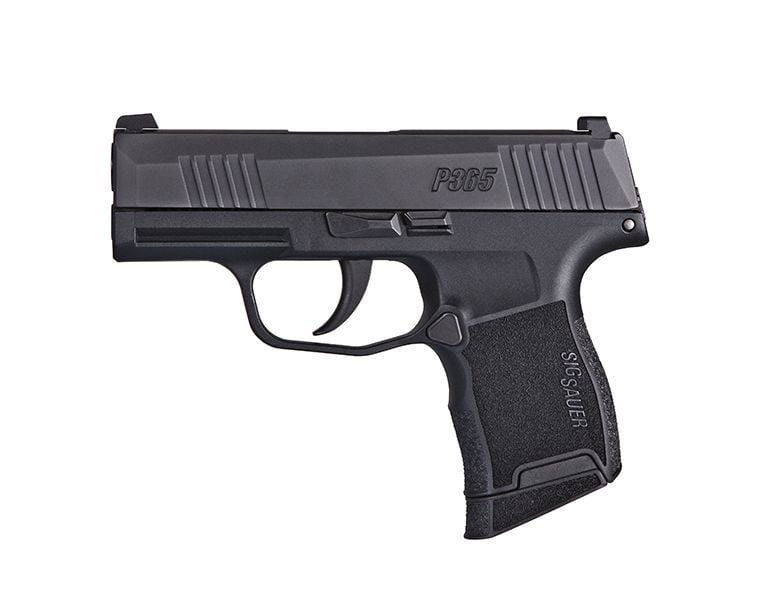
A few things jump out immediately. The P365 is shorter in every dimension and almost 2.5 ounces lighter, yet it offers more capacity options. That’s the engineering flex that made the P365 famous when it launched back in 2018. Nobody believed you could stuff 10 rounds into a package that small. And then Sig went and did it.
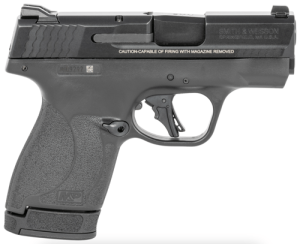
Smith & Wesson answered with a gun that’s fractionally larger but hits back hard on trigger quality and price. The width difference of 0.06 inches is basically irrelevant in real-world carry. You won’t feel it through a holster and a layer of clothing. What you will feel is the weight difference. Nearly 2.5 ounces doesn’t sound like much until you’ve been carrying all day in the summer heat.
Shield Plus Pros & Cons
Pros
- Best factory trigger in any sub-$500 micro-compact
- Street price $350-400, roughly $100 less than the P365
- 13+1 extended mag capacity is competitive
- 170+ years of S&W reliability behind it
- Fuller grip suits shooters with larger hands
Cons
- Heavier at 20.2 oz vs 17.8 oz
- Larger overall footprint than P365
- Stock sights are basic white dots
- Fewer optics-ready variants than P365 lineup
Sig P365 Pros & Cons
Pros
- Smallest and lightest micro-compact with 10+ round capacity
- 15-round extended mag option (compact pistol territory)
- XRAY3 night sights included from the factory
- Broad ecosystem: X, XL, Macro, AXG Legion variants
- More optics-ready configurations available
Cons
- $100+ more than the Shield Plus at street price
- Trigger is good but not Shield Plus good
- Narrow grip can feel cramped for larger hands
- Had early production issues in 2018 (resolved since)
Size and Ergonomics
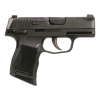
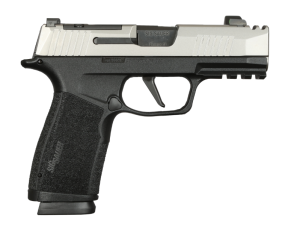
On paper, the P365 wins the size game. It’s 0.3 inches shorter overall, 0.3 inches shorter in height, and over two ounces lighter. Carry either one in a quality concealed carry holster and you’ll forget it’s there, but the P365 disappears just a little bit more. For appendix carry, those fractions of an inch actually matter when you’re bending over or sitting in a car all day.
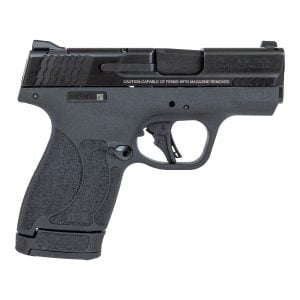
The Shield Plus feels more like a traditional handgun in your hand. It’s got a bit more grip real estate, which shooters with larger hands will appreciate. The texture is aggressive without being cheese-grater rough, and the beavertail gives you a solid high grip. I’ve always liked how Smith & Wesson handles ergonomics on the M&P line. It just feels like a proper pistol, scaled down.
P365 packs its capacity into a noticeably smaller frame, and that’s legitimately remarkable. But some shooters find the grip a touch narrow, especially guys with bigger mitts. Sig addressed this with the P365X and XL variants, which tells you even they knew the original grip wasn’t for everyone. If you’re between the two and have large hands, get to a gun store and wrap your fingers around both before you buy.
Winner: P365. The size-to-capacity ratio is still the benchmark for the industry, and those ounces add up over a long day of carry.
Trigger
This is where the Shield Plus punches way above its weight class. That flat-face trigger is, and I’m not exaggerating, one of the best factory triggers in any sub-$500 pistol. The take-up is smooth, the wall is distinct, and the break is crisp. The reset is short and tactile. You can actually shoot this thing well right out of the box without wishing you’d budgeted for an Apex upgrade.
P365 trigger is good. Really good, actually. Sig has refined it since launch, and the current production models have a clean break with minimal mush. But put them side by side and the Shield Plus just feels better. The pull is lighter, the reset is more positive, and it inspires more confidence on follow-up shots. For a gun that costs $100 less, that’s a flex.
Winner: Shield Plus. Not close. If trigger feel is your top priority and you don’t want to spend extra on aftermarket parts, Smith & Wesson handed you a gift here.
Capacity
P365 changed the game when it crammed 10+1 rounds into a package smaller than guns that held seven. But the real party trick is the 15-round extended magazine. Fifteen rounds of 9mm in a micro-compact. That’s compact pistol territory in a subcompact frame. The 12-round flush-fit mag is the sweet spot for most carry setups, giving you solid capacity without turning the grip into a baseball bat.
The Shield Plus tops out at 13+1 with the extended magazine, and 10+1 with the flush-fit. Still very respectable, and honestly more than enough for any realistic defensive scenario. Both ship with two magazines in the box, which is the industry standard these days.
If raw round count matters to you, the P365 wins. Two extra rounds with the extended mag might not sound like much, but it’s a 15% advantage. And in states with magazine capacity limits, both offer 10-round compliant options, so it’s a wash there. Winner: P365.
Accuracy
Both of these guns shoot better than most people can. At 7 yards, which is where the vast majority of defensive encounters happen, you’ll make ragged holes with either one. Push out to 15 or 25 yards and the differences are minimal. The barrels are the same length, the sights are both adequate, and the mechanical accuracy is there on both platforms.
That said, the Shield Plus trigger gives many shooters a practical accuracy edge. A better trigger means less disruption at the moment of the shot, and that translates to tighter groups for average shooters. I’ve seen newer shooters put together noticeably better groups with the Shield Plus, and I think the trigger is the main reason. When you’re not fighting a mushy break, you just shoot better. Simple as that.
For what it’s worth, both guns handle standard 115-grain range ammo and 124-grain defensive loads with the same point of aim. No surprises. If you’re planning to add a red dot down the road, the accuracy conversation changes completely since the optic does the heavy lifting on sight alignment. Winner: Tie. The guns are mechanically equal, but the Shield Plus trigger makes it easier for most people to shoot well with iron sights.
Reliability
This is the category where I refuse to pick a winner, because both guns have earned it. Smith & Wesson has been making firearms for over 170 years. The M&P platform is battle-tested by law enforcement agencies across the country. The Shield Plus runs. It eats cheap steel-case ammo and premium hollow points with the same indifference. I’ve never had a malfunction with one that wasn’t ammo-related.
P365 had some well-publicized teething issues in its first year of production. Primer drag, striker breakage, some reports of light primer strikes. Sig addressed all of it, and current production P365s are tanks. Thousands of rounds, no drama. If you’re buying a P365 in 2026, you’re getting a mature, proven design with eight years of refinement behind it. Don’t let forum posts from 2018 scare you off.
I’d trust either one of these guns with my life, and that’s about the highest compliment I can pay a firearm. Winner: Tie. Both are rock-solid reliable. Load them with quality 9mm defensive ammo and carry with confidence.
Sights and Optics
The concealed carry market has gone optics-crazy, and both manufacturers know it. The Shield Plus is available in a Performance Center optics-ready variant that comes from the factory with a milled slide and upgraded features. It’s a nice package, though the Performance Center tax bumps the price closer to P365 territory, which somewhat undermines the Shield Plus’s value advantage.
Sig plays the optics game harder. The P365X and P365XL both come optics-ready, and the P365 lineup has more variant options overall. Sig’s modular approach means you can pick exactly the configuration you want without paying a gunsmith to mill your slide. For stock sights, the P365’s XRAY3 night sights are legitimately excellent. Bright in daylight, glowing in the dark. The Shield Plus ships with decent but unremarkable white-dot sights that get the job done without impressing anyone.
Winner: P365. More optics-ready variants, better stock sights, and a more developed ecosystem for compact pistol red dot setups. If you know you’re going to mount an optic eventually, the P365 platform makes it much easier to get there.
Price and Value
Here it is. The section where the Shield Plus goes from “very good alternative” to “absolute no-brainer for budget-conscious shooters.” Street prices for the standard Shield Plus hover between $350 and $400. You can find them on sale for even less during holiday deals. That’s a legitimate, proven, reliable concealed carry pistol with an outstanding trigger for the price of a nice dinner for two. Well, a really nice dinner for two.
P365 typically runs $450 to $500 on the street, with the X and XL variants pushing higher. That’s not expensive by any means, but it’s a solid $100+ more than the Shield Plus. And when you’re comparing two guns this close in performance, that hundred bucks could go toward ammo, training, or a quality holster. The best gun is the one you can afford to actually practice with.
I’ve said it before and I’ll keep saying it: the Shield Plus might be the single best value in the budget CCW market right now. You’re not settling. You’re not compromising. You’re getting an excellent firearm that happens to cost less than the competition. Take that $100 you saved and buy 300 rounds of practice ammo. You’ll be a better shooter for it, and a better shooter with a Shield Plus will outperform a mediocre shooter with a P365 every single time. Winner: Shield Plus, by a mile.
Which Should You Buy?
Buy the Shield Plus if budget matters and you want the best trigger in the micro-compact class without paying for aftermarket upgrades. It’s the move if you’re not planning to mount a red dot, you appreciate a slightly fuller grip, and you’d rather spend that extra $100 on range time and good ammo. For first-time concealed carriers especially, the Shield Plus makes a ton of sense. Great gun, great price, zero apologies needed.
Buy the P365 if you want the smallest possible package with the most capacity options. If going optics-ready is in your plans, or if you want access to Sig’s broader ecosystem of X, XL, and Macro variants, start with the P365. The 15-round mag option is a legitimate advantage, and the lighter weight makes all-day carry just a touch more comfortable. It’s the premium choice, and it earns the premium.
That’s the Shield Plus vs P365 decision in a nutshell. And here’s the thing nobody on the internet wants to admit: for 95% of concealed carriers, either gun will serve you just fine for the rest of your life. The differences we’re talking about here are real, but they’re marginal. You’re splitting hairs between two of the finest micro-compact pistols ever manufactured. That’s a good problem to have.
Either way, you’re getting one of the best concealed carry handguns on the market in 2026. There’s no wrong answer here. There’s just your answer. Pick the one that fits your priorities, get a solid holster, and go train. That’s what actually matters.
How I Compared These Guns
I carried each gun for two weeks in the same Vedder LightTuck holster, alternating daily. Both were shot with the same three ammo types: Federal American Eagle 115gr FMJ, Federal HST 124gr JHP, and Speer Gold Dot 124gr JHP. Total round count was 500+ through each gun. Accuracy testing was done from a bench rest at 7, 15, and 25 yards. Timed draws from concealment were run on a shot timer to compare presentation speed. This wasn’t a lab test. It was two guns in rotation for a month of real carry and range work.
Final Thoughts
The Shield Plus vs P365 question is the concealed carry version of Coke vs Pepsi. It isn’t really about which gun is “better.” It’s about what you value most. Sig built the P365 to be the most capable micro-compact ever made, and they succeeded. Smith & Wesson built the Shield Plus to deliver 90% of that capability at a significantly lower price point, and they succeeded too. Both companies knocked it out of the park. We’re arguing about shades of excellent here.
My advice? Handle both if you can. Rent them at a range if that’s an option. The gun that fits your hand better and puts a grin on your face at the range is the right one for you. Specs and internet arguments only get you so far. The feel of the grip, the snap of the trigger, the way it sits in your holster during a long day. Those things matter more than any comparison chart.
One more thing worth considering: where you live. In states with 10-round magazine limits, the capacity advantage of the P365 evaporates. Both guns hold 10+1 with their compliant magazines, and at that point, the Shield Plus’s better trigger and lower price become even more compelling. If you’re in California, New York, New Jersey, or any other restricted state, the Shield Plus is probably the smarter buy.
Don’t overthink this. Two of the best carry guns ever built, both available for under $500. We live in remarkable times for concealed carriers. Pick one, get your permit, and carry it every single day. That’s the whole point.
Looking for the best prices? Check our gun deals page and price comparison tool to compare prices from 200+ retailers before you buy.
Frequently Asked Questions
Related: Cross-shopping slim 9mm carry guns? See our full Shield Plus vs Glock 43X comparison.
Is the Shield Plus as good as the Sig P365?
The Shield Plus is about 90% as capable as the P365 for roughly less. It has a better trigger and comparable reliability. The P365 edges it on size, weight, and capacity options, but the gap is narrower than the price difference suggests.
Which has a better trigger, Shield Plus or P365?
The Shield Plus has the better trigger. Its flat-face trigger has a lighter pull weight, crisper break, and shorter reset than the P365. It is arguably the best factory trigger in any micro-compact pistol under .
Is the Shield Plus reliable?
Yes. The Shield Plus is extremely reliable. Smith and Wesson has over 170 years of manufacturing experience, and the M&P platform is trusted by law enforcement agencies nationwide. It feeds all types of 9mm ammunition without issue.
Can you put a red dot on the Shield Plus?
Yes. The Shield Plus Performance Center variant comes optics-ready from the factory with a milled slide for direct red dot mounting. The standard model requires aftermarket slide milling to accept an optic.
Which is smaller, Shield Plus or P365?
The Sig P365 is smaller in every dimension. It is 0.3 inches shorter overall, 0.3 inches shorter in height, and 2.4 ounces lighter than the Shield Plus. Both are easily concealable, but the P365 is the more compact option.
How much cheaper is the Shield Plus than the P365?
The Shield Plus typically costs to ( less than the P365 at street prices. You can find the Shield Plus for ( to , while the P365 usually runs ( to . Sale prices can widen or narrow that gap.
Which has more aftermarket support?
The Sig P365 has a slight edge in aftermarket support due to its modular design and multiple factory variants. Both guns have extensive holster, sight, and accessory options from major manufacturers. Neither will leave you wanting for upgrades.
Should I get the Shield Plus Performance Center?
The Performance Center model is worth it if you want optics-ready capability and upgraded features from the factory. However, it costs more and closes the price gap with the P365, which somewhat reduces the Shield Plus value advantage.
4,659+ Gun & Ammo Deals
Updated daily from 200+ top retailers. Filter by category, caliber, action type, and price.