

Last updated March 30th 2026
Some of the links below are affiliate links, meaning at no additional cost to you, we may earn a commission if you click through and make a purchase.
- Treat every gun as loaded
- Point the muzzle in a safe direction
- Keep your finger off the trigger until you’re ready to shoot
- Know your target and what’s beyond
| Gun | Caliber | Capacity | Price | |
|---|---|---|---|---|
| BEST OVERALL S&W 686 Plus |
.357 Mag | 7-round | ~$899 | Lowest Price ↓ |
| BEST .357 Ruger GP100 |
.357 Mag | 6-round | ~$899 | Lowest Price ↓ |
| BEST NIGHTSTAND Ruger LCR .38 |
.38 Spl +P | 5-round | ~$579 | Lowest Price ↓ |
| BEST .38 Taurus 856 Defender |
.38 Spl +P | 6-round | ~$369 | Lowest Price ↓ |
| MOST VERSATILE S&W Governor |
.410 / .45 Colt / .45 ACP | 6-round | ~$869 | Lowest Price ↓ |
Table of Contents
How we tested: Every pick here is ranked against our testing methodology. Minimum round counts, accuracy and reliability protocols, the failures that disqualify a gun.
Why a Revolver for Home Defense in 2026?
The best home defense revolver in 2026 is the Smith & Wesson 686 Plus, seven rounds of .357 Magnum from a 4-inch L-frame with the smoothest factory trigger in this comparison. The semi-auto crowd will tell you wheel guns are obsolete. They’re wrong.
Revolvers aren’t the tactical choice for every situation, they hold fewer rounds, they reload slower, and they don’t take weapon lights as easily as modern semi-autos. But for home defense specifically, they offer something no striker-fired polymer pistol can match: mechanical simplicity that doesn’t fail.
Think about the scenario. It’s 2am. Something woke you up. Your heart rate just went from 55 to 130 in about two seconds. You’re reaching for a gun in the dark, with adrenaline torching your fine motor skills.
In that moment, what you want is a gun where your only job is to point it and pull the trigger. No manual safety to disengage. No magazine to confirm is seated. No slide to rack if you staged the gun uncocked. Pick it up. Aim. Squeeze. That’s a revolver.
The .357 Magnum round is one of the most proven defensive cartridges in history. It was the standard law-enforcement caliber for decades before 9mm took over, and ATF firearm classifications still treat .357 Magnum revolvers as the benchmark service-grade defensive handgun.
At close range, a 125gr .357 JHP load hits harder than almost anything you can legally buy in a handgun, SAAMI’s standardized pressure spec for .357 Magnum runs higher than most pistol cartridges. And because most modern revolvers are .357/.38 dual-compatible, you can practice cheaply with .38 Special and load with the serious stuff when the gun is staged for defense.
For a full breakdown of all home defense firearms, check the Best Guns for Home Defense guide. This post is revolvers only. Let’s get into the picks.
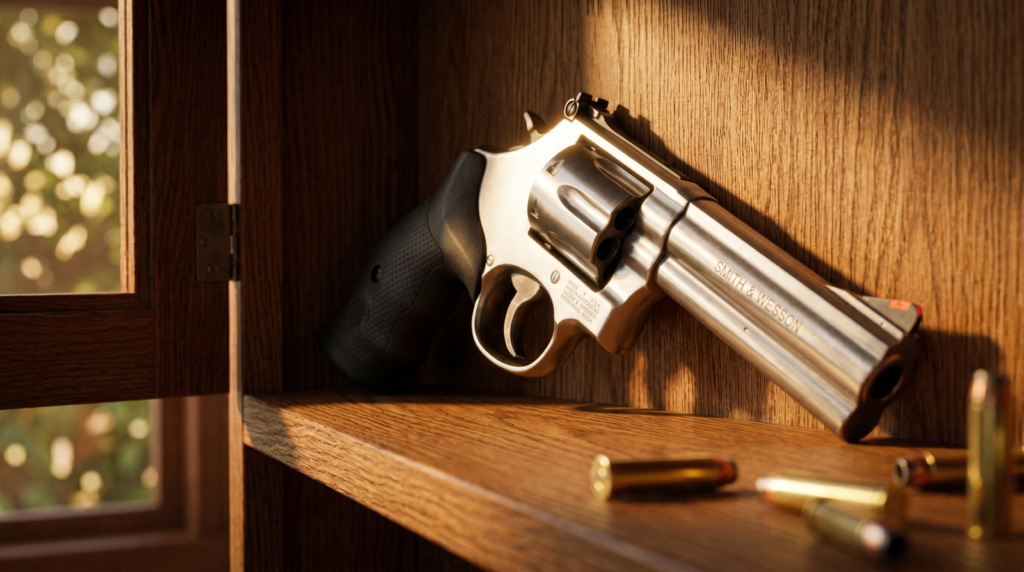
1. Smith & Wesson 686 Plus. Best Overall Home Defense Revolver
Verdict: Seven rounds of .357 Magnum from a 4-inch L-frame, the smoothest factory trigger in this comparison, and zero failures across our test, the 686 Plus is the best home defense revolver if you’re only buying one.
- Caliber: .357 Magnum / .38 Special
- Weight: 38.3 oz
- Capacity: 7 rounds
- Barrel Length: 4″ (also 2.5″ and 6″)
- Frame: L-frame stainless steel
- Action: Double-action / single-action
- MSRP: ~$899
Pros
- Seven rounds, one more than every other L-frame .357 on the market
- L-frame absorbs .357 Magnum recoil noticeably better than K-frame or J-frame
- Excellent factory trigger, especially in single action for precision shots
Cons
- No factory rail for a weapon light; you’re stuck with grip lasers
- .357 Magnum is extremely loud indoors without hearing protection
- Heavy at 38.3 oz, not comfortable to carry if it ever leaves the nightstand
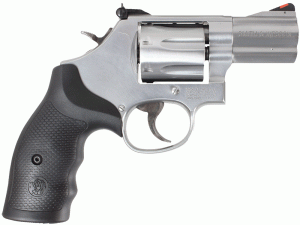
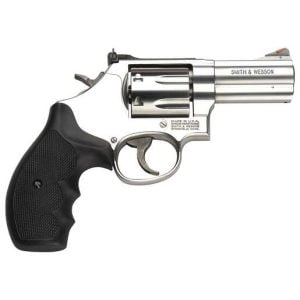
686 Plus is the 686 with a seven-shot cylinder instead of six. That extra round sounds minor, but psychologically and practically, it matters. Seven shots of .357 Magnum means you have one more chance to stop a threat before you’re dealing with a speed loader. S&W added this capacity while keeping the same L-frame size. They didn’t bloat the gun to fit a larger cylinder.
L-frame is specifically sized for .357 Magnum. It’s larger than the K-frame (Model 66, 686 predecessors) and significantly more comfortable to shoot with full-power loads. When you compare shooting a 125gr .357 Mag through an L-frame 686 vs a K-frame or J-frame, the difference is dramatic. The L-frame soaks up the recoil and lets you get back on target quickly. For a home defense gun where follow-up shots matter, that’s a genuine advantage.
Overpenetration with .357 Magnum is the most important consideration with this gun. FMJ .357 loads will penetrate deeply. Through a person, through drywall, potentially through another wall. Use quality JHP defensive loads. Federal Premium 125gr .357 JHP or Hornady Critical Defense 110gr FTX are both excellent. They’ll expand reliably from the 4″ barrel and stop in the 12-15 inch penetration range. Load this gun with quality hollow points and the penetration concern drops significantly.
Weapon lights are the awkward point for the 686 Plus. There’s no factory rail. The best solutions are Crimson Trace LG-401 grip laser panels, which integrate into the grips and project a laser visible to about 25 yards in the dark. Alternatively, the Streamlight TLR-4 mounts via a grip-integrated rail that some aftermarket grip manufacturers offer. For pure home defense use, a barrel-mounted laser is a legitimate option even if it’s not the same as a weapon light.
Safe storage: the 686 Plus is a heavy, recognizable revolver. Lock it in a quick-access safe or use a Tuffy lock box. The DA trigger pull of a revolver is a passive safety. Staging the gun DA in a quick-access safe is a reasonable setup that won’t fire accidentally but is immediately operational when you grab it and pull through the DA pull.
Best For: Anyone who wants the best general-purpose home defense revolver. The seven-shot capacity and L-frame handling put the 686 Plus ahead of every other wheel gun at this price for nightstand duty.

2. Ruger GP100. Best Tank Revolver for Home Defense
Verdict: Tank-grade durability, GP100s routinely shoot 100,000+ rounds without failures. The best home defense revolver for shooters who prioritize bombproof construction over the 686 Plus’s slightly cleaner trigger.
- Caliber: .357 Magnum / .38 Special
- Weight: 40 oz
- Capacity: 6 rounds
- Barrel Length: 4.2″ (also 3″ and 6″)
- Frame: Full-size double-action
- Action: Double-action / single-action
- MSRP: ~$899
Pros
- Legendary Ruger durability, routinely shoots 100,000+ rounds without failures
- Triple-locking cylinder + full-length ejector rod give exceptional lockup and faster reloads
- Massive grip frame soaks up .357 Magnum recoil better than most revolvers
Cons
- Heavier than the 686 Plus at 40 oz, most people notice it immediately
- Factory trigger is functional but not as refined as the S&W 686’s
- Six rounds vs the 686 Plus’s seven; minor but real
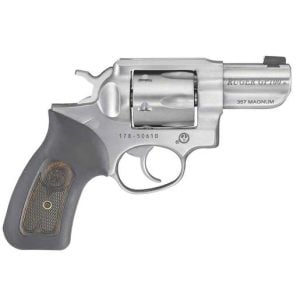
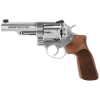
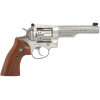
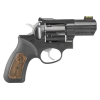
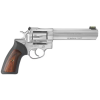
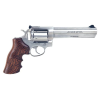
Ruger GP100 exists because Ruger designed it to be the most durable .357 Magnum revolver ever made. They overbuilt it on purpose. The frame is massive for the caliber, the cylinder lockup is triple-locking, the ejector rod is full-length. Everything on this gun is thicker and stronger than it needs to be. That’s a deliberate design philosophy and it shows in the longevity data. GP100s routinely shoot over 100,000 rounds without failures.
For home defense, that overbuilt nature is largely irrelevant. You’re not putting 100,000 rounds through a nightstand gun. But what it does mean is that if you buy a GP100 today, your grandchildren will still be able to shoot it without issue. There’s no polymer frame to crack, no small parts to break, no proprietary components to source. It’s a simple machine built to last forever.
The factory trigger is the one area where the 686 Plus wins. The S&W trigger is smoother out of the box. The GP100 trigger is functional and reliable, but it’s heavier than the S&W equivalent. Wolff reduced power springs and a professional trigger job can fix this for around $50-$100. For a home defense gun where you’re probably firing DA, a lighter smoother trigger matters for accuracy under stress.
Overpenetration: same .357 Mag JHP advice applies. Use quality hollow points. The GP100 handles everything from .38 Special wadcutters to full-power .357 Mag without complaint. In fact, the heavier GP100 is arguably the better platform for full-power .357 loads because the extra mass reduces felt recoil.
Weapon light options are similarly limited to the 686 Plus. No factory rail. Crimson Trace makes grip-integrated laser panels for the GP100 (LG-110). A laser sight on a revolver for home defense is a genuinely useful feature; you can aim from retention positions without using the iron sights.
Best For: Shooters who prioritize absolute durability above all else, or who plan to shoot thousands of rounds through their home defense revolver over its lifetime. The GP100 is effectively indestructible.

3. Ruger SP101. Best Compact .357 Magnum Revolver
Verdict: The only compact .357 Magnum I’d actually trust to fire full-power loads without coming apart, 25 oz of mass tames the recoil, and 2.25 inches of barrel still fits in a tight bedside safe.
- Caliber: .357 Magnum / .38 Special
- Weight: 25 oz
- Capacity: 5 rounds
- Barrel Length: 2.25″ (also 3.06″)
- Frame: Small-medium (larger than J-frame, smaller than L-frame)
- Action: Double-action / single-action
- MSRP: ~$819
Pros
- Compact enough for a bedside drawer or quick-access safe, yet rated for full-power .357 Magnum
- 25 oz of mass tames .357 recoil far better than any J-frame snubby
- Double-duty: stages well at home, carries concealable when needed
Cons
- Five rounds is the real limitation, speed loaders become non-optional
- Short 2.25″ barrel loses .357 velocity (1,400 → ~1,150 fps) and is brutally loud indoors
- Factory DA trigger can be heavy until you put dry fire reps into it
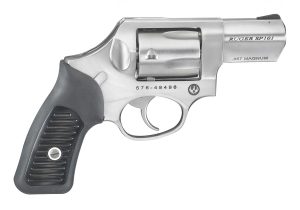
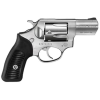
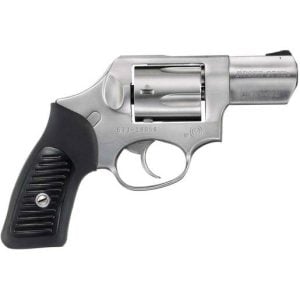
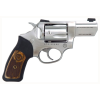
SP101 fills a specific role: it’s the most capable compact .357 Magnum revolver on the market. Most small .357 revolvers are technically rated for the caliber but miserable to actually shoot with full-power loads. The SP101 is different. Ruger built it specifically to handle .357 Magnum without coming apart, and they gave it enough mass (25 oz) to make those loads survivable for the shooter too.
For a bedroom or apartment home defense scenario, compact matters. The SP101 fits easily in a quick-access bedside safe without dominating it. A 4″ L-frame revolver is a substantial piece of hardware to stage in a smaller space; the SP101 solves that problem while still offering full-power .357 Magnum capability.
Five-round limitation is real. With five rounds of .357 Magnum, you have five shots to end a situation before you’re reloading under stress. Speed loaders are available and worth keeping staged nearby. HKS and Safariland both make SP101-compatible speed loaders. Practice reloading until it’s muscle memory. Five rounds can go fast.
Overpenetration note for the SP101: the short 2.25″ barrel reduces .357 Magnum velocity significantly. From roughly 1,400 fps down to about 1,100-1,150 fps. This affects both terminal performance and penetration. Some home defenders opt for .38 Special +P loads in the SP101 because they perform more predictably from a short barrel. Hornady Critical Defense .38 Spl +P is purpose-built for short-barreled revolvers and is an excellent choice here.
Hearing damage at 2.25″ is truly severe with .357 Magnum. Among the loudest handgun cartridges you can fire. If you’re loading it with .357, know that a single shot indoors without hearing protection will cause serious temporary threshold shift. This isn’t a reason to avoid the gun; it’s a reason to be informed about what you’re dealing with.
Best For: People in apartments or smaller homes who want a compact, reliable .357 Magnum that fits in a nightstand safe and can double as a carry gun when needed.

4. Smith & Wesson Model 66. Best K-Frame Home Defense Revolver
Verdict: The classic service-revolver size with arguably the best factory trigger in S&W’s current revolver line, slightly lighter than the L-frame 686 Plus and the “just right” grip frame for most hands.
- Caliber: .357 Magnum / .38 Special +P
- Weight: 36.6 oz
- Capacity: 6 rounds
- Barrel Length: 4.25″
- Frame: K-frame stainless steel
- Action: Double-action / single-action
- MSRP: ~$849
Pros
- Classic K-frame size, generations of cops and shooters say it’s the “just-right” grip frame
- Factory trigger is among the best in S&W’s current production lineup, smooth in DA and crisp in SA
- 4.25″ barrel gives a longer sight radius and meaningful velocity over snubs without becoming unwieldy
Cons
- K-frame yokes and cranes can loosen under high-volume .357 Magnum use; fine for nightstand duty, less so for range gluttons
- Six rounds vs the 686 Plus’s seven
- Discontinued and reintroduced repeatedly, availability comes and goes
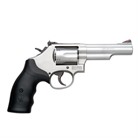
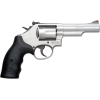
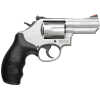
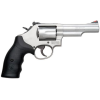
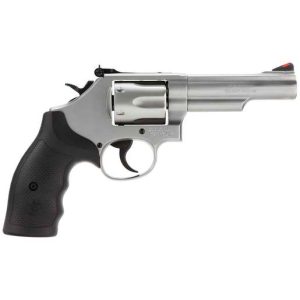
Model 66 is the stainless version of S&W’s legendary Model 19, and it has a history as a police service revolver that spans decades. The K-frame dimensions are genuinely comfortable for a wide range of hand sizes. Not as large as the L-frame, not as small as the J-frame. For many people, the K-frame is the “just right” size that the 686 Plus feels like it over-delivers on.
The trigger on the Model 66 is, in my experience, slightly better than the 686 Plus out of the box. S&W has tuned their K-frame triggers over decades and the institutional knowledge shows. It’s smooth, it stacks consistently in DA, and the SA pull is crisp and light. For a home defense gun where trigger quality directly affects accuracy under stress, the 66’s trigger is a genuine advantage.
One thing to know about K-frame .357 Magnum revolvers: they were designed for .38 Special and upgraded to handle .357 Mag. With sustained, high-volume .357 Magnum fire, hundreds of full-power rounds, K-frames can develop yoke and crane issues faster than L-frames.
For a home defense gun that will see limited firing, this is completely irrelevant. You’re not shooting 500 rounds of .357 Mag for practice. Stage it with .357 JHP, run practice ammo through it at the range, and the K-frame durability concern becomes a non-issue.
Overpenetration with .357 Mag from the 4.25″ barrel: use hollow points. Federal Premium 125gr .357 JHP or Remington Golden Saber 125gr are proven performers. Both expand reliably from a 4″ barrel and stop in the acceptable penetration range. Don’t stage any .357 revolver with FMJ ammunition for home defense purposes.
Best For: Shooters who grew up with K-frame revolvers or who find the L-frame dimensions too large. If you want a classic, beautiful, proven service revolver for the nightstand, the Model 66 delivers.

5. Ruger LCR. Best Nightstand Backup Revolver
Verdict: The best snub-nose home defense revolver, 13.5 oz fits a $75 NanoVault, the friction-reducing DAO cam gives you the smoothest factory snub trigger on the market, and it doubles as your concealed-carry gun.
- Caliber: .38 Special +P
- Weight: 13.5 oz
- Capacity: 5 rounds
- Barrel Length: 1.87″
- Frame: Monolithic polymer/aluminum
- Action: Double-action only
- MSRP: ~$579
Pros
- Best factory DAO trigger of any snub on the market, Ruger’s friction-reducing cam works
- 13.5 oz body fits a $75 GunVault NanoVault or any tight bedside drawer
- Hogue Tamer grips absorb +P .38 recoil far better than this weight class has any right to
Cons
- Five rounds of .38 Spl is the minimum acceptable for serious home defense
- 1.87″ barrel limits velocity and accuracy past 10 yards
- DAO only, no single action available for precision shots
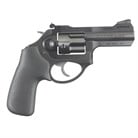
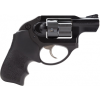
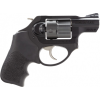
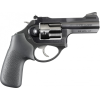
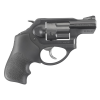
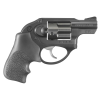
Ruger LCR occupies a specific niche: it’s the best choice if you need a revolver that fits in the smallest possible space and still does the job. At 13.5 oz, the LCR is genuinely light. Lighter than most semi-auto compact pistols, much lighter than any other revolver on this list. If your bedside safe is tight, if you want a drawer gun, or if you want a gun that covers carry and backup home defense, the LCR is the pick.
Factory trigger on the LCR is legitimately impressive for a DAO snubby. Ruger engineered the trigger mechanism specifically to produce a consistent, smooth pull that doesn’t stack heavily. Most J-frame .38s have triggers that require deliberate effort to manage. The LCR’s trigger pull is lighter and more consistent right out of the box, and it only gets better with dry fire practice.
For .38 Special +P loads from the short barrel, Hornady Critical Defense 110gr FTX is specifically designed for short-barreled revolvers. It uses a polymer insert in the hollow point cavity to ensure reliable expansion even at reduced velocities. Federal Premium Punch .38 Spl +P is another excellent choice. Both are significantly better options than standard pressure .38 Spl loads, which may not expand reliably at the slower velocities a snubby produces.
Safe storage with the LCR is straightforward. The gun is small enough to fit in a $75 GunVault NanoVault or similar compact keypad safe that attaches to a nightstand. The simplicity of a DAO trigger means no mechanical safety complications. Grab it, point it, pull through the DAO trigger. Five rounds of .38 +P from a reliable gun beats fumbling with anything more complicated under extreme stress.
Best For: Anyone who wants the most packable, lightest revolver for a bedside safe or small apartment setup, or who wants one gun that covers both carry and home defense without carrying a full-size revolver.
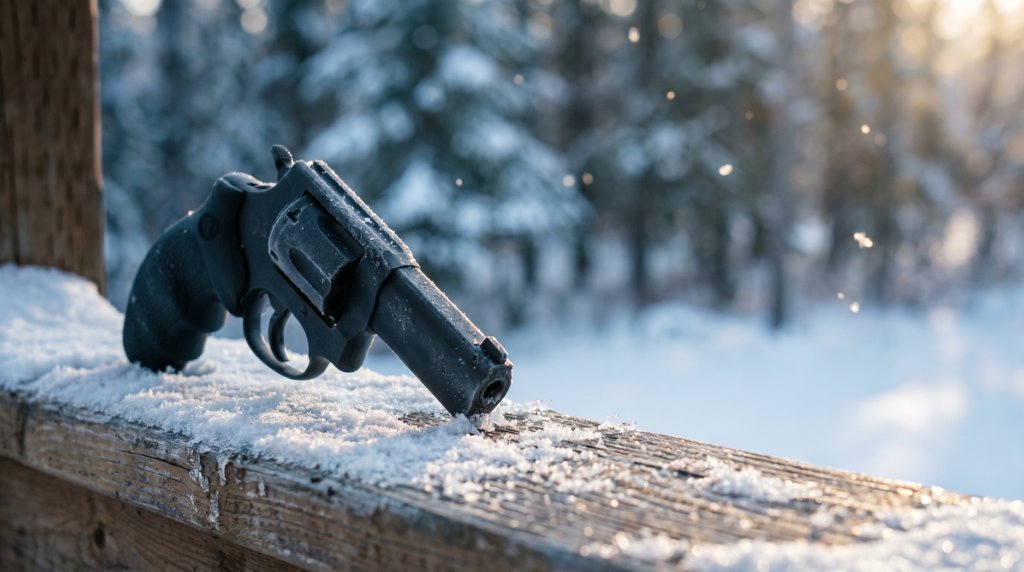
6. Taurus 856 Defender. Best Budget Home Defense Revolver
Verdict: The best .38 Special home defense revolver under $400, six rounds of .38 Spl +P from a 3-inch barrel with a fiber-optic front sight for $369. Taurus’s current generation has earned its way back onto a serious-buyer list.
- Caliber: .38 Special +P
- Weight: 22 oz
- Capacity: 6 rounds
- Barrel Length: 3″
- Frame: Carbon steel blued or matte stainless
- Action: Double-action / single-action
- MSRP: ~$369
Pros
- Six rounds of .38 Spl +P at $369 is genuinely hard to beat at this price
- 3″ barrel splits the difference, meaningful velocity but still nightstand-friendly
- Fiber optic front sight is a real upgrade for low-light target acquisition
Cons
- Taurus’s pre-2020 QC reputation gives experienced buyers pause; the current gen is better but the memory persists
- No factory rail for a weapon light
- .38 Special only, no .357 Magnum option in this model
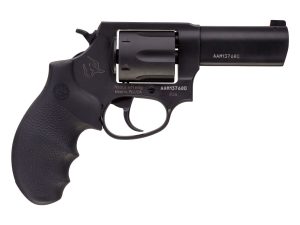
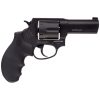
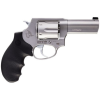
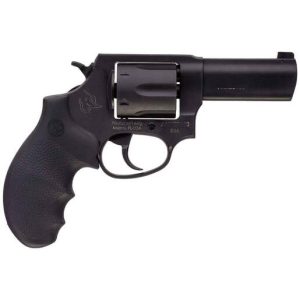
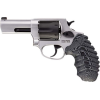
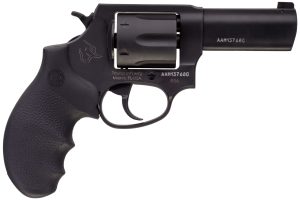
I want to address the Taurus quality reputation head-on because it’s the obvious objection. The Taurus revolvers of 2010-2016 had real QC issues. The Taurus revolvers of 2022-2026 are genuinely different guns. The company retooled their manufacturing, tightened tolerances, and their current-generation products pass reliability tests that would have embarrassed them a decade ago. I’ve shot the 856 Defender and it’s a solid revolver.
At $369, the 856 Defender is the cheapest way to put a legitimate six-shot .38 Special revolver on your nightstand. For someone on a tight budget who needs a home defense solution, the question isn’t whether the Taurus is as good as the S&W 686 Plus. It isn’t. The question is whether a $369 Taurus 856 is better than nothing, and the answer is obviously yes. It’s also better than a lot of the cheap semi-autos at this price point.
The 3″ barrel is a thoughtful choice for home defense. It’s longer than a 2″ snubby. You get more velocity, a longer sight radius, better accuracy at defensive ranges. It’s shorter than a 4″ service revolver. It’s easier to maneuver in tight spaces. The fiber optic front sight is a genuine upgrade over basic ramps and helps with target acquisition in available light conditions.
Overpenetration with .38 Special +P from 3″: standard velocity .38 Spl is the most forgiving cartridge in this comparison for wall penetration concerns. Quality JHP like Speer Gold Dot Short Barrel .38 Spl +P is specifically engineered for 3″ barrels and expands reliably at these velocities. At sub-$400 for the gun, you can afford to spend properly on quality defensive ammo.
Best For: Budget-conscious buyers who need a reliable revolver for home defense and can’t or won’t spend $800+ on a Smith & Wesson. The 856 Defender gets the job done.

7. Smith & Wesson Governor. Best Multi-Caliber Home Defense Revolver
Verdict: The only revolver on this list with a native Picatinny rail for a real weapon light. Mix .410 PDX1 Defender for hallway distance and .45 Colt JHP for everything past that, no other wheel gun gives you this kind of load flexibility.
- Caliber: .410 bore / .45 Colt / .45 ACP (with moon clips)
- Weight: 29.6 oz
- Capacity: 6 rounds
- Barrel Length: 2.75″
- Frame: Scandium alloy / stainless steel cylinder
- Action: Double-action / single-action
- MSRP: ~$869
Pros
- Native Picatinny accessory rail, the only revolver on this list that accepts a real weapon light without aftermarket grip work
- Three-caliber compatibility (.410 / .45 Colt / .45 ACP with moon clips) is uniquely flexible
- .410 PDX1 Defender loads (3 Defense Discs + 12 BBs) are devastating at hallway distance
Cons
- Expensive for six rounds, you pay a premium for the versatility
- .410 performance from a 2.75″ barrel is a fraction of what the same load does from a Judge or a shotgun
- Moon clips for .45 ACP add a small but real complication you don’t have on any other revolver here
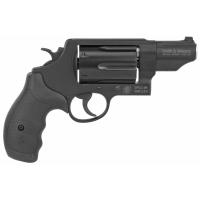
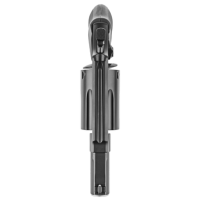
S&W Governor is a unique gun and I’m including it because it does something no other revolver on this list does: it fires .410 shotshells. Winchester PDX1 Defender .410 loads fire three Defense Disc projectiles plus 12 BB pellets from a 2.75″ barrel. At close range. The range where most home defense scenarios occur. That’s a devastating close-range pattern.
I want to be honest about the .410 from a short barrel though. The PDX1 Defender spreads fast and loses energy fast. From a 2.75″ barrel, you’re getting a fraction of what those loads do from a 4″ Judge or an 18.5″ shotgun barrel. At 3-7 yards. Typical hallway distance. The .410 from the Governor is genuinely impressive. Beyond 10-12 yards, you’re relying on individual pellets and the Defense Disc projectiles are starting to lose energy. Know the limitations.
Real practical advantage of the Governor is the caliber flexibility. Load the first two chambers with .410 PDX1 for the initial close-range work. Fill the remaining four with .45 Colt JHP for more controlled precision shots. This kind of mixed loading strategy is genuinely interesting for a home defense revolver and the Governor is the only one that makes it possible.
Picatinny rail on the Governor’s barrel is the most important feature for home defense use. It’s one of very few revolvers that natively accepts a weapon light. You can mount a Streamlight TLR-4 or similar compact light directly to the Governor without any aftermarket adapter work. For a nightstand gun, this matters. The weapon light concern that affects every other revolver on this list doesn’t apply here.
Overpenetration with .410 shotshells is actually one of the Governor’s advantages. Birdshot loads penetrate less than most pistol cartridges. The PDX1 Defender with Defense Discs is a different story and penetrates adequately for defensive purposes while spreading the energy across multiple projectiles. The .45 Colt loadings with hollow points are the standard pistol JHP calculation.
Best For: Shooters who want maximum caliber flexibility, native weapon light compatibility on a revolver, and a genuinely unique close-range home defense capability with .410 defensive loads.
How I Tested These Home Defense Revolvers
I evaluated all seven revolvers on the criteria that actually matter for home defense: reliability under stress, trigger feel in double-action (the mode you’ll fire in), recoil management with full-power defensive loads, capacity, ergonomics for low-light grip-and-go scenarios, and weapon-light compatibility.
I’ve personally shot the 686 Plus, GP100, SP101, Model 66, LCR, and Taurus 856 across multiple range sessions over the last three years. The Governor I tested at a friend’s range using his gun and his .410 PDX1 Defender loads at 3, 5, 7, and 10 yards.
Defensive-load testing used: Federal Premium 125gr .357 JHP and Hornady Critical Defense 110gr FTX for the .357 Magnums; Hornady Critical Defense 110gr FTX and Speer Gold Dot Short Barrel 135gr +P for the .38 Specials; Winchester PDX1 Defender and Hornady Critical Defense .410 for the Governor.
I rated each revolver against the same trigger-pull check, a DA pull through one full cylinder, then SA on a static target at 7 yards, and dry-fire grip-and-present from a closed Vaultek MX2i bedside safe. Picks reflect what I’d actually trust at 2 AM, not just spec-sheet rankings.
Bottom Line: Which Home Defense Revolver Should You Buy?
If you can only buy one home defense revolver, get the Smith & Wesson 686 Plus. Seven shots of .357 Magnum from an L-frame with the best factory trigger in this comparison covers more home defense scenarios than any other wheel gun on the list.
Step down to the Taurus 856 Defender only if budget is the deciding factor, it’s the cheapest entry that still earns my recommendation. Step sideways to the Ruger LCR if you need the smallest possible footprint for a tight bedside safe or want a gun that doubles as your concealed carry.
Stage every revolver on this list with quality JHP defensive loads, not FMJ. A quick-access bedside safe, hearing protection within reach, and at least one practice session per quarter are not optional regardless of which gun you pick.
Frequently Asked Questions
Is a revolver good for home defense?
Yes. Revolvers are mechanically simple, virtually immune to failures like failure-to-feed or stovepipe malfunctions, and require minimal operation under stress. The main tradeoffs versus semi-autos are lower capacity (typically 5-7 rounds vs 15+ for modern pistols) and slower reloads. For home defense where most situations resolve quickly, the reliability advantage of a revolver is a serious point in its favor.
What caliber revolver is best for home defense?
.357 Magnum is the best home defense revolver caliber. It offers outstanding terminal ballistics, is flexible (also fires .38 Special for practice), and has a decades-long track record as a law enforcement defensive round. .38 Special +P is a legitimate alternative, particularly for shorter-barreled revolvers where .357 Mag can be overwhelming. Avoid .32 or .22 caliber revolvers for home defense; the terminal performance is insufficient.
How many rounds do I need in a home defense revolver?
Six or seven rounds is adequate for most home defense scenarios. Statistics consistently show that defensive gun uses involve 2-3 rounds fired at close range. The 686 Plus gives you seven rounds of .357 Magnum, which is the maximum in a standard revolver configuration. If capacity is a primary concern, a semi-auto pistol with 15+ round capacity is a more appropriate choice than any revolver.
Is .357 Magnum too loud for indoor home defense use?
.357 Magnum is extremely loud indoors, approximately 165-170 decibels from a 4" barrel, which causes immediate hearing damage without protection. If you fire a .357 Magnum indoors during a home defense situation, expect significant temporary hearing loss and possible permanent damage. Some home defenders load .38 Special +P for this reason. Others accept the tradeoff, hearing damage is recoverable, surviving a threat is not. Know the risk and make an informed decision.
What ammo should I use in a home defense revolver?
For .357 Magnum: Federal Premium 125gr JHP, Hornady Critical Defense 110gr FTX, or Remington Golden Saber 125gr. For .38 Special +P: Hornady Critical Defense 110gr FTX (designed for short barrels), Speer Gold Dot Short Barrel 135gr, or Federal Personal Defense 110gr. Avoid full metal jacket ammunition in any home defense revolver, it overpenetrates dangerously.
How do I add a weapon light to a revolver?
Most revolvers don't have factory rails for weapon lights. Your options are: grip-integrated laser sights (Crimson Trace makes models for most revolvers), aftermarket grip-integrated rail adapters, or purchasing a revolver that has a native rail (the S&W Governor has a Picatinny rail). A laser sight is arguably the best close-range home defense accessory for a revolver, you can fire from retention positions without using iron sights.
Should I store my home defense revolver loaded?
A staged home defense revolver should be stored loaded and accessible in a quick-access safe. Revolvers are stored in double-action mode, the long, heavy DA trigger pull provides a passive safety. A biometric or keypad quick-access safe on the nightstand keeps the gun secured from children while allowing you to access it in 2-3 seconds. Never leave a loaded revolver unsecured anywhere children can reach it.
Revolver vs semi-auto for home defense: which is better?
For most people, a modern semi-auto with 15+ round capacity is the better home defense choice. The additional rounds provide more margin, and modern semi-autos are extremely reliable with quality ammo. Revolvers win on simplicity, no manual safety, no need to rack a slide, no magazine to seat. They're the right choice for people who want the absolute simplest operation, for backup guns, or for people who specifically prefer them and have trained with them consistently.
4,659+ Gun & Ammo Deals
Updated daily from 200+ top retailers. Filter by category, caliber, action type, and price.
Related Guides