

Last updated March 30th 2026
Some of the links below are affiliate links, meaning at no additional cost to you, we may earn a commission if you click through and make a purchase.
- Treat every gun as loaded
- Point the muzzle in a safe direction
- Keep your finger off the trigger until you’re ready to shoot
- Know your target and what’s beyond
| Load | Type | Pellets / Slug | Velocity | Price |
|---|---|---|---|---|
| BEST OVERALL Federal FliteControl 00 Buck |
00 Buckshot | 8 pellets | 1,325 fps | Lowest Price ↓ |
| BEST #1 BUCK Federal FliteControl #1 Buck |
#1 Buckshot | 16 pellets | 1,350 fps | Lowest Price ↓ |
| BEST PREMIUM 00 Hornady Critical Defense 00 Buck |
00 Buckshot | 8 pellets | 1,600 fps | Lowest Price ↓ |
| BEST LOW RECOIL Federal Reduced Recoil 00 Buck |
00 Buckshot | 8 pellets | 1,145 fps | Lowest Price ↓ |
| BEST PDX1 Winchester PDX1 Defender |
Mixed load | 1 slug + 3 discs | 1,150 fps | Lowest Price ↓ |
The Best Home Defense Shotgun Ammo in 2026
A 12 gauge pump shotgun is one of the most effective home defense tools ever made. But load it wrong and you’re either under-gunned with birdshot that won’t reach vital structures, or you’re throwing buckshot patterns wide enough to hit things you never intended to hit. Ammo selection matters as much as the gun itself.
The biggest development in shotgun defensive ammo over the past 15 years has been wad technology. Federal’s FliteControl wad changed what’s possible with patterning. Before it, 00 Buckshot might spread 6-10 inches at 10 yards. With FliteControl, that same distance produces a pattern you could cover with your fist. The tactical implications are significant. More pellets hit where you’re aiming and fewer go somewhere dangerous.
I’m covering buckshot, slugs, reduced-recoil options, and the .410 category below. Every load here has been selected based on documented performance data, not marketing claims. The bird shot debate doesn’t get a section here because it’s settled: don’t use it for defense.
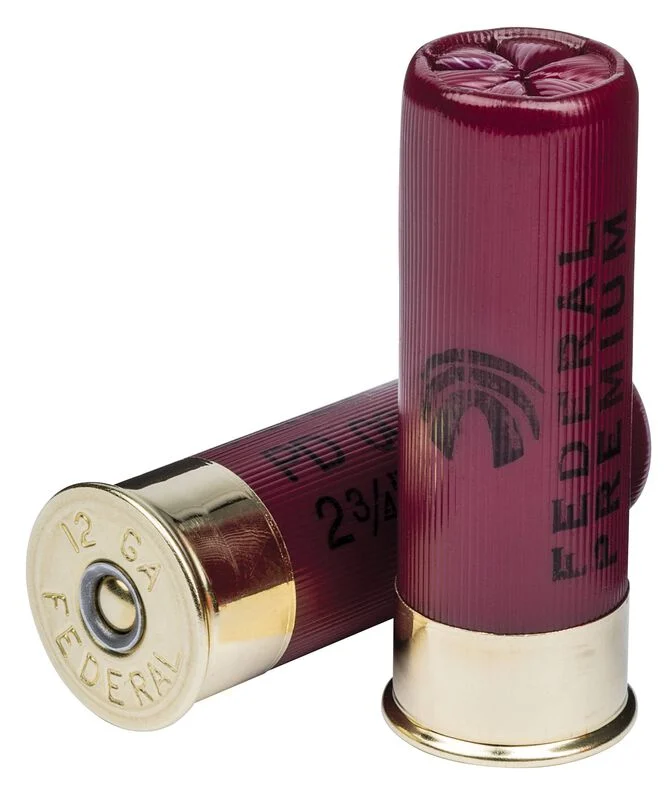
1. Federal FliteControl 00 Buck – Best Overall
- Gauge: 12
- Shot Size: 00 Buck
- Pellets: 8
- Velocity: 1,325 fps
- Wad: FliteControl
- MSRP: ~$1.50-2.00 per round
Pros
- FliteControl wad delivers dramatically tighter patterns than conventional 00 Buck
- 8 pellets of .33 caliber each meeting FBI penetration minimums
- 1,325 fps is sufficient for reliable performance without brutal recoil
- The most widely recommended defensive buckshot by instructors and trainers
- Works reliably in both pump and semi-auto shotguns
Cons
- More expensive per round than generic buckshot
- Sometimes harder to find than Winchester or Remington budget options
The FliteControl wad works by holding the shot column together longer after it leaves the barrel. The wad doesn’t release the pellets immediately at the muzzle. Instead, it stays with them for the first few feet of flight, which keeps the pattern dramatically tighter. Testing at 15 yards consistently shows patterns of 3-5 inches. Without FliteControl, that same distance might produce an 8-12 inch spread.
In practical home defense terms, this means that at typical hallway distances (5-15 yards), the FliteControl load hits essentially like a single projectile. All 8 pellets strike within a very small area, maximizing energy transfer and wound channel size. At longer distances (25+ yards), the pattern opens up appropriately. It’s the best of both worlds.
If you have a home defense shotgun and you’re not already running FliteControl, order it today. This is not a close call. Every serious shotgun instructor I’ve learned from uses this load or recommends it. It’s the standard against which other defensive buckshot is measured.
Best For: Anyone who wants the most effective, well-tested 00 Buck load available for home defense.
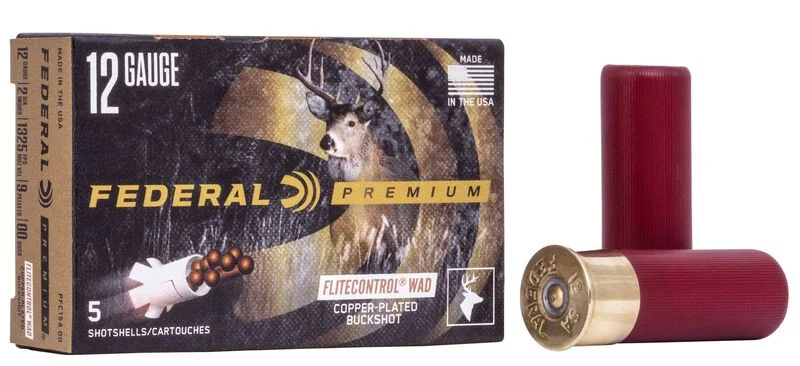
2. Federal FliteControl #1 Buck – Best #1 Buck
- Gauge: 12
- Shot Size: #1 Buck
- Pellets: 16
- Velocity: 1,350 fps
- Wad: FliteControl
- MSRP: ~$2.00-2.50 per round
Pros
- 16 pellets doubles the wound channel count vs standard 8-pellet 00 Buck
- Each #1 Buck pellet (.30 caliber) meets FBI minimum penetration in gel testing
- FliteControl keeps all 16 pellets on target at defensive distances
- Slightly less recoil than standard 00 Buck at similar velocity
- Particularly effective against multiple-threat scenarios (more pellets working)
Cons
- Less available than standard 00 FliteControl; may need to order online
- Higher price per round
This is actually my personal first choice for home defense buckshot, and I’ll explain why. More pellets means more wound channels. Every pellet that reaches the thoracic cavity and strikes a vital structure contributes to stopping a threat. The FliteControl #1 Buck throws 16 .30-caliber pellets that all stay in a tight pattern. That’s a lot of wound channels hitting a small area.
Each individual #1 Buck pellet is smaller than a 00 pellet (.30 caliber vs .33 caliber), but they still penetrate 12+ inches in FBI gel testing with the FliteControl wad controlling the pattern. The individual pellets are slightly less devastating than 00, but there are twice as many of them. The math works out favorably.
The availability issue is real. This load is harder to find at local gun shops than standard FliteControl 00. If you can’t find it locally, MidwayUSA usually has it in stock. Order a few boxes to test through your gun and stock what works.
Best For: Shotgunners who want maximum pellet count without sacrificing penetration, and don’t mind ordering online to get it.
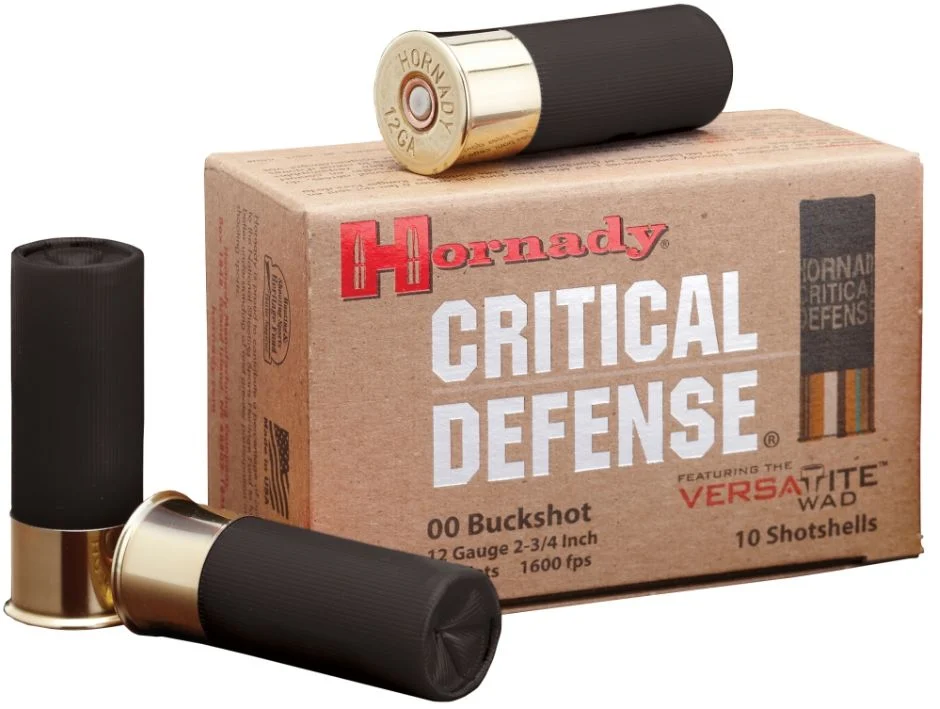
3. Hornady Critical Defense 00 Buck – Best Premium 00
- Gauge: 12
- Shot Size: 00 Buck
- Pellets: 8 (plus FTX wad disc)
- Velocity: 1,600 fps
- Wad: FliteControl-style with FTX Versatite wad
- MSRP: ~$2.00-2.50 per round
Pros
- 1,600 fps is significantly hotter than standard 00 Buck loads
- Hornady’s Versatite wad controls patterns comparably to FliteControl
- Premium components with nickel-plated shot for consistent performance
- The additional velocity gives each pellet more terminal energy
Cons
- Higher velocity means more felt recoil
- More expensive than Federal FliteControl, which performs comparably
Hornady’s Critical Defense shotgun load is the most widely marketed premium buckshot load that isn’t Federal FliteControl. The Versatite wad does a credible job of pattern control, and the 1,600 fps velocity gives each pellet noticeably more energy than standard velocity loads. That said, in head-to-head testing, it doesn’t clearly outperform Federal FliteControl in terminal performance.
If you can find it and the price is similar to FliteControl, it’s a perfectly valid choice. If you’re choosing between the two, I’d go FliteControl. The Critical Defense shines if you want a hot-loaded premium round and specifically want the Hornady name on it for legal/documentation reasons (some attorneys advise running “duty” or brand-name loads for post-incident clarity).
Best For: Home defenders who want a hot, premium 00 Buck option and specifically prefer the Hornady brand.
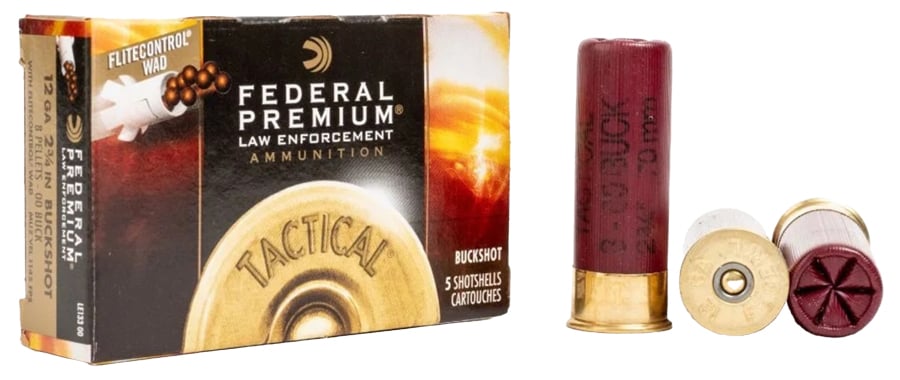
4. Federal Reduced Recoil 00 Buck – Best Low Recoil
- Gauge: 12
- Shot Size: 00 Buck
- Pellets: 8
- Velocity: 1,145 fps
- MSRP: ~$1.25-1.50 per round
Pros
- Significantly reduced recoil makes it easier to stay on target for follow-up shots
- Still meets FBI minimum penetration in gel testing
- Important for lighter-framed shooters, elderly shooters, or anyone recoil-sensitive
- Lower price per round than premium loads
- Recommended for semi-auto shotguns with recoil-operated actions (verify cycling)
Cons
- 1,145 fps is slower; pattern spreads slightly wider than standard velocity
- Not as tight a pattern as FliteControl at equivalent distances
- Verify your specific semi-auto cycles this load reliably (some may short-stroke)
A home defense shotgun that the shooter can’t control is worse than a pistol. If you’re a smaller person, an older shooter, or anyone for whom full-power 12 gauge is genuinely painful to shoot, reduced recoil buckshot is not a compromise: it’s the right answer. Controllability directly affects accuracy and follow-up shot speed. A fast second shot of reduced-recoil 00 Buck beats a slow, flinched second shot of standard power.
The terminal performance reduction from reduced recoil loads is minimal. FBI gel testing shows acceptable penetration and reasonable expansion from 1,145 fps loads. You’re not running bird shot; you’re still running 00 Buck. The difference between 1,145 fps and 1,325 fps matters less than some people suggest.
Best For: Smaller or recoil-sensitive shooters, and anyone who prioritizes fast follow-up shots over maximum per-shot energy.
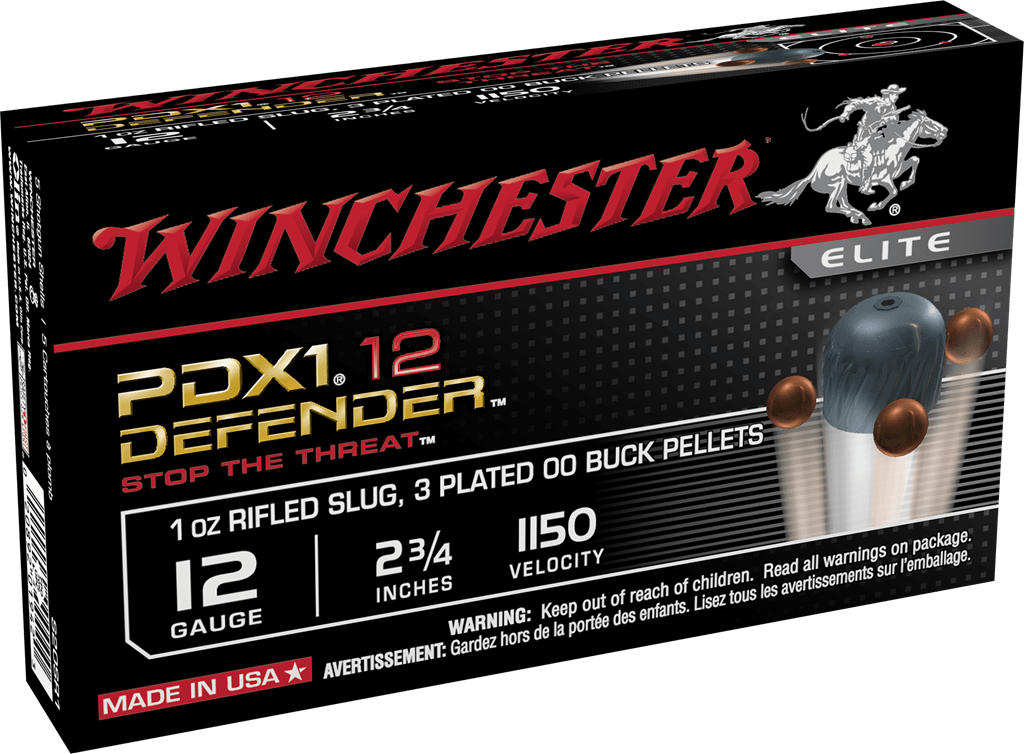
5. Winchester PDX1 Defender – Best Mixed Load
- Gauge: 12
- Contents: 1 rifled slug + 3 Defense Discs
- Velocity: 1,150 fps
- MSRP: ~$2.00-2.50 per round
Pros
- Unique load: slug + three large Defense Discs for a combined wound channel
- The slug provides deep penetration while discs create multiple wound channels
- More interesting terminal profile than pure buckshot
- Works well in smooth-bore cylinder or improved cylinder choked barrels
Cons
- Complex wound pattern can be harder to analyze post-incident
- Not the cleanest patterning option; discs can spread unpredictably
- The concept is compelling but it doesn’t clearly outperform FliteControl in testing
The PDX1 is the most creative defensive shotgun load on this list. Winchester combined one rifled slug with three scored Defense Discs in a single 12 gauge round. The idea is to get deep slug penetration and multiple wound channels simultaneously. In theory, it’s extremely effective. In practice, the patterning is less predictable than FliteControl buckshot and the concept is more interesting than the performance advantage justifies.
That said, it’s a legitimate defensive load. It patterns well at close quarters, the terminal ballistics are real, and it functions reliably in pump and semi-auto shotguns. If you want something that isn’t standard buckshot and the mixed-load concept appeals to you, it’s a valid choice. Just pattern test it through your specific gun and choke combination first.
Best For: Shooters who want a non-standard, innovative defensive load and have tested it for reliable function in their specific shotgun.
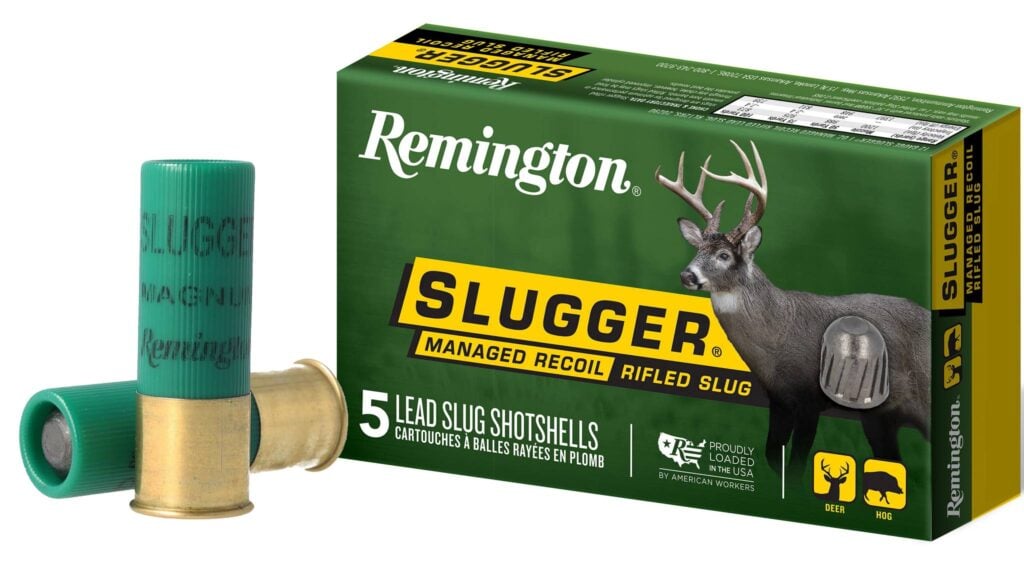
6. Remington Managed Recoil Slugs – Best Slug Option
- Gauge: 12
- Type: Foster-style rifled slug
- Slug Weight: 1 oz (437.5 gr)
- Velocity: 1,200 fps (managed recoil)
- MSRP: ~$0.75-1.00 per round
Pros
- Single projectile = zero ambiguity about where the hit goes
- 1 oz slug is devastating terminal performance at all home defense distances
- Managed recoil reduces the brutal push of full-power slugs
- Works in smooth bore, improved cylinder choked shotguns (no rifled barrel needed)
- Affordable enough to practice with
Cons
- Slugs over-penetrate more than buckshot. What you don’t hit with a slug will keep going far.
- Single projectile means a miss is a complete miss (no pellet spread helps you)
- Best suited for larger properties or rural settings rather than typical suburban homes
Slugs are the nuclear option for shotgun home defense. A 1-ounce rifled slug at 1,200 fps through soft tissue is as decisive as anything in the civilian defensive ammunition market. There’s no question about whether the projectile is going to stop a threat if it’s on target. The problem is the “on target” part: it’s a single projectile, and what it doesn’t hit keeps going.
For suburban homes with close neighbors, slugs are a significant liability. They penetrate too far. For rural property defense where the next structure is hundreds of yards away, or where threats might be at extended range (50+ yards), a slug is the right call. Match your ammunition to your environment.
Best For: Rural or large-property settings where over-penetration risk is low and single-projectile precision is preferred.
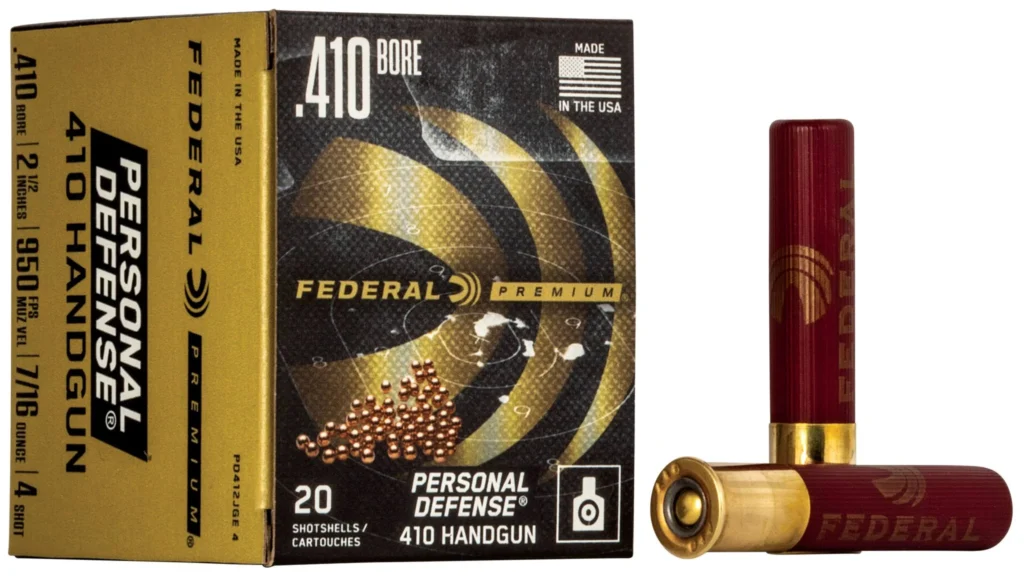
7. Federal Personal Defense .410 – Best .410 Option
- Gauge: .410
- Contents: 4 pellets #000 Buck
- Velocity: 1,225 fps
- MSRP: ~$1.50-2.00 per round
Pros
- The best .410 defensive load available; designed for platforms like the Taurus Judge and S&W Governor
- Very low recoil; suitable for shooters who genuinely cannot manage 12 gauge
- Four #000 pellets (.36 caliber) is a real defensive payload
Cons
- Four pellets is significantly less than 8-pellet 00 Buck; capacity per payload is lower
- .410 has fundamentally less terminal energy than 12 gauge; not the preferred choice
- Only relevant if you’re specifically using a .410-chambered platform
The .410 debate is simple: if you’re running a Taurus Judge, S&W Governor, or similar revolver/shotgun that chambers .410, use this load. If you have a choice between .410 and 12 gauge for home defense, choose 12 gauge every time. The terminal performance difference is real and significant.
That said, for the specific platforms that chamber .410, Federal Personal Defense is the best option available. Four .36-caliber pellets at 1,225 fps is a legitimate defensive payload if you can’t or won’t use 12 gauge. It beats birdshot dramatically and it beats handgun FMJ in certain scenarios.
Best For: Taurus Judge, S&W Governor, and dedicated .410 platform users who need the best available .410 defensive load.
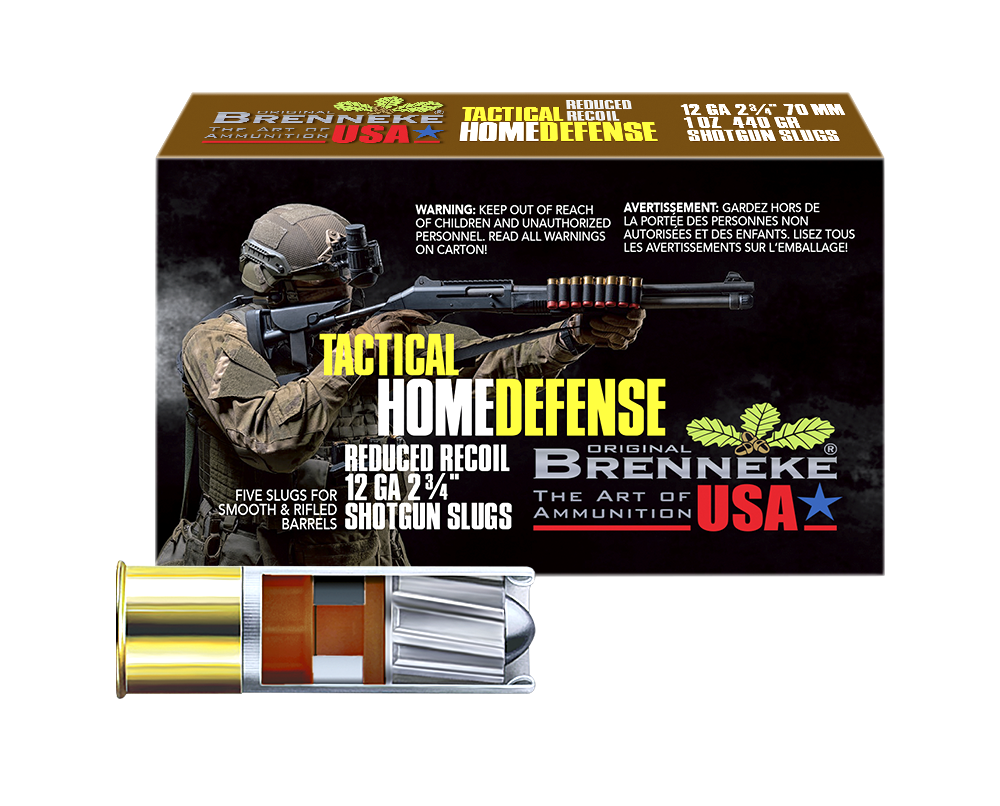
8. Brenneke Home Defense Slug – Best Dedicated Slug
- Gauge: 12
- Type: Brenneke-style attached wad slug
- Slug Weight: 1 oz
- Velocity: 1,312 fps
- MSRP: ~$1.25-1.75 per round
Pros
- Brenneke wad-attached design is the most accurate slug type in smooth bore barrels
- 1,312 fps provides excellent terminal energy
- More accurate than Foster-style slugs at extended range
- The attached wad prevents the slug from tumbling in flight
Cons
- Like all slugs, over-penetration is a real concern in close-quarters residential environments
- More expensive than standard Foster slugs
Brenneke’s slug design uses an attached wad that stays with the slug after firing, stabilizing it in flight and producing better accuracy from smooth-bore barrels than Foster-style slugs. At home defense distances this accuracy advantage is minor, but at 25+ yards, Brenneke slugs are noticeably more consistent. The 1,312 fps velocity is brisk for a slug load and produces excellent terminal performance.
The same over-penetration cautions apply as with any slug. Know your environment before choosing a slug load.
Best For: Smooth-bore shotgun users who want maximum slug accuracy, particularly at longer home or property defense distances.
Frequently Asked Questions
‘What is the best home defense shotgun ammo?’, ‘a’ => ‘Federal FliteControl 00 Buck or #1 Buck. The FliteControl wad technology produces dramatically tighter patterns than conventional buckshot, which means more pellets hit exactly where you’re aiming at defensive distances. Between 00 and #1, I prefer #1 Buck for the additional pellet count (16 vs 8), but both are excellent choices.’],
[‘q’ => ‘Is 00 buck or #1 buck better for home defense?’, ‘a’ => ‘Both are effective. #1 Buck gives you 16 pellets of .30 caliber vs 8 pellets of .33 caliber in 00 Buck. More pellets means more simultaneous wound channels. Individual #1 pellets are slightly smaller but still meet FBI penetration standards. With the FliteControl wad controlling pattern, both stay on target at defensive distances. #1 Buck has a slight edge on paper; 00 Buck is more widely available.’],
[‘q’ => ‘Will birdshot kill an intruder?’, ‘a’ => ‘Not reliably. Birdshot is designed for birds. At typical home defense distances, birdshot creates a surface wound that looks terrible but doesn’t reliably penetrate to vital structures. Multiple independent tests in ballistic gel confirm that birdshot stops before reaching adequate penetration depth. Do not use birdshot for home defense. Run buckshot.’],
[‘q’ => ‘Does reduced recoil ammo reduce effectiveness?’, ‘a’ => ‘Minimally. FBI penetration standards are met by quality reduced recoil buckshot loads. The terminal performance reduction from 1,325 fps to 1,145 fps is real but modest. The controllability gain is significant. For smaller shooters, the reduced recoil load is actually the right choice because it enables faster, more accurate follow-up shots. Don’t let anyone tell you reduced recoil is unsuitable for defense.’],
[‘q’ => ‘Can I use slugs for home defense?’, ‘a’ => ‘You can, with important caveats. Slugs provide decisive single-projectile performance but over-penetrate significantly more than buckshot. In a suburban setting with adjacent rooms occupied by family, or neighbors close by, buckshot is a safer choice. In a rural or large property setting where over-penetration risk is lower, slugs are legitimate. Know your environment before making this call.’],
[‘q’ => ‘Does choke affect buckshot performance?’, ‘a’ => ‘Yes. Most defensive buckshot performs best through a cylinder (no choke) or improved cylinder choke. Tighter chokes like modified or full can damage buckshot pellets and actually cause worse patterning. The FliteControl wad is designed to work optimally with cylinder to improved cylinder. Check the manufacturer’s recommendation for your specific load.’],
[‘q’ => ‘How many rounds of buckshot should I keep on the gun?’, ‘a’ => ‘As many as your shotgun holds plus whatever you can access quickly. A standard pump like the Mossberg 500 holds 5+1 or 8+1 depending on barrel length and configuration. A side saddle adds 4-6 more rounds accessible immediately. You won’t need 20 rounds for a home defense scenario, but more available rounds without reloading is always better. Add a side saddle to your home defense shotgun.’],
[‘q’ => ‘What’s wrong with using regular hunting buckshot for home defense?’, ‘a’ => ‘Standard hunting buckshot uses conventional cup wads that allow the pattern to spread immediately at the muzzle. At 10-15 yards, a typical 00 Buck hunting load might pattern 8-12 inches, meaning several pellets go wide of the aiming point. In a hallway with family members in adjacent rooms, that’s a serious concern. FliteControl wad technology reduces that spread to 2-4 inches at the same distances. The pattern control difference is the entire reason to buy defensive-specific buckshot.’],
];
foreach ($faqs as $i => $faq) {
echo ‘
echo ‘‘ . ($i+1) . ‘. ‘ . esc_html($faq[‘q’]) . ‘‘;
echo ‘
‘ . esc_html($faq[‘a’]) . ‘
‘;
echo ‘
‘;
}
?>
Author

14,522+ Gun & Ammo Deals
Updated daily from 10+ top retailers. Filter by category, caliber, action type, and price.
Related Guides