

Affiliate disclosure: This Glock 27 Gen 5 review contains affiliate links. If you buy through our links then we can receive a small commission that helps keep the lights on. You don’t pay anything more.
- Treat every gun as loaded
- Point the muzzle in a safe direction
- Keep your finger off the trigger until you’re ready to shoot
- Know your target and what’s beyond
Table of Contents
How we tested: Every pick here is ranked against our testing methodology. Minimum round counts, accuracy and reliability protocols, the failures that disqualify a gun.
Review: Glock 27 Gen 5 – The .40 Cal Pocket Rocket
Our Rating: 7.5/10
- RRP: $647
- Street Price: $479-$569 (Check our live pricing for the best current deal)
- Caliber: .40 S&W
- Action: Safe Action (striker-fired)
- Barrel Length: 3.43 in / 87 mm
- Overall Length: 6.43 in / 163 mm
- Height (with mag): 4.21 in / 107 mm
- Width: 1.32 in / 33.5 mm
- Weight (unloaded): 21.91 oz / 621 g
- Capacity: 9+1 (accepts Glock 22/23 mags)
- Frame Material: Polymer (Gen 5 nylon-reinforced)
- Slide Material: Steel, nDLC finish
- Sights: Fixed polymer white-dot front / white-outline rear
- Optics: Not optics-ready (no MOS variant)
- Safety: Trigger safety, firing pin safety, drop safety
- Grip: Modular backstrap system with beavertail
- Made in: Smyrna, Georgia, USA
Pros
- Absurdly reliable: 500 rounds, zero malfunctions across six ammo brands
- Accepts Glock 22 and 23 full-size mags for 13+1 or 15+1 reload backup
- Gen 5 Marksman barrel + nDLC finish are real improvements over Gen 3/4
Cons
- Snappy .40 S&W recoil demands real grip discipline and fatigues hands fast
- 9+1 capacity is thin for 2026 when micro-9s hold 13+
- Discontinued late 2025: no MOS option and shrinking aftermarket
Quick Take
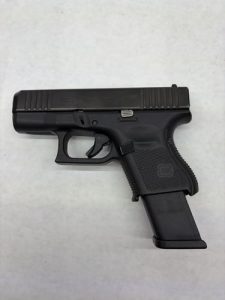
The Glock 27 Gen 5 is a strange gun to review in 2026. Glock officially discontinued it in late 2025, which means we’re looking at a pistol that’s simultaneously a proven law enforcement workhorse and a soon-to-be relic of the .40 S&W era. I put 500 rounds through mine to see if it still deserves a spot in the conversation. Short answer: it depends entirely on how you feel about .40 caliber.
If you’re already a .40 S&W believer, this is the smallest, most concealable way to carry that round from a major manufacturer. The Gen 5 upgrades are real.
The Marksman barrel tightened my groups noticeably compared to the Gen 3 I carried for years. The flared magwell actually matters on a gun this small. And the ambidextrous slide stop is a welcome addition for lefties.
But let’s not sugarcoat it. This thing kicks. It kicks in a way that makes follow-up shots genuinely harder than they need to be. And when the Glock 26 in 9mm or a Glock 43X gives you comparable or better capacity with half the felt recoil, you have to seriously ask yourself what .40 S&W buys you in 2026 that modern 9mm defensive ammo doesn’t.
Best For: Experienced shooters who are already invested in the .40 S&W platform, big-handed guys who want a concealable backup that shares mags with their Glock 22 or 23 duty gun, and anyone who just likes hitting harder at the cost of capacity.
Why Glock Built the G27 This Way
Rewind to 1996. The FBI had just made the switch to .40 S&W, and every law enforcement agency in America was scrambling to follow suit. Glock already had the G22 and G23 eating up duty holsters across the country.
Cops needed something smaller for plainclothes work, ankle holsters, and off-duty carry. The G27 was the answer.
Concept was simple and, honestly, kind of genius. Take the subcompact G26 frame, beef up the internals to handle .40 S&W pressure, and give detectives a backup gun that could eat the same magazines as their duty weapon.
One caliber. One magazine type. Total logistics simplicity. That’s the kind of thinking that sold millions of Glocks to agencies that didn’t want to think about logistics at all.
Gen 5 update landed quietly. Glock added the Marksman barrel with improved rifling, the flared magwell, an ambidextrous slide stop, and their modular backstrap system. No finger grooves this time. The nDLC finish replaced the older Tenifer process, giving the slide better corrosion resistance and a cleaner matte look.
Here’s the thing Glock couldn’t fix: physics. You’re still cramming a cartridge that generates 35,000 PSI into a pistol that weighs 22 ounces empty. The .40 S&W was designed for duty-size guns, and the G27 is barely larger than a deck of cards. Something has to give, and that something is your wrists after a couple hundred rounds.
Then came the discontinuation in late 2025. Glock pulled the G26, G27, and G33 from the active lineup as part of their transition away from Gen 5.
The writing was on the wall. The market had moved on from .40 S&W. Modern 9mm hollow points close the performance gap.
The G27 Gen 5 exists now as a sort of last hurrah for a caliber that dominated law enforcement for two decades and is slowly fading from the spotlight.
Glock 27 Variants
Glock built the G27 across three generations from 1996 through 2025, when the model was officially discontinued. Here is how the variants differ and which one you are actually looking at on the used market.
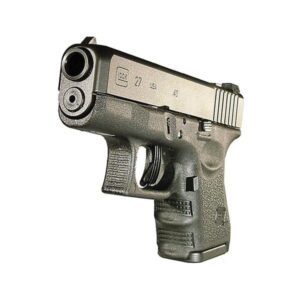
Glock 27 Gen 3 $399-$499 used
Best For: buyers who hate finger grooves on Gen 4s and want the simplest, cheapest entry into the G27 platform on the used market.
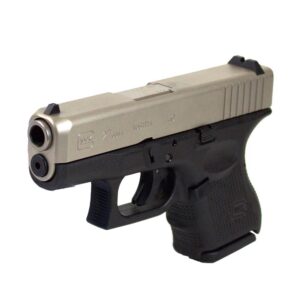
Glock 27 Gen 4 $449-$549
Best For: shooters who want the dual-spring recoil mitigation and modular backstraps but still need the older Gen 4 finger-groove ergonomics.
Glock 27 Gen 5 $479-$569
Best For: buyers who want the most accurate and best-finished Glock 27 ever produced, before remaining new stock dries up.
Competitor Comparison
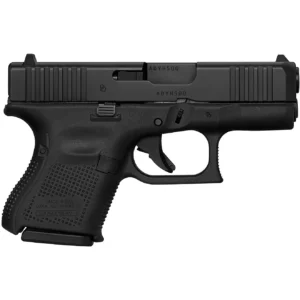
Glock 26 Gen 5 (9mm) $479-$539
The G26 also accepts Glock 17 and 19 mags. Unless you’re specifically committed to .40 S&W, the G26 is the better pistol for most people.
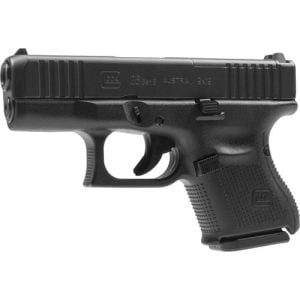
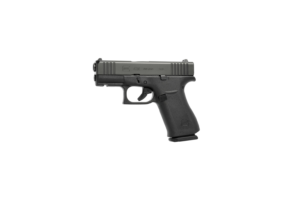
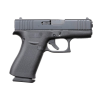
Glock 43X $449-$519
The G27 fights back with stubbier height that vanishes in a pocket or ankle holster where the 43X’s longer grip would print. Deep concealment to the G27; appendix/IWB to the 43X.
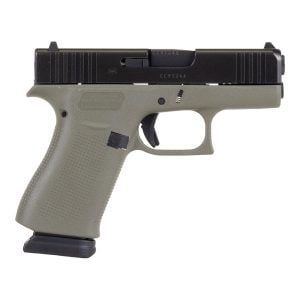
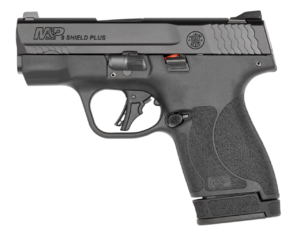
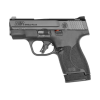
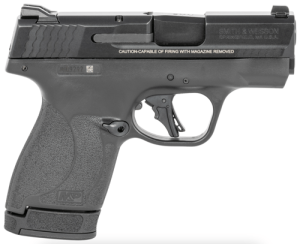
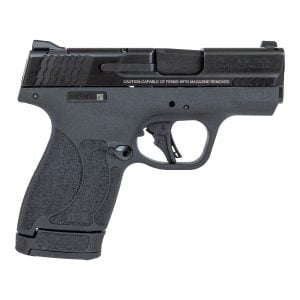
S&W Shield Plus (9mm) $399-$479
The G27 wins on aftermarket ecosystem and mag-share with Glock 22/23. If you don’t already own a Glock 22 or 23, the Shield Plus is the better buy.
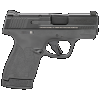
S&W M&P 2.0 Compact .40 $449-$529
Tradeoff is concealability. This is a compact, not a subcompact. IWB only; no ankle work.
Sig Sauer P320 Compact .40 $449-$519
But .40 P320s are drying up on dealer shelves as Sig pushes 9mm hard. Solid alternative if you can find one; availability is the real concern.
| Dimension | Glock 27 Gen 5 | Glock 26 Gen 5 | Glock 43X | S&W Shield Plus | M&P 2.0 Compact .40 | P320 Compact .40 |
|---|---|---|---|---|---|---|
| Caliber | .40 S&W | 9mm | 9mm | 9mm | .40 S&W | .40 S&W |
| Capacity (flush) | 9+1 | 10+1 | 10+1 | 13+1 | 13+1 | 13+1 |
| Street Price (2026) | $479-$569 | $479-$539 | $449-$519 | $399-$479 | $449-$529 | $449-$519 |
| Felt Recoil | Snappy | Soft | Soft | Soft | Manageable | Manageable |
| Optic-Ready (factory) | No | No | No (43X MOS yes) | Yes (OR) | Yes | Yes |
| Trigger Out-of-Box | Glock standard | Glock standard | Glock standard | Flat-faced | M&P 2.0 | Sig flat blade |
| Mag-Share Advantage | G22/G23 mags | G17/G19 mags | Proprietary | Proprietary | M&P family | FCU swap |
| Best For | .40 ecosystem backup | 9mm deep concealment | Slimline IWB | Budget micro-9 | .40 shootability | Modular .40 |
Read the chart this way: the G27 wins on the .40 S&W ecosystem mag-share with full-size Glock 22/23 duty guns. It loses on capacity, recoil, optic-readiness, and price against every modern 9mm micro-compact. The .40 caliber is the entire decision.
Features and Quirks
Frame and Construction
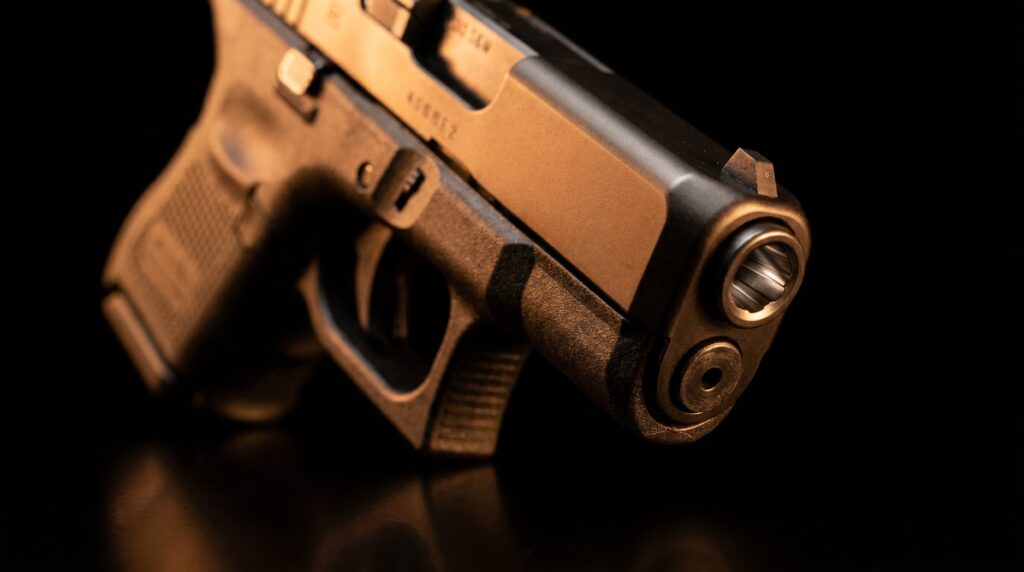
Gen 5 frame ditches the finger grooves that Glock insisted on for two generations. Good riddance. The old grooves never lined up right unless you had exactly Glock-engineer-sized hands. The new texture is aggressive enough to hold during recoil without feeling like 40-grit sandpaper against your skin during all-day carry.
The modular backstrap system gives you two insert options plus the bare frame. I ran the medium beavertail and it helped manage the muzzle flip noticeably compared to running it bare. If you have large hands, you’ll want that beavertail on there. It pushes your grip higher into the tang and gives you more leverage against the .40’s snap.
One thing to note: the Gen 5 .40 S&W models have a slightly wider slide than previous generations. It’s not dramatic, maybe a hair over a millimeter, but if you’re trying to use an old Gen 3 holster, check the fit. Some Kydex rigs will need a heat adjustment or replacement.
The Marksman Barrel
Glock’s Marksman Barrel is the single biggest improvement in the Gen 5 lineup. The improved rifling profile gives tighter groups than the old hexagonal rifling. At 10 yards from a bench rest, I was getting 3-inch groups with Federal HST 180 grain. That’s solid for a 3.43-inch barrel in .40 S&W.
Push out to 15 yards and those groups opened to around 4.5 inches. At 25 yards, we’re talking about 6 inches on a good day. That short sight radius is the limiting factor. The barrel is mechanically capable of better accuracy than most shooters can extract from a gun this small, especially with the recoil impulse working against you.
Trigger Feel
Standard Glock Safe Action trigger. About 5.5 pounds of pull with that familiar mushy takeup, a wall, and a relatively clean break.
Reset is audible and tactile. It’s fine. Not great, not terrible. Just fine.
Here’s my honest take: the trigger matters less on this gun than on most Glocks because the recoil is doing most of the work to throw off your follow-up shots. You could drop a $150 aftermarket trigger in here and your splits would barely improve because the snap of .40 S&W in a 22-ounce gun is the bottleneck, not the trigger. Save your money for ammo and practice.
Sights: The Weak Link
Stock polymer sights are the worst thing about this gun. Full stop. They’re the same flimsy plastic units Glock has been shipping since forever, and on a defensive pistol that costs north of $500, there’s no excuse. They work for basic range shooting, but they have a known reputation for chipping during one-handed slide manipulations and wearing down from holster draw repetitions.
Budget $50-$80 for Ameriglo or Trijicon night sights. Consider it part of the purchase price, because you’re going to replace these within the first month of ownership. Everyone does.
Magazine Compatibility: The G27’s Secret Weapon
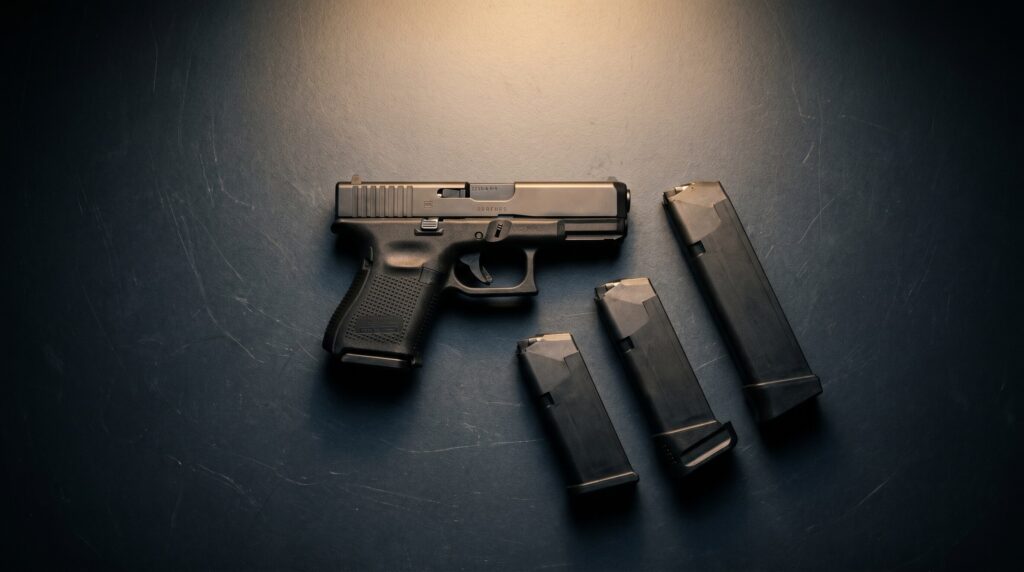
This is where the Glock 27 punches way above its weight class. The flush-fit magazine gives you 9+1. Fine for a pocket gun.
Drop a Glock 23 magazine in there and you’ve got 13+1 with a small baseplate extension that actually improves your grip. Go full send with a Glock 22 magazine and you’re at 15+1.
That magazine compatibility is the entire selling proposition for the G27 in a world that’s moved to 9mm. You carry the subcompact on your person with a flush mag, and your nightstand Glock 22 mags become your reloads.
One caliber across your carry gun and your home defense gun. One set of spare magazines. If you’re a .40 S&W household, this system makes a lot of practical sense.
A heads up on Magpul GL9 magazines: some Gen 5 owners report interference between the ambidextrous slide release and Magpul mags. Stick with OEM Glock magazines for this pistol. Not worth the risk on a carry gun.
At the Range: 500-Round Test Protocol
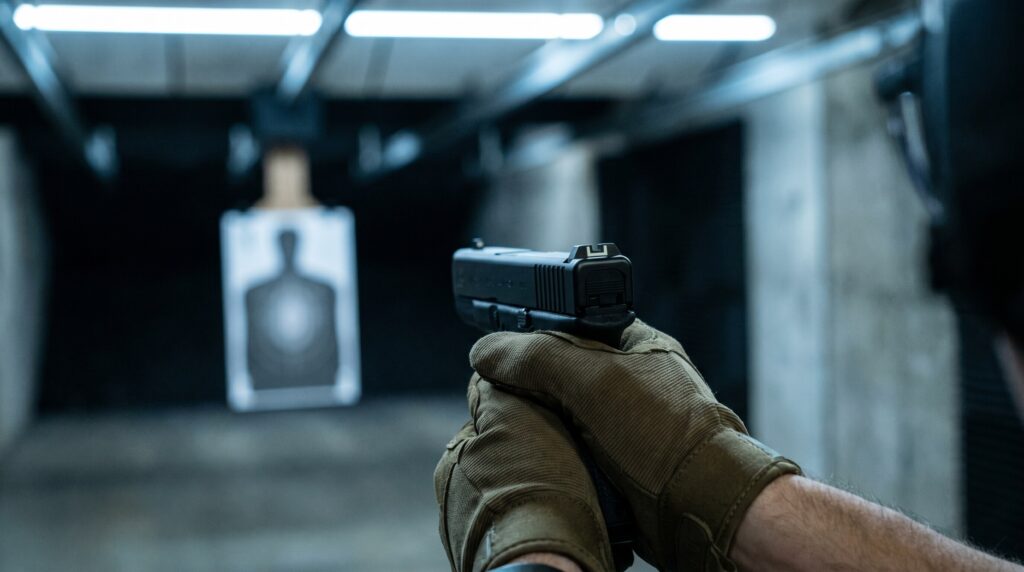
Break-In Period
G27 Gen 5 needed no break-in. First magazine, first round, it ran. Glock doesn’t do break-in periods. They do Glocks.
I gave it a light oiling before the first range trip because I always do, but the gun was ready to go out of the box.
First 50 rounds were S&B 180 grain FMJ. Cheap, consistent, and a good baseline. Everything fed, fired, and ejected without a hiccup.
The brass ejection pattern was consistent, throwing cases to about 4 o’clock at roughly 8 feet. Clean ejection.
Reliability Testing
Over 500 rounds across three range sessions, the G27 Gen 5 had exactly zero malfunctions. None. Not a single failure to feed, failure to eject, or light primer strike. It ate everything I put through it without complaint.
Here’s the ammo log:
- Sellier & Bellot 180 gr FMJ: 150 rounds
- Federal American Eagle 180 gr FMJ: 100 rounds
- Winchester White Box 165 gr FMJ: 80 rounds
- Blazer Brass 180 gr FMJ: 70 rounds
- Federal HST 180 gr JHP: 50 rounds
- Hornady Critical Defense 165 gr FTX: 50 rounds
The defensive loads ran identically to the practice ammo. Both the Federal HST and Hornady Critical Defense fed from flush mags and extended G23 mags without issues. That matters because some subcompacts get picky with hollow points, and the G27 clearly doesn’t care what you feed it.
Accuracy Testing
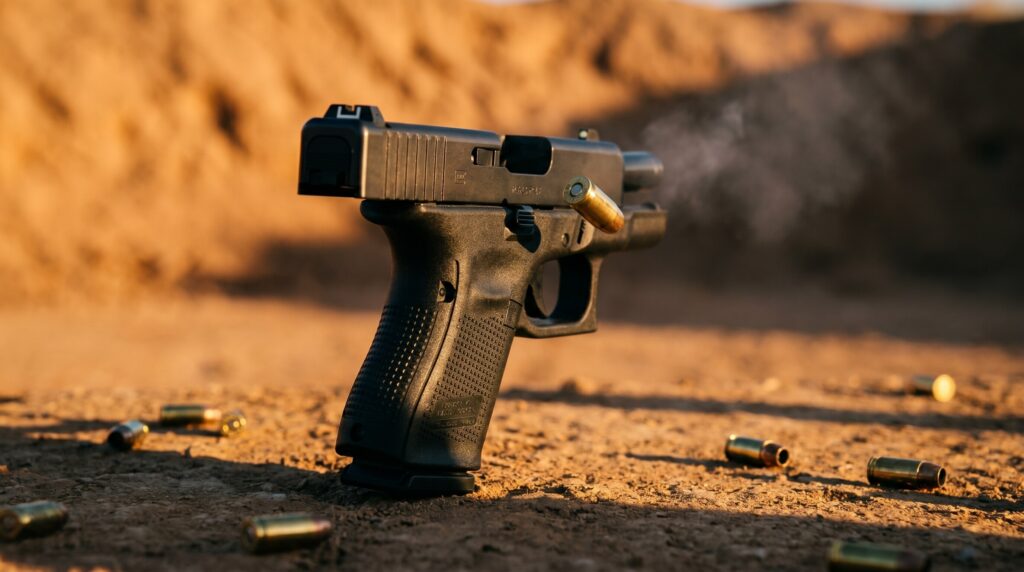
I benched the gun at 10 yards with Federal HST 180 grain and got my best 5-round group at 2.8 inches. Average across five groups was closer to 3.2 inches. That’s respectable for a subcompact with a 3.43-inch barrel.
Standing unsupported at 7 yards, which is the range that actually matters for this gun’s intended purpose, I was keeping everything inside a 3-inch circle shooting at a deliberate pace. Speed it up to combat tempo and those groups grew to about 5 inches. The snappy recoil makes fast follow-ups harder than they’d be with a 9mm of the same size. I noticed I was developing a flinch by round 200 that I had to actively fight.
At 15 yards offhand, the short sight radius really makes itself known. I could keep rounds on a silhouette all day, but precision headshots or small target work requires deliberate concentration. This is a belly gun, not a bullseye pistol. Know what you’re buying.
Performance Testing Results
Reliability: 10/10
Five hundred rounds across six ammunition types with zero malfunctions. That’s the Glock promise, and the G27 Gen 5 delivers.
The gun ran dirty too. I intentionally skipped cleaning between the second and third range sessions, about 200 rounds on a filthy action, and it didn’t care.
The extractor pulled cleanly every time. The ejector kicked brass consistently. The magazines dropped free without hesitation.
A Glock that doesn’t run is a defective Glock. This one runs.
Accuracy: 7/10
Mechanically, the Marksman barrel is more accurate than most shooters will ever realize from this platform. The limiting factors are the short sight radius and the recoil impulse. If you bench this gun and eliminate the human element, it’ll surprise you. In real shooting conditions, it’s adequate for defensive work inside 10 yards and workable out to 15.
Compared to the G26 in 9mm, accuracy is roughly equivalent from a bench, but practical accuracy under rapid fire is worse due to the additional recoil. The .40 S&W doesn’t make the gun less accurate. It makes the shooter less accurate.
Ergonomics and Recoil: 6/10
Let’s be real about this. The Glock 27 is not fun to shoot in extended sessions. The first 100 rounds are fine.
By 150, your support hand is feeling it. By 200, you’re actively thinking about how much your palm webbing hurts.
The combination of a short grip, a lightweight polymer frame, and .40 S&W pressures creates a recoil impulse that’s sharp and snappy rather than the rolling push of a full-size .40.
Backstrap inserts help. The medium beavertail pushes your hand up into the tang and gives you better purchase against muzzle flip.
No backstrap is going to change the fundamental physics of this gun. It snaps. You feel it. After 500 rounds over three sessions, my hand was done.
For carry purposes, the ergonomics are solid. The gun is small enough to disappear in an IWB holster. It sits in a pocket holster without printing in loose pants.
The rounded trigger guard doesn’t dig during all-day carry. It’s comfortable to carry. Just not comfortable to shoot a lot.
Fit, Finish, and QC: 7/10
NDLC slide finish is excellent. Better than the old Tenifer in terms of wear resistance and aesthetics. My test gun showed zero holster wear after repeated draws from a Kydex rig.
The frame molding is clean with no flash or rough spots. The slide-to-frame fit has minimal play.
Deduction comes from those stock sights and the general lack of refinement that’s just part of the Glock experience. You’re paying for function, not luxury. The polymer sights feel out of place on a gun at this price point when competitors like the Shield Plus ship with steel sights standard.
What Owners Are Saying

I dug through forums and owner discussions to see if my experience matched the broader community. Here’s what Glock 27 owners are saying:
A long-time owner on GlockTalk with 17,000 rounds through his G27 called it “my second favorite Glock,” noting it’s run flawlessly since the early 2000s. That kind of long-term track record is hard to argue with. Another carry-focused owner said, “I would be very happy if it was all that I had to carry.” Strong endorsement from someone who depends on it daily.
One law enforcement chaplain praised the G27’s ability to deliver “very accurate fast” under stress, calling it better than most in that regard. A forum member who runs appendix carry noted the G27 is “just fine” for that role where the larger G23 was “just a bit too long for comfort.”
Not everyone’s a fan though. One honest owner on GlockForum admitted, “I just could not fire the weapon accurately… there was absolutely nothing about the pistol I liked.”
Another owner straight up said, “I hated it in .40 S&W” before converting his with a 9mm barrel.
The recoil is the consistent dividing line. People who manage it love the gun. People who don’t, hate it.
The advice from the community is consistent: put at least 500 rounds through it before you trust it for carry. Not because of reliability concerns, but because you need that many rounds to build the grip discipline this gun demands.
Known Issues and Common Problems
Locking Block Pin Walk
Some owners report the locking block pin migrating or “walking” after extended firing. The Gen 5 design eliminated the second pin that older generations used.
The .40 S&W’s higher pressure can stress the single-pin setup over thousands of rounds. This is a long-term concern, not something you’ll see in the first 1,000 rounds.
Check the pin periodically during cleaning and replace it if you notice movement. Use OEM Glock pins only. Aftermarket steel pins don’t flex with the polymer frame and can crack things.
Limp-Wrist Sensitivity
G27 is more sensitive to limp wristing than its 9mm siblings. The .40 S&W’s higher bolt thrust combined with the lightweight frame means the gun needs a firm grip to cycle reliably.
I had zero malfunctions in my test, but I’m also gripping this thing like I owe it money.
New shooters or anyone with weak grip strength may experience stovepipes or short-stroking until they develop the proper hold. This isn’t a defect. It’s physics.
Recoil Spring Wear
The .40 S&W puts more stress on the recoil spring than 9mm does. Glock’s recommended replacement interval is around 3,000-5,000 rounds for the .40 caliber subcompacts, compared to the longer intervals 9mm Glocks enjoy. If you’re a high-volume shooter, budget for spring replacements. They’re cheap, about $10, but forgetting to replace them leads to erratic ejection patterns and eventually cycling issues.
Aftermarket Magazine Compatibility
Ambidextrous slide stop on the Gen 5 can interfere with some aftermarket magazines. Magpul GL9 mags in particular have mixed reports.
OEM Glock magazines work perfectly. ETS magazines seem fine.
If you’re tempted by cheap Korean mags or other off-brand options, test them thoroughly before trusting them for carry. Spending $25 on a Glock OEM mag is money well spent.
Parts, Accessories, and Upgrades
Glock aftermarket is enormous, and the G27 benefits from sharing parts with the G26 and the broader subcompact Glock family. Here’s what actually makes a difference on this gun versus what’s just throwing money at it.
| Upgrade Category | Recommended | Why It Matters | Cost Estimate |
|---|---|---|---|
| Night Sights | Trijicon HD XR or Ameriglo Bold | Stock plastic sights are the #1 weakness, night sights are mandatory for a carry gun | $80-$130 |
| Extended Magazine | OEM Glock 23 magazine (13 rd) | Turns the G27 into a 13+1 compact with better grip purchase | $25-$30 |
| Magazine Extension | Pearce PG-2733 grip extension | Adds pinky room to flush mags without adding concealable length | $10-$12 |
| Recoil Spring | OEM Glock recoil spring assembly | Replace every 3,000-5,000 rounds to maintain reliable cycling | $10-$15 |
| Holster | Vedder LightTuck or Tulster Profile | Quality Kydex IWB that accounts for the Gen 5’s slightly wider slide | $55-$75 |
What I wouldn’t bother with: aftermarket triggers, extended slide releases, or stippling. The trigger isn’t the bottleneck on this gun. Recoil is.
The slide release works fine. And stippling a $550 discontinued Glock feels like putting racing stripes on a minivan.
Put that money toward ammo and range time instead. You’ll get more out of practice than you will out of parts.
For accessories, check Brownells for Glock-specific parts and Palmetto State Armory for magazines and holsters. MidwayUSA typically has the best selection of Glock night sights.
Who Should NOT Buy the Glock 27 Gen 5
The Glock 27 is genuinely the wrong pistol for several buyer profiles. If any of these describe you, save the resale hassle and pick something else.
- First-time concealed carriers without a .40 ecosystem: if you’re buying your first carry gun and don’t already own a Glock 22 or 23 duty gun, the mag-share advantage is meaningless to you. Get a Glock 26 Gen 5 or Glock 43X in 9mm instead. Less recoil, more rounds, cheaper ammo.
- Recoil-sensitive or small-framed shooters: the .40 S&W in a 22-ounce subcompact is a punishing combination. If you’re new to shooting, have small hands, or finish range sessions with sore wrists, this gun will reinforce every bad habit you’ve already built. Pick a Sig P365 or Springfield Hellcat in 9mm.
- Red-dot optic buyers: the G27 was discontinued before the MOS treatment came to subcompact Glocks, so there’s no factory optic cut. Aftermarket slide milling runs $200-$300. If you want a pistol-mounted optic out of the box, look at the Hellcat OSP, Shield Plus OR, or the Glock 43X MOS.
- High-volume range shooters: .40 S&W ammo costs roughly 30% more than equivalent 9mm in 2026, and the G27 chews recoil springs every 3,000-5,000 rounds. If you’re putting 200+ rounds through your carry gun weekly, a Glock 19 in 9mm will save you a small fortune and last longer between parts replacements.
- Future-proofing buyers: Glock discontinued the G27 in late 2025. Holsters, mags, and OEM parts will keep getting harder to find over the next 5-10 years. If you want a carry gun you can resupply and resell easily a decade from now, buy a current-production Glock 43X or S&W Shield Plus instead.
The .40 S&W Question in 2026
I can’t review the Glock 27 without addressing the elephant in the room. Is .40 S&W still worth carrying in 2026?
The honest answer is complicated. Modern 9mm defensive ammo, things like Federal HST 147 grain or Speer Gold Dot, has closed the terminal performance gap to the point where the FBI itself switched back to 9mm.
The .40 S&W still hits harder on paper. It still makes bigger holes.
The margin is narrower than it was in 2005, and you’re paying for that margin with reduced capacity, increased recoil, faster parts wear, and more expensive ammo.
That said, .40 S&W isn’t garbage. It’s a proven defensive cartridge with decades of real-world results.
If you can shoot it well, and that’s the key qualifier, it’s still an effective choice.
The G27 in particular makes sense for anyone who already runs a Glock 22 or 23 and wants magazine commonality. That’s a legitimate, practical advantage that 9mm can’t match in this specific ecosystem.
Where I draw the line: if you’re starting from scratch and don’t have a .40 S&W collection to build around, there’s very little reason to choose the G27 over the G26 or a Glock 43X in 9mm. The math just doesn’t work out in .40’s favor for new buyers in 2026.
The Verdict
Glock 27 Gen 5 is a flawlessly reliable, absurdly compact .40 S&W pistol that does exactly what Glock designed it to do 30 years ago. It runs. It conceals. It hits hard.
The Gen 5 improvements are meaningful, with the Marksman barrel being the standout upgrade that actually changes how the gun shoots.
But it’s a gun fighting against the current. The .40 S&W is fading from mainstream carry. The capacity deficit against modern 9mm micro-compacts is real.
The recoil in a package this small demands more from the shooter than most alternatives.
With Glock discontinuing the model, parts availability and resale value are question marks going forward.
For the right person, the Glock 27 Gen 5 is still a solid choice. If you’ve got Glock 22 or 23 mags sitting in a drawer, if you’ve trained with .40 S&W and manage the recoil confidently, if you want the smallest possible .40 from a proven manufacturer, this is your gun. Buy one while you still can, because they aren’t making more.
For everyone else, the Glock 26 in 9mm does the same job with less pain. And the Glock 43X or Shield Plus do it better for most concealed carriers. The G27 is a great gun from a different era. Respect it, but make sure you’re buying it for the right reasons.
Final Score: 7.5/10
Best For: Experienced .40 S&W shooters who want deep concealment and magazine compatibility with their Glock 22/23, law enforcement backup duty, and big-handed shooters who need a powerful pocket gun they can actually grip.
Prefer the compact over the subcompact? Read our Glock 23 review.
FAQ: Glock 27 Gen 5
Is the Glock 27 still being made in 2026?
No. Glock officially discontinued the Glock 27 in late 2025 as part of their transition away from Gen 5 .40 S&W subcompacts. New old-stock Gen 5 G27s remain available at dealers but no new production is happening. Used Gen 3 and Gen 4 G27s are widely available and aftermarket support for the platform remains strong for the next several years.
What magazines fit the Glock 27?
The Glock 27 takes flush-fit 9-round G27 magazines as standard. It also accepts 13-round Glock 23 magazines and 15-round Glock 22 magazines for higher capacity, with a baseplate extension or magazine sleeve to fill the grip gap. This magazine compatibility with full-size Glock 22 and 23 duty pistols is the G27 secret advantage. Stick to OEM Glock magazines for carry use.
Is the Glock 27 Gen 5 good for concealed carry?
Yes, the Glock 27 Gen 5 is one of the most concealable .40 S&W pistols ever made. Its subcompact dimensions (6.43 inch overall length, 21.91 oz unloaded) make it suitable for IWB, pocket, or ankle carry. The tradeoffs are snappy .40 S&W recoil in a small frame and 9+1 capacity that lags behind modern 9mm micro-compacts. It is a strong carry choice for shooters already committed to the .40 ecosystem.
Glock 27 vs Glock 26: which is better?
For most buyers in 2026, the Glock 26 in 9mm is the better choice. Same frame dimensions, same weight, but 10+1 capacity (vs 9+1), softer recoil, and cheaper ammo. The Glock 27 wins only if you already own a Glock 22 or 23 in .40 S&W and want magazine commonality across your carry and duty guns. For new buyers without a .40 collection, the G26 wins on every practical metric.
How accurate is the Glock 27 Gen 5?
Mechanically very accurate for a subcompact: the Marksman barrel produces 3-inch groups at 10 yards from a bench rest with Federal HST 180 grain defensive ammo. Practical accuracy is limited by the short sight radius and the snappy .40 S&W recoil, which makes follow-up shots harder than with a 9mm of the same size. Inside 7 yards (the realistic defensive distance) the Glock 27 keeps everything inside a 3-inch circle at deliberate pace.
Does the Glock 27 Gen 5 have an optic cut?
No. Glock never released a Glock 27 MOS variant and the model was discontinued before the MOS treatment came to subcompact Glocks. To mount a red dot you need aftermarket slide milling (typically $200-$300) or an aftermarket optics-ready slide. If you want a factory optic cut on a similar-sized carry gun, the Glock 43X MOS, S&W Shield Plus OR, or Springfield Hellcat OSP are better options.
What is the best defensive ammo for the Glock 27?
Federal HST 180 grain JHP is the gold standard for .40 S&W defensive use. It expands reliably from the Glock 27 short barrel, has consistent terminal performance in FBI ballistic gel testing, and fed flawlessly during my 500-round test. Hornady Critical Defense 165 grain FTX is a strong alternative with slightly lower recoil. Avoid lightweight 135-grain loads which can erratically over-expand from short barrels.
Is the Glock 27 worth buying in 2026?
Conditional yes. If you already own a Glock 22 or 23 and want magazine commonality, the G27 is still a strong choice and the Gen 5 is the best version ever made. Buy one while remaining new stock lasts. For new shooters or anyone starting from scratch, the Glock 26 in 9mm or a modern micro-9 like the Shield Plus or Sig P365 is a better buy: more capacity, less recoil, cheaper ammo, factory optic cuts available.
4,715+ Gun & Ammo Deals
Updated daily from 200+ top retailers. Filter by category, caliber, action type, and price.
Related Guides