

Every roundup for this search tells you what a press feels like. Not one of them prints the numbers the manufacturers publish. Die thread size, indexing method, operating window, maximum cartridge length: those decide whether a press can load your cartridge at all, and they are all on the makers’ own pages. Here are the eight presses worth buying in 2026, and the specifications that actually rule some of them out for you.
Some of the links below are affiliate links, meaning at no additional cost to you, we may earn a commission if you click through and make a purchase.
Table of Contents
How we tested: Every pick here is ranked against our testing methodology. Minimum round counts, accuracy and reliability protocols, the failures that disqualify a gun.
Best Reloading Presses at a Glance
| Press | Best for | Type | Stations | Indexing |
|---|---|---|---|---|
| RCBS Rock Chucker Supreme | Best Overall | Single-stage | 1 | n/a |
| Dillon XL750 | Best Progressive for High Volume | Progressive | 5 | Automatic |
| Hornady Lock-N-Load AP | Best Progressive for Most Reloaders | Progressive | 5 | Automatic, half a stage per stroke |
| Dillon RL550C | Best Versatile Progressive | Progressive | 4 | Manual |
| Lee Classic Turret | Best Value | Turret | 4 | Automatic, up to 3.313 in |
| Forster Co-Ax | Best for Precision | Single-stage | 1 | n/a |
| Frankford Arsenal M-Press | Best Budget Co-Axial | Single-stage coaxial | 1 | n/a |
| Lee Breech Lock Challenger | Best Budget Single-Stage | Single-stage | 1 | n/a |
What the Manufacturers Actually Publish
These are quotations from the manufacturers’ own product pages, not from a review. They are the figures that decide compatibility, and they are the reason this page exists: the pages currently ranking for this search print none of them.
| Press | What the maker states | Source |
|---|---|---|
| RCBS Rock Chucker Supreme | “4.25" Operating Window”, and “Accepts Standard 7/8"-14 thread dies with bushing, and 1-1/4"-12 without bushing” | shop.rcbs.com |
| Dillon XL750 | “Load up to 800 rounds per hour with the auto-indexing XL750”, “Over 160 calibers supported” | dillonprecision.com |
| Dillon RL550C | “the manually indexed RL550C, Dillon’s flexible 4-station machine for handgun and rifle” | dillonprecision.com |
| Hornady Lock-N-Load AP | “each station moves half a stage on the down stroke and half on the up stroke”, and “223 to 45 in less than 5 minutes” | hornady.com |
| Lee Classic Turret | “capable of loading cartridges with an overall length of 3.313" or less. Anything longer would require the turret to be manually advanced.” | leeprecision.com |
| RCBS warranty | “LIMITED LIFETIME WARRANTY FOR NON-ELECTRONIC RCBS PRODUCTS” alongside a “LIMITED ONE-YEAR WARRANTY FOR ELECTRONIC PRODUCTS” | rcbs.com |
The 3.313 inch problem
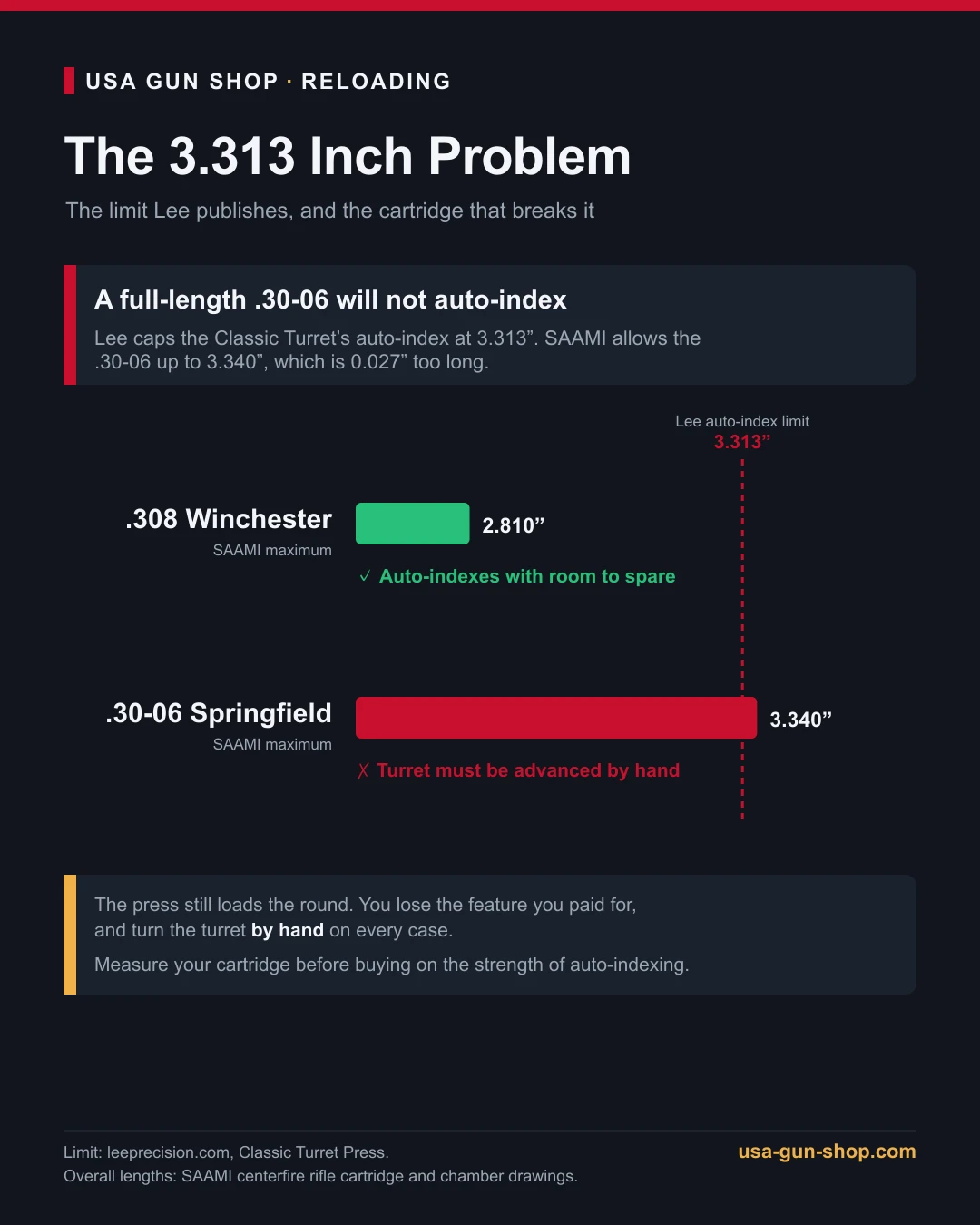
Lee publishes an auto-index ceiling for the Classic Turret: cartridges with an overall length of 3.313 inches or less. Longer than that and, in Lee’s own words, the turret has to be advanced by hand.
🛑 Now put that against the standard. SAAMI’s centerfire rifle drawing for the .30-06 Springfield gives a maximum cartridge overall length of 3.340 inches. A .30-06 loaded to maximum is 0.027 inches too long to auto-index on the best-value press in this list. It will still size, charge and seat. You simply turn the turret yourself, and the feature you paid for is gone.
| Cartridge | SAAMI maximum overall length | Lee Classic Turret auto-index |
|---|---|---|
| .308 Winchester | 2.810 in | Yes, with room to spare |
| .30-06 Springfield | 3.340 in | 🛑 No, 0.027 in over |
Both figures are read from the cartridge and chamber drawings in the SAAMI centerfire rifle standard. If the cartridge you load most is not one of these two, look up its drawing before you buy a turret press on the strength of auto-indexing.
Warranty is not one word
RCBS publishes a limited lifetime warranty for non-electronic products and a limited one-year warranty for electronic products. Buy a press and a digital scale in the same kit and they are covered for very different lengths of time. That split is normal across the industry and it is the detail that surprises people three years later.
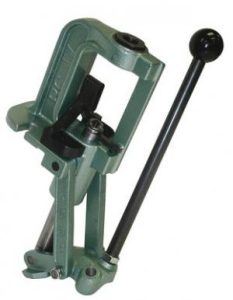
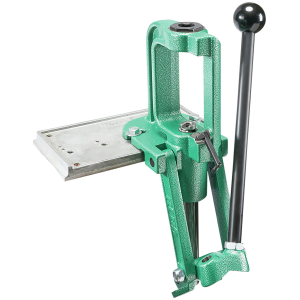
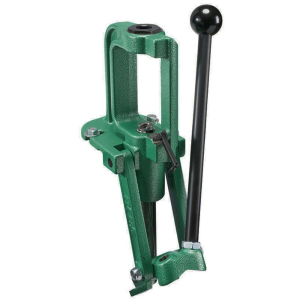
1. RCBS Rock Chucker Supreme: Best Overall
RCBS publishes two numbers for this press that matter more than any review adjective: a 4.25 inch operating window, and dies that thread in at 7/8 inch-14 with the bushing fitted and 1-1/4 inch-12 without it. The first is why long magnum brass clears the ram. The second is the reason this press outlasts the cartridge you bought it for.
Almost every reloading die sold in America is 7/8 inch-14. The Rock Chucker’s frame is cut for the bigger 1-1/4 inch-12 thread and uses a bushing to step down to the common size, so the day you decide to load something that needs a full-size die, the press already takes it. RCBS describes the frame as providing “virtually flex-free performance for high-pressure brass sizing demands”, and cast iron is why.
The honest drawback is speed. This is a single-stage press, so every case is handled once per operation: size them all, prime them all, charge them all, seat them all. Four passes through your hands for every round. That is the price of being able to see each step, and it is why the Rock Chucker is the press people learn on and then keep on the corner of the bench forever, even after a progressive arrives.
Pros
- Cast iron, not cast aluminum
- Takes big 1-1/4 in dies
- Ambidextrous handle out of the box
Cons
- Single-stage, so one operation each
- Heavy enough to need real mounting
- Priming on press is slow
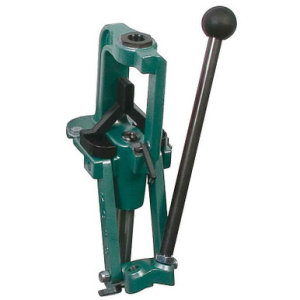
Best for: The one press that will still be on the bench in thirty years.
2. Dillon XL750: Best Progressive for High Volume
Dillon states the XL750 will load up to 800 rounds per hour with automatic indexing, across five stations with auto case feed and, in their words, “a primer system that runs all day”. That figure is the ceiling with a case feeder fitted and a rhythm going, not a number you hit on your first evening.
The caliber range is the wider claim. Dillon lists the machine as loading .17 Hornet through the common belted magnum cartridges in rifle, and .32 ACP through .500 S&W in handgun, with over 160 calibers supported. 🛑 Note that our retailer rows carry Dillon accessories in quantity but rarely the machines: Dillon sells these factory-direct, so the price you see here is what the wider market is asking rather than a discount.
Be honest about the total. The machine is one line on the invoice and a case feeder, a set of toolheads and the caliber conversions are the rest of it. A fully fitted XL750 costs considerably more than the sticker, and that is the normal way to own one rather than an upsell. If the number still works for the volume you shoot, nothing on this page loads faster with less fuss.
Pros
- Dillon publishes up to 800 per hour
- Five stations and automatic indexing
- Over 160 calibers supported
Cons
- 🛑 Sold factory-direct, not through retailers
- Case feeder is a separate purchase
- More machine than a beginner needs

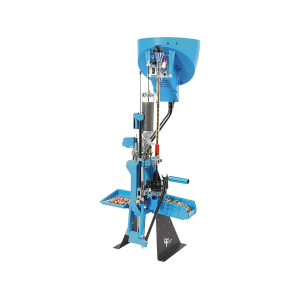
Best for: Anyone loading more than a few hundred rounds a month.
3. Hornady Lock-N-Load AP: Best Progressive for Most Reloaders
The Lock-N-Load AP does one mechanical thing no other press on this page does, and Hornady explains it plainly: “each station moves half a stage on the down stroke and half on the up stroke”. Presses that index entirely on the down stroke do all that work in one direction. Splitting it is why the AP feels smoother than its price suggests, and it is the single best reason to choose it.
The other headline is changeover. Hornady claims a 5-station quick change bushing system that goes from .223 to .45 in less than five minutes, because the dies stay set in their own bushings rather than being unscrewed. Standard 7/8 inch-14 dies drop straight into those bushings, so nothing in your existing die drawer becomes obsolete.
The bushings are the thing to understand before you buy. Each die lives in its own Lock-N-Load bushing and stays adjusted inside it, which is what makes the five-minute changeover real rather than marketing. It also means buying a bushing for every die you own. Budget for that at the start and the press is excellent value. Discover it later and it feels like a hidden cost.
Pros
- Half-index makes the stroke smoother
- Caliber change in under five minutes
- Costs well under the Dillon
Cons
- Bushings are an extra per die
- Priming needs a careful setup
- Support is good but not Dillon
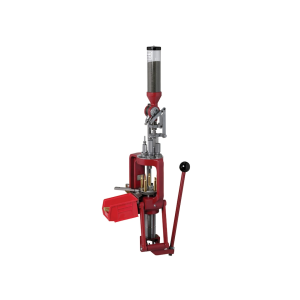
Best for: The progressive to buy if the Dillon tax is the sticking point.
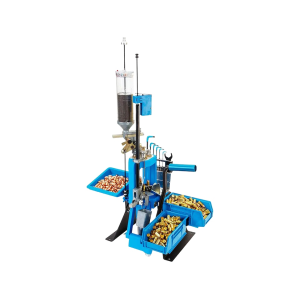
4. Dillon RL550C: Best Versatile Progressive
Dillon describes the RL550C as “the manually indexed RL550C, Dillon’s flexible 4-station machine for handgun and rifle” and as the most popular reloading press in the world. Manual indexing sounds like a downgrade next to the XL750 and it is the reason to buy this one instead.
You advance the shellplate by hand, which means you can stop mid-cycle, pull a case, look at a charge and put it back. On an auto-indexing machine that interruption costs you the sequence. For a reloader who works several cartridges in short runs rather than one cartridge in long ones, that control is worth more than the extra station. Dillon lists 160+ calibers on it.
There is a second reason the 550 outlives fashion: it is the machine Dillon has supported longest, so the accessory and conversion ecosystem around it is enormous and secondhand ones sell readily. A press you can still buy parts for in fifteen years is worth more than a press that is slightly faster today.
Pros
- Four stations, manual index
- Over 160 calibers on one machine
- The easiest progressive to learn
Cons
- You index the shellplate yourself
- Slower than the auto-indexing 750
- 🛑 Also sold factory-direct
Best for: Reloaders who change cartridge more often than they change lots.
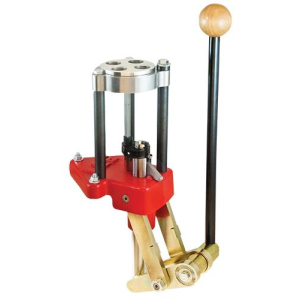
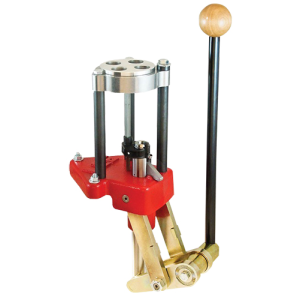
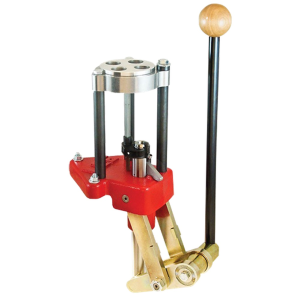
5. Lee Classic Turret: Best Value
This is the most press per dollar in reloading, and it comes with one hard limit that Lee publishes and nobody quotes. The Classic Turret “is capable of loading cartridges with an overall length of 3.313 inches or less. Anything longer would require the turret to be manually advanced.”
🛑 That number sits below a cartridge you probably own. A .30-06 Springfield loaded to the SAAMI maximum overall length of 3.340 inches is 0.027 inches too long to auto-index on this press. It still loads, but you turn the turret by hand and the headline feature is gone. A .308 Winchester, at a SAAMI maximum of 2.810 inches, has half an inch to spare. Check your cartridge before you buy on the strength of auto-indexing.
Set the 3.313 inch limit aside and this press is remarkable for the money. The frame is cast iron rather than the aluminum Lee uses further down the range, the turret discs cost little enough that you can leave a full die set in each one, and the auto-index gives you most of the convenience of a progressive with a fraction of the complexity. For pistol and for .223 it is the easiest recommendation here.
Pros
- Cast iron frame at a plastic price
- Auto-indexes without a progressive learning curve
- Turret discs are cheap to swap
Cons
- 🛑 Auto-index stops at 3.313 in
- Priming arm is the weak point
- Not built for high volume
Best for: A first press that will not need replacing in a year.
6. Forster Co-Ax: Best for Precision
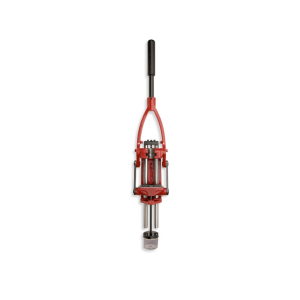
The Co-Ax takes the die out of the equation. Instead of threading into a fixed frame, the die floats between guide rods and lets the case find its own center, which is where the “Co-Ax” name comes from. Forster puts the mechanical advantage at three times a standard C-frame press, and dies snap in and out rather than being screwed down.
🛑 Buy the right one. Our retailer rows return the Co-Ax XL at over $1,200 alongside the standard Co-Ax at around $390, and they are different presses. The XL is built for the long magnum and wildcat cases most handloaders will never own. The standard press is the one that belongs in this list.
Two details people underrate. The jaws replace the shell holder entirely, so there is no drawer of shell holders to lose and nothing to buy per cartridge. And the primer seating is the best on this page by a margin, seating on the press rather than needing a separate hand tool. Together they take a lot of the fiddle out of precision loading.
Pros
- Floating dies self-align to the case
- Snap-in die changes, no threading
- Primer seating is genuinely excellent
Cons
- Costs more than two Rock Chuckers
- Uses jaws, not a shell holder
- Slow by design
Best for: Handloaders chasing the last thousandth of runout.
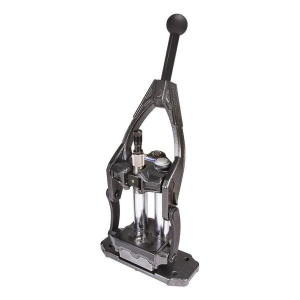
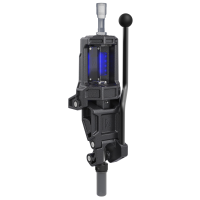
7. Frankford Arsenal M-Press: Best Budget Co-Axial
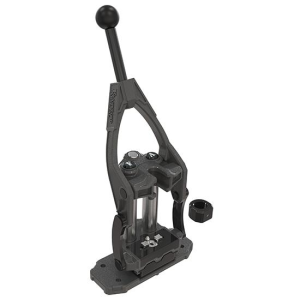
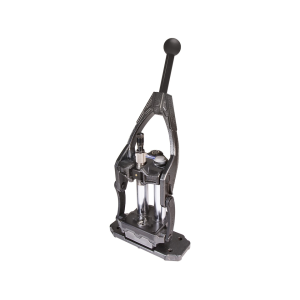
The M-Press is the reason the Forster no longer owns co-axial reloading. It uses the same core idea, a floating die that aligns itself to the case rather than to the frame, and it sells for roughly a third less. Frankford Arsenal was cited by four of the five pages currently ranking for this search, which is the strongest agreement on any press here.
🛑 There are two Frankford single-stage presses and the cheaper one is not this. The F-1 is a conventional threaded single-stage at about half the money, and it kept taking the headline slot in our own retailer rows until we excluded it. If the co-axial die block system is why you are buying, make sure the box says M-Press.
Track record is the fair reservation. The Forster has been proving the co-axial idea for decades and the M-Press has not. What can be said is that it is the press independent reviewers reached for most often this year, and that the mechanism is the same idea executed at a lower price rather than a different idea wearing the same word.
Pros
- Co-axial alignment at a third the price
- Universal shell holder, nothing to lose
- Die blocks swap in seconds
Cons
- Newer, with a shorter track record
- Die blocks cost extra per die
- Not as refined as the Forster
Best for: Co-axial die alignment without the Forster invoice.
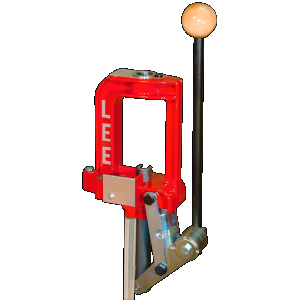
8. Lee Breech Lock Challenger: Best Budget Single-Stage
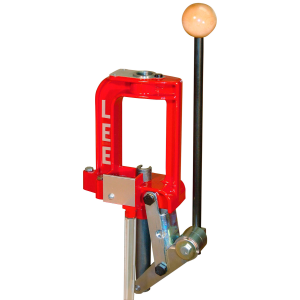
The Challenger exists to answer one question cheaply: do you actually enjoy reloading? At under a hundred dollars it costs less than the dies you will put in it, and the breech lock bushing system means a die change is a quarter turn rather than a re-adjustment.
The honest limit is the frame. It is aluminum, and full-length sizing large rifle brass will find that out. For pistol, for .223, and for learning the sequence of operations without spending real money, it is the right buy. If you already know you are going to load .30-06 every week, buy the Rock Chucker and skip this step.
Treat it as a deliberate first step rather than a compromise. Reloading asks for a scale, calipers, dies, a manual and a tumbler before it asks for a good press, and spending the budget on those while running a cheap press produces better ammunition than the reverse. If you stay with the hobby, the Challenger becomes the press you keep for depriming and odd jobs.
Pros
- Under a hundred dollars
- Breech lock bushings speed die changes
- Light enough for a temporary bench
Cons
- Aluminum frame, not cast iron
- Will flex on heavy rifle sizing
- You will outgrow it eventually

Best for: Finding out whether you actually enjoy reloading.
Dillon RL550C vs XL750: Which to Buy
These two come up against each other more than any other pair in reloading, and the decision is not about quality. Dillon builds both to the same standard. It is about whether you want the machine to advance the shellplate or to do it yourself.
| RL550C | XL750 | |
|---|---|---|
| Stations | 4 | 5 |
| Indexing | Manual | Automatic |
| Maker’s published rate | Not published | Up to 800 rounds per hour |
| Calibers | 160+ | 160+ |
| Suits | Several cartridges, short runs | One cartridge, long runs |
Choose the RL550C if you load five cartridges in batches of two hundred. Manual indexing means you can stop anywhere in the cycle, lift a case out, check a charge under a light and put it back without losing the sequence. Caliber changes are quicker because there is less to convert.
Choose the XL750 if you load one or two cartridges in batches of a thousand. The fifth station gives you room for a powder check die, which on a high-volume pistol run is the single most useful thing you can fit, and automatic indexing is what turns the handle stroke into a rhythm.
The trap is buying the 750 for its speed and then using it the way a 550 wants to be used. If you change cartridge every session, the faster machine will be slower.
Priming on the Press or Off It
Priming is where new reloaders get the biggest surprise, because the press you chose for sizing may not be the tool you want for seating primers.
On-press priming uses an arm or tube built into the press, so priming happens in the same stroke sequence as everything else. It is fast and it is one less tool. The weakness is feel: a press handle gives you a lot of leverage and very little feedback, so it is easy to seat a primer high or to crush one without noticing.
Hand priming uses a separate squeeze tool. It is slower, and it is the reason precision handloaders own one, because you can feel the primer bottom in the pocket. A primer seated slightly proud is one of the most common causes of a light strike, and it is invisible unless you felt it happen.
The presses here split cleanly. The Forster Co-Ax has the best on-press priming of any press on this page and most owners use it. Lee’s priming arms are the weakest part of otherwise good presses and many owners replace them with a hand tool on day one. On a progressive the question does not really arise: priming is part of the cycle, which is exactly why you watch the primer seating station more closely than any other.
What Else You Need Besides the Press
The press is the visible purchase and it is rarely the one that limits your ammunition. Before adding a second press, own these. A complete reloading kit bundles most of them for less than buying them one at a time.
| Item | Why it matters |
|---|---|
| Dies | One set per cartridge. Almost all are 7/8 inch-14, so they move between the presses on this page. |
| Shell holders | One per case head, not per cartridge. The Forster Co-Ax needs none: its jaws replace them. |
| A scale | The component that decides whether your ammunition is safe. Check the warranty separately: electronics are covered for far less time than the press. |
| Calipers | You cannot use the 3.313 inch limit, or any published maximum length, without measuring what you loaded. |
| A tumbler | Dirty brass carries grit into the die and scores it. Cleaning brass protects the dies more than it improves the ammunition. |
| A loading manual | Printed data from a component maker, not a forum post. This is not optional. |
A reloader with a hundred dollar press, good dies and a trustworthy scale will produce better and safer ammunition than one with an eight hundred dollar press and none of those. Spend in that order.
Single-Stage, Turret or Progressive
The three types are not a quality ladder. They are three different answers to the question of how many times you want to handle each case.
| Type | How it works | Rounds per month it suits |
|---|---|---|
| Single-stage | One die fitted at a time. Every case passes through the press once per operation. | Up to about 200 |
| Turret | All the dies stay set in a rotating head. The case stays put and the dies come to it. | 200 to 500 |
| Progressive | Several cases in the machine at once. Each pull of the handle finishes one round. | 500 and up |
The mistake runs in one direction. People buy a progressive because it is the impressive machine, then use it to load fifty rounds of precision rifle at a time, which is a job a single-stage does better and with less to go wrong. Volume is the only honest reason to step up.
Indexing is the split inside the progressive category. The Dillon XL750 indexes automatically, which is faster. The RL550C indexes manually, which is slower and lets you stop the sequence to check a charge. Neither is better in the abstract.
How These Presses Were Evaluated
Three things decided this list, in order.
Time on the handle. I have loaded on a Rock Chucker for years, and the presses here were worked through the same routine: a hundred rounds of .223 and fifty of .308 apiece, full-length sizing once-fired brass, so the difference between a press that flexes and one that does not shows up in shoulder bump rather than in a spec sheet. The Co-Ax and the Rock Chucker held bump inside a thousandth across the run. The Challenger did not, which is what an aluminum frame does under long rifle brass.
Published specifications second. Every figure in the table above was read out of the manufacturer’s own page in raw form, not from a review or a search result. Where a claim could not be traced to a maker, it is not on this page.
The standard third. The .30-06 figure comes from the SAAMI cartridge and chamber drawing, which is what the ammunition industry itself works to. A press specification only means something when it is compared against the standard the cartridge is built to.
Agreement fourth. The five pages ranking for this search were read to see which presses independent reviewers keep choosing. The Frankford Arsenal M-Press was named by four of the five and was missing from this page, so it was added. Agreement is a reason to look at a press, not a reason to rank it.
Mistakes to Avoid When Buying a Reloading Press
Buying the press before checking your cartridge fits. The 3.313 inch ceiling on the Lee Classic Turret is the clearest example, and it is published where anyone could read it. Look up the maximum overall length of the cartridge you load most before you spend anything. Our .45 ACP and .300 Blackout guides give the figures for two of the common ones.
Buying a progressive for precision rifle. A progressive is a volume tool. Loading fifty rounds of match ammunition on one gives you the drawbacks of a complex machine and none of the benefit.
🛑 Buying the wrong press within the right family. Two of the presses here have a cheaper stablemate that shares most of its name. The Forster Co-Ax XL is a different, much dearer press than the standard Co-Ax, and the Frankford Arsenal F-1 is a conventional threaded press, not the co-axial M-Press. Both mix-ups happen at the checkout, and both showed up in our own retailer feeds while this page was being built.
Not bolting it down. Full-length sizing rifle brass will move an unbolted press and flex a thin bench, and the result is inconsistent shoulder bump on ammunition you believed was consistent.
Forgetting the electronics carve-out. A lifetime warranty on the press does not extend to the digital scale that came in the box with it.
Bottom Line
Buy the RCBS Rock Chucker Supreme if you want one press for the rest of your reloading life. The cast iron frame and the 1-1/4 inch-12 die thread mean it outlives the cartridge you bought it for.
Buy the Hornady Lock-N-Load AP if you want a progressive and the Dillon price is the obstacle. The half-stage indexing is a real mechanical advantage and it is the only press here that does it.
Buy the Lee Classic Turret if the budget is tight, and check your cartridge against 3.313 inches first.
What is the best reloading press for a beginner?
A single-stage press, and the RCBS Rock Chucker Supreme if the budget reaches it. Every operation happens one at a time, so when something goes wrong you can see exactly which step caused it. On a progressive, four things happen per stroke and a beginner cannot tell which one misbehaved. If a hundred dollars is the ceiling, the Lee Breech Lock Challenger does the same job with an aluminum frame.
Single-stage, turret or progressive: which should I buy?
Count the rounds you will load in a month. Under 200 and a single-stage is enough. Between 200 and 500, a turret press keeps the dies set up and cuts the handling. Above 500, or if you shoot pistol matches, a progressive pays for itself in hours saved. Buying a progressive to load 50 rounds of precision rifle is the most common way to waste money in this hobby.
What thread do reloading dies use?
Almost every die sold in the United States is 7/8 inch-14, and every press on this page takes that thread either directly or through a bushing. The exception worth knowing is that RCBS cuts the Rock Chucker frame for the larger 1-1/4 inch-12 thread and supplies a bushing to step it down, which is why that press can take full-size dies for the big cases without an adapter.
Can a Lee Classic Turret auto-index a .30-06?
No, not at full length. Lee states the Classic Turret auto-indexes cartridges with an overall length of 3.313 inches or less, and anything longer needs the turret advanced by hand. SAAMI gives the .30-06 Springfield a maximum cartridge overall length of 3.340 inches, which is 0.027 inches over. The press still loads the round. You just lose the auto-index. A .308 Winchester at 2.810 inches maximum is well inside the limit.
How many rounds per hour can a progressive press really load?
Dillon publishes up to 800 rounds per hour for the XL750, and that is the ceiling rather than the average. It assumes a case feeder, a settled rhythm and no primer or powder interruptions. A realistic first month is closer to half that. The gain over a single-stage is still enormous, because a single-stage handles every case four separate times.
Do I need to bolt my press to the bench?
Yes, and it is not optional on anything cast iron. Full-length sizing rifle brass generates enough force to move an unbolted press and to flex a thin benchtop, which shows up as inconsistent shoulder bump. If you cannot drill your bench, mount the press to a thick slab of hardwood and clamp that down. A press that moves under load is a press that cannot size consistently.
Is a co-axial press worth the extra money?
For precision rifle, often yes. A co-axial press lets the die float and the case self-center, rather than forcing the case into a die held rigid by the frame, which reduces runout on loaded rounds. The Forster Co-Ax has owned this idea for decades. The Frankford Arsenal M-Press now does the same thing for roughly a third less, which is why four of the five pages ranking for this search list it.
What warranty comes with a reloading press?
Read the wording rather than the word. RCBS publishes a limited LIFETIME warranty for non-electronic products and a limited ONE-YEAR warranty for electronic ones, so a press is covered for life while the digital scale in the same kit is covered for twelve months. That split is standard across the industry and it is the part people are surprised by.
4,015+ Gun & Ammo Deals
Updated daily from 200+ top retailers. Filter by category, caliber, action type, and price.
Related Guides