

Most bullets are designed to expand. Fort Scott Munitions builds bullets designed to tumble. The Kansas company’s signature Tumble Upon Impact (TUI) projectile is a pointed, solid-copper bullet machined on a lathe, and it does its work by flipping end-over-end inside tissue rather than mushrooming. From that one idea grew a full line of defensive, hunting and competition ammunition in calibers from .380 ACP to .45-70. Here is who they are, what they make, and what is worth buying.
Fort Scott Munitions Deals — 39% Off or Better


Table of Contents
Who Fort Scott Munitions is
Fort Scott Munitions is a Fort Scott, Kansas ammunition maker founded in 2012, known for its patented Tumble Upon Impact (TUI) solid-copper bullet that tumbles inside tissue instead of expanding. Its monolithic projectiles are CNC-lathed from solid copper or brass for hunting, defense and competition.
The company started with a problem and an unconventional answer. Rather than chase a better hollow point, Fort Scott’s owner and gunsmith set out to make a bullet that did not rely on expansion at all — one that would perform the same through a barrier, at close range or far, fast or slow. The result was the patented TUI design, a spitzer-profile solid bullet engineered to begin tumbling when it meets water-based tissue, distributing its energy deep inside the target rather than on first contact. You can read the company’s own explanation on the Fort Scott TUI page.
What makes that possible is how the bullets are built. Every TUI projectile is CNC-lathed from a solid copper or brass rod to tight tolerances — turned on a machine rather than swaged or cast like a conventional bullet. That manufacturing approach gives consistent weight and dimensions from round to round, which is part of why the same load gets used for hunting, self-defense and target work.
On price, Fort Scott is premium. Solid-copper, machined projectiles cost more than lead-core bullets, and the ammunition is priced accordingly. It is also lead-free, which matters in jurisdictions and ranges that require non-toxic projectiles.
What Fort Scott Munitions makes
TUI defensive handgun ammo
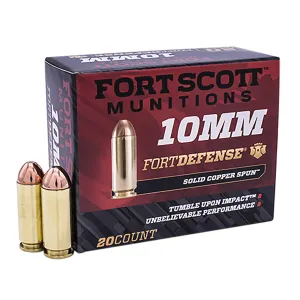
The heart of the line is TUI in defensive pistol calibers — 9mm, .380 ACP, .40 S&W, 10mm, .45 ACP and more. Because the bullet does not depend on expansion, Fort Scott markets it as barrier-blind and velocity-tolerant, including from short-barreled carry guns where many hollow points struggle to reach expansion velocity.
TUI rifle ammo
The same tumbling solid is loaded for rifles in 5.56mm NATO / .223, .308 Winchester, 6.5 Creedmoor, .300 Blackout and a long list of hunting calibers up to .45-70 Government and 450 Bushmaster. The lead-free construction makes it a natural fit for hunters in non-lead zones.
Centerfire rifle hunting line
Fort Scott loads its SCS (Solid Copper Spun) bullets for big game in popular cartridges like 6.5 Creedmoor, .308, .270 Winchester and .300 Win Mag, including the Buck Commander branded loads. Solid copper means deep penetration and high weight retention — the bullet stays in one piece.
Practice and specialty
The catalog also includes practice-oriented loads and a wide range of less common chamberings — from .32 ACP to .45 Colt and beyond — reflecting the brand’s habit of covering calibers others skip.
Build quality and how TUI works
Fort Scott’s whole identity rests on its manufacturing. CNC-lathing each projectile from solid copper or brass produces a monolithic bullet with consistent dimensions and no jacket to separate from a core. In the target, the pointed solid is designed to tumble — rotating end-over-end as it passes through tissue — which is the mechanism Fort Scott credits for its wounding performance without relying on expansion. The honest counterpoint: the broader defensive community still debates tumbling solids against traditional expanding hollow points, and independent gel testing of non-expanding designs varies. Fort Scott argues the tumbling action and lead-free construction are advantages; buyers who want the most extensively documented FBI-protocol expansion data may prefer a premium bonded JHP. Either way, the build quality and consistency are genuinely high.
How Fort Scott Munitions compares
As a solid-copper, lead-free maker, Fort Scott sits in the same conversation as Barnes (the TSX/TAC-XPD copper bullets) and Lehigh Defense (the machined Xtreme Defender solids loaded by Underwood and others). Where Barnes and Lehigh rely on petal expansion or fluted designs, Fort Scott’s pitch is the tumble. Against mainstream defensive ammo — Federal HST, Speer Gold Dot, Hornady Critical Defense — Fort Scott is the non-expanding, barrier-blind, lead-free alternative at a premium price.
Be straight about the trade-offs: Fort Scott costs more than conventional ammo, its terminal mechanism is less conventional than a hollow point, and it is a smaller maker, so availability of every caliber and weight can be patchy. If you want a barrier-blind, lead-free solid that shoots from short barrels and works across hunting and defense, it is a compelling and distinctive choice; if you want the most mainstream, heavily lab-tested expanding defensive round, a premium JHP may suit you better.
Who should buy what
- The concealed carrier with a short-barrel pistol: TUI in 9mm, .380 or .45 ACP for velocity-tolerant, barrier-blind performance.
- The lead-free hunter: SCS solid-copper loads in 6.5 Creedmoor, .308 or .300 Win Mag for deep penetration and full weight retention.
- The AR or PCC shooter: TUI in 5.56/.223 or .300 Blackout.
- The 10mm shooter: Fort Scott’s solid 10mm loads for woods carry and hunting.
- The owner of an unusual caliber: Fort Scott’s broad chambering list, from .32 ACP to .45-70.
Who should look elsewhere? Shooters who specifically want a proven expanding hollow point with extensive FBI-protocol gel data, or who need the cheapest possible range ammo. Fort Scott is a premium, lead-free, tumbling-solid specialist.
The Fort Scott Munitions philosophy
Fort Scott bet on a single contrarian idea: that a bullet does not have to expand to be effective. Everything follows from there — the machined solid-copper construction, the barrier-blind marketing, the one-projectile-does-everything approach across hunting, defense and competition. It is a small American maker built around a patent and a point of view, and that focus is exactly what gives the brand its identity.
How to choose your Fort Scott load
Start with the gun and the job. For concealed carry, choose TUI in your pistol caliber — the design is meant to shine from shorter barrels where expansion can be unreliable. For hunting, pick the SCS solid-copper load for your cartridge and game, leaning on its deep penetration and weight retention, and confirm it is legal and appropriate for your hunt. For an AR or .300 Blackout, match the bullet weight to your barrel’s twist. As always, pattern and confirm reliable feeding in your specific firearm before trusting any defensive load, and verify the caliber matches your gun.
One idea, machined into copper
It is rare for a new ammunition company to introduce a genuinely different idea, but that is what Fort Scott did. By machining a pointed solid from copper and engineering it to tumble rather than expand, the company carved out a niche between the big defensive brands and the established copper-bullet makers. Whether the tumble outperforms a great hollow point is a debate shooters enjoy having — but the precision of the product and the clarity of the idea are not in question. For lead-free, barrier-blind performance from a small American maker, Fort Scott Munitions is one of a kind.
Shop Fort Scott Munitions & Prices
Live Fort Scott Munitions products and current prices, organized by caliber and updated automatically.
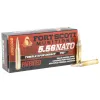
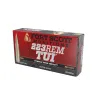
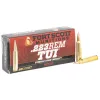
Fort Scott 5.56 / .223 Ammo


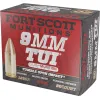
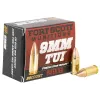
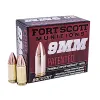
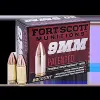
Fort Scott 9mm Ammo






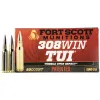
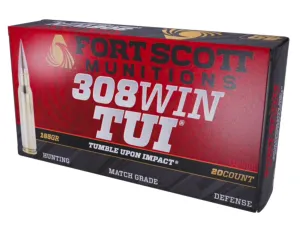
Fort Scott .308 Winchester Ammo





Fort Scott 6.5 Creedmoor Ammo


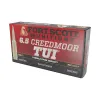
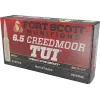


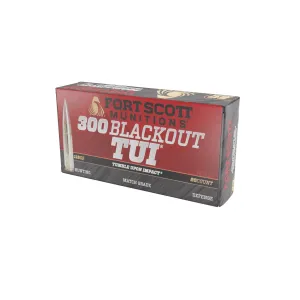
Fort Scott .300 Blackout Ammo


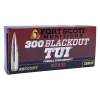

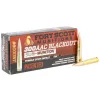
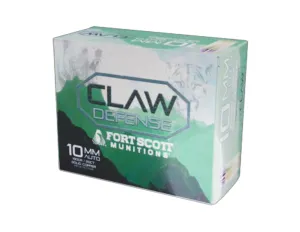
Fort Scott 10mm Auto Ammo




Where Fort Scott Fits in Our Buying Guides
- Best Defensive Ammo
- Best 9mm Ammo
- Best AR-15 Ammo (5.56 NATO / .223 Rem)
- Best 10mm Ammo
- Best Deer Hunting Cartridges
Fort Scott Munitions FAQ
Where is Fort Scott Munitions located?
Fort Scott Munitions is based in Fort Scott, Kansas, where it was founded in 2012.
What is TUI ammo?
TUI stands for Tumble Upon Impact. It is Fort Scott’s patented solid-copper bullet design that tumbles end-over-end when it strikes water-based tissue, creating its wound channel internally rather than relying on expansion.
How are Fort Scott bullets made?
Each TUI projectile is CNC-lathed from a solid copper or brass rod to tight tolerances, producing a monolithic, lead-free bullet with consistent weight and dimensions.
Is Fort Scott ammo good for self-defense?
Many carriers like it for being barrier-blind and velocity-tolerant, especially from short-barreled pistols. The tumbling-solid approach is different from a traditional hollow point, and shooters debate the two; Fort Scott is a credible, premium, lead-free option.
Is Fort Scott ammo lead-free?
Yes. Because the projectiles are solid copper or brass, Fort Scott ammunition is lead-free, which suits non-lead hunting zones and indoor ranges with lead restrictions.
Can you hunt with Fort Scott ammo?
Yes. Its solid-copper SCS loads are made for big game, offering deep penetration and high weight retention. Always confirm the load is legal and appropriate for your game and area.
Why is Fort Scott ammo expensive?
Machining each bullet from solid copper or brass costs more than making conventional lead-core bullets, so Fort Scott is priced as a premium product.
What tier is Fort Scott Munitions?
Premium. Fort Scott is a specialist American maker of patented, lead-free, tumbling solid-copper ammunition for defense, hunting and competition.
Related Ammunition Brands
- DoubleTap Ammunition Parts
- Buffalo Bore Ammunition Parts
- Lapua Ammunition Parts
- Federal Ammunition Parts
- CCI Ammunition Parts
- Winchester Ammunition Parts
USA Gun Shop may earn a commission on purchases made through the links on this page, at no extra cost to you. We list products on merit; prices and availability are pulled live and can change.
6,232+ Gun & Ammo Deals
Updated daily from 200+ top retailers. Filter by category, caliber, action type, and price.