
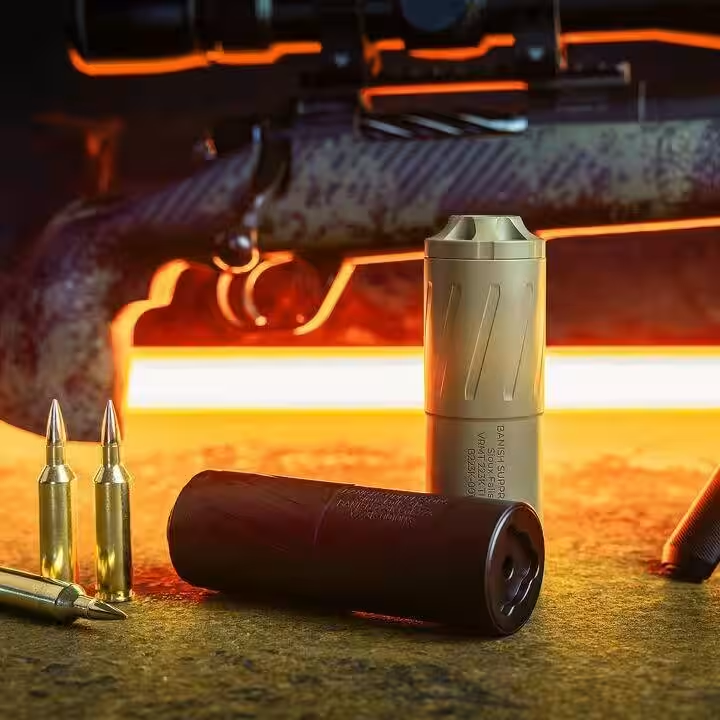
Last updated July 2026.
A suppressor works by giving the high-pressure gas behind a bullet somewhere to go. Instead of that gas exploding straight out of the muzzle in one sharp crack, a series of internal chambers lets it expand, slow down, and cool before it escapes, which drops the sound of the shot by roughly 20 to 35 decibels. It is the same principle as a car muffler. Here is what is actually happening inside the tube.
Table of Contents
Why a Gunshot Is So Loud in the First Place
Most of the “bang” is the muzzle blast. When the powder burns, it produces a large volume of gas at extremely high pressure, thousands of pounds per square inch. The instant the bullet leaves the barrel, that gas erupts into the open air and expands violently, creating a pressure wave your ear hears as a loud crack. A second sound source exists too: if the bullet is traveling faster than the speed of sound (supersonic), it drags a small sonic boom, the same “crack” a bullwhip makes, along its whole flight path. A suppressor can do a lot about the first sound. It can do nothing about the second.
What’s Actually Inside a Suppressor
Strip the marketing away and a suppressor is a sealed metal tube with a bullet-sized hole through the center and a stack of obstacles inside:
- The tube (body): the outer housing that seals everything and threads onto the barrel.
- The blast/expansion chamber: the first, largest open space right behind the muzzle, where gas gets its first big room to expand into.
- Baffles: a series of angled cones or partitions stacked down the length of the can. Each one carves out a small chamber and forces the gas to change direction, lose energy, and give up heat.
- End caps and the bore: the front cap the bullet exits through, sized just larger than the projectile.
The bullet passes straight through the center of all of it and never touches the baffles. Only the gas gets trapped and slowed.
What Happens in the Split Second You Fire
Follow the gas, not the bullet:
- The bullet exits the barrel and enters the suppressor’s first chamber, with the high-pressure gas chasing right behind it.
- That gas floods into the large blast chamber and expands, the moment a gas expands into a bigger volume, its pressure and temperature drop.
- As the gas moves down the tube, each baffle traps a pocket of it, redirects it into turbulence, and pulls heat out of it. Energy that would have been a sharp crack in open air gets spent bouncing around inside the can instead.
- By the time the gas finally leaks out the front, it is at far lower pressure, lower velocity, and lower temperature, so it makes a much softer sound as it meets the outside air.
The whole event takes a few milliseconds. There are no moving parts, the suppressor is purely about geometry and giving hot gas time and space.
How Much Quieter, Really?
A typical unsuppressed centerfire rifle or pistol runs around 160–165 dB at the shooter’s ear. A good suppressor removes roughly 20–35 dB, which is enough to bring many hosts down near or below the ~140 dB “hearing-safe” threshold. That sounds modest until you remember decibels are logarithmic: every 3 dB is a doubling of sound energy, and every ~10 dB is perceived as roughly “half as loud.” So a 30 dB reduction is enormous, the difference between “painful, permanent-damage loud” and “I could shoot this without earpro.” What it is not is the movie “pfft.” A suppressed centerfire rifle is still clearly a gunshot; it is just no longer an ear-splitting one.
The Two Sounds a Suppressor Can’t Fully Kill
1. The supersonic crack. Most rifle rounds and many pistol rounds fly faster than sound, so they generate that sonic boom along the bullet’s path no matter what is on the muzzle. The only way to eliminate it is to shoot subsonic ammunition (or a naturally subsonic cartridge like .45 ACP or .300 Blackout subsonic). That is why the truly “Hollywood quiet” combinations are always a suppressor plus subsonic ammo.
2. Mechanical action noise. On a semi-auto, the bolt cycling, the hammer falling, and the action clacking all make sound the suppressor never touches. On a very quiet rimfire setup, that mechanical clack can actually become the loudest thing you hear.
“First-Round Pop”: Why the First Shot Is Louder
Ever notice the first shot through a suppressor is noticeably louder than the rest? That is first-round pop. A suppressor sitting in open air is full of ordinary oxygen. On the first shot, the hot muzzle gases ignite that trapped oxygen, a tiny extra combustion that adds a “pop.” After that first round, the oxygen inside has been consumed and replaced by inert combustion gas, so subsequent shots are quieter and more consistent until the can cools and refills with air.
Why Suppressors Are Made From Exotic Metals
Everything a suppressor does, trapping high-pressure, 3,000-plus-degree gas over and over, is brutal on materials. That drives the metal choices:
- Stainless steel: tough and cheap, but heavy. Common on rimfire and budget cans.
- Titanium: lighter and corrosion-resistant, popular on rifle cans where weight on the muzzle matters, at a higher price.
- Inconel and other superalloys: used in the hottest, highest-pressure areas (like the blast baffle on a full-auto-rated can) because they hold strength at extreme temperatures.
- Aluminum: very light and cheap, but limited to low-pressure rimfire and pistol use, it cannot take rifle heat.
Bonus Effects: Recoil, Flash, and Concussion
Because the suppressor is managing all that muzzle gas, it does more than quiet the shot. It noticeably reduces recoil (the gas is vented gradually instead of all at once), nearly eliminates muzzle flash (the burning gas is contained and cooled), and cuts the concussion felt by people standing nearby. Those “side effects” are a big reason competitive and defensive shooters run suppressors even where the sound reduction is secondary.
Suppressors are legal for civilians in most of the country, but they are still NFA-registered items. If the science has you interested in owning one, start with our guide on how to buy a suppressor in 2026, the tax stamp is now $0.
Related Guides
- How to Buy a Suppressor in 2026: The Complete Guide
- The $0 Suppressor Tax Stamp: What Changed in 2026
- What Is the National Firearms Act? NFA Explained
Frequently Asked Questions
How does a suppressor work in simple terms?
A suppressor gives the high-pressure gas behind the bullet room to expand, slow down, and cool inside a series of internal chambers (baffles) before it exits, instead of erupting into the open air all at once. That reduces the muzzle blast by roughly 20–35 decibels. It works on the same principle as a car muffler, and the bullet passes straight through the center without touching anything.
Do suppressors make guns silent?
No. A good suppressor reduces the shot by about 20–35 dB, bringing many guns near or below the ~140 dB hearing-safe threshold, but a suppressed centerfire firearm is still clearly a gunshot, not the movie “pfft.” True near-silence requires a suppressor plus subsonic ammunition to also remove the bullet’s sonic crack.
Why is the first shot through a suppressor louder?
It is called first-round pop. The suppressor is full of ordinary oxygen when you start; the first shot ignites that trapped oxygen, adding a small extra combustion. After the first round, the oxygen is consumed and replaced by inert gas, so following shots are quieter and more consistent.
Why can’t a suppressor silence a rifle completely?
Two sounds remain. First, most rifle bullets fly faster than sound and create a sonic crack along their whole flight path that no muzzle device can stop, only subsonic ammo removes it. Second, the mechanical action (bolt, hammer, cycling) makes noise the suppressor never touches.
Do suppressors reduce recoil and muzzle flash?
Yes. Because the suppressor vents the muzzle gas gradually instead of all at once, it noticeably reduces felt recoil, nearly eliminates muzzle flash, and cuts the concussion felt by nearby shooters, benefits many shooters value as much as the sound reduction.
5,031+ Gun & Ammo Deals
Updated daily from 200+ top retailers. Filter by category, caliber, action type, and price.