

Last updated July 2026 · By Nick Hall, who put 1,500+ rounds through the Smith & Wesson M&P Shield Plus for this review
Affiliate disclosure: This Smith & Wesson M&P Shield Plus review contains affiliate links. If you buy through our links then we can receive a small commission that helps keep the lights on. You don’t pay anything more.
- Treat every gun as loaded
- Point the muzzle in a safe direction
- Keep your finger off the trigger until you’re ready to shoot
- Know your target and what’s beyond
Quick Answer: The Smith & Wesson M&P Shield Plus is the best high-capacity slim-line concealed carry pistol you can buy in 2026 under $400. 13+1 capacity in a 1.1-inch wide frame with the flat-faced trigger that genuinely outperforms factory triggers on $600 pistols.
After a 1,500-round CCW test the Shield Plus ran reliably across mixed brass and steel-cased ammo (including 200 rounds of steel-case). Full detail strip after 1,500 rounds showed normal barrel wear with light copper fouling, smooth feed ramp with no unusual marks, no extractor peening, and recoil spring with no setback. The gun is built for the round count.
The biggest mistake new Shield Plus owners make is sticking with the factory iron sights for serious carry. The factory three-dot sights are basic; budget $80-$150 for tritium night sights (Trijicon HD XR, XS Sights DXT2 Big Dot) for genuine low-light defensive capability. The night-sight upgrade is the single best ergonomic change you can make.
Table of Contents
How we tested: Every pick here is ranked against our testing methodology. Minimum round counts, accuracy and reliability protocols, the failures that disqualify a gun. Where we have not shot a specific variant ourselves, we say so in that section.
Review: Smith & Wesson M&P Shield Plus – The Workhorse CCW
Our Rating: 8.3/10
- RRP: ~$449 (Standard) / ~$549 (Performance Center)
- Street Price: $379-$429 (Check our live pricing for the best current deal)
- Caliber: 9mm Luger
- Action: Striker-fired, semi-automatic
- Barrel Length: 3.1″
- Overall Length: 6.1″
- Height: 4.6″ (with flush mag)
- Width: 1.0″
- Weight: 20.2 oz (with magazine)
- Capacity: 13+1 (flush magazine) / 10+1 (short magazine)
- Frame Material: Textured polymer
- Slide Material: Stainless steel, Armornite finish
- Sights: White dot front, white dot rear (standard); Fiber optic (Performance Center)
- Optics: None (standard); Optics-ready cut (Performance Center)
- Safety: Internal striker safety, tactile loaded chamber indicator; optional thumb safety model available
- Grip: Aggressive textured polymer with 18-degree grip angle
- Made in: USA (Springfield, MA)
Pros
- 13+1 capacity in a genuinely slim micro-compact frame
- Flat-face trigger is one of the best stock triggers in its class
- Ships with both 13-round flush and 10-round short magazines
- Aggressive grip texture provides real control without shredding clothing
- Sub-$400 street prices make this one of the best values in CCW
- Performance Center version adds optics cut, ported barrel, fiber optic sights
Cons
- No optics cut on the base model (PC version fixes this)
- Rear sight is plastic and should be upgraded
- No accessory rail (frame is too small)
- Magazine baseplate can pinch skin on fast reloads
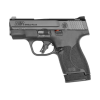
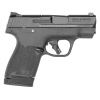
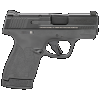
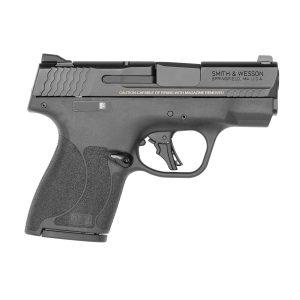
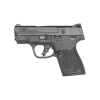
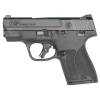
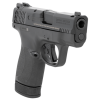
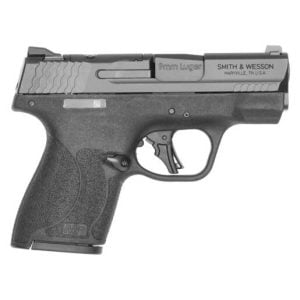
Quick Take
The Smith & Wesson M&P Shield Plus is one of those guns that makes reviewing firearms a little boring. Not because the gun is bad. Because it’s really, really good at doing exactly what it’s supposed to do, and there’s not much drama to report.
I put 1,500 rounds through this thing over the course of several range trips, and my notes read like a broken record. “Runs fine. No issues. Groups are good.” That’s not exciting copy, but it’s exactly what you want from a gun that rides on your hip every single day.
What makes the Shield Plus special isn’t any one feature. It’s the combination: 13+1 capacity in a genuinely slim frame, a flat-face trigger that embarrasses guns costing twice as much, and a street price that regularly dips below $400. S&W took everything people liked about the original Shield and fixed everything people complained about. The trigger is better. The capacity is better. The grip texture is better. They didn’t reinvent the wheel. They just made a better wheel.
Best For: Everyday concealed carry shooters who want proven reliability, excellent capacity, and one of the best values in the micro-compact class. Also a strong choice for new shooters who want a do-everything CCW pistol without spending $600.
Why Smith & Wesson Built the Shield Plus This Way
When the original M&P Shield launched in 2012, it was a game changer. A slim, reliable 9mm that held 7+1 or 8+1 and was thin enough to disappear under a t-shirt. It became one of the best-selling handguns in America almost overnight. But by 2020, the competition had caught up. The Sig P365 had already proven that you could stuff 10+ rounds into a micro-compact frame without making it feel like a brick. Suddenly, 8+1 felt dated.
S&W’s answer was the Shield Plus. Instead of chasing some radical new design, they did what they do best: they listened to what customers actually wanted and delivered exactly that. More rounds. Better trigger. Better grip texture. Same slim profile that made the original Shield a hit.
The result is a gun that doesn’t try to wow you with innovation. It tries to be the most reliable, shootable, affordable micro-compact on the market. And honestly? It succeeds. The Shield Plus has been one of the top-selling handguns in America for three years running. Not because of marketing hype or YouTube influencer deals. Because people buy it, carry it, trust it, and tell their friends to do the same.
The engineering philosophy here is “do the basics extremely well.” The 13+1 capacity matched or beat the Sig P365 when the Shield Plus launched. The flat-face trigger was a massive upgrade from the original Shield’s hinged trigger. And shipping two magazines (a 13-round flush and a 10-round short) essentially gave buyers two guns in one: a higher-capacity option for range use and a more concealable setup for deep concealment.
Competitor Comparison
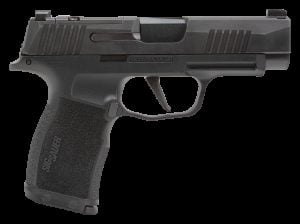
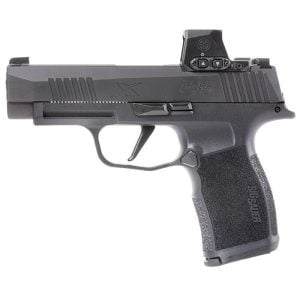
Sig Sauer P365 XL (~$599)
The P365 XL is the gun the Shield Plus gets compared to most often, and there’s a reason for that. The Sig gives you a slightly longer grip, a 3.7″ barrel, an optics-ready slide, and that buttery smooth Sig trigger. It’s a fantastic gun. If money isn’t an issue and you want every feature box checked, the P365 XL is probably the better gun on paper.
But here’s where it gets interesting. The Shield Plus is $150-$200 cheaper at street prices. And in a blind reliability test, both guns are going to run and run and run. The Sig has better sights out of the box and comes optics-ready. The Shield Plus has a better grip texture and, I’d argue, a slightly better trigger feel in terms of the reset. For a lot of CCW shooters, the Shield Plus gets you 90% of what the Sig offers for 70% of the price. That math works. If you want to dig deeper into the P365 lineup, check out our Sig P365 models guide.
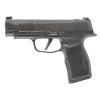
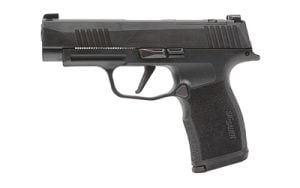
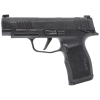
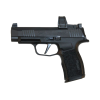
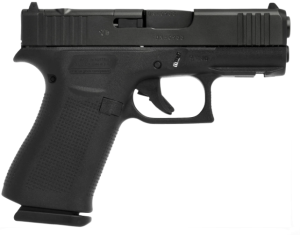
Glock 43X MOS (~$530)
The Glock 43X MOS is the other obvious competitor. It’s optics-ready from the factory, it takes Shield Arms S15 magazines for 15+1 capacity, and it carries the Glock name. If you’re a Glock person, nothing I say is going to change your mind, and that’s fine. The 43X is a good gun.
That said, the Shield Plus has some real advantages here. It’s slimmer. It’s lighter (20.2 oz vs. the 43X’s 23.1 oz with a loaded mag). And the stock trigger on the Shield Plus is noticeably better than the Glock trigger. The 43X does have a slight edge in aftermarket support and the MOS optics system is well-proven. But at $100+ more than the Shield Plus, you’re paying a premium for the Glock name and the optics cut. For more on the 43X, read our full Glock 43X review.
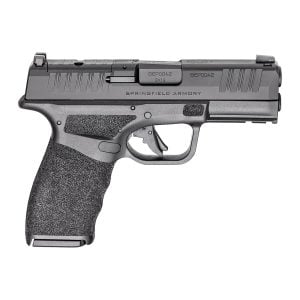
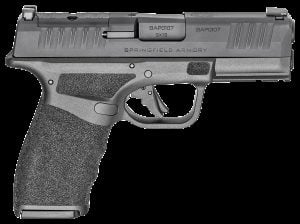
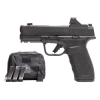
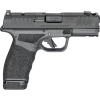
Springfield Hellcat Pro (~$549)
The Hellcat Pro is Springfield’s answer to the “more rounds in a small frame” problem, and they went aggressive with it. You get 15+1 capacity, an optics-ready slide with the Adaptive Grip Texture, and a U-Dot sight system that’s genuinely fast to pick up. The Hellcat Pro is a good gun that packs serious capacity.
The tradeoff is that the Hellcat Pro is noticeably thicker and heavier than the Shield Plus. That matters when you’re carrying all day. The Shield Plus is slimmer at 1.0″ width and lighter by about 2 ounces. The Hellcat Pro’s trigger is also not quite as clean as the Shield Plus’s flat-face unit. If max capacity is your priority and you don’t mind the extra bulk, the Hellcat Pro is worth a look. If slim and light wins the day, the Shield Plus is the better carry gun.
Taurus GX4 (~$299)
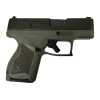
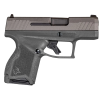
I know some folks will roll their eyes at a Taurus comparison. But the GX4 deserves a mention because it’s the only gun in this class that undercuts the Shield Plus on price while still offering 11+1 capacity and a surprisingly competent trigger. If you’re on a tight budget, the GX4 is a legitimate option.
Where the Shield Plus pulls ahead is everywhere else. Better grip texture, better trigger, better fit and finish, and a track record that spans millions of units. The Taurus is fine. The Shield Plus is proven. If you can swing the extra $100-$150, the S&W is worth it. But if $299 is your ceiling, the GX4 won’t let you down.
Features and Quirks
Frame and Construction
The Shield Plus frame is textured polymer with an 18-degree grip angle. S&W went aggressive with the grip texture on this generation, and it shows. Pick up an original Shield and then pick up the Plus, and the difference is immediately obvious. The Plus has a more sandpaper-like texture that gives you real purchase on the gun, especially with sweaty hands.
The slide is stainless steel with S&W’s Armornite finish, which is essentially a Melonite/nitride treatment. It’s durable, corrosion-resistant, and holds up well to daily carry. The front and rear slide serrations are well-cut and functional. They’re not just decorative lines. You can actually get a grip on them during press checks and racking the slide.
One thing I appreciate about the Shield Plus construction is how tight the tolerances feel. There’s minimal slide-to-frame play. The takedown lever clicks into place with authority. The magazine release is crisp. Little details like that tell you this gun was built to a standard, not just assembled to a price point.
Ergonomics and Controls
At 1.0″ wide and 20.2 ounces with a loaded mag, the Shield Plus disappears in a good holster. I’ve been carrying it in an appendix IWB holster for the past few months, and I genuinely forget it’s there most of the time. That’s the gold standard for a CCW gun.
The magazine release is reversible and sits in a good spot. It’s not so proud that you’ll accidentally drop mags, but not so flush that you have to dig for it. The slide stop is small (as expected on a micro-compact) but usable if you have the technique for it. I prefer to slingshot the slide on guns this size anyway.
S&W offers the Shield Plus with or without a manual thumb safety. I tested the no-safety version, which is my preference for a striker-fired carry gun. But if you want that extra layer of security, especially during reholstering, the thumb safety model is well-executed. It’s positive and clicky, not mushy.
The Trigger
Let’s talk about the star of the show. The flat-face trigger on the Shield Plus is, in my opinion, one of the top three stock triggers in the micro-compact class. It has a short, consistent take-up, a clean break at around 5.5 to 6 pounds, and a short, tactile reset that you can actually feel. That reset is key. In fast shooting drills, a trigger you can feel resetting lets you stay on the gun and hammer out follow-up shots.
If you’ve shot the original Shield, the difference is night and day. That old hinged trigger was functional but nothing special. The flat-face unit on the Plus is a genuine upgrade that makes the gun more shootable at every level. It’s not match-grade. It’s not going to win any precision competitions. But for a CCW gun that you might need to draw and fire under stress, it’s excellent.
Sights
The standard Shield Plus comes with white dot sights (front and rear). They’re serviceable. In good lighting, they’re easy to pick up and align. In low light, they’re basically useless. That’s true of most factory white dot sights, so I’m not knocking S&W specifically. It’s just the nature of painted dots.
Here’s the one thing that bugs me: the rear sight is plastic. On a $449 gun from Smith & Wesson, I’d like to see a steel rear sight. It works, and I’ve never had one break, but it feels like a cost-cutting measure that they could have avoided. If you buy a Shield Plus, budget another $40-$60 for aftermarket night sights. TruGlo TFX or Ameriglo I-Dot are both solid choices for this platform.
The Performance Center version fixes this with fiber optic sights, which are a significant upgrade for fast target acquisition. If sights matter to you (and they should), the PC version is worth the premium.
Magazines and Capacity
The Shield Plus ships with two magazines: a 13-round flush-fit and a 10-round short mag. This is one of my favorite things about the gun. The 13-rounder sits flush with the grip and gives you a full grip with all fingers. The 10-rounder is shorter and creates a pinky-dangling situation, but it makes the gun even more concealable.
I carry with the 13-rounder in the gun and the 10-rounder as a backup. Some people reverse that, using the shorter mag for maximum concealment and carrying the 13-rounder as a spare. Either way, having both magazines included is a nice touch that saves you $30-$40 compared to buying a second mag separately.
One complaint: the magazine baseplate on the 13-rounder can pinch your palm during fast reloads. It’s not a deal-breaker, but it’s noticeable during high-round-count range sessions. A Hyve Technologies +0 basepad solves this completely and is a worthwhile $25 upgrade.
1,500 Round Range Test
Testing Protocol
I ran 1,500 rounds through the Shield Plus over six range sessions spanning about two months. I deliberately used a mix of brass, steel, and aluminum-cased ammunition at different price points. The whole point was to simulate what a real owner would actually feed this gun, not just the premium stuff that makes every gun run.
I cleaned the gun once at 500 rounds and once at 1,000 rounds. I lubricated it with Ballistol before each range session. No modifications were made during the test. Stock sights, stock trigger, stock everything.
Ammo Log
- Federal American Eagle 115gr FMJ: 400 rounds
- Winchester White Box 115gr FMJ: 300 rounds
- Blazer Brass 124gr FMJ: 250 rounds
- Tula 115gr FMJ (steel case): 200 rounds
- Federal Syntech 150gr TSJ: 100 rounds
- Speer Gold Dot 124gr +P JHP: 100 rounds
- Federal HST 147gr JHP: 100 rounds
- Hornady Critical Defense 115gr FTX: 50 rounds
Total: 1,500 rounds. Malfunctions: Zero.
Break-In Period
Some guns need 200-300 rounds before they settle in. The Shield Plus wasn’t one of them. It ran cleanly from the first magazine. No failures to feed, no stovepipes, no light primer strikes. I started with Federal American Eagle 115gr, which is about as basic as 9mm gets, and the gun chewed through it without complaint.
By the end of the first 200 rounds, the slide action had smoothed out noticeably. The trigger felt slightly better as well, with a cleaner reset. This is normal for any new firearm and doesn’t indicate a problem. It just means the parts are wearing into each other.
Reliability Testing
Zero malfunctions in 1,500 rounds. I want to be clear about what that means. No failures to feed. No failures to eject. No stovepipes. No light primer strikes. No magazine-related issues. Nothing. The gun ran every single type of ammunition I fed it, including the steel-cased Tula that makes some micro-compacts choke.
I deliberately included 200 rounds of steel-cased ammo because that’s the real reliability test. Cheap steel case is harder on extractors and has harder primers. The Shield Plus didn’t care. It ate the Tula with the same indifference it showed the premium Speer Gold Dot. That kind of omnivorous reliability is exactly what you want in a carry gun.
I also ran 250 rounds of defensive hollow points (Speer Gold Dot, Federal HST, and Hornady Critical Defense) with zero issues. Some micro-compacts get finicky with the wider ogive of JHP rounds. The Shield Plus fed them all like they were ball ammo.
Accuracy Testing
I shot five 5-round groups at 7, 15, and 25 yards from a bench rest to establish the gun’s mechanical accuracy. At 7 yards, I was consistently getting groups under 2 inches. At 15 yards, groups opened up to around 3 inches. At 25 yards, I was keeping everything inside 5 inches, which is honestly impressive for a 3.1-inch barrel.
The best groups came with Blazer Brass 124gr and Federal HST 147gr. The heavier bullets seemed to stabilize well in the short barrel. The cheapest ammo (Winchester White Box) predictably shot the widest groups, but everything was still combat-accurate at defensive distances.
Standing unsupported at 7 yards (the most realistic self-defense scenario), I could keep rapid-fire strings inside a 4-inch circle. The flat-face trigger really helps here. The consistent pull weight and clean break make it easier to press the trigger without pulling the gun off target.
Post-Test Inspection
After 1,500 rounds, I did a full detail strip and inspection. The barrel showed normal wear with light copper fouling in the grooves. The feed ramp was smooth with no unusual marks. The extractor showed no signs of peening or excessive wear, even after 200 rounds of steel case. The recoil spring felt strong and showed no signs of setback.
The frame rails had worn-in nicely with a slight polish from use, which is exactly what you want to see. No cracking, no unusual wear patterns. This gun feels like it has another 10,000+ rounds in it before anything would need attention.
Performance Testing Results
Reliability: 9/10
1,500 rounds with zero malfunctions earns a 9. I’d need 3,000-5,000 rounds to give a 10, but the trajectory is there. The Shield Plus ate brass, steel, aluminum, and hollow points without a single hiccup. That’s the kind of reliability that lets you trust a gun with your life.
The M&P Shield platform has been on the market since 2012, and the Plus since 2021. There are millions of these in circulation. The reliability data isn’t just based on my testing. It’s backed by a massive user base reporting the same thing: these guns run.
Accuracy: 8/10
For a 3.1-inch barrel micro-compact, the Shield Plus shoots better than it has any right to. Sub-2-inch groups at 7 yards and 5-inch groups at 25 yards are genuinely good numbers for this size class. The flat-face trigger is a major contributor here. A better trigger means better shot placement, period.
I didn’t give it a 9 because the short sight radius does limit precision at longer distances, and the factory sights (particularly that plastic rear) aren’t doing the gun any favors. Upgrade the sights and you might see a half-inch improvement in groups.
Ergonomics and Recoil: 8/10
The Shield Plus is surprisingly pleasant to shoot for its size. The 18-degree grip angle feels natural, and the aggressive texture lets you maintain a consistent grip through extended shooting sessions. Recoil is manageable with standard 115gr and 124gr loads. The gun does get snappy with 147gr and +P ammo, but that’s physics. It’s a 20-ounce gun.
The flat-face trigger and the grip geometry work together to keep the gun tracking back on target quickly. I found split times (the time between shots) averaged around 0.3-0.4 seconds at 7 yards, which is respectable for a gun this size. The 13-round flush magazine gives you a full three-finger grip that makes a real difference in control compared to the shorter 10-round mag.
Fit, Finish, and QC: 8/10
Smith & Wesson builds a quality gun. The Armornite finish on the slide is even and consistent. The machining is clean. The trigger has no side-to-side play. The magazine well is beveled enough to aid reloads without looking like a competition gun. There are no rough edges, no tool marks, no fit issues.
The reason it’s an 8 and not a 9 comes down to two things: the plastic rear sight (which feels cheap on a $449 gun) and the fact that the base model doesn’t include an optics cut. In 2026, optics-ready should be standard on every gun in this price range. S&W reserves that for the Performance Center version, which feels like they’re leaving money on the table and leaving base-model buyers one step behind.
Known Issues and Common Problems
No Optics Cut on Base Model
This is the single biggest knock on the standard Shield Plus. In a world where the Sig P365 XL, Glock 43X MOS, and Springfield Hellcat Pro all come optics-ready, the base Shield Plus doesn’t even have an optics cut. If you want to mount a red dot, you need to either buy the Performance Center version (~$549) or pay a gunsmith to mill the slide ($100-$150).
S&W did release the Shield Plus OR (Optics Ready) SKU, but availability has been inconsistent. Your best bet is the Performance Center version, which adds the optics cut plus ported barrel, fiber optic sights, and tuned trigger for about $100 more than the base model.
Plastic Rear Sight
The factory rear sight on the standard model is plastic (technically a polymer/nylon compound). It works fine and I’ve never seen one break, but it feels like an odd place to save 50 cents on a gun this popular. Plan on upgrading to steel night sights. TruGlo TFX, Ameriglo I-Dot, and Trijicon HD XR are all excellent drop-in options for the Shield Plus.
No Accessory Rail
The Shield Plus does not have an accessory rail. The frame is simply too small to accommodate one without increasing the overall size. This means no weapon-mounted light (WML) without a trigger guard mount like the Recover Tactical or TLR-6 laser/light combo. If a rail-mounted light is a requirement for your carry setup, look at the Hellcat Pro or P365 XL instead.
Magazine Baseplate Pinch
The 13-round flush magazine’s baseplate has a slight gap where it meets the grip that can pinch the meaty part of your palm during aggressive reloads. This is more of a range issue than a real-world carry issue (in a defensive situation, you won’t feel it). But if you train hard and do a lot of reload drills, it gets old. A Hyve Technologies or Magguts basepad eliminates the pinch and costs $20-$30.
Parts, Accessories, and Upgrades
The Shield Plus has excellent aftermarket support. Here are the upgrades I’d recommend, in order of priority.
| Upgrade Category | Recommended Component | Why It Matters | Cost Estimate |
|---|---|---|---|
| Night Sights | TruGlo TFX or Ameriglo I-Dot | Replaces plastic rear sight, adds tritium for low-light use | $80-$120 |
| Magazine Basepad | Hyve Technologies +0 Basepad | Eliminates magazine pinch, adds a cleaner look | $25-$30 |
| Holster | Tier 1 Concealed Axis Elite or Tenicor Velo4 | Quality AIWB holster makes or breaks the carry experience | $100-$150 |
| Spare Magazines | OEM S&W 13-round magazines | Always carry a spare; stick with factory mags for reliability | $30-$40 each |
| Trigger Upgrade | Apex Tactical Flat-Face Forward Set | Reduces pull weight and improves reset (only if you want perfection) | $100-$150 |
| Optic (PC version) | Holosun 407K or Shield RMSc | Micro red dot for faster target acquisition | $200-$300 |
You can find most of these upgrades at Palmetto State Armory or Brownells. Both carry a full selection of Shield Plus parts and accessories.
The Standard vs. Performance Center Debate
This is a question I get a lot, so let’s address it directly. The Performance Center Shield Plus adds an optics-ready slide cut, a ported barrel, fiber optic sights, and a tuned action for about $100 more than the standard model. Is it worth it?
If you plan to run an optic: absolutely yes. Getting the factory optics cut saves you the cost and hassle of aftermarket slide milling. The fiber optic sights alone are a meaningful upgrade over the standard white dots. And the ported barrel does reduce muzzle flip, although the difference is subtle on a 9mm this size.
If you don’t plan to run an optic and you’re comfortable upgrading the sights yourself, the standard model is the better value play. You’ll spend $80-$120 on aftermarket night sights (which are better than fiber optics for carry anyway) and still come out ahead financially. The tuned trigger on the PC version is marginally better than the standard trigger, but the standard trigger is already so good that the improvement is hard to notice.
My recommendation: if you can find the Performance Center version for under $500, buy it. At that price, the optics cut alone justifies the premium. If the price gap is closer to $150, the standard model is the smarter buy for most people.
Carrying the Shield Plus: Real-World Experience
I’ve been carrying the Shield Plus as my primary CCW for several months now, rotating it with a Sig P365 and a Glock 19. Here’s what I’ve found in actual daily carry, not just range sessions.
The Shield Plus is one of the easiest guns I’ve ever concealed. At 1.0″ wide and 20.2 ounces, it sits flat against the body in an appendix holster. I can wear it under a fitted t-shirt without printing. That’s not true of every micro-compact (the Hellcat Pro prints noticeably more due to its wider grip). The 10-round short mag makes it even more concealable for deep concealment situations.
Comfort during extended wear is excellent. I’ve worn it for 12+ hour days without the usual hot spots or pressure points that heavier guns create. The rounded edges on the slide and frame help here. S&W clearly thought about how this gun would feel against the body, not just in the hand.
The grip texture is aggressive enough that I’ve never felt the gun shift or slip during a draw, even with sweaty hands in summer heat. But it’s not so aggressive that it eats through undershirts. That’s a harder balance to strike than you’d think. Some guns in this class (looking at you, Hellcat) have textures that feel like 60-grit sandpaper against your skin.
Who Should Buy the Shield Plus (And Who Shouldn’t)
The Shield Plus is ideal for a specific type of shooter. If you want a dead-reliable, easy-to-shoot concealed carry gun that you don’t have to think about, this is it. It’s the Honda Civic of CCW guns. Not flashy. Not exciting. Just relentlessly good at its job, year after year.
It’s particularly good for new shooters. The trigger is forgiving, the recoil is manageable, the controls are simple, and the price is accessible. If someone asks me “what should my first carry gun be?” the Shield Plus is always on the short list, along with the P365 and the Glock 43X.
Who shouldn’t buy it? If you absolutely need an optics-ready gun and don’t want to pay for the PC version, look elsewhere. If you need a weapon-mounted light, this isn’t your gun. And if you’re the type of shooter who geeks out on features and wants the latest and greatest, the Shield Plus might feel a little plain. It doesn’t have the modular grip system of the P365 or the aftermarket ecosystem of a Glock. It’s simple. That’s the whole point.
The Verdict
After 1,500 rounds, months of daily carry, and more notes than I usually take for a review, I keep coming back to the same conclusion. The Smith & Wesson M&P Shield Plus is boring in the best possible way. It doesn’t have the wow factor of a Sig P365. It doesn’t have the cult following of a Glock. It doesn’t have the capacity bragging rights of a Hellcat Pro.
What it has is a track record. Millions of units sold. Zero malfunctions in my testing. A trigger that embarrasses guns costing $150 more. A grip texture that actually works. Two magazines in the box. And a street price that regularly drops below $400. That combination is why the Shield Plus has been one of the best-selling handguns in America for three years running. People don’t buy millions of a gun because of marketing. They buy it because it works.
Is it perfect? No. The lack of an optics cut on the base model is a real miss in 2026. The plastic rear sight should have been steel from day one. And the magazine baseplate pinch is a minor annoyance. But those are quibbles, not dealbreakers. Every gun in this class has compromises. The Shield Plus just has fewer of them than most.
If you’re looking for a compact 9mm that you can trust with your life, that won’t break the bank, and that you’ll still be happily carrying five years from now, the Shield Plus belongs on your shortlist. It belongs at the top of it.
Final Score: 8.3/10
Best For: Everyday concealed carry shooters who prioritize reliability, shootability, and value. One of the best all-around CCW handguns you can buy, and one of the best values in the micro-compact class. Also an excellent choice alongside other top-tier Smith & Wesson pistols.
Prefer looks and a crisp trigger? Read our Kimber Micro 9 review.
FAQ: Smith & Wesson M&P Shield Plus
Frequently Asked Questions
Related: Cross-shopping slim 9mm carry guns? See our full Shield Plus vs Glock 43X comparison.
Is the M&P Shield Plus a good gun?
The Shield Plus is one of the best CCW guns available. It scores 8.3/10 in our testing. 13+1 capacity in a slim frame, excellent trigger, reliable, and priced at $449. It is not the most exciting gun, but it does everything a carry gun needs to do without drama.
Shield Plus vs Sig P365: which is better?
The P365 is smaller and lighter with 10-12+1 capacity. The Shield Plus is slightly larger with 13+1 and a better stock trigger. The P365 has more aftermarket support and variant options. The Shield Plus is cheaper ($449 vs $499+). For most people, either is an excellent choice. The Shield Plus is the better value.
Does the Shield Plus have an optics cut?
The standard Shield Plus does NOT have an optics cut. The Performance Center version ($549) includes an optics cut for the Shield RMSc footprint, a ported barrel, fiber optic sights, and an enhanced trigger. If you want a red dot, buy the Performance Center version.
How many rounds does the Shield Plus hold?
The Shield Plus ships with two magazines: a 13-round flush-fit magazine and a 10-round short magazine. With one in the chamber, you get 13+1 (flush) or 10+1 (short). The 13-round mag is the one most people carry. Extended 15-round magazines are also available.
Is the Shield Plus good for concealed carry?
Excellent. At 20.2 ounces loaded and 1 inch wide, the Shield Plus disappears in an IWB holster. The 13+1 capacity gives you more rounds than most competitors at this size. The flat-face trigger is crisp and short. It is one of the most popular CCW guns in America for good reason.
What is the difference between Shield Plus and Shield Plus Performance Center?
The Performance Center version adds: optics-ready slide (Shield RMSc footprint), ported barrel for reduced muzzle flip, fiber optic front sight, enhanced flat-face trigger, and a slightly higher price ($549 vs $449). The core gun is identical. The PC version is worth the extra $100 if you want an optic.
Is the Shield Plus better than the original Shield?
For most people, yes. The Shield Plus keeps the same slim, concealable footprint but adds a stack-and-a-half magazine for 13+1 capacity versus the original's 8+1, plus a noticeably better flat-faced trigger. It is the upgrade the Shield always needed, and it is why the Plus has largely replaced the original in most carriers' rotations.
How many rounds does the M&P Shield Plus hold?
The Shield Plus holds 13+1 with the extended magazine and 10+1 with the flush-fit magazine, a big jump from the original Shield's 8+1. That extra capacity in the same micro-compact size is the gun's headline feature and a major reason to choose it.
Upgrading your Shield? See our full guide to the best M&P Shield parts and accessories, triggers, sights, lights, magazines and holsters, with live prices.
6,216+ Gun & Ammo Deals
Updated daily from 200+ top retailers. Filter by category, caliber, action type, and price.
Related Guides