

Last updated July 2026 · By Nick Hall, pistol instructor who has coached hundreds of beginners through their first handgun for beginners
Disclosure: This post contains affiliate links. If you purchase through these links, we may earn a small commission at no extra cost to you. This helps support the site and allows us to keep bringing you quality content and the best handguns for beginners. All opinions are our own, we only recommend products we genuinely believe in.
Table of Contents
Find the Best Price in Seconds
Search once, compare 200+ trusted retailers instantly.
Buying your first handgun is one of the most important decisions you’ll make as a new shooter looking at handguns for beginners. The market is flooded with options, and the sheer volume of opinions online can make the process overwhelming. Should you get a full-size or a compact? Does the safety matter? How much should you actually spend? We’ve cut through the noise to bring you seven proven beginner-friendly handguns that balance reliability, ease of use, and value.
Every pistol on this list fires 9mm, the undisputed king of beginner calibers. It’s affordable to practice with, soft enough on recoil that you’ll actually enjoy range sessions, and powerful enough for home defense or concealed carry. We’ve ranked these based on hundreds of hours of collective trigger time, side-by-side comparisons, and real feedback from first-time shooters we’ve coached at the range.
Whether your budget is $250 or $550, there’s a handgun on this list that fits. Let’s get into it.

How we tested: Every pick here is ranked against our testing methodology. Minimum round counts, accuracy and reliability protocols, the failures that disqualify a gun. Where we have not shot a specific variant ourselves, we say so in that section.
1. Smith & Wesson M&P9 2.0 Compact
Caliber: 9mm | Capacity: 15+1 | Barrel Length: 4.0″ | Weight: 24.0 oz | MSRP: ~$500 | Safety: Optional thumb safety
| Category | Score |
|---|---|
| Ease of Use | ⭐⭐⭐⭐⭐ |
| Reliability | ⭐⭐⭐⭐⭐ |
| Ergonomics | ⭐⭐⭐⭐½ |
| Accuracy | ⭐⭐⭐⭐½ |
| Value | ⭐⭐⭐⭐½ |
| Overall | ⭐⭐⭐⭐½ |
Pros
- Incredibly natural grip angle that fits almost every hand size
- Four interchangeable palm swell inserts for a custom feel
- Available with or without a manual thumb safety
Cons
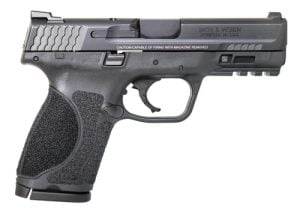
If we could only recommend one handgun to a first-time buyer, it would be the Smith & Wesson M&P9 2.0 Compact. It does everything well and nothing poorly. The aggressive texturing on the grip gives you confident purchase without tearing up your hands, and those four palm swell inserts mean you can dial in the fit whether you have large mitts or smaller fingers. Out of the box, it runs reliably with any factory ammunition we’ve fed it, brass, steel, hollow points, all of it.
The 4-inch barrel sits in the sweet spot between concealability and shootability. You get a long enough sight radius for accurate shooting at the range, but the compact frame still tucks inside a waistband holster without printing. Smith & Wesson also gives you the choice of a thumb safety model or a no-safety model, which is rare and extremely valuable for beginners who haven’t yet decided which camp they fall into.
The trigger isn’t match-grade, but it’s predictable and consistent, two things that matter far more when you’re building fundamentals. After about 500 rounds, the take-up smooths out noticeably. Aftermarket support is massive: holsters, night sights, upgraded triggers, and optics-ready slides are all readily available. This is the pistol we hand to students on their first range day, and the one most of them end up buying.
Best For: First-time buyers who want the most well-rounded, do-it-all pistol with zero compromises on reliability or ergonomics.
| Firearm | Caliber | Weight | Capacity | Barrel | MSRP | Price |
|---|---|---|---|---|---|---|
| Smith & Wesson M&P9 2.0 Compact | 9mm | | 24.0 oz | | 15+1 | | 4.0" | | ~$500 | | |
| Glock 19 Gen 6 | 9mm | | 20 oz | | 15+1 | | 4.02" | | ~$745 | | |
| Sig Sauer P365 | 9mm | | 17.8 oz | | 10+1, 12+1 with the extended mag | | 3.1" | | ~$500 | | |
| Springfield Armory Hellcat | 9mm | | 18.3 oz | | 11+1, 13+1 with the extended mag | | 3.0" | | ~$530 | | |
| 9 Ruger Security | 9mm | | 23.7 oz | | 15+1 | | 4.0" | | ~$320 | | |
| Smith & Wesson SD9 VE | 9mm | | 22.7 oz | | 16+1 | | 4.0" | | ~$280 | | |
| Taurus G3 | 9mm | | 24.8 oz | | 15+1, 17+1 with the extended mag | | 4.0" | | ~$250 | |

2. Glock 19 Gen 6
Caliber: 9mm | Capacity: 15+1 | Barrel Length: 4.02″ | Weight: 20 oz | MSRP: ~$745 | Safety: Trigger safety, no manual safety
| Category | Score |
|---|---|
| Ease of Use | ⭐⭐⭐⭐½ |
| Reliability | ⭐⭐⭐⭐⭐ |
| Ergonomics | ⭐⭐⭐⭐ |
| Accuracy | ⭐⭐⭐⭐½ |
| Value | ⭐⭐⭐⭐ |
| Overall | ⭐⭐⭐⭐½ |
Pros
- Legendary reliability, runs in any condition, with any ammo
- Largest aftermarket ecosystem of any handgun on the planet
- Gen 5 marksman barrel delivers excellent accuracy
Cons
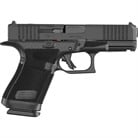
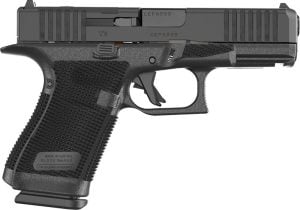
The Glock 19 is the Honda Civic of the handgun world. It’s not the flashiest, not the cheapest, but it just works, every single time. There’s a reason it’s the most popular pistol among law enforcement, military, and civilian shooters worldwide.
The Gen 6 iteration refined the platform with improved ergonomics, a flat trigger, and a direct mount optics system.
Where the Glock 19 really shines for beginners is its simplicity. There are no levers, decockers, or switches to fumble with under stress. You load it, you rack the slide, and it fires when you pull the trigger. The internal safeties prevent it from going off unless that trigger is deliberately pressed. This mechanical simplicity also translates to easy maintenance. Field stripping a Glock takes about five seconds and requires no tools.
The trade-off is ergonomics. Glock’s grip angle is distinctive and doesn’t feel as natural in the hand as the M&P or the P365 for most shooters. Some people love it, some tolerate it. We’d strongly recommend handling one in a gun store before buying.
The aftermarket is so deep, though, that literally anything you want to change, sights, trigger, grip texture, slide cuts, can be done affordably. If you want a platform you can grow with for years, the Glock 19 is hard to beat.
Best For: Shooters who value proven reliability above all else and want access to the widest aftermarket ecosystem available.

3. Sig Sauer P365
Caliber: 9mm | Capacity: 10+1, 12+1 with the extended mag | Barrel Length: 3.1″ | Weight: 17.8 oz | MSRP: ~$500 | Safety: Optional manual safety
| Category | Score |
|---|---|
| Ease of Use | ⭐⭐⭐⭐½ |
| Reliability | ⭐⭐⭐⭐⭐ |
| Ergonomics | ⭐⭐⭐⭐½ |
| Accuracy | ⭐⭐⭐⭐ |
| Value | ⭐⭐⭐⭐½ |
| Overall | ⭐⭐⭐⭐½ |
Pros
- Revolutionary capacity in a micro-compact frame, 10+1 standard
- Extremely comfortable for shooters with small to medium hands
- Excellent stock trigger with a clean, short reset
Cons
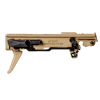
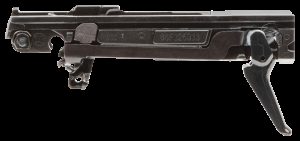
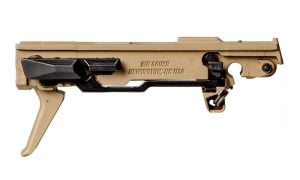
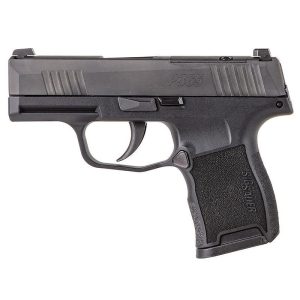

The Sig Sauer P365 changed the micro-compact game when it launched, and it remains one of the best options in the category. Before the P365 existed, you had to choose between a small gun with 6-7 rounds or a bigger gun with double-stack capacity. Sig figured out how to cram 10+1 rounds of 9mm into a package barely larger than a subcompact single-stack. That’s a genuine engineering achievement, and it’s why this gun sells in enormous numbers.
For beginners with smaller hands, and this is a common concern we hear, especially from women and younger shooters, the P365 is often the most comfortable option in the store. The grip circumference is noticeably slimmer than a Glock 19 or M&P Compact, and the reach to the trigger is shorter. Sig’s stock trigger is also one of the best in its class: flat-faced, crisp, with a tactile reset that helps you learn trigger control faster.
The downside of any micro-compact is physics. A lighter, shorter gun means more felt recoil per shot. The P365 isn’t punishing, but a complete novice will notice the snap compared to a compact or full-size pistol. Our recommendation: if concealed carry is your primary goal from day one, the P365 is a top-tier choice. If you’re mainly a range shooter who might carry later, start with something bigger and come back to the P365 when you’re ready.
Best For: Shooters with smaller hands or anyone who prioritizes concealability and wants maximum capacity in the smallest possible package.

4. Springfield Armory Hellcat
Caliber: 9mm | Capacity: 11+1, 13+1 with the extended mag | Barrel Length: 3.0″ | Weight: 18.3 oz | MSRP: ~$530 | Safety: Optional manual safety, the Hellcat OSP
| Category | Score |
|---|---|
| Ease of Use | ⭐⭐⭐⭐ |
| Reliability | ⭐⭐⭐⭐½ |
| Ergonomics | ⭐⭐⭐⭐ |
| Accuracy | ⭐⭐⭐⭐ |
| Value | ⭐⭐⭐⭐½ |
| Overall | ⭐⭐⭐⭐ |
Pros
- Highest capacity in the micro-compact class, 11+1 standard
- Adaptive grip texture provides excellent hold without being abrasive
- U-Dot tritium/luminescent sight system is outstanding in low light
Cons

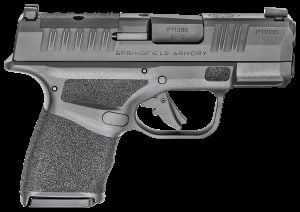
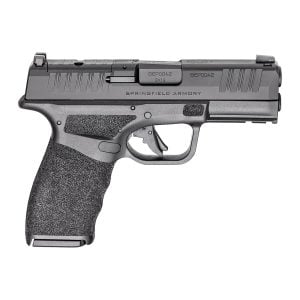

Springfield’s Hellcat entered the micro-compact wars as a direct competitor to the P365 and carved out its own niche by pushing capacity even further. The standard flush-fit magazine holds 11 rounds, one more than the P365’s flush mag, and the extended magazine bumps that up to 13+1. For a gun this small, that’s remarkable. In a defensive situation, more rounds in the gun means fewer reloads, and for a beginner who may not shoot with perfect precision under stress, every round counts.
The standout feature for us is the U-Dot sight system. The rear sight has a U-shaped notch with a tritium vial, and the front sight has a tritium dot surrounded by a high-visibility luminescent ring. In low light, your eye naturally centers that glowing front dot inside the U-notch. It’s faster and more intuitive than traditional three-dot sights, and beginners consistently pick it up quicker in our experience. Springfield also offers the Hellcat OSP model with a factory-milled optic cut if you want to add a red dot later.
Our main critique is the slide. It’s thin, and the serrations, while aggressive, don’t give as much purchase as a Glock or M&P slide. Shooters with limited hand strength, common among true beginners, sometimes struggle to rack it confidently. If you’re considering the Hellcat, practice the “push-pull” method of racking the slide, push the frame forward while pulling the slide back rather than just trying to pull the slide rearward. The trigger also isn’t quite as refined as Sig’s, but it’s perfectly serviceable.
Best For: Concealed carry-focused beginners who want every possible round in the magazine and appreciate excellent stock sights.

5. Ruger Security-9
Caliber: 9mm | Capacity: 15+1 | Barrel Length: 4.0″ | Weight: 23.7 oz | MSRP: ~$320 | Safety: Manual thumb safety and internal hammer block
| Category | Score |
|---|---|
| Ease of Use | ⭐⭐⭐⭐½ |
| Reliability | ⭐⭐⭐⭐½ |
| Ergonomics | ⭐⭐⭐⭐ |
| Accuracy | ⭐⭐⭐⭐ |
| Value | ⭐⭐⭐⭐⭐ |
| Overall | ⭐⭐⭐⭐ |
Pros
- Exceptional value, full-size performance at a budget price
- Includes a manual thumb safety for added peace of mind
- Easy to field strip with Ruger’s Secure Action trigger system
Cons
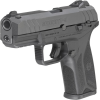
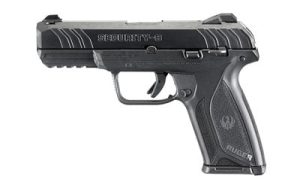
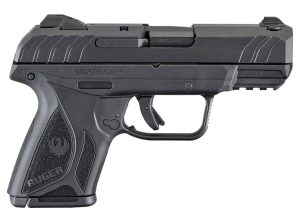

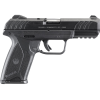
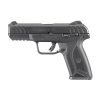
The Ruger Security-9 occupies a critical price point for beginners: it’s a legitimate, reliable 15-round 9mm pistol that routinely sells for under $350. That matters because the real cost of getting into shooting isn’t just the gun, it’s ammunition, a holster, a safe, range fees, and maybe a training class. Saving $150-200 on the pistol means you can put that money toward practice ammo, which will do more for your shooting ability than any premium firearm feature.
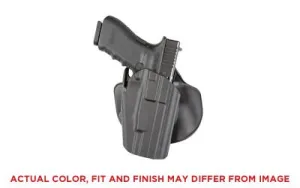
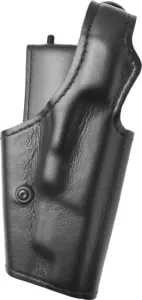
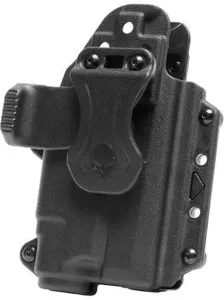
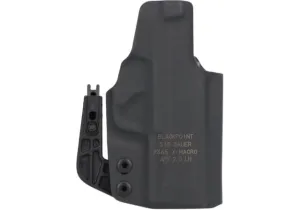
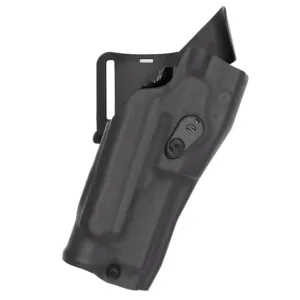
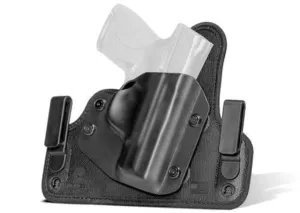
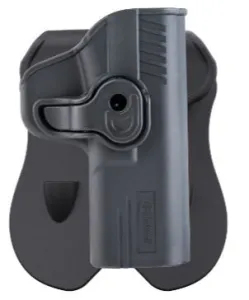
Holsters and Range Gear
Best-scored accessories across 200+ retailers · Updated every 4 hours

9mm Ammo on Sale
On-sale 9mm from 200+ retailers · Updated every 4 hours


Ruger built the Security-9 on a glass-filled nylon frame with a blued alloy steel slide. It borrows its internal hammer-fired mechanism from Ruger’s proven LCP II design, scaled up. The trigger pull is smooth with a positive reset, and the manual thumb safety is easy to disengage without being so loose that it clicks off accidentally. For a new shooter who feels more comfortable having a manual safety, and there’s absolutely nothing wrong with that preference, the Security-9 is one of the best options at any price.
Where it falls short compared to the M&P or Glock is refinement. The grip texturing is smoother and can feel slippery with sweaty hands. The magazines are notoriously stiff when new and take a few hundred rounds to break in and a speed loader helps enormously. And the aftermarket, while growing, is nowhere near as deep. But if your priorities are reliability, capacity, and keeping money in your pocket for training ammo, the Security-9 delivers.
Best For: Budget-conscious buyers who want full-size capacity and a manual safety without sacrificing reliability.

6. Smith & Wesson SD9 VE
Caliber: 9mm | Capacity: 16+1 | Barrel Length: 4.0″ | Weight: 22.7 oz | MSRP: ~$280 | Safety: Trigger safety, no manual safety
| Category | Score |
|---|---|
| Ease of Use | ⭐⭐⭐⭐ |
| Reliability | ⭐⭐⭐⭐½ |
| Ergonomics | ⭐⭐⭐½ |
| Accuracy | ⭐⭐⭐⭐ |
| Value | ⭐⭐⭐⭐⭐ |
| Overall | ⭐⭐⭐⭐ |
Pros
- Incredible value, often found under $300 brand new
- 16+1 capacity is the highest on this list
- Self-Defense Trigger has a clean break despite the heavy pull
Cons
![SMITH & WESSON SD9VE [FDE] *10 ROUND*](https://www.usa-gun-shop.com/wp-content/uploads/ugs-pc-img/aa182d948d88c8e39baa6c6b2cb9818a.png)
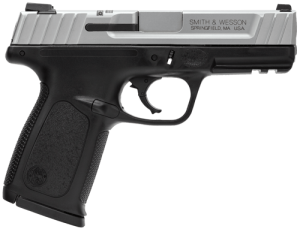
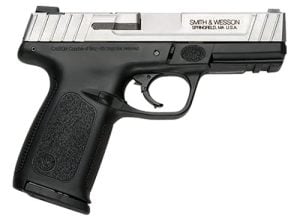
The Smith & Wesson SD9 VE, Self Defense, Value Enhanced is the spiritual successor to the old Sigma series, and it’s come a very long way. You can frequently find it on sale for under $280, which makes it one of the least expensive name-brand 9mm pistols on the market. Despite the basement-level price, this is a gun built by one of the most respected manufacturers in the industry, and it carries their lifetime service warranty.
The standout number here is 16+1 capacity. That’s more rounds than a Glock 19, more than an M&P Compact, and significantly more than any micro-compact on this list. For a home defense gun that lives in a nightstand safe, where concealability doesn’t matter and round count does, the SD9 VE makes a very strong case. The stainless steel slide and barrel are durable and resist corrosion well, and the overall build quality belies the low sticker price.
The big compromise is the trigger. At roughly 8 pounds of pull weight, it’s noticeably heavier than every other gun on this list. Smith & Wesson designed it this way intentionally, the heavy trigger acts as a passive safety mechanism for a gun that has no manual safety lever. For a beginner, this actually has an upside: it forces you to develop a strong, deliberate trigger press, which builds good habits. But if you plan to shoot competitively or want a lighter pull, a $25 Apex Tactical spring kit drops it to around 5.5 pounds and transforms the gun.
Best For: Home defense on a strict budget, maximum capacity from a trusted manufacturer at the lowest price on this list.

7. Taurus G3
Caliber: 9mm | Capacity: 15+1, 17+1 with the extended mag | Barrel Length: 4.0″ | Weight: 24.8 oz | MSRP: ~$250 | Safety: Manual thumb safety and trigger safety
| Category | Score |
|---|---|
| Ease of Use | ⭐⭐⭐⭐ |
| Reliability | ⭐⭐⭐⭐ |
| Ergonomics | ⭐⭐⭐⭐ |
| Accuracy | ⭐⭐⭐⭐ |
| Value | ⭐⭐⭐⭐⭐ |
| Overall | ⭐⭐⭐⭐ |
Pros
- The most affordable full-size 9mm from a major manufacturer
- Ships with both a 15-round and a 17-round magazine
- Surprisingly good trigger with a short, tactile reset
Cons
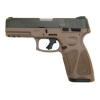
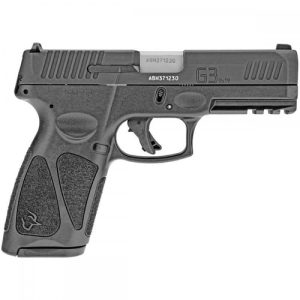
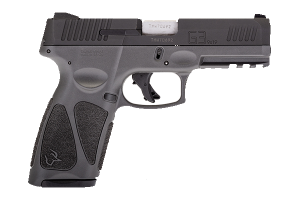
Let’s address the elephant in the room: Taurus had quality control issues in the past. The G3, however, represents a genuinely different era for the company. Built in their modern Georgia manufacturing facility, it’s been one of the most reliable budget pistols we’ve tested. We’ve put over 2,000 rounds through our test gun without a single malfunction, not one failure to feed, not one failure to eject. At roughly $250, that kind of reliability is hard to argue with.
Taurus ships the G3 with two magazines: a flush-fit 15-rounder and an extended 17-rounder with a grip sleeve. That’s a $40-50 value in extra magazines alone, which sweetens an already impressive deal. The trigger is honestly the biggest surprise here, it’s a flat-faced design with a short take-up and a crisp break, easily the best stock trigger of any gun under $300 on this list. The restrike capability, you can pull the trigger again on a round that doesn’t fire is another nice safety net for beginners.
The G3 doesn’t cut corners where it counts. It has steel sights, not plastic, a Picatinny rail for a weapon light, and aggressive front and rear slide serrations. Where it does economize is in the finish, the Tenifer-like coating on the slide will show holster wear faster than a Glock’s nDLC finish. That’s cosmetic, not functional. If you’re a first-time buyer and every dollar matters, the Taurus G3 gives you more gun per dollar than anything else on the market right now.
Best For: Absolute budget buyers who refuse to compromise on capacity or features and don’t mind the Taurus name on the slide.
Buyer’s Guide: How to Choose Your First Handgun
Now that you’ve seen the seven best options, let’s dig into the factors that should drive your decision. Choosing a handgun isn’t like picking a phone case, this is a serious tool, and understanding the “why” behind each feature will make you a smarter buyer and a better shooter.
Semi-Auto vs Revolver for Beginners
You’ll notice every gun on our list is a semi-automatic pistol, not a revolver. That’s deliberate. The old advice of “get a revolver for simplicity” hasn’t aged well. Modern striker-fired semi-autos are just as simple to operate as a revolver, load, rack, shoot, while offering double or triple the capacity, faster reloads, less felt recoil because the cycling action absorbs energy, and significantly cheaper practice ammunition compatibility.
Revolvers have their place, particularly for people with limited hand strength who struggle to rack a semi-auto slide. A revolver eliminates that problem entirely. A .22 LR revolver with almost zero recoil can be an ideal starting point. But for the vast majority of beginners, a modern 9mm semi-auto is the better training platform. You’ll learn magazine changes, slide manipulation, and malfunction clearing, all skills that transfer to virtually any handgun you might own in the future.
Caliber Choice: Why 9mm Wins
Every handgun on this list is chambered in 9mm Luger, and that’s not a coincidence. The 9mm cartridge hits the sweet spot of stopping power, controllability, capacity, and cost. Modern 9mm defensive ammunition such as Federal HST and Speer Gold Dot performs nearly identically to .40 S&W and .45 ACP in FBI ballistic gel testing, while producing significantly less recoil. Less recoil means faster follow-up shots and more accurate shooting, especially under stress.
The cost factor cannot be overstated for beginners. As of 2026, 9mm practice ammunition costs roughly $0.22-0.28 per round. Comparable .45 ACP runs $0.38-0.50 per round. Over the course of even 1,000 rounds of practice, which any serious shooter will go through in the first few months, that’s a savings of $150 or more. That money is better spent on range time and professional instruction. Start with 9mm, get proficient, and explore other calibers later if you’re curious.
Size Matters: Full, Compact, and Subcompact
Handgun sizing follows a general hierarchy: full-size, compact, subcompact, and micro-compact. Full-size pistols such as the Taurus G3 and SD9 VE have 4+ inch barrels and longer grips that accommodate 15-17 round magazines. They’re the easiest to shoot accurately and the most comfortable during extended range sessions, but they’re harder to conceal on your body.
Compact pistols such as the M&P9 2.0 Compact and Glock 19 shave about a half inch off the grip and barrel, putting them in a “Goldilocks” zone that’s still comfortable at the range but concealable with the right holster. These are the most versatile size class and our top recommendation for someone buying just one gun.
Micro-compacts such as the P365 and Hellcat prioritize concealability above all else. They’re noticeably snappier to shoot and hold fewer rounds in their flush magazines. If concealed carry is your primary purpose from day one, a micro-compact makes sense. If you’re primarily a range shooter or home defender, go compact or full-size and add a micro-compact later when you’ve built your skills.
Manual Safety vs No Manual Safety
This is one of the most debated topics in the gun world, and beginners often have strong feelings before they’ve had enough experience to form an informed opinion. Here’s the balanced take: both options are safe when paired with proper training and handling habits.
A manual thumb safety adds an extra step between drawing the gun and firing it. Proponents argue it’s an additional layer of protection against negligent discharge. Critics argue it’s one more thing to fumble under stress and that you might forget to disengage it when you need the gun most. The reality is that a manual safety is a preference, not a requirement. If having a safety lever makes you feel more confident as a new gun owner, get a gun that has one, the M&P9, P365, Security-9, and G3 all offer manual safety models. If you’d rather keep things simple, Glock’s trigger safety system and the SD9 VE’s heavy trigger accomplish the same goal without an external lever.
What actually prevents negligent discharges is following the four fundamental rules of gun safety listed below, using a quality holster that covers the trigger guard, and keeping your finger indexed along the frame until you’ve made the conscious decision to fire. No mechanical device is a substitute for proper training and discipline.
Budget Reality: What to Expect from $250 to $600
One of the most common questions we get is “how much should I spend on my first gun?” The honest answer: as little as necessary to get a reliable, well-built pistol, and then spend the rest on ammunition, training, and accessories. A $250 Taurus G3 with 1,000 rounds of practice ammo behind it will serve you infinitely better than a $600 Sig that sits in a drawer because you couldn’t afford to practice with it.
Here’s a realistic budget breakdown for a complete beginner setup in 2026. The gun itself will run $250-$550 depending on your choice. Add $100-150 for a quality Kydex holster if carrying and $100-200 for a quick-access gun safe, non-negotiable if anyone else lives in your home. Budget $100-150 for 500 rounds of practice ammunition, and another $75-150 for a beginner pistol course at your local range. All in, you’re looking at $625-1,200 for a complete, responsible setup. The gun is just one piece of the puzzle.
At the $500+ price point, you’re getting refinements: better triggers, smoother actions, superior grip textures, and optics-ready slides. These are nice, but they’re not necessary for a first gun. Every pistol on this list, from the $250 Taurus G3 to the $550 Glock 19, will go bang when you need it to. That’s what matters.
⚠️ Safety First
Every new gun owner must know the 4 universal rules of gun safety:
- Treat every firearm as if it is loaded.
- Never point the muzzle at anything you are not willing to destroy.
- Keep your finger off the trigger until your sights are on target.
- Be sure of your target and what is beyond it.
Invest in a quality holster, a gun safe, and professional training. Read our full Handgun Buyer’s Guide for more.
Final Thoughts
Choosing your first handgun doesn’t have to be complicated. Every pistol on this list has been tested, proven, and trusted by thousands of shooters. If you want our single strongest recommendation: the Smith & Wesson M&P9 2.0 Compact strikes the best balance of shootability, reliability, ergonomics, and value. But you genuinely can’t go wrong with any of these seven.
Remember: the best handgun for a beginner is the one you’ll actually practice with. Go to a local range that offers rentals, try a few of these in person, and buy the one that feels right in your hand. Then invest in training, put in the range time, and build your skills on a solid foundation. The gun is just the starting point, the shooter behind it is what makes the difference.
Frequently Asked Questions
What is the best handgun for a first-time buyer?
The Smith and Wesson M&P 2.0 Compact and Glock 19 are ideal first handguns. Both are reliable, affordable, easy to maintain, and have extensive aftermarket support. Start with compact size, not subcompact.
Should my first handgun be a revolver or semi-auto?
Semi-auto for most people. Modern 9mm semi-autos hold more rounds, are easier to reload, and have less felt recoil than comparable revolvers. Revolvers are simpler mechanically but harder to shoot well.
What caliber should I buy for my first handgun?
9mm. It is affordable to practice with, has manageable recoil, and modern defensive loads perform well. Higher capacity than .40 or .45 with less recoil. The FBI, military, and most law enforcement agree.
How much should I spend on my first gun?
400 to 600 dollars gets you a quality handgun from Glock, Smith and Wesson, Sig Sauer, or Ruger. Budget options from Taurus work at 250 to 300. Avoid going below 200. Also budget for a holster, ammo, and training.
Do I need to take a class before buying a gun?
Not legally required in most states, but strongly recommended. A basic pistol safety course teaches safe handling, storage, and marksmanship fundamentals. Many ranges and gun stores offer beginner classes for 100 to 200 dollars.
Is a Glock good for beginners?
Excellent. Glocks are simple to operate, extremely reliable, easy to clean, and have the largest aftermarket of any handgun. The Glock 19 is the most popular choice. The controls are intuitive for new shooters.
Should I buy a full-size or compact handgun first?
Compact. A compact like the Glock 19 or M&P Compact is small enough to carry concealed but large enough to shoot comfortably at the range. Full-size is better for range only. Subcompact is too small to learn on.
What accessories do I need with my first handgun?
A quality holster, eye and ear protection, cleaning kit, and at least 500 rounds of practice ammo. A weapon light for home defense is worth adding. Skip fancy accessories until you master the fundamentals.