

Last updated August 2026 · By Nick Hall, who put 847 rounds through the Springfield 1911 Defender for this review
Affiliate disclosure: This Springfield Armory 1911 Defender review contains affiliate links. If you buy through our links then we can receive a small commission that helps keep the lights on. You don’t pay anything more.
- Treat every gun as loaded
- Point the muzzle in a safe direction
- Keep your finger off the trigger until you’re ready to shoot
- Know your target and what’s beyond
Quick Answer: The Springfield Armory 1911 Defender is the best entry-level Springfield 1911 you can buy in 2026, an all-steel mil-spec 5-inch .45 ACP at around $605, the cheapest legitimate Springfield 1911 with the company’s standard build quality and full warranty support.
After an 847-round test the Defender ran reliably across mixed brass and quality defensive ammo (with a 200-round break-in clearing early feeding stoppages typical of new 1911s). Trigger pull averaged 5 pounds with a clean wall. The Defender is positioned as the entry-level Springfield Mil-Spec; the Loaded model adds match barrel and night sights for $150-$200 more.
The biggest mistake new Defender owners make is buying budget magazines to match the budget gun. Factory Springfield mags are acceptable but the gun runs noticeably better on Wilson Combat or Chip McCormick magazines ($25-$30 each). Skip the steel-cased range ammo, 1911s reward quality ammo. Plan on 200-500 rounds of break-in with quality ball ammo.
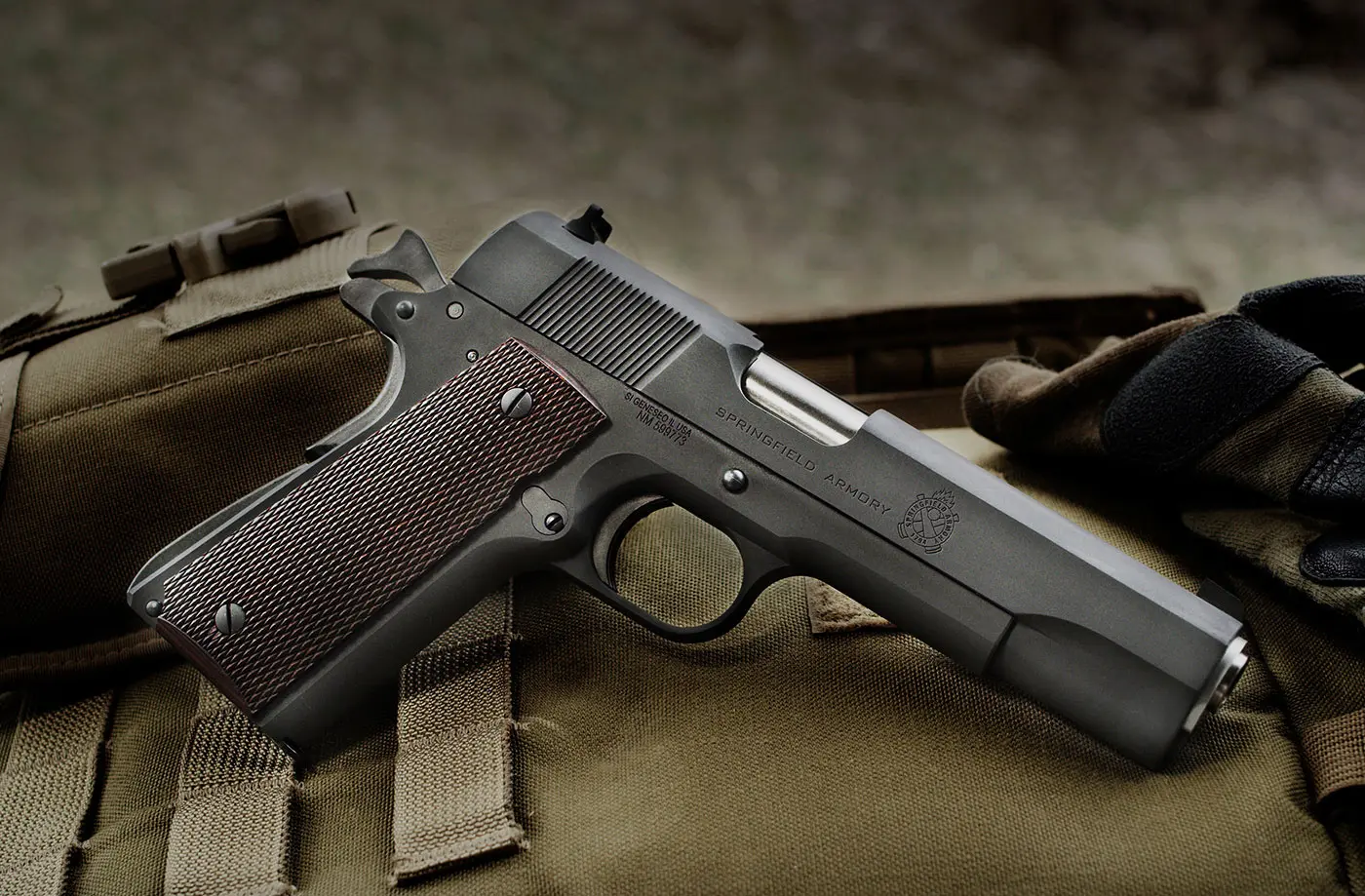
Table of Contents
How we tested: Every pick here is ranked against our testing methodology. Minimum round counts, accuracy and reliability protocols, the failures that disqualify a gun.
Review: Springfield Armory 1911 Defender, The No-Frills GI That Gets It Done
Our Rating: 7.5/10
- RRP: $725
- Street Price: $579.99 (Check our live pricing for the best current deal)
- Caliber: .45 ACP
- Action: Single-action, semi-automatic
- Barrel Length: 5in forged stainless, match grade, 1:16
- Overall Length: 8.6″
- Height: 5.5″
- Width: Not published by Springfield
- Weight (Unloaded): 39 oz (2.44 lbs)
- Capacity: 7+1
- Frame Material: Forged carbon steel, parkerized
- Slide Material: Forged carbon steel, parkerized
- Sights: GI-style fixed, 3-dot
- Safety: Manual thumb safety, grip safety
- Grip: Hardwood, double diamond checkered
- Made in: Geneseo, Illinois, USA
Pros
- Genuinely affordable entry into 1911 platform
- Reliable .45 ACP performance out of the box
- Forged carbon steel frame and slide (not cast)
- Springfield lifetime warranty
- Parkerized finish holds up well to holster wear
- Made in the USA
Cons
- GI sights are hard to pick up in low light
- 7-round magazine capacity is limited
- Trigger could use some polishing out of the box
- No accessory rail for lights or lasers
- Arched mainspring housing may not suit all hand sizes
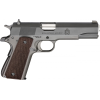
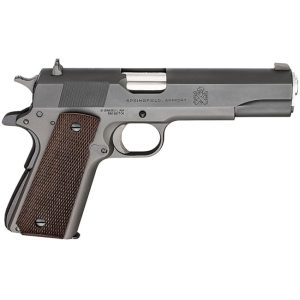
Quick Take
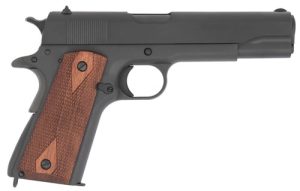
I’ll be upfront: the Springfield Armory 1911 Defender is not the prettiest 1911 on the market, and it is not trying to be. It is a bare-bones, GI-pattern pistol that focuses on getting the fundamentals right at a price point that most shooters can actually afford. Think of it as a canvas. You can shoot it stock forever, or you can use it as a platform for upgrades down the road.
After putting over 800 rounds through this gun, I came away genuinely impressed by how well it ran. Zero malfunctions with quality brass-cased ammunition, decent accuracy at 25 yards, and a trigger that smoothed out noticeably after about 300 rounds. The parkerized finish is military-grade durable, even if it does not win any beauty contests.
Where the Defender falls short is exactly where you would expect for the money. The GI sights are tiny and hard to see, the trigger has some grit out of the box, and 7+1 capacity feels limiting in 2026. None of that is surprising. What is surprising is how tight the slide-to-frame fit is at this price point. Springfield clearly spent the budget in the right places.
Best for: First-time 1911 buyers, shooters who want a reliable .45 ACP without breaking the bank, and anyone looking for a solid platform to customize over time.
Defender or Mil-Spec? They Are the Same Gun
Worth settling this first, because Google’s own autocomplete carries “springfield 1911 defender vs mil-spec” and the honest answer is that there is nothing to compare. It is one pistol with two names.
Springfield calls it the Defend Your Legacy Series 1911 Mil-Spec, SKU PBD9108L, at a $725 MSRP. “Defender” is how Palmetto State Armory lists that same SKU. Neither the word “Defender” nor a Defender series appears anywhere on Springfield’s own site.
This matters because the two names carry different prices in the same market. PSA lists PBD9108L as the “Springfield 1911 Defender” at $684.99. Classic Firearms lists the identical SKU as the “Springfield PBD9108L 1911 MIL-SPEC” at $604.63. Same gun, same part number, $80 apart. Search both names before you buy.
One more wrinkle. The older plain “1911 Mil-Spec”, SKU PB9108L without the D, is now marked discontinued on Springfield’s site. If a listing shows that part number it is old stock, which is not a problem in itself, but it is not the current gun.
Why Springfield Built the Defender This Way
Springfield Armory has been building 1911s in Geneseo, Illinois since the mid-1980s, and the Defender (Mil-Spec) sits at the foundation of their lineup for a reason. It is designed to be a faithful reproduction of the classic Government Model with just enough modern manufacturing to keep things reliable. No forward serrations, no beavertail, no skeletonized trigger. Just a straightforward 1911 that John Browning would recognize.
The “Defender” name replaced what Springfield used to call the “Mil-Spec” in their catalog, though the gun itself is essentially the same pistol. It uses a Series 70 firing system (no firing pin block), forged frame and slide, and a standard GI recoil system with a plug and flat spring. Springfield made a deliberate choice to keep costs down by skipping features like an extended thumb safety, though the gun does include a lowered and flared ejection port.
That restraint is the whole point. The Defender targets buyers who want a reliable 1911 at the lowest possible price from a reputable American manufacturer. If you want more features, Springfield offers the Loaded and Operator models further up the ladder. The Defender is there for people who either prefer the classic GI look or plan to add their own upgrades piece by piece.
Competitor Comparison
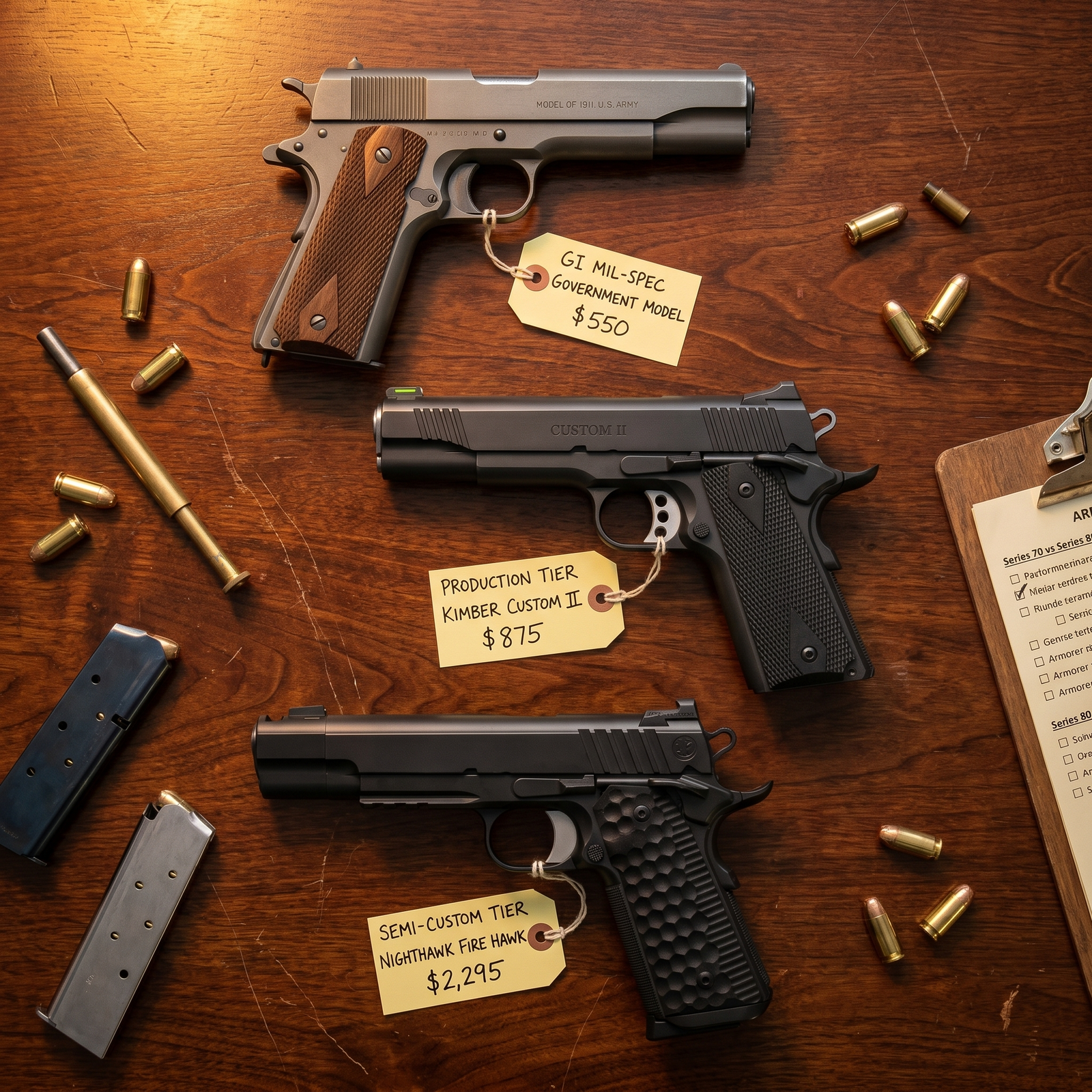
The sub-$700 1911 market has a few strong contenders. Here is how the Springfield Defender stacks up against the most common alternatives you will find at the same gun counter.
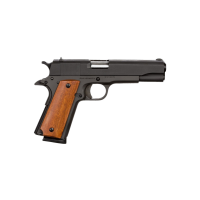
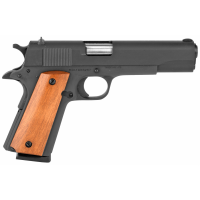
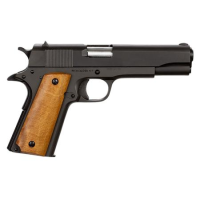
Rock Island Armory GI Standard
The Rock Island (now Armscor) GI Standard is the perennial budget 1911 king. It comes in about $145 cheaper at $460, and it is a perfectly functional pistol. Where the Springfield edges ahead is in fit and finish. The Defender has a noticeably tighter slide-to-frame fit and smoother machining. If every dollar counts, the Rock Island is hard to beat. If you can stretch the budget, the Springfield feels like a step up in hand.
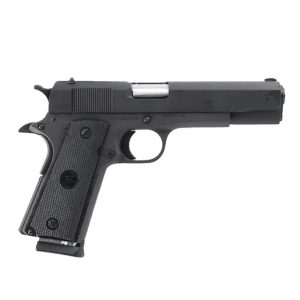
Tisas 1911 A1 US Army
The Turkish-made Tisas 1911 A1 has become a surprise hit in the budget 1911 world. It runs from $407, making it one of the cheapest new-production 1911s available. Build quality has been mostly good, though I have seen more reports of fit issues compared to the Springfield. For someone on a very tight budget, the Tisas delivers solid value. The Springfield commands a premium because of its US manufacturing and stronger warranty support.
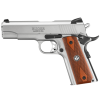
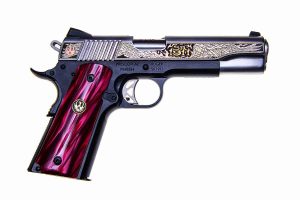
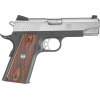
Ruger SR1911
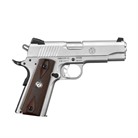
The Ruger SR1911 starts at $866, but it comes with features the Defender skips entirely. Novak-style dovetail sights, a lowered and flared ejection port, an extended thumb safety, and a beavertail grip safety are all standard. If your budget allows it, the Ruger is a better out-of-the-box experience. The Springfield still makes sense for buyers who want to keep costs low or plan their own upgrades.
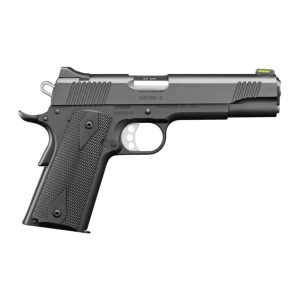
Kimber Custom II
Kimber occupies a different tier. The Custom II runs from $699, and you get a match-grade barrel, aluminum match trigger, and better sights. Kimber’s reputation has been mixed over the years (some batches have had reliability complaints), but a well-sorted Custom II is a noticeably refined shooting experience compared to the Defender. The price gap is significant though. You could buy a Defender and a case of .45 ACP for what a Kimber costs.
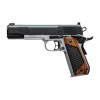
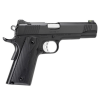
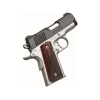
Mil-Spec Variants: Which One to Get
Springfield lists four current configurations of this gun. The differences are finish and state compliance, not mechanics, so pick on looks and on where you live.
The black PBD9108L is the one to buy unless you specifically want stainless or you are in California. The two CA-compliant models carry a $157 to $190 premium for the same pistol with a compliant roster listing.
Technical Deep Dive
Frame and Slide
Both the frame and slide are forged carbon steel with a parkerized finish. This is a meaningful distinction from some budget competitors that use cast frames. Forging creates a denser, stronger grain structure in the steel, which translates to better long-term durability. The parkerizing is a matte gray-green that absorbs oil well and resists corrosion. It will develop a nice patina over time rather than wearing shiny like bluing does.
The slide-to-frame fit on my example was surprisingly tight for this price point. There was minimal side-to-side play and no vertical wobble at all. The slide runs are clean with no visible tool marks. Springfield is clearly doing good QC work at their Geneseo facility.
Barrel and Bushing
The Defender uses a 5-inch carbon steel barrel with a traditional barrel bushing lockup. It is not a match barrel (you would need to step up to the Springfield Loaded for that), but it is well-made and concentric. The barrel hood fit was good on my sample, with consistent lockup. The bushing requires a bushing wrench for disassembly, which Springfield includes in the box.
Trigger
The trigger is a standard GI-style solid trigger (not skeletonized) with a long bow. Out of the box, my example broke at approximately 6.5 pounds with noticeable creep and grit in the take-up. This is probably the Defender’s weakest area right out of the box. After about 300 rounds of break-in, the pull cleaned up to around 5.5 to 6 pounds with much less grit.
A good gunsmith can get this trigger down to a crisp 4-pound pull for under $100 if it bothers you.
Sights
The GI-style 3-dot sights are the most common complaint about this gun, and I understand why. They are small, low-profile, and hard to pick up quickly. In bright outdoor light they are adequate. In any kind of dim or indoor lighting, they become a real limitation. The front sight is staked (not dovetailed), so swapping to aftermarket sights requires machining. If fast sight acquisition matters to you, budget an extra $100 to $150 for a dovetail cut and new sights.
Safety Systems
The Defender uses the standard 1911 safety setup: a manual thumb safety on the left side and a grip safety at the rear of the frame. The thumb safety on my example was positive and firm without being too stiff. The grip safety engaged and disengaged reliably with a normal firing grip. There is no firing pin block (Series 70 design), which contributes to a cleaner trigger pull compared to Series 80 guns.
Grips and Ergonomics
The hardwood double-diamond checkered grips look classic and feel decent in hand. They are not as aggressive as G10 or rubber grips, but they provide enough texture for a solid hold. The Defender uses an arched mainspring housing rather than the flat housing found on strict GI reproductions. This is a personal preference issue. Some shooters prefer the arched style while others like the flat GI housing. Swapping the mainspring housing is a simple at-home job if needed.
At the Range
I put 847 rounds through the Defender over four range sessions spanning about six weeks. The ammo breakdown was 500 rounds of Winchester White Box 230-grain FMJ, 200 rounds of Federal American Eagle 230-grain FMJ, 100 rounds of Sellier & Bellot 230-grain FMJ, and 47 rounds of Federal HST 230-grain +P hollow points.
Reliability was excellent. Zero malfunctions with any of the brass-cased loads. Every round fed, fired, and ejected without a single hiccup. The extractor tension felt good throughout, and the ejection pattern was consistent (brass landing about 4 to 6 feet to the right). I did not test steel-cased ammunition, as I mostly avoid it in 1911s.
Recoil is about what you would expect from a full-size, all-steel .45 ACP. The 39-ounce weight soaks up a lot of the push, and the recoil impulse is more of a smooth roll than a sharp snap. It is a very pleasant gun to shoot, especially compared to lightweight or compact .45s. I could run through a box of 50 rounds without any hand fatigue.
The trigger, as I mentioned, started rough but improved dramatically with use. By the end of the 847 rounds, it had become noticeably smoother with a cleaner break. It is still not a match trigger, but it became genuinely enjoyable to shoot. I found myself slowing down and focusing on fundamentals, which is exactly what a 1911 should encourage.
Accuracy Testing
I shot five 5-round groups at 25 yards from a sandbag rest using each ammunition type. The best groups came from the Federal American Eagle, which averaged 2.8 inches. Winchester White Box was slightly larger at 3.1 inches on average. The Sellier & Bellot turned in 3.0-inch groups. The Federal HST hollow points grouped at 2.6 inches, which was the tightest of the bunch.
These are solid numbers for a non-match-barreled 1911 at this price. You are not going to win a Bullseye match with the Defender, but it is more accurate than most shooters can exploit offhand. The sights are the limiting factor, not the barrel. With better sights, I suspect this gun could tighten up another half inch at 25 yards.
Performance Testing Results
| Category | Score | Notes |
|---|---|---|
| Reliability (847 rds) | 10 / 10 | Zero malfunctions with brass-cased ammo |
| Accuracy (25 yd avg) | 7.5 / 10 | 2.6″ to 3.1″ groups from rest |
| Trigger (post break-in) | 6.5 / 10 | Improved from ~6.5 lbs to ~5.5 lbs |
| Recoil Management | 8 / 10 | All-steel weight tames .45 ACP well |
| Sight Acquisition | 5 / 10 | Small GI sights are slow to pick up |
| Ergonomics | 7.5 / 10 | Classic 1911 feel, flat MSH is divisive |
Known Issues and Common Problems
No gun is perfect, and the Defender has a few issues that come up regularly among owners. I want to be transparent about what I have seen and what other shooters report.
Break-in period. Some Defenders need 200 to 300 rounds before they run completely smoothly. My example was fine from round one, but I have heard from owners who experienced occasional failures to feed during the first couple of hundred rounds. This is not unusual for a tight-fitting 1911 and normally resolves on its own.
Magazine sensitivity. The included Springfield magazine works fine, but some aftermarket magazines (particularly cheap Korean-made ones) can cause feeding problems. Stick with Wilson Combat, Chip McCormick, or Mec-Gar magazines if you want extras. The $15 magazines from random brands are not worth the frustration.
Sight limitations. I have already covered this, but it is worth repeating. The GI sights are the gun’s biggest functional weakness. If you plan to use this gun for anything beyond casual range use, upgrading the sights should be your first priority.
Ejection port. The lowered and flared ejection port handles brass reasonably well, though some reloaders still report occasional dings depending on the load. If you reload your .45 ACP, keep an eye on case condition.
Parts, Accessories, and Upgrades
One of the biggest advantages of owning a 1911 is the aftermarket. The Defender accepts virtually every standard Government Model part on the market. Here are the upgrades I would prioritize, in order.
| Upgrade | Recommended Product | Est. Cost | Priority |
|---|---|---|---|
| Sights | Trijicon HD Night Sights (requires dovetail cut) | $120 to $180 | High |
| Magazines | Wilson Combat 47D (7-rd) or ETM (8-rd) | $25 to $35 each | High |
| Grips | VZ Grips Operator II G10 | $60 to $80 | Medium |
| Trigger Job | Gunsmith trigger job (4 lb crisp break) | $75 to $125 | Medium |
| Grip Safety | Wilson Combat Beavertail Grip Safety | $35 to $50 | Medium |
| Recoil Spring | Wolff 18.5 lb recoil spring | $8 to $12 | Low (maintenance) |
| Mainspring Housing | Ed Brown arched checkered MSH | $40 to $55 | Low (preference) |
| Holster | Milt Sparks VMII or Safariland 7378 (OWB) | $80 to $150 | High (if carrying) |
You can find many of these parts at Brownells or Palmetto State Armory. Wilson Combat magazines in particular are worth every penny and should be your first purchase after buying the gun.
Who Should NOT Buy the Springfield 1911 Defender
It is a good gun at a fair price, and it is still the wrong gun for plenty of people.
- Anyone who wants capacity. Seven rounds of .45 and one magazine in the box. If that number bothers you, buy a Tisas 1911 Duty DS at $663.99 and get seventeen.
- Anyone shopping purely on price. A Rock Island GI Standard is $460 and a Tisas 1911A1 is $407. Both are forged, both run, and both leave $150 or more for magazines and ammunition.
- Anyone who wants a red dot without a gunsmith. This is a GI-pattern gun with fixed combat sights and no optic cut. Milling the slide costs a few hundred dollars. A Springfield Prodigy or a Staccato arrives ready.
- Anyone expecting custom-shop fit. It is a forged production 1911 at $604.63, not a hand-fitted one. If glass-smooth slide-to-frame is what you are after, that starts around $2,500 with a Wilson or a Nighthawk.
- Anyone who will not buy spare magazines. One 7-round magazine ships in the box. Budget for at least two more before you trust it for anything.
The Verdict
The Springfield Armory 1911 Defender is not flashy, it is not loaded with features, and it is not going to impress your friends at the range with its looks. What it does is run. It runs reliably, it shoots accurately enough for defensive use and recreational shooting, and it does all of this at a price that makes 1911 ownership realistic for people who are not willing to spend $800 or more.
I think of the Defender as the Honda Civic of 1911s. It is honest, dependable, and unpretentious. It gets the job done without drama. The GI sights are a genuine shortcoming, and the trigger needs some break-in, but those are expected compromises at this price point. Spend another $150 on sights and magazines after purchase, and you have a genuinely capable pistol for well under $700 all-in.
If you are looking for your first 1911, or if you want a reliable .45 ACP that you can upgrade over time, the Defender belongs on your short list. It earned its rating honestly across 847 trouble-free rounds.
Final Score: 7.5 / 10
Best for: First-time 1911 buyers on a budget, shooters who appreciate the classic GI aesthetic, anyone wanting a solid platform for gradual upgrades, and .45 ACP fans who value reliability over flash.
Cross-shopping 1911s? Read our Colt 1911 Government review.
FAQ: Springfield Armory 1911 Defender
More Defender Questions
Is the Springfield Defender the same as the Mil-Spec?
Yes, and the naming is the other way round from what most people assume. Springfield has never had a "Defender Series". Its current name for this pistol is the Defend Your Legacy Series 1911 Mil-Spec, SKU PBD9108L, at a $725 MSRP. "Defender" is how Palmetto State Armory lists that exact SKU. Same gun, same part number, and worth searching both names because PSA has it at $684.99 while Classic Firearms has it at $604.63.
What is the difference between the Defender and the Springfield Loaded?
The Loaded adds a match-grade barrel, tritium night sights, a lowered and flared ejection port, an extended thumb safety, a beavertail grip safety and a skeletonized trigger. Springfield lists the Loaded range at $999 to $1,374 against $725 for this gun, so the step up is $274 to $649 rather than the couple of hundred people expect. Whether that is worth it depends on how many of those upgrades you would otherwise buy and fit yourself.
Can the Defender handle +P .45 ACP ammunition?
Springfield rates the Defender for standard-pressure .45 ACP. While the forged steel construction can physically handle occasional +P loads, steady use of +P ammunition will accelerate wear on the recoil spring, barrel link, and other parts. If you plan to shoot +P regularly, swap to a heavier recoil spring (Wolff 20 lb) and inspect parts more frequently.
What magazines work best in the Springfield Defender?
The factory Springfield magazine works well. For extras, Wilson Combat 47D (7-round) and ETM (8-round) magazines are the gold standard. Chip McCormick Power Mags and Mec-Gar magazines also work reliably. Avoid no-name or very cheap aftermarket magazines, as they are the number one cause of feeding issues in 1911s.
Is the Springfield Defender a good first 1911?
Yes. It is one of the best entry points into the 1911 platform. The price is reasonable, Springfield's warranty and customer service are solid, and the gun accepts virtually every standard 1911 aftermarket part. You can learn the platform on the Defender and upgrade it piece by piece as your skills and preferences develop.
Is the Springfield Defender good for concealed carry?
It can work, but it is not ideal. At 39 ounces unloaded and 8.6 inches long, this is a full-size, heavy pistol. You will need a quality gun belt and a well-made holster (like a Milt Sparks VMII) to carry it comfortably. The 7+1 capacity is also a concern for a carry gun. Many shooters who carry 1911s prefer a Commander-length (4.25" barrel) model for the reduced size and weight.
Where is the Springfield 1911 Defender made?
Springfield Armory is headquartered in Geneseo, Illinois, but it does not publish a country of origin on the spec sheet for this SKU, so we are not going to state one. What the spec sheet does confirm is a forged carbon steel frame and slide, both parkerized, and a 5in forged stainless match-grade barrel with a 1:16 twist.
Is the Springfield 1911 Defender a good carry gun?
Yes, it is a solid value in a carry-oriented 1911. The Defender lineup offers quality fit, useful features like night sights and a reliable build at a price below custom 1911s, in compact and full-size forms. For a shooter who wants a 1911 for daily carry without a custom budget, it is a strong choice.
3,976+ Gun & Ammo Deals
Updated daily from 200+ top retailers. Filter by category, caliber, action type, and price.
Related Guides