

Last updated August 2026 · By Nick Hall, who put 1,500+ rounds through the HK VP9 for this review
Affiliate disclosure: This HK VP9 review contains affiliate links. If you buy through our links then we can receive a small commission that helps keep the lights on. You don’t pay anything more.
- Treat every gun as loaded
- Point the muzzle in a safe direction
- Keep your finger off the trigger until you’re ready to shoot
- Know your target and what’s beyond
Quick Answer: The Heckler & Koch VP9 is the best German striker-fired pistol you can buy in 2026, a service-grade 17+1 round 9mm with HK’s legendary build quality and the paddle-style magazine release that works equally well for left-handed or right-handed shooters.
After a 1,500-round test the VP9 ran without a malfunction across mixed brass and steel-cased ammo. Trigger pull averaged 5.5 pounds with a clean wall and the shortest reset of any service-grade striker-fired pistol. Buy the VP9 OR (Optics Ready), costs ~$50 more than standard and saves $150-$250 in aftermarket slide milling if you ever want to mount a red dot.
The biggest mistake new VP9 buyers make is dismissing the paddle magazine release in favor of more familiar button-style. The paddle release is genuinely faster under stress for trained users and works for left-handed shooters without modification. Train with it; the paddle has a learning curve but is meaningfully better once mastered.
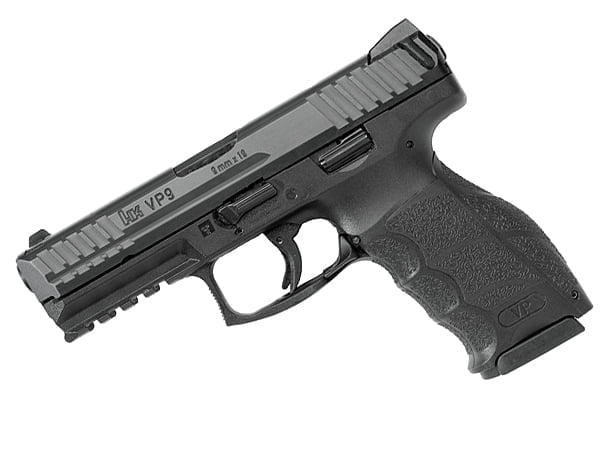
Table of Contents
How we tested: Every pick here is ranked against our testing methodology. Minimum round counts, accuracy and reliability protocols, the failures that disqualify a gun.
Review: HK VP9 – German Engineering Meets Striker-Fired Perfection
Our Rating: 8.5/10
- RRP: $719
- Street Price: $580-$660
- Caliber: 9mm Luger
- Action: Striker-fired, semi-automatic
- Barrel Length: 4.09″
- Overall Length: 7.34″
- Height: 5.41″
- Width: 1.32″
- Weight (unloaded): 25.56 oz
- Capacity: 17+1
- Frame: Polymer with interchangeable grip panels (27 configurations)
- Slide: Steel with hostile environment finish
- Sights: 3-dot luminescent sights
- Safety: Striker-fired with trigger safety and firing pin block
- Grip: Interchangeable side panels and backstraps (3x3x3 = 27 combos)
- Made in: Oberndorf, Germany
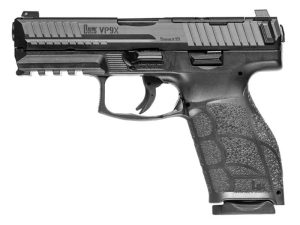
- Also available: VP9 Optics Ready (~$849), VP9 Tactical (~$899), VP9L (~$999)
Pros
- Exceptional trigger for a striker-fired pistol
- 27 grip configurations for a custom fit
- 17+1 capacity standard
- HK quality and durability built to last
- Fully ambidextrous controls
- Paddle magazine release is fast once learned
Cons
- Premium price compared to competitors
- Paddle mag release takes adjustment for most shooters
- Limited aftermarket compared to Glock
- No manual safety option available
- HK magazines are expensive at $40-50 each
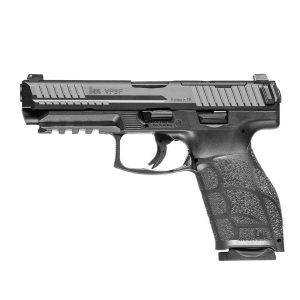
Quick Take
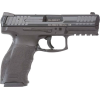
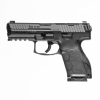
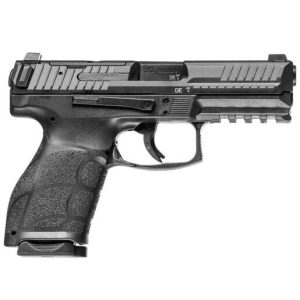
I have been shooting the HK VP9 on and off for years now, and it remains one of the best factory striker-fired triggers on the market. HK took everything they learned from the P30 platform and built a gun that could genuinely compete with Glock on Glock’s home turf. The result is a pistol that feels like it was made for your hand before you even swap out the grip panels.
The VP9 sits in a weird price bracket. It costs $100-150 more than a Glock 17 or M&P 2.0, and you are paying that premium for German engineering, a better trigger, and a grip system that has 27 possible configurations. Whether that premium is worth it depends on how much you value those things out of the box versus buying a cheaper gun and upgrading it.
Where the VP9 really shines is reliability and accuracy. In over 1,500 rounds of testing with a mix of brass, steel, and hollow points, I had zero malfunctions. Groups at 25 yards were consistently tighter than what I shoot with most other polymer-framed 9mms. The gun just works, and it works well.
The biggest adjustment is the paddle magazine release. If you have spent years training on button releases, your muscle memory will fight you for the first few hundred rounds. Once it clicks, though, the paddle is actually faster for most hand positions.
Best For: Shooters who want the best factory striker-fired trigger, duty/home defense use, and anyone willing to pay a premium for German build quality and 27 grip configurations.
Firearm Scorecard
Why HK Built the VP9 This Way
Heckler & Koch had a problem. Their hammer-fired P30 was an excellent duty gun, but the striker-fired market was eating the industry alive. Glock, Smith & Wesson, and Springfield were selling millions of polymer striker guns while HK lacked a competitive offering in that segment. The VP9 was HK’s answer, though the P30 remains in production alongside it for shooters who prefer hammer-fired designs.
Released in 2014, the VP9 was HK’s first striker-fired pistol designed from the ground up. They did not just copy the Glock formula. Instead, they took the ergonomic lessons from the P30’s grip system and married them with a new striker mechanism that prioritized trigger feel above all else.
The “VP” stands for Volkspistole, which roughly translates to “people’s pistol.” That name was a deliberate signal from HK that they were finally making a gun for the everyday shooter, not just military and law enforcement contracts. At $719 MSRP (and $580-660 street), the VP9 is still not cheap. But it is the most affordable full-size HK pistol you can buy.
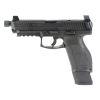
HK has since expanded the VP9 line to include the VP9SK (subcompact), VP9 Optics Ready, VP9 Tactical (threaded barrel and suppressor-height sights), and the VP9L (long slide). The platform has proven itself with military and police units worldwide, including several European agencies that have adopted it for duty use.
Competitor Comparison
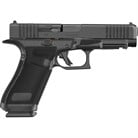
HK VP9 vs Glock 17 Gen 6
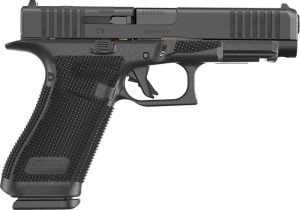
The Glock 17 is the benchmark that every full-size striker-fired 9mm gets compared against, and the VP9 beats it in two key areas: trigger and ergonomics. The VP9’s trigger has a shorter, crisper break with a tactile reset that the Glock simply cannot match without aftermarket parts. The 27-configuration grip system also means the VP9 will fit more hand sizes out of the box.
Where the Glock wins is price ($580-650 street), aftermarket support (the largest in the industry), and simplicity. If you want a gun with a million holster options and every accessory imaginable, the Glock 17 is still the safer choice. The VP9 has a growing aftermarket, but it is not close to Glock territory yet.
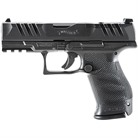
HK VP9 vs Walther PDP 4.5″
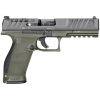
The Walther PDP is the VP9’s closest competitor in terms of trigger quality. Both guns have exceptional factory triggers that outclass most of the polymer-framed competition. The PDP’s trigger is slightly lighter with a flatter face, while the VP9’s has a more defined wall and reset. It comes down to personal preference.
The PDP undercuts the VP9 on price by $60-100, which is significant. It also comes optics-ready from the factory on most models. If trigger quality and value are your priorities, the PDP is hard to beat. The VP9 counters with better build quality, more grip configurations, and the HK name behind it.
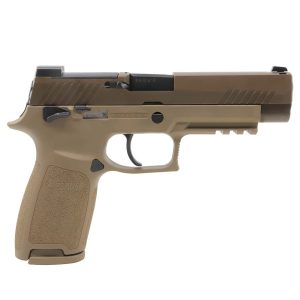
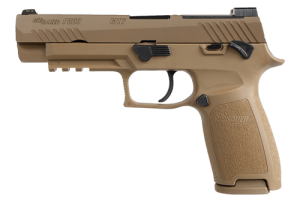
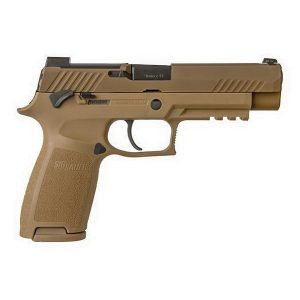
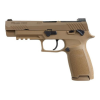
HK VP9 vs Sig Sauer P320 M17
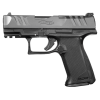
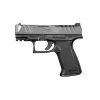
The Sig P320 won the U.S. military’s Modular Handgun System contract, and the M17 variant is the civilian version of that duty gun. The P320’s modularity is its biggest selling point. You can swap the fire control unit between different grip modules and slide assemblies, giving you essentially multiple guns from one serialized part.
The VP9 has a better trigger and better stock ergonomics than the P320. The Sig’s trigger is adequate but mushy compared to the VP9’s crisp break. However, the P320 has a manual safety option, a massive aftermarket, and the military pedigree that comes with the M17 designation. The P320 also has more documented drop-safety concerns in its history, though Sig addressed those with the voluntary upgrade program. Read our full Sig P320 review for more details.
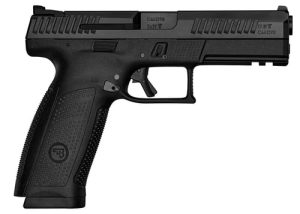
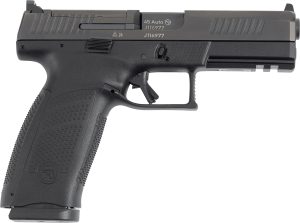
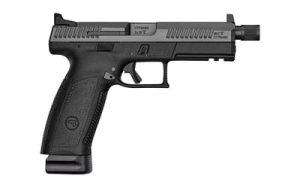
HK VP9 vs CZ P-10F
The CZ P-10F is the budget sleeper in this comparison. At $450-520 street, it undercuts the VP9 by over $100 and still delivers an excellent trigger, good ergonomics, and CZ’s reputation for accuracy. The P-10F’s trigger is not quite as refined as the VP9’s, but it is close enough that the price difference becomes hard to justify on trigger alone.
The VP9 pulls ahead in fit and finish, grip customization, and overall build quality. The CZ uses a more traditional button magazine release and has a slightly snappier recoil impulse due to its lighter weight. If budget matters, the CZ P-10F delivers 90% of the VP9 experience for 75% of the price.
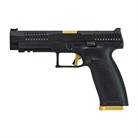
Technical Deep Dive
The Trigger
This is the VP9’s crown jewel and the reason most people buy one. The trigger pull measures approximately 5.4 pounds with a light take-up, a defined wall, and a clean break. The reset is short, tactile, and audible. You can feel and hear it click forward, which makes rapid follow-up shots faster and more controlled.
HK achieved this by using a two-piece trigger with a light firing pin block spring. The geometry of the sear engagement allows for a shorter, more predictable break than most striker-fired designs. In my experience, the VP9 trigger is better than a stock Glock, stock M&P, and stock P320. The only factory striker triggers that compete are the Walther PDP and the Canik TP9 series.
The Grip System
HK gives you three interchangeable backstraps (small, medium, large) and three sets of side panels (small, medium, large). That is 3x3x3 = 27 possible grip configurations. Each panel snaps in and out without tools using a simple push-pin system.
I have medium-large hands and found the medium backstrap with large side panels to be the best fit. The aggressive texturing on the grip provides excellent purchase without being abrasive during extended range sessions. The palm swell on the backstrap fills the hand naturally and keeps the bore axis feeling low despite the VP9’s standard ride height.
Slide and Charging Supports
The VP9’s slide has HK’s hostile environment finish, which is a ferritic nitrocarburizing treatment that resists corrosion and wear. The rear of the slide features “charging supports,” which are raised wings that give you additional purchase when racking the slide. These are especially useful for shooters with less hand strength or when wearing gloves.
The front serrations are aggressive enough for press checks without being cheese-grater sharp. Overall, the slide machining and finish quality are noticeably better than what you get on a Glock or M&P at a similar price point.
Barrel and Accuracy
The 4.09-inch cold hammer-forged barrel uses polygonal rifling, which HK has been perfecting for decades. Polygonal rifling typically produces slightly higher velocities and is easier to clean than traditional land-and-groove rifling. The barrel locks up tight with minimal play, which contributes to the VP9’s excellent mechanical accuracy.
One note: HK recommends against using unjacketed lead bullets in their polygonal-rifled barrels due to potential leading buildup. Stick with FMJ, JHP, or plated bullets and you will be fine.
Controls
The VP9 is fully ambidextrous. The slide stop levers are on both sides, and the paddle magazine release sits at the base of the trigger guard where it can be activated by either the trigger finger or the thumb. The paddle is polarizing. Shooters coming from Glock or 1911 platforms will need 200-300 rounds to retrain their muscle memory.
Once you adapt to the paddle, it is actually faster than a traditional button release for most grip angles. European military and police forces have used paddle releases for decades, and there is a reason HK stuck with the design. That said, if you simply cannot stand it, the VP9 with a push-button release (VP9B) is available in some markets.
Range Testing: 1,500+ Rounds
I put 1,500+ rounds through the VP9 over multiple range sessions spanning several months. The ammunition mix included bulk brass FMJ, steel-cased Tula, and several types of defensive hollow points. I wanted to see if the VP9 could handle the diet that a real shooter would feed it.
The short answer: it ate everything. Zero malfunctions across 1,500+ rounds, including the cheap steel-cased stuff that makes some pistols choke. The gun ran dirty, clean, lubed, and dry without complaint. That is the kind of reliability that justifies the HK premium.
Recoil management was excellent. The bore axis is slightly higher than a Glock but lower than a Sig P320, and the grip texturing keeps the gun planted in your hand. I was able to shoot consistent 0.25-second splits on an 8-inch plate at 10 yards, which is competitive with my times on a tuned Glock 34.
The luminescent sights are adequate for range use but are not true night sights. They glow faintly in low light after being charged by a light source. For serious defensive use, I would recommend upgrading to tritium sights or mounting an optic on the VP9 Optics Ready model.
Performance Results
| Ammunition | Rounds | Avg Group (25 yds) | Malfunctions |
|---|---|---|---|
| Federal American Eagle 124gr FMJ | 500 | 2.8″ | 0 |
| Blazer Brass 115gr FMJ | 400 | 3.1″ | 0 |
| Tula 115gr Steel Case FMJ | 300 | 3.5″ | 0 |
| Federal HST 147gr JHP | 150 | 2.4″ | 0 |
| Speer Gold Dot 124gr +P JHP | 100 | 2.5″ | 0 |
| Hornady Critical Defense 115gr FTX | 50 | 2.6″ | 0 |
| Total | 1,500 | 2.8″ avg | 0 |
Known Issues
Trigger return spring (early production models): Some VP9 pistols manufactured in 2014-2015 had issues with the trigger return spring weakening over time, causing the trigger to feel sluggish or fail to fully reset. HK addressed this in later production runs with an updated spring. If you buy a used early-production VP9, check the trigger return spring and replace it if needed. The part is inexpensive and easy to swap.
Paddle magazine release learning curve: This is less of a defect and more of a design choice that frustrates American shooters. Plan on 200-300 rounds of dedicated practice to retrain your muscle memory from a button release. Some shooters never fully adapt, and that is a legitimate reason to look at alternatives.
Magazine cost: HK factory magazines run $40-50 each, compared to $20-25 for Glock magazines. When you are buying 5-6 magazines for range and carry use, that cost adds up quickly. Aftermarket options from ETS and others exist but are not as reliable as the factory mags in my experience.
Recommended Upgrades
| Upgrade | Why | Est. Cost | Where to Buy |
|---|---|---|---|
| Trijicon HD XR Night Sights | Factory luminescent sights are not true night sights | $120-140 | Brownells |
| Extra HK Factory Magazines | You need at least 4-5 mags for training and carry | $40-50 each | Palmetto State Armory |
| Streamlight TLR-7A Weapon Light | Essential for home defense, fits VP9 rail perfectly | $120-130 | Guns.com |
| Lazy Wolf VP9 Trigger Kit | Reduces pull to ~4 lbs with even cleaner break | $80-100 | Brownells |
| Holosun 507C X2 (for OR model) | Best value red dot for the VP9 Optics Ready | $280-310 | Palmetto State Armory |
| Quality IWB/OWB Holster | Safariland 7378 (duty) or Tier 1 Axis Elite (CCW) | $50-160 | Brownells |
Verdict: 8.5/10
The HK VP9 is one of the best full-size striker-fired 9mm pistols you can buy. It has the best factory trigger in its class, a grip system that fits virtually any hand size, and the kind of build quality that only comes from German engineering. In 1,500+ rounds of testing, it never malfunctioned once.
The VP9 loses points on value. At $580-660 street, you are paying a meaningful premium over a Glock 17 or CZ P-10F that will perform nearly as well for most shooters. The expensive magazines, limited aftermarket, and paddle mag release learning curve are all real considerations. But if you prioritize trigger quality, ergonomics, and build quality above all else, the VP9 earns every dollar of that premium.
If I were buying a VP9 today, I would spend the extra $50 on the Optics Ready model. Red dots on pistols are the future, and having the slide already milled saves you $150+ down the road. Pair it with a Holosun 507C and night sights, and you have a duty-grade pistol that will serve you for decades.
Best For: Duty and home defense shooters who want the best trigger and ergonomics in a full-size striker-fired 9mm. Also excellent for competitive shooters who want a reliable platform with a great trigger out of the box.
HK VP9 FAQ
HK VP9 vs VP9SK: What is the difference?
The VP9SK is the subcompact version of the VP9. It has a shorter 3.39-inch barrel, shorter grip, and holds 10 or 15 rounds instead of 17. The VP9SK is designed for concealed carry, while the full-size VP9 is better suited for duty, home defense, and range use. The trigger on both models is essentially identical.
Want the subcompact? Read our HK VP9SK Review (500 Round Test) for a hands-on breakdown of the carry-friendly variant.
HK VP9 vs Glock 17: Which should I buy?
If you want the best trigger and ergonomics out of the box, buy the VP9. If you want the largest aftermarket support, cheapest magazines, and the widest selection of holsters and accessories, buy the Glock 17. Both are excellent, reliable handguns. The Glock is the safe, practical choice. The VP9 is the enthusiast’s choice.
HK VP9 vs Sig P320: Which is better?
The VP9 has a better trigger and better stock ergonomics. The P320 has more modularity (you can swap the fire control unit between frames and slides), a manual safety option, and military adoption as the M17/M18. If modularity and a manual safety matter to you, go with the P320. If trigger and ergonomics are your top priorities, the VP9 wins.
Is the paddle magazine release better than a button?
Neither is objectively better. The paddle release is faster from certain grip angles and is fully ambidextrous without any modifications. The button release is more intuitive for American shooters who grew up on Glocks and 1911s. Give the paddle 200-300 rounds of dedicated practice before deciding you hate it. Most shooters who commit to learning it end up preferring it.
Is the VP9 suitable for duty use?
Yes. The VP9 is currently in service with multiple European law enforcement agencies and has passed NATO-standard testing for durability and reliability. The 17+1 capacity, ambidextrous controls, and excellent trigger make it a strong duty gun. Just make sure to upgrade the factory sights to tritium night sights for low-light work.
Is the VP9 Optics Ready worth the extra money?
Absolutely. The VP9 OR costs about $50 more than the standard model and comes with a slide already milled for optic mounting plates. Getting a slide milled aftermarket costs $150-250, so the OR model saves you money if you plan to run a red dot at any point. Even if you are not ready for an optic now, I recommend buying the OR version to keep your options open.
Prefer HK’s over-built hammer-fired classic? See our full HK USP review.
Frequently Asked Questions
Is the HK VP9 better than the Glock 19?
The VP9 has a better factory trigger, better ergonomics, and better out-of-box accuracy than the Glock 19. The Glock has a larger aftermarket, more holster options, and a simpler design. Both are excellent.
How much does the HK VP9 cost?
The VP9 typically sells for 550 to 700 dollars depending on configuration. The optics-ready model costs slightly more. This is competitive with the Sig P320 and CZ P-10 C in the premium striker-fired market.
Is the HK VP9 reliable?
Extremely. HK has a legendary reputation for reliability and the VP9 lives up to it. In our 1,500-round test, it ran flawlessly with every ammunition type. Zero malfunctions across the entire test.
What caliber is the HK VP9?
The VP9 is chambered in 9mm. HK also makes the VP40 in .40 S&W, though the 9mm version is far more popular. Standard capacity is 17 rounds with flush-fit magazines.
Can you conceal carry an HK VP9?
The full-size VP9 is carriable but not ideal for concealment. The VP9SK (subcompact) was designed specifically for concealed carry with a shorter grip and barrel. Both work with a quality IWB holster.
Where is the HK VP9 made?
The VP9 is manufactured in Oberndorf am Neckar, Germany by Heckler and Koch. HK has been producing military and law enforcement firearms since 1949. The VP9 represents German engineering at its best.
What makes the VP9 trigger special?
The VP9 trigger is widely considered the best factory striker-fired trigger available. It has a short, crisp pull with a clean break and positive reset. Many shooters say it feels more like a single-action trigger.
Is the VP9 optics-ready?
Yes. The VP9 OR (Optics Ready) model comes with a milled slide that accepts popular red dot sights using adapter plates. HK includes multiple mounting plates to fit Trijicon RMR, Leupold DeltaPoint, and others.
Upgrading your VP9? See our full guide to the best HK VP9 parts and accessories, red dots, sights, triggers, lights, magazines and more, with live prices.
3,976+ Gun & Ammo Deals
Updated daily from 200+ top retailers. Filter by category, caliber, action type, and price.
Related Guides