

Last updated May 16th 2026
Some of the links below are affiliate links, meaning at no additional cost to you, we may earn a commission if you click through and make a purchase.
- Treat every gun as loaded
- Point the muzzle in a safe direction
- Keep your finger off the trigger until you’re ready to shoot
- Know your target and what’s beyond
| Model | Gauge | Weight | Price |
|---|---|---|---|
| BEST OVERALL Beretta 686 Silver Pigeon I |
12 ga | 6.8 lbs | Lowest Price ↓ |
| BEST ALL-AROUND Browning Citori CXS |
12 ga | 7.9 lbs | Lowest Price ↓ |
| BEST VALUE CZ Redhead Premier |
12 ga | 7.4 lbs | Lowest Price ↓ |
| MODERN VALUE Browning Cynergy CX |
12 ga | 8.0 lbs | Lowest Price ↓ |
| BEST LIGHTWEIGHT Franchi Instinct L |
20 ga | 5.9 lbs | Lowest Price ↓ |
| BUDGET ENTRY Weatherby Orion |
12 ga | 7.5 lbs | Lowest Price ↓ |
| BEST BUDGET Stoeger Condor Competition |
12 ga | 7.8 lbs | Lowest Price ↓ |
| BEST PREMIUM Caesar Guerini Summit Sporting |
12 ga | 8.2 lbs | Lowest Price ↓ |
Table of Contents
How we tested: Every pick here is ranked against our testing methodology. Minimum round counts, accuracy and reliability protocols, the failures that disqualify a gun.
The Best Over/Under Shotguns in 2026
The over/under is probably the most honest shotgun design ever made. Two barrels, two shots, zero excuses. That simplicity is exactly why it’s dominated clay sports for a century and why serious hunters still trust one when the flush matters most. I’ve put rounds through dozens of O/Us over the years and there’s a reason I keep coming back to them.
That said, picking the right one takes some thought. The gap between a $600 Stoeger and a $6,000 Caesar Guerini is enormous, and not all of it is marketing fluff. Action fit, trigger quality, barrel regulation, and stock geometry make a genuine difference on whether you break clays or watch them sail. I put together this guide to cut through the noise and give you honest takes at every price point.
Before we get into the guns themselves, a quick word on what actually matters in an O/U. The lockup needs to be tight with zero side-to-side movement in the barrels. Triggers should break cleanly, ideally with a single-selective trigger so you can choose your choke sequence.
Automatic ejectors are worth the upgrade over extractors if you shoot clays at any volume. And stock fit matters more in a shotgun than almost any other firearm because you’re mounting it fast every single time. Keep all of that in mind as you read through the picks below.
If you’re still learning the format, our shotgun buying guide is a solid starting point.
I’ve also broken out a dedicated best over/under shotguns under $1,000 list if you’re working with a tighter budget. And if you’re specifically chasing clay birds, the best shotguns for clay shooting guide goes deep on what the competition circuit actually demands.
1. Beretta 686 Silver Pigeon I. Best Overall
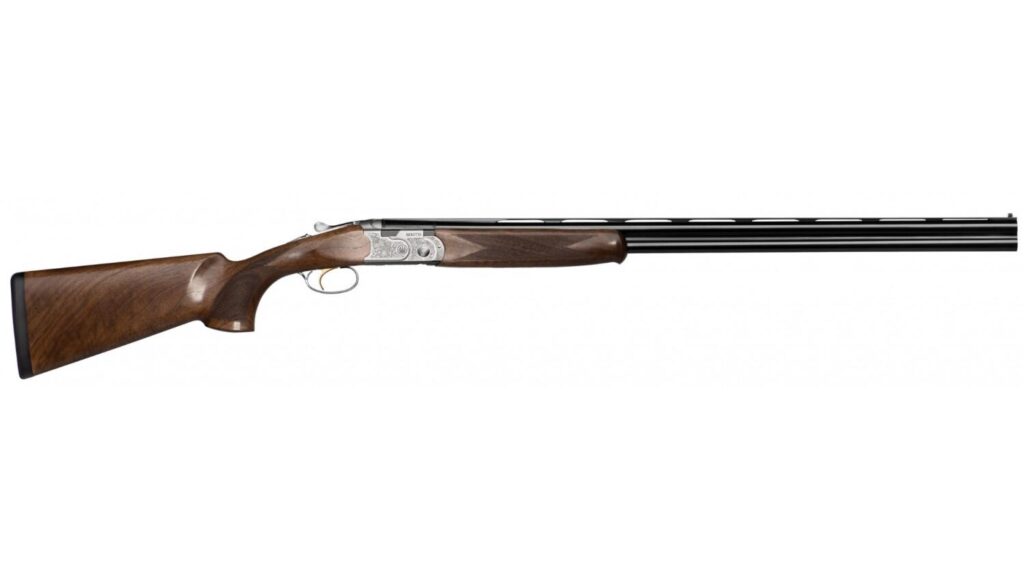
- Gauge: 12 ga (also available in 20 ga, 28 ga.410)
- Barrel Length: 26″, 28″, or 30″
- Weight: 6.8 lbs (28″ barrel)
- Chamber: 3″
- Action: Over/under, boxlock
- Stock: Oiled walnut with pistol grip
- MSRP: $2,899 (Field configuration, starting)
Pros
- Legendary reliability with decades of proven track record
- Excellent balance and pointability out of the box, swings through crossing targets naturally
- Available in four gauges (12 / 20 / 28 / .410) with wide aftermarket support
Cons
- Engraving is modest for the price point
- Some shooters find the forearm a touch slim
- Not the most budget-friendly entry point

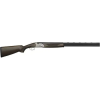
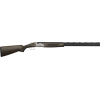
There’s a reason the 686 Silver Pigeon I has been the yardstick by which every other mid-range O/U gets measured for 40 years. It shoots like it costs twice as much. The balance point sits right between the hands, it swings through crossing targets naturally, and the trigger is one of the best at this price.
Not one of the best for the money. Just one of the best, period.
Beretta’s Steelium barrels are cold hammer forged and then floated in the action with a monobloc construction that keeps them locked up tightly shot after shot. You’re not going to find barrel wiggle on a properly spec’d 686 even after tens of thousands of rounds. The ejectors are automatic and reliable, which matters a lot if you’re shooting 200 targets in a day. For ejectors at a lower price, see our Mossberg Gold Reserve review.
Engraving is honestly a little underwhelming. Silver Pigeon birds on a silver receiver looks nice in photos but up close it’s nothing to write home about. Doesn’t affect function one bit, but if you’re spending nearly $2,900 you might expect more flash. If engraving matters at that money, the Rizzini BR110 Light Luxe and Limited both carry more of it.
That’s about the only real knock. Everything else works the way you hope a premium gun works.
I’ve seen these guns get handed down from parent to kid and then to grandkid. That’s not marketing talk, that’s just what happens when you build something right. The 686 SP I is available in 12, 20, 28 gauge, and .410, so you can match a whole set if that’s your thing. Check out our best shotgun brands breakdown to understand why Beretta consistently tops that list.
Best For: Shooters who want a lifetime gun that does everything well, from trap and skeet to upland birds and sporting clays, without babying it or worrying about resale value.
2. Browning Citori CXS. Best All-Around
- Gauge: 12 or 20 ga
- Barrel Length: 28″, 30″, or 32″
- Weight: 7 lbs 12 oz (28″ barrel)
- Chamber: 3″
- Action: Over/under, boxlock with Vector Pro locking system
- Stock: Grade II/III walnut, adjustable comb
- MSRP: $2,779 (Grade II walnut, adjustable comb standard)
Pros
- Adjustable comb is a real fitment upgrade most O/Us at this price skip
- Inflex recoil pad tames the 12 gauge noticeably across long shooting days
- Rock-solid Vector Pro lockup with Invector-DS choke pattern control
Cons
- Heavier than the 686 at nearly 8 lbs
- 12 gauge only in the CXS configuration
- Costs a bit more than the Beretta equivalent
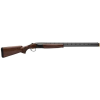
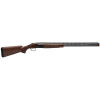

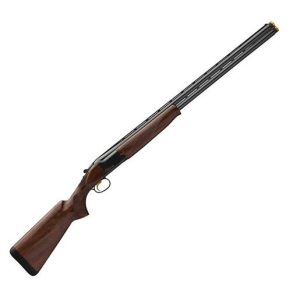
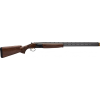

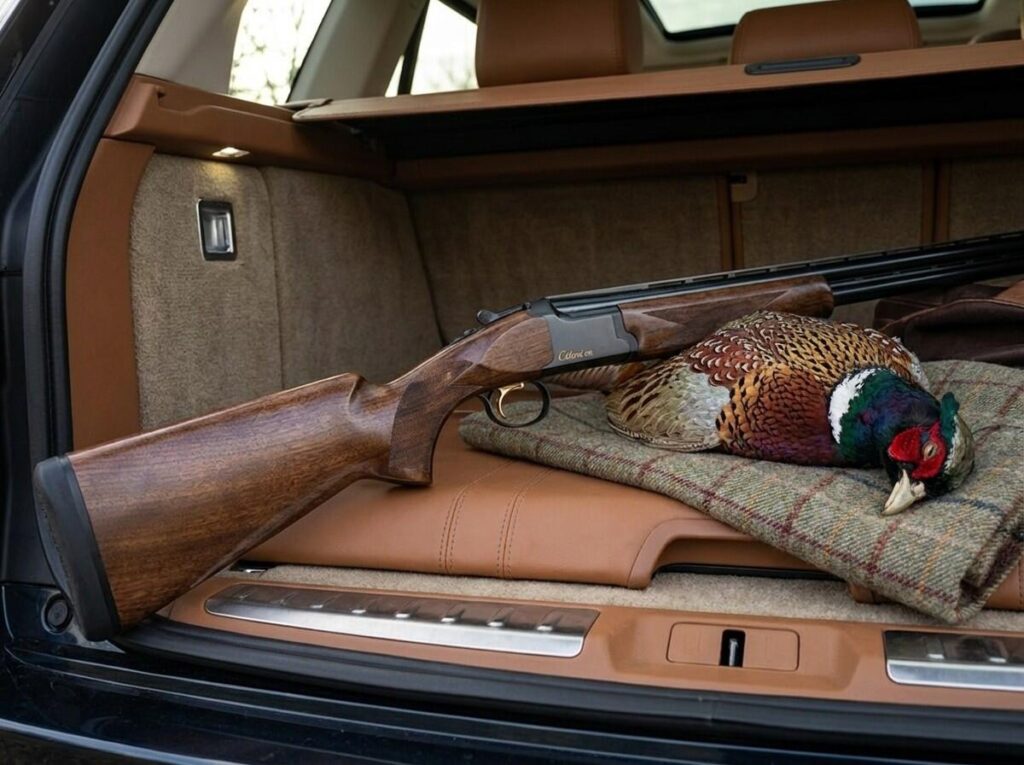
Citori line has been Browning’s flagship O/U since 1973 and the CXS is their crossover model, built to transition naturally between sporting clays and trap. The weight is on the heavier side at just under 8 pounds, which slows the swing slightly but also tames recoil and helps with consistent gun mount on long shooting days. Some people love that, some don’t. I do.
What really sets the CXS apart from the competition is the adjustable comb. Most O/Us at this price come with a fixed stock and you either fit it or you don’t. Browning built in comb adjustment so you can dial in your eye-to-rib alignment without shipping it to a gunsmith. That single feature is worth real money to a shooter who’s serious about their scores.
Inflex recoil pad is legitimately one of the best factory pads in the business. It deflects downward on recoil so the stock isn’t dragging your cheek down as it kicks back. After 100 target rounds in a morning session, you’ll notice the difference compared to a standard pad.
Best For: The dedicated clay shooter who wants a single gun that transitions between sporting clays, trap, and skeet without compromise, and who’s willing to pay a little more for a properly fitted stock.
3. CZ Redhead Premier. Best Value
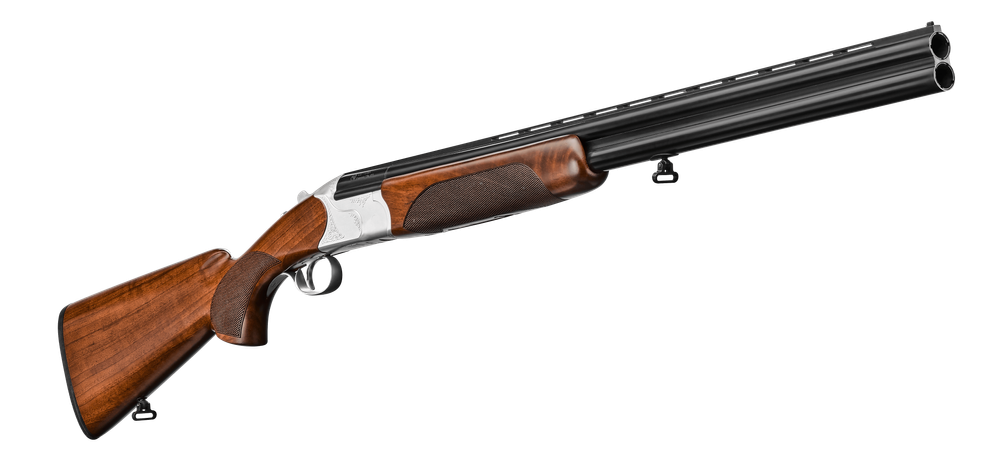
- Gauge: 12, 16, 20, 28.410 (all five gauges, most options on this list)
- Barrel Length: 28″
- Weight: 7.4 lbs
- Chamber: 3″
- Action: Over/under, boxlock with single selective trigger
- Stock: Turkish walnut, round knob pistol grip
- MSRP: $999 (most gauge options at this price tier, including a current-production 16 gauge)
Pros
- Exceptional value at just over $1,000 street price
- Automatic ejectors and single selective trigger standard (not class-typical at this price)
- Maxis-pattern chokes are Beretta-Browning compatible, no proprietary tube lock-in
Cons
- Turkish walnut grain can be inconsistent between guns
- Trigger reset is longer than on the Beretta or Browning
- Fit and finish not quite at the Italian/Japanese level


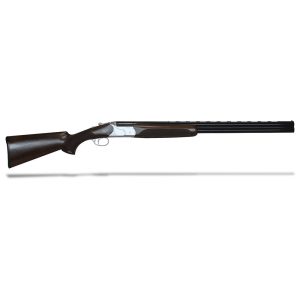
CZ has been building quality guns at honest prices for decades, and the Redhead Premier is them doing it again in the O/U space. You’re getting automatic ejectors, a single selective trigger, and Turkish walnut stock at a price that makes Italian guns sweat. For a lot of shooters, this is the move.
The action is tight and the chrome-lined chambers handle everything from light target loads to heavy 3-inch field loads without complaint. Chokes are the Beretta-Browning compatible Maxis pattern, so you’re not stuck buying proprietary tubes. That matters more than people realize when you start building out a choke collection.
Where the Redhead shows its price point is in the trigger. The break is acceptable, not exceptional. The reset is longer than I’d like if you’re running doubles fast on a sporting clays course.
For field hunting it’s totally fine. For competitive clay shooting at a serious level, you might start wishing you spent more.
That said, a hair under a thousand bucks for a gun this capable is genuinely hard to argue with. It’s also a strong starting point if you’re new to O/Us and not ready to commit to a $2,000 gun yet. If you’re hunting quail with it, check out our best shotguns for quail guide to see how the 20 gauge Redhead stacks up for that specific application.
Best For: The hunter or occasional clay shooter who wants a real O/U with real features without clearing out their savings account.
4. Browning Cynergy CX. Best Modern Value
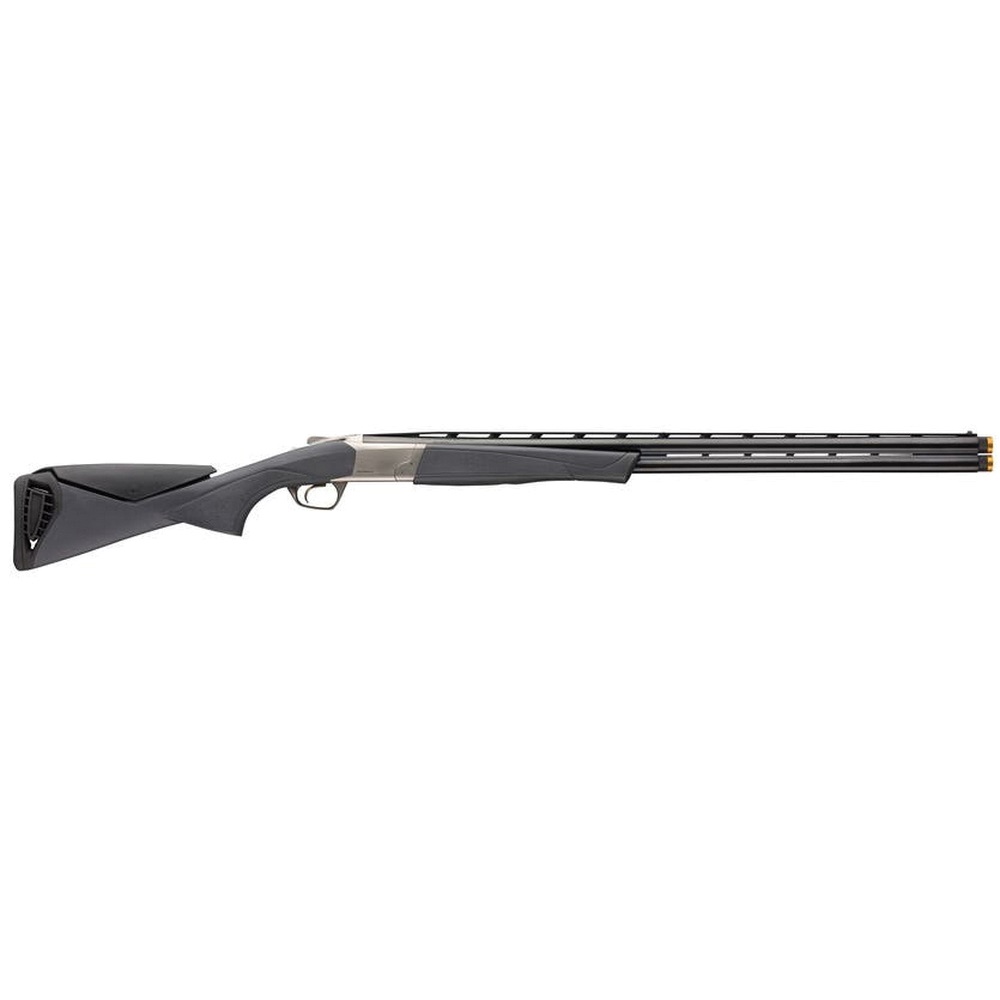
- Gauge: 12 ga
- Barrel Length: 28″ or 30″
- Weight: 7 lbs 12 oz (28″ barrel)
- Chamber: 3″
- Action: Over/under, reverse striker design
- Stock: Composite or walnut depending on variant
- MSRP: $2,239 (Grade I walnut, satin finish)
Pros
- Reverse striker firing pins drastically reduce felt recoil and muzzle rise
- MonoLock hinge stays tight over thousands of rounds, better than O/Us at twice the price
- Low-profile receiver + Inflex pad combo built for high-volume clay sessions
Cons
- Heavy at 8 lbs, not ideal for upland hunting on foot
- Polarizing modern aesthetic
- Composite stock feels out of place at this price for traditionalists
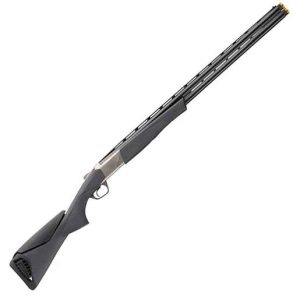
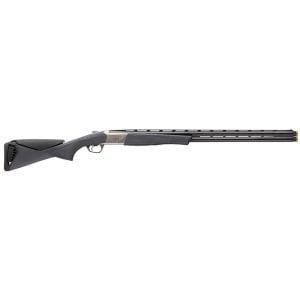
Cynergy divides opinion. The look is angular and modern, nothing like a traditional O/U, and when Browning introduced it a lot of people wrote it off as a gimmick. They were wrong. The engineering on this gun is genuinely smart and the shooting experience backs it up.
Reverse striker design is the headline feature. Instead of a conventional hammer, the firing pins work on a different mechanism that puts the recoil force in line with your grip rather than rotating around the hinge pin. The result is less muzzle rise and a more predictable second shot. On a 200-target day of sporting clays, that adds up to a lot less fatigue.
MonoLock hinge is another legitimate engineering win. The barrel-to-receiver lockup is tighter than most O/Us at twice the price, and it stays tight over thousands of rounds. This gun was designed for people who shoot a lot, and it handles that workload well.
The weight is a real consideration though. 8 pounds is a lot if you’re walking through timber or crossing fence rows all day after pheasant. This is a gun for the range, the trap field, or a driven shoot where you’re not hiking miles between shots. Know your use case before you buy.
Best For: The clay shooter who wants modern recoil-reduction engineering and doesn’t care about looking like their grandfather at the gun club.
5. Franchi Instinct L. Best Lightweight

- Gauge: 12 ga or 20 ga
- Barrel Length: 26″ or 28″
- Weight: 5.9 lbs (20 ga, 26″ barrel)
- Chamber: 3″
- Action: Over/under, alloy receiver
- Stock: AA-grade walnut, Prince of Wales grip
- MSRP: $1,299 (color-case-hardened receiver standard, rare under $1,500)
Pros
- Under 6 lbs in 20 gauge, practically floats when you’re walking timber all day
- AA-grade walnut with classic Prince of Wales grip is genuinely beautiful
- Italian-made with auto ejectors, quality you can feel in the handling
Cons
- Lightweight means more felt recoil, especially in 12 gauge
- Not designed for heavy clay shooting volumes
- Limited aftermarket compared to Beretta or Browning
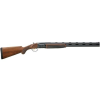

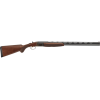
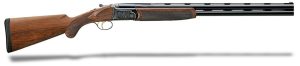
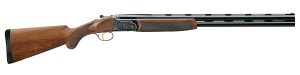
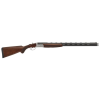
Franchi is a name that doesn’t get nearly enough attention in the American market. They’re an Italian manufacturer with a long tradition, and the Instinct L is flat-out one of the most elegant upland hunting guns you can buy under $1,500. Pick up a 20 gauge and you’ll immediately understand why people fall in love with it.
At 5.9 pounds it practically floats. If you’re hunting quail in Georgia or grouse in the northeast where you’re covering miles of ground, the difference between a 6-pound gun and an 8-pound gun is enormous by the end of a day. Your shoulder will thank you. So will your knees.
AA-grade walnut on the Instinct L is genuinely attractive, with a classic Prince of Wales grip that suits the traditional O/U aesthetic perfectly. This is a gun you can hand down and it’ll still look right doing it. The alloy receiver keeps the weight down without sacrificing durability in normal hunting use.
One honest warning: lightweight and 12 gauge aren’t a comfortable combination for extended shooting. The Instinct L in 12 gauge kicks noticeably with full loads. In 20 gauge it’s manageable.
If you’re primarily a clay shooter running 100-plus rounds in a session, this isn’t your gun. But for upland birds, especially bobwhite quail and ruffed grouse, it’s nearly perfect.
Best For: The upland hunter who walks far and shoots light loads, and who wants something beautiful to carry while doing it.
6. Weatherby Orion. Best Budget Entry
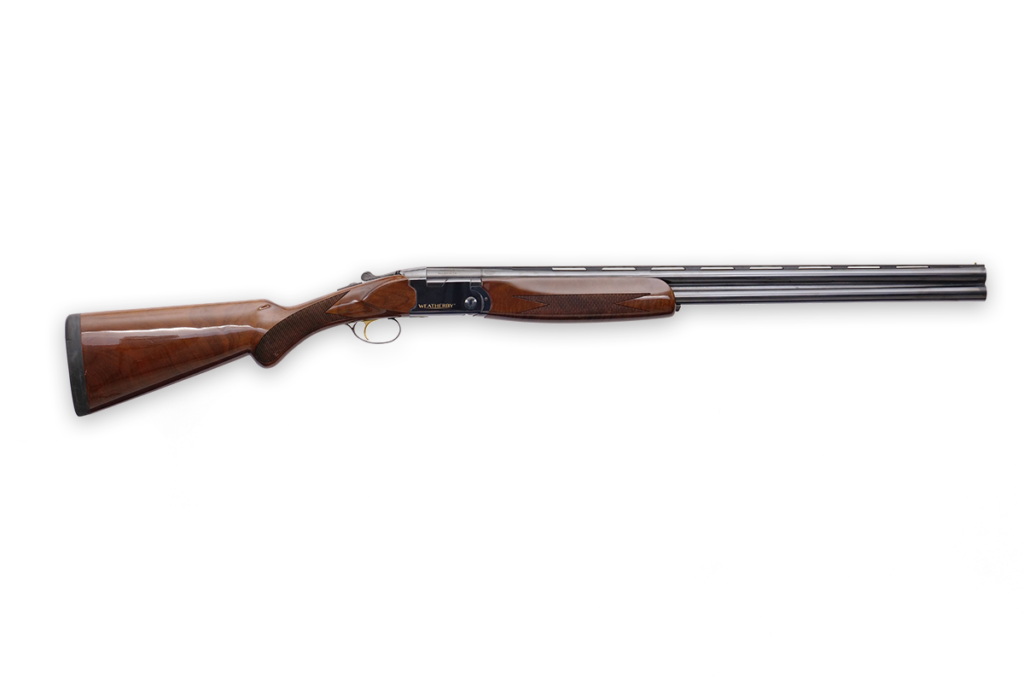
- Gauge: 12 ga or 20 ga
- Barrel Length: 26″ or 28″
- Weight: 7.5 lbs (12 ga, 28″ barrel)
- Chamber: 3″
- Action: Over/under, boxlock
- Stock: Turkish walnut
- MSRP: $1,249 (starting, current production is Orion I field model)
Pros
- Chrome-lined barrels at this price, corrosion-resistant and easier to clean than standard bores
- Solid lockup and three choke tubes included covers 95% of hunting/casual use
- Weatherby dealer support means service is real, not orphan
Cons
- Trigger is average at best
- Walnut finish can feel plasticky on some examples
- Heavier than competing guns at similar price points
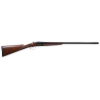
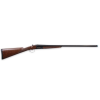
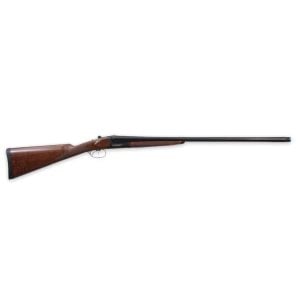
Weatherby built their reputation on precision rifles, and the Orion is their attempt to bring that brand credibility into the shotgun space at an accessible price point. It largely works. The Orion is a dependable, no-drama O/U that will handle hunting seasons and weekend clay sessions without giving you trouble.
Chrome-lined barrels are a real plus at this price. They’re more corrosion resistant and easier to clean than standard barrels, which matters if you’re hunting in wet conditions or not meticulous about post-hunt maintenance. Three choke tubes cover the standard Modified, Improved Cylinder, and Full patterns, which handles 95% of what most hunters and recreational shooters need.
Trigger is where Weatherby took the shortcut, and you’ll feel it. It’s functional but mushy. Not unsafe, just uninspiring.
If you’re price-shopping and plan to shoot this gun recreationally without competitive ambitions, it’s totally workable. If the trigger bothers you down the road, a competent gunsmith can improve it for a few hundred dollars and suddenly you’ve got a really solid mid-range gun for not a lot of money.
Best For: First-time O/U buyers who want a recognized brand name, chrome-lined barrels, and a functional gun for hunting season and occasional range days in the $1,200 tier.
7. Stoeger Condor Competition. Best Budget
- Gauge: 12 ga or 20 ga
- Barrel Length: 30″ (12 ga)
- Weight: 7.8 lbs
- Chamber: 3″
- Action: Over/under, boxlock
- Stock: AA-grade walnut with adjustable comb
- MSRP: $669 ($649 street, only sub-$700 O/U with adjustable comb AND ported barrels)
Pros
- Adjustable comb at this price is almost unbelievable, class-leading feature
- 30″ barrels + five extended choke tubes standard for clays-out-of-the-box
- Benelli USA service network means warranty and parts are not orphan
Cons
- Action feels rough compared to guns at twice the price
- Trigger is heavy and not crisp
- Needs a thorough cleaning and light lubrication out of the box

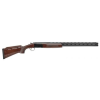
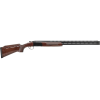
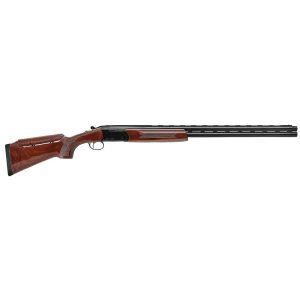
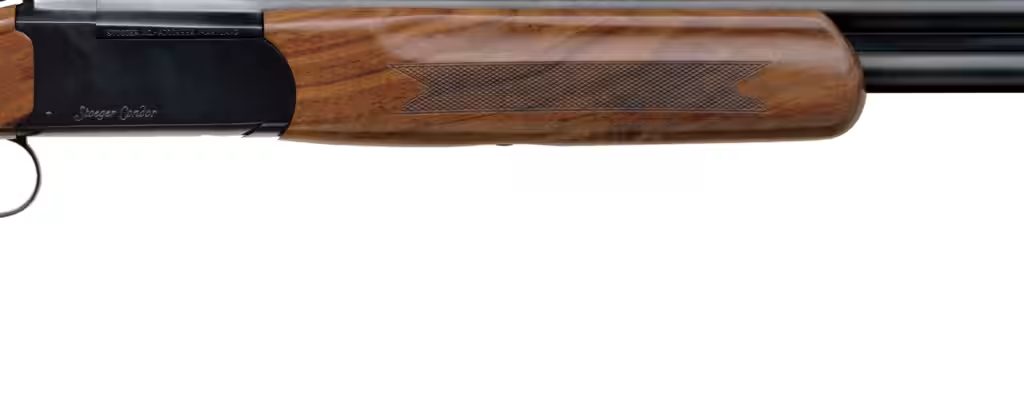
Let me be direct: the Stoeger Condor Competition punches way above its weight class for the price. You can find these under $600 on sale, and at that number you’re getting an adjustable comb, 30-inch barrels, AA-grade walnut, and five extended choke tubes. That feature list on a $600 gun is borderline absurd.
Stoeger is owned by Benelli USA, which means warranty support and parts availability are real. You’re not buying an orphan gun from a brand that might vanish. When something goes wrong (and at this price point, something eventually will), you have a place to call.
Here’s what you need to know before the first range session: give it a full disassembly and cleaning before you shoot it. The factory cosmoline and rough spots in the action smooth out significantly with proper lubrication, and the gun runs better out of the box if you do that work first. It’s a small ask for a $600 O/U.
The trigger is heavy and not something you’d brag about. The action is noticeably rougher than the Italian or Japanese guns on this list. But for a new shooter learning the O/U format, or someone who needs a backup gun for a clay league without committing serious money, the Condor Competition is a legitimate option. More details in the full O/U under $1,000 guide.
Best For: Shooters on a tight budget who want a clay-oriented O/U with an adjustable comb and long barrels, and who don’t mind doing a little prep work before the first shoot.
8. Caesar Guerini Summit Sporting. Best Premium
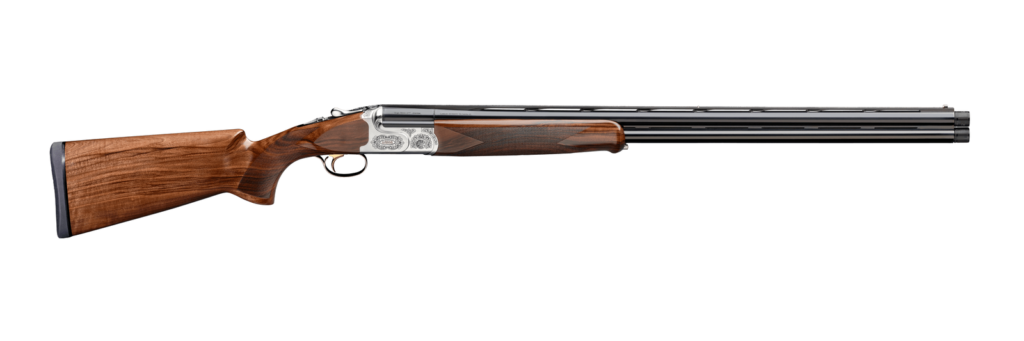
- Gauge: 12 ga or 20 ga
- Barrel Length: 30″ or 32″
- Weight: 8.2 lbs (30″ barrel)
- Chamber: 3″
- Action: Over/under, boxlock with DTS trigger system
- Stock: Grade 3 Turkish walnut with Bavarian cheekpiece, fully adjustable
- MSRP: $5,615 (12 ga); $5,845 (.410), 25-year transferable warranty
Pros
- DTS trigger is arguably the best production O/U trigger available, period
- Fully adjustable stock (length, drop, cast, comb height) fits any shooter without a gunsmith visit
- 25-year transferable warranty is nearly unmatched in the firearms industry
Cons
- Over $5,000 is serious money for most shooters
- Heavy at 8+ pounds
- Waiting list at many dealers
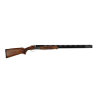
Caesar Guerini built their entire brand around one proposition: make guns that can compete with the established Italian and British houses on quality, but back them with a warranty program and customer service that neither of those houses would consider. A 25-year transferable warranty on a shotgun is genuinely extraordinary. If you buy one of these guns and sell it five years later, the warranty transfers to the new owner. That’s confidence in your product.
DTS (Dynamic Trigger System) is the trigger I judge other O/U triggers against. It’s adjustable, it breaks clean with zero creep, and it resets fast enough that running doubles on a sporting clays course feels effortless. I’ve shot $10,000 guns with worse triggers. No exaggeration.
Summit Sporting comes with a fully adjustable stock as standard. Not adjustable comb only, fully adjustable in length of pull, drop, cast, and comb height. You can fit this gun to virtually any shooter without visiting a gunsmith. For competitive shooters who are serious about their setup, that matters enormously.
Yes, it costs $5,615. That’s real money. But if you’re shooting 5,000 to 10,000 rounds a year at serious sporting clays competition, the quality of your equipment becomes a real variable.
This is the gun where the returns justify the investment for the right shooter. For everyone else, the Beretta 686 SP I or the Citori CXS gives you 85% of the performance at less than half the price. Know which shooter you are before you write the check.
Best For: Competitive sporting clays and FITASC shooters who shoot frequently enough that premium trigger quality, full adjustability, and long-term reliability justify a $5,000-plus investment.
What Makes a Good Over/Under Shotgun
A solid O/U comes down to five things: lockup, trigger, ejectors, barrel regulation, and stock fit. Get all five right and the gun will do everything you need it to. Compromise on any of them and you’ll feel it every time you mount the gun.
Lockup is the foundation. The hinge between the barrels and receiver should have zero lateral movement when the gun is closed. Grab the barrels and try to wiggle them side to side.
A tight gun won’t move at all. A worn gun will have play, and that play gets worse over time. When you’re buying used, this is the first thing you check.
Triggers on O/Us are either single-selective or double. Single selective means one trigger controls both barrels, with a barrel selector (usually incorporated into the safety) that lets you choose which fires first. Double trigger guns have a separate trigger for each barrel.
Most modern shooters prefer single selective because you stay in your firing grip without shifting fingers. The selector lets you choose bottom barrel first (usually the more open choke for the close shot) or top barrel first depending on the situation.
Automatic ejectors vs extractors is a real quality divider. Extractors just lift the fired shell partially out of the chamber so you can grab it. Ejectors physically throw fired hulls clear of the gun when you open it.
For clay shooting, ejectors are nearly mandatory at any real volume. For hunting where you’re picking up your hulls or shooting small numbers of birds, extractors are fine and the simpler mechanism means less that can go wrong.
Barrel regulation is how well the two barrels are aligned to print patterns in the same place at hunting distances. A well-regulated gun prints both barrels to the same point of aim. A poorly regulated gun has one barrel shooting a different point than the other.
You don’t notice this on paper, but on a crossing bird at 30 yards it becomes obvious. Quality manufacturers regulate barrels to a consistent standard. Budget guns can be hit or miss.
Always pattern both barrels separately when you get a new O/U.
Stock fit is the one you can’t negotiate on. A shotgun fits when you mount it naturally and look straight down the rib without lifting your head or dropping your cheek. If you have to adjust your head position to see the front bead, the stock doesn’t fit you.
Guns with adjustable combs eliminate this problem at the cost of more money. Fixed stock guns may require custom fitting. A gun that fits you will always outperform a technically superior gun that doesn’t.
That’s the whole game.
Related Guides
Looking for more help choosing the right shotgun? Start with our full shotgun buying guide for a complete breakdown of gauges, actions, and use cases. The best O/U shotguns under $1,000 goes deeper on the budget end of this list.
Serious clay shooters should read the best shotguns for clay shooting for competition-focused picks. And if upland hunting is your primary use, the best shotguns for quail covers the lightweight field guns in detail. Our best shotgun brands roundup gives you the full manufacturer landscape if you want to understand who’s making what and why.
Frequently Asked Questions
What is the best over/under shotgun?
The Beretta 686 Silver Pigeon I is the best overall O/U for most shooters. It combines proven reliability, excellent triggers, and strong resale value at a competitive price point around 2,150 dollars.
Are over/under shotguns better than semi-autos?
O/Us offer two choke selections, better balance for instinctive shooting, and a slimmer profile in brush. Semi-autos offer less recoil and a third shot. Neither is universally better. Your use case decides which is right.
What is the best budget over/under?
The Stoeger Condor Competition at around 650 dollars is the cheapest usable O/U. The CZ Redhead Premier at around 1,100 dollars is the best value where quality takes a meaningful step up.
How much should I spend on an over/under?
For casual use, 600 to 1,000 dollars gets a functional gun. For regular sporting clays or serious hunting, 1,500 to 2,500 dollars is the sweet spot. Competition guns from Krieghoff and Perazzi start around 5,000 dollars.
What is the difference between ejectors and extractors?
Ejectors throw fired shells clear of the gun when you open the action. Extractors lift shells slightly so you pull them out by hand. Ejectors are faster for reloading and standard on guns over 1,000 dollars.
Is Browning or Beretta better for O/U shotguns?
Both make excellent O/Us. Beretta 686 Silver Pigeon is slightly better value. Browning Citori has a longer heritage and wider US dealer network. Try both and buy whichever fits you better.
What barrel length for an over/under?
28 inches is the most versatile. 30 inches for dedicated sporting clays or trap. 26 inches for upland hunting in thick cover. Most buyers should start with 28 inches.
Are Turkish over/under shotguns any good?
Quality varies. CZ Redhead Premier (Turkish-made with Czech oversight) and Weatherby Orion are solid options. Stoeger Condor is functional at the price. Avoid no-name Turkish O/Us without US warranty support.
4,715+ Gun & Ammo Deals
Updated daily from 200+ top retailers. Filter by category, caliber, action type, and price.
Related Guides