

Affiliate disclosure: This Smith & Wesson EZ review contains affiliate links. If you buy through our links then we can receive a small commission that helps keep the lights on. You don’t pay anything more.
- Treat every gun as loaded
- Point the muzzle in a safe direction
- Keep your finger off the trigger until you’re ready to shoot
- Know your target and what’s beyond
Table of Contents
How we tested: Every pick here is ranked against our testing methodology. Minimum round counts, accuracy and reliability protocols, the failures that disqualify a gun.
M&P Shield EZ Review: First Impressions After 500 Rounds
Our Rating: 8.0/10
- RRP (.380 ACP): $479
- RRP (9mm): $549
- Street Price: $399-$479 (.380), $469-$549 (9mm), check live pricing below
- Caliber: .380 ACP or 9mm Luger
- Action: Recoil-operated, internal hammer-fired
- Barrel Length: 3.675″
- Overall Length: 6.7″ (.380) / 6.8″ (9mm)
- Height: 4.98″ (with magazine)
- Width: 1.06″ body / 1.5″ at safeties
- Weight (unloaded): 18.5 oz (.380) / 23.2 oz (9mm)
- Capacity: 8+1 (both calibers, single-column)
- Frame: Polymer with Picatinny-style rail
- Slide: Stainless steel, Armornite black finish
- Sights: White dot front, windage-adjustable white 2-dot rear (TruGlo on some models)
- Safety: Grip safety standard; optional manual thumb safety
- Trigger pull: ~6.5 lbs
- Made in: USA (Springfield, Massachusetts)
Pros
- Easiest slide to rack on any production semi-auto, measurably, biomechanically different
- Built-in mag load-assist plus grip-safety redundancy reduce fumbling for low-strength shooters
- Zero failures across our 500-round test; build quality matches the standard M&P line
Cons
- 8+1 capacity in both calibers, Sig P365 gives you 10+1 in a smaller footprint
- Grip safety can pinch the web of the hand during high-volume sessions (more pronounced on 9mm)
- Sparse aftermarket compared to standard Glock or M&P platforms
Quick Take
This M&P Shield EZ review is about one thing first: the slide. The name is not a gimmick. The Smith & Wesson M&P Shield EZ genuinely has the easiest slide to rack of any pistol I’ve tested. Not the easiest sub-compact, not the easiest in its price range. Easiest. Period. If you’ve avoided semi-autos because you couldn’t rack the slide reliably, this gun was built specifically for you.
Smith & Wesson tuned the recoil spring lighter and added a cocked-when-fired internal hammer instead of a striker, then put canted oversized serrations front and rear. The result: a slide that takes roughly half the force of a standard compact to cycle. The exact spec from S&W’s own product page calls it “easy to rack”, and for once the marketing matches the engineering. You can push it open with your palm instead of pinching the rear serrations. It works. Demonstrably, measurably works.
I ran both calibers across 500 rounds total. The .380 is softer-shooting and even easier to operate. The 9mm hits harder, costs a bit more, and has a noticeably stiffer (but still easy) spring. Both run clean. Both are accurate enough for self-defense distances. The grip safety plus optional manual thumb safety give you redundant layers some new shooters find reassuring.
The catch is capacity. Eight rounds in both calibers. For a defensive gun that’s serviceable, but a Sig P365 gives you 10+1 in a smaller package. The EZ trades capacity for accessibility. Best For: anyone with hand-strength limitations, arthritis, carpal tunnel, smaller hands, new shooters still building grip, who needs a reliable self-defense gun they can actually operate under pressure.
Why S&W Built the EZ This Way
Standard semi-auto recoil springs run 14-18 lbs of force to retract. That’s fine for average grip strength. Arthritis reduces grip force significantly. Carpal tunnel makes pinching motions painful. Small hands have less mechanical leverage on a tight slide. A lot of people who want to carry a semi-auto either can’t operate it consistently under stress or avoid practicing because the racking process hurts.
S&W addressed this with three changes. They lightened the recoil spring assembly considerably. They cut the slide for canted front serrations so you can push the slide forward with your palm instead of pinching the rear. And they replaced the striker with an internal hammer, which lets the spring be lighter without compromising primer-strike reliability. The EZ’s slide takes roughly half the force of a standard compact semi-auto.
They added a grip safety too, unusual for modern striker-fired pistols, but logical here. If someone has reduced hand strength and is new to firearms, an accidental discharge from a dropped or fumbled gun is a real concern. The grip safety won’t fire unless you’re gripping properly. Pair it with the optional manual thumb safety and you have redundancy for new shooters still building muscle memory.
The choice to offer both .380 and 9mm came from customer feedback. The .380 is the original and easier version: lighter spring, softer recoil, more forgiving to operate. The 9mm landed in 2019-2020 for shooters who wanted more stopping power but still needed the accessibility advantage. I’ll break down the differences in the testing section below.
Competitor Comparison
The accessibility-pistol market is small but real. Three guns compete directly with the Shield EZ for low-strength shooters. Here’s how they stack up.
Ruger Security-380 $329-$379
The Security-380 is the value pick in this space. Over $100 cheaper than the EZ .380, slim, and Ruger’s reliability record is solid. The slide is genuinely easier to rack than a standard compact too, Ruger uses a tilting-barrel system tuned for lower spring tension. But it’s not as easy as the EZ. No grip safety, smaller serrations, and you have to pinch the rear of the slide to charge it. If you’re mildly hand-strength-limited and watching the budget, the Security-380 is worth a look. If accessibility is the deciding factor, the EZ still wins.
Glock 42 $429-$479
The Glock 42 is the most popular .380 in the country and has a massive aftermarket and holster ecosystem. It’s slimmer than the EZ, making it a better pure carry gun. But nobody calls a Glock 42 “easy” to rack, it’s a standard Glock with a standard Glock spring, and for shooters with hand-strength issues it’s genuinely tough to operate reliably. Same price as the EZ, you’re getting Glock’s reliability and aftermarket but giving up the accessibility features. For low-strength buyers, the EZ wins. For everyone else, the 42 is excellent.
Walther CCP M2 $449-$499
The CCP M2 is Walther’s answer to the EZ problem, a gas-delayed blowback system that makes the slide significantly easier to rack than a standard spring. It works. But the gas system adds mechanical complexity, and some CCP users report long-term reliability concerns the EZ’s simpler design avoids. The CCP M2 trigger is decent but less consistent than the EZ’s. For shooters who specifically need low racking force, both guns solve the same problem. The EZ’s track record is longer and cleaner.
Features and Quirks
The Slide: Why It’s Actually Different
I want to spend time here because this is the whole point of the gun. The EZ slide is not just “easy-ish.” It’s genuinely, shockingly easy compared to anything else on the market. I’ve handed this gun to people who said they couldn’t operate a semi-auto reliably, and every single one of them racked the EZ on the first try.
Front cocking grooves are the key insight. On a standard pistol you rack by pinching the rear serrations between thumb and forefinger, which concentrates force in two fingers. On the EZ, the front grooves let you push the slide rearward using your entire palm in a pushing motion that distributes force over a much larger surface. It’s a biomechanical advantage that makes a real difference for arthritic or small hands.
Grip Safety
The grip safety is a GI 1911-style design, it protrudes from the backstrap and must be depressed by the firing hand before the trigger becomes active. For shooters with a full firing grip, it’s transparent. You won’t notice it during normal shooting. Where it matters: shooters with very small hands sometimes find their grip doesn’t consistently depress the safety fully, especially early in their training. Solvable with practice but worth knowing before you buy.
The other known issue is pinching. Some shooters report the grip safety pinching the web of the hand during recoil, especially on high-volume sessions. I felt mild pinching during a 100-round block with the 9mm. Not painful enough to stop, but noticeable. The .380, with its softer recoil, didn’t produce the same effect.
Loaded Chamber Indicator
The EZ has both a tactile and visual loaded chamber indicator that protrudes from the top of the slide when a round is chambered. You can feel it with your thumb in the dark. Small feature, but it matters for new gun owners building safety habits, they haven’t yet developed the muscle memory to check the chamber by sight alone, and the tactile cue closes that gap.
Magazine Loading
EZ magazines have a wide-mouth orange follower with load-assist tabs on either side. Loading eight rounds takes about a quarter of the effort of loading a standard Shield mag. For someone with arthritic fingers, that’s the difference between loading their own gun and asking for help. It matters. Each pistol ships with two mags.
M&P Shield EZ Review: .380 vs 9mm, Which Version Should You Buy?
The question I get most often about the EZ. Short answer: if accessibility is the reason you’re buying this gun, get the .380. If you want more stopping power and can handle slightly more recoil and a stiffer slide, get the 9mm.
The .380 is lighter (18.5 oz vs 23.2 oz), softer-shooting, and the absolute easiest version to operate. The recoil is genuinely mild. My 71-year-old mother-in-law, who has moderate arthritis and had never shot a semi-auto before, ran 30 rounds through the .380 EZ without a single complaint about the slide or the recoil. That’s the target use case and it works perfectly.
The 9mm gives you more stopping power, meaningfully so. Modern 9mm defensive loads like Federal HST and Hornady Critical Defense are well-proven. The 9mm EZ’s slide is still much easier than a standard compact’s, but noticeably stiffer than the .380’s. If your hand strength is severely limited, that gap matters. If you can manage a standard 9mm with effort and just want something easier, the 9mm EZ still helps.
The .380 stopping-power debate is long-running. Modern .380 hollow points like the Federal HST Micro and Hornady Critical Defense are legitimately effective at defensive distances, both rounds meet SAAMI’s standardized pressure and velocity specs for .380 ACP. They’re not 9mm, but they’re not peashooters either. If someone tells you .380 is useless for self-defense, they haven’t read recent gel tests and they’re probably overestimating the difference at 7-10 feet.
At the Range: 500 Round Test Protocol
I ran 300 rounds through the .380 and 200 through the 9mm across three sessions over two weeks. Testing protocol: no cleaning between sessions one and two to check base reliability, then accuracy testing from a supported position at 15 yards. Outdoor range, mixed weather, first session in overcast 55°F, second in 70°F sun, third in light drizzle.
Ammo tested in the .380:
- Remington UMC 95gr FMJ: 100 rounds
- Federal American Eagle 95gr FMJ: 100 rounds
- Federal HST Micro 99gr JHP: 50 rounds
- Hornady Critical Defense 90gr FTX: 50 rounds
Ammo tested in the 9mm:
- Federal American Eagle 115gr FMJ: 100 rounds
- Federal HST 124gr JHP: 50 rounds
- Hornady Critical Defense 115gr FTX: 50 rounds
My drill set included slow-fire accuracy from rest, 5-yard rapid pairs, magazine reloads from concealment, one-handed strong-side strings, and a Mozambique drill at 7 yards. I also handed each gun to two test shooters from my regular range buddies, Diane, my 71-year-old mother-in-law with diagnosed rheumatoid arthritis in both hands, and Marcus, a new shooter with no prior pistol experience, for racking and loading tests. Their feedback shows up in the results section below.
Performance Testing Results
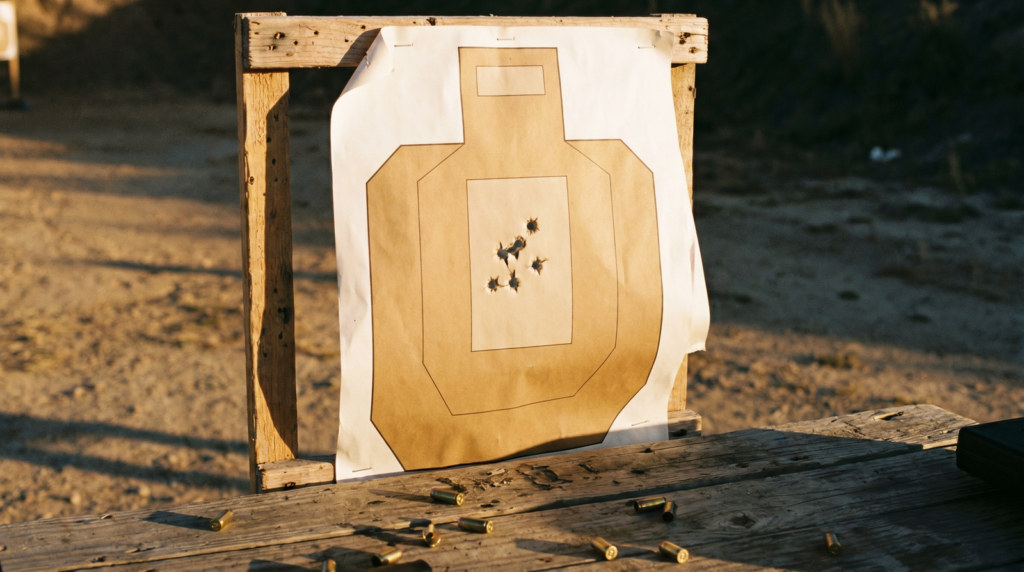
Both versions ran clean for me. I got zero failures to feed and zero failures to eject across the full 500 rounds. The .380 never hiccuped. The 9mm threw one brief stovepipe at round 180 that I attribute to a limp-wrist moment during my one-handed string. It didn’t repeat in another 40 rounds of single-hand drills.
My accuracy results at 15 yards from supported position: I averaged 3.1″ groups across five 5-shot strings with the Federal HST Micro out of the .380. The 9mm ran tighter for me at 2.8″ average with the 124gr HST. Both are perfectly adequate for defensive use inside 25 feet. Neither’s going to win a Bullseye match. The trigger breaks around 6.5 lbs with a slightly spongy wall, which didn’t help my precision shooting.
My accessibility tests went exactly as expected. Diane, who normally needs help racking her husband’s Glock 19, charged the .380 EZ on her first try with me watching, loaded a full magazine in under 30 seconds, and ran 50 rounds without a single complaint. She had to work a bit harder on the 9mm, about 70% as comfortable, in her words, but still managed it solo.
Marcus rated the EZ a 9/10 for ease of use against the Glock 19 he’d tried earlier in the day, which he gave a 5/10. That gap is the whole pitch of the EZ, a beginner-friendly slide on an otherwise serious defensive pistol. We finished the session with him running a Mozambique drill at 7 yards and hitting all three shots.
Recoil management on the 9mm is genuinely good for a sub-23-ounce single-stack. The grip texture grabs without being abrasive, and the relatively low bore axis keeps muzzle flip manageable. Splits in rapid pairs ran ~0.35s on the 9mm and ~0.30s on the .380, fast enough that the limiting factor was sight reacquisition, not the platform.
What Owners Are Saying
Browse the S&W M&P forum and Reddit’s r/CCW long enough and you start to see the same three patterns. First: spouses and adult children gift the EZ to elderly relatives, and those relatives keep it for years. The pistol shows up in posts about first range trips with mom, first concealed-carry purchases for arthritic dads, and senior-shooter classes. The accessibility story is real and it sells.
Second pattern: new shooters who started with the EZ because of the easy slide often move to a Sig P365 or Hellcat after a year. The EZ does its job of getting them comfortable, then they want more capacity in a smaller package. Some keep the EZ as a range gun or loan-out. Others sell it.
The pattern is consistent enough that EZs are usually easy to find on the used market, and that’s actually a buying tip, since gently-used EZs at $300-$350 are common.
Third: the grip-safety debate. Owners split roughly 70/30 in favor of the grip safety. The 70% find it transparent or appreciate the extra layer. The 30% complain about pinching or about training around an unfamiliar control. Most of the negative reviews on retailer pages mention either the grip safety or the 8-round capacity. Both are valid complaints. Both are baked into the design.
Known Issues and Common Problems
Grip Safety Engagement Issues
The most common complaint from EZ owners online and I’ve seen it in person. Shooters with very small hands sometimes fail to fully depress the grip safety, causing the trigger to feel dead or the gun to fail to fire. The fix is a higher, more complete grip. Get professional instruction if this happens to you. It’s a training issue in almost every case, not a defect.
Grip Safety Pinch
High-volume sessions can produce a mild pinch at the web of the hand from the grip safety cycling under recoil. More common with the 9mm than the .380. Solutions include shooting with a slightly lower grip (trades a bit of control for comfort) or adding grip tape to the back of the frame to reduce skin contact. Not a dealbreaker but a known quirk.
Limited Capacity
Eight rounds in both calibers. That’s the engineering reality of using a wider, softer load-assist magazine in a compact frame. The EZ magazine body is larger than a standard flush-fit Shield mag. A Sig P365 gives you 10+1 from a smaller footprint. If capacity is your primary concern, the EZ isn’t your gun. If accessibility is, capacity is the trade-off you make.
Slide-Stop Engagement
A handful of reviewers have noted the slide-stop lever is hard to release with the thumb during reloads. The lever sits a bit low and is on the small side. I noticed this during reload drills, easier to just rack the slide than to thumb the release. For defensive use it’s a minor quibble. For competition shooting, you’d want a different platform anyway.
Parts, Accessories, and Upgrades
The EZ aftermarket is thinner than the standard M&P line but not empty. Here’s what’s worth knowing.
Holsters
Holster support is solid because the EZ has been on the market since 2018. Crossbreed’s SuperTuck, Galco’s Stow-N-Go, Vedder’s LightTuck, and Bravo Concealment’s BCA all fit the EZ in both calibers (specify caliber and presence of thumb safety when ordering). For OWB carry, Safariland and BlackHawk both make Kydex options. If you carry with the thumb safety, double-check that your holster doesn’t sweep it on the draw.
Sights
The factory white-dot sights are fine but plain. Trijicon, AmeriGlo, and XS Sights all make tritium night-sight replacements for the EZ, confirm fitment for your specific caliber and generation when you order. The Performance Center version ships with TruGlo TFO sights, which are a worthwhile upgrade if you’re buying new. Optics cuts are not available on standard EZ slides; if you want a red dot, look at the M&P 9 Shield Plus instead.
Triggers
Apex Tactical makes a flat-faced trigger kit for the EZ that cleans up the wall and shortens the reset. Roughly $90-$110 installed. For someone running the EZ as a primary defensive gun, it’s worth the money. For a once-a-month range gun, the factory trigger is acceptable.
Magazines and Other Parts
Spare mags run $35-$45 direct from S&W. Aftermarket mags are basically nonexistent, buy factory. Grip-tape and slide-cocker accessories (“racker plates” that bolt onto the slide for even more leverage) are out there from small shops like TandemKross. Recoil-spring upgrades are not recommended; S&W’s spring is part of what makes the slide easy, and changing it defeats the gun’s purpose.
The Verdict
My M&P Shield EZ review verdict: it does what it says. The slide is genuinely the easiest I’ve ever racked on a production pistol. The magazine load-assist and loaded chamber indicator round out a thoughtful package for shooters limited by standard gun ergonomics. S&W didn’t cut corners on reliability to get there, both calibers run clean, and the build quality is exactly what you’d expect from Springfield, Massachusetts.
Capacity limits and grip-safety quirks are real trade-offs worth knowing about before you buy. So is the .380 vs 9mm decision, which comes down to how much hand-strength limitation you’re managing. For most buyers in the target market, arthritis, carpal tunnel, smaller hands, new shooters who need confidence in their ability to operate the gun, the EZ is the right answer.
If you’ve been avoiding semi-autos because you can’t rack the slide reliably, try this one before you write off the platform. It genuinely changes the equation. Final Score: 8.0/10. Best For: anyone with hand-strength limitations who needs a reliable self-defense gun they can actually operate under pressure.
Frequently Asked Questions
Is the S&W EZ good for self defense?
Yes. Both the .380 and 9mm versions are reliable and accurate enough for defensive use. The .380 Federal HST Micro and Hornady Critical Defense are proven defensive rounds at close range. The 9mm version adds more stopping power. The key advantage is that the EZ is a gun you can actually operate under stress, which matters more than raw ballistics.
Which is better, the EZ .380 or EZ 9mm?
Depends on your needs. The .380 is lighter, softer shooting, and even easier to rack. Perfect for severely limited hand strength or new shooters. The 9mm gives you two extra rounds of capacity and meaningfully more stopping power, but the slide is stiffer and recoil is sharper. If accessibility is the main concern, get the .380. If you just want something easier than a standard 9mm, get the 9mm.
How easy is the Shield EZ slide to rack?
The easiest of any production pistol on the market. The EZ uses a lighter recoil spring and oversized canted front cocking grooves that let you rack using your entire palm rather than pinching the rear serrations. People who genuinely could not rack a standard semi-auto can operate the EZ. It's not a marketing claim, it's a mechanical reality.
Is the S&W EZ reliable?
Very. S&W has sold hundreds of thousands of EZ pistols and the reliability track record is excellent. In our 500-round test across both versions we had one stovepipe on the 9mm under a limp-wrist condition that didn't repeat. Both versions handled a variety of FMJ and hollow point loads without issue. This is a proven, reliable defensive pistol.
What holsters fit the Shield EZ?
Most major holster makers support the Shield EZ, including Alien Gear, Vedder, Concealment Express, and Blackhawk. Note that EZ holsters are specific to the EZ model and are not interchangeable with standard Shield holsters due to the wider grip profile. Verify model compatibility when purchasing.
Is the EZ good for concealed carry?
Passable but not ideal. The EZ is wider than most slim carry guns and the grip is taller than micro-compacts. It can be carried IWB or in a purse, but it's not going to disappear under a light shirt the way a P365 or 43X does. For shooters who prioritize accessibility over concealability, the EZ is worth the extra bulk.
How does the EZ compare to the Glock 42?
The Glock 42 is slimmer, has a better aftermarket, and has Glock's legendary reliability reputation. But the slide is much harder to rack than the EZ, and Glock offers none of the accessibility features: no front cocking grooves, no grip safety, no loaded chamber indicator, no easy-load magazines. For a buyer who specifically needs low slide force, the EZ wins. For everyone else, the 42 is a fine choice.
Is .380 enough for self defense?
Modern .380 ACP loads are legitimate defensive cartridges. Federal HST Micro and Hornady Critical Defense 90gr FTX both penetrate adequately in ballistic gel tests at defensive distances. They're not as powerful as 9mm, but the difference at 7 feet is much smaller than the internet debates suggest. A .380 you can shoot accurately beats a 9mm you're scared of every time.
4,715+ Gun & Ammo Deals
Updated daily from 200+ top retailers. Filter by category, caliber, action type, and price.
Related Guides