

Affiliate disclosure: This Ruger Mini-14 review contains affiliate links. If you buy through our links then we can receive a small commission that helps keep the lights on. You don’t pay anything more.
- Treat every gun as loaded
- Point the muzzle in a safe direction
- Keep your finger off the trigger until you’re ready to shoot
- Know your target and what’s beyond
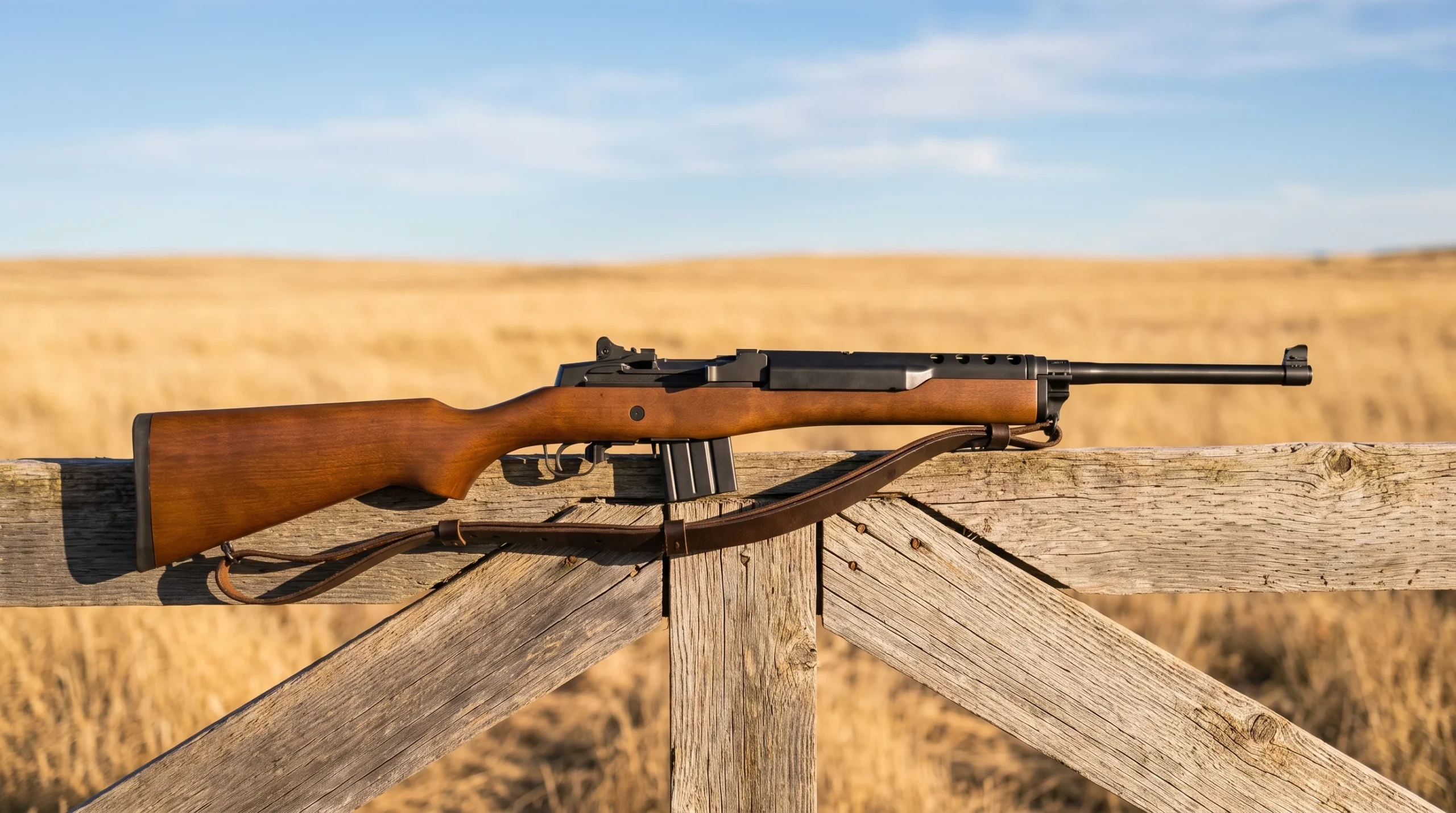
Table of Contents
How we tested: Every pick here is ranked against our testing methodology. Minimum round counts, accuracy and reliability protocols, the failures that disqualify a gun.
Review: Ruger Mini-14 Ranch Rifle – The Non-Scary AR Alternative
Our Rating: 7.5/10
- MSRP: $1,299
- Street Price: $850-$1,100 (Check our live pricing for the best current deal)
- Caliber: 5.56 NATO / .223 Remington
- Action: Gas-operated semi-automatic (Garand-style rotating bolt)
- Barrel Length: 18.50″
- Overall Length: 38.00″
- Weight: 7.0 lbs (unloaded)
- Capacity: 5 rounds (ships with two magazines; 10, 20, and 30-round mags available)
- Twist Rate: 1:9″ RH, 6 grooves
- Barrel: Cold hammer-forged alloy steel, blued finish
- Stock: Synthetic (also available in hardwood)
- Sights: Protected blade front, adjustable ghost ring aperture rear
- Optics: Integral scope mounts machined into receiver; includes scope rings
- Safety: Garand-style crossbolt
- Length of Pull: 13.50″
- Made in: USA (Prescott, Arizona)
Pros
- Rock-solid Garand-action reliability through 500 rounds of mixed ammo
- 100% legal in California, New York, New Jersey, and every other ban state without modification
- Self-cleaning fixed-piston gas system with integral scope mounts and excellent ghost-ring aperture sights
Cons
- Street price of $850-$1,100 buys a significantly more accurate AR-15
- 2 MOA accuracy ceiling is real, and barrel heat opens groups fast after rapid strings
- Proprietary magazines cost more than AR mags and the aftermarket is a fraction of the AR platform
Quick Take
The Ruger Mini-14 Ranch Rifle is one of those guns that shouldn’t still exist in 2026. It’s heavier than a modern AR-15, less accurate, less modular, and costs more.
On paper, it loses every single comparison. And yet Ruger keeps making them because millions of shooters keep buying them. There’s a reason for that.
I put 500 rounds of mixed ammo through the 5801 model over three range sessions and came away with a clear picture. This is a rifle that does a few things exceptionally well: it runs like a freight train, it handles like a hunting rifle, and it passes the “grandma’s house” test. Nobody panics when they see a wood-stocked Mini-14 leaning in the corner. Try that with an AR.
But you’re paying a real premium for those qualities. The accuracy ceiling hovers around 2 MOA on a good day, and it gets worse when the barrel heats up. For a rifle that costs north of $850 at street price, that stings when a $650 AR will outshoot it all day long.
If you live in a ban state, though, none of that matters. The Mini-14 Ranch is your ticket to a semi-auto .223/5.56 rifle that’s legal everywhere without a single modification. That alone makes it worth considering.
Best For: Ban-state shooters in California, New York, and New Jersey who want a semi-auto 5.56 without the legal headaches. Also great for ranch and property defense where a traditional-looking rifle matters more than tactical cool factor.
Why Ruger Built the Mini-14 This Way
Ruger also sells the Mini-14 Tactical (model 5847) with a 16.12-inch barrel, flash hider, and optional pistol-grip stock for free-state buyers who want a more aggressive setup. The Ranch reviewed here remains the volume seller. Bill Ruger designed the Mini-14 in 1973 with one clear philosophy: take the proven M1 Garand/M14 operating system, shrink it down for .223 Remington, and sell it as a ranch rifle.
Not a military weapon. Not a tactical carbine. A ranch rifle. That was deliberate.
Ruger understood something about the American gun market that a lot of companies still don’t get. Most rifle buyers aren’t building plate carriers and running drills. They want something reliable that handles coyotes, varmints, and the occasional two-legged problem if it comes to that. The Mini-14’s traditional wood stock and clean lines appeal to that buyer in a way no AR ever will.
Garand-style rotating bolt and fixed-piston gas system are overbuilt by modern standards. That’s a feature, not a bug. This action was designed to function in the mud and snow of the Korean War.
Scaling it down for .223 gives you an operating system with massive reliability margins. The self-cleaning gas cylinder pushes carbon and fouling out with every shot, which is why Mini-14s run for thousands of rounds between cleanings.
Then the state-level assault-weapons restrictions came along, and the Mini-14 suddenly had a second career. Because it doesn’t have a pistol grip, a threaded barrel, or a flash hider, it slips right past every feature-based ban in the country.
Same caliber, same semi-auto action, same magazine capacity as an AR-15. But it’s “not an assault weapon” because it looks like something your grandad would have owned. Politics is weird.
Ruger knows exactly what they’ve got here. The $1,299 MSRP tells you this isn’t a budget rifle competing with entry-level ARs. It’s a premium-priced alternative for buyers who either can’t have an AR or don’t want one. And as long as states keep banning things with pistol grips, Ruger will keep cashing those checks.
Mini-14 Variants and Configurations
Ruger sells the Mini-14 in three core families covering five practical configurations. The Ranch Rifle is the original, hardwood stock, blued barrel, 18.5″ barrel, the rifle most buyers picture when they say “Mini-14.” From there the line splits two ways: the Tactical (shorter 16.12″ barrel, flash hider, synthetic stock, built for truck-gun and home-defense duty) and the Mini Thirty (everything in a Ranch package but chambered in 7.62×39mm Russian for cheap surplus ammo and hog-hunting energy). Stainless steel and synthetic-stock variants run alongside each family. Pick by the job, not the badge, the lockwork is the same across the line.
Ranch Rifle — Hardwood (Model 5801) $1,299
18.5″ tapered blued barrel, 5-round magazine, traditional hardwood stock, integral scope-ring mounts. The all-rounder, what most buyers actually take home.
Ranch Rifle — Synthetic 20rd (Model 5816) $1,379
18.5″ blued barrel, 20-round magazine, black synthetic stock. Higher-capacity workhorse for ranch and pest-control use in free states.
Ranch Rifle — Stainless 20rd (Model 5817) $1,489
18.5″ stainless barrel, 20-round magazine, black synthetic stock. The coastal/wet-climate pick, same gun, finish that won’t pit in salt air or humid timber.
Tactical (5.56 NATO, Model 5819) $1,529
16.12″ barrel with flash hider, 20-round magazine, synthetic stock. The home-defense and truck-gun configuration, short overall length, fast handling indoors.
Tactical (300 Blackout, Model 5864) $1,419
16.12″ barrel chambered in .300 AAC Blackout, 20-round magazine, synthetic stock. Suppressed-shooting-friendly chambering with subsonic options, a niche the .223 Tactical can’t fill.
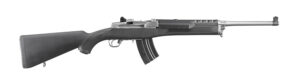
Mini Thirty (7.62×39, Model 5853) $1,489
18.5″ matte stainless barrel, 20-round magazine, synthetic stock, chambered in 7.62×39mm. Cheap surplus ammo, more energy than 5.56, popular for hog hunting and brush guns.
What’s missing: the Target Rifle (22″ heavy-barrel laminate-thumbhole bench gun, introduced 2007) appears to have rotated out of current production, its page on Ruger.com is gone as of mid-2026. If precision is the priority, look elsewhere; the Mini-14 platform was never going to out-shoot a purpose-built bolt action anyway.
Competitor Comparison
Every Mini-14 vs AR-15 comparison comes down to the same trade-off: traditional rifle silhouette and ban-state legality on the Ruger side, accuracy and aftermarket depth on the AR side. The four guns below cover the most common cross-shopped alternatives in the 2026 budget AR market. For a wider field, see our AR-15 brands tier list.

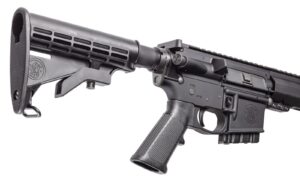
Ruger AR-556 / Harrier $650-$800
If you live in a free state, the AR-556/Harrier is the better buy. Period. The Mini-14’s only advantage is ban-state legality and the traditional aesthetic.

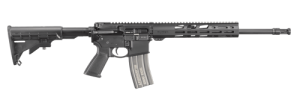
S&W M&P15 Sport III $700-$800
At $700-$800 street, it’s meaningfully cheaper than the Mini-14 and meaningfully more accurate. Probably the single biggest argument against buying a Mini-14 if your state allows AR-15s. You get more gun for less money.
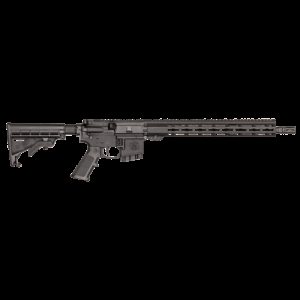
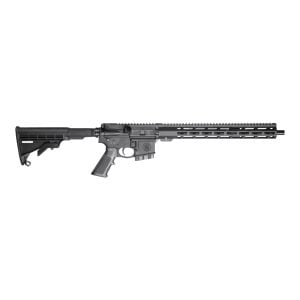
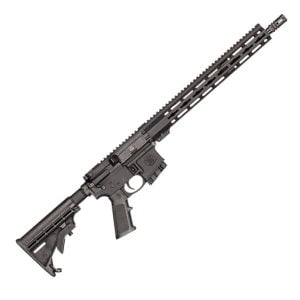
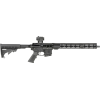
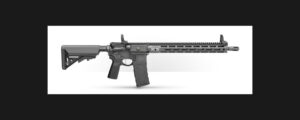
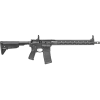
Springfield Armory Saint $800-$950
Springfield updated the Saint Victor in late 2025 with M-LOK rails and new configurations. If you’re spending Mini-14 money in a free state, the Saint Victor gives you a lot more rifle.
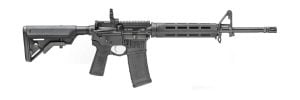
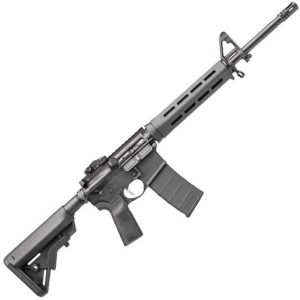


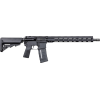
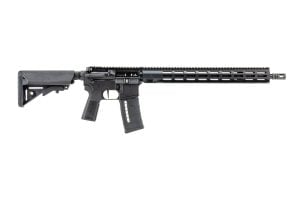
IWI Zion-15 $850-$950
At roughly the same street price as the Mini-14, the Zion-15 is what you buy if you can. It’s the gun the Mini-14 wishes it could be, accuracy-wise. The catch: it can’t follow you to California.

| Dimension | Ruger Mini-14 Ranch | Ruger AR-556 / Harrier | S&W M&P15 Sport III | Springfield Saint Victor | IWI Zion-15 |
|---|---|---|---|---|---|
| Street Price (2026) | $850-$1,100 | $650-$800 | $700-$800 | $800-$950 | $850-$950 |
| Practical Accuracy | 3-4 MOA typical | ~2 MOA | Sub-MOA reports common | ~1.5 MOA | ~1 MOA |
| Aftermarket Depth | Limited (Mini-14 specific) | Full AR-15 ecosystem | Full AR-15 ecosystem | Full AR-15 ecosystem | Full AR-15 ecosystem |
| Ban-State Legal (CA/NY/NJ etc.) | Yes (traditional rifle) | No (features-based ban) | No | No | No |
| Trigger | Two-stage military-style, 5-6 lb | Mil-spec, ~6 lb | Mil-spec, ~6.5 lb | Nickel-boron, ~5 lb crisp | Mil-spec, ~6 lb |
| Stock / Grip | Fixed synthetic or hardwood | Mil-spec collapsible | M-LOK furniture | BCM grip + M-LOK | B5 Systems |
| Manufacturer Status | Active | AR-556 discontinued; Harrier active | Active | Active | Active |
| Out-of-Box Score | 7/10 | 8/10 | 8/10 | 8/10 | 9/10 |
| Best For | Ban-state shooters, ranch / truck gun | First-AR Ruger loyalists | Budget AR-15 buyers | Mid-tier AR with good furniture | Best-shooting budget AR |
Read the chart this way: the Mini-14 only wins one row outright (ban-state legality) and ties no one on accuracy or aftermarket. If you live anywhere the AR-15 is on the menu, every alternative beats it on cost, accuracy, or both. The Mini-14’s case is geography and aesthetics, not capability.
Features and Quirks
The Garand Action
Let’s start with what makes the Mini-14 tick. The Garand-style rotating bolt locks into the receiver with a breech bolt locking system that’s been feeding Americans since World War II. It’s a fixed-piston gas system, which means the gas cylinder sits right there on the barrel and pushes the operating rod back to cycle the action. No direct impingement gas tube blowing carbon into the receiver like your AR.
Self-cleaning aspect is real, not marketing fluff. The moving gas cylinder literally pushes fouling out with each shot cycle. I went through all 500 test rounds across three sessions and only wiped the bolt down once, more out of habit than necessity. The action was still slick at the end.
Sights and Optics Mounting
Ghost ring aperture rear sight paired with the protected blade front is one of the Mini-14’s genuine highlights. These sights are fast on target and intuitive. The rear is adjustable for windage and elevation, and the aperture size is well-chosen for both precision work and quick acquisition.
For optics, Ruger machines integral scope mounts directly into the solid steel receiver and includes a set of scope rings in the box. That’s a nice touch. No need for a separate Picatinny rail unless you want one.
The receiver is also drilled and tapped if you prefer a different mounting solution. I ran the iron sights for most of my testing because, honestly, they’re good enough for what this rifle does best.
Stock and Ergonomics
Ranch Rifle stock options include both classic hardwood and a black synthetic with checkered panels. The hardwood is genuinely attractive on the 5801.
Clean grain, decent finish, and the wood-to-metal fit on my test rifle was tight with no gaps. It looks like a real rifle, not a plastic toy. That matters to a lot of buyers and I’m not going to pretend it doesn’t.
At 7 pounds flat and 38 inches overall, the Mini-14 handles like a sporting rifle. It shoulders quickly, points naturally, and carries comfortably for extended periods. The 13.5-inch length of pull fits most adult shooters well.
Compare that to the adjustable stock on an AR and yes, you lose versatility. But you gain a rifle that just feels right the first time you pick it up.
The Trigger
Here’s where I get honest. The factory trigger is functional but uninspiring. I measured it at roughly 6 pounds with some creep before a reasonably clean break.
It’s not terrible. But it’s not helping you shoot better, either. For a rifle that already has accuracy limitations, a 6-pound trigger with creep is adding insult to injury.
The good news is that M*CARBO makes a trigger spring kit that drops the pull to about 4.25 pounds. That’s a $30 upgrade that makes a meaningful difference. If you buy a Mini-14, budget for that spring kit on day one.
Magazines
Mini-14 ships with two 5-round magazines. Five rounds. In 2026. Look, I understand Ruger is selling a lot of these in California where 10 is the max anyway, but shipping a 5-rounder as standard is stingy when the rifle costs $1,299 MSRP.
Factory Ruger 20-round magazines run about $35-$45 each. AR-15 PMAGs cost $12. That math never gets better. Aftermarket Mini-14 magazine options exist, but quality varies wildly.
Stick with factory Ruger mags and prepare to spend. ProMag and other cheapo brands are a crapshoot with the Mini-14’s feed geometry.
At the Range: 500-Round Test Protocol
I tested the Mini-14 Ranch Rifle across three range sessions over two weeks. The goal was simple: establish an accuracy baseline, test reliability with various ammunition, and see how the rifle performs as the barrel heats up. That last part matters more with the Mini-14 than almost any other modern rifle.
Ammunition Log
- PMC Bronze .223 55gr FMJ: 200 rounds
- Federal American Eagle 5.56 55gr FMJ: 120 rounds
- Hornady Frontier 5.56 55gr FMJ: 80 rounds
- Fiocchi .223 55gr FMJ: 60 rounds
- Federal Gold Medal .223 69gr Sierra MatchKing: 40 rounds (accuracy testing)
Break-In Period
Mini-14 needed no real break-in. First magazine out of the box cycled perfectly. No stiff action, no failure to feed, no issues.
That Garand bolt just goes to work from round one. I fired the first 100 rounds of PMC Bronze without cleaning and the rifle ran like it had been shooting for years.
Reliability Results
Zero malfunctions in 500 rounds. Not one. Every brand, every lot, brass-cased across the board. The Mini-14 ate everything I fed it without a hiccup.
Ejection was consistent at about 2 o’clock. The action stayed smooth even as the round count climbed. By round 400, I had only wiped the bolt face once. This rifle genuinely doesn’t care about maintenance.
That reliability isn’t anecdotal to my test sample, either. Law enforcement agencies ran stainless Mini-14s through qualification courses for years without cleaning or lubrication and reported zero malfunctions. The Garand action earns its reputation.
Accuracy Testing
Ruger Mini-14 accuracy is where this rifle’s reputation gets honest. The factory spec is around 2 MOA with match ammo on a cold barrel and it tests out that way.
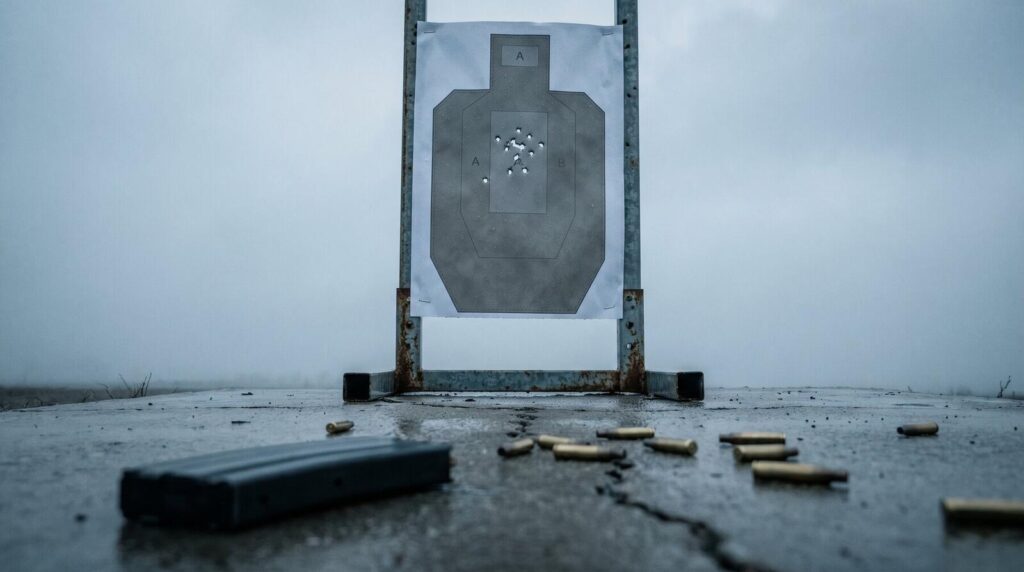
Here’s where it gets complicated. Cold bore, off a sandbag rest at 100 yards with the Federal Gold Medal 69gr Sierra MatchKing, I got consistent 1.8 to 2.1 MOA five-shot groups. That’s about as good as the Mini-14 gets. Ruger’s own spec says to expect 2 MOA, and that’s honest.
With the bulk ammo (PMC Bronze, American Eagle), groups opened to about 2.5 to 3 MOA. Totally acceptable for a ranch rifle or defensive carbine. Not great for a rifle that costs what it costs.
Now here’s the real issue. After running through two or three rapid magazines, the barrel gets hot. Noticeably hot. And when that barrel heats up, groups blow out to 4 inches or worse.
The barrel is thicker than the old pencil-barrel models from the pre-2007 era, but it still strings shots under heat. Slow, deliberate fire gives you 2 MOA. Rapid fire gives you “minute of bad guy at 50 yards.” That’s the trade-off.
Performance Testing Results
Reliability: 9/10
This is the Mini-14’s calling card. Five hundred rounds of mixed ammunition from five different manufacturers and not a single malfunction. The self-cleaning gas system works as advertised, and the Garand bolt is built like it expects to see combat.
I’d trust this rifle in a life-or-death situation without hesitation. The only reason it doesn’t get a perfect 10 is that I’ve seen AR-15s achieve the same reliability at a lower price point. But the Mini-14’s reputation for running dirty, running neglected, and running regardless is completely earned.
Accuracy: 7/10
Two MOA with match ammo on a cold barrel is serviceable. It’s not great. A $650 M&P15 will hold 1 MOA.
But the Mini-14 was never designed to be a precision rifle. It was designed to put rounds on a coyote at 150 yards, more in the spirit of our best AR-15 for hunting picks than the precision rifles in our long-range coverage, and it does that just fine.
The barrel heat issue is the real accuracy killer. If you take your time between shots and let the barrel cool, you’ll get acceptable groups. Start hammering away and watch your point of impact wander. For deliberate shooting, 7/10 is fair; for rapid fire, knock a point off.
Ergonomics and Recoil: 8/10
Mini-14 is a pleasant rifle to shoot. Recoil is soft, more of a push than a snap. The 7-pound weight absorbs the .223’s modest energy well, and the traditional stock design distributes recoil naturally into your shoulder pocket. It’s noticeably more comfortable than shooting a lightweight AR with a collapsible stock.
Handling is superb. The 38-inch overall length and 7-pound weight make it easy to carry and quick to shoulder. My one complaint is the lack of a pistol grip, which some shooters prefer for extended shooting sessions. But that’s also why it’s legal in California, so pick your poison.
Fit and Finish: 8/10
Ruger does excellent work on the Mini-14. The bluing is even and deep. The hardwood stock has nice figuring and a smooth finish. Wood-to-metal fit’s tight.
The receiver machining is clean, and those integral scope mounts look professional. This rifle feels like it costs what it costs. The only ding here’s that some owners report inconsistent gas block contact with the barrel, which can affect harmonics and accuracy. My test rifle showed no such issues, but it’s worth mentioning because it pops up in the forums often enough to notice.
What Owners Are Saying
I spent time digging through RugerForum, Perfect Union, and Reddit to see what long-term Mini-14 owners think of their rifles. The sentiment is consistent: people love the reliability and hate the price-to-accuracy ratio.
“I shoot my Mini far more than my ARs. When I’m moving and shooting, I can hit better with the Mini than any AR I’ve owned.” That’s a common theme. Owners who train with the platform genuinely prefer how it handles dynamically.
“My 583 series easily holds 2 MOA with PMC Bronze. Absolutely reliable. Haven’t had a single malfunction in over 1,000 rounds.” The newer 580+ series rifles get consistently positive accuracy reports. If you’re buying used, make sure it’s a 580 series or later.
“For my needs, it shoots just fine. But I wouldn’t trade my AR for it if I lived in a free state.” That’s the honest truth right there. Owners appreciate what the Mini-14 does well but acknowledge the trade-offs.
“I love my Mini because ARs are uncomfortable to me. The traditional stock just fits better.” Ergonomic preference is a real factor. Not everyone clicks with the AR pistol grip and buffer tube stock.
“The barrel heats up in about 3 or 4 shots and it’s too hot to touch by 7 or 8. Groups open from 3/4 inch to 1.5 inches once it’s stinging hot.” Barrel heat remains the most discussed issue in owner forums, even with the heavier post-2007 barrels.
“Mini-14s never shot well for me, even the newer ones. They’re reliable as a hammer, but if I’m spending over $800, I want better than 2 MOA.” The value argument comes up repeatedly. When budget ARs shoot tighter groups, the Mini-14’s price is hard to justify on performance alone.
Known Issues and Common Problems
Barrel Heat and Shot Stringing
This is the big one. The Mini-14’s barrel heats up faster than most modern rifles and accuracy degrades significantly under sustained fire. Pre-2007 pencil-barrel models were notorious for 3-5 MOA groups and visible point-of-impact shifts as the barrel warmed.
Ruger addressed this with a heavier tapered barrel starting with the 580 series, and the improvement is real. But the problem isn’t solved, just reduced. If you’re planning to do rapid-fire drills or dump magazines, the Mini-14 will disappoint you with wandering groups.
Gas Block Inconsistency
Some Mini-14s leave the factory with gas blocks that don’t contact the barrel evenly. This distorts the barrel’s harmonics and can cause erratic accuracy that no amount of ammo testing will fix. If your Mini-14 shoots inconsistent groups despite trying multiple ammunition types, a gunsmith can check and correct the gas block fit. Accuracy Systems makes an aftermarket gas bushing that many owners swear by.
Scope Mount Issues
Despite Ruger’s integral scope mounts being a selling point, some owners report that scope rings can work loose under recoil over time. Blue Loctite on the ring screws fixes this permanently, but it’s worth checking after your first few range sessions. A loose scope mount will ruin your accuracy and have you chasing a problem that isn’t the rifle’s barrel or ammo.
Aftermarket Magazine Quality
Third-party Mini-14 magazines are hit or miss. ProMag and similar budget brands have a reputation for feed lip deformation, weak springs, and unreliable feeding. Stick with factory Ruger magazines.
Yes, they cost $35-$45 each compared to $12 for a PMAG. That’s the cost of owning a Mini-14. Don’t cheap out on magazines for a rifle that otherwise runs flawlessly.
Parts, Accessories, and Upgrades
| Upgrade Category | Recommended Component | Why It Matters | Cost Estimate |
|---|---|---|---|
| Trigger Spring | M*CARBO Trigger Spring Kit | Drops pull from ~6 lbs to ~4.25 lbs with cleaner break | $30 |
| Gas Bushing | Accuracy Systems Gas Bushing | Corrects over-gassing and improves accuracy in affected rifles | $40-$60 |
| Muzzle Brake | Mini-14 3-Port Muzzle Brake | Reduces felt recoil by up to 45% for faster follow-up shots | $40-$70 |
| Scope Mount | Ruger Factory Rings or UTG Pro mount | Solid optics platform using the integral receiver mounts | $25-$50 |
| Optic | Vortex Crossfire II 1-4×24 | Perfect magnification range for the Mini-14’s practical accuracy | $180-$220 |
| Stock | Hogue OverMolded Stock | Better grip and weather resistance than factory wood | $80-$120 |
| Magazines | Factory Ruger 20-Round | Reliable feeding, proper fit, worth the premium over aftermarket | $35-$45 each |
The aftermarket for the Mini-14 is nothing compared to the AR-15 ecosystem. You won’t find 47 different handguard options or drop-in trigger cassettes. But the upgrades that do exist are targeted at the rifle’s real weaknesses, and the trigger spring kit plus a quality optic will transform the shooting experience. Check Brownells and MidwayUSA for the best selection of Mini-14 parts.
The Ban-State Elephant in the Room
Let’s talk about the real reason most Mini-14s get sold in 2026. California, New York, New Jersey, Connecticut, Massachusetts, Maryland, and Hawaii all have some form of assault weapons ban that restricts AR-15 ownership. The Mini-14 Ranch model is legal in every single one of them without any modification.
No fin grip. No fixed magazine. No compliance wrap. The Ranch model qualifies as a featureless rifle straight from the box in every assault-weapons-ban jurisdiction.
Just a wood-stocked semi-auto rifle that fires the same 5.56 NATO cartridge as the “assault weapon” sitting in the restricted case next to it. The irony is thick enough to spread on toast.
If you’re a California shooter looking for a home defense rifle, the Mini-14 is one of your best options. It gives you semi-auto capability, detachable 10-round magazines, and a proven platform without any of the legal gray areas that come with featureless AR builds or maglocked rifles. You can walk into any California gun store, buy a Mini-14 off the rack, and walk out with zero compliance headaches.
Is it the best rifle for the money in a free state? No. Not even close. But in a ban state, the calculus changes completely.
The Mini-14 goes from “overpriced for what it is” to “only game in town.” And Ruger prices it accordingly.
Who Should NOT Buy the Mini-14
The Mini-14 is great at what it does, but it is genuinely the wrong rifle for several buyer profiles. Save yourself the resale hassle.
- AR-15 builders and customizers: the Mini-14 aftermarket is a fraction the size of the AR ecosystem. You can’t swap uppers, drop in match triggers easily, or tune the gas system the way you would on a Sport III or PSA build. If you want to make a rifle “yours,” buy an AR. The S&W M&P15 Sport III is $700 with 10× the aftermarket depth.
- Sub-MOA precision shooters: Mini-14 accuracy averages 2-3 MOA even with the post-2005 thicker barrel redesign. If you need to hit small targets past 300 yards, a bolt-action like the Ruger American Predator or Tikka T3x will out-shoot a Mini-14 all day for less money.
- High-volume optic-mounters: the integral scope-ring mounts flex under heavy use, and the receiver shape pushes optics high, there’s no low-mount red-dot configuration that feels right. The Tactical’s Picatinny top rail helps, but it’s still inferior to an AR’s full-length flat-top for serious optic work.
- Free-state buyers looking for AR-class value: if you live in a state without an assault-weapons ban, the math doesn’t work. A PSAK-47 GF3 is $800. A complete AR-15 is $700-900. The Mini-14’s $1,299+ premium only pays off for ban-state buyers OR people who genuinely prefer the traditional wood-and-steel silhouette over a black rifle.
- Full-auto / hard-use abusers: the Mini-14 is built for ranch and recreational use, not 10,000-round-per-year competition or suppressed full-auto runs. The bolt and op-rod weren’t designed for that duty cycle. A piston AR like the LWRC or POF will laugh at abuse the Mini-14 will start protesting at round 3,000.
The Verdict
This Ruger Mini-14 review keeps landing on the same paradox: the Ranch Rifle is a contradiction. It’s simultaneously overpriced and irreplaceable, outdated and perfectly suited for 2026. It costs too much for what it delivers on paper, and yet there’s nothing else quite like it on the market.
That Garand action runs like a Swiss watch. The handling is superb. And it goes where ARs legally cannot.
If you live in a free state, buy an AR. The Ruger AR-556, the M&P15 Sport III, or the IWI Zion-15 will all outshoot the Mini-14 for less money. I’m not going to pretend otherwise. The Mini-14 loses the spec-sheet comparison every single time.
But if you’re in California, New York, New Jersey, or any other ban state, the Mini-14 Ranch Rifle is one of the best semi-auto rifles you can legally own without compromise. It’s also the right pick for shooters who simply prefer a traditional rifle aesthetic, or for ranch and property use where a wood-stocked rifle draws less attention than a black rifle with a pistol grip. Sometimes the right tool is the one that doesn’t start an argument.
Final Score: 7.5/10
Best For: Ban-state residents who want a legal semi-auto 5.56 without compliance headaches, ranch and property owners who prefer traditional rifle aesthetics, and shooters who value bombproof reliability over precision accuracy.
Frequently Asked Questions
Related: Comparing classic and modern .223 rifles? Read our full Mini-14 vs AR-15 comparison.
Is the Ruger Mini-14 reliable?
Very reliable. The Garand-style rotating bolt action is proven across millions of rounds. We fired 500 rounds with zero malfunctions. The Mini-14 has a decades-long reputation for dependable function.
Is the Mini-14 legal in California?
Yes. The Mini-14 Ranch Rifle with a fixed stock is legal in California, New York, New Jersey, and most other states that restrict AR-15 style rifles. This is one of its primary selling points.
Mini-14 vs AR-15: which is better?
The AR-15 is more accurate, more modular, and cheaper. The Mini-14 is legal in ban states, has a traditional look, and requires less maintenance. If you can own an AR-15, the AR is the better platform. If you cannot, the Mini-14 is the best alternative.
Is the Ruger Mini-14 accurate?
Adequate for defensive and hunting use. Expect 2 to 3 MOA groups, which is 2 to 3 inches at 100 yards. Earlier Mini-14s were less accurate but current production with the improved barrel is significantly better.
Why is the Mini-14 so expensive?
At 850 to 1100 dollars street price, the Mini-14 costs more than most AR-15s that outperform it. The price reflects the more complex machined receiver, Garand-type action, and lower production volume compared to AR platforms.
What magazines work in the Mini-14?
Ruger factory magazines are the most reliable. Aftermarket options from ProMag exist but have mixed reliability reviews. Factory 5, 10, and 20-round magazines are available from Ruger directly.
Can you put a scope on the Mini-14?
Yes. The Ranch Rifle model includes scope rings and a receiver-mounted rail. Any standard 1-inch scope rings will work. Low-power variable optics in the 1-6x range are popular choices.
Is the Mini-14 good for home defense?
Functional for home defense but not optimal. The 18.5-inch barrel and traditional stock are less maneuverable than an AR pistol or short carbine. For ban-state residents it is one of the best 5.56 options available.
4,715+ Gun & Ammo Deals
Updated daily from 200+ top retailers. Filter by category, caliber, action type, and price.
Related Guides