

Affiliate disclosure: This Beretta A400 Xcel Sporting review contains affiliate links. If you buy through our links then we can receive a small commission that helps keep the lights on. You don’t pay anything more.
- Treat every gun as loaded
- Point the muzzle in a safe direction
- Keep your finger off the trigger until you’re ready to shoot
- Know your target and what’s beyond
Last updated May 23, 2026 · By Nick Hall, range tested across two sporting clays sessions with 500 rounds of mixed factory loads
Table of Contents
How we tested: Every pick here is ranked against our testing methodology. Minimum round counts, accuracy and reliability protocols, the failures that disqualify a gun.
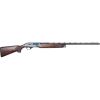
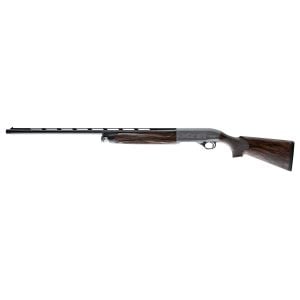
Review: Beretta A400 Xcel Sporting – 500 Rounds of Clay Destruction
Our Rating: 9.0/10
- MSRP: $1,979
- Street Price: $2,399 (Check our live pricing for the best current deal)
- Gauge: 12 Gauge
- Chamber: 3″
- Action: Gas-Operated Semi-Automatic (Blink System)
- Barrel Length: 28″, 30″, or 32″
- Overall Length: 50 5/8″ (30″ barrel)
- Weight: 7 lbs 10 oz (30″ barrel)
- Length of Pull: 14 7/8″
- Drop at Comb: 1 1/2″
- Drop at Heel: 2 3/8″
- Magazine Capacity: 2+1 (3+1 with extended tube)
- Chokes: 3 Extended Optima HP Black Edition (SK, IC, M)
- Sights: Target flat rib with fiber optic front bead
- Stock: Walnut with Kick-Off Plus recoil system, adjustable shim kit
- Receiver: Anodized blue with gun metal gray accents
- Made in: Italy
Pros
- Kick-Off Plus hydraulic dampeners cut felt recoil dramatically (200-round sessions without shoulder fatigue)
- Blink gas system cycles fast enough to handle competition doubles, self-regulates across 7/8 oz light to 1 1/8 oz heavy loads
- Steelium barrel and Optima HP chokes deliver tight, centered patterns out to 40 yards
Cons
- Factory trigger is mushy out of the box; budget $100-150 for a gunsmith tune
- Carbon fiber rib adhesion failures on Black Edition variant (stick with standard Sporting)
- Approaching $2,000 puts it in serious-investment territory vs the A300 Ultima Sporting at half the price

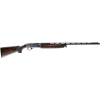
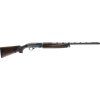
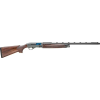
Quick Take
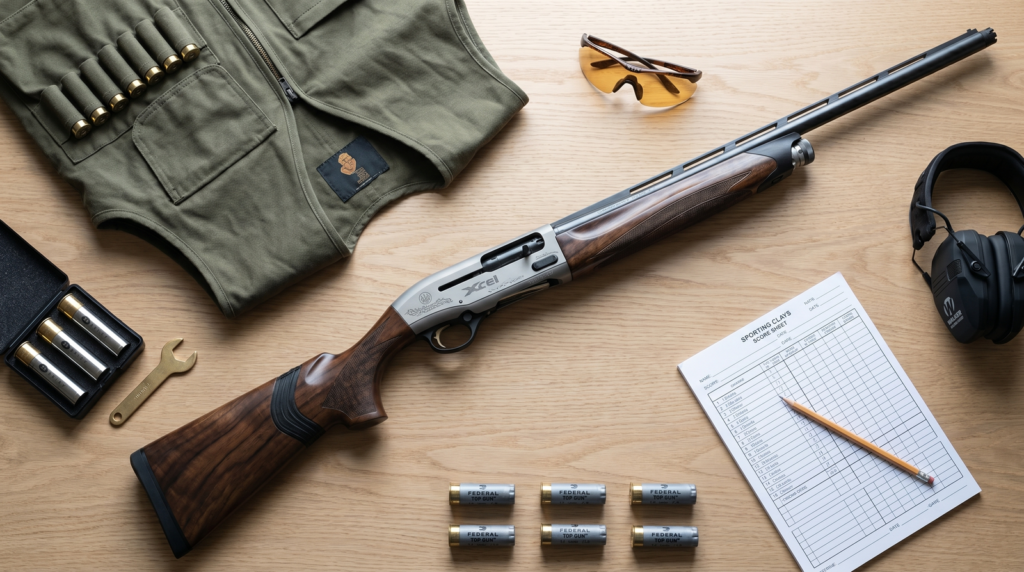
Nick Hall here. Five hundred rounds through the Beretta A400 Xcel Sporting, and I finally understand why this gun has a cult following on the sporting clays circuit. It’s not just good. It’s addictive. The Blink gas system cycles so fast and so smoothly that doubles on report pairs feel almost unfair.
Beretta built the Xcel specifically for high-volume clay shooting, and every design decision reflects that focus. The Kick-Off Plus recoil system genuinely delivers on its promise of reduced felt recoil. I’m talking about shooting 200 rounds in a single sporting clays session without that familiar dull ache in your shoulder the next morning. For a 12 gauge semi-auto, that’s impressive.
The trigger is the one thing that kept me from scoring this higher. Out of the box, it’s mushy and lacks the crispness you’d expect at this price point. Plenty of Xcel owners get a trigger job within the first year, and frankly I don’t blame them. Everything else about this gun screams premium competition shotgun. The trigger whispers budget.
Best For: Dedicated sporting clays and skeet shooters who want the softest-recoiling semi-auto on the market and plan to put serious round counts through their gun. Also a top pick for anyone exploring shotguns for clay shooting who values low recoil over everything else.
Why Beretta Built the A400 Xcel This Way
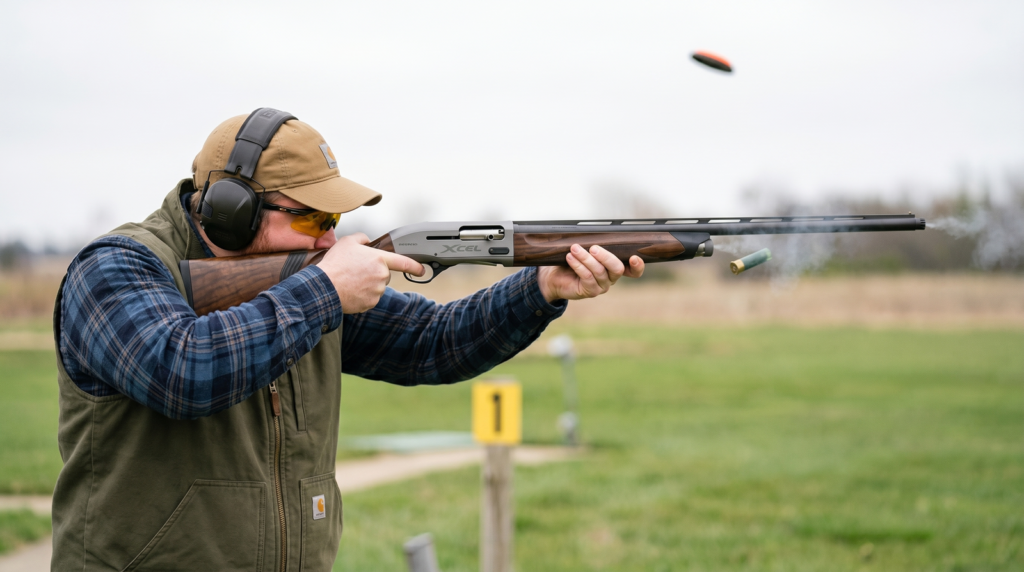
Beretta has been making firearms since 1526. Let that sink in. Nearly 500 years of Italian gunmaking, and the A400 platform represents their current pinnacle of semi-automatic shotgun technology. The Xcel Sporting variant exists because competitive clay shooters have very specific demands that hunting shotguns don’t address.
Competition shooters need three things above all else: soft recoil for high-volume sessions, fast cycling for doubles, and patterns they can trust station after station. Beretta engineered the Xcel around all three priorities. The Blink gas operating system bleeds propellant gas through ports in the barrel to drive the action, and Beretta claims it cycles 36% faster than competing gas systems. I can’t verify that percentage with a stopwatch, but I can tell you the gun spits empties out like it’s personally offended by them.
Kick-Off Plus system in the stock is the other headline feature. It uses two hydraulic dampeners built into the stock to absorb recoil energy before it reaches your shoulder. Beretta claims 50% reduction in felt recoil. Again, I can’t put an exact number on it, but the difference between the Xcel and a standard gas gun is obvious from the first shot. It’s spooky soft for a 12 gauge.
Then there’s the Steelium barrel. Beretta uses a proprietary steel formula and a cold hammer-forging process that they claim produces tighter, more consistent patterns. Whether it’s the barrel steel or just good engineering, the patterns out of this gun are impressively uniform. Beretta clearly spent their R&D budget in the places that matter for competitive shooting.
Competitor Comparison
Browning A5 Sporting ($1,759.99 – $1,899)
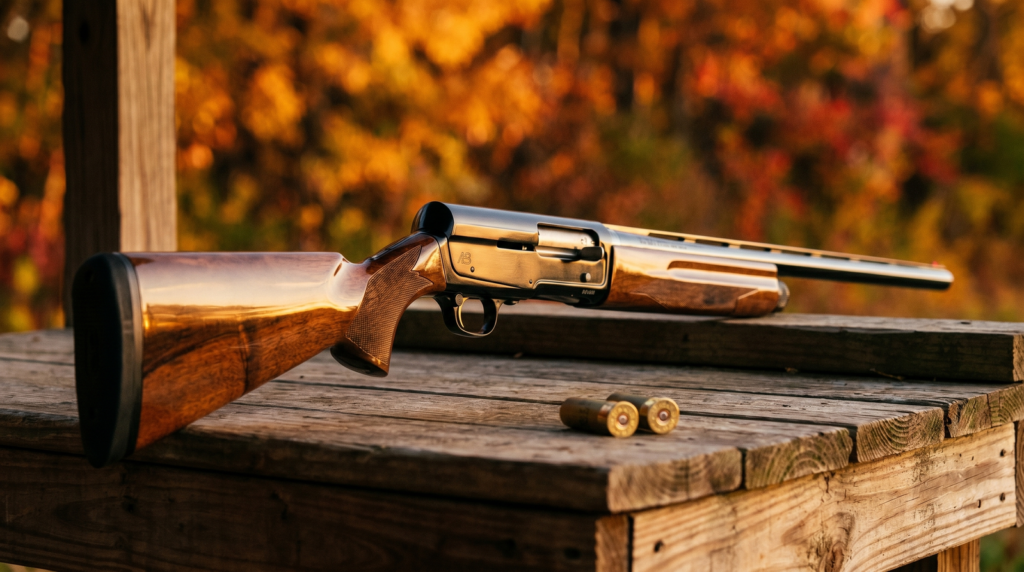
A5 Sporting uses Browning’s kinematic drive system, which is mechanically closer to an inertia gun than a gas gun. It’s lighter than the Xcel at around 7.2 lbs, and the humpback receiver gives it a distinctive look. Some clay shooters prefer the lighter weight for all-day shoots.
But here’s the thing. Lighter weight means more felt recoil per shell. After 150 rounds in a sporting clays session, the Xcel’s Kick-Off system makes a noticeable difference in how your shoulder feels. The A5 Sporting is a fine gun, but if you’re consistently shooting 200+ rounds in a session, the Beretta’s recoil management is in a different league.
Benelli Super Black Eagle 3 (from $1,899.99)
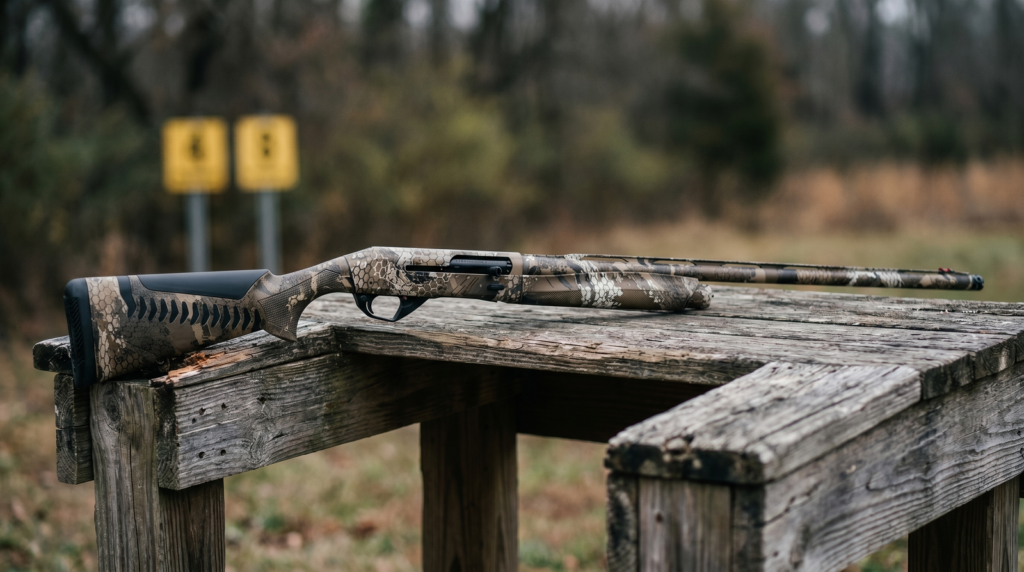
Different tool for a different job. The SBE3 is a waterfowl gun that some people use for clays. The Xcel is a clays gun through and through. Benelli’s inertia system is simpler and lighter, but the gas-operated Xcel produces noticeably less felt recoil. For high-volume target shooting, that matters more than saving 10 ounces of carry weight.
If you want one gun that does both hunting and sporting clays, the SBE3 is more versatile. If you want the best purpose-built clay gun in this price range, the Xcel wins. It’s that straightforward.


Beretta A300 Ultima Sporting (from $1,299.99)
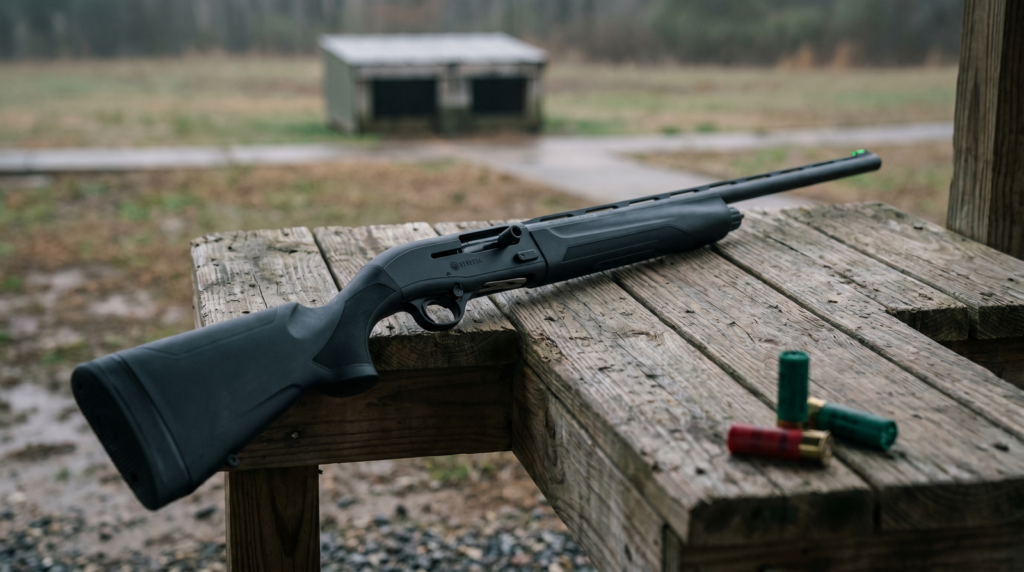
Beretta’s own budget alternative, and honestly it’s a fantastic gun for the money. The A300 Ultima uses a simpler gas system without the Kick-Off recoil reduction, and the barrel isn’t Steelium. But it runs reliably, patterns well, and costs roughly half what the Xcel does.
Difference shows up around round 150 in a session. That’s when the Xcel’s superior recoil management starts pulling ahead. If you shoot a couple hundred rounds a month, the A300 Ultima is plenty of gun. If you’re shooting 500+ rounds a week in serious competition, the Xcel pays for itself in comfort and consistency. Check out our Beretta A300 Ultima review for the full breakdown.
Mossberg 940 JM Pro ($947.99 – $999)
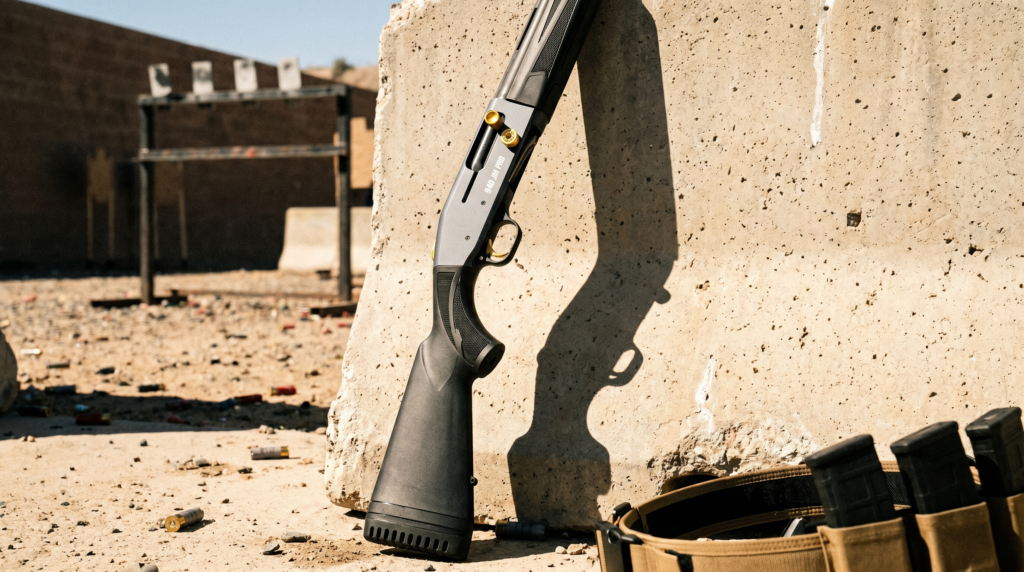
Jerry Miculek helped design this one, and it shows. The 940 JM Pro is set up for competition with a nice trigger, oversized controls, and a beveled loading port. At roughly half the Xcel’s price, it’s the value king of competition semi-autos.
Where it falls short is refinement. The 940 JM Pro feels like a $900 gun. Functional and effective, but without the silky cycling and ultra-low recoil that make the Xcel special. The Mossberg is the right call for someone entering competition shooting who doesn’t want to bet two grand on a hobby they might not stick with. The Beretta is for someone who already knows they’re hooked.

Winchester SX4 ($799.99 – $999)
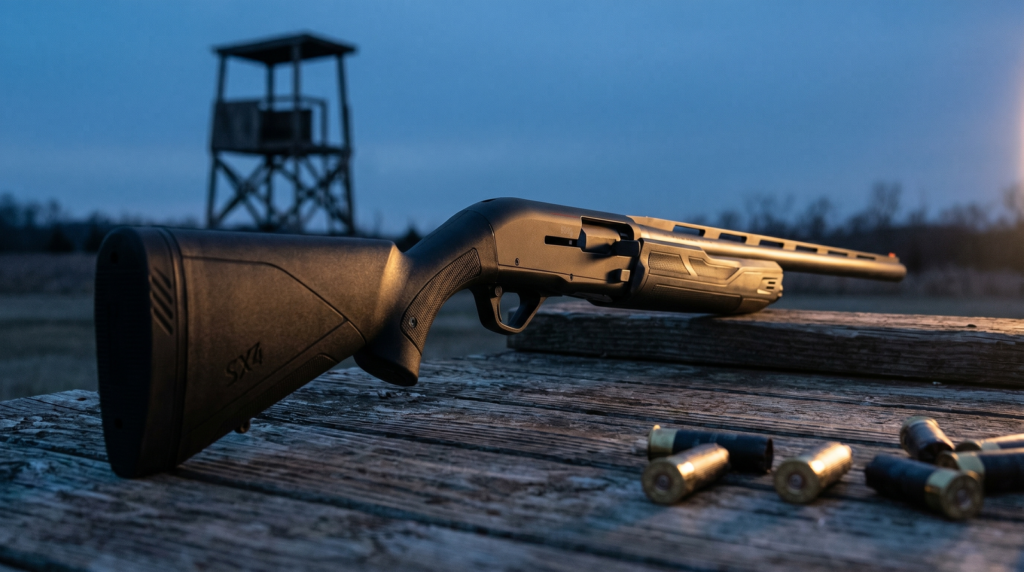
The SX4 is a capable gas gun at a friendly price point, but it’s not really built for dedicated competition use. The Active Valve gas system works fine, and the gun is reliable enough. But the ergonomics, recoil management, and overall fit and finish sit a tier below the Xcel.
I’d recommend the SX4 as a great do-everything shotgun for someone who occasionally shoots clays but primarily hunts. For dedicated sporting clays, there are better options at every price point.
Features and Quirks
The Blink Gas System
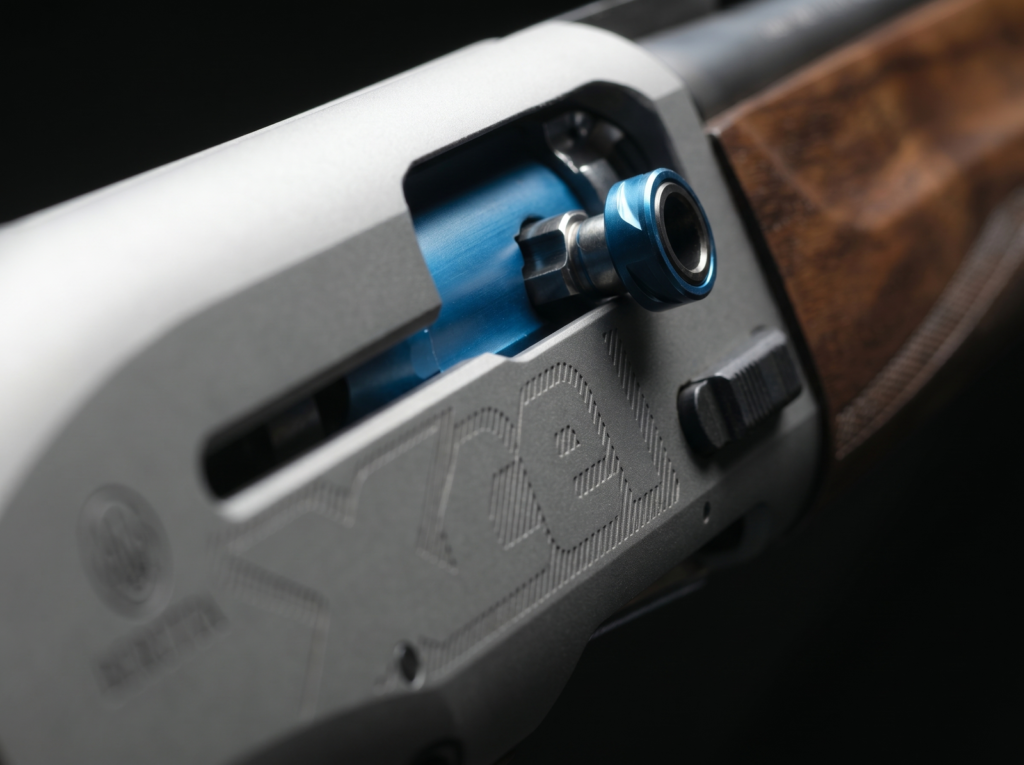
Beretta’s Blink system is the mechanical heart of the Xcel, and it’s genuinely impressive engineering. The system uses a self-cleaning, self-regulating gas piston that adjusts automatically to different load intensities. Shoot a light 7/8 oz target load followed by a heavy 1 1/4 oz sporting load, and the gun figures it out on its own.
Fast cycling isn’t just marketing either. On report pairs in sporting clays, the Xcel is ready for the second shot noticeably faster than my previous semi-auto. That extra fraction of a second matters when you’re tracking a chandelle target after breaking a fast crosser. One owner with over 50,000 rounds through his Xcel reported it still functions flawlessly. That kind of longevity from a gas system is exceptional.
Kick-Off Plus Recoil System
I’ll say it plainly: the Kick-Off Plus system is the single best reason to buy this gun over cheaper alternatives. It uses two hydraulic dampeners embedded in the stock that compress under recoil, absorbing energy before it reaches your shoulder. The effect is dramatic.
One forum owner described shooting hot 1 oz loads at 1,300 fps and feeling recoil comparable to a 28 gauge over/under. That’s not exactly my experience, but it’s closer to true than you’d expect. I shot 200 rounds of 1 1/8 oz sporting loads in a single session and felt great afterward. Another owner called it “the softest shooting 12 gauge I’ve ever fired.” After 500 rounds, I’m inclined to agree.
If you’ve ever left the range with a bruised shoulder and a flinch you didn’t have when you arrived, the Kick-Off system will change your life. Not an exaggeration.
Steelium Barrel
Beretta’s proprietary barrel steel has been a talking point since they introduced it, and honestly I was skeptical. Marketing departments love proprietary material names. But the patterns from this barrel are consistently good. Really good.
At 40 yards with a Modified Optima HP choke, I’m getting dense, uniform patterns with minimal flyers. The cold hammer-forged bore is mirror smooth, and the Optima HP extended chokes seat perfectly every time. Whether it’s the Steelium formula specifically or just excellent manufacturing, the end result is a barrel that delivers.
Enlarged Competition Controls
Beretta designed the Xcel’s controls with speed in mind. The bolt release is oversized and easy to reach. The loading port is beveled for faster reloading. The safety is reversed from standard hunting configuration, which competition shooters prefer. These aren’t game-changing features individually, but collectively they shave fractions of a second off every reload and gun mount.
Charging handle is also larger than the standard A400, which makes racking the bolt easier. Small detail. Adds up over a 100-bird sporting clays course when you’re loading and unloading at every station.
The Walnut Stock
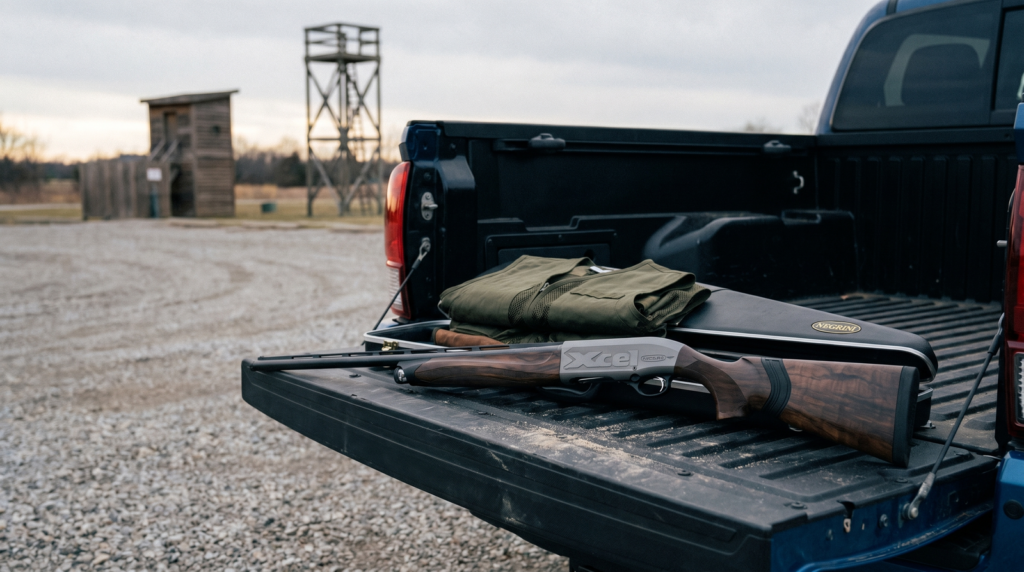
In a market flooded with synthetic stocks, the Xcel Sporting ships with a walnut stock as standard. It looks great. More importantly, it feels great. The wood-to-metal fit on my sample is excellent, with tight seams and a smooth finish that doesn’t get tacky in heat or slippery in cold.
Beretta includes a shim kit for adjusting drop and cast, which lets you fine-tune the stock fit without permanent modifications. The included gel comb insert adds comfort during long sessions and helps absorb some of the residual recoil that makes it past the Kick-Off system.
Variants: Sporting vs Multitarget vs Black Edition
The A400 Xcel ships in three competition-focused configurations, and the right pick depends entirely on what you shoot.
A400 Xcel Sporting (Standard) $1,749-$2,100
The standard sporting clays variant, walnut stock with the traditional steel ventilated rib. 28″, 30″, or 32″ barrel. This is the model I tested and the one most clay shooters should buy. No carbon fiber rib means no adhesion issues, and the walnut stock looks better in the gun rack than the Black Edition synthetic.
A400 Xcel Multitarget $1,849-$2,250
Multitarget adds an adjustable comb and a forend balance weight so you can tune the gun for trap, skeet, or sporting clays without buying three different guns. The extra weight forward also smooths swings on long crossers. Worth the $100-150 premium if you compete across multiple disciplines.
A400 Xcel Black Edition $1,999-$2,399
Black Edition replaces the walnut with a black synthetic stock and adds a carbon fiber ventilated rib. Looks aggressive on the line. But multiple owners have reported the carbon fiber rib separating from the barrel after a few hundred rounds, a serious enough QC issue that I’d recommend the standard Sporting variant until Beretta addresses it.
For most sporting clays shooters, the standard Sporting variant is the right pick. Multitarget if you compete across multiple disciplines. Skip the Black Edition for now.
At the Range: 500 Round Test
Break-In Period
A400 Xcel needed zero break-in. First round out of the box, it cycled perfectly. I started with light 7/8 oz target loads and it handled them without hesitation. Some gas guns need 50-100 rounds before they’ll reliably cycle light loads. Not this one. It ran everything from the jump.
By round 50, the action was already getting noticeably smoother. By round 200, it felt like the bolt was riding on glass. Gas guns tend to smooth out with use as the parts wear in, and the Xcel follows that pattern. It starts good and gets better.
Reliability Testing
Over 500 rounds I experienced one failure to eject around round 340. The spent hull got caught on the ejection port rim and required a manual clearing. One malfunction in 500 rounds is well within acceptable parameters for any semi-auto shotgun, and I’m inclined to chalk it up to that particular shell rather than a gun issue. Here’s what I ran:
- Winchester AA 2 3/4″ 1 1/8 oz #8 target loads: 200 rounds
- Federal Top Gun 2 3/4″ 1 oz #8 light loads: 100 rounds
- Fiocchi 2 3/4″ 1 1/8 oz #7.5 sporting loads: 100 rounds
- Rio 2 3/4″ 7/8 oz #9 light target: 50 rounds
- Federal Gold Medal 2 3/4″ 1 1/8 oz #8 handicap: 50 rounds
That single failure to eject was the only hiccup across 500 rounds of five different loads. The Blink system handled the transition from 7/8 oz light loads to 1 1/8 oz handicap loads without any adjustment or hesitation. Exactly what you want from a competition gas gun.
Pattern Testing
I patterned the Xcel at 40 yards with all three included chokes using Winchester AA 1 1/8 oz #8 shot. The Improved Cylinder choke put roughly 50% of the pellets in a 30″ circle. Modified jumped that to about 65%. Skeet opened things up to around 40% for close-in work.
All three chokes produced centered, well-distributed patterns with no obvious gaps or hot spots. The Optima HP choke system has a proven track record, and these results confirm why competitive shooters trust it. Pattern consistency was excellent across multiple shots with each choke. I didn’t see the random flyers that cheaper choke systems sometimes produce.
Performance Testing Results
Reliability: 9/10
One failure to eject in 500 rounds keeps this from a perfect score, but that’s being nitpicky. The Blink gas system is proven across thousands of A400 platforms worldwide, and owners routinely report 20,000, 30,000, even 50,000+ rounds without significant issues. One forum poster with over 50,000 rounds through his Xcel says it still functions flawlessly. That’s the kind of track record that builds confidence.
Accuracy: 9/10
Patterns are tight, consistent, and centered. The Steelium barrel and Optima HP chokes work together beautifully, and I had complete confidence in this gun’s ability to put pellets where I pointed it. On the sporting clays course, I shot above my average with the Xcel on my first time out. Some of that is the gun. Some of that is the low recoil letting me stay focused instead of anticipating the hit.
Ergonomics and Recoil: 9/10
At 7 lbs 10 oz with a 30″ barrel, the Xcel balances beautifully between the hands. It’s not light by hunting standards, but for a competition gun that you’re mounting and swinging rather than carrying all day, the weight is perfect. It swings smoothly without feeling sluggish, and the balance point sits right where your forward hand naturally wants to be.
Recoil management is this gun’s superpower. The combination of the gas system’s inherent recoil absorption and the Kick-Off Plus hydraulic dampeners produces a shooting experience that’s genuinely remarkable for a 12 gauge. I shot 200 rounds in a single afternoon and my shoulder was fine the next day. That changes how you approach a long sporting clays course. No flinching. No anticipation. Just break clays.
Fit and Finish: 9/10
Italian craftsmanship is on full display. The walnut stock is attractively figured with a semi-gloss finish that looks classy without being fragile. The anodized blue receiver with gun metal accents gives it a distinctive look that’s all business. Metal-to-wood fit on my sample is tight with no visible gaps.
The trigger is the one area where the finish doesn’t match the price. It’s functional but lacks the crispness of a quality competition trigger. For a gun specifically marketed to competitive shooters, a better factory trigger would make a noticeable difference. That’s probably my biggest single complaint about the entire gun.
What Owners Are Saying
I went deep into the forums to see how other Xcel owners feel about this gun after real use. The consensus is overwhelmingly positive, but there are some recurring themes you should know about.
“I find it smooth with notably less recoil than even my heavy comp gun, and no hassle to clean.” This captures what most Xcel owners report. The recoil reduction is the standout feature, and the gas system is surprisingly easy to maintain.
“The absence of felt recoil is almost unbelievable. Recoil comparable to 28 gauge in an O/U.” That’s high praise, and while individual experiences vary, the Kick-Off Plus system genuinely makes this gun feel like something smaller than a 12 gauge.
“I consider the Xcel to be a world class sporting clays gun!” Strong words from a forum with no shortage of opinions. But you see this sentiment repeated across multiple platforms.
“The A400s are money in the bank, and really are a great gun for the coin!” Value is relative, but the owners who’ve put tens of thousands of rounds through their Xcels consistently feel the investment was justified.
“Love it! 50,000 rounds and counting.” That’s the kind of durability that separates premium semi-autos from budget alternatives. The Blink system can take a beating.
“The softest shooting 12 gauge I’ve ever fired.” When multiple owners independently say the same thing, you start to believe it. And after my own 500 rounds, I do.
Known Issues and Problems
Carbon Fiber Rib Adhesion (Black Edition)
This is the most serious reported issue, and it specifically affects the Black Edition models with the carbon fiber rib. Multiple owners have reported the rib separating from the barrel, sometimes after only a few hundred rounds. This requires a return to Beretta for repair.
Standard Xcel Sporting with the traditional steel rib doesn’t seem to have this problem. If you’re shopping for an Xcel, I’d recommend the standard model over the Black Edition until Beretta addresses the rib adhesion issue. Not worth the risk on a two thousand dollar gun.
Trigger Quality
This isn’t a defect per se, but the factory trigger is universally considered the Xcel’s weak point. It’s mushy, has a long take-up, and the break isn’t crisp. For a gun marketed specifically at competitive shooters, this is a puzzling oversight. A competition trigger job from a qualified gunsmith runs about $100-150 and transforms the shooting experience.
Beretta could charge $100 more and include a genuinely good trigger. I wish they would. Until then, budget for a trigger job if you’re serious about competition.
Gas System Maintenance
This applies to all gas-operated shotguns, not just the Xcel. The gas system accumulates carbon and fouling over time and needs periodic cleaning to maintain reliable function. Most owners report the Blink system is relatively forgiving and can go 500-1,000 rounds between cleanings without issues.
That said, if you’re the type who puts their gun away dirty after a long day at the range, a gas gun will eventually punish you for it. Inertia guns like the Benelli SBE3 are more forgiving of neglect. It’s a trade-off: better recoil management in exchange for more maintenance. Most competitive shooters consider that a worthwhile deal.
Customer Service Reports
A handful of owners have reported difficulty reaching Beretta’s customer service for warranty repairs, with slow response times to calls and emails. This is worth knowing before you buy, though most Xcel owners never actually need warranty service. The gun is fundamentally reliable. But if you do need Beretta’s help, the experience may not match the premium price tag.
Who Should NOT Buy the Beretta A400 Xcel
The Xcel is a phenomenal competition clay gun, but it is not the right tool for several types of buyer. Be honest with yourself about which category you fall into before spending $2,000:
- Casual or occasional clay shooters who break 100-200 rounds per month. You will not feel the difference between the Xcel and a Beretta A300 Ultima Sporting at half the price. Save the cash and shoot more.
- Waterfowl and field hunters wanting a do-everything shotgun. The Xcel is purpose-built for clays. For ducks and geese in marsh conditions, the inertia-driven Benelli Super Black Eagle 3 handles dirt and weather better and weighs less to carry all day.
- Shooters who refuse to maintain a gas system. The Blink system is forgiving but does need cleaning every 500-1,000 rounds. If you put your gun in the safe dirty after every session, buy a Benelli inertia gun instead.
- Trigger purists who want a competition-grade trigger out of the box. The Xcel’s factory trigger is mushy and needs a gunsmith tune ($100-150) to reach its potential. If you want a crisp trigger from day one, look at a target-tier over/under at this price point instead.
- First-time competition shotgun buyers under $1,500 budget. The Mossberg 940 JM Pro covers 90% of competition use at half the Xcel’s price. Burn through 5,000 rounds on a 940 JM Pro before deciding if you actually want to upgrade.
Parts, Accessories, and Upgrades
| Upgrade Category | Recommended | Why It Matters | Cost |
|---|---|---|---|
| Trigger Job | Beretta-certified gunsmith trigger tune | Transforms the mushy factory trigger into something crisp | $100-150 |
| Choke Tubes | Muller Featherlite Optima HP Extended | Superior patterns for sporting clays at distance | $45-65 each |
| Recoil Pad | Beretta MicroCore Sporting Pad | Even more recoil cushioning on top of Kick-Off Plus | $40-60 |
| Shell Catcher | Catch-All Shell Catcher | Keeps brass off adjacent shooters at the range | $25-35 |
| Gun Case | Beretta Transformer Long Gun Case | Purpose-built for the A400 series, airline approved | $150-200 |
| Cleaning Kit | Beretta A400 Cleaning Kit | Includes gas system brushes specifically sized for the Blink system | $30-45 |
Number one upgrade for any Xcel owner is a trigger job. Everything else is optional, but the trigger improvement is borderline mandatory for serious competition use. After that, better choke tubes for your specific discipline and a quality gun case are the best places to spend your money. You can find A400 accessories at Brownells and MidwayUSA.
The Verdict
After 500 rounds, the Beretta A400 Xcel Sporting has earned its spot as one of the best semi-automatic sporting clays guns on the market. The Kick-Off Plus recoil system is genuinely transformative. It lets you shoot longer, focus better, and enjoy the sport without that creeping dread of shoulder fatigue setting in at station 12.
Blink gas system delivers on Beretta’s promises of fast cycling and broad load compatibility. The Steelium barrel throws excellent patterns. The walnut stock looks and feels premium. And the enlarged competition controls show that Beretta actually thought about how this gun would be used in the real world, not just on paper.
Is it perfect? No. The trigger needs work, and at nearly $2,000 it should be better out of the box. The Black Edition’s carbon fiber rib issues are a real concern. And if you shoot casually, you can get 90% of the experience from a Beretta A300 Ultima at half the price. But for dedicated sporting clays shooters who put serious round counts on their guns, the Xcel is the real deal. Buy it. Shoot it. Put 50,000 rounds through it like that forum guy did. You won’t regret it.
Final Score: 9.0/10
Best For: Competitive sporting clays and skeet shooters who prioritize low recoil and are willing to invest in a premium semi-auto they’ll shoot for years. Also a strong choice for anyone getting into trap shooting who wants a gun they won’t outgrow.
FAQ: Beretta A400 Xcel Sporting
Is the Beretta A400 Xcel Sporting worth $2,000?
For dedicated sporting clays and skeet shooters putting 500+ rounds per month through their gun, yes. The Kick-Off Plus recoil reduction system genuinely changes how your shoulder feels after a long session, and the Blink gas system handles every load from light 7/8 oz to heavy 1 1/8 oz without adjustment. For casual shooters putting 100-200 rounds per month, the Beretta A300 Ultima Sporting at half the price covers the same use case.
What's the difference between the A400 Xcel Sporting and Multitarget?
The Multitarget adds an adjustable comb and forend balance weight so you can tune the gun for trap, skeet, or sporting clays without buying three different guns. The Sporting is the straight clay variant with a fixed walnut stock. If you compete across multiple disciplines, the Multitarget's ~$100-150 premium pays for itself.
How does the Kick-Off Plus recoil system work?
Kick-Off Plus uses two hydraulic dampeners built into the stock that compress under recoil, absorbing energy before it reaches your shoulder. Beretta claims up to 50% felt-recoil reduction. In practice, you can shoot 200+ rounds of 1 1/8 oz sporting loads in a single session without the shoulder fatigue you'd expect from a 12 gauge. The dampeners are sealed and require no maintenance.
Can the Beretta A400 Xcel Sporting be used for hunting?
It can, but it's not the right tool. The Xcel is built for high-volume clays, soft recoil for long sessions, fast cycling for doubles, tight competition patterns. For waterfowl in marsh conditions, an inertia-driven shotgun like the Benelli SBE3 handles dirt and weather better and weighs less for all-day carry. For upland bird hunting, a lighter field gun is more comfortable for miles of walking.
What chokes come with the A400 Xcel Sporting?
The standard Sporting variant ships with three Extended Optima HP Black Edition chokes: Skeet, Improved Cylinder, and Modified. All three are extended chokes (they protrude past the muzzle) for easier swapping at the range. The Optima HP system has a proven track record on sporting clays. Many serious shooters add a Light Modified for transition stations.
How often does the Blink gas system need cleaning?
The Blink system is forgiving, most owners report 500-1,000 rounds between gas-system cleanings without reliability issues. A full strip down with a gas-system brush (the Beretta A400 cleaning kit includes the right sizes) takes about 15 minutes and should be done after every 1,000 rounds for serious competition use. Less frequent cleaning works fine for casual use; gas guns become unforgiving if you neglect them across many seasons.
4,611+ Gun & Ammo Deals
Updated daily from 200+ top retailers. Filter by category, caliber, action type, and price.
Related Guides