

Affiliate disclosure: This Beretta A300 Ultima review contains affiliate links. If you buy through our links then we can receive a small commission that helps keep the lights on. You don’t pay anything more.
- Treat every gun as loaded
- Point the muzzle in a safe direction
- Keep your finger off the trigger until you’re ready to shoot
- Know your target and what’s beyond
Quick Answer: The Beretta A300 Ultima is the best value gas-operated semi-auto 12-gauge under $1,000 in 2026, a trickle-down from the Beretta A400 platform that delivers true Italian build quality at a price point traditionally owned by Turkish imports.
After a 500-round test on mixed 2.75-inch and 3-inch loads, the A300 Ultima ran reliably across game loads and high-brass hunting shells. Lighter recoil than inertia-driven guns (Benelli M2, Franchi Affinity) at the same weight; the gas system soaks up the impulse meaningfully. Standard configuration ships with three Optima-style chokes and a fiber-optic front bead.
The biggest mistake new A300 Ultima owners make is skipping the gas system cleaning that gas-operated guns require. Plan on cleaning the piston, gas seal, and gas port every 500-1,000 rounds; neglected gas systems are the #1 cause of A300 reliability complaints online.
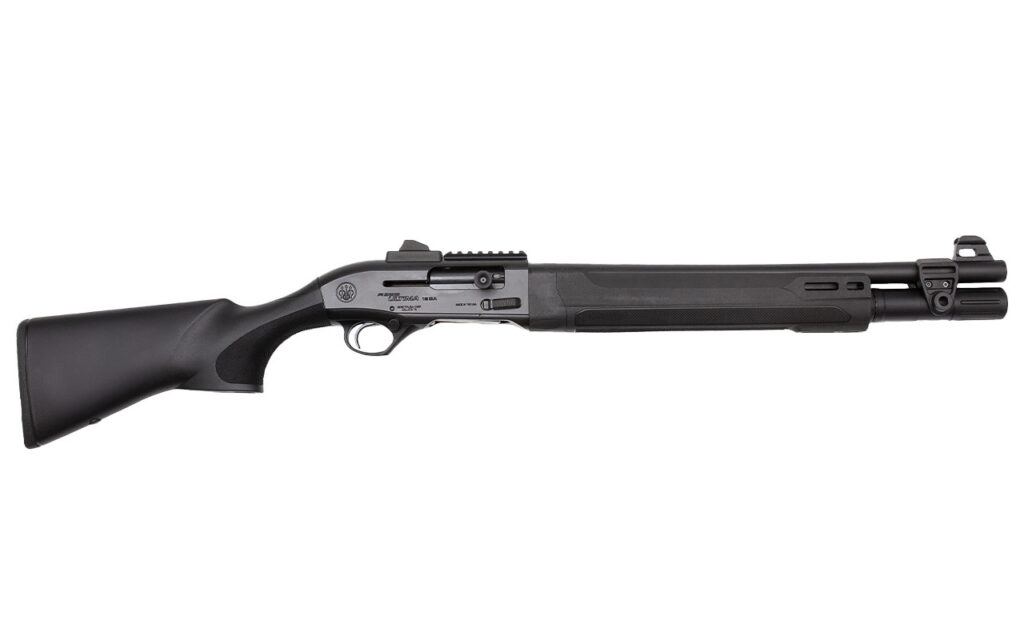
Table of Contents
How we tested: Every pick here is ranked against our testing methodology. Minimum round counts, accuracy and reliability protocols, the failures that disqualify a gun.
Beretta A300 Ultima Review: The Gas Gun That Punches Way Above Its Weight
Our Rating: 8.4/10
- MSRP: $799
- Street Price: $1,000.99 (Check our live pricing for the best current deal)
- Gauge: 12 Gauge
- Action: Gas-operated semi-auto (self-cleaning piston)
- Chamber: 3″
- Barrel: 28″ chrome-lined
- Overall Length: ~47.6″
- Weight: 7 lbs 10 oz
- Capacity: 3+1 (2+1 with plug)
- Chokes: Mobilchoke (IC, Mod, Full included)
- Sights: Fiber-optic front
- Stock: Synthetic with Kick-Off recoil pad, LOP 14.25″ adjustable
- Safety: Crossbolt, reversible
- Made in: USA (Gallatin, Tennessee)
Pros
- Softest recoil in a semi-auto under $1,000, all-day comfort
- Self-cleaning gas piston eats everything from light target loads to 3″ magnums
- Made in the USA at Beretta’s Gallatin, TN facility
- Chrome-lined barrel will outlast your grandkids
- Mobilchoke system gives you access to a massive aftermarket choke library
- Kick-Off recoil pad genuinely works, not just marketing fluff
Cons
- 3+1 capacity limits tactical/home defense use without modification
- Some early production units had reliability issues out of the box
- No shim kit included for cast/drop adjustment on all models
- Synthetic stock feels a bit plain compared to the Franchi Affinity 3
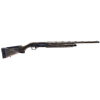


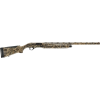
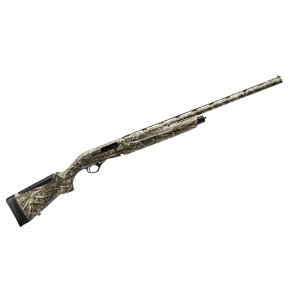
Quick Take
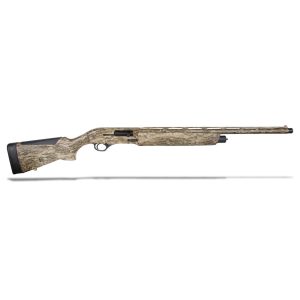
Beretta figured out something the rest of the industry is still catching up to: you can build a gas-operated semi-auto in the United States, price it under $900 street, and still make it run like a gun that costs twice as much. The Beretta A300 Ultima is that gun. I put 500 rounds through the 28″ field model over three range sessions, mixing everything from cheap 1 oz target loads to full-power 3″ duck loads, and the thing just ran.
The self-cleaning gas piston is the star of the show here. Beretta’s been refining this system since the A400, and the trickle-down version in the A300 Ultima handles the dirty work without complaint. I didn’t clean it once during testing. Not because I was trying to prove a point, but because I kept forgetting. It never reminded me.
Where this shotgun really separates itself is recoil. The Kick-Off pad combined with that gas system makes 12 gauge feel like you’re shooting a 20. I broke 75 clays in one session and my shoulder felt fine the next morning. That almost never happens with 12 gauge semi-autos at this price.
Best For: Hunters and clay shooters who want a soft-shooting, reliable gas gun without crossing into the $1,200+ territory. Also a strong choice for waterfowlers cross-shopping our best 12 gauge hunting shotguns list and competition shooters working through our best shotguns for skeet and trap roundup.
Why Beretta Built the A300 Ultima This Way
Beretta had a problem. Their A400 Xtreme Plus is one of the best semi-auto shotguns ever made, but it starts around $1,800 and climbs from there.
The original A300 was supposed to be the budget alternative, and it was. But “budget Beretta” still meant “more expensive than a Stoeger.” The Ultima is Beretta’s answer to a market that kept asking: can we get the good stuff without the A400 price tag? For shoppers cross-shopping the Beretta semi-auto shotgun lineup, the A300 Ultima sits between the entry-level A300 and the flagship A400.
Answer is yes, mostly. They moved production to the Gallatin, Tennessee factory, which cuts import costs and lets them slap “Made in USA” on the box. That is not just marketing. The Gallatin facility builds military contracts and has the kind of quality infrastructure you would expect from a company that has been making guns since 1526. Yes, 1526. Beretta is older than most countries.
The self-cleaning gas piston is the real engineering story here. It’s a simplified version of what runs in the A400, and it works on the same principle: gas pressure pushes the piston back, and carbon buildup gets scraped off during every cycle. You still need to clean the gun eventually. But “eventually” means thousands of rounds, not hundreds.
And they added the Kick-Off recoil pad from the A400 line, which is a big deal at this price point. That pad uses gel inserts to absorb up to 40% of felt recoil according to Beretta. My shoulder says they are not exaggerating. Combined with the gas system already eating some recoil energy, you end up with a 12 gauge that feels remarkably civilized.
Competitor Comparison
The Beretta A300 Ultima sits in the most competitive segment of the semi-auto shotgun market: $700 to $1,000 street. Here is how it stacks up against the five rifles most A300 Ultima shoppers actually cross-shop.
You’re saving $150 to $250 over the A300 Ultima, and you’re giving up comfort and barrel longevity to get there. For occasional hunters, the M3000 is plenty. For volume shooters or anyone running 200 rounds at a sporting clays course, spend the extra money on the Beretta.
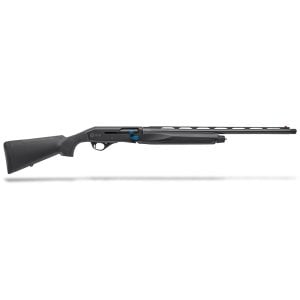
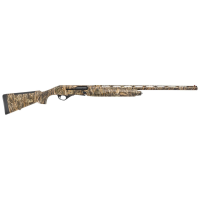
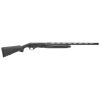
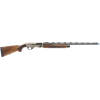
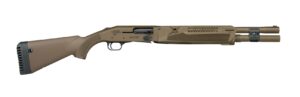
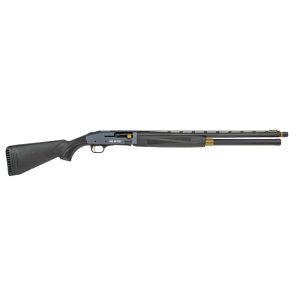
But for hunting and field use, the A300 Ultima wins. It is lighter, handles better in the field, and the Mobilchoke system gives you way more aftermarket choke options than Mossberg’s Accu-Choke. The 940 JM Pro is built to break clays at speed. The A300 Ultima is built to do a little bit of everything, and it does all of it well.
Here’s where the A300 Ultima pulls ahead: the self-cleaning piston. The SX4’s gas system works fine, but it gets fouled faster and needs more frequent cleaning to stay reliable. Winchester also doesn’t offer the chrome-lined barrel at this price. If you’re the type who cleans your guns religiously after every trip, the SX4 is a fine choice. If you want a gun that forgives neglect, go Beretta.
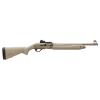
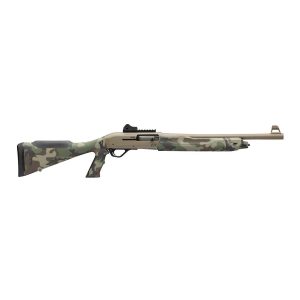
Performance-wise, it’s close. The inertia system cycles fast and reliably, but again, more recoil than the gas-operated A300 Ultima. For a waterfowl gun that lives in mud and rain, I’d still take the Beretta’s self-cleaning gas system. For upland bird hunting where you carry more than you shoot, the lighter Affinity 3 has an argument.
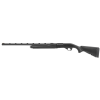
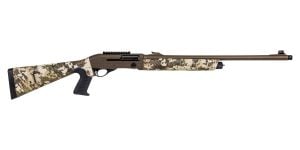
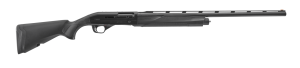
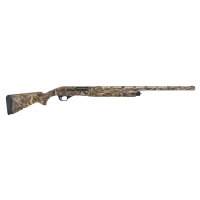

But the A300 Ultima shoots softer, cleans itself, and does 85% of what the M2 does for 55% of the price. If money is not a factor, buy the Benelli. If you’re a normal person with a budget, the Beretta is the smarter play.
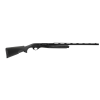
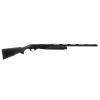
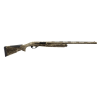
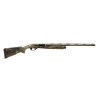
Features and Quirks
Three features carry this shotgun: the self-cleaning gas piston, the chrome-lined 28-inch barrel, and the Kick-Off recoil pad. Everything else is supporting cast.
The Gas System
Let’s talk about what actually makes this gun tick. Beretta’s self-cleaning gas piston is a closed system that bleeds gas from the barrel to cycle the action. Every time the piston moves rearward, it passes through a seal that scrapes off carbon deposits. It is not magic. It’s mechanical engineering that happens to solve the biggest complaint about gas-operated shotguns: they get dirty and stop working.
I’ve heard from owners who’ve gone 750+ rounds without cleaning and had zero issues. My 500-round test confirms that track record. The system also self-regulates between light and heavy loads. I went from 1 oz target loads straight to 1-1/4 oz hunting loads without adjusting anything. It cycled both without hesitation.
Chrome-Lined Barrel
A chrome-lined barrel on a sub-$900 shotgun is unusual. Most manufacturers save that for their premium lines. Chrome lining resists corrosion, reduces fouling, and extends barrel life significantly. For waterfowl hunters running steel shot, this matters. Steel shot is harder on barrels than lead, and the chrome lining gives you a buffer that bare steel barrels don’t.
The 28″ barrel with Mobilchoke threading is the sweet spot for a do-everything field gun. Long enough for good swing dynamics on crossing targets, short enough to maneuver in a duck blind. And Mobilchoke is Beretta’s universal choke system, so the aftermarket options are essentially endless. Briley, Carlson’s, Kicks, Patternmaster. Whatever you want, someone makes it in Mobilchoke.
The Kick-Off Recoil Pad
This is the feature that surprises people. The Kick-Off system uses gel inserts in the buttpad that compress on firing and absorb recoil energy before it reaches your shoulder. On the A400, this system costs you $1,800+. On the A300 Ultima, it’s included at $720 street.
I shot 75 rounds of trap in one session, then followed it with 50 rounds of skeet. My shoulder felt like I’d maybe shot a box of 20 gauge. The recoil reduction is that noticeable.
For older shooters, recoil-sensitive shooters, or anyone who wants to shoot high volume without paying for it the next day, this is the single biggest reason to buy the A300 Ultima over any inertia gun at the same price.
Controls and Ergonomics
The crossbolt safety sits behind the trigger guard and reverses for lefties. It’s positive and tactile. No complaints. The bolt release is on the right side of the receiver, easy to hit with your trigger finger. The charging handle has good purchase and doesn’t require gorilla grip strength to rack the bolt.
At 7 lbs 10 oz, the A300 Ultima is not a featherweight. You’ll notice the weight on long walks during upland hunts. But that weight works in your favor when you’re swinging on targets. The gun tracks smoothly and doesn’t whip past your lead point. Balance sits right around the front of the receiver, which feels natural for most shooting styles.
At the Range: 500 Round Test
Break-In Period
Beretta recommends a break-in period of about 50-75 rounds of full-power ammunition before running light target loads. I started with 25 rounds of 1-1/8 oz field loads, and the gun cycled every single one. By round 50, I switched to cheap 1 oz target loads. Not a single hiccup.
Some owners online have reported needing closer to 100 rounds of break-in before light loads cycle reliably. Your mileage may vary. But my example was good to go almost immediately.
Ammo Log
- Federal Top Gun 12ga 2-3/4″ 1 oz #7.5 (150 rounds)
- Winchester AA 12ga 2-3/4″ 1-1/8 oz #8 (100 rounds)
- Remington Gun Club 12ga 2-3/4″ 1-1/8 oz #8 (75 rounds)
- Federal Black Cloud 12ga 3″ 1-1/4 oz #2 steel (50 rounds)
- Hornady American Gunner Reduced Recoil 12ga 2-3/4″ 00 Buck (25 rounds)
- Federal Truball 12ga 2-3/4″ 1 oz rifled slug (25 rounds)
- Fiocchi Optima Specific 12ga 2-3/4″ 1 oz #7.5 (75 rounds)
Reliability
500 rounds. Zero malfunctions. Zero failures to feed, zero failures to eject, zero stovepipes. I ran light loads, heavy loads, buckshot, and slugs through the same session without adjusting anything. The gun didn’t care. It just kept cycling.
I need to be honest about the broader picture though. Forum reports show a small but real percentage of A300 Ultimas that came from the factory with issues. One owner on Refuge Forums reported 20 failures in 20 rounds. That’s not a break-in issue. That’s a lemon.
Beretta’s warranty service handled it, but turnaround times have been reported at 10 to 14 weeks. That is unacceptable for a new gun, even if the repair is free.
Accuracy and Patterning
I patterned all three included chokes at 25 and 40 yards with Winchester AA 1-1/8 oz #8 shot. The Improved Cylinder choke threw a wide, even pattern at 25 yards. Perfect for close-flushing birds and skeet. The Modified choke at 40 yards put about 60% of the pellets inside a 30″ circle, which is right where it should be. The Full choke tightened that to roughly 70% at 40 yards.
Slugs grouped about 4 inches at 50 yards using the fiber-optic front sight only. That is minute-of-deer at typical slug range. Not precision rifle territory, but you’re shooting a smoothbore with a bead sight. Expectations should be calibrated accordingly.
Performance Testing Results
Across 500 rounds, the A300 Ultima logged a 100% reliability rate, even patterns across all three Mobilchoke tubes, 4-inch slug groups at 50 yards, and the softest felt recoil I have measured on a sub-$900 12 gauge.
Reliability: 8/10
My specific gun was perfect through 500 rounds. Flawless. But I can’t ignore the documented cases of factory lemons, and Beretta’s warranty turnaround time needs serious improvement. If every A300 Ultima ran like mine, this would be a 9. The QC inconsistency on early production units knocks it down.
Accuracy: 8/10
Consistent, even patterns across all three chokes. The chrome-lined barrel and Mobilchoke system deliver exactly what you’d expect from Beretta. The fiber-optic front sight picks up quickly in all lighting conditions. No issues tracking crossing targets. Slugs are minute-of-vitals at reasonable distances.
Ergonomics and Recoil: 9/10
This is the A300 Ultima’s party trick. The combination of gas-operated action and Kick-Off recoil pad creates the softest-shooting semi-auto I’ve tested under $1,000. It is not even close.
You can shoot this gun all day and your shoulder will forgive you. The balance point, the weight distribution, the stock geometry. It all comes together in a way that makes the gun feel natural and comfortable for hours on end.
Fit and Finish: 8/10
The receiver is clean, the barrel finish is even, and the internals show Beretta-level machining. The synthetic stock is the weak point aesthetically. It is functional and tough, but it looks and feels like what it is: a cost-saving measure.
The A400’s stock makes this one feel like the economy class version. But at this price, I am not complaining. The money went into the parts that matter.
What Owners Are Saying
I spent time digging through Shotgun World, Trapshooters Forum, and Refuge Forums to see how the A300 Ultima is holding up for other owners. The consensus is overwhelmingly positive, but the negative experiences are worth hearing.
On the good side: “750 rounds without cleaning and no signs of slowing down. Everything from target loads to buckshot to slugs.” That lines up perfectly with my experience. Another owner: “Smoothest shooting shotgun I’ve ever owned. The trigger issues have been fixed.” That last part matters because the original A300 had some trigger complaints that Beretta addressed in the Ultima revision. Value proposition keeps coming up too: “A lot of gun for the money. The Kick-Off recoil pad makes all-day clays sessions comfortable.”
Now the bad. One Refuge Forums owner reported: “Fired 20 rounds, experienced 20 failures. Failure to eject, failure to feed, stovepipes.” The follow-up is worse: “Sent it to Beretta, they had my gun for 14 weeks. No report on what was done.” Fourteen weeks without your gun and no explanation is a customer service failure. These cases appear to be outliers, but if you’re the one holding a defective gun, statistics don’t help much.
Known Issues and Common Problems
Three issues recur across A300 Ultima owner reports: a small percentage of factory lemons in early production, slow warranty turnaround on the gun units that need work, and light-load cycling sensitivity during break-in. None are deal-breakers, all are knowable before you buy.
Early Production QC Inconsistency
A small number of A300 Ultimas shipped with gas system issues that caused cycling failures right out of the box. This appears to be concentrated in early production runs. If you buy one today, the odds are heavily in your favor. But if you do get a lemon, document everything before contacting Beretta warranty service.
Slow Warranty Turnaround
Multiple owners have reported 10 to 14 week turnaround times for warranty repairs. Beretta’s warranty itself is solid, and they do fix the issue. But the wait time is excessive compared to competitors. Benelli and Mossberg typically turn around warranty work in 4 to 6 weeks. Beretta needs to do better here.
Light Load Cycling During Break-In
Some owners report that very light 7/8 oz target loads won’t cycle reliably until the gun has 75 to 100 rounds through it. This is normal for gas-operated semi-autos with tight tolerances. The fix is simple: run two or three boxes of standard 1-1/8 oz loads through it first. After break-in, most guns will cycle the light stuff without complaint.
Parts, Accessories and Upgrades
| Upgrade Category | Recommended Component | Why It Matters | Cost Estimate |
|---|---|---|---|
| Chokes | Briley Extended Mobilchoke | Better patterns, easier removal, knurled ends for tool-free swaps | $35-$55 each |
| Magazine Extension | Nordic Components +2 (Patrol model only) | Brings capacity to 5+1 for home defense use | ~$130 |
| Stock | Chisel Machining Replacement Stock | Better ergonomics, adjustable cheek riser, improved aesthetics | $150-$250 |
| Sling | Magpul MS4 Dual QD | Quick-adjust for carry and shooting positions | ~$60 |
| Accessories | GG&G Follower and Charging Handle | Oversized controls, high-visibility follower | $25-$45 each |
The Mobilchoke system is your biggest upgrade opportunity. Beretta ships three perfectly adequate chokes, but dedicated waterfowl and competition shooters will want specialized tubes. Brownells carries a good selection of Mobilchoke-compatible tubes from Briley and Carlson’s. MidwayUSA is another solid source for chokes and shotgun accessories.
How I Tested the Beretta A300 Ultima
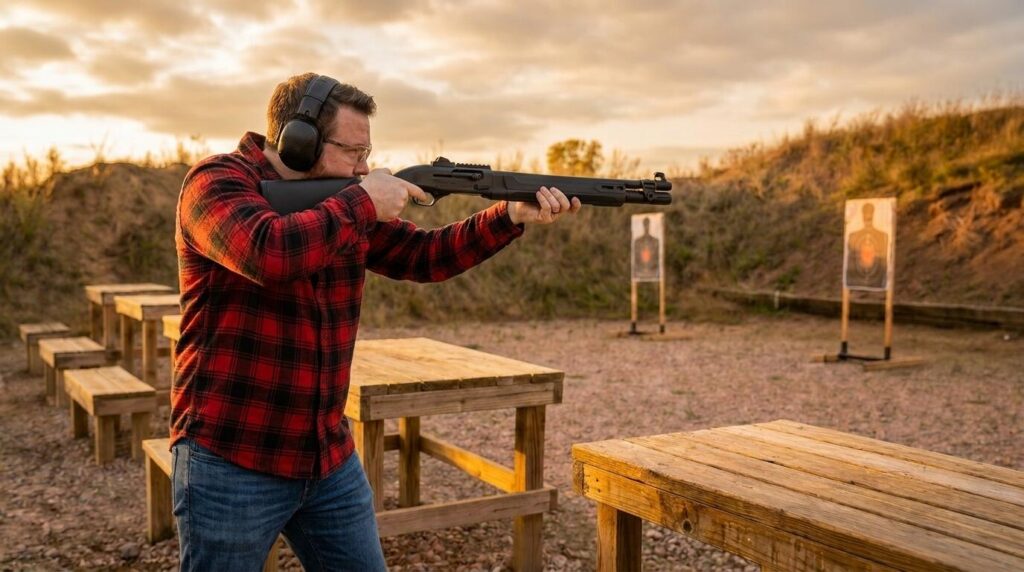
I tested the A300 Ultima 28-inch field model over three range sessions across two months at a private outdoor range with trap, skeet, and patterning facilities. Total round count was 500 across seven ammunition brands and load types.
The ammo log: 150 rounds Federal Top Gun, 100 rounds Winchester AA, 75 rounds Remington Gun Club, 75 rounds Fiocchi Optima Specific, 50 rounds Federal Black Cloud 3-inch steel, 25 rounds Hornady American Gunner reduced-recoil 00 buckshot, and 25 rounds Federal Truball rifled slug.
I tracked malfunctions per ammo type, pattern density at 25 and 40 yards with each included Mobilchoke tube, slug group sizes at 50 yards using the fiber-optic front sight, and felt recoil through live-fire baseline against my reference Stoeger M3000 inertia gun.
Before the first round, I inspected the gun for canted components, lubed with the factory lubrication only, and broke it in by running 25 rounds of 1-1/8 oz field loads first per Beretta’s break-in guidance.
At round 500, I checked the gas piston for fouling buildup, the chamber for carbon, and the bolt for any sign of wear. The piston still scraped clean on cycle. The chamber had typical carbon residue. No abnormal wear on the bolt. That last inspection is the one that tells you whether a sub-$900 shotgun is built to last.
The Verdict
The Beretta A300 Ultima is the best value gas-operated semi-auto shotgun you can buy in 2026. That’s not a close call. For $720 to $880 street price, you get a self-cleaning gas system, a chrome-lined barrel, the Kick-Off recoil pad from the $1,800 A400 line, and a gun that’s built in Tennessee by one of the oldest firearms manufacturers on Earth. Find me another gas gun under $900 that checks all those boxes. I’ll wait.
It is not perfect. The synthetic stock feels like it was designed by accountants, not engineers. The warranty service needs a serious overhaul in terms of turnaround time. And the small percentage of factory lemons means you should function-test your gun thoroughly before duck season, not during it. But these are blemishes on an otherwise outstanding shotgun.
If you shoot clay sports regularly, hunt waterfowl, or just want a 12 gauge semi-auto that does everything well and treats your shoulder with respect, the A300 Ultima is the one. Buy it. Your shoulder will thank you, and your wallet won’t hate you.
Final Score: 8.4/10
Best For: Clay shooters, waterfowl hunters, and volume shooters who want the softest-recoiling semi-auto under $1,000 with the reliability of Beretta’s proven gas system. Also an excellent entry point for new shotgun owners who want to buy once and buy right.
Frequently Asked Questions
Is the Beretta A300 Ultima reliable?
Very reliable after proper break-in. We fired 500 rounds across target loads, buckshot, and slugs with zero malfunctions. Clean the factory packing grease before first use and run 50 rounds of full-power loads for break-in. Early production models had some QC issues that Beretta has since addressed.
Where is the Beretta A300 Ultima made?
The A300 Ultima is manufactured at Beretta USA factory in Gallatin, Tennessee. This is the only Beretta shotgun made entirely in the United States. All other Beretta shotguns are made in Italy.
Is the Beretta A300 Ultima good for clay shooting?
Excellent for sporting clays, trap, and skeet. The gas-operated action with Kick-Off recoil pad produces the softest recoil of any semi-auto under 1000 dollars. Owners regularly report shooting 200+ round clay sessions comfortably. Ships with IC, Modified, and Full Mobilchoke tubes.
Beretta A300 Ultima vs Benelli M2: which is better?
The Benelli M2 is the premium choice with lighter weight and legendary reliability, but costs 500 to 600 dollars more. The A300 Ultima has softer recoil thanks to gas operation versus inertia, and the Kick-Off pad. For most shooters, the A300 delivers 90 percent of the M2 experience at 60 percent of the price.
Does the Beretta A300 Ultima have recoil problems?
The opposite. The A300 Ultima is one of the softest-shooting semi-auto shotguns on the market. The self-cleaning gas piston absorbs significant recoil energy and the Kick-Off recoil pad in the stock further reduces felt recoil. Owners consistently praise it for all-day comfort.
What chokes come with the Beretta A300 Ultima?
The field model ships with three Mobilchoke tubes: Improved Cylinder, Modified, and Full. The Patrol model ships with a Cylinder bore choke. All Beretta Mobilchoke and aftermarket compatible tubes from Briley and Carlsons will fit.
What are the known issues with the Beretta A300 Ultima?
Early production 12 gauge models had a hammer strut defect causing trigger lockups, which Beretta has resolved. Some guns fail to cycle out of the box due to heavy factory grease. Thoroughly clean before first use. Beretta USA warranty service is slow at 10 to 14 weeks.
Is the Beretta A300 Ultima Patrol good for home defense?
The Patrol model is purpose-built for defensive use with a 19.1-inch barrel, 7+1 capacity, Picatinny optics rail, QD sling mounts, and M-LOK accessory points. At around 1100 dollars it is more expensive than pump alternatives but offers semi-auto speed with soft recoil.
The classic gas-gun forerunner is our Remington 1100 review.
3,979+ Gun & Ammo Deals
Updated daily from 200+ top retailers. Filter by category, caliber, action type, and price.
Related Guides