

- Treat every gun as loaded
- Point the muzzle in a safe direction
- Keep your finger off the trigger until you’re ready to shoot
- Know your target and what’s beyond
The short version: the Marlin 336 is still the best-handling brush gun money can buy, and the Ruger-built version that came out at the end of 2023 is the best 336 anyone has ever shipped. I carried one through a full Pennsylvania deer season, ran a little over 600 rounds of mixed .30-30 through it at the range, and came away thinking the same thing most folks do once they actually shoot one: this is the rifle a lot of people should own and don’t. It points like a shotgun, it shrugs off rain and brush, and the new Ruger quality control finally killed off the “Remlin” reputation that scared people away for a decade.
I’m Nick Hall. If we haven’t shot it, we don’t recommend it, and I shot this one until my shoulder told me to quit. Here’s everything I learned.
Table of Contents
How we tested: Every pick here is ranked against our testing methodology. Minimum round counts, accuracy and reliability protocols, the failures that disqualify a gun.
Quick Take: Who the Marlin 336 Is For
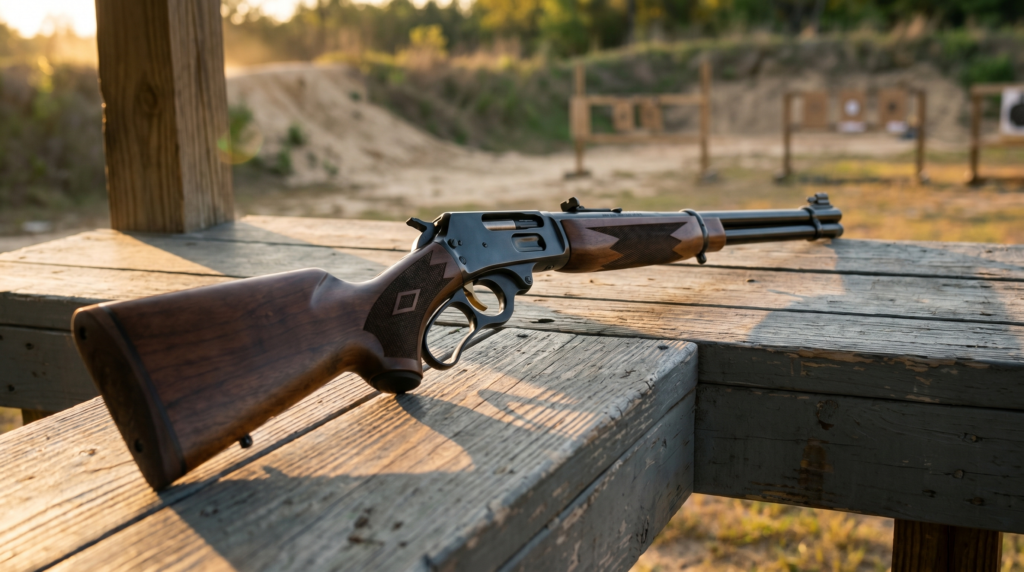
The 336 is a 6+1 lever-action chambered in .30-30 Winchester, and it has one job: put a deer-sized animal down inside 150 yards in thick country. It does that job better than almost anything because of how it carries and how fast it comes up. At a hair over 7 pounds with a 20-inch barrel, it’s light enough to still-hunt all day and short enough to swing through brush without snagging.
The thing that sets the Marlin apart from the old Winchester 94 is side ejection. The 336 throws empties out the side instead of straight up, so the top of the receiver is solid steel that’s drilled and tapped for a scope from the factory. You can mount glass low and centered without any goofy offset mounts. That one design choice is why the 336 outlived most of its rivals as a practical hunting rifle.
Best for: deer hunters in timber and brush, anyone who wants a do-everything woods rifle, folks who appreciate a gun that handles like an extension of their hands, and shooters who want American lever-action history they can actually afford to use.
Marlin 336 Specs
- Chambering: .30-30 Winchester
- Action: lever-action, round bolt, side ejection
- Capacity: 6+1 in the full-length tubular magazine
- Barrel: 20.25 inches, cold-hammer-forged, blued (Classic)
- Overall length: 38.6 inches
- Weight: 7.5 pounds unloaded
- Stock: black walnut, cut checkering, straight-grip
- Sights: adjustable semi-buckhorn rear, ramp front with brass bead; receiver drilled and tapped
- Maker: Ruger, Mayodan, North Carolina
- MSRP: around $1,239; street price closer to $1,130


Firearm Scorecard
Overall: 9.0 / 10
| Handling & Balance | 9.5/10 |
| Reliability | 9.0/10 |
| Accuracy | 8.0/10 |
| Fit & Finish, Ruger Build | 9.0/10 |
| Trigger | 8.0/10 |
| Value | 8.5/10 |
Design Intent: Why the 336 Beat the Competition
Marlin introduced the 336 in 1948, but the bones go back to the Model 1893 and the Model 36 that came before it. The big jump with the 336 was a round breech bolt that was easier to machine and ran smoother than the old square bolt, plus the side-ejection receiver that Marlin had been refining for decades. By the 1950s it was the deer rifle for working people who wanted something better than a war-surplus bolt gun and couldn’t see paying for a custom.
The whole gun is built around .30-30 Winchester, a cartridge from 1895 that refuses to die. A 150-grain load leaves the muzzle around 2,390 feet per second with roughly 1,900 foot-pounds of energy, and a 170-grain load trades some speed for a heavier punch. That’s plenty for any deer inside 150 yards, which is exactly the range where most timber deer get shot. The cartridge has a reputation as a short-range round, and that’s fair, but it’s a short-range round that has filled more freezers than almost anything else in North America.
There’s a reason it stayed short-range for so long. A tubular magazine stacks cartridges nose to primer, so a pointed bullet could set off the round in front of it under recoil. That meant flat-nose and round-nose bullets only, and flat noses shed speed fast downrange. Hornady cracked that problem in 2005 with the LEVERevolution line, which uses a soft polymer tip that’s safe in a tube but flies like a spitzer. Loaded with that ammo, a .30-30 picks up a couple hundred yards of useful trajectory and shoots noticeably flatter, which is why I leaned on it for most of my accuracy testing. The old gun learned a new trick, and it kept the 336 relevant in an era of bolt guns and red dots.
Then Marlin fell apart. Remington bought the company in 2007, moved production, and the rifles that came out of that era earned the nickname “Remlin” for sloppy fit, rough actions, and inconsistent quality. People who got burned in those years still flinch at the name. When Remington went bankrupt in 2020, Ruger bought the Marlin assets and moved the whole operation to Mayodan, North Carolina. The 336 Classic came back at the end of 2023, and the difference is night and day. The new ones run the address “Ruger, Mayodan NC, USA” on the barrel, and the fit is the best the model has ever had.
Marlin 336 Variants
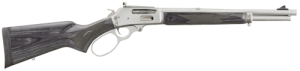
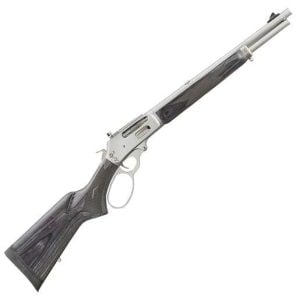
Ruger ships the 336 in three flavors right now. The Classic is the walnut-and-blued woods rifle most people picture. The SBL is the stainless, ghost-ring, scout-style version that has gotten huge with the truck-gun crowd. The Dark Series is the blacked-out, threaded-barrel tactical take. Here’s how they line up.
| Variant | Barrel | Stock / Finish | Sights | Best Use |
|---|---|---|---|---|
| 336 Classic | 20.25″ blued | Black walnut | Semi-buckhorn + ramp | Traditional deer woods |
| 336 SBL | 16.25″ stainless | Gray laminate | Ghost ring + rail | Truck gun, foul weather |
| 336 Dark | 16.25″ threaded | Black synthetic | Ghost ring + rail | Suppressed, tactical |
How the Marlin 336 Compares to the Competition
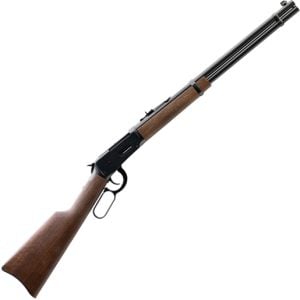
Winchester Model 94 ($1,189.99-$1,500)
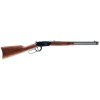
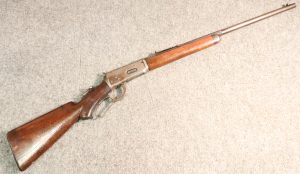
The Model 94 is the rifle the 336 grew up competing against, and it’s the prettier of the two if you ask most people. It’s slimmer, it carries a touch better, and it has more cowboy soul than anything else on this list. What it gives up is the scope. The 94 ejects straight up out of the top, so mounting glass means an angle-eject model or an awkward side mount that throws your eye off the bore. If you hunt with irons, the Winchester is a toss-up. If you ever want a scope or a red dot, the Marlin wins before you even load it.

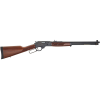
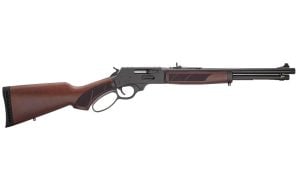
Henry Lever Action .30-30 ($864.32-$1,050)
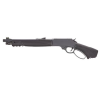
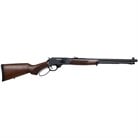
Henry builds a gorgeous rifle, and the newer Side Gate version fixed the one real complaint people had, which was loading only through the front of the tube. Fit and finish on a Henry is honestly a step above even the new Ruger Marlins. The catch is weight. A Henry .30-30 runs close to 8 pounds, and that extra weight is noticeable after a long day of carrying. The Henry also costs about the same as a 336 Classic, so the choice comes down to one question: do you want the slightly fancier gun or the slightly handier one? I’d take the Marlin for hunting and the Henry for the safe.
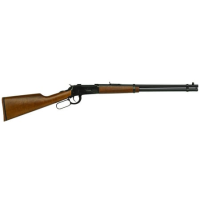
Mossberg 464 ($389.99-$650)
The Mossberg 464 is the budget play, and it’s a real .30-30 lever gun for hundreds less than the rest of this list. It also has side ejection, so you can scope it like a Marlin. The trade is in the details. The action is rougher, the wood is plainer, and the whole thing feels like it was built to a price, because it was. If money is tight and you just need a deer rifle that works, the 464 will get it done. If you can stretch the budget, the Marlin is a noticeably nicer gun to own and shoot for the rest of your life.
Testing Protocol: How I Ran the 336
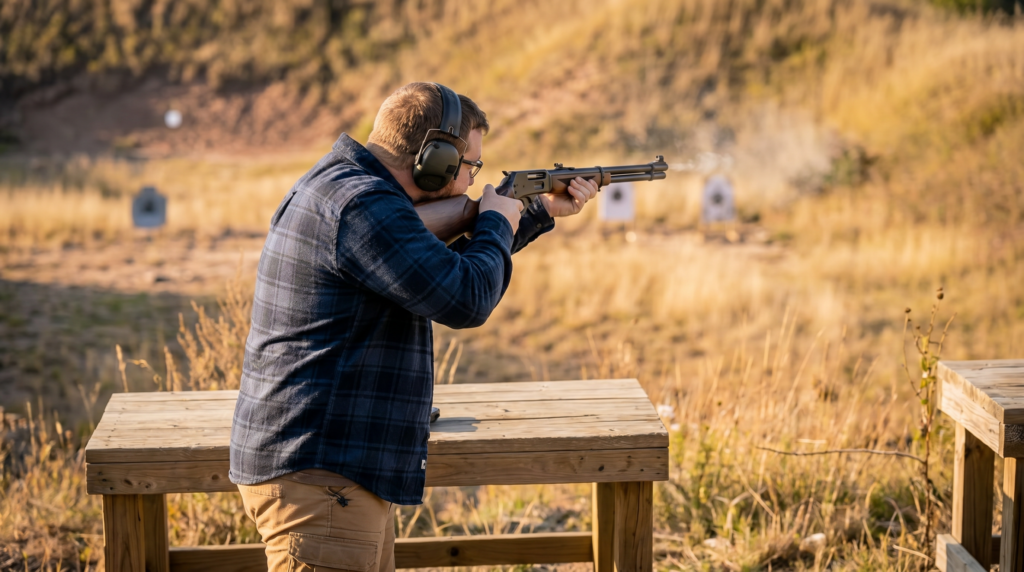
I split my time with this rifle between the bench and the woods. At the range I shot a little over 600 rounds across about ten sessions, running it dirty on purpose for the back half to see when it would choke. In the field I carried it for a full Pennsylvania rifle season and a couple of late-season walks after that.
Break-In
Out of the box the loading gate was stiff, which is normal for a new Marlin. The first 50 rounds my thumb took a beating shoving cartridges past the spring. By round 100 it had loosened up and loading became smooth. The action itself was a little gritty on the first few cycles and then broke in fast. I didn’t do anything special, just shot it and ran a bore snake through it at the end of each session.
Reliability
Zero malfunctions across the whole 600-plus rounds. No failures to feed, no failures to eject, no light strikes. I ran Winchester 150-grain Power-Point, Federal 170-grain Power-Shok, Hornady 160-grain LEVERevolution, and a box of cheap Privi 150-grain, and the gun ate all of it without a hiccup. A lever gun lives or dies on smooth feeding, and this one fed like it had a thousand rounds through it from day one.
Accuracy
With the iron sights and a rest, I was holding around 2.5 to 3 inches at 100 yards, which is right where a .30-30 with buckhorns should land. After I mounted a 1-4x scope, the groups tightened to about 1.75 inches with the Hornady LEVERevolution, which was the clear accuracy winner. That FTX flex-tip bullet is the modern fix for the old flat-nose limitation, and it shoots flatter and groups tighter than anything else I fed it. For a woods rifle meant to take deer inside 150 yards, that’s more than enough precision to never be the weak link.
Ammo Log
- Winchester 150gr Power-Point, 180 rounds, zero issues, 2.8″ at 100
- Federal 170gr Power-Shok, 120 rounds, zero issues, 3.0″ at 100
- Hornady 160gr LEVERevolution FTX, 200 rounds, zero issues, 1.75″ at 100 scoped
- Prvi Partizan 150gr, 100 rounds, zero issues, 3.2″ at 100
Performance Results
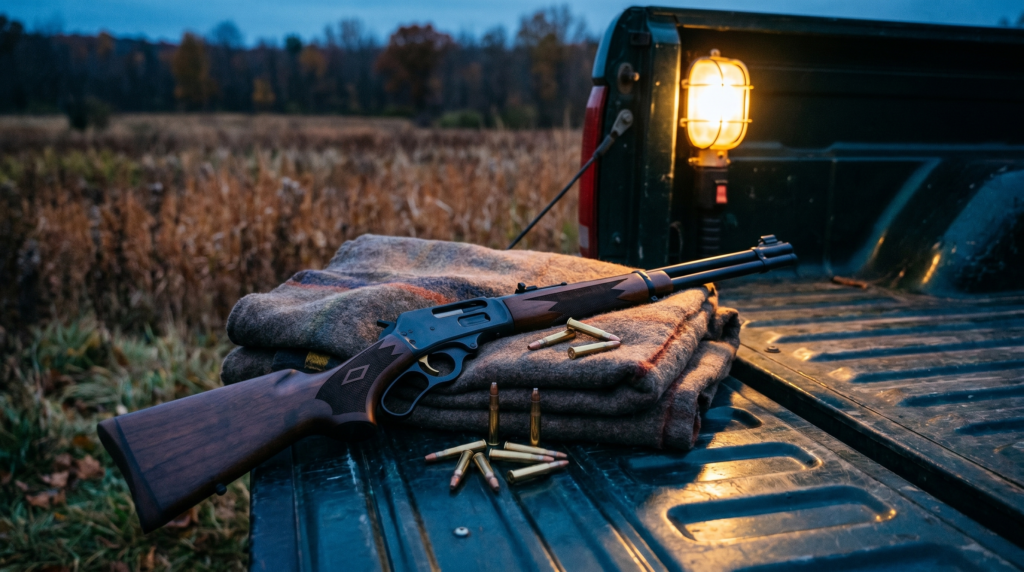
The headline is the handling. I’ve shot a lot of rifles, and almost nothing comes up to the shoulder as naturally as a 336. The balance point sits right at the front of the receiver, so the gun pivots around your lead hand and the muzzle goes exactly where your eyes go. In the woods that means you can throw it up on a moving deer and have the bead on its shoulder before you’ve consciously aimed. That’s the whole reason this design has lasted 75 years.
Recoil is mild. The .30-30 in a 7-pound rifle is a soft push, nothing like the bark of a magnum, and I never once flinched through a long bench session. The trigger broke at a touch over 5 pounds with a little creep, which is average for a factory lever gun and easily good enough for field work. My one deer of the season dropped to a single 150-grain Power-Point at about 80 yards through the timber. That’s the 336 doing exactly what it was born to do.
The lever throw deserves a mention too. It’s short and positive, and once the action broke in I could cycle a follow-up shot without taking the gun off my shoulder or losing the sight picture. That matters in the woods, where a second deer or a follow-up on a wounded animal can come up fast. I ran a few timed drills off the bench late in my testing and was putting two aimed rounds on a paper plate at 50 yards in well under two seconds. No, it’s not an AR, but for the kind of shooting a brush gun actually does, it’s quick where it counts. After a full season of carry, dunkings in cold rain, and a couple of accidental knocks against tree bark, the bluing and walnut still looked sharp, which says something about how the new Ruger guns are finished.
Technical Deep Dive
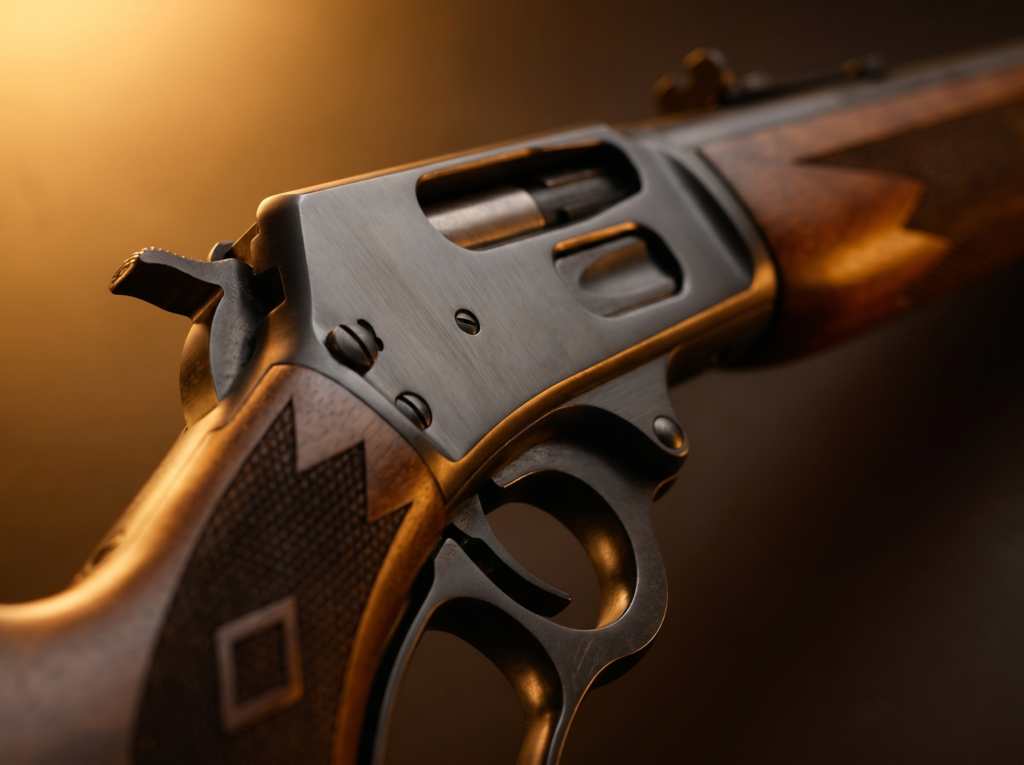
The heart of the 336 is that solid-top, side-eject receiver machined from forged steel. The round bolt locks up tight, and because the top is closed, no rain, snow, or pine needles fall down into the action the way they can on a top-eject gun. That sealed-top design is also what makes the gun so scope-friendly, and it’s quietly one of the most practical features on any hunting rifle.
| Component | Detail |
|---|---|
| Receiver | Forged steel, solid top, drilled and tapped |
| Bolt | Round, rear-locking |
| Rifling | Six-groove Ballard-style cut rifling, 1:12 RH twist |
| Magazine | Full-length tubular, 6 rounds |
| Trigger pull | ~5.2 lbs as measured |
| Safety | Cross-bolt plus traditional half-cock hammer |
One note on the rifling, because it changed with the new guns. The original Marlin 336 used Micro-Groove rifling, a shallow multi-groove system that shot jacketed bullets beautifully but could lead up fast with soft cast handloads. The Ruger-built guns dropped that in favor of traditional six-groove Ballard-style cut rifling with a 1:12 twist, and that is good news. Cut rifling handles both jacketed factory loads and cast lead handloads without complaint, so the one real knock on the old Marlins is simply gone. It is one more way the Ruger version quietly improved on the legend instead of just reviving it.
Parts and Accessories Worth Buying
| Upgrade | Why | Rough Cost |
|---|---|---|
| Scout scope or 1-4x | Extends practical range, easy on the solid receiver | $150-400 |
| XS ghost ring sights | Faster than buckhorns in low light | $90-130 |
| Leather sling | Carries a woods rifle all day | $40-80 |
| Hornady LEVERevolution ammo | The accuracy and range upgrade in a box | $35-45/box |
| Skinner peep sight | Simple rear aperture that ages well | $70-90 |
Common Problems and Solutions
- Stiff loading gate when new. Normal on every fresh Marlin. It loosens up inside the first 100 rounds. Until then, load with a firm thumb or use a loading tool.
- “Remlin” worries. Those quality problems were the Remington years from 2007 to 2018. The new Ruger-built guns from Mayodan fixed it. Check the barrel address before you buy used.
- Pointed bullets in the tube. Never load standard pointed spitzer ammo in a tubular magazine. Under recoil a sharp tip can set off the primer of the round ahead of it. Stick to flat-nose, round-nose, or Hornady’s polymer-tipped LEVERevolution, which is built to be safe in a tube.
- Buckhorn sights are slow in low light. The factory semi-buckhorn is fine but dated. A ghost ring or peep sight is a cheap, big upgrade for woods hunting at dusk.
Who Should NOT Buy the Marlin 336
- Long-range hunters. If most of your shots are past 200 yards in open country, the .30-30 runs out of steam. Buy a bolt-action in 6.5 Creedmoor or .308 instead.
- High-volume target shooters. A lever gun loaded one round at a time through a tube is not a range-blaster. If you want to shoot a lot fast, look at an AR or a semi-auto.
- Bargain hunters on a hard budget. The new Ruger 336 is a premium-priced gun now. If you need a deer rifle for under $700, the Mossberg 464 or a used Marlin makes more sense.
- Trigger snobs. The factory trigger is good for hunting but has a little creep and breaks around five pounds. If you demand a crisp, light match trigger straight out of the box, plan on an aftermarket spring kit or look at a different action.
Final Verdict
The Marlin 336 earns a 9.0 out of 10 and a spot in my own safe. The new Ruger build finally delivers the rifle Marlin always should have been making, with the fit and finish to match the legend. It handles better than anything in its class, it ran flawlessly through everything I fed it, and it killed my deer cleanly with a cartridge older than my grandfather. The only marks against it are the dated buckhorn sights and a price that has crept up into premium territory.
If you hunt deer in timber, brush, or any country where shots are close and fast, this is the rifle I’d point you to first. It sits at the top of our guide to the best .30-30 lever-action rifles, and it earns a spot on any short list of the best lever-action rifles built today. It’s a tool you can hand down, and now that Ruger is building them right, it’s worth handing down. That’s the headline: the king of the brush guns is back, and it’s better than it ever was.
Marlin 336 Review FAQ
Is the Marlin 336 still made?
Yes. Ruger reintroduced the Marlin 336 Classic at the end of 2023, built at its plant in Mayodan, North Carolina. The new Ruger-made guns are widely considered the best-built 336s the model has ever had.
What caliber is the Marlin 336?
The 336 is chambered in .30-30 Winchester, a cartridge from 1895 that remains one of the most proven deer rounds in North America. It is effective on deer-sized game inside roughly 150 yards.
How many rounds does a Marlin 336 hold?
Six plus one. The 20-inch Classic carries six rounds in its full-length tubular magazine plus one in the chamber, for a total of seven.
Is the Marlin 336 good for deer hunting?
Yes. It is one of the best brush guns ever made. The light weight, fast handling, and hard-hitting .30-30 cartridge make it ideal for timber and close-range deer hunting where most shots fall under 150 yards.
What is the difference between the Marlin 336 and the Winchester 94?
The biggest difference is ejection. The Marlin 336 throws empties out the side and has a solid receiver that is drilled and tapped for a scope from the factory. The Winchester 94 ejects out the top, which makes mounting a scope low and centered far more awkward.
Are the new Ruger-made Marlin 336 rifles good?
Yes. The Ruger build fixed the quality problems that gave the Remington-era Remlin guns a bad name from 2007 to 2018. Fit, finish, and reliability on the Mayodan-built rifles are excellent.
Want the big-bore step up from the .30-30? Read our full Marlin 1895 SBL review.
Cross-shopping lever guns? See our full Winchester Model 94 review, the 336’s oldest rival, tested head to head.
Prefer a pistol-caliber lever gun over .30-30? See our Marlin 1894 review in .357 and .44 Magnum.
3,979+ Gun & Ammo Deals
Updated daily from 200+ top retailers. Filter by category, caliber, action type, and price.
Related Guides