

Affiliate disclosure: This Ruger Wrangler review contains affiliate links. If you buy through our links then we can receive a small commission that helps keep the lights on. You don’t pay anything more.
- Treat every gun as loaded
- Point the muzzle in a safe direction
- Keep your finger off the trigger until you’re ready to shoot
- Know your target and what’s beyond
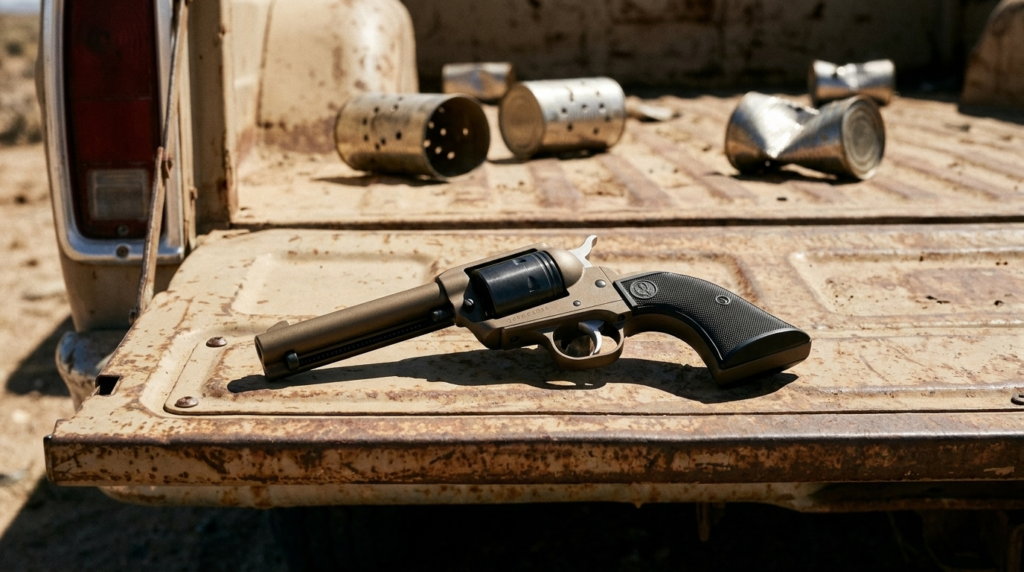
Table of Contents
How we tested: Every pick here is ranked against our testing methodology. Minimum round counts, accuracy and reliability protocols, the failures that disqualify a gun.
Review: Ruger Wrangler – The $250 Single-Action That Made Plinking Fun Again
Our Rating: 8.6/10
- RRP: $269 (MSRP)
- Street Price: $199-$239 (Check our live pricing for the best current deal)
- Caliber: .22 LR
- Action: Single-action revolver, transfer-bar safety
- Capacity: 6 rounds
- Barrel Length: 4.62″ (also 3.75″, 6.5″, 7.5″)
- Barrel: Cold hammer-forged
- Twist Rate: 1:14 RH
- Overall Length: 10.25″ (4.62″ barrel)
- Weight: 30 oz
- Frame Material: Aluminum alloy, Cerakote finish
- Sights: Blade front, integral notch rear (fixed)
- Grip: Checkered synthetic
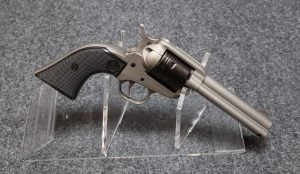
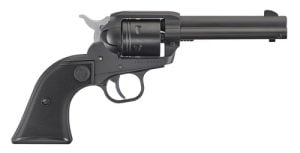
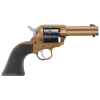
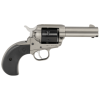
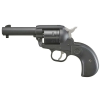
- Finishes: Black, Silver, Burnt Bronze (standard); Cobalt, Tungsten, Midnight Bronze, Midnight Blue (exclusives)
- Made in: Mayodan, North Carolina, USA
Pros
- Costs about the same as a few bricks of ammo, around $210 street
- Cold hammer-forged barrel is genuinely accurate for plinking and small game
- Cerakote color options look great and shrug off holster wear and weather
- Transfer-bar safety means you can carry all six rounds, unlike old cowboy single-actions
- Same grip frame as the legendary Single-Six, so a huge aftermarket fits
Cons
- Aluminum frame and cylinder won’t take the abuse a steel Single-Six shrugs off forever
- Fixed sights mean you adjust point of impact by holding off, not by clicking dials
- Loading and unloading one chamber at a time through the gate is slow if you’re used to a swing-out cylinder


Quick Take
The Ruger Wrangler is a six-shot, single-action .22 LR revolver that sells for around $210 street, built on the same grip frame as Ruger’s iconic Single-Six but with an aluminum frame and Cerakote finish to hit a budget price. It is the rimfire plinker that finally made a Ruger single-action affordable for everybody.
For decades, if you wanted a Ruger cowboy-style .22, you bought a Single-Six and paid north of $600. The Wrangler arrived in 2019 and did the unthinkable: a real Ruger single-action for the price of a couple bricks of ammo. It cut cost in smart places, an aluminum frame instead of steel, a Cerakote finish instead of bluing, but kept the cold hammer-forged barrel and the lockwork that make these guns shoot.
I ran one for a few hundred rounds of mixed .22, from bulk bargain stuff to good copper-plated, and it ate all of it and rang steel like it cost three times the money. Is it a Single-Six killer? No, and it isn’t trying to be. It’s the gun you hand a new shooter, toss in the truck for a camping trip, or grab for a lazy afternoon of cans. For that, it’s close to perfect.
Best For: New shooters learning trigger control, plinkers, campers, and anyone who wants a fun, cheap .22 wheelgun. If you’re shopping rimfire, our best .22 LR revolvers and best .22 pistols guides put it in context.
Why Ruger Built the Wrangler This Way
Ruger built the Wrangler to win back the bottom of the .22 revolver market, which Heritage’s Rough Rider had owned on price for years. The Single-Six is a wonderful gun, but at three times the price it was never going to be the rifle a parent grabbed to teach a kid, or the throwaway-cheap plinker a college student bought.
So Ruger asked a simple question. What can we cut without ruining how it shoots? The answer was the expensive metal. The Wrangler uses an aluminum-alloy frame and a Cerakote finish instead of the Single-Six’s steel and bluing. That alone knocked hundreds off the price. What they refused to cut was the barrel and the guts. The Wrangler keeps a cold hammer-forged barrel and the same proven single-action lockwork, including the transfer-bar safety that lets you load all six.
The result hit the market like a freight train. It undercut everything except the very cheapest imports, and it carried the Ruger name and the Ruger reputation for building rimfires that just run. The Cerakote color menu, from plain black to burnt bronze to cobalt blue, turned a budget gun into something people actually wanted to collect.
Ruger Wrangler Variants
The Wrangler family has grown well past the original 4.62-inch gun. Here are the configurations worth knowing.
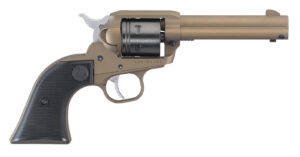
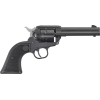
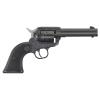
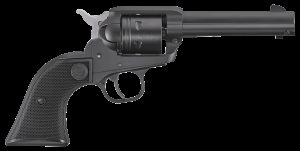
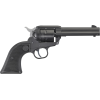
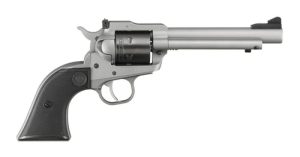
Wrangler 4.62-inch Standard $199-$239
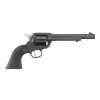
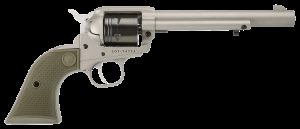
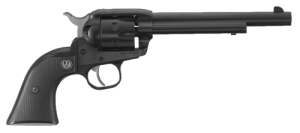
The original and the one most people should buy. A 4.62-inch barrel, six-shot .22 LR, in black, silver, or burnt bronze Cerakote at $269 MSRP. Balanced, holster-friendly, and the cheapest way into the line. Best For: first revolver, all-around plinking.
Wrangler 6.5-inch & 7.5-inch $239-$269
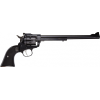
The long-barrel exclusives squeeze more velocity and a longer sight radius out of the .22, which helps accuracy on small targets. These run as TALO and Lipsey’s exclusives in colors like cobalt and midnight blue. Best For: small-game and steel shooters who want a little more reach.
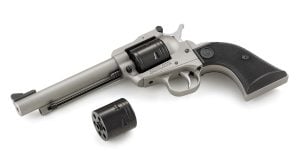
Ruger Super Wrangler (convertible) $241-$280
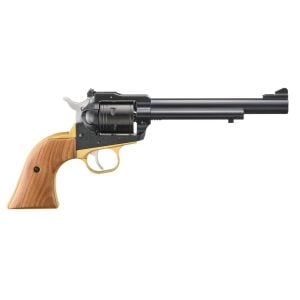
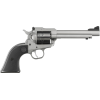
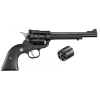
The upgrade pick. The Super Wrangler adds a second cylinder so it shoots both .22 LR and .22 WMR, a 5.5-inch barrel, and adjustable sights, all for about $339 MSRP. The adjustable rear alone is worth the jump if you care about hitting point of aim. Best For: shooters who want magnum punch and real sight adjustment.
Competitor Comparison
The budget .22 single-action class is small but scrappy. Here’s how the Wrangler stacks against the guns you’ll actually cross-shop.
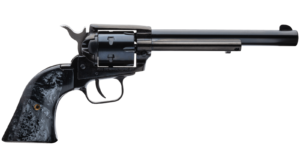
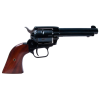
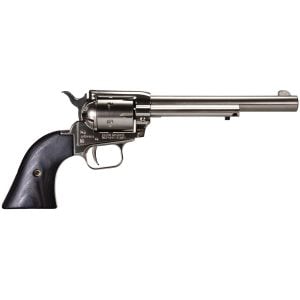
Heritage Rough Rider ($150-$200) $150-$200
The Rough Rider is the only thing cheaper, and it’s the gun the Wrangler was built to beat. See our full Heritage Rough Rider review for the full test. Heritage gives you more barrel and finish options and an even lower price. The Wrangler answers with tighter fit, a better trigger out of the box, the transfer-bar safety done cleaner, and the Ruger name. If budget is everything, the Heritage wins. If you want the nicer gun for $40 more, the Ruger does.


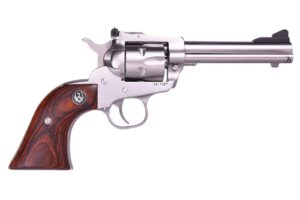
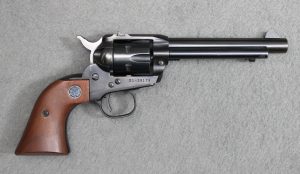
Ruger Single-Six ($679-$799) $679-$799
The Single-Six is the gun the Wrangler is based on, and it’s still the better revolver in every material way: steel frame, blued or stainless, adjustable sights, convertible cylinders, a lifetime-heirloom build. It also costs three times as much. The Wrangler exists precisely because not everyone needs or wants to pay for all that. Buy the Single-Six if it’s a forever gun; buy the Wrangler if it’s a fun gun.
Diamondback Sidekick ($290-$330) $290-$330
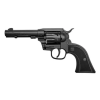
The Sidekick is the wildcard: a swing-out-style budget single-action with .22 LR and .22 WMR cylinders that loads through a gate but swings the cylinder for easier ejection. The .22 LR only versions undercut the Super Wrangler, and the convertible version with a magnum cylinder costs a little more. Build quality is a half-step below Ruger, but the feature set is generous for the money.
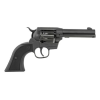
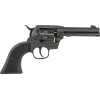
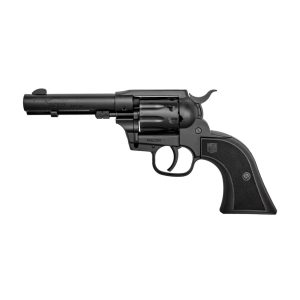
Verdict: The Wrangler sits in the sweet spot. It’s nicer than the Heritage for not much more, far cheaper than the Single-Six, and simpler than the convertibles if you only ever shoot .22 LR. For most buyers, it’s the right call.
| Dimension | Ruger Wrangler | Heritage Rough Rider | Diamondback Sidekick | Ruger Single-Six |
|---|---|---|---|---|
| Street Price (2026) | $199-$239 | $150-$200 | $290-$330 | $679-$799 |
| Frame Material | Aluminum alloy | Zinc alloy | Zinc alloy | Steel |
| Calibers | .22 LR | .22 LR (+.22 WMR combo) | .22 LR + .22 WMR | .22 LR + .22 WMR |
| Sights | Fixed | Fixed | Fixed | Adjustable |
| Build & Trigger Quality | Excellent for price | Good | Good | Heirloom |
| Manufacturer Status | Operating | Operating | Operating | Operating |
| Our Score | 8.6/10 | 7.0/10 | 7.5/10 | 9.0/10 |
| Best For | Best-value plinker | Cheapest entry | Magnum + easy ejection | Steel heirloom |
Features and Build Quality
The Aluminum Frame and Cerakote
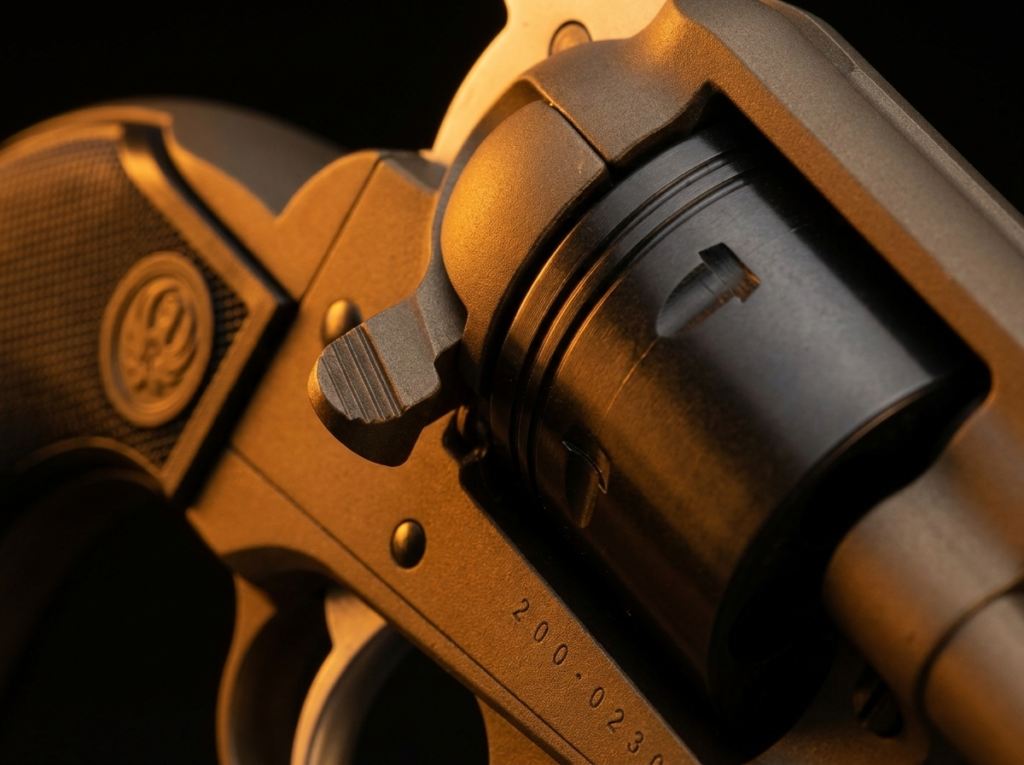
The aluminum-alloy frame is the single biggest cost-saver, and it’s the one place the budget shows. It keeps the gun light at 30 ounces and it takes Cerakote beautifully, which is why the color options look so good. For a .22 plinker, aluminum is plenty.
Where it matters is the very long haul. A steel Single-Six will outlast you and your grandkids. The Wrangler’s aluminum frame and cylinder are rated for tens of thousands of rounds of .22, which most owners will never approach, but it isn’t the buy-it-for-life tank the steel guns are. For the price and the purpose, that’s a trade worth making.
The Trigger and Transfer-Bar Safety
The single-action trigger is the Wrangler’s quiet highlight, breaking clean and light in true cowboy-gun fashion. You cock the hammer, the trigger does almost nothing but release, and that simplicity makes it a fantastic trigger-control teacher. New shooters learn fast on a gun that doesn’t fight them.
The transfer-bar safety is the modern touch that matters. Old single-actions had to be carried with an empty chamber under the hammer, because a knock could fire them. The Wrangler’s transfer bar only lets the hammer reach the firing pin when you pull the trigger, so all six chambers are safe to load. It’s the same system Ruger pioneered on its centerfire single-actions, and it works.
Sights, Grip, and Loading
The fixed sights are the Wrangler’s real limitation, a blade up front and an integral notch milled into the topstrap. They’re rugged and snag-free, but you can’t adjust them. If your gun shoots a little left or high with your favorite ammo, you hold off to compensate rather than dialing it in. For plinking that’s fine. For precise small-game work, it’s the reason to step up to the Super Wrangler’s adjustable rear.
The checkered synthetic grips fill the hand well and, crucially, fit the same grip frame as the Single-Six, so the deep aftermarket of wood and rubber grips bolts right on. Loading is classic single-action: open the gate, half-cock, rotate, drop a round in each chamber, then use the ejector rod to punch empties out one at a time. It’s slower than a swing-out cylinder, and that’s part of the charm and part of the learning.
At the Range: 600-Round Test
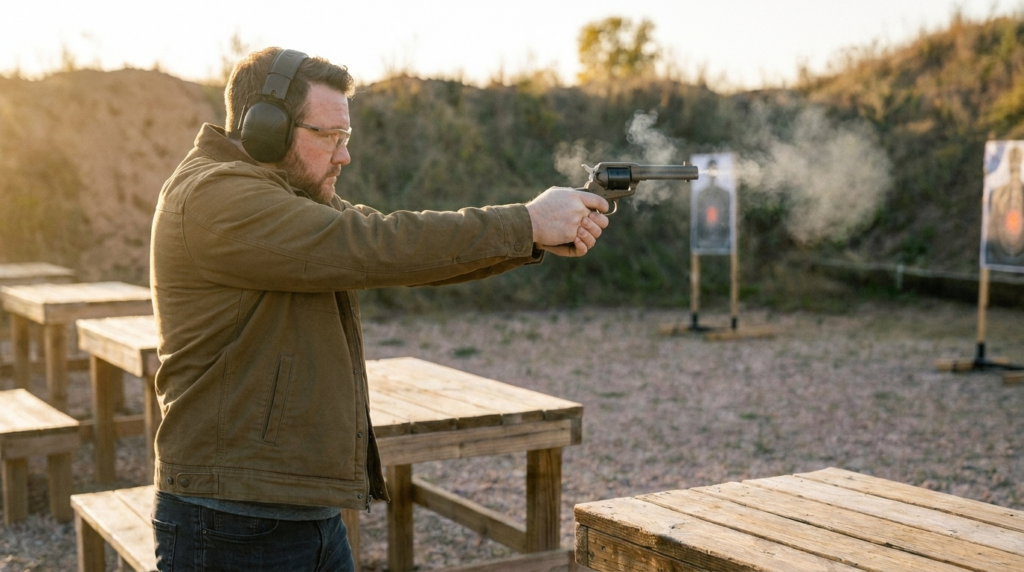
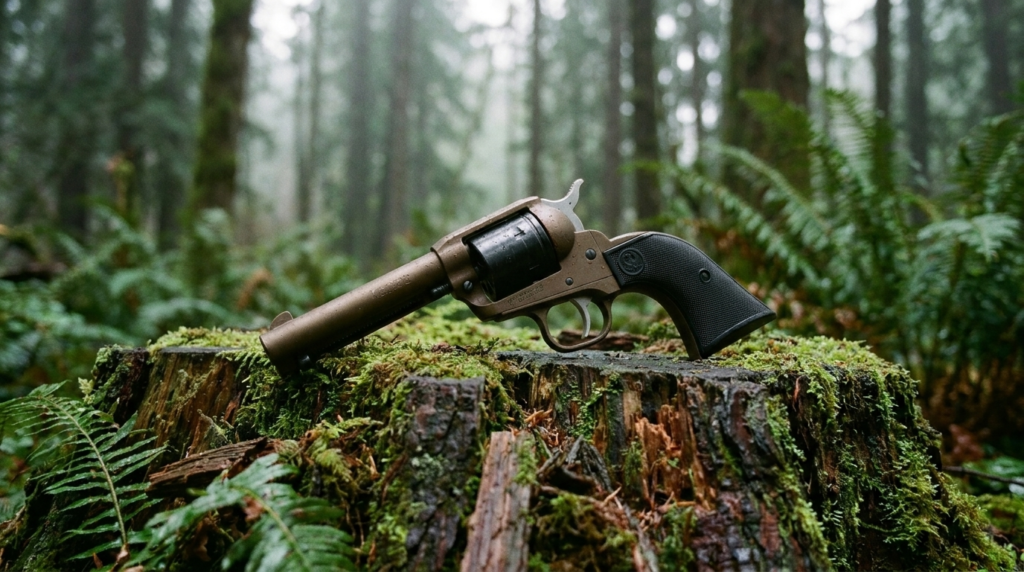
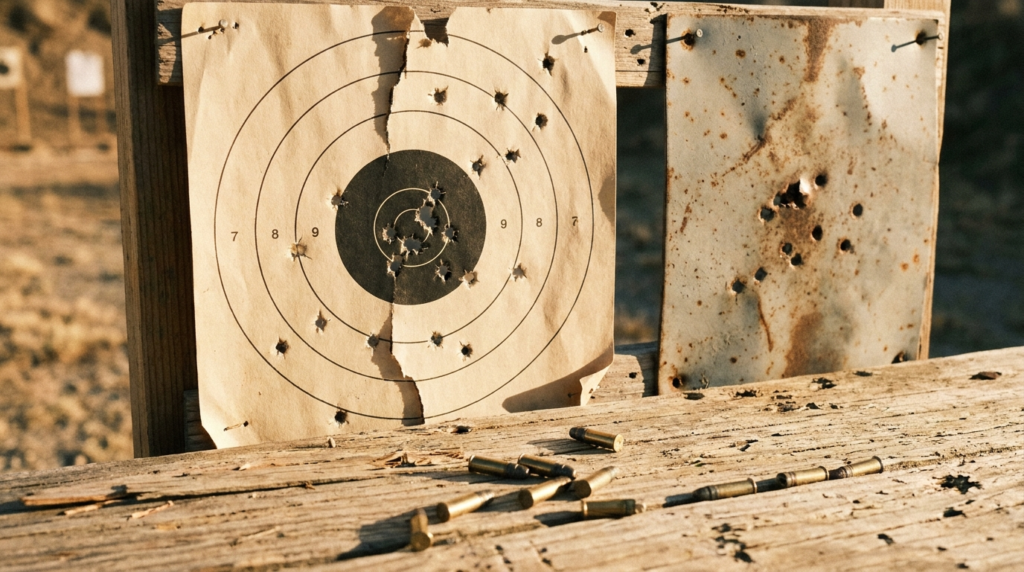
I ran 600 rounds of mixed .22 LR through the 4.62-inch burnt bronze Wrangler over three afternoons, from dirt-cheap bulk to good copper-plated match, shooting steel and paper at 15 and 25 yards. Here’s how it held up.
Reliability
Reliability on a single-action revolver comes down to two things: does it go bang, and does it eject. The Wrangler went bang on everything except the duds that are baked into cheap rimfire ammo, and even those fired on a second strike most of the time thanks to a solid hammer hit. No mechanical failures, no timing issues, no light strikes traceable to the gun.
The one annoyance is sticky extraction with filthy bulk ammo. After a couple hundred rounds of the cheapest stuff, the chambers fouled enough that the ejector rod needed a firm push. A quick bore-snake and a wipe of the cylinder face fixed it. That’s rimfire life, not a Wrangler flaw.
Accuracy
For a fixed-sight plinker, accuracy genuinely impressed me. With CCI Mini-Mag, I was keeping six shots inside about two inches at 25 yards resting over a bag, and ringing a 6-inch steel plate at that distance was automatic once I learned the gun’s hold. The cold hammer-forged barrel earns its keep. My gun printed slightly left with most ammo, the fixed-sight tax, so I held a hair right and got on.
Ammunition Log
- CCI Mini-Mag 40gr CPRN: 150 rounds, best accuracy, zero malfunctions
- Federal Champion 36gr CPHP: 150 rounds, reliable, slightly less precise
- Remington Golden Bullet 36gr: 150 rounds, a couple duds (ammo, not gun)
- Winchester 333 bulk 36gr: 150 rounds, dirtiest, sticky extraction late
Performance Testing Results
Reliability (9/10)
Every failure I had traced back to cheap ammo, not the revolver. The Wrangler’s hammer hits hard and the lockwork timed up perfectly through 600 rounds. Sticky extraction with filthy bulk is the only knock, and it’s a cleaning issue, not a defect.
Accuracy (7/10)
The barrel is better than the price suggests, but the fixed sights cap the score. You can’t dial out a point-of-impact shift, so you live with a hold-off. Two-inch groups at 25 yards from a bag is great for a plinker; it’s not a target gun, and the Super Wrangler’s adjustable sights are there if you want more.
Ergonomics and Handling (8/10)
The Single-Six grip frame is a known-good shape and it points naturally. At 30 ounces the gun is light enough for a kid to hold up and heavy enough to stay steady. The single-action trigger is a joy. The only ergonomic friction is the deliberately slow gate-loading, which is inherent to the design.
Fit, Finish, and Value (9/10)
The Cerakote is even and tough, the cylinder locks up with minimal play, and nothing on my sample felt sloppy. For around $210, the fit and finish punch well above the price. As a value proposition, almost nothing in the gun world beats it.
Common Problems and Solutions
- Sticky extraction with bulk ammo: Cheap dirty .22 fouls the chambers fast. Run a bore snake through the cylinder every couple hundred rounds and wipe the cylinder face. Cleaner ammo like CCI extracts far easier.
- Shoots left or high of point of aim: The fixed sights can’t be adjusted, so hold off to compensate, or step up to the Super Wrangler with its adjustable rear sight.
- Duds and light strikes: Almost always the ammo, not the gun. Rotate the cylinder and try the round again with a fresh strike; rimfire priming is uneven by nature. If a specific lot misfires constantly, switch brands.
- Cylinder feels gritty when new: A light cleaning and a drop of oil on the base pin and cylinder smooths it out. These break in nicely over the first few hundred rounds.
Who Should NOT Buy the Ruger Wrangler
The Wrangler is a brilliant budget plinker, but it’s the wrong gun for a few buyers. Here’s who should look elsewhere.
- The buy-it-for-life collector: If you want a steel heirloom .22 to pass down, spend up to the Ruger Single-Six. The aluminum Wrangler is built to shoot, not to become a family treasure.
- The shooter who wants .22 Magnum too: The base Wrangler is .22 LR only. Get the Super Wrangler convertible or a Diamondback Sidekick if you want to shoot .22 WMR as well.
- The precise small-game hunter: Fixed sights and a hold-off zero aren’t ideal for headshots on squirrels at distance. The Super Wrangler’s adjustable sights or a .22 with optics will serve you better.
- The defensive shooter: A six-shot single-action .22 that loads through a gate is not a self-defense gun. Look at our 9mm concealed carry picks instead.
The Verdict
The Ruger Wrangler is the best cheap .22 revolver you can buy, and one of the great value guns in all of shooting. Ruger cut cost in the right places and refused to cut it in the wrong ones, and the result is a single-action that shoots like a much more expensive gun and costs about the same as a nice dinner out.
It’s not perfect. The aluminum frame won’t take the abuse a steel Single-Six will, the fixed sights mean a hold-off zero, and gate loading is slow. None of that matters for what this gun is actually for: teaching new shooters, plinking cans, and riding along on every camping trip and range day without anyone worrying about babying it.
If you want magnum capability or adjustable sights, jump to the Super Wrangler for a little more. Everyone else, just buy the standard gun and a few bricks of ammo. It’s the most fun you can have for two hundred bucks.
Final Score: 8.6/10 – The plinker that put a real Ruger single-action in everyone’s hands, and it shoots better than it has any right to.
Best For: New shooters, plinkers, and campers who want a fun, cheap, accurate .22 wheelgun. See where it ranks among the best .22 LR revolvers and the wider .22 pistol field.
FAQ: Ruger Wrangler
Is the Ruger Wrangler a good gun for beginners?
Yes. The single-action trigger is light and simple, the .22 LR recoil is almost nothing, and the transfer-bar safety lets you load all six chambers safely. It is one of the best guns out there for teaching trigger control.
What is the difference between the Ruger Wrangler and the Single-Six?
The Single-Six is steel with adjustable sights and convertible cylinders, built as a lifetime heirloom for around $679 and up. The Wrangler is the budget version: an aluminum frame, Cerakote finish, and fixed sights for around $199 to $239. Both share the same grip frame and cold hammer-forged barrel.
Can you carry all six rounds in a Ruger Wrangler?
Yes. Unlike old cowboy single-actions that had to ride on an empty chamber, the Wrangler uses a transfer-bar safety, so the hammer can only reach the firing pin when you pull the trigger. All six chambers are safe to load.
Is the Ruger Wrangler accurate?
For a fixed-sight plinker, yes. In our test it kept six shots inside about two inches at 25 yards over a bag with CCI Mini-Mag, and ringing steel at that distance was easy once we learned its hold. The fixed sights are the only real limit.
What is the best ammo for the Ruger Wrangler?
It runs almost anything, but it shoots cleanest and most accurately with quality copper-plated ammo like CCI Mini-Mag. Cheap bulk ammo works too, it just fouls the chambers faster and can make extraction sticky.
How much does the Ruger Wrangler cost?
MSRP is $269, but street price runs about $199 to $239 for the standard model depending on finish and dealer. The Super Wrangler convertible runs closer to $329. Check our live pricing for the current best deal.
Where is the Ruger Wrangler made?
It is made in the United States at Ruger's factory in Mayodan, North Carolina.
Is the Ruger Wrangler good for self-defense?
No. A six-shot single-action .22 that loads one round at a time through a gate is a plinker and trainer, not a defensive gun. For carry, look at a proper 9mm instead.
4,715+ Gun & Ammo Deals
Updated daily from 200+ top retailers. Filter by category, caliber, action type, and price.
Related Guides