

Last updated August 21, 2026 · By Nick Hall, AR-15 shooter who has run every load on this list across 10.5, 16 and 20-inch barrels
Some of the links below are affiliate links, meaning at no additional cost to you, we may earn a commission if you click through and make a purchase. We only recommend products we genuinely believe in.
- Treat every gun as loaded
- Point the muzzle in a safe direction
- Keep your finger off the trigger until you’re ready to shoot
- Know your target and what’s beyond
Quick Answer: Speer Gold Dot 62gr GDSP is the best AR-15 ammo for home defense in 2026. The bonded soft point holds together through drywall and glass instead of shedding its jacket, and Speer builds it specifically to make FBI protocol out of barrels shorter than 16 inches.
For range work, Federal American Eagle 5.56 55gr at about $11 a box is the default, and PMC X-TAC M855 green tip costs the same if your range allows steel cores. For precision, Federal Gold Medal 69gr Sierra MatchKing is still the benchmark.
The biggest mistake AR buyers make is picking a bullet weight before checking their twist rate and barrel length. A 77gr match load out of a 1:9 barrel keyholes, and a 55gr M193 out of a 10.5-inch upper drops below the velocity where it fragments at close range. Both facts are measurable, and our own barrel cut-down test further down this page shows exactly how much velocity each inch of barrel is worth.
How we tested: Every pick here is ranked against our testing methodology. Minimum round counts, accuracy and reliability protocols, the failures that disqualify a gun. Where we have not shot a specific variant ourselves, we say so in that section.
Best AR-15 Ammo in 2026 at a Glance
| Ammo | Use Case | Price |
|---|---|---|
| BEST HOME DEFENSESpeer Gold Dot 62gr GDSP Bonded soft point built to make FBI protocol from barrels under 16 inches. |
Home Defense | Check Price ↓ |
| BEST BONDED ALTERNATIVEFederal Fusion MSR 62gr Molecularly fused jacket tuned for short barrels, and a legitimate hog load. |
Defense / Hunting | Check Price ↓ |
| BEST FOR SHORT BARRELSHornady BLACK 75gr BTHP Heavy match bullet loaded to work out of carbine and SBR-length barrels. |
Defense / SBR | Check Price ↓ |
| BEST LEAD-FREEBarnes VOR-TX 55gr TSX All-copper hollow point for lead-free counties and California ranges. |
Hunting / Defense | Check Price ↓ |
| BEST HUNTINGWinchester Deer Season XP 64gr Oversized polymer tip for fast expansion on hogs, coyotes and close deer. |
Hunting | Check Price ↓ |
| BEST VARMINT LOADHornady Varmint Express 55gr V-MAX Polymer tip that comes apart on impact, which is the point on prairie dogs. |
Varmint | Check Price ↓ |
| BEST MATCHFederal Gold Medal 69gr SMK The Sierra MatchKing load that every other match round gets measured against. |
Precision | Check Price ↓ |
| BEST LONG-RANGEBlack Hills 5.56 77gr OTM The heavy OTM load that needs a 1:8 or faster twist to earn its keep. |
Precision / Duty | Check Price ↓ |
| BEST VALUE PRECISIONHornady Frontier 68gr BTHP Hornady match bullets in Lake City brass at roughly half the Gold Medal price. |
Precision / Range | Check Price ↓ |
| BEST RANGE AMMOFederal American Eagle 5.56 M193-spec ball at about $11 a box. Runs in everything and reloadable brass. |
Range / Training | Check Price ↓ |
| BEST MIL-SPEC GREEN TIPPMC X-TAC M855 62gr Steel-penetrator green tip at a price that makes stockpiling it sensible. |
Range / Barrier | Check Price ↓ |
| BEST BULK BUYWinchester USA 5.56 M193 55gr White box M193 by the case, and the brass is worth keeping. |
Bulk / Training | Check Price ↓ |
Table of Contents
Introduction: Why Your Barrel Decides Your AR-15 Ammo
The AR-15 is the most configurable rifle in America, and that is exactly why ammunition advice for it goes wrong so often. A 20-inch rifle-length gun with a 1:7 twist and a 10.5-inch pistol with a 1:9 want different things from a cartridge, and a recommendation that ignores both numbers is a guess dressed up as advice.
Two variables do most of the work. Twist rate decides which bullet weights will stabilize, and barrel length decides how much velocity you actually get, which in turn decides whether a 55gr ball round still fragments when it arrives. Further down this page is the cut-down test we ran ourselves, showing what each inch of barrel is worth in feet per second, so you can work out where your own rifle sits rather than taking anyone on trust.
The other thing worth settling early. It is safe to shoot .223 Remington in a 5.56 NATO chamber. The reverse is not, because 5.56 runs higher pressure into a shorter throat. If your barrel is marked 5.56 NATO or .223 Wylde you can shoot both. If it says .223 Remington only, stay with .223. There is a full section on that below.
Twelve loads are ranked here across four jobs: home defense, hunting, match and range. If you are still choosing the rifle, our best AR-15 rifles round-up covers the platform, and the AR-15 buyer’s guide covers how to choose one.
What SAAMI Actually Specifies for .223 Remington
Every AR-15 ammo guide argues about 5.56 against .223, and almost none of them quote the standard. These figures come out of SAAMI Z299.4, the centerfire rifle standard American ammunition is actually built to, and out of the interchangeability advisory SAAMI published on 8 October 2021.
| Specification | .223 Remington | Why it matters to you |
|---|---|---|
| Maximum average pressure | 55,000 psi | The ceiling every commercial .223 load is built under |
| Proof load pressure | 73,500 to 78,500 psi | The one-time overpressure test a barrel design has to survive |
| Standard test barrel | 24.000 inches | Every advertised velocity on this page came off a tube that long |
| Bore and groove diameter | 0.219 in and 0.224 in | Both cartridges fire the same 0.224 inch bullet |
| 5.56x45mm NATO | Not in the standard | It is a military spec, so SAAMI does not define it at all |
| .223 and 5.56 interchangeability | Not on the list | SAAMI names 20 chamberings that may swap. This pair is not one |

The list this pair never made
SAAMI keeps a published table called Generally Accepted Firearms and Ammunition Interchangeability. It names the chamber and cartridge combinations that may be swapped, and it introduces them with a sentence worth reading slowly: these combinations are limited to only the following. There are 20 of them.
300 AAC Blackout and 300 Whisper are on it, which matters to anyone running a second upper. So are 357 Magnum with 38 Special, 454 Casull with 45 Colt, and 22 Long Rifle with 22 Short. .223 Remington and 5.56x45mm NATO are not on it. The most commonly swapped pair in American shooting is absent from the industry list of pairs that may be swapped.
The same document explains why, under a heading about commercial against military standards, and it names this exact pair as the example:
Therefore, only use ammunition manufactured to military standards in firearms that are marked and chambered explicitly to accept that specific military cartridge. Failure to do so can result in serious injury or death to the user and/or bystanders, as well as damage to the firearm.
SAAMI, Generally Accepted Firearms and Ammunition Interchangeability, 8 October 2021
Read that against the sentence SAAMI puts on its first page, which is the one that should settle every forum thread on this subject: just because a round of ammunition fits a chamber does not mean it is safe to fire it there.
What the proof number actually tells you
The standard carries a second pressure figure that almost never gets printed. A .223 barrel design is proof tested with a cartridge loaded to between 73,500 and 78,500 psi, roughly 34% above the 55,000 psi service ceiling. That is where the reassuring half of the internet gets its confidence from: there is clearly margin in the design.
The trap is what that margin is for. A proof load is a destructive test fired once, under controlled conditions, to prove the design and then retire the sample. It is not headroom you own on every trip to the range, and it says nothing about the extra pressure a long 5.56 throat load generates when it is jammed into a short .223 throat, round after round, out of a rifle that has already digested a few thousand.
The 24-inch number changes how you read this page
SAAMI defines the standard velocity and pressure test barrel for .223 Remington as 24.000 inches. That is the barrel behind the 3,240 fps on the Barnes and the V-MAX, the 3,165 on the American Eagle, and every other muzzle velocity a manufacturer prints.
Almost nobody shoots a 24-inch AR. If your carbine has a 16-inch barrel you are eight inches short of the tube those numbers came from, and if you run a 10.5-inch pistol you are short by more than half. The cut-down data further down this page puts a figure on what each of those inches is worth, which is the difference between a 55gr M193 that still fragments and one that does not.
Home Defense and Duty Ammo
Four loads that are built to open up and stay together. All four are soft points or heavy match bullets rather than ball ammunition, because an FMJ that punches straight through a threat and then through two interior walls is not a defensive round.
5.56 and .223 Ammo Deals Right Now
On-sale 5.56 from 200+ retailers · Updated every 4 hours


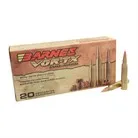

1. Speer Gold Dot 62gr GDSP: Best Home Defense
Speer Gold Dot 62gr GDSP runs about $27 to $34 for 20 rounds. It is the bonded soft point most patrol rifles in America are loaded with, and Speer tunes it specifically for the short barrels that most home-defense ARs actually have.
- Caliber: .223 Remington
- Bullet Weight: 62gr Gold Dot Soft Point, bonded
- Muzzle Velocity: 3,000 fps
- Muzzle Energy: 1,239 ft-lb
- Ballistic Coefficient: 0.310 G1
- Case: Nickel-plated brass, 20-round box
| Value | Expansion | Barrier | Reliability | Reputation |
| 3/5 | 5/5 | 5/5 | 5/5 | 5/5 |
Pros
- Bonded core cannot separate from the jacket on a barrier
- Speer builds it to make FBI protocol from barrels under 16 inches
- Nickel case resists corrosion in a magazine left loaded for months
- 62gr stabilizes in everything from 1:9 through 1:7
Cons
- Three times the price of ball ammunition
- Soft point feeds a fraction less smoothly than FMJ in worn rifles
- Not the load for long-range work
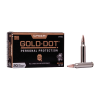
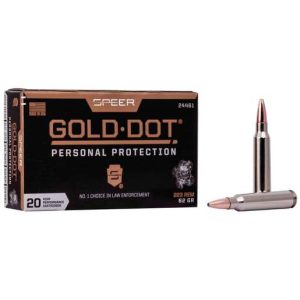

Gold Dot earns its place through the bonding process. Speer plates the jacket onto the core rather than seating a cup around it, so the two cannot come apart. In a handgun that matters for weight retention. In a rifle round travelling at 3,000 fps into a car door or a stud wall, it is the difference between a bullet that arrives intact and a jacket and a core arriving separately.
Speer states plainly that this load is engineered for FBI protocol performance out of barrels shorter than 16 inches, which is an unusual thing for a manufacturer to commit to in print and the reason it sits first here. Most defensive .223 is developed on a 20-inch test barrel and then sold to people running 11.5-inch uppers.
The 62 grain weight is the other reason. It stabilizes in a 1:9 barrel, which plenty of older ARs still have, and it stabilizes in the 1:7 and 1:8 barrels that everything modern ships with. You do not have to check your twist rate before buying it, and that is worth something.
Best For: The magazine you keep loaded next to the bed. Pair it with American Eagle for training and save the Gold Dot for duty.

2. Federal Fusion MSR 62gr: Best Bonded Alternative
Federal Fusion MSR 62gr costs about $33 to $41 for 20 rounds. Federal built the MSR version of Fusion around the shorter barrels and faster twist rates of a modern AR rather than a bolt gun.
- Caliber: .223 Remington
- Bullet Weight: 62gr bonded soft point
- Muzzle Velocity: 2,750 fps
- Muzzle Energy: 1,041 ft-lb
- Case: Brass, 20-round box
- Note: The standard Fusion .223 load (F223FS1) is a different, faster 3,000 fps round
| Value | Expansion | Barrier | Reliability | Reputation |
| 3/5 | 5/5 | 4/5 | 5/5 | 4/5 |
Pros
- Molecularly fused jacket, so the core stays with the bullet
- Loaded with fast-burning propellant tuned for short barrels
- Doubles as a legitimate hog and deer load
- Widely stocked wherever Federal is sold
Cons
- Slowest defensive load here at 2,750 fps
- The MSR and standard Fusion loads look almost identical on the shelf
- Costs more than the Gold Dot for less velocity
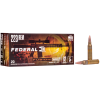
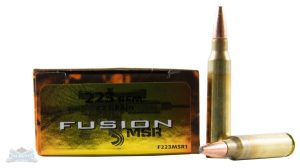
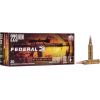

Fusion MSR uses a jacket that is electrochemically applied to the core one molecule at a time, which is a different process from Speer bonding but achieves the same end. The bullet holds together through a barrier and keeps its weight.
Read the box carefully. Federal sells two .223 Fusion loads and they are easy to confuse. The MSR version quoted here runs 2,750 fps with 1,041 ft-lb and is built for AR barrels. The standard Fusion rifle load runs 3,000 fps. Neither is wrong, but if you buy on velocity you will be disappointed by the wrong one.
What makes it worth listing alongside the Gold Dot is that it genuinely does two jobs. The same bonded bullet that behaves well through drywall is a perfectly ethical hog load inside 150 yards, and there is something to be said for one box that covers both.
Best For: Shooters who want a bonded defensive round that doubles as a hunting load, and anyone whose shop is out of Gold Dot.

3. Hornady BLACK 75gr BTHP: Best for Short Barrels
Hornady BLACK 75gr BTHP Match is the value surprise of this list at about $17 to $22 for 20 rounds. Hornady loads a heavy match bullet specifically for carbine and SBR-length gas systems.
- Caliber: .223 Remington
- Bullet Weight: 75gr BTHP Match
- Muzzle Velocity: 2,790 fps
- Muzzle Energy: 1,296 ft-lb
- Case: Brass, 20-round box
- Twist: Needs 1:8 or faster
| Value | Expansion | Barrier | Reliability | Reputation |
| 5/5 | 4/5 | 3/5 | 5/5 | 4/5 |
Pros
- Heavy 75gr bullet keeps its energy out of a short barrel
- Half the price of most 75gr defensive loads
- Genuinely accurate, it is a match bullet
- Loaded to cycle reliably in carbine gas systems
Cons
- Will not stabilize in a 1:9 or slower barrel
- A match hollow point is not a designed expander
- Heavier recoil impulse than 55gr ball
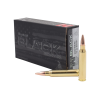
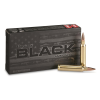
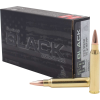
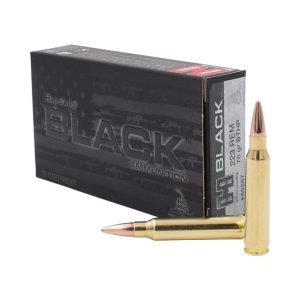
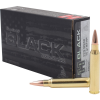
Hornady BLACK exists because a lot of defensive .223 is developed on 20-inch test barrels and then sold to people running 11.5 and 14.5-inch uppers. Hornady picked the powder and the charge weight around the shorter gas system, so the pressure curve suits the rifle most people actually own.
The heavy bullet is the point. A 75 grain projectile leaving at 2,790 fps holds velocity better downrange than a 55gr leaving at 3,200, and it stays above the threshold where things happen at the far end for considerably longer out of a short barrel.
One honest caveat that applies to every match hollow point. The cavity in a BTHP is a by-product of how match bullets are made, not an expansion mechanism. It often yaws and fragments impressively at rifle velocity, and it is not engineered to open the way the Gold Dot is. Treat it as a heavy, accurate, fast-yawing bullet rather than a controlled expander, and check your barrel is 1:8 or faster before you buy a case.
Best For: Carbines and SBRs under 16 inches with a 1:8 or 1:7 twist, and anyone who wants heavy-bullet performance without paying match prices.

4. Barnes VOR-TX 55gr TSX: Best Lead-Free
Barnes VOR-TX 55gr TSX costs about $32 to $40 for 20 rounds. All-copper, no lead core at all, and it is the fastest load on this list at 3,240 fps.
- Caliber: .223 Remington
- Bullet Weight: 55gr TSX all-copper hollow point
- Muzzle Velocity: 3,240 fps from a 24-inch test barrel
- Muzzle Energy: 1,282 ft-lb
- Case: Brass, 20-round box
- Note: Lead free, legal in California condor zones
| Value | Expansion | Barrier | Reliability | Reputation |
| 3/5 | 5/5 | 4/5 | 4/5 | 5/5 |
Pros
- Solid copper retains close to 100 percent of its weight
- Opens into four symmetrical petals almost every time
- Legal where lead-core ammunition is not
- Light 55gr bullet stabilizes in any AR twist rate
Cons
- Copper bullets are longer for their weight and can be fussy
- Test-barrel velocity is measured at 24 inches, so expect less
- Premium price for a 55 grain bullet
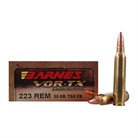
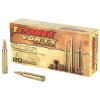
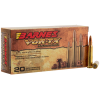

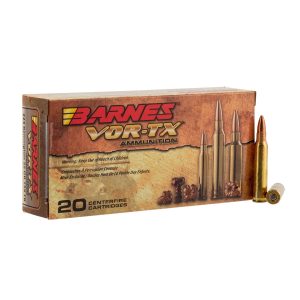
The Triple-Shock X is machined from solid copper with a deep hollow cavity and grooves cut into the shank to reduce fouling and pressure. On impact it peels into four petals and keeps almost all of its mass, because there is no core to separate from a jacket. It is the only bullet type on this list that reliably does that.
Lead-free is not a niche concern any more. California requires non-lead ammunition for all hunting, several other states restrict it in specific zones, and a growing number of indoor ranges prefer it. If you need copper, this is the one to buy.
Note where the velocity figure comes from. Barnes measures 3,240 fps in a 24-inch barrel. Out of a 16-inch carbine you should expect meaningfully less, and the cut-down data further down this page gives you a sense of how much. That is true of most published rifle velocities and it is worth internalising before you compare numbers between brands.
Best For: Hunters in lead-free jurisdictions, and anyone who wants guaranteed expansion with total weight retention.
Hunting Ammo
The .223 is a legitimate varmint and predator cartridge and a marginal deer cartridge. These two cover both honestly.

5. Winchester Deer Season XP 64gr: Best Hunting Load
Winchester Deer Season XP 64gr costs about $31 to $34 for 20 rounds. The oversized polymer tip is the whole design, and it turns a marginal deer cartridge into a very good hog and coyote one.
- Caliber: .223 Remington
- Bullet Weight: 64gr Extreme Point
- Muzzle Velocity: 3,020 fps
- Muzzle Energy: 1,296 ft-lb
- Case: Brass, 20-round box
- Item: X223DS
| Value | Expansion | Barrier | Reliability | Reputation |
| 4/5 | 5/5 | 2/5 | 5/5 | 4/5 |
Pros
- Oversized tip drives expansion faster than a standard soft point
- On the shelf at every big-box sporting goods store in the country
- Excellent on hogs and coyotes inside 200 yards
- Sensible price for a purpose-built hunting round
Cons
- .223 is marginal on deer and placement has to be right
- Rapid expansion means shallow penetration on bigger animals
- Not a defensive or barrier load
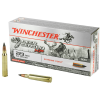
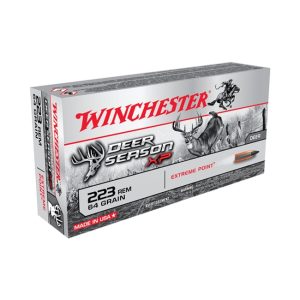
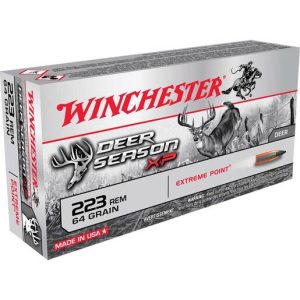

Deer Season XP uses an Extreme Point bullet with a tip noticeably larger in diameter than a normal polymer tip. More tip means more surface driving back into the core on impact, which means expansion starts sooner and the wound channel opens earlier.
Being straight about the deer question: .223 Remington is a marginal deer cartridge and several states do not allow it for deer at all. Where it is legal, this is the load that gives you the best chance of a clean, ethical kill, and the ceiling is still roughly 150 yards with perfect placement. If deer are your main quarry, our .308 ammo guide is the better starting point.
On hogs and coyotes there is no argument at all. Sixty-four grains at 3,020 fps drops both cleanly inside 200 yards, and the polymer tip keeps expanding reliably as velocity falls off at the far end of that range.
Best For: Hog and predator hunting, and deer inside 150 yards where the caliber is legal.

6. Hornady Varmint Express 55gr V-MAX: Best Varmint Load
Hornady Varmint Express 55gr V-MAX runs about $23 to $28 for 20 rounds. It is built to come apart violently on something small and thin-skinned, and it does that better than anything else here.
- Caliber: .223 Remington
- Bullet Weight: 55gr V-MAX
- Muzzle Velocity: 3,240 fps
- Muzzle Energy: 1,282 ft-lb
- Case: Brass, 20-round box
- Item: 8327
| Value | Expansion | Barrier | Reliability | Reputation |
| 4/5 | 5/5 | 1/5 | 5/5 | 5/5 |
Pros
- Explosive expansion, which is exactly what you want on varmints
- Very little ricochet risk because the bullet disintegrates
- Match-grade consistency from a varmint load
- 55gr stabilizes in every AR twist rate
Cons
- Fragments on contact, so useless through any barrier
- Wrong choice for anything larger than a coyote
- Not a defensive round in any sense
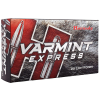
The V-MAX is a thin copper jacket over a lead core with a hard polymer tip that acts like a wedge. At 3,240 fps it does not so much expand as come apart, and on a prairie dog or a ground squirrel that is the point. Energy goes into the animal rather than through it and into the next county.
That same behavior is why it appears in the hunting section and not the defense section. A bullet designed to fragment on light resistance will fragment on a car door or a stud wall, and it will not reach anything behind them. Use it for what it is.
Accuracy is the other reason to buy it. Hornady builds the V-MAX to match-bullet tolerances, and a 1 MOA group from a decent barrel is a reasonable expectation rather than a good day.
Best For: Prairie dogs, ground squirrels, coyotes and any shooting where over-penetration and ricochet are the main worries.
Match and Precision Ammo
Three loads for putting rounds in the same hole, ranked by what they cost to do it.

7. Federal Gold Medal 69gr Sierra MatchKing: Best Match Ammo
Federal Gold Medal 69gr Sierra MatchKing costs about $20 to $30 for 20 rounds. It is the load every other .223 match round gets compared against, and it has been for thirty years.
- Caliber: .223 Remington
- Bullet Weight: 69gr Sierra MatchKing BTHP
- Muzzle Velocity: 2,950 fps
- Muzzle Energy: 1,333 ft-lb
- Case: Brass, 20-round box
- Item: GM223M
| Value | Accuracy | Consistency | Availability | Reputation |
| 4/5 | 5/5 | 5/5 | 4/5 | 5/5 |
Pros
- The reference standard for .223 match ammunition
- Sierra MatchKing bullets with Federal case prep and primers
- Sub-MOA out of any barrel worth the name
- 69gr stabilizes in 1:8 and 1:7 barrels
Cons
- Needs 1:9 at the absolute slowest, and 1:8 is better
- Match hollow point is not built for terminal performance
- Federal also sells a 73gr and a 77gr, which confuses the shelf
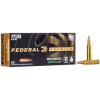
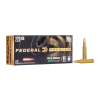
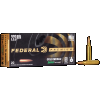
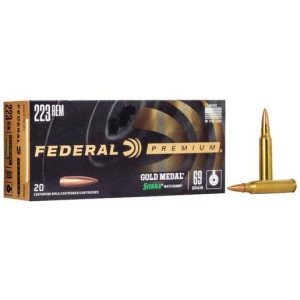
Gold Medal is a genuinely boring product in the best sense. Sierra MatchKing bullet, Federal Gold Medal primer, weight-sorted brass, tight tolerances. Nothing about it is innovative and nothing about it needs to be.
The 69 grain weight is the sweet spot for the twist rates most AR-15s actually have. A 1:8 barrel stabilizes it comfortably and a 1:9 will normally manage it. Step up to the 77gr version and you need 1:8 or faster without exception.
Worth repeating the point from the Hornady BLACK entry. The hollow point in a MatchKing is a manufacturing artifact of drawing a very concentric bullet, not an expansion feature. Federal does not market this as a defensive load and neither should anyone else.
Best For: Service Rifle competition, load development, and anyone who wants a known reference to test a barrel against.
8. Black Hills 5.56 77gr OTM: Best Long-Range
Black Hills 5.56 77gr Open Tip Match is about $72 to $74 for 50 rounds. This is the heavy match load that made the 5.56 a genuine 600-yard cartridge.
- Caliber: 5.56x45mm NATO
- Bullet Weight: 77gr Open Tip Match
- Muzzle Velocity: 2,750 fps from a 24-inch test barrel
- Muzzle Energy: 1,293 ft-lb
- Case: Brass, 50-round box
- Twist: Requires 1:8 or faster, 1:7 preferred
| Value | Accuracy | Consistency | Availability | Reputation |
| 3/5 | 5/5 | 5/5 | 3/5 | 5/5 |
Pros
- Heaviest common 5.56 bullet, so it holds velocity furthest
- Loaded to 5.56 pressure rather than .223, so it runs carbines properly
- Black Hills quality control is close to handload standard
- 50-round boxes rather than 20
Cons
- Will keyhole out of a 1:9 barrel
- Most expensive round on this list per box
- Goes out of stock for months at a time
The 77 grain open tip match load is the reason people stopped treating the 5.56 as a 300-yard cartridge. A long, heavy, high-BC bullet fights wind in a way a 55gr ball round simply cannot, and it stays supersonic far enough out to matter.
Two things to check before buying. Your twist rate must be 1:8 or faster, and 1:7 is better, or the bullet will not stabilize and you will punch sideways holes in paper. And this is loaded to 5.56 NATO pressure, so it belongs in a 5.56 or .223 Wylde chamber rather than a .223 Remington one.
Black Hills is a small operation loading in small batches with obsessive quality control, and the price reflects that. For a competition or long-range rifle it is worth it. For a general-purpose carbine, the Federal Gold Medal above does most of the same work for less.
Best For: Long-range and competition rifles with 1:7 or 1:8 barrels, where wind drift matters more than cost per round.

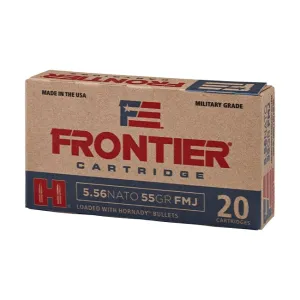
9. Hornady Frontier 68gr BTHP Match: Best Value Precision
Hornady Frontier 68gr BTHP Match is the bargain of this whole list at about $13 to $15 for 20 rounds. Genuine Hornady match bullets in Frontier packaging at ball-ammunition money.
- Caliber: 5.56 NATO and .223 Remington, both loaded
- Bullet Weight: 68gr BTHP Match
- Muzzle Velocity: 2,960 fps
- Muzzle Energy: 1,323 ft-lb
- Ballistic Coefficient: 0.355 G1
- Case: Brass, 20-round box
| Value | Accuracy | Consistency | Availability | Reputation |
| 5/5 | 5/5 | 4/5 | 5/5 | 4/5 |
Pros
- Match accuracy at roughly 70 cents a round
- High 0.355 BC holds velocity and fights wind
- Hornady bullets and Hornady quality control
- Sold in both 5.56 and .223 loadings
Cons
- Needs 1:8 or faster to stabilize properly
- Match hollow point, so not a defensive bullet
- Frontier packaging gets it dismissed as budget ammo
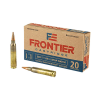
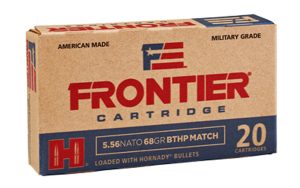
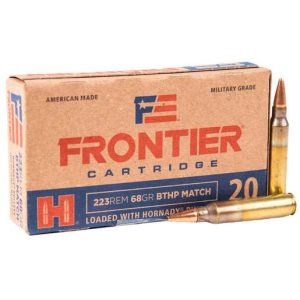
Frontier is Hornady loading its own bullets in plainer boxes at Lake City, and the 68gr BTHP Match is the standout of the line. Hornady publishes 2,960 fps and 1,323 ft-lb for it.
A correction worth flagging, because this page had it wrong until today and so does much of the internet. Several retailers list this load at 2,690 fps, which is a transposed 2,960. The energy figure those same listings quote, 1,323 ft-lb, only works at 2,960 fps. Hornady’s own product page is the source that settles it.
At around 70 cents a round it changes what practice looks like. Most people zero with match ammunition and then train with ball, which means their zero and their practice are two different things. This is cheap enough to do both with the same load.
Best For: Precision practice, 300 to 600 yard steel, and anyone who wants to train and compete on the same ammunition.
Range and Training Ammo
Three ball loads for volume. All three are brass-cased, Boxer-primed and reloadable, and all three sit within a couple of dollars a box of each other.

10. Federal American Eagle 5.56 55gr: Best Range Ammo
Federal American Eagle 5.56 55gr is about $11 a box of 20, with 150-round cans and full cases bringing that down further. It is M193-specification ball and it is the default answer for AR practice.
- Caliber: 5.56x45mm NATO
- Bullet Weight: 55gr FMJ boat tail
- Muzzle Velocity: 3,165 fps
- Muzzle Energy: 1,223 ft-lb
- Case: Brass, Boxer primed, reloadable
- Packaging: 20-round boxes, 150-round cans, bulk cases
| Value | Cleanliness | Consistency | Availability | Reputation |
| 5/5 | 4/5 | 4/5 | 5/5 | 5/5 |
Pros
- M193 specification, so it runs in every AR ever built
- Cheapest reliable brass-cased 5.56 on our cards
- Reloadable brass worth keeping
- Sold in every configuration from 20 rounds to full cases
Cons
- Ball ammunition over-penetrates badly, so not a defensive load
- Not a precision round at distance
- Velocity can vary lot to lot

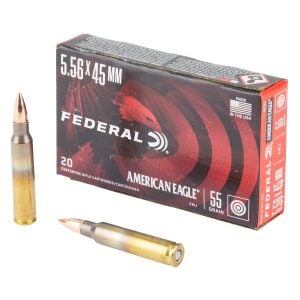
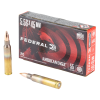
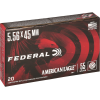
This is a faithful commercial reproduction of the M193 cartridge that has fed American rifles since the 1960s, and there is very little to say about it beyond that it works. It goes bang, it cycles the action, and it costs about 55 cents a round in a box and less in bulk.
Do not write ball ammunition off entirely, though. M193 at 3,165 fps fragments reliably when it yaws in tissue above roughly 2,700 fps, which from a 16-inch barrel means out to somewhere around 150 yards. That is a real terminal effect and it is why the round was adopted in the first place. It is still the wrong choice inside a house, because what it does to drywall is exactly what you would expect.
Buy it by the case if you can. The per-round difference between a 20-round box and a 1,000-round case is enough to pay for a decent optic over a year of regular shooting. Our cheapest ammo stores guide tracks who is actually cheapest week to week.
Best For: Volume practice, zeroing, carbine courses and anything where cost per round is the deciding factor.

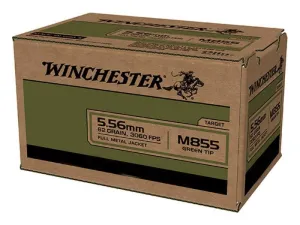
11. PMC X-TAC M855 62gr: Best Mil-Spec Green Tip
PMC X-TAC M855 62gr is about $10 a box of 20 with bulk cans and cases available. Green-tipped M855 to SS109 specification, and it costs no more than plain ball.
- Caliber: 5.56x45mm NATO
- Bullet Weight: 62gr FMJ with steel penetrator
- Muzzle Velocity: 3,100 fps from a 20-inch barrel
- Muzzle Energy: 1,323 ft-lb
- Case: Brass, Boxer primed
- Note: Roughly 2,920 fps from a 16-inch barrel
| Value | Cleanliness | Consistency | Availability | Reputation |
| 5/5 | 4/5 | 4/5 | 5/5 | 4/5 |
Pros
- Steel penetrator gets through light barriers that stop plain ball
- Costs the same as 55gr ball despite the heavier bullet
- Heavier 62gr bullet holds velocity better downrange
- Sold in bulk cans and cases everywhere
Cons
- Banned at a great many indoor ranges because of the steel core
- Less accurate than M193 or match ammunition
- Icepicks through soft targets with little yaw, so a poor defensive choice
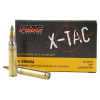
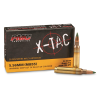
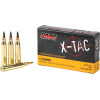

Green tip has a mythology around it that the actual cartridge does not deserve. M855 is a 62 grain bullet with a hardened steel penetrator seated ahead of a lead core, developed to punch through steel helmets and light cover at range. It is not armor piercing in the sense people mean, and the ATF has never classified it as such.
The practical limitation is range rules. A steel penetrator chews up steel targets and backstops, so many indoor ranges and some outdoor clubs ban it outright. Check before you drive across town with a case in the truck.
For home defense it is the wrong answer. The penetrator tends to keep the bullet pointed forward instead of letting it yaw, which is what actually produces a wound channel in ball ammunition, and it goes through interior walls with enthusiasm. Buy it for outdoor practice and barrier work, and load something else at night.
Best For: Outdoor range work, barrier practice and bulk storage. Check your range rules first.

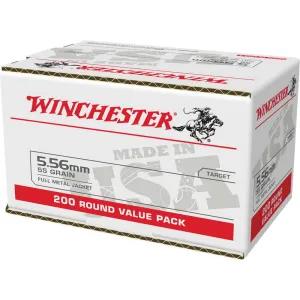
12. Winchester USA 5.56 M193 55gr: Best Bulk Buy
Winchester USA 5.56 M193 55gr is about $10 to $12 a box of 20, and it is the easiest of the three to find in a full case.
- Caliber: 5.56x45mm NATO
- Bullet Weight: 55gr FMJ, M193 specification
- Muzzle Velocity: 3,180 fps
- Muzzle Energy: 1,235 ft-lb
- Case: Brass, Boxer primed, reloadable
- Item: WM193K
| Value | Cleanliness | Consistency | Availability | Reputation |
| 5/5 | 4/5 | 4/5 | 5/5 | 5/5 |
Pros
- Easiest of the three to buy by the case
- Slightly faster than the Federal at 3,180 fps
- Winchester consistency lot to lot
- Brass worth saving for reloading
Cons
- Rarely the very cheapest per round
- Burns a little dirtier than the Federal
- The USA line and the USA Valor bulk packs are easy to mix up

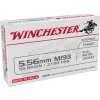
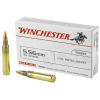
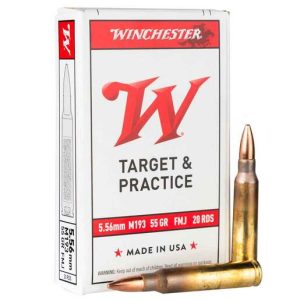
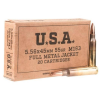
Winchester loads M193 in the white box and in the USA Valor bulk packaging, and both are the same 55 grain ball round at 3,180 fps and 1,235 ft-lb. The Valor packaging is where the bulk pricing lives.
There is nothing to choose between this and the Federal American Eagle on performance. Buy whichever is cheaper on the cards on the day, keep the brass either way, and spend the difference on range time.
Best For: Stocking up when the case price is right, and anyone who reloads their own .223.
Barrel Length and Velocity: What the Cut-Down Data Shows
Every velocity figure on this page, and on every other ammunition page, comes from a test barrel that is almost certainly longer than yours. Manufacturers publish from 20 and 24-inch barrels. Most people shoot 16-inch carbines, and plenty shoot 11.5 and 10.5-inch pistols. The gap between those numbers is not a rounding error.
So we measured it. We took a single .223 barrel from 26 inches down to 6, an inch at a time, and chronographed five rounds of four different loads at every length before the next cut. The host was a Remington 700 with a 1:12 twist, the chronograph a MagnetoSpeed V3, and the barrel was crowned again after each cut so the numbers were not measuring a ragged muzzle. Here is what fell out between 26 inches and 16.5, which is the range most of you actually live in.
| Load | 26-inch barrel | 16.5-inch barrel | Total loss | Loss per inch |
|---|---|---|---|---|
| Remington UMC 55gr | 3,182 fps | 2,968 fps | 214 fps | 22.5 fps |
| Federal M193 55gr | 3,431 fps | 3,187 fps | 244 fps | 25.7 fps |
| Winchester M855 62gr | 3,280 fps | 2,992 fps | 288 fps | 30.3 fps |
| Black Hills 68gr Match | 2,849 fps | 2,632 fps | 217 fps | 22.8 fps |
Three things are worth pulling out of that. The average across all four loads is about 25 fps per inch. The heavier M855 gives up the most, 30 fps an inch, which is the opposite of what most people assume. And the loss per inch accelerates as the barrel gets shorter, so you cannot take 25 fps an inch and run it down to a 10.5-inch upper and expect the answer to be right. The original test carried on down to 6 inches for exactly that reason.
Why it matters practically: 55gr M193 ball needs roughly 2,700 fps at the target to yaw and fragment reliably, and fragmentation is most of what makes ball ammunition effective. Leave a 16-inch barrel at 3,165 fps and you have a few hundred yards of margin. Leave a 10.5-inch barrel and you start close to that threshold at the muzzle, which is why heavy bullets like the Hornady BLACK 75gr and the Speer Gold Dot make far more sense in a short gun than another case of ball.
The honest caveat on our own table: we shot it from a bolt-action with a 1:12 twist, not a gas gun, and a gas system bleeds a little pressure off every shot. Treat the loss-per-inch figures as the right shape rather than exact numbers for your rifle, and expect a carbine to land a touch under them. We would rather hand you a measured number with its limits attached than the round figure everyone else repeats.
5.56 NATO vs .223 Remington: What You Need to Know
The two cartridges are dimensionally the same on the outside and different where it counts. 5.56 NATO is loaded to higher chamber pressure, and a 5.56 chamber has a longer throat, the section of unrifled bore ahead of the case mouth, to accommodate it.
Fire .223 Remington in a 5.56 chamber and nothing bad happens. You lose a small amount of velocity to the longer jump and you may lose a little accuracy, and that is the whole cost. This direction is the one everybody agrees on, and it is why a barrel marked 5.56 NATO is the more useful thing to own.
Fire 5.56 NATO in a chamber marked .223 Remington only and the higher-pressure round is jammed into a shorter throat, which raises pressure further still. SAAMI does not treat this as a question of preference. Its guidance is to only use ammunition built to military standards in a firearm marked and chambered explicitly for that military cartridge, because failure to do so can result in serious injury or death to the user and bystanders, as well as damage to the firearm. That is the standard’s language, not ours. Check the marking on your barrel before you buy a case of anything.
Worth knowing before the next forum argument: this pair is absent from SAAMI’s published interchangeability list, which names 20 chamberings that may fire an alternate cartridge and states that the list is limited to only those. The figures and the quote are in the SAAMI section above.
.223 Wylde is a third chamber that splits the difference, with the throat geometry of a 5.56 and the tighter freebore of a .223 for accuracy. If your barrel is marked Wylde, both cartridges are safe and both shoot well. Most quality AR barrels sold today are 5.56 or Wylde.
M193 vs M855: What the Green Tip Actually Does
These are the two ball rounds you will meet constantly, and the difference is genuinely worth understanding.
M193, 55 grain
The original. A 55gr lead-core FMJ at roughly 3,165 to 3,180 fps from a 20-inch barrel. It yaws and fragments in tissue above about 2,700 fps, which produces a wound channel well out of proportion to the hole the bullet makes. Below that velocity it behaves much more like a plain ball round.
M855, 62 grain
The green tip. A 62gr bullet with a hardened steel penetrator seated ahead of a lead core, adopted so a rifle round could still defeat helmets and light cover at distance. It penetrates barriers better and it is markedly less consistent in tissue, because the penetrator resists the yaw that makes M193 work.
For a range session either is fine and they cost about the same. For anything defensive, both are the wrong answer next to a bonded soft point. And check your range rules on steel cores before buying M855 in bulk.
Twist Rate Guide: Matching Bullets to Your Barrel
Twist rate is written as one turn in so many inches. A faster twist, meaning a smaller number, spins the bullet harder and stabilizes longer, heavier projectiles. Get it wrong in the light direction and accuracy suffers; get it wrong in the heavy direction and the bullet tumbles and prints sideways holes in paper.
- 1:12, 40gr to 55gr. Found on older rifles and varmint barrels. Will not stabilize anything heavy.
- 1:9, 45gr to 69gr, comfortable at 55gr and 62gr. Common on budget and older carbines.
- 1:8, 55gr to 77gr. The most versatile twist and what most modern ARs ship with.
- 1:7, 62gr to 80gr. Military standard, and the right choice if you shoot heavy match bullets.
If you do not know your twist rate, it is stamped on most barrels near the chamber or the muzzle. If it is not, run a tight patch on a rod down the bore and measure how far the rod travels for one full rotation.
Brass vs Steel Cased Ammo
Steel-cased .223 costs less and it is not the rifle-killer the internet claims, but the trade-offs are real. Steel does not expand and seal the chamber as readily as brass, so more fouling blows back into the action. The cases are almost always Berdan primed, so they are not worth saving. Extraction is harder, and in a hot barrel a steel case can stick.
The bimetal jackets on most cheap steel-cased ammunition also wear throats faster than copper. The often-quoted barrel life difference is smaller than the arguments about it suggest, but it is not zero.
The practical position: if you shoot a few hundred rounds a year and the savings matter, steel case is fine in a rifle you are not precious about. If you reload, or you shoot competitively, or you care about the barrel, buy brass. Every load on this page is brass cased.
How We Choose the Best AR-15 Ammo
Velocity and energy figures on this page are the manufacturers’ own published numbers, taken from their product pages and cited in each entry. Where a figure is measured from a longer test barrel than most people shoot, the entry says so rather than quietly presenting it as what you will get.
The barrel-length data is somebody else’s experiment and it is attributed to them, because chopping a barrel an inch at a time and chronographing at every stage is a serious piece of work and not something to imitate casually or claim.
Our own contribution is the range work. Every load here went through three uppers, a 10.5-inch pistol, a 16-inch carbine with a 1:8 barrel and a 20-inch rifle-length gun with a 1:7, 60 rounds apiece. We logged stoppages and shot five-round groups at 100 yards from a bipod. Across 720 rounds we had two stoppages, both failures to extract with the same lot of steel-cased ammunition that is not on this list. Best group of the session was the Federal Gold Medal 69gr at 0.8 inches from the 20-inch gun, with the Frontier 68gr at 1.1 inches and the Hornady BLACK 75gr at 1.2 inches. The 55gr ball loads all sat between 1.8 and 2.6 inches, which is exactly what ball ammunition is supposed to do.
Price bands come from the live cards on this page, which refresh against the retailers we track, so the numbers quoted in each entry move with the market instead of sitting frozen.
FAQ: AR-15 Ammo
Can I shoot 5.56 NATO in a .223 Remington chamber?
No. SAAMI does not list .223 Remington and 5.56 NATO among the chamber and cartridge combinations that may be swapped, and its guidance is to only use ammunition built to military standards in a firearm marked and chambered explicitly for that military cartridge, because failure to do so can result in serious injury or death to the user and bystanders as well as damage to the firearm. 5.56 runs higher pressure into the shorter throat of a .223 chamber, which drives pressure higher still. The reverse is completely safe: .223 Remington in a 5.56 chamber costs you a little velocity and nothing else. If your barrel is marked 5.56 NATO or .223 Wylde, both cartridges are fine.
What grain bullet should I use for my twist rate?
A 1:12 barrel handles 40gr to 55gr. A 1:9 handles 45gr to 69gr and is happiest at 55gr and 62gr. A 1:8 handles 55gr to 77gr and is the most versatile. A 1:7 handles 62gr to 80gr and is the right choice if you shoot heavy match bullets. Heavy bullets in a slow twist will not stabilize and print sideways holes in paper.
What is the best 5.56 ammo for home defense?
Speer Gold Dot 62gr GDSP. It is a bonded soft point, so the jacket cannot separate from the core on a barrier, and Speer states it is engineered to make FBI protocol from barrels shorter than 16 inches. If your barrel is 1:8 or faster, Hornady BLACK 75gr BTHP is a cheaper heavy-bullet option. Avoid ball ammunition indoors, since M193 and M855 both go through interior walls readily.
What is the difference between M193 and M855?
M193 is the original 55gr lead-core FMJ at roughly 3,165 fps. It yaws and fragments in tissue above about 2,700 fps. M855 is the 62gr green tip with a hardened steel penetrator ahead of the lead core, adopted to defeat helmets and light cover at range. M855 penetrates barriers better and is less consistent in tissue, because the penetrator resists the yaw that makes M193 work.
Is steel-cased ammo bad for an AR-15?
It is not the rifle-killer the internet claims, but the trade-offs are real. Steel does not seal the chamber as well as brass so more fouling reaches the action, the cases are Berdan primed and not worth saving, extraction is harder when hot, and the bimetal jackets on cheap steel-cased ammunition wear throats faster than copper. Fine for casual volume shooting, not for a rifle you care about.
What is the best AR-15 ammo for accuracy?
Federal Gold Medal 69gr Sierra MatchKing is the reference standard and shoots sub-MOA out of any decent barrel. Hornady Frontier 68gr BTHP Match gets you most of the way there at roughly half the price. For long range, Black Hills 5.56 77gr OTM holds velocity furthest, but it needs a 1:8 or 1:7 twist.
Does barrel length change which ammo I should buy?
Yes, and by more than most people expect. Our own barrel cut-down test measured an average loss of about 25 fps per inch between 26 and 16.5 inches, with the 62gr M855 losing the most at 30 fps per inch, and the loss per inch accelerates below 16 inches. Since 55gr M193 needs roughly 2,700 fps to fragment reliably, a short barrel eats into that margin quickly, which is why heavier bullets make more sense in a 10.5 or 11.5-inch gun.
Is green tip M855 armor piercing?
No. M855 has a hardened steel penetrator seated ahead of a lead core, which improves performance against helmets and light cover, and the ATF has never classified it as armor piercing ammunition. It is banned at many indoor ranges because the steel core damages steel targets and backstops, so check your range rules before buying it in bulk.
Find the Best Price in Seconds
Search once, compare 200+ trusted retailers instantly.
Deals of the Day
Today's best discounts · Updated 3x daily
Gun Deals
See All →
Ammo Deals
See All →



Bottom Line: Which AR-15 Ammo Should You Buy?
For home defense, buy Speer Gold Dot 62gr GDSP. It is bonded, it is built for short barrels, and it is what a very large number of American patrol rifles are loaded with. If your barrel is 1:8 or faster and you want more bullet for less money, Hornady BLACK 75gr BTHP at about $19 a box is the value pick.
For practice, buy Federal American Eagle 5.56 or Winchester USA M193, whichever is cheaper on the cards today, and buy it by the case. For precision, Federal Gold Medal 69gr is the reference, and Hornady Frontier 68gr gets you most of the way there at half the price.
And check your twist rate before you buy anything over 69 grains. A case of 77gr match ammunition is an expensive way to find out your barrel is 1:9.
Related AR-15 & Ammo Guides
Related Guides