

Last updated March 30, 2026.
This post contains affiliate links. If you buy something through a link, I may earn a commission at no extra cost to you.
- Treat every gun as loaded
- Point the muzzle in a safe direction
- Keep your finger off the trigger until you’re ready to shoot
- Know your target and what’s beyond
The Platform Question
Choosing a home defense platform is one of those questions where people get very tribal very fast. Shotgun guys swear by the pump. AR guys point to capacity and modularity. Pistol people note that a handgun goes with you everywhere the long guns can’t. Everyone is right about something and nobody is completely right. The actual answer depends on your situation, your household, and your skill level.
I’ve trained with all three seriously. I’ve taken courses where instructors challenged my assumptions about each platform. What I can tell you is that every platform has real advantages and real disadvantages for home defense specifically, and the person who claims one is unambiguously superior is oversimplifying. Let me break them down category by category.
Category 1: Accuracy at Home Defense Distances
AR-15
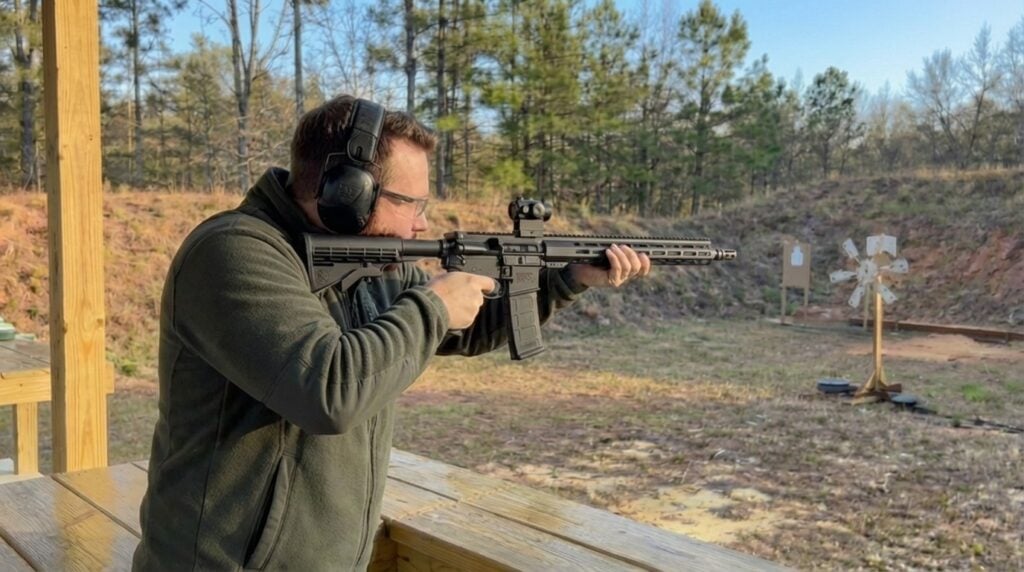
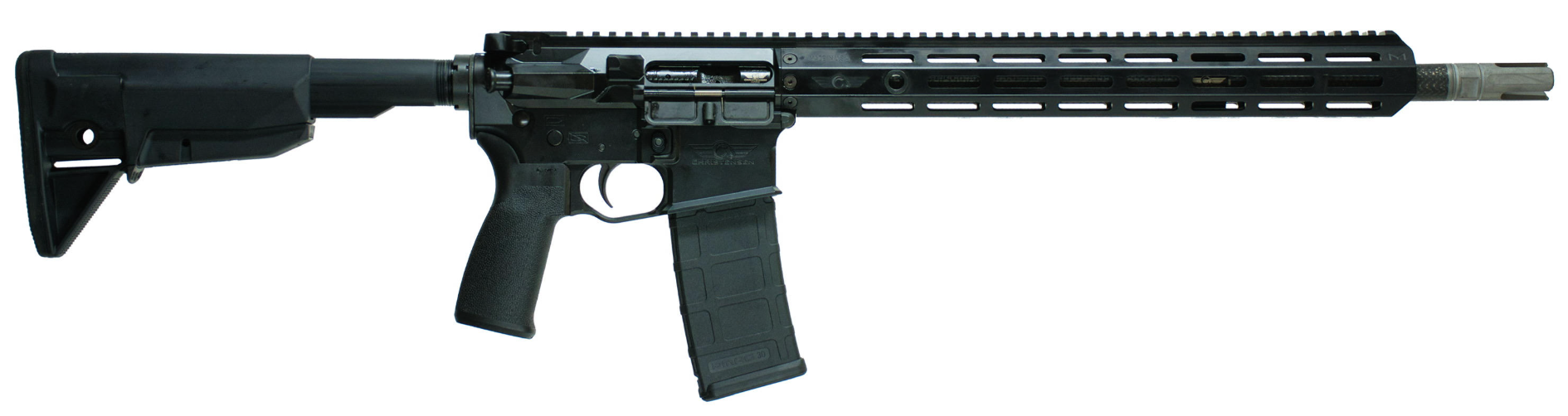
Winner. At home defense distances (3-25 yards), the AR-15 is the easiest platform to shoot accurately for most people. The stock provides three points of contact. The trigger, while not match-grade in a base-model AR, is manageable. The sights or optic are at eye level. The recoil is mild enough that follow-up shots are fast. A red dot like the Aimpoint Acro, Holosun 510C, or EOTech 512 makes target acquisition fast and intuitive, and allows shooting with both eyes open. The AR-15 is simply more accurate faster for the average person than a shotgun or pistol under stress.
Shotgun
Very good. The common belief that shotguns don’t require aiming in a home defense situation is a dangerous myth. At 10 feet, a cylinder-bore 12 gauge 00 buck pattern is about the size of a fist. You still need to aim. That said, a shoulder-fired weapon with a stock is far easier to aim than a pistol, and the short sight radius matters less because you’re looking at the whole target. The shotgun is accurate enough for home defense. It’s just not quite as fast or as easy as a modern AR for most shooters.
Pistol
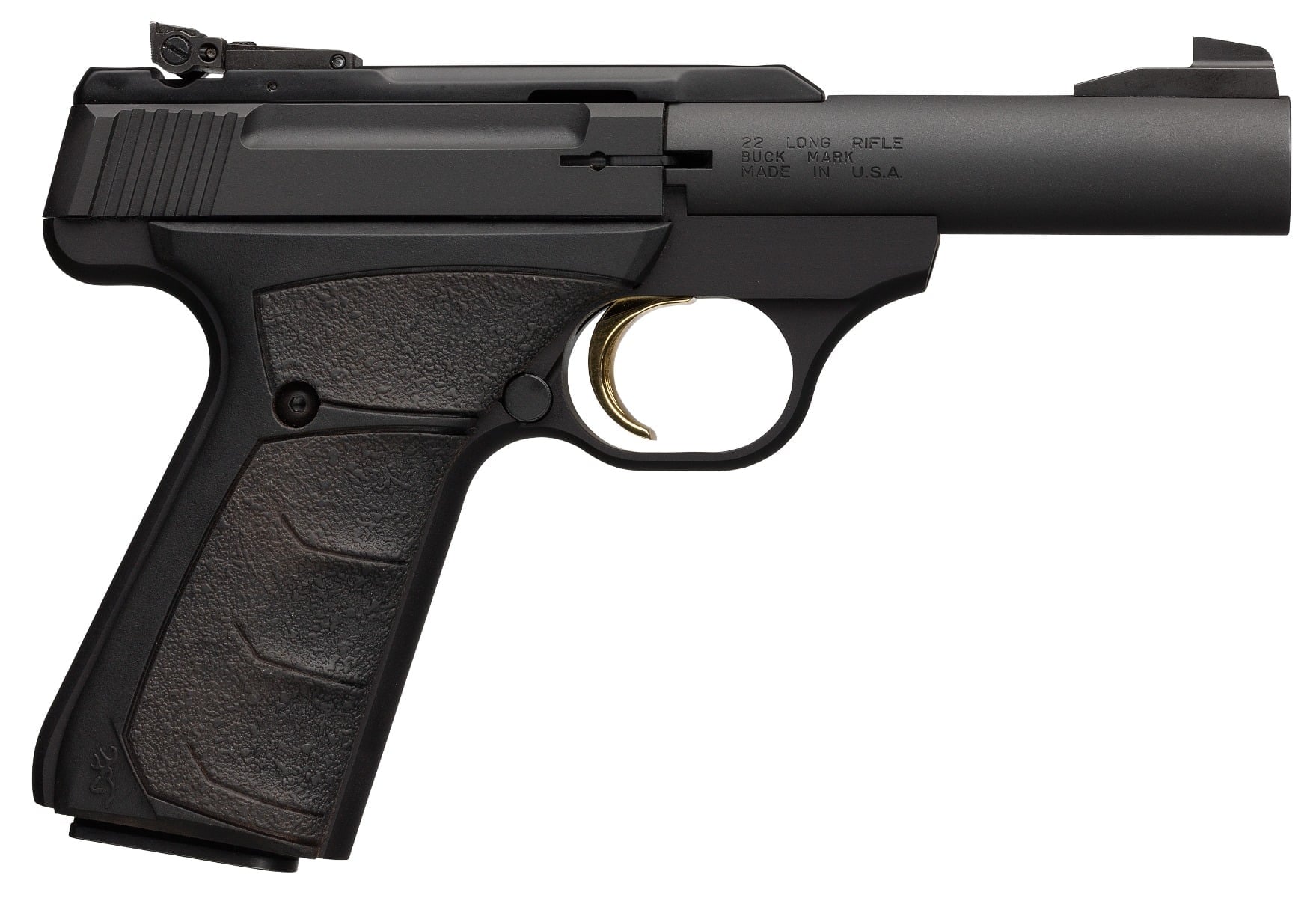
Hardest of the three. Pistols are the most difficult to shoot accurately, period. They have the shortest sight radius, two points of contact instead of three, and more recoil per unit of mass than a rifle. Under stress, pistol accuracy drops significantly for most people. That said, at 7-10 feet (the most common home defense distance), even a moderately trained shooter can hit center mass reliably with a pistol. The pistol is not hopeless for home defense. It’s just the hardest platform to run well under stress.
Winner: AR-15





Category 2: Capacity
AR-15
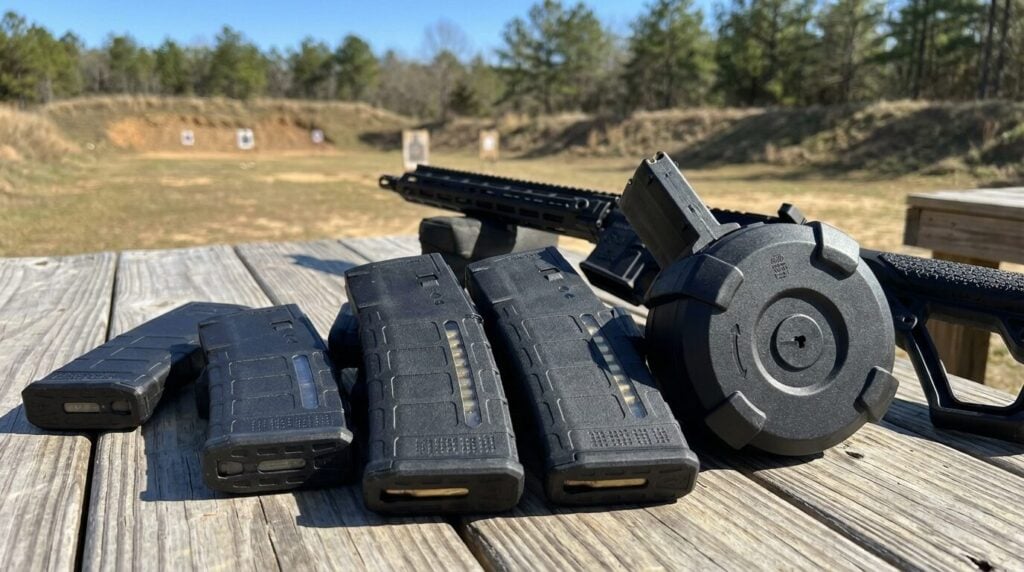
Winner. A standard AR-15 with a 30-round magazine holds 30 rounds. A 40-round Magpul PMAG gives you 40. Extended drum magazines hold 50 or more. For a home defense scenario where you might face multiple threats, or where you want the confidence of not running out, the capacity advantage of the AR-15 is significant. Reloads are also faster with box magazines than with a tube-fed shotgun.
Pistol
Good. A full-size 9mm pistol like the Glock 17, SIG P320 M17, or Beretta APX holds 17 to 21 rounds depending on magazine selection. Extended magazines can push that to 30+ rounds. For a dedicated home defense pistol that stays in a quick-access safe, you can keep a spare magazine handy. Reloads require both hands and some dexterity, which can be compromised under stress.
Shotgun
Limited. A standard pump 12 gauge holds 4-7 rounds in the tube depending on barrel length and shell length. A magazine extension can push that to 8-9 rounds. Some semi-auto shotguns with detachable box magazines (Mossberg 590M) offer higher capacity, but the traditional tube-fed shotgun is the lowest-capacity option on this list. Reloading a pump shotgun is a gross motor skill that can be trained, but it is slower than a magazine swap on a pistol or AR-15. For multi-threat scenarios, the shotgun’s capacity is a genuine limitation.
Winner: AR-15
Category 3: Recoil Management
AR-15
Winner again. The 5.56 cartridge in a full-size AR-15 produces very manageable recoil. The inline stock design means recoil impulse goes straight back rather than rotating the muzzle upward. With a properly adjusted buffer and spring, the felt recoil is mild enough that most shooters can run the platform well with minimal training. This is significant for home defense because you want every member of your household who may need to defend the home to be able to operate the weapon effectively.
Pistol
Variable. A 9mm pistol has manageable recoil. A .45 ACP or .357 Magnum has more. The pistol offers the least mechanical assistance with recoil management; it is entirely up to your grip and stance. With training, 9mm is very controllable. The platform is still harder to run than a shoulder-fired gun for most people.
Shotgun
Toughest of the three. Full-house 12 gauge 00 buckshot hits hard. The recoil is manageable for a trained adult who shoots regularly, but for a smaller-framed person, a teenager, or someone who doesn’t practice often, it can be difficult to recover from quickly for follow-up shots. Reduced recoil buckshot loads help significantly. 20 gauge is a lighter option that reduces recoil substantially while still being very effective at home defense distances. If recoil management is a priority, the 20 gauge deserves serious consideration over 12 gauge.
Winner: AR-15
Category 4: Overpenetration
AR-15 (with correct ammo)
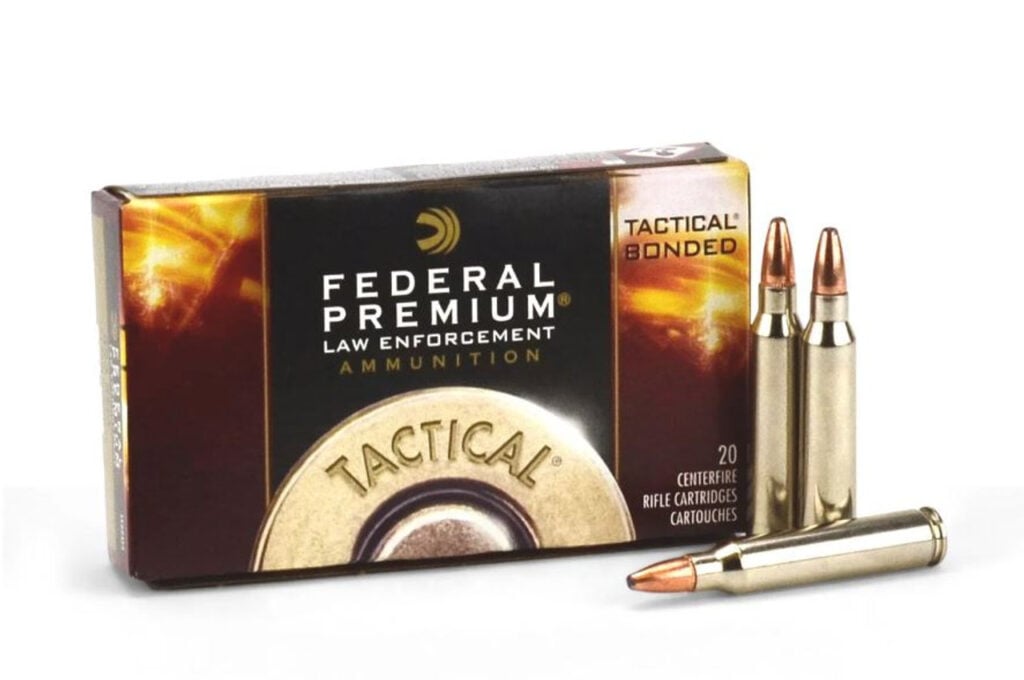
Surprisingly good. When loaded with quality fragmenting ammunition (Hornady TAP, Federal LE Tactical TRX, Black Hills 77gr OTM), 5.56 fragments on impact with drywall and penetrates fewer total walls than 9mm handgun ammunition. The high velocity of 5.56 causes the thin-jacketed projectile to yaw and fragment, shedding energy rapidly in soft material. This is the caliber’s counterintuitive advantage for home defense in densely occupied spaces. The caveat is you must use fragmenting loads, not ball FMJ ammunition.
Pistol (with correct ammo)
Moderate concern. 9mm hollowpoints often clog with drywall material and do not expand as designed once they pass through a wall. The non-expanded round then penetrates as an effective FMJ through subsequent barriers. Typical 9mm defensive loads penetrate 3-5 interior walls before stopping. This is not catastrophic, but it means family members in adjacent rooms are at risk if you miss or overshoot. Choosing the right ammo helps, but no handgun round is truly wall-safe at defensive velocities.
Shotgun
Real concern. 00 buckshot sends multiple .33-caliber pellets that individually penetrate 3-6 interior walls. The multiple projectile issue also means more total lead going through walls on a miss. Smaller shot sizes penetrate less but are also less effective on targets. There is no shotgun load that solves the overpenetration problem as elegantly as fragmenting 5.56 does. For apartment dwellers or homes with thin shared walls, this is a significant disadvantage of the shotgun.
Winner: AR-15 (with fragmenting loads)
Category 5: Weapon Light Options
AR-15
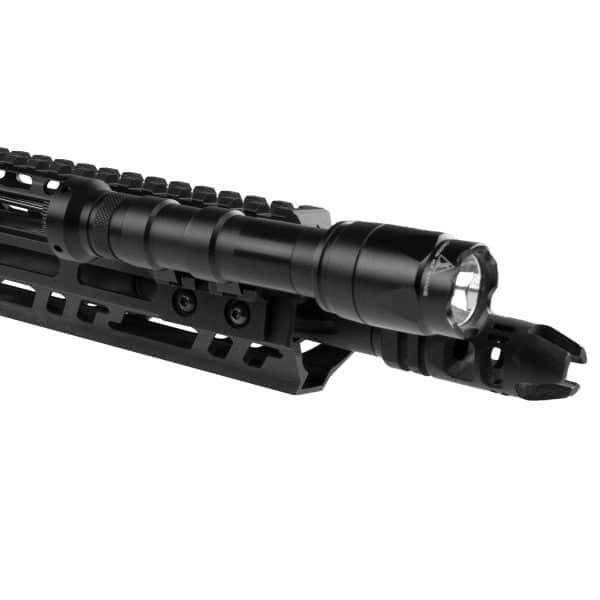
Best. Picatinny or M-LOK rail systems on an AR-15 handguard make mounting a weapon light trivial. The Cloud Defensive REIN, Modlite OKW, SureFire M300 Scout, and Streamlight ProTac Rail Mount HL-X are all excellent options. A quality weapon light is critical for target identification in the dark. At least 500 lumens; 1,000+ is better. The AR-15’s accessory ecosystem is the best of any rifle platform for adding useful tools.
Pistol
Good. Any modern defensive pistol with a rail (Glock 17, SIG P320, Springfield Hellion, etc.) accepts a weapon light easily. The Streamlight TLR-1 HL and SureFire X300 Ultra are the gold standard for pistol lights. Smaller options like the Streamlight TLR-7A work well for compact pistols. A weapon light on a pistol is non-negotiable for home defense. The selection is excellent.
Shotgun
Workable but requires more effort. Traditional pump shotguns require clamp-on rail adapters or a dedicated rail forend to mount standard weapon lights. The Streamlight TL-Racker replaces the entire forend and integrates a light. The Mesa Tactical and Magpul AFG+rail systems provide rail-mounting options. Not as turnkey as the AR-15, but achievable with the right accessories. Lights on shotguns are essential; you need to see in the dark regardless of what platform you’re running.
Winner: AR-15

Category 6: Maneuverability in Tight Spaces
Pistol
Clear winner. A pistol is the most maneuverable option. You can shoot it with one hand around a corner. You can transition from strong to weak hand quickly. You can retain it in a close-quarters struggle more effectively than a long gun. If your home defense scenario involves tight hallways, bathrooms, closets, or close-contact situations, the pistol’s compact size is a genuine advantage. This is the primary practical argument for the pistol as a dedicated home defense tool.
Shotgun (short barrel)
Manageable. An 18-inch barrel shotgun is workable in most home environments. It is longer than a pistol but much shorter than a standard rifle. The key tactic is “buttstocking” – keeping the stock compressed against your body rather than fully mounted as you move through doorways, then extending to fire. A pistol grip shotgun without a stock is often thought to help in tight spaces, but the reality is it is much harder to shoot accurately without a stock and slower to fire fast follow-up shots.
AR-15 (pistol or short barrel)
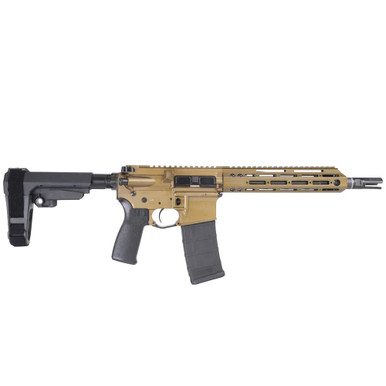
This is where the AR-15 with a 10.5-inch pistol configuration (or a short-barrel rifle with an NFA SBR stamp) shines in close quarters. A 10.5-inch AR pistol with a brace is as maneuverable as a long shotgun while offering all the other advantages of the AR platform. With a standard 16-inch barrel, the AR is somewhat awkward in very tight spaces. The SBR or pistol configuration solves this at the cost of some muzzle velocity.
Winner: Pistol (standard) / AR-15 SBR (for those with the configuration)
Category 7: Cost of Entry
Pistol
Most affordable for a complete setup. A Glock 17 or SIG P320 M17 runs $500-$600. Add a Streamlight TLR-1 HL ($120) and a Holosun 507C optic if you want a red dot ($280), and you’re into a complete home defense pistol for under $1,000. You can do it for less with a Canik TP9SF and a TLR-7A and be very well equipped for around $600-$700 total.
Shotgun
Very affordable for the base gun. A Mossberg 500 or Remington 870 runs $300-$450. Add a Streamlight TL-Racker forend light ($130), a side saddle for extra shells ($30-$60), and maybe a Magpul SGA stock ($90) and you’re looking at a complete home defense shotgun for $600-$750. The shotgun has the lowest cost of entry of the long gun platforms.
AR-15
More expensive but accessible. A quality entry-level AR-15 like the Ruger AR-556, Smith and Wesson M&P15 Sport II, or Springfield Saint runs $700-$900. Add a Cloud Defensive REIN or SureFire Scout ($200-$400), a Holosun 510C or Aimpoint Acro ($250-$400), and quality magazines and you’re at $1,200-$1,700 for a complete setup. You can trim this with more affordable light options, but this is the highest cost platform of the three when configured properly.
Winner: Pistol (lowest total cost) / Shotgun (lowest long gun cost)
))/3638161.json "AR-15 vs Shotgun vs Pistol for Home Defense (2026) 68")

Category 8: Training Curve
Shotgun
Simple but punishing. The pump shotgun has a simple manual of arms: rack, aim, fire. The concept is easy to teach. The challenge is managing the recoil, loading the tube under stress, and dealing with malfunctions (which are less common than in semi-autos but harder to clear). For someone who wants a reliable defensive tool with minimal training time, the shotgun’s simple manual of arms is appealing. But the recoil will discourage practice for some users, which defeats the purpose.
AR-15
Moderate. The AR-15 is not complicated, but it has more controls to learn than a shotgun: safety, charging handle, bolt catch, magazine release. Malfunction clearance is straightforward once trained but takes practice to make automatic. The good news is that the mild recoil makes practice enjoyable and affordable, which means you’ll actually train. The weapon is also the subject of more instructional content, classes, and resources than any other home defense platform.
Pistol
Steepest. The pistol requires the most training to run well. Stance, grip, sight alignment, trigger control, and malfunction clearance all require more practice than long guns. The weapon is harder to shoot accurately and the manual of arms varies more by model. That said, the pistol is the weapon you’re most likely to have with you in all circumstances, which makes training with it disproportionately valuable.
Winner: Shotgun (simplest) / AR-15 (best training ecosystem)
Overall Verdict
Based on the data and my experience, here is how I rank these platforms for a dedicated home defense role:
First choice for most people: AR-15. Better accuracy, higher capacity, lower recoil, better weapon light options, and counterintuitively better overpenetration characteristics with the right ammo. The main knock against it is cost and the SBR limitation for tight-space maneuvering, but a 16-inch AR-15 is workable in most homes. If your family includes shooters of different sizes and experience levels, the AR-15 is the most accessible long gun platform for everyone.
Second choice: Shotgun. Overwhelming terminal performance at home defense distances, simple manual of arms, and the lowest cost entry point. If you live in a state with magazine restrictions that limit your AR-15 capacity, the shotgun becomes more competitive. The main disadvantages are capacity, recoil, and reload complexity. Best suited for experienced shooters who practice regularly with the platform.
Third choice (long gun) or best choice (any location): Pistol. The pistol is the hardest platform to shoot well but the only one that goes with you everywhere. It is the most important firearm to train with. If you are going to have only one firearm for home defense, a quality 9mm pistol with a weapon light is a completely valid choice and allows you to keep the same weapon at your bedside and on your person. A pistol is not a second-best compromise. For many people it is the right answer.




Frequently Asked Questions
‘Is an AR-15 good for home defense?’,
‘a’ => ‘Yes, the AR-15 is an excellent home defense weapon. It offers high capacity, mild recoil, easy weapon light mounting, good accuracy at home defense distances, and with fragmenting ammunition, surprisingly good overpenetration characteristics. A properly configured AR-15 is arguably the best long gun platform for home defense for most people.’
],
[
‘q’ => ‘Is a shotgun better than an AR-15 for home defense?’,
‘a’ => ‘Not overall, though a shotgun has specific advantages. The shotgun’s terminal performance at room distances is exceptional, the manual of arms is simple, and the entry cost is lower. But the AR-15 wins on capacity, recoil, weapon light options, and overpenetration characteristics. For most situations the AR-15 is the better choice. The shotgun is best for experienced shooters who train with it regularly.’
],
[
‘q’ => ‘Can I use a pistol for home defense instead of a long gun?’,
‘a’ => ‘Absolutely. A 9mm pistol with a weapon-mounted light and quality hollowpoint ammunition is a completely capable home defense tool. The main advantage of a pistol is that it goes with you everywhere the long gun cannot. The main disadvantage is that it is harder to shoot accurately under stress and requires more training. For many people, training hard with one pistol is a better strategy than owning both a pistol and a long gun.’
],
[
‘q’ => ‘Does an AR-15 overpenetrate through walls?’,
‘a’ => ‘With FMJ ammo, yes. With quality fragmenting defensive loads (Hornady TAP, Federal LE Tactical TRX), no, 5.56 actually penetrates fewer interior walls than 9mm handgun rounds. The high velocity causes the thin-jacketed bullet to fragment and shed energy rapidly in drywall. Always use fragmenting ammo in your home defense AR-15, not ball ammunition.’
],
[
‘q’ => ‘What is the best home defense gun for a beginner?’,
‘a’ => ‘A 9mm pistol or an AR-15 are both excellent choices for beginners due to manageable recoil and good instructional resources. The shotgun has a simple concept but the recoil can discourage new shooters from practicing. Whichever platform you choose, take a quality defensive firearms course and practice regularly. The gun itself matters less than the training behind it.’
],
[
‘q’ => ‘Should I get a pistol grip shotgun for home defense?’,
‘a’ => ‘No. A pistol grip shotgun without a stock is much harder to shoot accurately and control for fast follow-up shots. The idea that a pistol grip helps in tight spaces is largely a myth. An 18-inch barrel shotgun with a standard stock or a Magpul SGA stock is significantly more effective and more controllable. Keep the stock.’
],
[
‘q’ => ‘What is the best AR-15 for home defense?’,
‘a’ => ‘The Ruger AR-556, Smith and Wesson M&P15 Sport II, Springfield Saint, and Daniel Defense DDM4 V7 are all excellent home defense AR-15 platforms at different price points. Add a red dot optic (Holosun 510C or Aimpoint), a quality weapon light (Cloud Defensive REIN or Streamlight ProTac HL-X), and load it with Hornady TAP or Federal LE Tactical TRX ammunition.’
],
[
‘q’ => ‘What is the best home defense shotgun?’,
‘a’ => ‘The Mossberg 590 and Remington 870 are the most proven platforms. The Mossberg 590A1 is the most durable version. Add a Streamlight TL-Racker forend light or a rail forend with a Scout light, a side saddle for spare ammunition, and load it with Federal Reduced Recoil 00 Buckshot or Federal FliteControl 00 Buck. See our full home defense shotgun setup guide for more detail.’
],
];
foreach ($faqs as $faq) {
echo ‘
echo ‘
‘ . $faq[‘q’] . ‘
‘;
echo ‘
‘ . $faq[‘a’] . ‘
‘;
echo ‘
‘;
}
?>
Related Guides
- Home Defense Caliber Guide: 9mm vs .45 vs 12 Gauge vs 5.56
- Home Defense Shotgun Setup: Complete Configuration Guide
- Home Defense AR-15 Setup: Build, Accessories and Configuration
- Over-Penetration in Home Defense: The Complete Guide
Author

14,522+ Gun & Ammo Deals
Updated daily from 10+ top retailers. Filter by category, caliber, action type, and price.