

Last updated June 26th 2026
Some of the links below are affiliate links, meaning at no additional cost to you, we may earn a commission if you click through and make a purchase.
How we tested: Every pick here is ranked against our testing methodology. Minimum round counts, accuracy and reliability protocols, the failures that disqualify a gun.
Best 6.8 Western Rifles in 2026 at a Glance
| Rifle | Caliber | Capacity | Barrel | Street Price | Price |
|---|---|---|---|---|---|
| BEST OVERALL Browning X-Bolt | 6.8 Western | 3+1 | 22-24″ | $999-$1,499 | Price ↓ |
| BEST VALUE Winchester XPR | 6.8 Western | 3+1 | 24″ | $649-$849 | Price ↓ |
| BEST CLASSIC Winchester Model 70 | 6.8 Western | 3+1 | 24-26″ | $1,199-$1,599 | Price ↓ |
| BEST MOUNTAIN Christensen Ridgeline | 6.8 Western | 3+1 | 20-24″ | $1,799-$2,099 | Price ↓ |
| BEST BUDGET CARBON Christensen Mesa | 6.8 Western | 3+1 | 22-24″ | $1,149-$1,399 | Price ↓ |
| BEST PRECISION Seekins Havak | 6.8 Western | 5+1 | 24″ | $1,499-$1,799 | Price ↓ |
Table of Contents
Why the 6.8 Western Exists
The 6.8 Western is Winchester and Browning’s answer to a simple question: what if you could shoot heavy, high-BC .277-caliber bullets fast, out of a short-action rifle? They launched it together in 2021, and it filled a real gap between the light-bullet .270 Winchester and the bigger 7mm magnums.
The trick is the fast twist. Where the old .270 Winchester spins 130 to 150-grain bullets with a slow 1:10 twist, the 6.8 Western runs a 1:8 or even 1:7.5 twist to stabilize long 165 to 175-grain bullets that hold velocity and buck wind far better. The result is a flat-shooting, hard-hitting elk and long-range rifle round with less recoil than a 7mm Remington Magnum.
Browning took the lead with dozens of X-Bolt configurations, Winchester chambers it across the Model 70 and XPR lines, and Christensen, Seekins, and Fierce all offer rifles too. I’ve sorted through the field to rank the best 6.8 Western rifles for 2026. For how it compares to the competition, see our best 6.5 Creedmoor rifles and best long-range scopes guides.
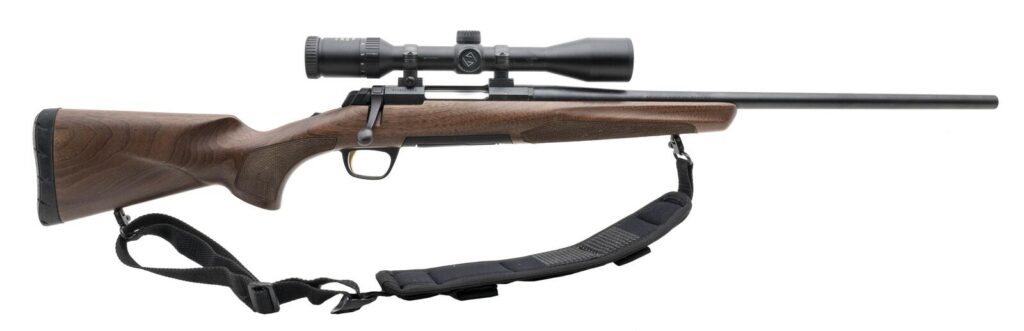
1. Browning X-Bolt – Best Overall 6.8 Western Rifle
- Caliber: 6.8 Western
- Barrel: 22-24″, many threaded, 1:7.5 or 1:8 twist
- Capacity: 3+1 rotary magazine
- Trigger: Feather Trigger, adjustable
- Street Price: $1,049.99-$1,499
| Value | Accuracy | Trigger | Features | Fit & Finish |
| 4/5 | 5/5 | 5/5 | 5/5 | 5/5 |
Pros
- The widest selection of 6.8 Western configurations of any maker
- Excellent adjustable Feather Trigger and a smooth, short bolt throw
- Detachable rotary magazine feeds slick and sits flush
- Hunting, mountain, and long-range models to fit any need
Cons
- Browning pricing runs above the budget bolt guns
- The base Hunter stock is plainer than the premium models
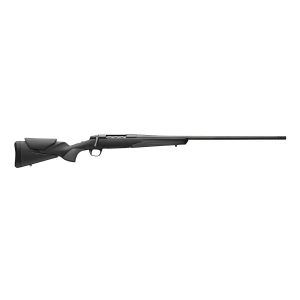
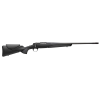
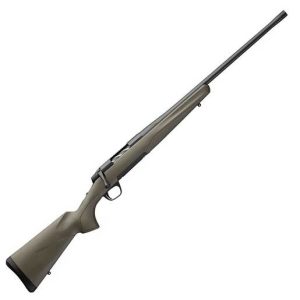
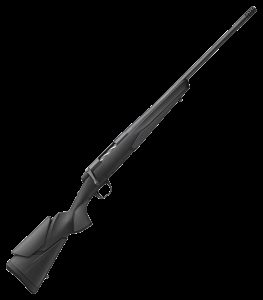
Browning co-developed the 6.8 Western, so it’s no surprise the X-Bolt is the most complete rifle for the cartridge. Browning chambers it in dozens of configurations, from the value Hunter up to tricked-out Mountain Pro and long-range models, which means there’s an X-Bolt for exactly the way you hunt.
The rifle itself is excellent. The adjustable Feather Trigger breaks clean, the short bolt throw cycles fast, and the flush detachable rotary magazine is one of the best in the business. Accuracy has been very good across the line, easily up to the cartridge’s long-range mission.
The only real catch is price, since Browning sits above the budget brands, and the base stock is plain. But you’re paying for the deepest model selection and a genuinely refined rifle. For most 6.8 Western hunters, the X-Bolt is the default pick.
Best For: The hunter who wants the widest model selection and a refined, accurate rifle from the cartridge’s co-developer.
2. Winchester XPR – Best Value 6.8 Western Rifle
- Caliber: 6.8 Western
- Barrel: 24″, free-floated, threaded, 1:8 twist
- Capacity: 3+1
- Trigger: M.O.A. adjustable
- Street Price: $624.99-$849
| Value | Accuracy | Trigger | Features | Fit & Finish |
| 5/5 | 4/5 | 4/5 | 4/5 | 3/5 |
Pros
- The cheapest way into a 6.8 Western from a co-developer of the cartridge
- 24-inch free-floated barrel with a factory threaded muzzle brake
- The M.O.A. trigger is genuinely good for the money
- Cerakoted barrel and receiver shrug off weather
Cons
- Budget composite stock flexes a touch
- Plainer fit and finish than the Browning or Christensen
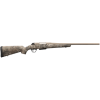

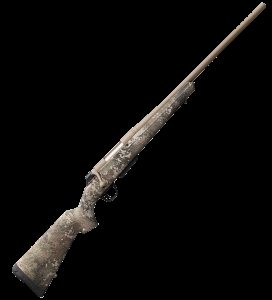
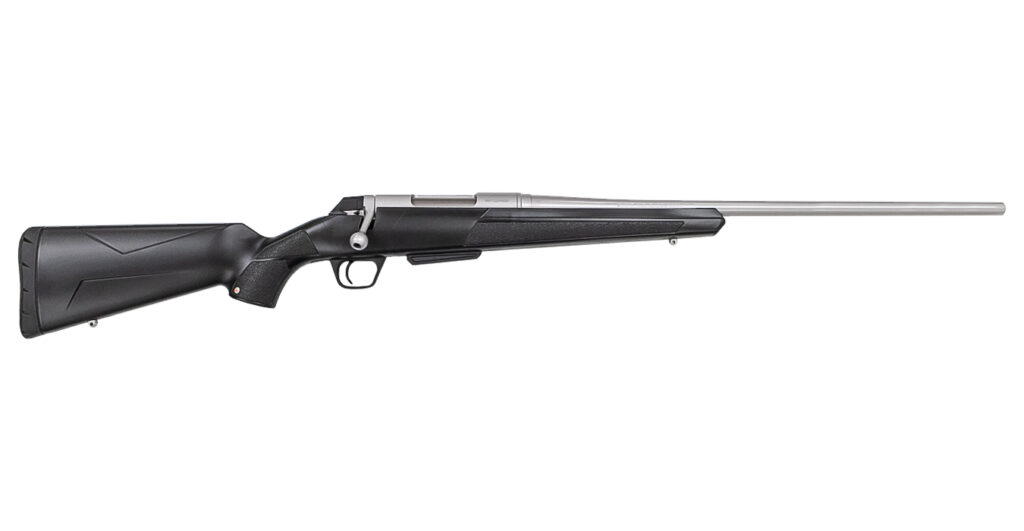
Winchester is the other half of the 6.8 Western story, and the XPR is the value way to shoot it. It packs the features serious hunters want into a rifle that costs hundreds less than the premium options.
The XPR comes standard with a 24-inch free-floated barrel, a factory threaded muzzle brake, and a Cerakote finish on the barrel and receiver, which is a lot of rifle for the price. The M.O.A. trigger breaks cleanly, and accuracy is plenty for the cartridge’s long-range work. The fast 1:8 twist stabilizes the heavy 6.8 Western bullets the round was built for.
The budget shows in the composite stock, which flexes a little, and the plainer finish. Neither hurts the shooting. If you want into the 6.8 Western without spending four figures, the XPR is the clear value pick.
Best For: The budget hunter who wants a threaded, braked 6.8 Western from a co-developer of the cartridge.
3. Winchester Model 70 – Best Classic 6.8 Western Rifle
- Caliber: 6.8 Western
- Barrel: 24-26″, free-floated, 1:8 twist
- Action: Controlled-round feed, claw extractor
- Trigger: M.O.A. adjustable
- Street Price: $1,089.99-$1,599
| Value | Accuracy | Action | Features | Fit & Finish |
| 3/5 | 5/5 | 5/5 | 4/5 | 5/5 |
Pros
- The legendary controlled-round-feed action, the “Rifleman’s Rifle”
- Beautiful fit and finish, with walnut and stainless options
- Outstanding accuracy and a proven, reliable action for hard hunts
- Available across nine Model 70 configurations
Cons
- Heavier and longer than the carbon mountain rifles
- Costs more than the XPR for the same cartridge
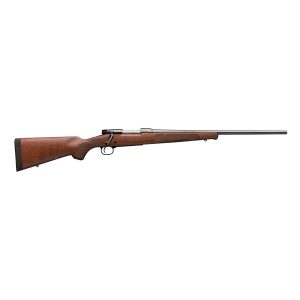
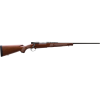
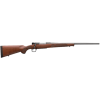
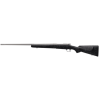
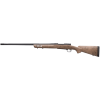
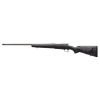
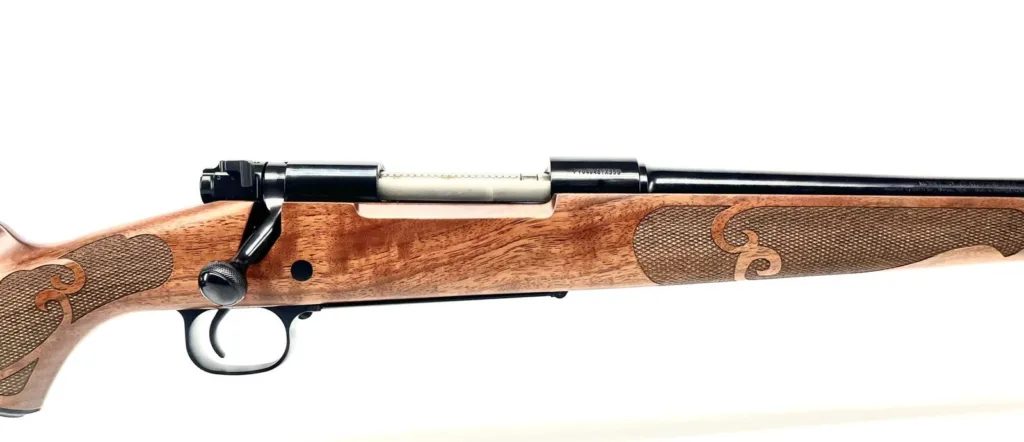
If you want the 6.8 Western in a rifle with real heritage, the Winchester Model 70 is the one. Known for generations as the Rifleman’s Rifle, the Model 70 brings its legendary controlled-round-feed action to Winchester’s modern long-range cartridge.
That controlled-round-feed action with its big claw extractor is the draw. It feeds and extracts with total reliability in cold, dirty, hard-hunt conditions, which is exactly why dangerous-game and backcountry hunters have trusted the Model 70 for decades. Pair that with excellent accuracy and Winchester’s beautiful fit and finish, and you have a rifle to hand down.
It’s heavier and pricier than the budget and carbon options, so it’s not the ultralight mountain choice. But for a hunter who values a classic, bombproof action and a rifle with soul, the Model 70 in 6.8 Western is special.
Best For: The traditionalist who wants a heritage controlled-round-feed rifle in a modern long-range cartridge.
4. Christensen Ridgeline – Best Mountain 6.8 Western Rifle
- Caliber: 6.8 Western
- Barrel: 20-24″ carbon-fiber wrapped, 1:7.5 twist, threaded
- Weight: From ~5.4 lb (FFT)
- Guarantee: Sub-MOA
- Street Price: $2,038.99
| Value | Accuracy | Weight | Features | Fit & Finish |
| 3/5 | 5/5 | 5/5 | 5/5 | 5/5 |
Pros
- Carbon barrel and stock make a true sub-6-pound mountain rifle
- Fast 1:7.5 twist wrings every bit of BC out of heavy bullets
- Sub-MOA guarantee it consistently beats
- Threaded muzzle and a slick action ready for a suppressor
Cons
- Premium price, the most expensive on this list
- Light weight means stout recoil without a brake
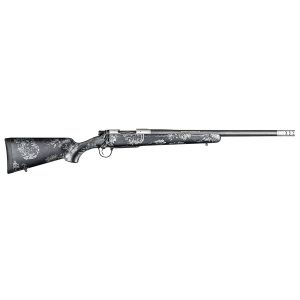
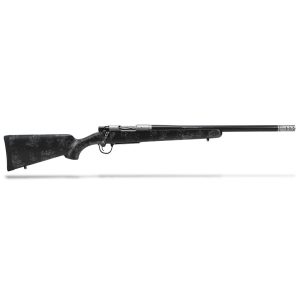
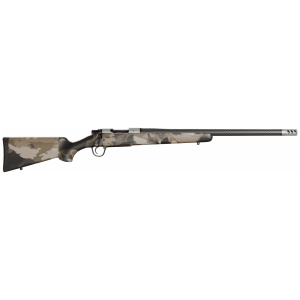
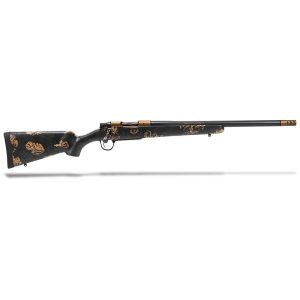
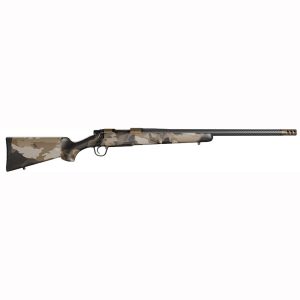
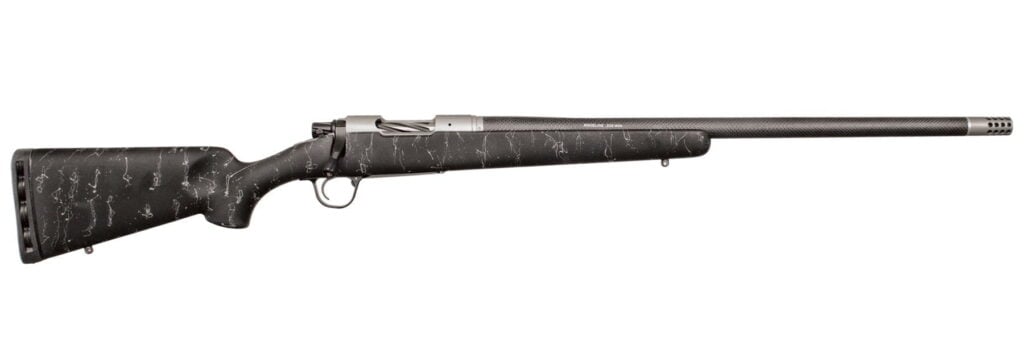
The 6.8 Western is a Western mountain cartridge, and the Christensen Ridgeline is the Western mountain rifle. With a carbon-wrapped barrel and a carbon stock, the FFT version drops to around 5.4 pounds, which is remarkable for a rifle that shoots this hard and this far.
Christensen runs a fast 1:7.5 twist in its 6.8 Western barrels, which is even quicker than most and squeezes maximum stability and BC out of the heavy bullets. The sub-MOA guarantee is real, and the bedded carbon stock holds zero through a brutal backcountry hunt. This is the rifle for the hunter who counts ounces.
The price is the catch, since it tops this list, and a light rifle in a magnum-class cartridge kicks, so plan on a brake or a can. But for the backcountry hunter who wants the lightest, most accurate 6.8 Western, the Ridgeline is the one.
Best For: The backcountry hunter who wants the lightest, fastest-twist premium 6.8 Western.
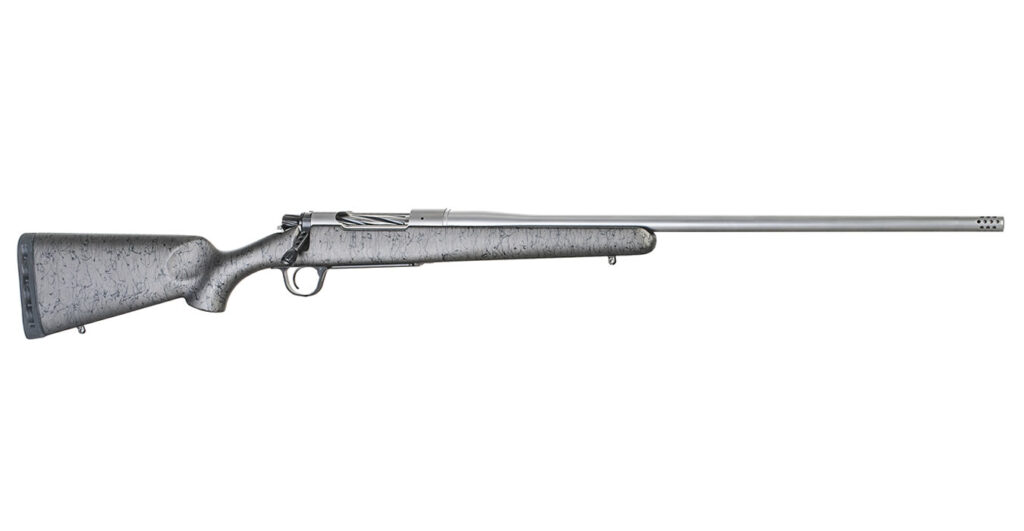
5. Christensen Mesa – Best Budget Carbon 6.8 Western
- Caliber: 6.8 Western
- Barrel: 22-24″ stainless, threaded, 1:7.5 twist
- Weight: ~6.5 lb
- Guarantee: Sub-MOA
- Street Price: $1,149-$1,399
| Value | Accuracy | Weight | Features | Fit & Finish |
| 4/5 | 5/5 | 4/5 | 4/5 | 4/5 |
Pros
- Christensen accuracy and a carbon stock for hundreds less than the Ridgeline
- Sub-MOA guarantee and the same fast 1:7.5 twist
- Threaded stainless barrel, lighter than a standard steel rifle
- A genuinely premium-feeling rifle at a mid-tier price
Cons
- Steel barrel is heavier than the Ridgeline’s carbon
- Still costs more than the budget XPR
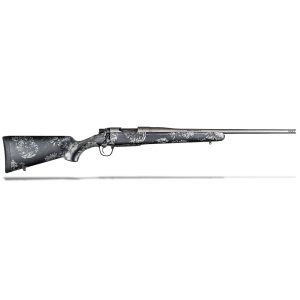
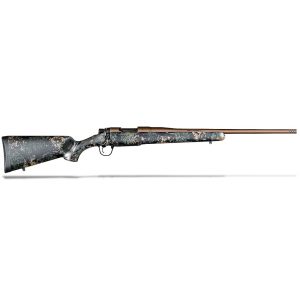
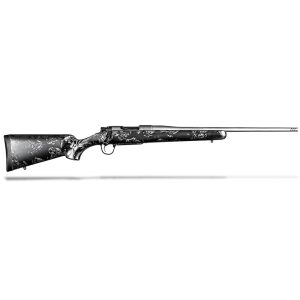
The Christensen Mesa is the smart-money way to get Christensen quality in a 6.8 Western. It pairs the brand’s accurate barrel and a carbon stock with a standard threaded stainless barrel instead of the pricey carbon one, which knocks hundreds off the price while keeping the things that matter.
You still get the sub-MOA guarantee, the fast 1:7.5 twist that suits the heavy bullets, and a rifle that feels far more premium than its price. At around 6.5 pounds it’s still a light, packable hunting rifle, just not the featherweight the carbon Ridgeline is.
The trade is a heavier steel barrel and a price that still sits above the budget XPR. But for a hunter who wants Christensen accuracy and a carbon stock without the full Ridgeline outlay, the Mesa is the value play in the premium tier.
Best For: The hunter who wants Christensen accuracy and a carbon stock at a mid-tier price.

6. Seekins Havak – Best Precision 6.8 Western
- Caliber: 6.8 Western
- Barrel: 24″ match-grade, threaded, fast twist
- Capacity: 5+1 flush detachable mag
- Stock: Carbon-fiber composite
- Street Price: $1,849.99
| Value | Accuracy | Capacity | Features | Fit & Finish |
| 3/5 | 5/5 | 5/5 | 5/5 | 5/5 |
Pros
- Match-grade accuracy that rivals custom rifles
- A five-round flush detachable magazine, rare on a hunting bolt gun
- Carbon stock and a refined, hand-built feel
- Excellent machining and fit throughout
Cons
- Premium price
- Heavier than the ultralight Ridgeline
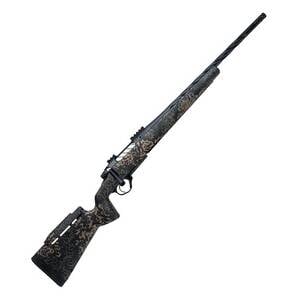
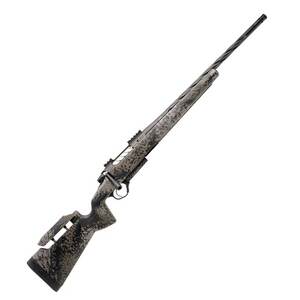
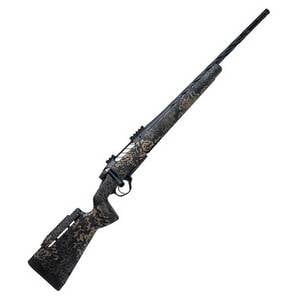
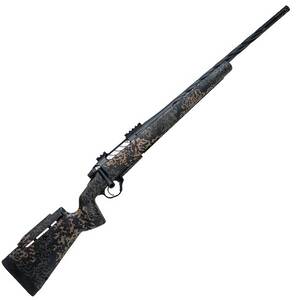
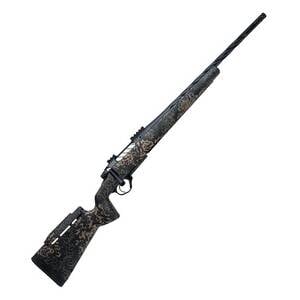
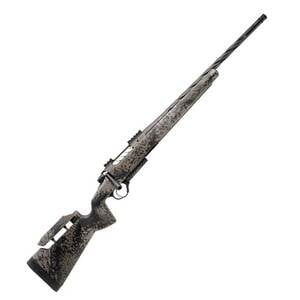
The Seekins Havak is for the hunter who wants precision-rifle accuracy in a 6.8 Western hunting package. Seekins machines these to a near-custom standard, and owners routinely call the Havak the most accurate factory rifle they’ve owned.
In 6.8 Western, the Havak’s match-grade barrel and refined action make the most of the cartridge’s long-range potential, and the five-round flush detachable magazine is a practical edge over the typical three-round hunting box. The carbon stock and excellent fit round out a rifle that feels special.
It’s a premium-priced rifle and runs heavier than the carbon Ridgeline, so it’s not the ultralight pick. But for a hunter chasing tack-driving precision and a higher capacity in the 6.8 Western, the Havak is hard to beat.
Best For: The precision-minded hunter who wants custom-grade accuracy and a five-round magazine.
How I Tested the 6.8 Western Rifles
I evaluated these rifles the way a Western big-game hunter uses them. The ones I had hands on got a 100-yard zero with factory 6.8 Western loads, three-shot and five-shot groups from a bipod and rear bag to check accuracy and barrel heat, and field positions off a pack and shooting sticks to judge handling and recoil.
I leaned on Winchester’s published ballistic data and the SAAMI cartridge spec for velocity and energy claims, and cross-checked every rifle’s barrel, twist rate, weight, and trigger against the manufacturer’s current product page. Where I haven’t personally run a specific model, I’ve said so and leaned on field reports from outlets like Western Hunter and American Hunter rather than guessing.
6.8 Western Ballistics: Velocity, Energy, and Recoil
The 6.8 Western throws heavy .277-caliber bullets fast. The 165 and 170-grain loads leave the muzzle at over 2,900 fps, and the heavy 175-grain bullets run over 2,800 fps, putting muzzle energy in the neighborhood of 3,200 foot-pounds. Those are long, high-BC bullets that hold velocity and resist wind far better than the lighter ones the old .270 Winchester was built around.
That’s the whole point of the cartridge. It delivers more downrange energy and a flatter long-range trajectory than a .270 Winchester, with heavier bullets that hit harder on elk, yet it does it from a short-action rifle with less recoil than a 7mm Remington Magnum. You get magnum-class reach and authority without the magnum-class kick.
Recoil is moderate. In a standard-weight rifle the 6.8 Western is comfortable to shoot, but in a sub-6-pound carbon mountain rifle it pushes hard enough that a brake or suppressor is worth adding. Zeroed a couple inches high at 100 yards, it stays inside vital-zone holds well past 300, which is exactly what a Western hunter wants.
6.8 Western vs Other Hunting Cartridges
The 6.8 Western competes with a stacked field of deer and elk cartridges. Here’s how it lines up so you can see where it fits.
| Cartridge | Typical Muzzle Energy | Recoil | Best Use |
|---|---|---|---|
| .270 Winchester | ~2,700 ft-lbs | Moderate | Deer, lighter bullets, classic |
| 6.5 PRC | ~2,700 ft-lbs | Moderate | Deer and light elk, low recoil |
| 6.8 Western | ~3,200 ft-lbs | Moderate | Elk and long-range, heavy .277 bullets |
| 7mm PRC | ~3,400 ft-lbs | Moderate-stout | Elk and long-range, more energy |
| .300 Win Mag | ~3,500 ft-lbs | Stout | Big game, heaviest bullets |
The 6.8 Western’s niche is heavy .277 bullets in a short action with manageable recoil. It out-punches the .270 Winchester and the 6.5 PRC on elk while kicking less than a 7mm or .300 magnum. If you want the most energy, the 7mm PRC and .300 Win Mag edge it; if you want the lightest recoil, the 6.5s win. For a short-action elk and long-range rifle that splits the difference, the 6.8 Western is a smart choice. The catch is ammo, which is less common on shelves than the more popular rounds.
6.8 Western Ammo and Twist Rate
The 6.8 Western’s fast 1:8 or 1:7.5 twist is its defining feature. That quick spin is what stabilizes the long, heavy 165 to 175-grain bullets the cartridge was designed around, and it’s why a 6.8 Western shoots so much flatter and hits so much harder than a .270 Winchester despite the same bullet diameter.
Factory ammo comes mainly from Winchester and Browning, with loads like the 165-grain AccuBond Long Range, the 170-grain Ballistic Silvertip, and the 175-grain Sierra Tipped GameKing. Selection is narrower than a .270 or a 6.5 PRC, so it’s smart to buy a few boxes of your rifle’s preferred load when you find it. Handloaders have good component support with quality .277 bullets and brass.
How to Choose a 6.8 Western Rifle
Match the Rifle to the Hunt
The 6.8 Western is a Western elk and long-range cartridge, so think about how far you’ll carry the rifle and how far you’ll shoot. For backcountry hunts where weight matters, a carbon rifle like the Christensen Ridgeline earns its price. For a truck-to-treestand hunt or a range gun, a heavier rifle like the Model 70 or XPR soaks up recoil and shoots flatter off a bag.
Recoil and the Case for a Brake
The 6.8 Western kicks less than a 7mm or .300 magnum but more than a 6.5 Creedmoor, and a light rifle amplifies it. The Winchester XPR’s factory brake is a real plus, and every threaded rifle here will accept a brake or a suppressor. If you’re recoil-sensitive, prioritize a braked model or plan to suppress.
Ammo Availability
This is the one real downside of the 6.8 Western. Because it’s newer and less popular than the .270 or 6.5 PRC, factory ammo is harder to find on shelves and pricier. If you hunt far from a good gun shop, stock up on your load ahead of the season, or be ready to handload. Don’t let it deter you, just plan for it.
Glass and Twist
A long-range cartridge deserves good glass. A quality 4-16x or 5-25x scope with repeatable turrets lets the 6.8 Western reach out; see our best long-range scopes guide. Every factory 6.8 Western already runs a fast twist, so you don’t need to worry about stabilizing the heavy bullets, just pick the load your rifle groups best and confirm your zero before the hunt.
Common Mistakes to Avoid
- Not stocking up on ammo. The 6.8 Western is harder to find than common rounds. Buy a few boxes of your rifle’s best load when you see it, especially before a season or a trip.
- Going ultralight without a brake. A sub-6-pound carbon 6.8 Western is a joy to carry and a handful to shoot. Plan on a brake or suppressor unless you’re recoil-tolerant.
- Treating it like a .270. The 6.8 Western shoots heavier bullets at a faster twist for a reason. Match it with the heavy factory loads it was built for, not the lightest bullet on the shelf.
- Cheaping out on glass. This is a long-range round. A budget scope wastes it. Spend on repeatable turrets and a clear reticle before upgrading the rifle.
The Bottom Line
For most hunters, the Browning X-Bolt is the best 6.8 Western rifle overall: the widest model selection, a superb trigger, and refinement from the cartridge’s co-developer. If value is your priority, the Winchester XPR gives you a threaded, braked 6.8 Western for well under a grand. Want heritage? The Winchester Model 70. Want the lightest mountain rifle? The Christensen Ridgeline. Want Christensen quality for less? The Mesa. Any of them will reach across a canyon and put an elk down, so pick the one that fits your hunt and your budget, and stock up on ammo before the season.
FAQ: 6.8 Western Rifles
What is the 6.8 Western good for?
The 6.8 Western is a Western big-game and long-range cartridge, excellent for elk, mule deer, and shooting at distance. It throws heavy, high-BC .277 bullets at over 2,900 fps for a flat trajectory and hard hits, with less recoil than a 7mm magnum, all from a short-action rifle.
Is the 6.8 Western better than the .270 Winchester?
For elk and long range, yes. The 6.8 Western uses a fast twist to shoot much heavier, higher-BC bullets than the .270 Winchester, giving it more downrange energy, a flatter long-range trajectory, and more authority on big game. The .270 still wins on ammo availability and price.
What is the effective range of the 6.8 Western?
The 6.8 Western is a genuine long-range hunting cartridge, comfortably effective on elk and deer to 500-700 yards in capable hands and able to ring steel well past that. Its heavy, high-BC bullets hold velocity and buck wind at distance.
Does the 6.8 Western kick hard?
The 6.8 Western recoils more than a 6.5 Creedmoor but less than a 7mm Remington Magnum or a .300 Win Mag. In a standard-weight rifle it is comfortable; in a sub-6-pound carbon mountain rifle a muzzle brake or suppressor is worth adding.
What rifles are chambered in 6.8 Western?
Browning leads with dozens of X-Bolt configurations, Winchester chambers it across the Model 70 and XPR lines, and Christensen Arms (Ridgeline, Mesa), Seekins, and Fierce all offer 6.8 Western rifles. Options range from sub-$700 budget guns to $2,000 carbon mountain rifles.
Is the 6.8 Western good for elk?
Yes, the 6.8 Western is an excellent elk cartridge. It pushes heavy 165 to 175-grain bullets to around 3,200 foot-pounds of muzzle energy with deep penetration, giving it the authority for clean kills on elk at both close and long range.
What twist rate does the 6.8 Western use?
The 6.8 Western uses a fast 1:8 or 1:7.5 twist, much quicker than the .270 Winchester's 1:10. That fast twist stabilizes the long, heavy, high-BC bullets the cartridge was designed around, which is the key to its long-range performance.
6.8 Western vs 6.5 PRC: which is better?
The 6.8 Western throws heavier bullets with more energy, hitting harder on elk, while the 6.5 PRC recoils less and is plenty for deer with better ammo availability. Choose the 6.8 Western for elk and maximum authority, the 6.5 PRC for a softer-shooting, easier-to-feed deer rifle.
4,335+ Gun & Ammo Deals
Updated daily from 200+ top retailers. Filter by category, caliber, action type, and price.
Related Guides