

Last updated May 19th 2026. This post contains affiliate links. If you buy through them, I earn a small commission at no extra cost to you.
- Treat every gun as loaded
- Point the muzzle in a safe direction
- Keep your finger off the trigger until you’re ready to shoot
- Know your target and what’s beyond
How we tested: Every pick here is ranked against our testing methodology. Minimum round counts, accuracy and reliability protocols, the failures that disqualify a gun.
Best Home Defense Guns Under $500: At a Glance
| Gun | Type | Price | Capacity | Best For | Buy |
|---|---|---|---|---|---|
| Mossberg Maverick 88 | Pump Shotgun | ~$249 | 5+1 | Best Overall Value | Lowest Price ↓ |
| Taurus G3c | Semi-Auto | ~$279 | 12+1 | Best Budget Pistol | Lowest Price ↓ |
| S&W SD9 VE | Semi-Auto | ~$369 | 16+1 | Best Capacity Under $400 | Lowest Price ↓ |
| Ruger Security-9 | Semi-Auto | ~$379 | 15+1 | Best Reliability Under $400 | Lowest Price ↓ |
| Winchester SXP Defender | Pump Shotgun | ~$349 | 4+1 | Best Mid-Range Pump | Lowest Price ↓ |
| Stoeger M3000 Defense | Semi-Auto Shotgun | ~$449 | 7+1 | Best Budget Semi-Auto Shotgun | Lowest Price ↓ |
| SCCY CPX-2 | Sub-Compact Pistol | ~$249 | 10+1 | Tightest Budget Pistol | Lowest Price ↓ |
| Heritage Rough Rider .22 Mag | Revolver | ~$199 | 6 | Training Gun Only | Lowest Price ↓ |
Table of Contents
You Don’t Need to Spend $1,000 to Defend Your Home
The gun industry has a habit of making people think they need to spend $600-800 to get a reliable defensive firearm. That’s not true. Some of the most reliable defensive guns made in the last decade cost under $400 new. The gap between a $350 defensive gun and an $800 defensive gun has never been smaller.
What matters for home defense: reliable function, adequate capacity, enough power to stop a threat, and controls you can operate under stress. None of those require a premium price tag. A Mossberg Maverick 88 at $249 will blow a hole in a threat just as effectively as a $1,200 shotgun. Reliability is the one area where you genuinely don’t want to cheap out — but reliable doesn’t mean expensive.
Here’s the budget math that most articles skip: your home defense budget isn’t just the gun. You need a rapid-access safe ($80-150), a weapon light ($60-100), and quality defensive ammunition ($25-40). If you spend $500 on a gun, your total setup cost is $750-800. If you spend $300 on the gun, your total is $550-600 and you got the same functional result. Think about the whole setup, not just the gun price tag.
I’ve excluded obvious junk from this list. There are guns that cost $200 that are genuinely dangerous to shoot — frame failures, unreliable feeding, extractors that break on the first mag. Those aren’t on here. Every gun on this list has earned enough real-world reputation to recommend with confidence. Cheap but not junk. That’s the standard.
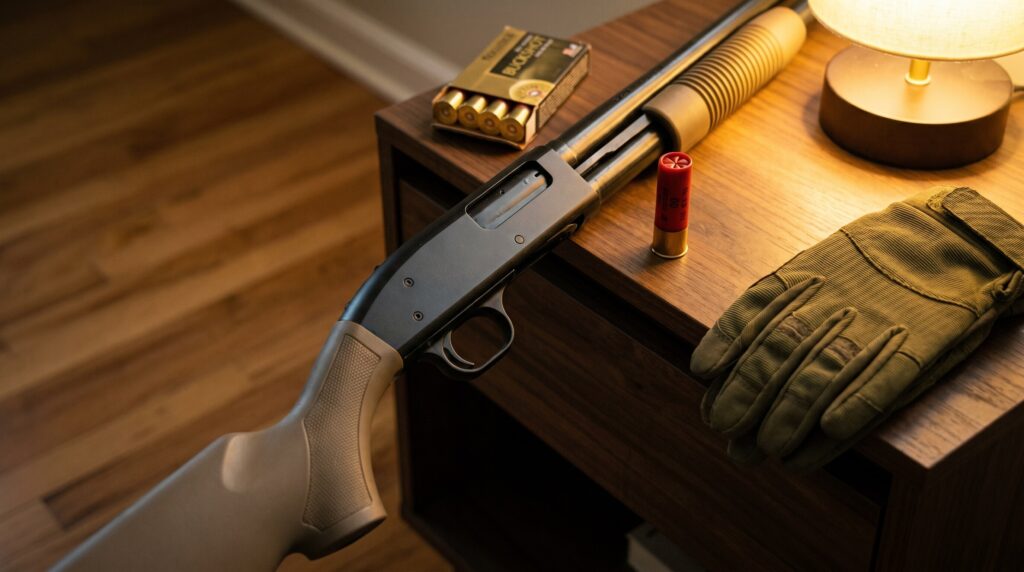
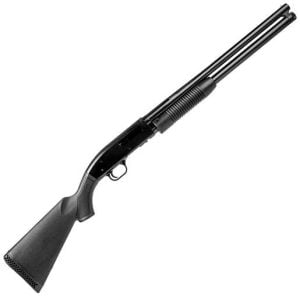
1. Mossberg Maverick 88 (~$249) — Best Overall Value
Specs: Pump action | 5+1 capacity | 18.5″ barrel | 12 gauge | 7.5 lbs | Street price ~$249
Pros
- At $249 it leaves the most budget for safe, light, and ammo
- Same basic action as the legendary Mossberg 500
- 12 gauge buckshot is devastating at home defense distances
Cons
- Trigger safety placement is less convenient than tang safety on 500
- More limited aftermarket than the 500
- Recoil is real and requires practice
$249 for a functional home defense shotgun is an extraordinary value. The Maverick 88 uses the same basic pump-action design as the Mossberg 500, with some manufacturing changes that reduce cost without meaningfully reducing defensive capability. The cross-bolt trigger-guard safety is less intuitive than the 500’s tang safety, but you can learn it with practice.
At $249, the math becomes interesting. You have $251 remaining in a $500 budget. That buys a GunVault SpeedVault safe ($90), a Streamlight HL-X shotgun forend light ($75), and two boxes of Federal Personal Defense buckshot ($50). Total setup cost: $464. For under $500, you have a loaded shotgun in a biometric safe with a weapon light and a spare box of defensive ammunition. Try matching that with a $500 handgun.
One thing the Maverick 88 needs is practice. Short-stroking a pump under stress is a real failure mode, and the only way to prevent it is building muscle memory through repetition. Run 50 shells through it at the range. Then run 50 more. The action smooths out with use and the stroke becomes automatic. Don’t store it and forget it — actually shoot the thing.
Best For: Budget-conscious buyers who want maximum home defense value, anyone who wants the most complete setup under $500, first-time gun owners who prioritize simplicity.
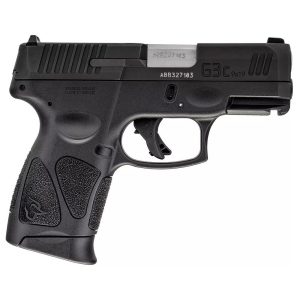
2. Taurus G3c (~$279) — Best Budget Pistol
Specs: Semi-auto | 12+1 capacity | 3.26″ barrel | 9mm | 22 oz | Street price ~$279
Pros
- 12+1 capacity at a genuinely low price
- Taurus has dramatically improved QC over the last 5 years
- Integrated Picatinny rail for weapon light
Cons
- Short 3.26-inch barrel is compact but limits sight radius
- Trigger is heavier and longer than premium options
- Some early G3c units had reliability issues so verify your production date
Taurus G3c represents the most dramatic improvement in value-tier 9mm quality over the past decade. Five years ago I would have steered you away from budget Taurus pistols. That’s changed. The G3c has earned a reputation for reliable function with quality 9mm defensive loads, and at $279, the price-to-performance ratio is remarkable.
Integrated rail on the frame accepts the Streamlight TLR-7A directly. For a home defense setup, that’s the right light for this gun — compact, bright, and around $100. Run quality Federal HST or Speer Gold Dot through it for defensive loads. Buy a second 12-round magazine to keep alongside the gun for reload practice.
Honest note: Taurus’s reputation historically warranted caution. Recent production is considerably better, but I’d still recommend buying new (with warranty) rather than used, and running 100 rounds of your chosen defensive ammunition through the gun before trusting it for home defense. Verify it feeds and ejects 100% before it becomes your nightstand gun. Every gun deserves that test — but for value-tier guns, it’s especially important.
Best For: Strict budget buyers who want a 9mm pistol, anyone who needs to stay as close to $300 as possible for the gun itself.

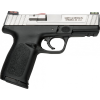
3. S&W SD9 VE (~$369) — Best Capacity Under $400
Specs: Semi-auto | 16+1 capacity | 4″ barrel | 9mm | 22.7 oz | Street price ~$369
Pros
- 16+1 capacity is exceptional at this price point
- S&W reliability reputation carries over from premium lines
- Textured grip is genuinely effective
Cons
- Trigger is heavy by design — this is intentional but takes getting used to
- No optic cut
- Limited aftermarket compared to M&P
The SD9 VE (Self-Defense 9 Value Edition) is S&W’s answer to budget pistols, and it carries genuine S&W reliability in a sub-$400 package. The 16+1 capacity is the headline — that’s Glock 17-level round count at nearly $230 less. If capacity is your primary concern in a home defense pistol, the SD9 VE delivers it at a genuinely accessible price.
Trigger pull is deliberately heavy — Smith and Wesson designed it as an additional safety feature for a budget gun that might end up in less experienced hands. It’s consistent and predictable, which is what matters for accuracy, but don’t expect it to feel like a premium striker-fired trigger. Practice with it at the range and you’ll find you can shoot it accurately once you understand the pull.
SD9 VE comes with two 16-round magazines. That’s a real value add — a spare magazine alone costs $25-40 from many manufacturers. Keep one in the gun, one on the bedside table or in the safe. In a home defense scenario, you want to be able to hit a speed reload if the first magazine runs dry, even if you’re probably not going to need all 32 rounds.
Best For: Anyone who prioritizes round count, shooters who want S&W reliability at budget pricing, people who want 16+ rounds without spending Glock or M&P money.
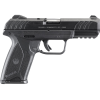
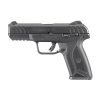
4. Ruger Security-9 (~$379) — Best Reliability Under $400
Specs: Semi-auto | 15+1 capacity | 4″ barrel | 9mm | 23.7 oz | Street price ~$379
Pros
- Ruger manufacturing quality is genuinely above its price point
- 15+1 capacity is competitive
- Trigger safety (no external manual safety) for simpler operation
Cons
- Trigger has some take-up that takes adjustment
- Limited optic compatibility without aftermarket work
- Less ergonomic grip geometry for smaller hands compared to M&P
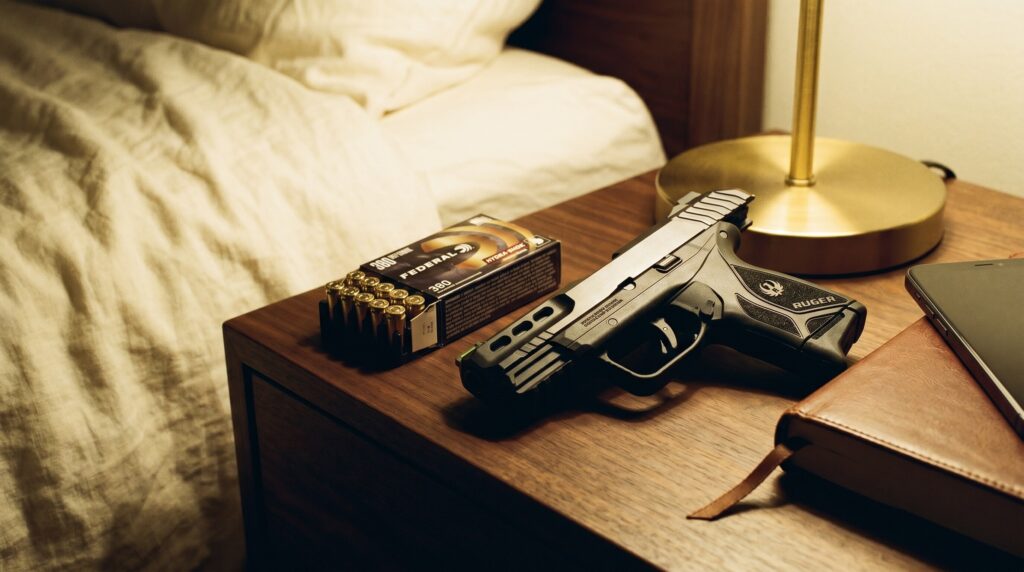
Ruger has a manufacturing reputation that consistently outperforms their price point. The Security-9 was built to be their entry-level 9mm, and Ruger apparently decided “entry-level” shouldn’t mean “cut every corner.” The metallurgy and fit-and-finish are noticeably better than competing $350-400 pistols from brands with less manufacturing discipline.
Trigger safety on the Security-9 means no external manual safety to forget. Pull the trigger, the gun fires. Don’t pull the trigger, it doesn’t. For a home defense gun that might be operated under extreme stress by someone who doesn’t train every week, simple operation is a genuine safety advantage — not a liability. Store it in a rapid-access safe and you’ve addressed the child-access concern.
At $379, the Security-9 lands roughly $20 more than the SD9 VE and $100 less than a Glock 19. It’s the sweet spot of the budget 9mm segment if build quality matters to you more than brand prestige. Run Federal HST 9mm through it, get comfortable with the trigger, and you have a genuinely capable home defense pistol for well under $400.
Best For: Buyers who want Ruger quality at a fraction of the price of premium brands, anyone who values build quality and reliability above all else on a tight budget.

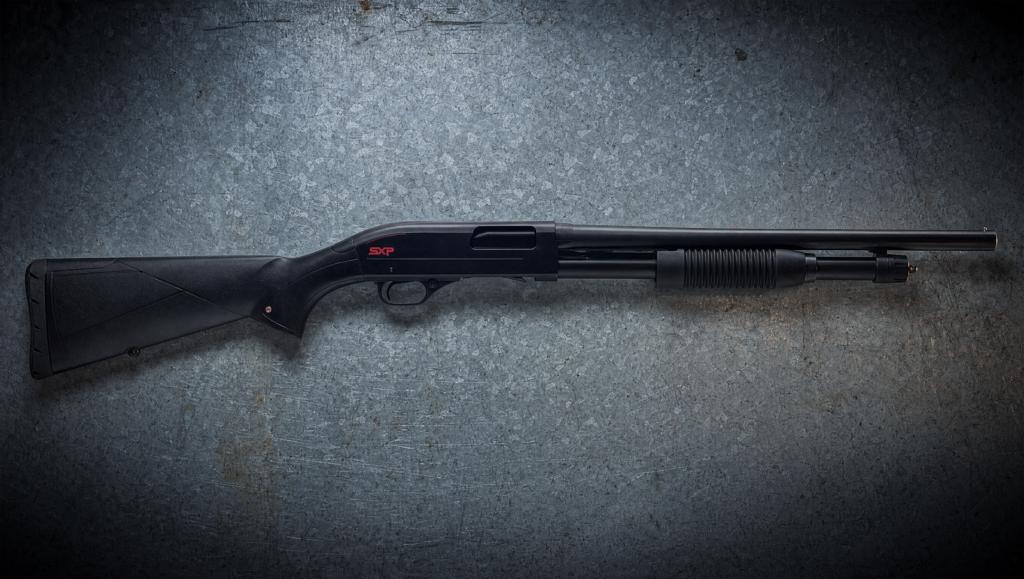
5. Winchester SXP Defender (~$349) — Best Mid-Range Pump
Specs: Pump action (Speed Pump) | 4+1 capacity | 18″ barrel | 12 gauge | 6.5 lbs | Street price ~$349
Pros
- Speed Pump system is noticeably faster and smoother than standard pumps
- Hard chrome chamber resists fouling and corrosion
- Comes with 18-inch defensive barrel from the factory
Cons
- 4+1 capacity is lower than some competitors
- Cross-bolt safety less intuitive than Mossberg tang safety
- Less extensive aftermarket than Mossberg 500
At $349, the SXP Defender costs $100 more than the Maverick 88 and lands roughly in the middle of the budget shotgun segment. What you get for the extra $100 is the Speed Pump action — genuinely the slickest pump mechanism in this price range — plus the hard chrome chamber that adds corrosion resistance. If you live somewhere humid or store the gun in a garage safe, that chrome chamber matters.
The SXP Defender ships with an 18-inch cylinder-bore barrel already configured for home defense. No barrel swap required, no extra purchase. Winchester designed this specifically as a defensive shotgun, and the out-of-box configuration reflects that. Point, pump, shoot. Nothing to modify, nothing to swap.
Speed Pump mechanism deserves explanation. The rotating bolt and dual slide bars create a faster, more positive lock-up than traditional pump designs. The practical benefit is a reduced likelihood of short-stroking under stress. For a gun you hope you never have to use but need to work instantly if you do, that reliability margin is worth the price premium over the Maverick 88.
Best For: Budget-conscious buyers willing to spend slightly more for a better pump mechanism, anyone in humid environments who wants a chrome chamber, shooters who want an out-of-the-box defensive configuration without modifications.
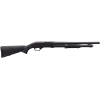

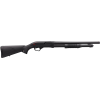
6. Stoeger M3000 Defense (~$449) — Best Budget Semi-Auto Shotgun
Specs: Semi-auto (Inertia Driven) | 5+1 capacity | 18.5″ barrel | 12 gauge | 7.4 lbs | Street price ~$449
Pros
- Benelli inertia system at $449 is genuinely remarkable value
- Semi-auto means faster follow-up shots without pumping
- 5+1 capacity is strong for a semi-auto shotgun
Cons
- Gas system needs cleaning — neglect causes malfunctions
- Trigger is heavier than premium semi-autos
- Fit and finish is clearly lower-grade than Benelli or Franchi
At $449, the Stoeger M3000 Defense is the most affordable inertia-driven semi-auto shotgun on the market. The inertia system comes directly from Benelli’s design — Stoeger is a Benelli subsidiary — just built to a lower standard to hit the price point. For home defense use, which means relatively limited round counts and infrequent range trips, the simplified execution is fine.
Semi-auto follow-up shots are genuinely faster than pumping after each shot. Whether that matters in a home defense scenario is debatable — most defensive shotgun uses end in fewer shots than the magazine holds. But for shooters with weaker hands, or anyone who struggled to pump consistently under stress, semi-auto removes that failure mode entirely.
Clean this gun. Gas-operated semi-autos need regular maintenance to cycle reliably. If the M3000 sits in your safe for six months without a cleaning, the gas ports will gunk up and you’ll get failures to cycle. A basic strip-and-clean every few months, plus after every range trip, keeps it running. This is slightly more maintenance burden than a pump, but nothing onerous.
Best For: Anyone who wants semi-auto reliability at the lowest possible price, shooters who struggle with pump operation, anyone who wants a shotgun that won’t require short-stroke corrections under stress.
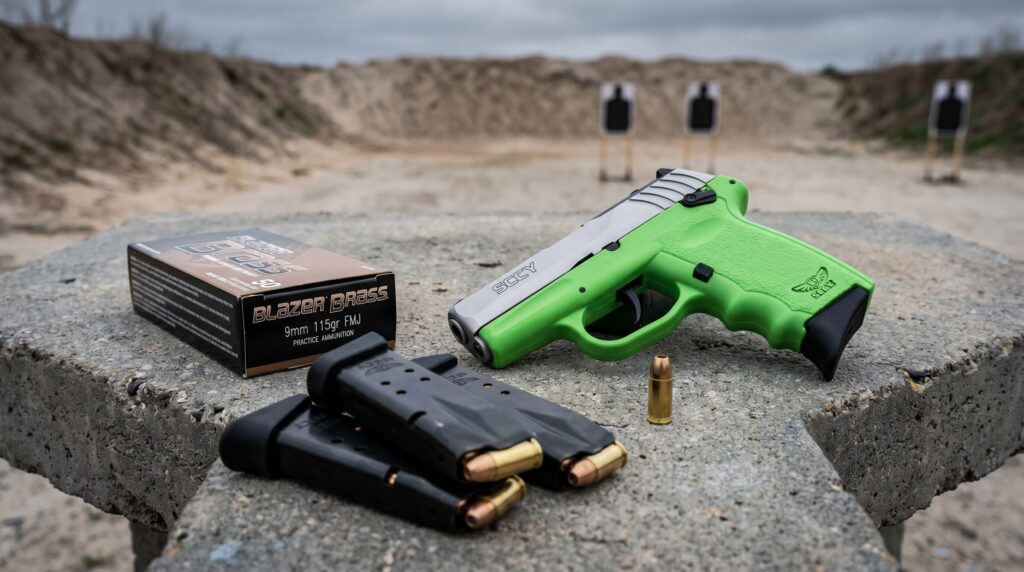
7. SCCY CPX-2 (~$249) — Tightest Budget Pistol Option
Specs: Semi-auto (DAO) | 10+1 capacity | 3.1″ barrel | 9mm | 15 oz | Street price ~$249
Pros
- $249 makes it among the most affordable 9mm options from a known maker
- Double-action-only with no external safety simplifies operation
- Lifetime warranty covers any repairs — SCCY stands behind these guns
Cons
- DAO trigger is long and heavy — accuracy requires significant trigger practice
- Very short 3.1-inch sight radius makes precision harder
- Limited aftermarket
SCCY CPX-2 is the honest answer when someone needs a home defense pistol and has $250 to spend. It’s not glamorous. The trigger is long and heavy. The sight radius is short. But SCCY backs their guns with a genuine lifetime warranty — and that warranty gets used, which tells you something about both the service and the quality level. They’ll fix it if it breaks.
Double-action-only trigger means every shot has the same long pull. No short reset to learn, no pre-travel to account for. For a new shooter or someone who doesn’t train frequently, the consistent DAO trigger is actually more predictable than a striker-fired action. You always know exactly what the trigger is going to do.
At $249 new, the CPX-2 is the only sub-$300 pistol I’d genuinely recommend for home defense over a cheap pump shotgun. The Maverick 88 at the same price is more effective per dollar for most people. But if a handgun is specifically what you want and $249 is your limit, the SCCY is the right choice over the imported no-name brands you’ll see at the same price point.
Best For: Strict budget buyers who specifically need a handgun, anyone in the absolute tightest budget tier who wants a known brand with a warranty.
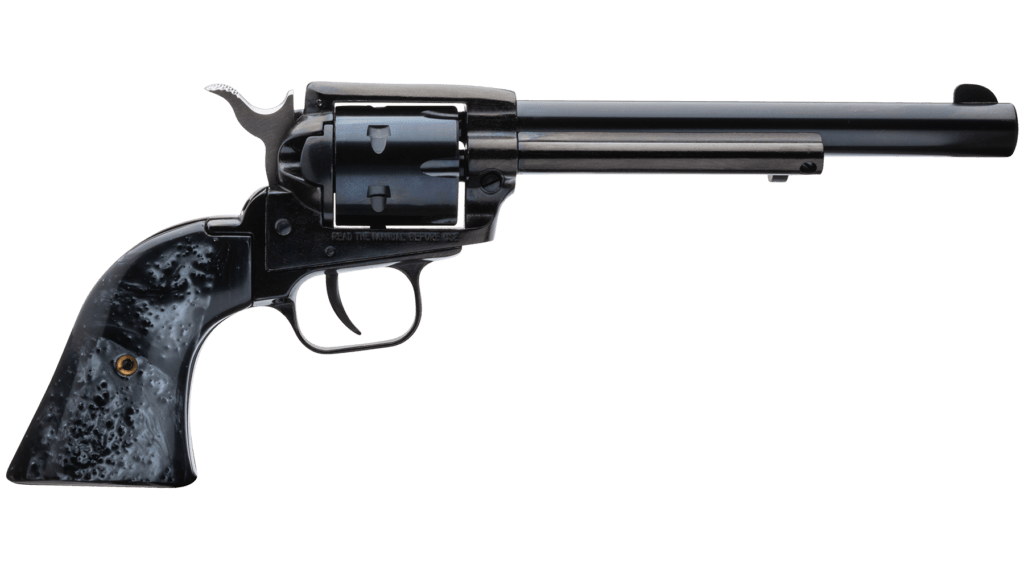
8. Heritage Rough Rider .22 Mag (~$199) — Training Gun Only
Specs: Single-action revolver | 6-round cylinder | 4.75″ barrel | .22 Magnum | 31 oz | Street price ~$199
Pros
- $199 is the cheapest way to build real trigger fundamentals, .22 Magnum has some defensive merit in a pinch
- Excellent for introducing new shooters to handgun fundamentals
- Fun to shoot — encourages regular practice
Cons
- Single-action only — must cock hammer for each shot
- Dramatically less stopping power than centerfire options
- NOT a first choice for home defense
I’m including this with a massive caveat: the Heritage Rough Rider in .22 Mag is a training tool, not a primary home defense gun. If you absolutely cannot afford anything on this list and already own one of these, yes, .22 Magnum from a 4.75-inch barrel produces around 300 ft-lbs of muzzle energy — that’s roughly comparable to a weak .380. It’s not nothing. But it’s the absolute last resort on this list.
Where the Rough Rider actually earns its place on a budget home defense list is as a training supplement. At $199, you can afford this in addition to a primary defensive gun. Cheap .22 Magnum ammunition lets you practice trigger control, sight alignment, and grip mechanics for pennies per round. The fundamentals you build with a .22 transfer directly to centerfire pistols.
The single-action only requirement means you cock the hammer before every shot. That’s not a defensive gun. Don’t rely on this as your primary home defense option if you can possibly afford anything else on this list. But as a range companion for fundamentals practice? At $199, it’s excellent value.
Best For: Supplemental training alongside a primary defensive gun, absolute budget floor when nothing else is possible, introducing new shooters to fundamentals with minimal cost.
Who This Guide Isn’t For
- Anyone choosing the Heritage Rough Rider as a serious defensive gun. The .22 Magnum revolver is here as a training gun and a last-resort option for shooters who genuinely cannot manage a 9mm or 12 gauge. If you can handle a 9mm at all, buy the Taurus G3c or the SCCY CPX-2 first. Rimfire ignition is also less reliable than centerfire under storage.
- People who insist on Glock, SIG, or HK reliability at this price. Premium-brand triggers and tighter manufacturing tolerances cost more for real reasons. If $279 vs $549 keeps you up at night, the Taurus G3c or Ruger Security-9 will outright work. If you cannot accept lower QC variance, save another $200 and look at the Glock 19 Gen 6 or a used M&P 9 M2.0.
- Anyone who skips the safe to spend the full budget on the gun. If you have children, roommates, or a household where the gun cannot stay on your person, you cannot skip the safe. Buy the cheaper gun. The GunVault SpeedVault is $90. The Hornady RAPiD Safe is $130. Both are non-negotiable when kids are present.
- Concealed-carry buyers. Home defense guns and CCW guns are not always the same gun. The Maverick 88, Stoeger M3000, and SXP Defender obviously do not conceal. The Taurus G3c, SCCY CPX-2, and Security-9 do, but for a dedicated CCW pick at this budget, the best budget CCW guns guide is the better starting point.
The Complete Home Defense Budget Breakdown
Here’s what a complete home defense setup actually costs at different budget tiers. The gun is one line item, not the whole budget.
$450 total budget: Mossberg Maverick 88 ($249) + GunVault SpeedVault ($90) + Streamlight HL-X forend light ($75) + Federal Personal Defense buckshot two-pack ($35) = $449. That’s a fully functional home defense shotgun in a biometric safe with a weapon light and spare defensive ammo.
$600 total budget: Ruger Security-9 ($379) + Hornady RAPiD Safe ($130) + Streamlight TLR-7A ($109) = $618. Swap the SCCY CPX-2 for the Security-9 to save $130 if you need to shave cost. That’s a loaded 9mm in a biometric handgun safe with a weapon light.
What not to cut: The safe. If you have children in your house and skip the safe to spend more on the gun, you’ve made a dangerous tradeoff. The safe is non-negotiable when children are present. Spend less on the gun before you spend less on the safe.
Frequently Asked Questions
What is the cheapest reliable home defense gun?
The Mossberg Maverick 88 12 gauge pump shotgun at around $249 is the cheapest genuinely reliable home defense gun. It uses the same basic pump-action design as the Mossberg 500 and accepts 2.75 inch or 3 inch shells. The 12 gauge buckshot terminal effect at home-defense distances is overwhelming. For under $250, no other defensive firearm matches that combination of stopping power and reliability.
Is a $300 pistol reliable enough for home defense?
Yes, in 2026 several $300 pistols are genuinely defensive-capable. The Taurus G3c ($279), Ruger Security-9 ($379), and S&W SD9 VE ($369) all run reliably with modern defensive ammunition through normal maintenance cycles. The gap between a $279 G3c and a $549 Glock 19 Gen 6 is real on the trigger and the fine manufacturing tolerances, but functional reliability for home defense is comparable. Practice and ammunition testing matter more than the gun's price tag.
Should I buy a 9mm or a 12 gauge shotgun for home defense?
For most people, the 12 gauge shotgun is the better home defense choice if you can handle the recoil and have the space to maneuver it. The Mossberg Maverick 88 or Winchester SXP Defender at $249-$349 delivers more terminal effect per shot than any 9mm pistol. The 9mm wins on maneuverability in tight hallways and on follow-up shot speed. If you live in a small apartment or have mobility limitations, the 9mm pistol is the smarter choice.
How much should I spend on a home defense gun?
Budget for the complete setup, not just the gun. A $500 home defense budget can cover a Mossberg Maverick 88 ($249), a GunVault SpeedVault biometric safe ($90), a Streamlight HL-X weapon light ($75), and two boxes of Federal Personal Defense buckshot ($35), for a total under $450. That gives you a loaded, secured, and lit defensive shotgun with spare defensive ammo. Spending more on the gun and less on the safe is a common mistake when children are in the home.
Is the Mossberg Maverick 88 as reliable as the Mossberg 500?
The Maverick 88 shares the same basic pump-action design as the Mossberg 500 with manufacturing changes that reduce cost. Reliability for defensive use is comparable when the gun is maintained. The 88 uses a trigger-guard safety instead of the 500's tang safety and has fewer aftermarket options, but the core action is the same. Many Mossberg 500 parts will fit the Maverick 88 if you want to upgrade later.
Is the SCCY CPX-2 reliable enough for home defense?
The SCCY CPX-2 is the cheapest pistol on this list at around $249 and is reliable enough for serious home defense if you accept the trade-offs. The trigger is long and heavy, the sights are basic, and the manufacturing tolerances run looser than premium pistols. SCCY also offers a lifetime warranty that has historically honored repairs without arguments. For a buyer who genuinely cannot stretch to a Taurus G3c or Ruger Security-9, the CPX-2 is a real defensive gun, not a toy.
What ammunition should I use for budget home defense guns?
For the 12 gauge shotguns (Maverick 88, SXP Defender, Stoeger M3000), use Federal Personal Defense 00 buckshot, Hornady Critical Defense buckshot, or Winchester PDX1 Defender 00 buckshot. For the 9mm pistols (Taurus G3c, Ruger Security-9, S&W SD9 VE, SCCY CPX-2), use Federal HST 124 or 147 grain, Hornady Critical Defense 115 grain, or Speer Gold Dot 124 grain. Always test 100 rounds of your chosen defensive load through your specific gun before trusting it for defensive use.
Why is the Heritage Rough Rider only listed as a training gun?
The Heritage Rough Rider .22 Magnum is on the list as a training-grade and last-resort option, not a serious primary home defense gun. The .22 Magnum cartridge is significantly less effective than 9mm or 12 gauge for stopping a threat. The rimfire ignition is also less reliable under long-term storage than centerfire ammunition. The Rough Rider earns a spot only because it's cheap, easy to shoot, and a step up from no gun at all for a shooter who genuinely cannot manage 9mm recoil.
4,739+ Gun & Ammo Deals
Updated daily from 200+ top retailers. Filter by category, caliber, action type, and price.
Related Guides