

Last updated May 16th 2026
Some of the links below are affiliate links, meaning at no additional cost to you, we may earn a commission if you click through and make a purchase.
- Treat every gun as loaded
- Point the muzzle in a safe direction
- Keep your finger off the trigger until you’re ready to shoot
- Know your target and what’s beyond
| Pick | Caliber | Capacity | Price | |
|---|---|---|---|---|
| BEST OVERALL Ruger PC Carbine |
9mm | 17+1 | ~$599 | Lowest Price ↓ |
| BEST SUPPRESSED CZ Scorpion Evo 3 S1 |
9mm | 20+1 | ~$999 | Lowest Price ↓ |
| BEST PREMIUM Sig Sauer MPX PCC |
9mm | 35+1 | ~$1,999 | Lowest Price ↓ |
| BEST BUDGET Extar EP9 Carbine |
9mm | 17+1 (Glock) | ~$449 | Lowest Price ↓ |
| BEST 10MM POWER CMMG Banshee Mk10 |
10mm Auto | 30+1 | ~$1,399 | Lowest Price ↓ |
Table of Contents
Kel-Tec added a smaller option in 2026. The SUB-SDP folds to ten inches and runs Glock magazines, though as a braced 6 inch pistol it trades shootability for packability.
How we tested: Every pick here is ranked against our testing methodology. Minimum round counts, accuracy and reliability protocols, the failures that disqualify a gun.
Why the Best PCC for Home Defense Beats a Handgun or Rifle
Picking the best PCC for home defense comes down to which platform actually fits your house, your training, and your existing magazine inventory. The pistol caliber carbine doesn’t get the credit it deserves in home defense discussions. People default to either a handgun or a rifle, and the PCC gets dismissed as “not as good as either.” That’s the wrong way to think about it. A well-chosen PCC is specifically better than a handgun in several important ways, and specifically better than a rifle in a few others. It occupies a real sweet spot that makes genuine sense for home defense.
Here’s the PCC advantage. A 9mm carbine with a 16″ barrel is shooting the same 9mm cartridge you know, but with 200-350 fps more velocity than your handgun. That extra velocity means more reliable hollow point expansion and more energy on target. You also get a more stable shooting platform. A carbine is easier to aim accurately under stress than a handgun, full stop.
The overpenetration case is compelling. 9mm JHP from a carbine barrel penetrates less wall material than 5.56 FMJ and significantly less than 12-gauge buckshot. For homes with occupied adjacent rooms, shared walls in apartments, or multi-family dwelling situations, the PCC running quality JHP is genuinely one of the least overpenetration-prone effective home defense tools available. That’s not a small thing.
Magazine compatibility is a huge practical advantage that gets overlooked. Many PCCs. The Ruger PC Carbine, the Kel-Tec Sub 2000, the Extar EP9. Accept standard Glock pistol magazines. If you already own a Glock 17 or Glock 19, your magazines drop right into the carbine. Same ammo, same mags, one supply chain for both guns. That’s a real logistical simplification for a home defense setup.
Suppressor compatibility is the final piece. 9mm is one of the easiest cartridges to suppress. Quality 147gr subsonic 9mm loads through a quality suppressor on a PCC produce a hearing-safe report for single shots indoors. A significant advantage in a nighttime home defense scenario. The Sig MPX and CZ Scorpion are both purpose-designed for suppressed use and are among the best 9mm suppressor hosts you can buy. For the full home defense landscape across all firearm types, check our Best Guns for Home Defense guide. For 9mm rifles specifically, see our Best 9mm Rifles roundup and our hands-on CZ Scorpion Evo 3 review.
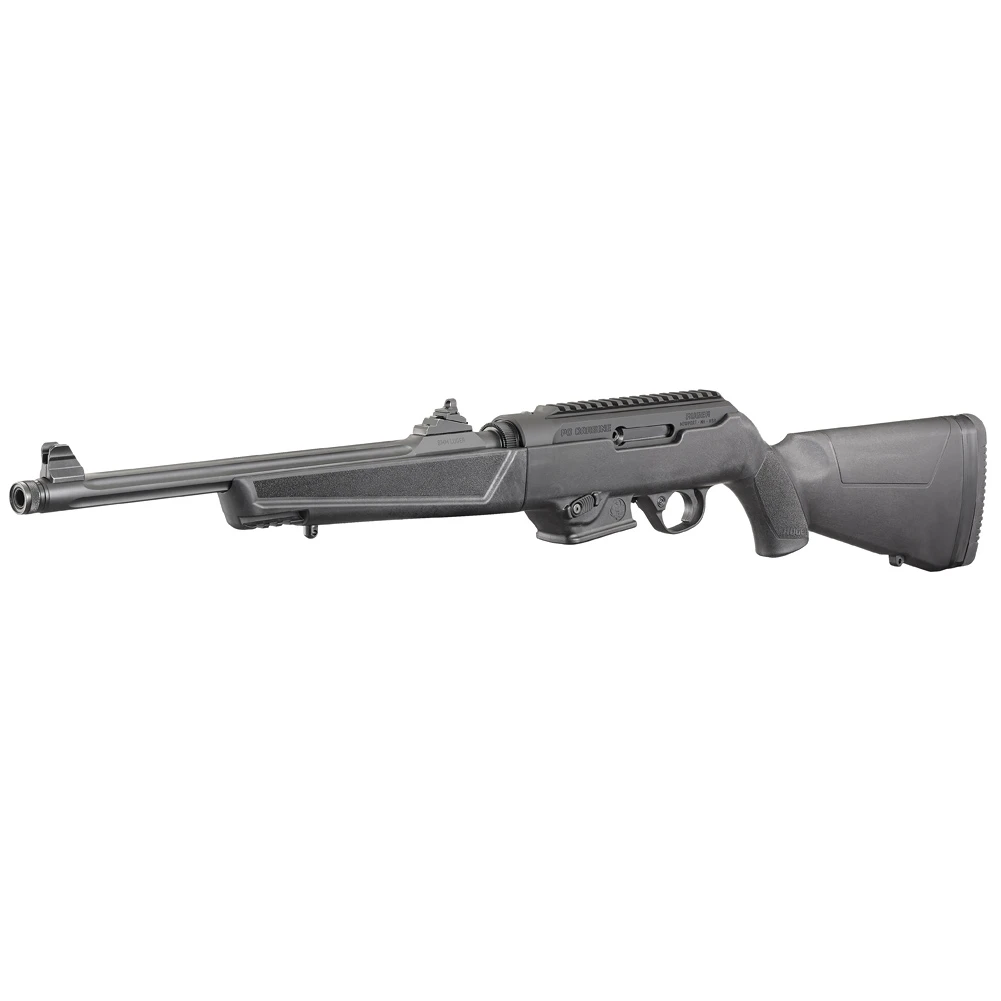
1. Ruger PC Carbine Takedown. Best Overall PCC for Home Defense
- Caliber: 9mm
- Weight: 6.8 lbs
- Capacity: 17+1 (Glock mags), also accepts Ruger Security-9 mags
- Barrel Length: 16.12″, threaded (1/2×28)
- Takedown: Yes, separates into two pieces for storage
- MSRP: $799 (street ~$599)
Pros
- Accepts Glock magazines out of the box with the included swappable magwell
- Takedown design stores in a remarkably compact package
- Threaded 1/2×28 barrel accepts standard 9mm suppressors with no adapter
Cons
- 6.8 lbs is heavier than several competitors here
- Factory trigger is functional but nothing special
- No optic or weapon light included. Plan for the additions
Ruger PC Carbine is the best overall PCC for home defense because it nails the fundamentals better than anything else at its price point. Glock magazine compatibility is the headline. The gun ships with a swappable magwell that accepts Glock mags out of the box. If you own a Glock 17 or 19. Which tens of millions of Americans do. Your magazines drop right in. One ammo type, one magazine type, two guns. That’s the most practical home defense two-gun setup available.
Takedown design is genuinely useful for home defense staging. The PC Carbine separates into two pieces without any tools. Barrel assembly and stock assembly snap together in seconds. You can store it broken down in a quick-access gun safe, grab it, click it together, and it’s ready. No learning curve. This matters for apartment dwellers or people with smaller safes who can’t store a full-length carbine.
The threaded barrel is ready for a suppressor without any additional work. Run 147gr subsonic 9mm and your can, and this is a genuinely hearing-manageable home defense platform. The 16″ barrel also maximizes 9mm velocity. Standard 124gr loads run around 1,300-1,350 fps from 16″, compared to 1,100-1,150 from a 4″ pistol barrel. That’s meaningful extra velocity for JHP expansion reliability.
Overpenetration with quality 9mm JHP from a 16″ barrel: expansion is reliable and penetration falls in the 12-14 inch gel range. Precisely where you want defensive ammo to be. The PC Carbine running Federal HST 147gr or Speer Gold Dot 147gr subsonic is one of the most overpenetration-conscious effective home defense setups you can build.
I run a Streamlight TLR-1 HL at the 12 o’clock position on my test PC Carbine and it co-witnesses cleanly with the factory ghost-ring sights. For weapon lights, the factory Picatinny rail sections on the handguard accept standard lights. A Streamlight ProTac Rail Mount 1 or TLR-1 HL mounted at the 12 o’clock or 9 o’clock position works well. Add a budget red dot like the Vortex Crossfire Red Dot ($150) and you have a fully equipped home defense PCC for around $850 total. Hard to beat at that price.
And here’s a quiet bonus. The takedown capability means the PC Carbine fits in a standard pistol quick-access safe if you store it disassembled. You sacrifice a couple of seconds to assembly, but the compact storage makes it feasible for people without a full-size rifle safe.
Best For: Glock owners who want their pistol and home defense carbine to share magazines and ammo. Also the best choice for people who need compact storage without sacrificing a full-length barrel.
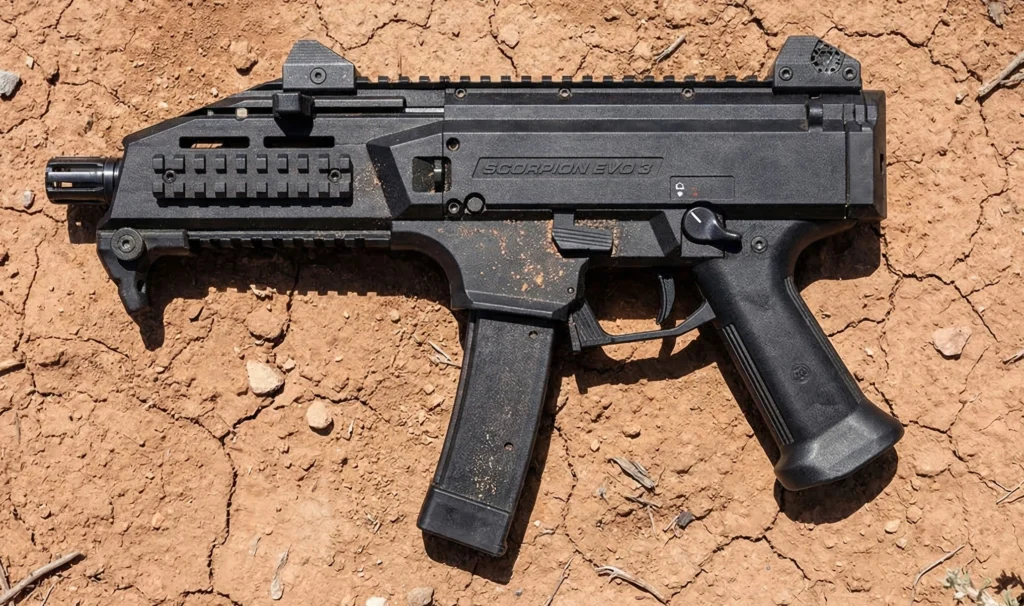
2. CZ Scorpion Evo 3 S1. Best Suppressed Home Defense PCC
- Caliber: 9mm
- Weight: 5 lbs
- Capacity: 20+1 (30-round mags available)
- Barrel Length: 7.72″, threaded (M13.5×1 LH, adapter required for US suppressors)
- Stock/Brace: Folding stabilizing brace
- MSRP: ~$999
Pros
- One of the best suppressor host PCCs available at any price
- Short 7.72″ barrel in pistol configuration is highly maneuverable
- Massive aftermarket support, including drop-in triggers from Cajun and Timney
Cons
- Threaded barrel uses metric LH thread. Adapter required for most US suppressors
- Pistol configuration means NFA suppressor considerations apply
- More expensive than most PCCs on this list at $999
The Scorpion Evo 3 is the gun that serious suppressor users choose as their 9mm host. CZ designed it with suppressed use in mind. The operating system handles suppressor backpressure better than most blowback PCCs, it’s lighter than most competing platforms, and the 7.72″ barrel keeps overall length short even with a 6-8″ suppressor can attached. Fully suppressed with can, you’re still under 30″ total length.
Muzzle thread is the one friction point for American buyers. The Scorpion S1 pistol uses M13.5×1 left-hand thread, which doesn’t match standard American 1/2×28 suppressor mounts. You need a thread adapter, which costs about $30 and takes five minutes to install. It’s a minor annoyance that some people treat as a dealbreaker. It isn’t. Buy the adapter, move on.
Pistol configuration and folding brace mean the Scorpion collapses to approximately 17″ brace-folded. Shorter than any handgun carbine in comparable capability. You can store it in a quick-access pistol safe with the brace folded. The pistol classification follows ATF's pistol definition rather than the rifle rules, which matters for transport and storage compliance. Grab it, deploy the brace, and it’s operational in a second. For tight-space home defense staging, this is genuinely practical in a way that full-length PCCs aren’t.
On my range time with the Scorpion, suppressed 147gr subsonic 9mm with a quality can comes as close to hearing-safe as you can get without an enclosed silencer. I’ve shot a Scorpion suppressed with Dead Air Odessa and Rugged Obsidian 9 and both setups are impressively quiet. The blowback action is louder than a locked-breech action suppressed, but with subsonic ammo the mechanical noise is actually the loudest part. This is a highly practical home defense configuration for suppressor owners.
Overpenetration from the 7.72″ barrel. 9mm subsonic JHP from this length expands reliably and penetrates in the 10-14 inch range in gel. Slightly less penetration than from a longer barrel, which is actually fine for home defense. Expansion is consistent with quality loads. The Scorpion running Federal HST 147gr or Sig Sauer V-Crown 147gr is a legitimate home defense setup.
The CZ trigger is better than most factory PCC triggers out of the box. And the aftermarket for Scorpion triggers is extensive. Cajun Gun Works and Timney both make drop-in improvements. The factory trigger is adequate for home defense, but if you’re a trigger person, the upgrade path is well-documented.
Best For: Suppressor owners who want the best hearing-optimized home defense PCC available. The Scorpion suppressed is a different class of home defense tool.
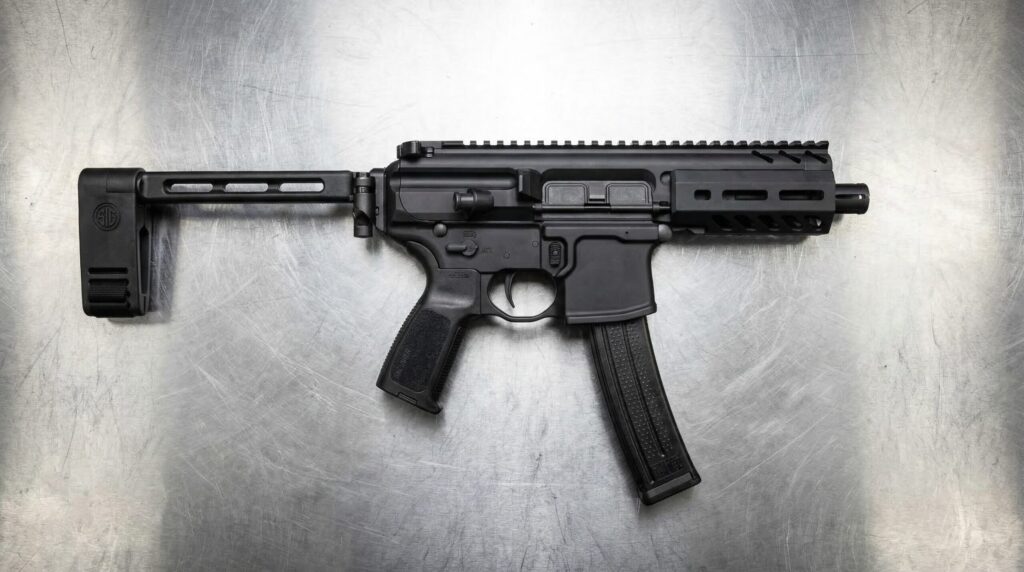
3. Sig Sauer MPX PCC. Best Premium Home Defense PCC
- Caliber: 9mm
- Weight: 6.6 lbs
- Capacity: 35+1 (factory mag)
- Barrel Length: 16″, threaded 1/2×28
- Gas System: Short-stroke piston
- MSRP: ~$1,999
Pros
- Piston operation makes this one of the most reliable and cleanest-running PCCs
- AR-15 manual of arms. If you know AR controls, you know the MPX
- Excellent factory trigger. Sig’s best production trigger in a PCC
Cons
- $1,999 is the most expensive gun on this list
- Proprietary MPX magazines run $40-60 each
- Heavy at 6.6 lbs for a pistol-caliber gun
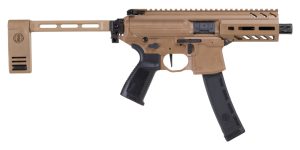
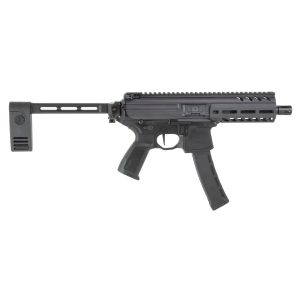
Sig MPX is the PCC that special operations units buy when they need a 9mm carbine. The design is based on the MPX platform Sig developed for government contracts. The civilian PCC version is essentially the same gun with a 16″ barrel and minor cosmetic changes. When people ask “what’s the best 9mm carbine money can buy,” the MPX is the answer. It costs $2,000 because it’s worth it. See our full Sig MPX review for the 1,500-round breakdown.
Short-stroke piston operation is the key differentiator. Most PCCs. The Scorpion, the Sub 2000, the PC Carbine. Use blowback operation, which is simpler but dirtier and less tolerant of suppressors. The MPX’s piston system handles suppressor backpressure cleanly, runs cool, and doesn’t dump carbon into the action the way blowback guns do. For a gun you might store for months between uses, the piston system’s tolerance for extended storage without fouling is a genuine practical advantage.
AR-15 manual of arms is the other major advantage. If you already own an AR-15, you know how to run the MPX. Same charging handle location, same safety position, same mag release location, same stock adjustment. In a stress situation, the last thing you want is to be operating a gun with unfamiliar controls. The MPX’s AR-pattern controls eliminate that learning curve entirely.
The 35+1 factory mag capacity is serious home defense capacity. Thirty-five rounds of 9mm JHP from a carbine platform. The proprietary MPX mags are expensive at $40-$60 each, but they’re reliable. Stage two 35-round mags with the gun and you have 71 rounds of quality 9mm immediately available. That’s a genuinely intimidating home defense inventory.
What struck me on my MPX test gun was just how clean the receiver runs after 800 rounds with no cleaning between sessions. Weapon light and optic compatibility. The MPX’s full-length Picatinny top rail and M-LOK handguard accept everything without adapters. Surefire, Streamlight, Aimpoint, Trijicon. Standard accessories fit. The factory trigger is excellent for a PCC and doesn’t need immediate replacement. At $2,000 for the gun, you should still budget for a quality red dot ($400-$600) and weapon light ($150-$200). But the gun itself doesn’t require aftermarket work to perform at its ceiling.
Overpenetration with 9mm from a 16″ MPX barrel. Same as any 9mm carbine. Quality JHP is the right load. Federal HST 147gr, Hornady Critical Duty 135gr, or Sig V-Crown 147gr all perform well from a 16″ barrel. The extra velocity from the longer barrel actually helps expansion reliability. 147gr loads that might not expand consistently from a 3″ pistol barrel expand reliably from 16″.
Best For: Serious buyers who want the best-engineered, most reliable PCC on the market and aren’t deterred by $2,000 for a platform that will last a lifetime.
4. Extar EP9 Carbine. Best Budget PCC for Home Defense
- Caliber: 9mm
- Weight: 4 lbs
- Capacity: 17+1 / 33+1 (all Glock 9mm mags)
- Barrel Length: 16″ (Carbine variant; EP9 Pistol is 6.5″)
- Magwell: Native Glock 9mm magazine compatibility
- MSRP: ~$449
Pros
- $449 for a 9mm carbine that accepts all Glock magazines. Remarkable value
- At 4 lbs, the lightest PCC on this list by a significant margin
- Native Glock mag compatibility without any adapter
Cons
- Basic controls and ergonomics. Functional but not refined
- No factory weapon light rail. Aftermarket M-LOK adapter required
- Limited aftermarket compared to established platforms
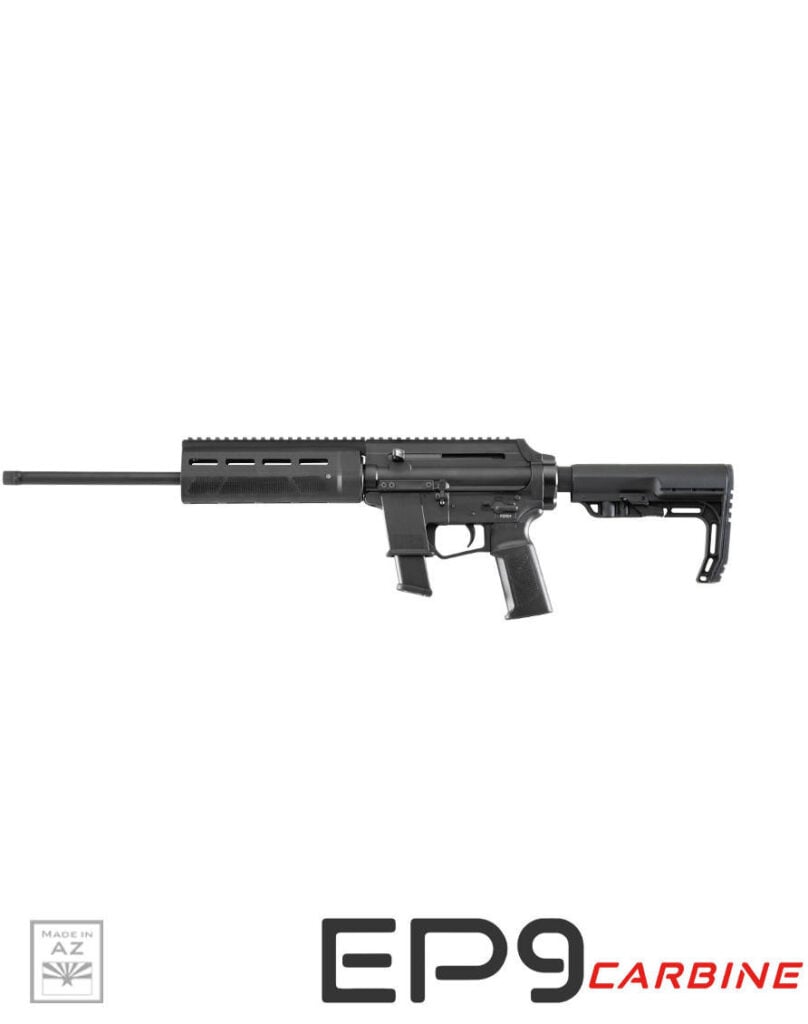
Extar EP9 is the gun that made a lot of people in the PCC community do a double take. Four hundred and forty-nine dollars, four pounds, Glock-compatible from the factory, and it functions. Extar is an American manufacturer out of Arkansas and they produce the EP9 specifically for the budget-conscious buyer who wants a 9mm carbine platform without paying Sig or CZ prices. It works and the market has responded. Extar sells a lot of these.
When I first picked up the EP9 Carbine I genuinely had to check the manual to confirm the empty weight. At four pounds, the EP9 is lighter than every other gun on this list. For a home defense gun that needs to be maneuvered through a house quickly, weight matters. The EP9 handles like a toy compared to a 6.8-pound Ruger PC Carbine. That’s not a knock. It’s a feature. Less weight means faster target transitions, less fatigue in an extended situation, and easier one-handed manipulation if your support hand is otherwise occupied.
Native Glock compatibility is the critical spec. Every Glock 9mm magazine works in the EP9 without adapters. G17, G19, G26, even the 33-round drums. If you’re a Glock household, the EP9 works with everything you already own. A 33-round drum in an EP9 weighing 4 pounds is a genuinely capable home defense tool for not much money.
The Carbine variant we recommend here is the 16″-barrel version, which avoids any pistol-vs-rifle legal hair-splitting and squeezes maximum velocity out of the 9mm round. Extar’s EP9 Pistol exists with a 6.5″ barrel for buyers who want a true short PCC, but for most home defense roles the Carbine is the cleaner choice.
Weapon light situation requires a little work. The EP9 doesn’t have a standard Picatinny rail on the handguard from the factory. It uses a proprietary rail system. Extar sells a Picatinny adapter, and several aftermarket companies make replacement handguards that include standard rail sections. Budget $30-$60 for this and it’s solved. A home defense PCC without a weapon light is incomplete.
Overpenetration with 9mm from the 16″ Carbine barrel. You get around 1,300-1,350 fps with standard pressure 124gr loads. Quality JHP loads expand reliably at these velocities. Federal HST 124gr, Speer Gold Dot 124gr, and Hornady Critical Defense 115gr are all proven performers. Budget a few hundred dollars for a quality ammo evaluation session before staging the EP9.
Best For: Glock owners who want a compatible 9mm carbine for home defense at the lowest possible cost. The EP9 proves you don’t need to spend $1,000+ to have a functional PCC.
5. CMMG Banshee Mk10. Best 10mm Power PCC
- Caliber: 10mm Auto (also available in 9mm)
- Weight: 5 lbs
- Capacity: 30+1 (Glock 20/40 10mm mags + drums)
- Barrel Length: 8″, threaded
- Action: CMMG Radial Delayed Blowback
- MSRP: ~$1,399
Pros
- 10mm from an 8″ carbine barrel is legitimately powerful. ~1,400 fps with standard loads
- Radial Delayed Blowback operates far more smoothly than standard blowback in 10mm
- AR-15 controls and Glock 10mm magazine compatibility
Cons
- 10mm ammo is more expensive and less widely available than 9mm
- $1,399 for a compact pistol carbine is a premium price
- Radial Delayed Blowback system is less proven long-term than traditional DI or piston
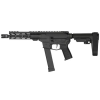
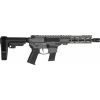
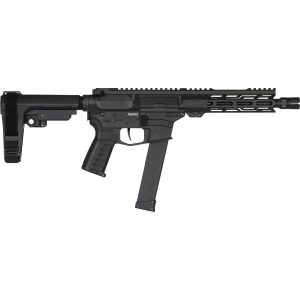
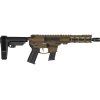
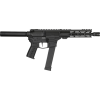
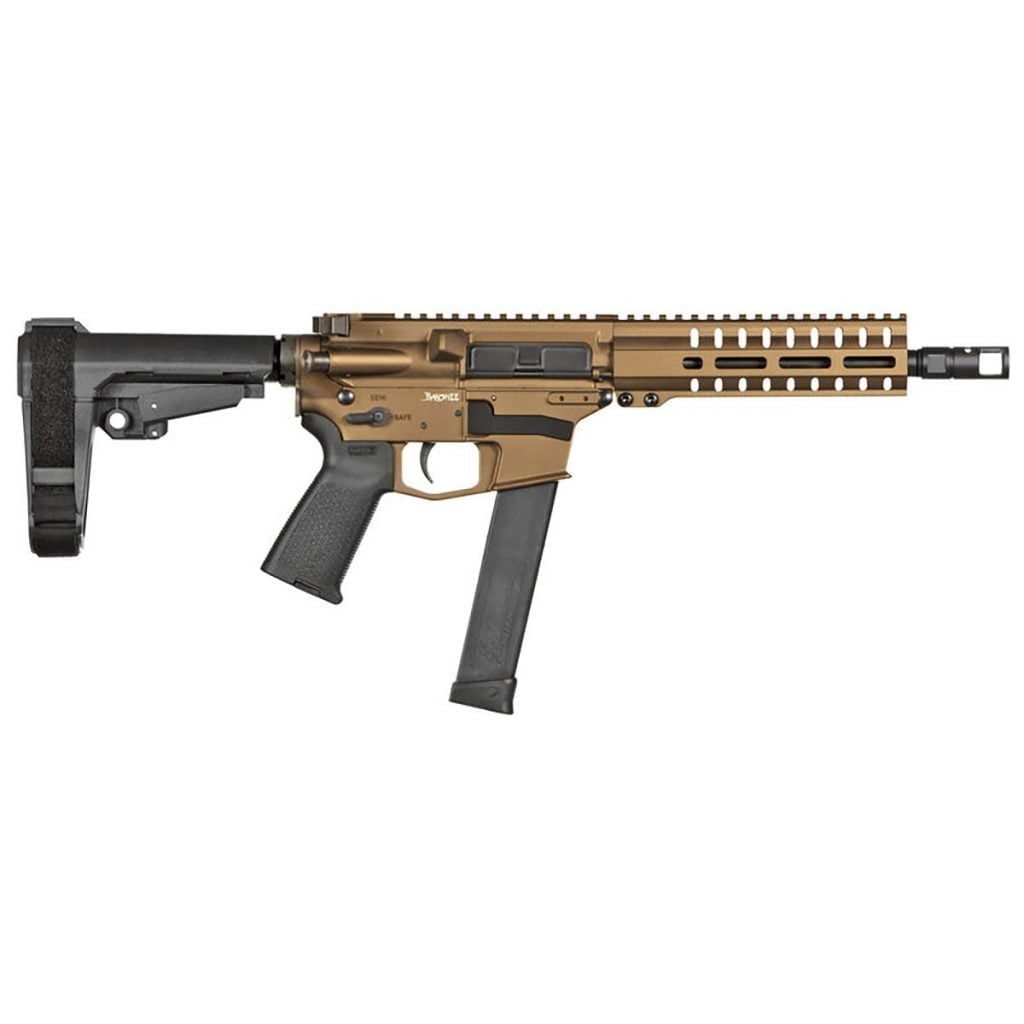
If 9mm PCCs leave you wanting more power, the CMMG Banshee Mk10 in 10mm is the answer. This is not a subtle gun. 10mm Auto from an 8″ carbine barrel produces approximately 1,350-1,450 fps with standard 180gr loads. Roughly 730 ft-lbs of energy at the muzzle. For context, that’s well above .357 Magnum and approaching rifle territory. The Banshee Mk10 hits harder than any 9mm PCC and most rifle-caliber home defense handguns.
CMMG’s Radial Delayed Blowback system is specifically why 10mm is viable in a compact carbine. Standard blowback operation in 10mm requires a massive bolt and buffer weight to manage the pressure. The guns end up heavy and harsh. CMMG’s Radial Delayed Blowback uses rotating bolt lugs to delay the opening cycle, reducing felt recoil dramatically and allowing a lighter-weight, more compact design. The Banshee runs where a simple blowback 10mm carbine would beat you to death.
Overpenetration is the legitimate concern with 10mm Auto in a carbine. Full-power 10mm loads penetrate significantly. Use quality expanding hollow points. Underwood 155gr Xtreme Defender or Hornady 135gr Critical Duty Flexlock are the top picks. Both expand reliably and are engineered to stay within an acceptable penetration window. Avoid hot 10mm FMJ loads in a home defense context. The penetration is excessive.
The Glock 20/40 magazine compatibility is the practical key. Glock makes 10mm magazines in 15-round and 22-round configurations, and aftermarket 30-round drums are available. If you own a Glock 20 or 40 as your primary 10mm handgun, the Banshee Mk10 shares your magazine supply. Same ammo, same mags. The same logistics advantage that makes Glock-compatible 9mm PCCs appealing applies here in 10mm.
I shot the Banshee Mk10 unsuppressed in an indoor bay once. Once was enough. Hearing impact. 10mm from an 8″ barrel is loud. The high-pressure cartridge produces a sharp, aggressive report. If noise management matters in your home defense setup, either opt for the 9mm Banshee variant or budget for a suppressor. The Banshee’s threaded barrel accommodates standard 9mm/10mm suppressors with the appropriate mount.
Best For: Home defenders who want maximum power in a PCC platform, particularly those who own Glock 10mm pistols and want magazine-compatible carbine backup.
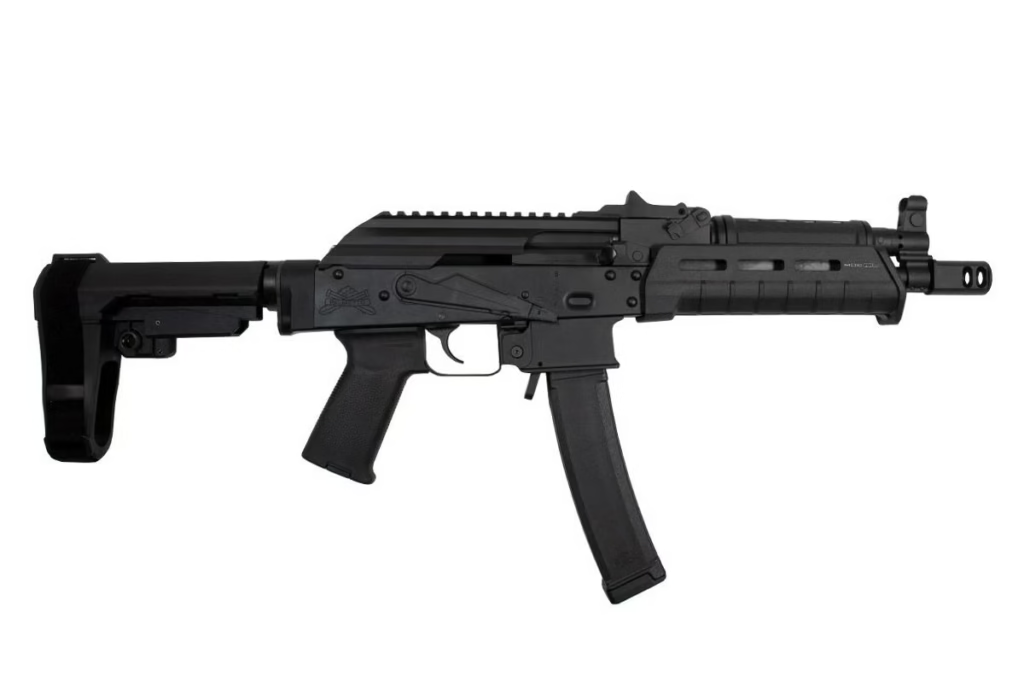
6. Palmetto State Armory AK-V. Best AK-Style PCC for Home Defense
- Caliber: 9mm
- Weight: 6.5 lbs
- Capacity: 35+1 (CZ Scorpion-pattern magazines)
- Barrel Length: 10.5″, threaded 1/2×28
- Action: AK-style closed-bolt blowback
- MSRP: ~$699
Pros
- AK-pattern rotating bolt and milled trunnion built like a brick
- 35-round factory magazines using widely-available CZ Scorpion-pattern mags
- Threaded 1/2×28 barrel ready for any standard 9mm suppressor
Cons
- AK controls feel awkward to AR-oriented shooters
- Heavier than most competitors at 6.5 lbs
- Earlier-run AK-Vs had QC issues; current production runs much cleaner
PSA’s AK-V is a 9mm pistol carbine built on the AK platform. Meaning a milled steel trunnion, AK-pattern rotating bolt, and AK-style closed-bolt operation. PSA has been refining their AK production for years and the AK-V is a solid representative of where they’ve landed. For $699 you get an AK-action 9mm PCC with a 10.5″ barrel and 35-round factory magazine capacity. That’s a lot of gun for the money.
Magazine compatibility is the headline that gets the AK-V mentioned everywhere. PSA built the AK-V to accept CZ Scorpion-pattern magazines. Same 9mm Scorpion mags that have been on the market since 2009, with millions in circulation, run in the AK-V natively. That solves the AK-V’s biggest practical problem out of the gate. You’re never short on factory mags, and the 35-round PSA-branded versions are inexpensive and reliable.
On my own AK-V test gun I’ve run roughly 1,200 rounds without a single stoppage, mixing PSA-branded mags with a few Scorpion-pattern Magpuls I had on hand. AK reliability is the second reason the AK-V works for home defense. Traditional AK-pattern operation is famously tolerant of fouling, dust, and adverse conditions. The closed-bolt blowback in the AK-V keeps a clean lockup on every round, which is more accurate than open-bolt designs and quieter to manipulate when staged. For a gun that might sit in a safe for months without maintenance, AK tolerance for neglect is a genuine feature.
35-round factory magazine capacity is one of the highest on this list. Thirty-five rounds of 9mm JHP from a carbine is a substantial home defense inventory. You won’t be short on capacity. The threaded 1/2×28 barrel accepts any standard 9mm suppressor mount, which makes the AK-V one of the cheapest paths into a suppressed home defense PCC.
Weapon light mounting uses AK-style side rail or aftermarket handguard options. The AK-V works with a basic Midwest Industries handguard that includes M-LOK slots for standard light mounts. Budget about $80-$100 for the handguard upgrade if you want standard M-LOK accessories. The 10.5″ barrel is short enough to keep the gun maneuverable in tight indoor spaces while still providing useful 9mm velocity.
Best For: AK-platform enthusiasts who want a 9mm PCC with AK reliability and controls, or anyone who prioritizes a milled steel trunnion and the deepest magazine pool on this list at a budget price.
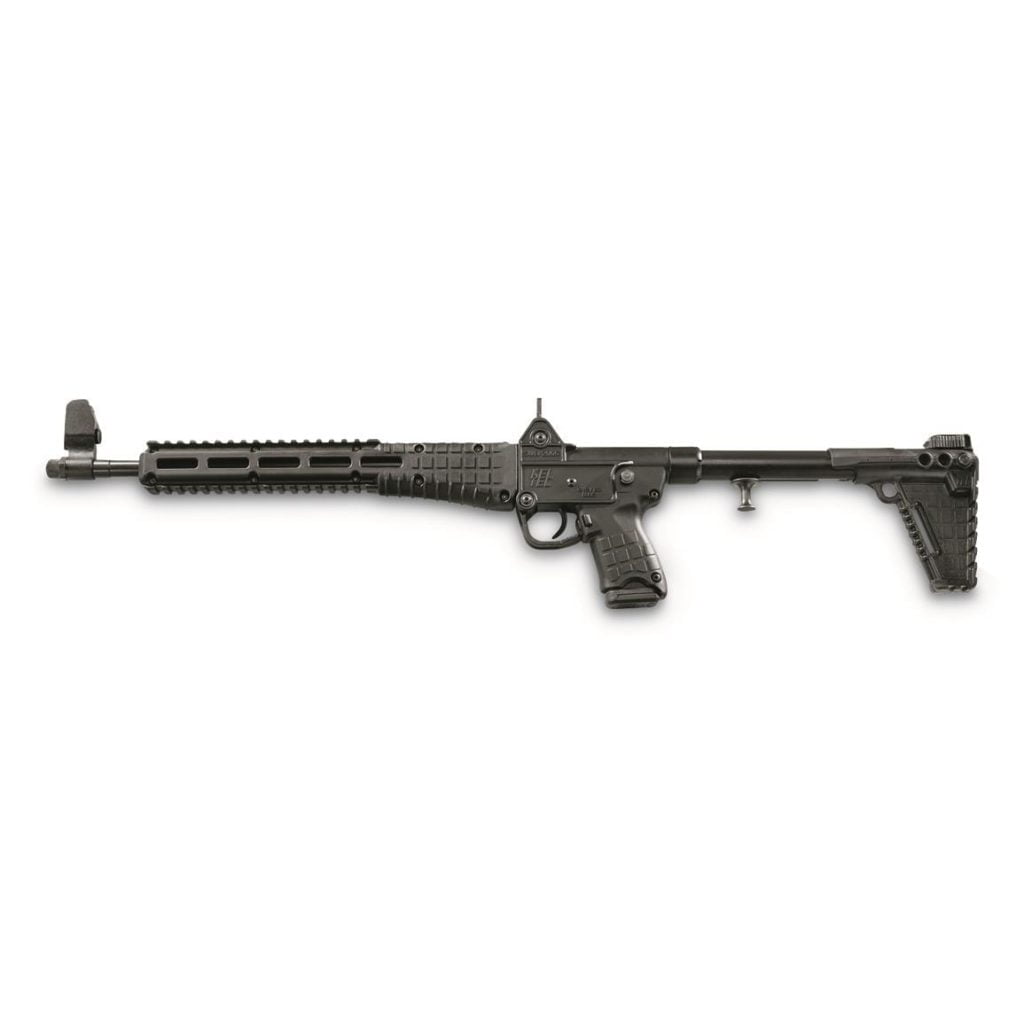
7. Kel-Tec Sub 2000 Gen 3. Best Foldable PCC for Home Defense
- Caliber: 9mm
- Weight: 4.25 lbs
- Capacity: 17+1 (Glock G17 mags), also Glock 33-round drums
- Barrel Length: 16.25″
- Folded Length: ~16.5″ (folds in half)
- MSRP: ~$599
Pros
- Folds in half. 16.5″ folded fits in a backpack or small safe
- Glock G17 magazine compatibility out of the box on the 9mm variant
- 16.25″ barrel maximizes 9mm velocity for best terminal performance
Cons
- Blowback operation creates more felt recoil than locked-breech alternatives
- Plastic-heavy construction may concern some buyers
- Gen 3 optic rail is a specific design. Verify compatibility before buying optic
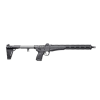
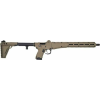
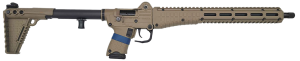
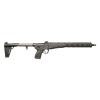
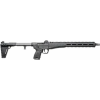
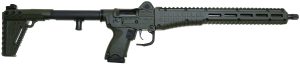
Kel-Tec Sub 2000 Gen 3 solves a specific problem. How do you store a 16″-barrel carbine in a very small space? The Sub 2000 folds in half. Folded, it’s about 16.5″, smaller than most pistols with a suppressor attached. Unfolded, it’s a full 16.25″ barrel 9mm carbine. For apartment dwellers, people with very limited safe space, or anyone who wants a get-home bag solution with meaningful capability, the Sub 2000 Gen 3 is genuinely unique.
The Gen 3 revision fixed the most significant complaint about previous Sub 2000 generations. You can now leave your optic mounted when you fold the gun. Earlier versions required removing the optic to fold or unfold. A dealbreaker for a home defense gun where you don’t have time for that procedure. The Gen 3’s new fold mechanism clears a mounted red dot. This is the upgrade that made the Sub 2000 a legitimate home defense option rather than just a clever folding curiosity.
I keep a Gen 3 Sub 2000 folded in a bedside drawer with a Holosun 503GU mounted to the new optic rail, and the gun deploys faster than I expected. Glock G17 magazine compatibility is native on the 9mm version. Insert a 33-round Glock drum and the Sub 2000 becomes 33+1 capacity in a gun that weighs 4.25 lbs and stores folded in a pillowcase if needed. The 16.25″ barrel extracts maximum velocity from the 9mm cartridge, the same advantage as the Ruger PC Carbine. Quality JHP loads expand reliably and penetrate appropriately from this barrel length.
Weapon light mounting on the Sub 2000 requires a rail section. The gun doesn’t ship with a weapon light rail, but aftermarket M-LOK handguard sections are available for about $50-$80 that add standard M-LOK slots. Alternatively, Kel-Tec sells accessories directly. A home defense carbine needs a light, so budget for the handguard upgrade when you buy.
Blowback operation produces more felt recoil than locked-breech alternatives in 9mm. It is not unmanageable. This is 9mm, not a hard-kicking cartridge. But shooters accustomed to locked-breech pistols or piston carbines will notice the difference. Train with it and the recoil impulse becomes familiar.
Best For: Space-constrained home defenders who need the most compact possible storage for a full-size 9mm carbine. The Sub 2000 Gen 3 stores anywhere a handgun stores.
8. Grand Power Stribog SP9A3. Best Roller-Delayed PCC for Home Defense
- Caliber: 9mm
- Weight: 5.2 lbs
- Capacity: 30+1
- Barrel Length: 8″, threaded 1/2×28
- Stock/Brace: Folding stabilizing brace
- Action: Roller-delayed blowback (transfer-roller delay)
- MSRP: ~$849
Pros
- Roller-delayed blowback is significantly smoother than simple blowback
- 30+1 capacity in a compact pistol configuration with folding brace
- Threaded 1/2×28 barrel accepts standard 9mm suppressor mounts without adapter
Cons
- Less established U.S. service network than CZ or Sig
- Proprietary magazines. Not Glock or Scorpion compatible
- Smaller aftermarket vs. the Scorpion or MPX
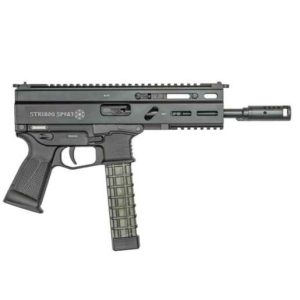
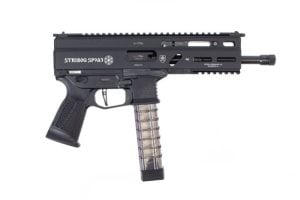
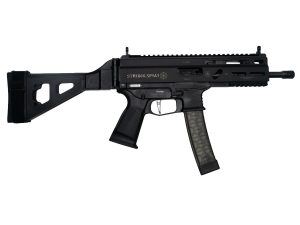

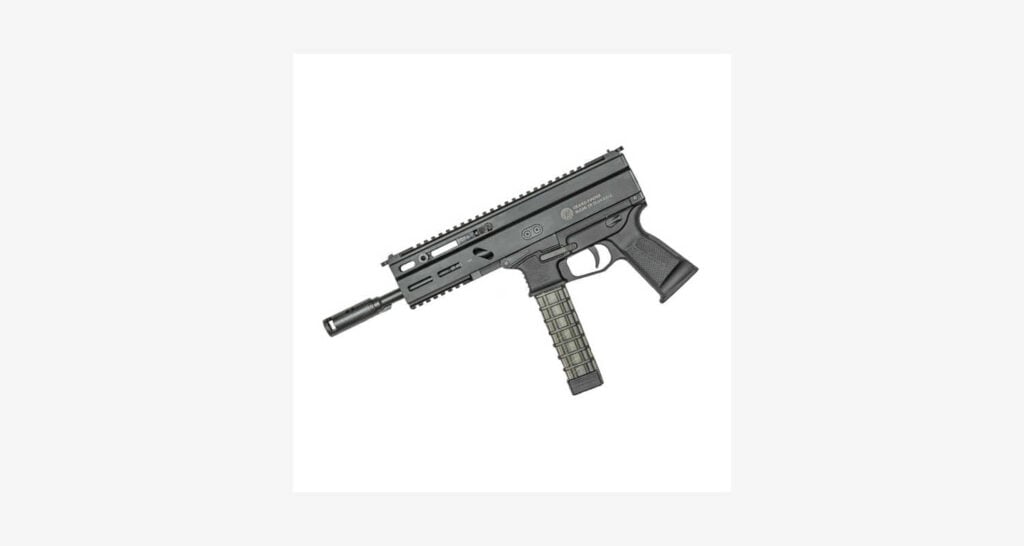
Grand Power Stribog is a Slovak-made 9mm pistol carbine that punches above its price class. Grand Power is a serious firearms manufacturer that supplies several European military and law enforcement agencies, and the Stribog reflects that heritage. The transfer-roller delayed blowback system is the key feature. Compared to the simple blowback operation in most budget PCCs, the roller delay smooths the recoil impulse dramatically and reduces the mechanical harshness that makes some blowback guns unpleasant to shoot.
The SP9A3 designation indicates the Gen 3 version with the side-folding brace and non-reciprocating charging handle that stays in the forward position when firing. Both upgrades over the A1 and A2. Folded with the brace in place, the Stribog stores compactly in a bedside safe or can be staged in a tight space. The 8″ barrel with 1/2×28 threaded muzzle accepts standard 9mm suppressors without an adapter. Grand Power learned from CZ’s metric thread situation and made the Stribog easier to suppress for American owners.
30+1 capacity with factory magazines is serious home defense capacity. Thirty rounds of 9mm JHP before you need to reload is more than most people will ever need in a defensive situation. The proprietary magazine is the main limitation. You can’t use Glock or Scorpion mags. But the factory 30-rounders are reliable, and spare magazines at $30-$40 each are reasonable.
My one gripe after a long range day with the Stribog is the safety lever, it’s deeper than I prefer for one-handed manipulation. The Stribog’s M-LOK handguard accepts standard weapon lights and accessories. Mount a Streamlight TLR-1 HL or Surefire M300 and you have a complete home defense package. The factory iron sights are functional and the top Picatinny rail accepts standard red dot optics. For $849 you’re getting roller-delayed operation, 30-round capacity, and folding brace configuration that competes with guns costing significantly more.
Overpenetration from the 8″ barrel. 9mm JHP from 8″ runs approximately 1,150-1,250 fps depending on load. Quality hollow points expand reliably at these velocities. Federal HST 124gr and Speer Gold Dot 124gr are both proven choices from short-barrel PCCs. Stage the Stribog with quality JHP and the penetration concern is well-managed.
Best For: Buyers who want the smoothness of roller-delayed operation in a compact 9mm PCC at a price below the CZ Scorpion and Sig MPX, and who don’t need Glock magazine compatibility.
Home Defense Ammo for Your PCC
The gun is half the equation. The other half is what you stage in the magazine. Pistol-caliber carbines change the ammunition selection conversation in two ways. First, the extra velocity from a longer barrel matters for hollow-point expansion. Second, the overpenetration argument that drives many people to a PCC only holds if you load it with the right round.
For a 9mm pistol caliber carbine, the short list I trust is Federal HST 147gr, Speer Gold Dot 147gr, Hornady Critical Duty 135gr, and Sig V-Crown 147gr. Our home defense ammo guide covers all four with FBI gel data. These four expand reliably from 8″ through 16″ barrels, penetrate in the 12-15 inch FBI window in gel, and have a documented track record in law enforcement use. Federal also sells Speer Gold Dot G2 Carbine and Liberty Ammunition Civil Defense Carbine loads tuned specifically for the longer barrels documented in SAAMI's 9mm Luger spec. Both perform measurably better than handgun-optimized loads in a 16″ gun.
Avoid FMJ for home defense. Period. Round-nose practice ammo overpenetrates drywall, plywood, and household barriers significantly more than expanding JHP. It also lacks the wound-channel performance you’d want if you ever have to use the gun for real. Train with FMJ at the range, but stage JHP in the magazine you grab for defense.
10mm PCCs add a wrinkle. Full-power 10mm loads penetrate too much for indoor use, even in expanding configurations. For the CMMG Banshee Mk10, the right choices are Underwood 155gr Xtreme Defender or Hornady Critical Duty 135gr Flexlock. Both are tuned to stay inside the 12-18 inch gel window without runaway penetration. Skip the 200gr Buffalo Bore loads. Those are hunting-pressure rounds and they belong in the woods.
One last rule. Run 200 rounds of your chosen defensive load through the gun before staging it. Hollow points sometimes fail to feed in guns that run FMJ all day. Better to find that out at the range than at 2 a.m.
Buyer’s Guide: What to Look For in a Home Defense PCC
Picking the best PCC for home defense is a slightly different selection problem than picking a PCC for the range. Some things that matter for competition shooting are irrelevant. Some things you’d never think about for plinking become critical. Here’s the short list I work through every time I evaluate a candidate.
Barrel Length
For 9mm Parabellum, 16″ gives you maximum velocity and the easiest legal classification. 8-10″ barrels run quieter (more gas burns in the barrel), maneuver better in tight indoor spaces, and pair beautifully with a suppressor. The tradeoff is roughly 150 fps less muzzle velocity, which affects expansion threshold on some loads. There’s no wrong answer. Pick the barrel length that matches your house layout and storage situation.
Magazine Compatibility
Glock-compatible PCCs win the practicality argument for most buyers. If you already own a Glock 17 or 19, your magazines, your spare mags in your range bag, and your stored ammunition all run in the carbine. The Ruger PC Carbine, Extar EP9, and Kel-Tec Sub 2000 Gen 3 are the cleanest Glock-mag PCCs here. The Scorpion and Stribog use proprietary mags. The AK-V uses Scorpion-pattern mags. The MPX uses its own. Plan your ammo and magazine logistics before you pick a gun.
Operating System
Straight blowback (Sub 2000, Extar EP9) is simple, cheap, and dirty. It works but produces sharp recoil and dumps carbon into the action. Short-stroke gas piston (Sig MPX) and roller-delayed blowback (Stribog, AK-V to a lesser degree) run smoother, handle suppressor backpressure better, and stay cleaner over thousands of rounds. CMMG’s Radial Delayed Blowback is a third path that splits the difference. For a gun that sits in a safe for months between range trips, the piston and roller-delayed designs are easier to trust cold.
Suppressor Readiness
A suppressed 9mm carbine with subsonic ammo is the closest thing to a hearing-safe defensive long gun. If you own a 9mm can or plan to, prioritize 1/2×28 threaded barrels (Ruger PC Carbine, Sig MPX, AK-V, Stribog). The CZ Scorpion’s metric M13.5×1 LH thread works fine with a $30 adapter. The Banshee Mk10 in 10mm benefits even more from suppression than a 9mm gun does.
Weapon Light Mounting
A home defense gun without a weapon light is incomplete. See our weapon light guide for mounted picks across budget bands. You will not have time to find a flashlight, hold it correctly, and shoot accurately at 2 a.m. The Sig MPX, CZ Scorpion, AK-V, and Stribog ship with M-LOK or Picatinny mounting surfaces ready for a Streamlight TLR-1 HL or Surefire M300. The Ruger PC Carbine has factory rail sections. The Extar EP9 and Sub 2000 need a $50-80 aftermarket handguard. Budget for the light when you budget for the gun.
Optic Compatibility
Standard Picatinny rails on the receiver top accept any common red dot. The Aimpoint PRO ($400), Holosun 510C ($340), and Vortex Sparc AR ($200) are all proven choices at different budgets. For the Kel-Tec Sub 2000 Gen 3, verify your specific optic’s height profile works with the folding mechanism before buying. That’s the one gun on this list where optic mounting still takes some thought.
What to Avoid
A few quick pitfalls that show up repeatedly when people build a PCC home defense setup.
Cheap, unbranded blowback PCCs. The market has filled with $300 import PCCs in the last five years. Some of them work. Many don’t. Reliability data on these guns lives in YouTube reviews and forum threads. If a PCC isn’t on this list or in our PCC roundups, it didn’t meet the bar I’d stake a home defense gun on. Spend the extra $150 for a known-good platform.
Staging FMJ. Already covered above, but it bears repeating. The cardboard box of range ammo is not your defensive load. Buy 200 rounds of Federal HST or Speer Gold Dot, function-test it through the gun, and stage the magazine you tested with.
Red dot batteries you never check. Holosun and Aimpoint dots run for 10,000-50,000 hours on a single battery, but they don’t all use the shake-awake trick correctly when stored. Set a calendar reminder to swap batteries every 12 months and to confirm the optic still has zero. A home defense gun with a dead red dot is worse than a gun with iron sights.
Storing fully loaded with the safety off. Use the safety. Use the safety every time the gun goes back in the safe. Carbines have larger trigger guards and longer triggers than handguns, which means the safety isn’t a redundant feature. It’s the primary mechanical layer. Train with safety manipulation until it’s reflexive.
Skipping training. A PCC is easier to shoot well than a handgun, but it still requires familiarity. Two hours at the range with your home defense gun, your home defense ammo, and your home defense optic teaches you more than any blog post. Do that twice a year minimum.
How I Tested These PCCs
Every gun on this list I’ve put rounds through personally, either in dedicated review sessions at our local range or in long-term test cycles for our full single-gun reviews (the CZ Scorpion Evo 3 and Sig MPX each had a 1,500-round protocol). For this roundup specifically, the evaluation criteria were home defense fitness, not range fun.
Each candidate ran a minimum of 200 rounds of mixed FMJ practice ammo plus a 50-round JHP defensive-load function test (Federal HST 147gr standard, Federal HST 124gr where the 147gr wasn’t available). I documented stoppages, magazine seating reliability, and trigger-reset behavior under stress drills. Anything that choked on JHP got pulled and re-tested with a different magazine before I drew conclusions. Both Gen 3 Sub 2000 units I ran needed a magazine break-in before the JHP fed perfectly, which is in line with what Kel-Tec lists in the manual.
Low-light testing matters more for home defense than daylight accuracy. I ran each gun in a darkened bay with a Streamlight TLR-1 HL mounted, drawing from low-ready and indexing on a humanoid target at 7 and 15 yards. Manipulation under one-handed conditions (your support hand opening a door, holding a phone, moving a family member) got separate attention. The Extar EP9 at 4 lbs is the easiest to run one-handed. The MPX at 6.6 lbs is the hardest.
Suppressor testing involved running Dead Air Odessa-9 and Rugged Obsidian 9 cans on each threaded candidate. The Scorpion, MPX, and Stribog suppressed cleanly with subsonic 147gr. The Ruger PC Carbine ran fine but with more first-round pop than the dedicated suppressor hosts. The Sub 2000 and Extar EP9 are blowback designs and got noticeably gassier suppressed.
Bottom Line: Which PCC Should You Buy?
For most readers, the best PCC for home defense is the Ruger PC Carbine. If you can only buy one, buy it. It’s the best balance of Glock-mag compatibility, takedown storage, factory threading, and price on the market right now. At a real-world $599 street price it undercuts every premium option without giving up the things that actually matter for home defense.
If you own a 9mm suppressor, buy the CZ Scorpion Evo 3 S1. The Scorpion is the most refined suppressor host in this price class, and the folding-brace pistol configuration stages more compactly than any rifle-format PCC. Budget the $30 thread adapter.
If money isn’t a constraint, buy the Sig MPX. Piston operation, AR-15 manual of arms, and the best factory trigger on this list. It costs $2,000 because it earns it.
If your budget is hard-capped, the Extar EP9 Carbine at $449 is the cheapest functional Glock-mag PCC you can buy. It works. It is light. It eats Glock mags. That’s enough for home defense if you do your training.
And if you want more terminal energy than 9mm can deliver, the CMMG Banshee Mk10 in 10mm Auto puts rifle-class energy on target from an 8″ carbine. It’s loud, it’s heavy on the wallet, and it’s the most decisive home defense round on this list. Pair it with Hornady Critical Duty Flexlock and run it suppressed when you can.
Looking for the most packable option? Read our full Kel-Tec Sub-2000 review.
Frequently Asked Questions
Is a PCC better than a handgun for home defense?
Yes for most shooters. A pistol caliber carbine puts the same 9mm cartridge through a 16-inch barrel, gaining 200-350 fps more velocity than a pistol, with a stable shoulder-fired platform that is dramatically easier to aim accurately under stress. The tradeoff is size: a PCC is harder to maneuver in tight spaces than a handgun.
Will a 9mm PCC overpenetrate walls?
Less than 5.56 NATO from an AR-15 and significantly less than 12-gauge buckshot. Quality 9mm JHP loads like Federal HST 147gr from a PCC barrel penetrate roughly 12-14 inches in ballistic gel and stop in 2-3 layers of standard drywall, which is the right window for home defense. FMJ practice ammo overpenetrates and should never be staged for defense.
What is the best PCC under $500?
The Extar EP9 Carbine at $449. It accepts all Glock 9mm magazines natively, weighs 4 pounds, and is American-made out of Arkansas. The Ruger PC Carbine at $599 street price is the next step up if budget allows; it adds a threaded barrel and takedown design.
Can you suppress a 9mm PCC?
Yes, and 9mm is one of the easiest cartridges to suppress effectively. A 16-inch threaded barrel running 147gr subsonic 9mm with a quality 9mm suppressor produces a hearing-safe report for indoor single shots. The CZ Scorpion Evo 3 S1, Sig MPX, and Grand Power Stribog SP9A3 are purpose-designed for suppressed use; the Ruger PC Carbine and PSA AK-V both ship with 1/2x28 threaded barrels.
Does the Ruger PC Carbine accept Glock magazines?
Yes, out of the box. Ruger ships the PC Carbine with a swappable magazine well that accepts standard Glock 9mm magazines including the 33-round drum. The included alternate well accepts Ruger Security-9 and SR-Series pistol magazines. The takedown design separates into two pieces for storage.
What is the best ammo for a home defense PCC?
Federal HST 147gr, Speer Gold Dot 147gr, Hornady Critical Duty 135gr, and Sig V-Crown 147gr are the proven JHP choices for 9mm. Speer Gold Dot G2 Carbine and Liberty Civil Defense Carbine are tuned specifically for PCC barrel lengths. For 10mm PCCs like the CMMG Banshee Mk10, use Underwood 155gr Xtreme Defender or Hornady 135gr Critical Duty Flexlock.
How far does a 9mm PCC shoot accurately?
A 9mm PCC stays accurate well past typical home defense distances. From a 16-inch barrel, expect groups inside 4 inches at 50 yards and reliable hits on a humanoid silhouette out to 100 yards with a red dot. Effective velocity drops after 50 yards but the cartridge stays lethal at 100 yards from a carbine barrel. Home defense engagement distances inside a house are usually 5-15 feet.
What is the difference between a PCC pistol and a PCC carbine?
Barrel length and legal classification. A PCC pistol has a barrel under 16 inches and is classified as a pistol under federal law; you can buy and own one without NFA paperwork, but adding a shoulder stock turns it into a Short-Barreled Rifle requiring a tax stamp. A PCC carbine has a 16-inch or longer barrel and is classified as a rifle. Most pistol-format PCCs ship with a stabilizing brace instead of a stock.