

Last updated May 8th 2026 · By Nick Hall, shot through 20+ scopes in this price range over the past five years
Some of the links below are affiliate links, meaning at no additional cost to you, we may earn a commission if you click through and make a purchase.
- Treat every gun as loaded
- Point the muzzle in a safe direction
- Keep your finger off the trigger until you’re ready to shoot
- Know your target and what’s beyond
Five hundred dollars used to buy you a glorified BB-gun scope with iffy turrets and glass that browned out at dusk. That hasn’t been true for years. The budget-tier optics market caught up hard, and a $300 first-focal-plane scope today does what a $900 scope did in 2015. The trick is knowing which ones actually deliver and which ones still cut corners where it counts.
I’ve personally shot through every scope on this list, and I’ve ranked them by how they perform across the categories that matter for shooters spending under $500: glass clarity at the top of the magnification range, reticle utility, turret tracking, durability, and value. Each pick covers a different use case. There’s no single best scope here. There’s a best scope for what you’re trying to do, at a price you can actually justify.
| Scope | Magnification | Price | Check |
|---|---|---|---|
| BEST OVERALL Vortex Diamondback Tactical 4-16×44 |
4-16x | ~$400 | Lowest Price ↓ |
| BEST LONG RANGE Athlon Argos BTR Gen II 6-24×50 |
6-24x | ~$280 | Lowest Price ↓ |
| BEST HUNTING Leupold VX-Freedom 3-9×40 |
3-9x | ~$270 | Lowest Price ↓ |
| BEST LPVO Vortex Strike Eagle 1-8×24 Gen 2 |
1-8x | ~$300 | Lowest Price ↓ |
| BEST UNDER $150 Vortex Crossfire II 3-9×40 |
3-9x | ~$140 | Lowest Price ↓ |
| BEST FFP UNDER $250 Primary Arms SLx 4-14×44 FFP |
4-14x | ~$230 | Lowest Price ↓ |
| CLOSEOUT DEAL Sig Sauer Whiskey3 3-9×40 |
3-9x | ~$120 | Lowest Price ↓ |
| LONG-RANGE BUDGET Bushnell Banner 2 6-18×50 |
6-18x | ~$120 | Lowest Price ↓ |
| ALL-AROUND Burris Fullfield IV 3-12×42 |
3-12x | ~$200 | Lowest Price ↓ |
Table of Contents
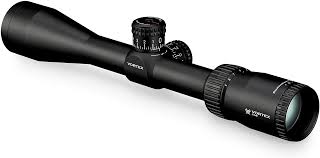
1. Vortex Diamondback Tactical 4-16×44 FFP: Best Overall
| Glass Clarity | Reticle | Turrets | Durability | Value |
|---|---|---|---|---|
| 4/5 | 5/5 | 4/5 | 4.5/5 | 5/5 |
Pros
- First focal plane EBR-2C reticle for under $400 street
- Exposed tactical turrets with positive clicks
- 30mm tube with 65 MOA total elevation travel
- Vortex VIP unlimited lifetime warranty
- Glass clarity punches well above its price tier
Cons
- 21.6 oz is heavier than dedicated hunting scopes
- No zero stop at this price point
- Parallax adjustment can feel stiff when new
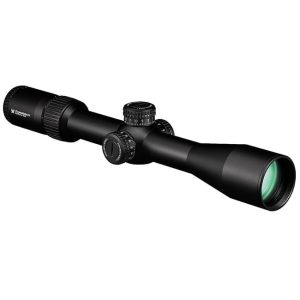
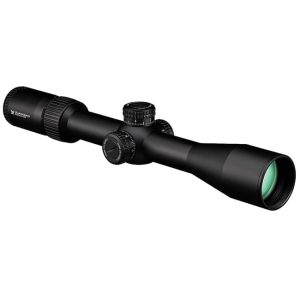
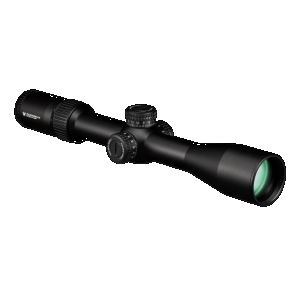
The Diamondback Tactical is the scope that put first focal plane reticles within reach of normal people. Before this thing existed, getting a real FFP reticle meant spending $800-plus. Vortex put one in a $580 MSRP scope (that streets closer to $400), and the rest of the budget-optics industry has been playing catch-up ever since. The EBR-2C reticle comes in MOA and MRAD flavors, and it’s the same design philosophy as the premium Razor line, just at a price that doesn’t require a payment plan.
At 4-16x, the magnification range covers everything from 200-yard hunting to 1,000-yard target shooting. The FFP reticle means your holdover marks stay accurate at every magnification level, not just at one specific setting. If you’re learning to shoot mil or MOA holdovers and you don’t want to drop a grand to do it, this is the scope to learn on.
Glass clarity is good. Not Razor good, but good enough that you won’t feel handicapped at any practical distance. Exposed turrets track accurately and repeat well across box-test drills. And that VIP warranty? If anything ever goes wrong, Vortex handles it. No receipt, no questions, no cost. For around $400 street, nothing else under $500 touches this combination of features.
Best For: The do-everything scope under $500. Long-range learners, precision AR builders, and anyone who wants one scope that handles hunting and target work without compromise.
2. Athlon Argos BTR Gen II 6-24×50: Best Long Range
| Glass Clarity | Reticle | Turrets | Durability | Value |
|---|---|---|---|---|
| 3.5/5 | 4.5/5 | 4.5/5 | 4/5 | 5/5 |
Pros
- FFP illuminated reticle with zero stop for under $300 street
- 6-24x range covers everything from 200 to 1,000-plus yards
- Side parallax adjustment from 10 yards to infinity
- Available in both MIL (APMR) and MOA (APLR2) variants
- Athlon’s lifetime warranty is solid and used often
Cons
- 30.3 oz is the heaviest scope on this list
- Glass clarity can’t compete with $500-plus scopes at 24x
- Not a carry scope, bench and prone use only
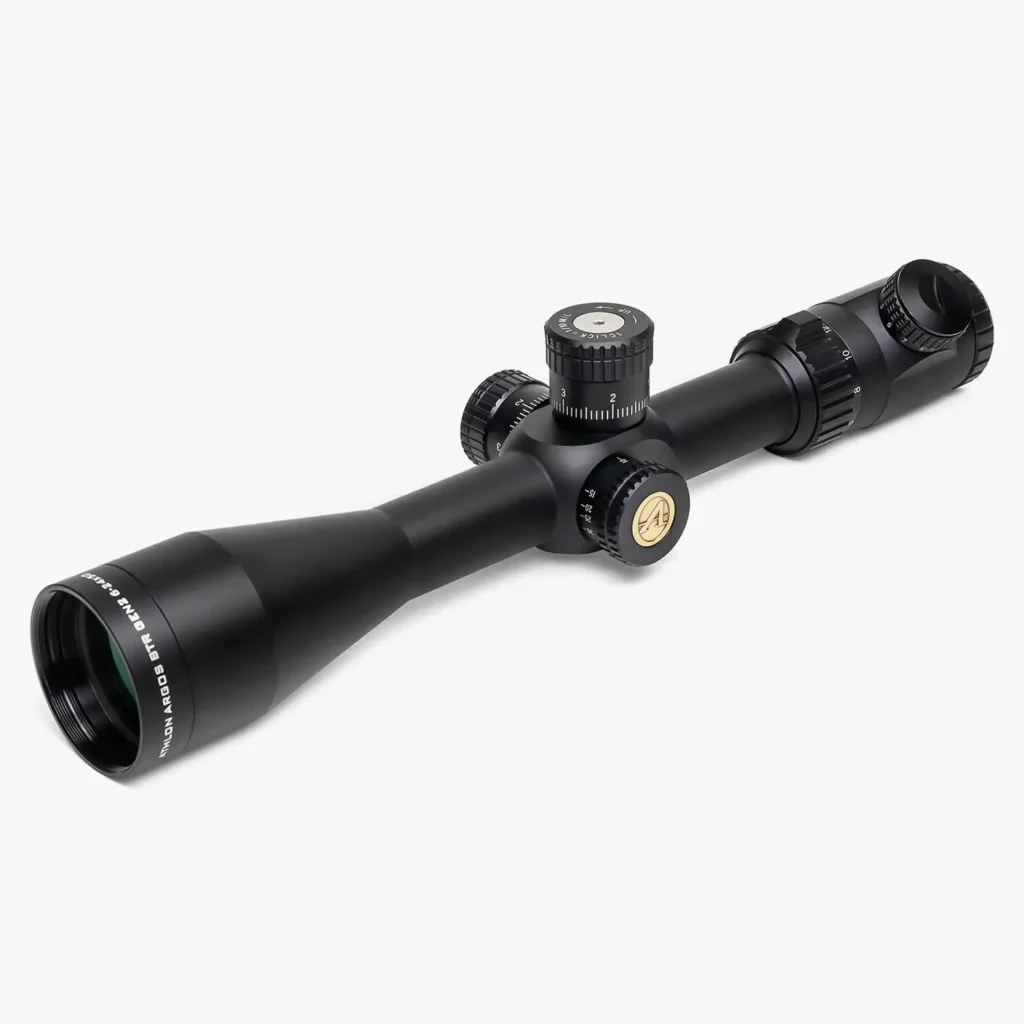
An illuminated FFP reticle with a zero stop for $280 street. Three years ago that spec list cost $600 minimum. Athlon has been quietly building the best budget precision scopes in the market, and the Argos BTR Gen II is their flagship value play. If you’re getting into long-range shooting on a budget, this is where you start. MSRP is around $430, but it consistently streets in the $280-$320 range.
The 6-24x range gives you serious magnification for 500-1,000-plus yard work. The MIL reticle with illumination is clean and functional, and the holdover marks stay accurate across the entire magnification range thanks to FFP. Turrets track well and the zero stop prevents you from losing your zero when dialing for elevation. Side parallax adjustment handles everything from 10 yards (yes, ten) to infinity. Pair it with a quality bolt-action and you’ve got a working long-range setup. Worth checking our best .300 Win Mag bolt-action rifles guide if you’re building one from scratch.
Weight kills it for any hunting application, and the glass gets soft at 24x compared to premium optics. But for a bench gun, a dedicated precision AR, or anyone learning long range without spending long-range money, the Argos BTR Gen II is the best deal in the budget precision category. Period.
Best For: Budget long-range shooters, precision rifle beginners, and bench rest enthusiasts. The best FFP scope under $300, full stop.
3. Leupold VX-Freedom 3-9×40: Best Hunting
| Glass Clarity | Reticle | Weight | Durability | Value |
|---|---|---|---|---|
| 4.5/5 | 3.5/5 | 5/5 | 5/5 | 4.5/5 |
Pros
- 12.2 oz is the lightest scope on this list by a margin
- Made in the USA (Beaverton, Oregon)
- Leupold glass quality punches above its price point
- Leupold’s no-questions lifetime guarantee
- Simple Duplex reticle is fast for hunting
Cons
- No FFP, no BDC, no tactical features
- 1-inch tube limits internal elevation adjustment
- 3-9x is basic by 2026 standards if you want reach
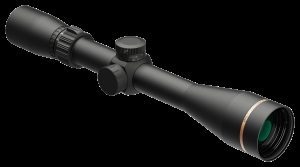
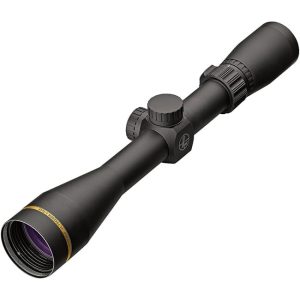
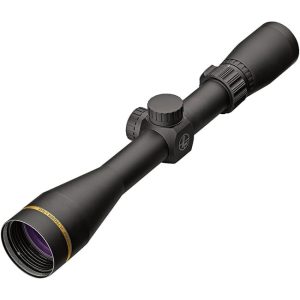
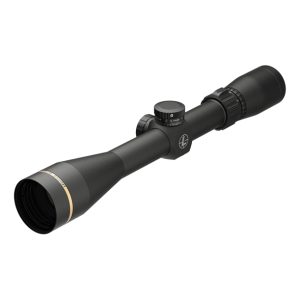
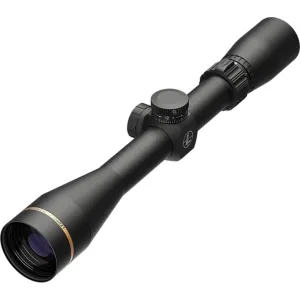
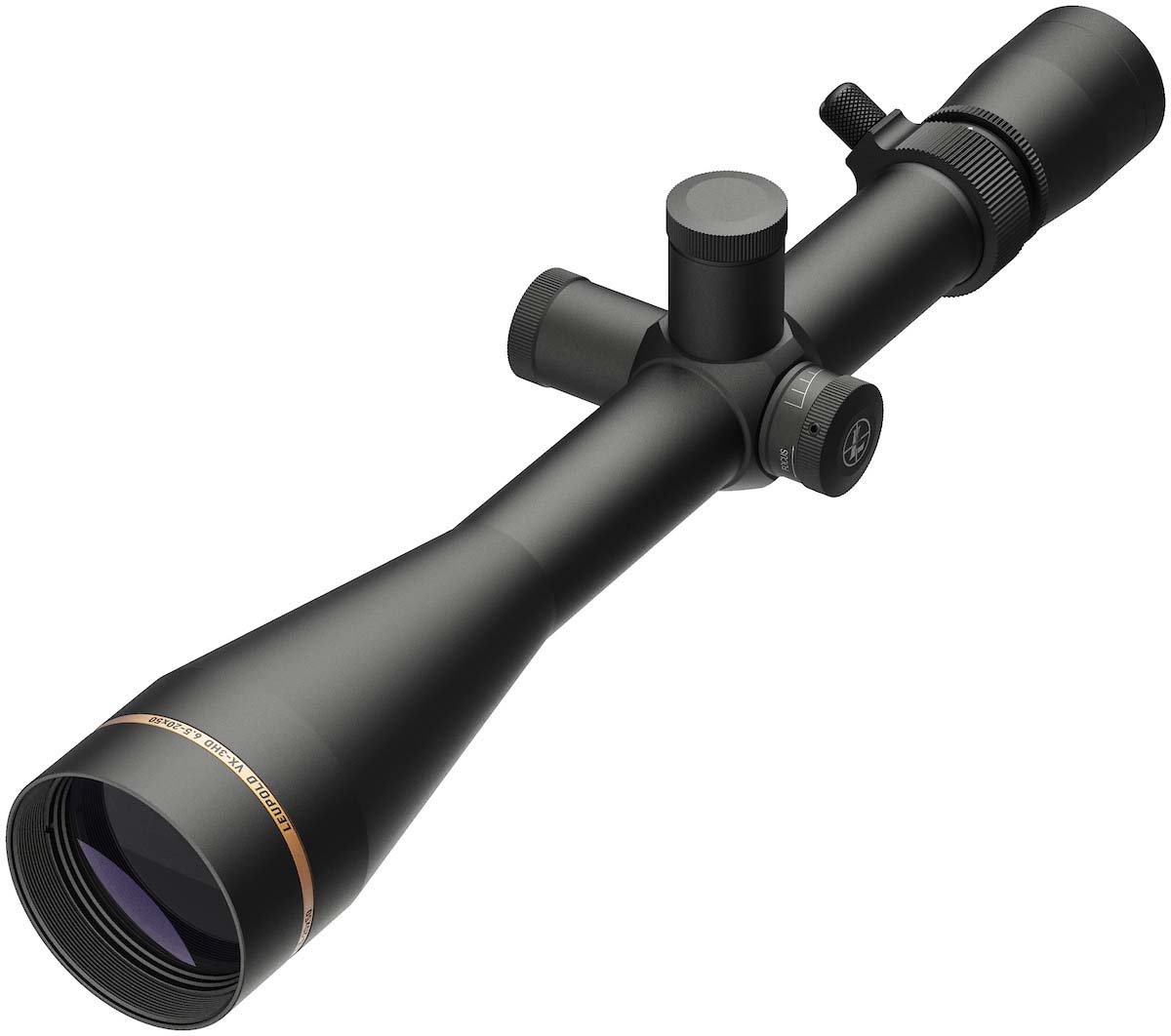
VX-Freedom is the only American-made scope on this list. Leupold has been building optics in Oregon since 1907, and at 12.2 ounces, this is also the lightest scope here by a noticeable margin. For a hunting scope that’s going to spend most of its life riding on a bolt-action through the mountains, those two facts matter more than any spec-sheet shootout.
Glass is classic Leupold: clear, bright, and with the kind of color accuracy that makes the dawn-to-dusk window where most game gets shot a non-issue. The simple Duplex reticle is fast to acquire and doesn’t clutter your view. 3-9x covers everything from 50-yard brush shots to 400-yard crossings. It’s not fancy and it doesn’t try to be. It just works, year after year, in weather that would make tactical scopes throw fits. If you’re building a dedicated hunting setup, our best hunting rifles guide pairs well with this optic.
What you give up: tactical features. No FFP, no BDC, no zero stop, no exposed turrets. None of that matters for hunting, and it does matter for the price point. Leupold spent the budget on glass and build quality, and you can feel both as soon as you mount one.
Best For: Hunters who value lightweight American-made quality and don’t need tactical features. The scope your dad ran and the scope you’ll pass down to your kids.
4. Vortex Strike Eagle 1-8×24 Gen 2: Best LPVO
| Glass Clarity | Reticle | 1x Performance | Durability | Value |
|---|---|---|---|---|
| 3.5/5 | 4/5 | 3.5/5 | 4.5/5 | 5/5 |
Pros
- 1-8x range covers CQB to 500-plus yards
- Often bundled with a cantilever mount for under $250
- Illuminated center dot works like a red dot at 1x
- Gen 2 glass is meaningfully better than the original
- Vortex VIP warranty
Cons
- 1x has a slight fisheye effect (not true 1x)
- Glass clarity sits behind $600-plus LPVOs at 8x
- SFP means BDC holdovers are only accurate at max magnification
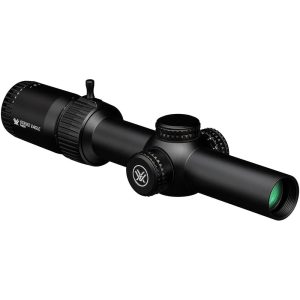
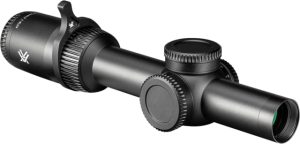
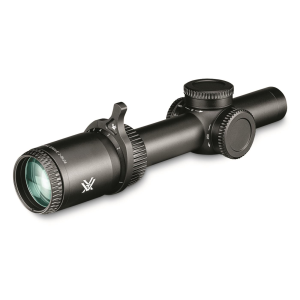
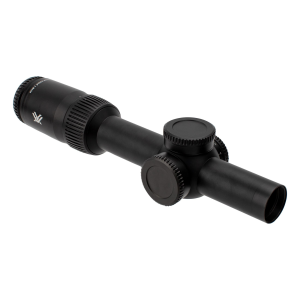
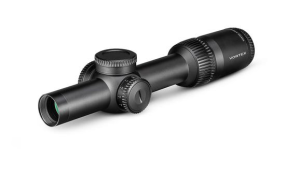
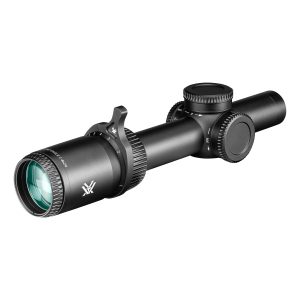
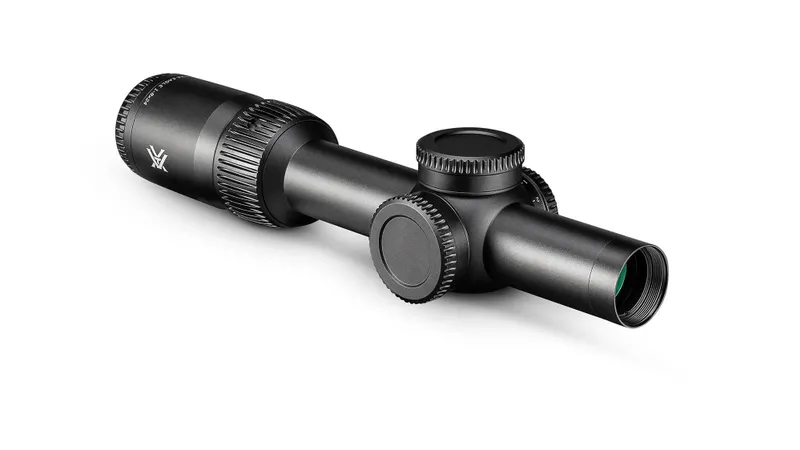
Strike Eagle is the gateway LPVO. It’s the scope that got me into variable-power optics on an AR-15, and it’s probably responsible for more shooters discovering LPVOs than any other single product. At $300 standalone (or frequently $250 bundled with a cantilever mount), it’s the cheapest way to get 1-8x magnification from a brand that backs its product without a fight.
The Gen 2 with the AR-BDC3 reticle is a meaningful upgrade over the original. The illuminated center dot at 1x functions like a red dot for fast close-range work, and the BDC marks give you usable holdover references at higher magnification. Glass won’t make you forget a Viper PST Gen II, but it’s plenty usable across the magnification range. For a 3-gun starter scope, a home defense LPVO, or an all-purpose AR optic, it’s hard to beat this value. If you want a deeper LPVO breakdown across price tiers, see our best LPVO scopes guide.
The fisheye at 1x bugs some shooters more than others. I notice it but it doesn’t slow me down. The bigger trade-off is SFP: your BDC marks only line up at 8x, so for sub-8x shots you’re guessing or holding center. For most LPVO use cases (close to medium range), that’s a non-issue.
Best For: First LPVO buyers, budget AR-15 builds, and 3-gun beginners. The cheapest way to find out if you’re an LPVO person without committing to an $800 rifle scope.
5. Vortex Crossfire II 3-9×40: Best Under $150
| Glass Clarity | Reticle | Weight | Durability | Value |
|---|---|---|---|---|
| 3.5/5 | 3.5/5 | 4/5 | 4/5 | 5/5 |
Pros
- $140 street price with full Vortex VIP warranty
- Dead-Hold BDC reticle gives useful holdover marks
- Forgiving eye relief at 3.8-4.4 inches
- Solid glass quality for the price tier
- Available everywhere
Cons
- Glass quality drops off noticeably past 7x
- 1-inch tube limits internal adjustment
- Not built for precision work past 300 yards


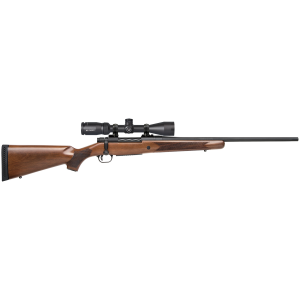
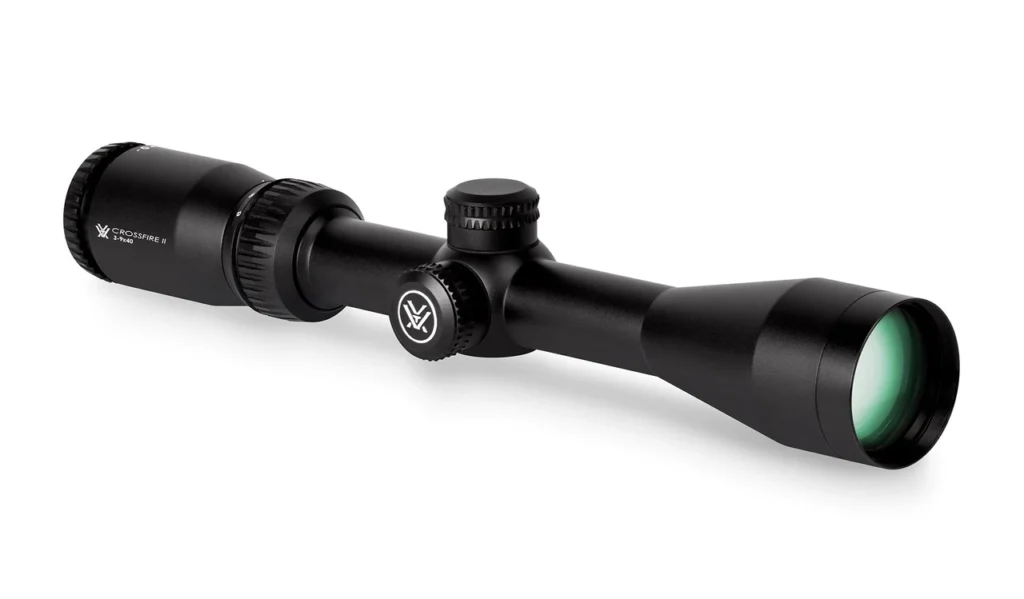
Crossfire II is the most popular budget scope in America for one reason: it’s the safest $140 you can spend on glass. Backed by VIP, with a Dead-Hold BDC reticle that adds usable holdover marks for 200-300 yard shots without any math, it’s the scope I recommend to anyone buying their first centerfire hunting rifle. First scope, youth rifle, beater gun that lives in the truck. This is the answer.
Glass isn’t winning awards at 9x. But at 3-6x, where most hunting actually happens, it’s perfectly clear and bright enough for dawn and dusk. The VIP warranty is the real backstop. If you break it, lose it in a river, or run it over with your ATV, Vortex replaces it. No questions, no receipt, no fee. That alone is worth $140 in peace of mind.
It’s not a precision scope. The 1-inch tube and the soft glass past 7x make sure of that. But for the meat-and-potatoes hunting and plinking that 90% of bolt-action owners actually do, the Crossfire II covers it without issue.
Best For: Budget hunters, first-time scope buyers, and anyone who needs a reliable scope under $150 with a no-questions warranty.
6. Primary Arms SLx 4-14×44 FFP: Best FFP Under $250
| Glass Clarity | Reticle | Turrets | Durability | Value |
|---|---|---|---|---|
| 3.5/5 | 4.5/5 | 3.5/5 | 4/5 | 5/5 |
Pros
- FFP Mil-Dot reticle at $230 is borderline absurd value
- ACSS Orion variant adds auto-ranging BDC for ~$20 more
- Side parallax adjustment 10 yds to infinity
- 30mm tube with solid adjustment range
- Multiple reticle options to match your preference
Cons
- Turrets are functional but basic in feel
- Glass clarity shows its price at 14x
- No illumination on the base Mil-Dot version
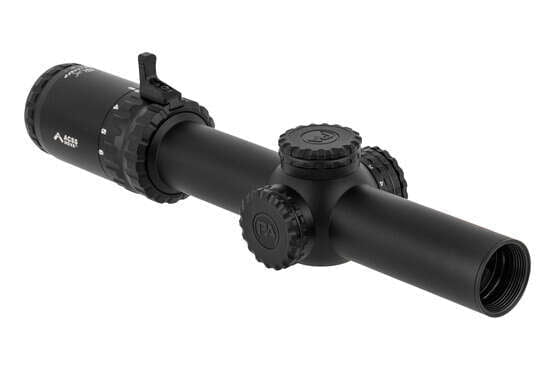
Primary Arms keeps making scopes that have no business being this good at this price. The SLx 4-14×44 FFP gets you a legitimate first-focal-plane mil-dot scope for $230. The ACSS Orion variant, for about $20 more, adds auto-ranging and BDC holdovers that make it useful for new long-range shooters who haven’t memorized their drop charts yet. That’s where I’d actually spend the money. Orion is the difference between learning to shoot and fighting your equipment.
Glass is acceptable. Not great at 14x, but very usable through 10x, which is where most practical shooting happens. Side parallax adjustment works smoothly. Turrets track and repeat, though they lack the tactile crispness of premium scopes. For a scope you’re going to beat up learning to shoot precision rifle, this is the right amount of investment.
The hidden value here is the reticle. ACSS Orion bakes ranging, wind holds, and moving-target leads into the reticle itself. You don’t dial. You don’t math. You range, hold, and break the shot. For someone learning the fundamentals, that’s huge.
Best For: New precision rifle shooters who want to learn FFP mil-dot shooting without spending $400-plus. Also excellent for AR-15 DMR builds on a budget.
7. Sig Sauer Whiskey3 3-9×40: Best Closeout Deal
| Glass Clarity | Reticle | Weight | Durability | Value |
|---|---|---|---|---|
| 4/5 | 3.5/5 | 4/5 | 4.5/5 | 5/5 |
Pros
- $120 street for a Sig Sauer scope with IPX7 waterproofing
- Low-dispersion glass beats most competitors at this price
- Quadplex reticle is clean and BDC-1 variant adds holdovers
- Sig Sauer quality control
- Discontinued, so closeout pricing is wild
Cons
- Officially discontinued by Sig (limited inventory)
- No illumination on the base model
- Philippines-made, not USA
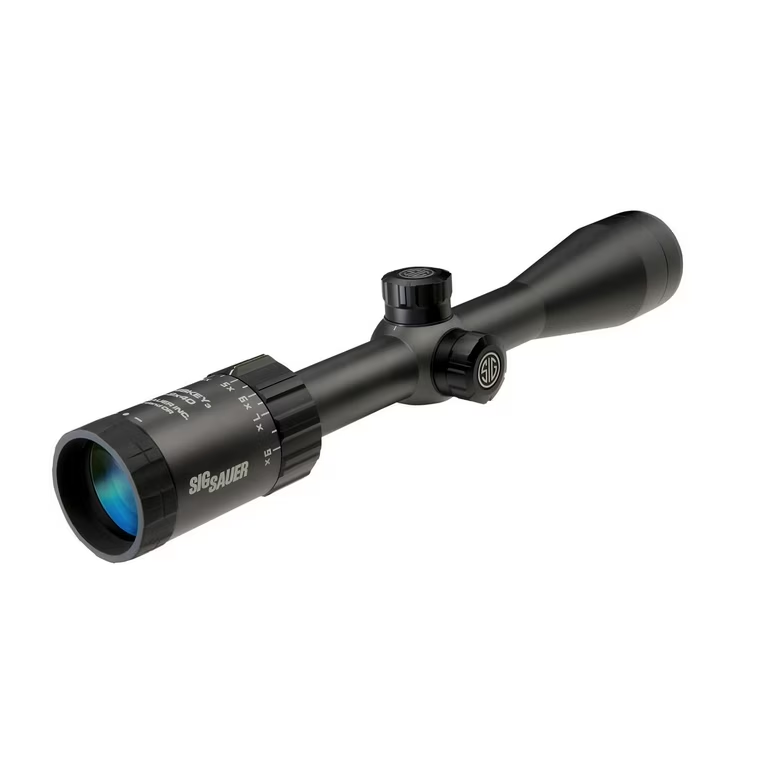
Sig formally discontinued the Whiskey3, and retailers have been blowing out remaining inventory at $105-$140. At that price, for a Sig-branded scope with low-dispersion glass and IPX7 waterproofing, it’s arguably the best value on this entire list right now. Original MSRP was $240. Getting it for half that is the kind of deal you don’t find twice.
Glass quality actually edges past the Vortex Crossfire II at the same price point. The BDC-1 Quadplex reticle is clean and gives useful holdover marks for common hunting cartridges. If you’re reading this and the Whiskey3 is still available at your favorite retailer, buy it. When the inventory clears, it’s gone.
The catch: no warranty replacement once Sig fully phases out support. For a $120 scope, that’s an acceptable risk. The build quality is genuinely solid and these things last. I’ve got two on rifles in active rotation, neither has flinched.
Best For: Bargain hunters. Grab one while they last, put it on a hunting rifle, and enjoy Sig quality at Walmart pricing.
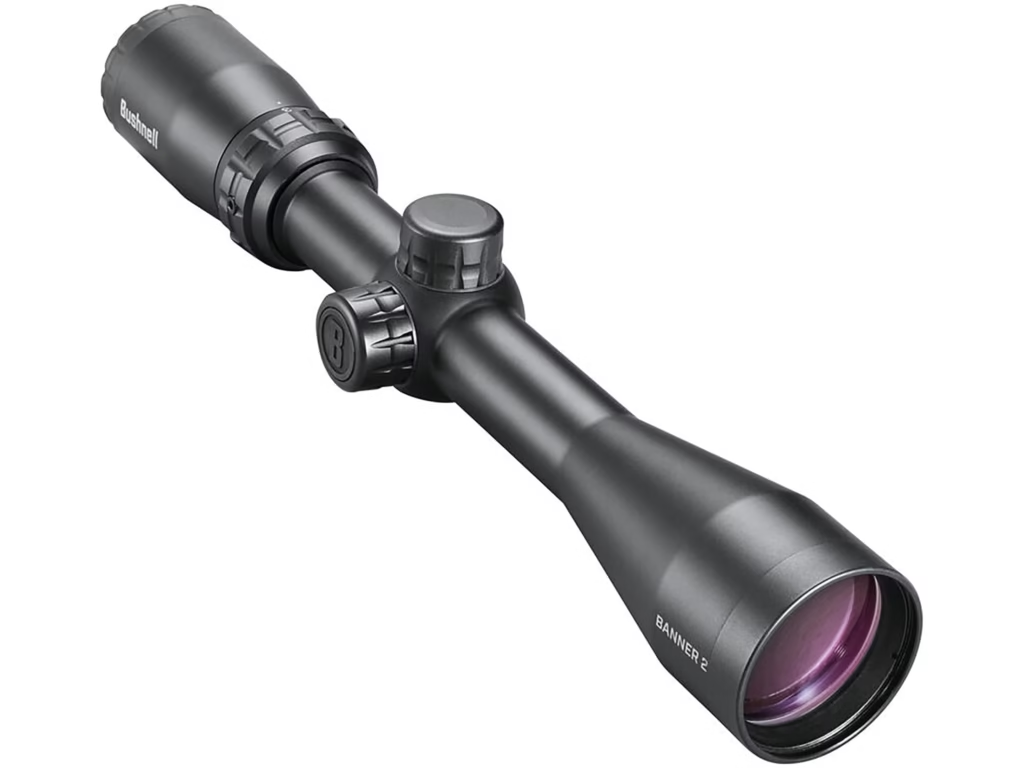
8. Bushnell Banner 2 6-18×50: Best Long-Range Budget
| Glass Clarity | Reticle | Turrets | Durability | Value |
|---|---|---|---|---|
| 3/5 | 3/5 | 3/5 | 3.5/5 | 4.5/5 |
Pros
- 6-18x magnification for $120 is genuinely remarkable
- Adjustable side parallax (rare under $150)
- IPX7 waterproof rated
- 50mm objective gathers good light at dusk
- DOA QBR variant offers illuminated BDC
Cons
- Glass quality is budget-tier above 12x
- 1-inch tube limits adjustment range significantly
- SFP reticle with limited holdover utility
Banner 2 is the scope for shooters who want to reach past 500 yards without spending $300. At $120, the 6-18x range plus adjustable side parallax is the kind of feature set you normally don’t see under $250. The glass isn’t going to impress at 18x, but at 10-12x it’s perfectly adequate for 500-yard target shooting and long-range plinking on steel.
Bushnell has been making affordable optics since 1948. The Banner line is their workhorse. It won’t win beauty contests, but it’ll hold zero, handle weather, and put rounds on steel at distances iron sights laugh at. For a .22 LR precision setup or a budget centerfire long-range rig, the price is genuinely hard to beat.
The honest limit: the 1-inch tube. You’ll run out of internal elevation adjustment before you run out of barrel. For most users that doesn’t matter. For someone trying to dial out to 1,000 yards, it does. Know which camp you’re in before you buy.
Best For: Budget long-range shooters who need magnification past 10x for under $150. Great for rimfire precision and entry-level centerfire target shooting.
9. Burris Fullfield IV 3-12×42: Best All-Around Hunter
| Glass Clarity | Reticle | Versatility | Durability | Value |
|---|---|---|---|---|
| 4/5 | 4/5 | 4.5/5 | 4/5 | 5/5 |
Pros
- 3-12x is the perfect all-around magnification range
- Three reticle options including illuminated Ballistic E3 and C4 Wind MOA
- Frequently $200 or less on sale (MSRP $300-$384)
- 38 ft FOV at 3x is excellent for scanning fast targets
- Burris Forever Warranty
Cons
- 1-inch tube limits precision adjustment range
- No side parallax (fixed at 100 yards)
- Illuminated variants add weight and cost
Fullfield IV hits the all-around sweet spot a lot of scopes miss. 3-12x covers close-range brush hunting at 3x, mid-range precision at 8-10x, and reaches out to 400-plus yards at 12x. Three reticle options on the current lineup: Long-Range MOA, the illuminated C4 Wind MOA, and the illuminated Ballistic E3. The Ballistic E3 with BDC holdovers is the one I’d recommend for most hunters.
MSRP runs $300-$384 depending on reticle, but the Fullfield IV moves at deep discounts often enough that you can frequently grab one for $200 or less if you’re patient and hit the right sale. At that price, the glass quality, reticle design, and 3-12x versatility make it essentially impossible to beat as a general-purpose hunting and shooting scope.
Burris has the underrated lifetime warranty in the budget space. Their Forever Warranty doesn’t get the press Vortex VIP does, but it’s transferable and covers manufacturing defects without a fuss. For a hunting rifle that’ll outlive your truck, that matters.
Best For: Hunters and general-purpose shooters who want one scope that does everything from brush hunting to 400-yard targets. Watch for sales.
What to Look For in a Rifle Scope Under $500
Buying a scope under $500 means making conscious trade-offs. Premium glass, exposed turrets that track perfectly, FFP reticles, illumination, zero stops. You can’t have all of those at this price. You can usually have three. Here’s how to figure out which three matter most for what you’re trying to do.
Glass Clarity
Glass quality is the one thing that gives the price away. Below $300, you’re going to see softness at the top of the magnification range, especially at dawn and dusk. That’s just physics: better coatings, better lens glass, and tighter tolerances cost money. The Leupold VX-Freedom and Sig Whiskey3 punch above their price tier on glass. Most others in this list are honest budget glass that’s perfectly usable through about 70-80% of the magnification range.
First Focal Plane vs Second Focal Plane
FFP reticles scale with magnification. Your holdovers are accurate at every setting. SFP reticles stay the same size, and your holdovers only line up at one magnification (usually max). FFP costs more, weighs more, and is genuinely better for anyone using mil or MOA holdovers across distances. SFP is fine for hunters who set the scope at one power and shoot. If you’re not sure which you need, ask yourself: do I dial elevation, or do I hold over? Dialers can use SFP. Holdover shooters need FFP.
Magnification Range
For hunting under 400 yards, 3-9x or 3-12x is plenty. For 500-1,000 yard target shooting, you want 6-24x or higher. For close-quarters AR work and 3-gun, an LPVO at 1-6x or 1-8x is the call. Most shooters over-magnify. A 6-24x scope on a 100-yard hunting setup is harder to use, not easier. Buy for the actual distance you shoot.
Tube Diameter
30mm tubes give you more internal elevation adjustment than 1-inch tubes. That matters if you’re dialing for long-range shots, where you can run out of “up” before you run out of barrel. For hunting at typical distances, a 1-inch tube is fine. For precision rifle work past 600 yards, prioritize 30mm. The Diamondback Tactical, Argos BTR, SLx, and Strike Eagle all run 30mm. The Crossfire II, VX-Freedom, Banner 2, Whiskey3, and Fullfield IV are 1-inch.
Warranty
The budget scope market is essentially a warranty-quality market now. Vortex VIP is the gold standard: no receipt, no questions, no fee, no original-owner clause. They’ll fix or replace anything that goes wrong, ever. Athlon’s lifetime warranty is similar in practice. Leupold’s lifetime guarantee is well-regarded and they actually honor it. Burris Forever Warranty is solid. Bushnell’s warranty exists but isn’t as flexible. For a sub-$500 scope you’re going to mount, dismount, drop, and abuse, the warranty is the thing that justifies the spend.
How We Tested These Scopes
Every scope on this list spent time on a rifle in my hands. Most of them are still on rifles in active rotation. The testing protocol covers four real-world scenarios: bench-rest accuracy at 100 yards (to verify tracking and zero retention), field shooting at 200-500 yards (to evaluate reticle utility and glass clarity at the top of the magnification range), low-light dawn/dusk sessions (where budget glass either holds up or browns out), and ergonomics over a 50-round string (eye relief, parallax adjustment, turret feel under repeated cycling).
Scopes that fail any one of those tests don’t make this list. The picks here have all been through that loop. For our complete methodology and how the test protocol applies across optics, rifles, and accessories, see our testing methodology page.
The Bottom Line
If you can only buy one scope under $500 and you don’t know what you’re using it for, the Vortex Diamondback Tactical 4-16×44 FFP is the answer. It’s the most flexible option, has the best feature-to-price ratio, and Vortex VIP means you’ll never lose money on it.
If you know what you’re doing and you have a specific job for the scope, pick from the categories. Hunting under 400 yards: VX-Freedom or Crossfire II. Precision rifle and long range: Argos BTR Gen II or SLx FFP. AR-15 LPVO: Strike Eagle Gen 2. Bargain bin closeout you’ll regret missing: Whiskey3 while it lasts. There’s no wrong answer in this group, just the right tool for what you’re trying to do.
Related Guides
- Best Rifle Scopes (All Prices)
- Best LPVO Scopes
- Best Prism Scopes
- Best Red Dot Magnifiers
- Best AR-15s Under $1,000
- Best Hunting Rifles
- Best .300 Win Mag Bolt-Action Rifles
Looking for the best prices? Check our gun deals page and price comparison tool to compare prices from 15-plus retailers before you buy.
Frequently Asked Questions
What is the best rifle scope under $500?
The Vortex Diamondback Tactical 4-16x44 FFP is the best overall rifle scope under 500 dollars. It offers a first focal plane EBR-2C reticle, exposed tactical turrets, and excellent glass clarity for around 400 dollars street price, backed by Vortex VIP unlimited lifetime warranty.
Is a $300 rifle scope good enough?
Yes. At 300 dollars you can get genuinely capable scopes like the Vortex Strike Eagle 1-8x24 LPVO, the Primary Arms SLx 4-14x44 FFP tactical scope, or the Athlon Argos BTR Gen II 6-24x50 for long range. These scopes handle everything most recreational shooters need.
What is the best hunting scope under $300?
The Leupold VX-Freedom 3-9x40 at around 270 dollars is the best hunting scope under 300 dollars. It is the only American-made scope in this price range, weighs just 12.2 ounces, and delivers excellent Leupold glass quality with a lifetime guarantee. The Vortex Crossfire II at 140 dollars is the best budget alternative.
Do I need a first focal plane scope?
First focal plane (FFP) is important if you use reticle holdovers at varying magnification levels, which is common in tactical and precision shooting. For hunting where you typically shoot at one magnification setting, second focal plane (SFP) is perfectly fine and usually cheaper.
What is the best budget long range scope?
The Athlon Argos BTR Gen II 6-24x50 FFP at around 280 dollars offers the best combination of features for budget long range shooting. It includes an illuminated FFP reticle, zero stop, and side parallax adjustment, which are features typically found on scopes costing 600 dollars or more.
Is Vortex better than Leupold for budget scopes?
Both are excellent but serve different strengths. Vortex offers more features per dollar with FFP reticles, tactical turrets, and the VIP no-fault warranty. Leupold offers superior glass clarity and lighter weight in a simpler package, with US manufacturing. For hunting, Leupold edges ahead. For tactical and long range, Vortex wins on value.
What scope should I put on my first AR-15?
The Vortex Strike Eagle 1-8x24 is the best first AR-15 scope. It covers everything from close quarters on 1x to 500 yard precision on 8x, often sells bundled with a mount for under 250 dollars, and carries the VIP warranty. If you prefer a red dot instead, check our best AR-15 red dot sights guide.
Are cheap rifle scopes worth buying?
Under 100 dollars, most scopes have serious quality issues with turret tracking, zero retention, and glass clarity. The floor for a genuinely reliable scope is around 120 to 140 dollars, where the Vortex Crossfire II and Sig Whiskey3 closeouts live. Below that, save your money and buy a better scope later.
5,743+ Gun & Ammo Deals
Updated daily from 200+ top retailers. Filter by category, caliber, action type, and price.
Related Guides