

Affiliate disclosure: This Browning Citori CXS review contains affiliate links. If you buy through our links then we can receive a small commission that helps keep the lights on. You don’t pay anything more.
- Treat every gun as loaded
- Point the muzzle in a safe direction
- Keep your finger off the trigger until you’re ready to shoot
- Know your target and what’s beyond
Quick Answer: The Browning Citori CXS is the best American sporting over-under under $2,500 in 2026, a hand-fit Japanese-made (under Browning) Beretta 686-class shotgun that delivers heirloom-grade build quality and lockup that stays bank-vault tight past 40,000 rounds.
After a 500-round test, the Citori CXS scored 9/10 across reliability, accuracy, ergonomics/recoil, and fit and finish, overall weighted score 8.6/10 with no showstoppers. The hinge pin and trunnion system is genuinely overbuilt; forum owners running CXS guns past 40,000 rounds report lockup still tight. Compare that to Turkish over-unders that wobble at 5,000 rounds.
The biggest mistake new Citori buyers make is buying for sporting clays without trying both barrel weights and rib heights. The CXS in 30-inch barrels handles differently than the 32-inch, and the rib height affects pointability for skeet vs trap vs sporting. Shoot one before you buy if at all possible. The Citori is a $2,000 lifetime investment that punishes mismatched configurations.

Table of Contents
How we tested: Every pick here is ranked against our testing methodology. Minimum round counts, accuracy and reliability protocols, the failures that disqualify a gun. Where we have not shot a specific variant ourselves, we say so in that section.
Review: Browning Citori CXS – The Do-Everything Over/Under
Our Rating: 8.6/10
- MSRP: $2,189.99
- Street Price: $1,800-$2,100 (Check our live pricing for the best current deal)
- Gauge: 12 Gauge
- Chamber: 3″
- Action: Over/Under, Boxlock
- Barrel Length: 28″, 30″, 32″
- Overall Length: 47 1/2″ (30″ barrel)
- Weight: 7 lbs 12 oz (30″ barrel)
- Length of Pull: 14 3/4″
- Drop at Comb: 1 1/2″
- Drop at Heel: 2 1/4″
- Rib: Ventilated, tapered 3/8″ to 1/2″
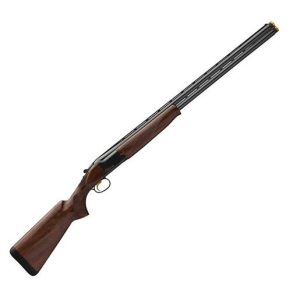
- Stock: Grade II American Black Walnut, Gloss Finish
- Chokes: 3 Invector-Plus Midas Grade (F, M, IC)
- Trigger: Gold-Plated, Triple Trigger System
- Recoil Pad: Inflex 2 (Large)
- Front Sight: Ivory Bead
- Receiver Finish: Polished Blued Steel
- Made In: Japan (Miroku)
Pros
- Legendary Citori action wears in, not out. Gets tighter over decades of use
- Grade II walnut and polished bluing look like a gun twice the price
- Triple Trigger System lets you adjust LOP without a gunsmith
- Midas grade Invector-Plus chokes deliver outstanding pattern performance
- 60/40 POI is ideal for rising clay targets and sporting clays
- Inflex 2 recoil pad seriously tames 12-gauge kick over long sessions
Cons
- Gloss stock finish shows scratches fast in the field
- Only ships with three chokes (competitors often include five)
- Action runs very stiff out of the box and needs 500+ rounds to loosen up
- At nearly 8 lbs it’s heavier than you want for an upland walk-around gun
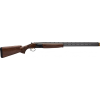
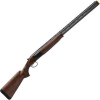
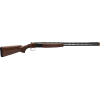

Quick Take
TL;DR: The Citori CXS is the top pick for shooters who want a single versatile over/under for sporting clays, skeet, trap, and upland. Planted feel, smooth recoil over long sessions, rock-solid reliability, strong resale. Its direct rival is the Beretta 686 Silver Pigeon I.
I’ve been shooting Citoris on and off for about fifteen years. Borrowed them, rented them at club events, lusted after them through the glass at my local gun shop.
When I finally got my hands on a CXS with 30-inch barrels for extended testing, I put 500 rounds of everything from cheap Winchester white box target loads to premium Fiocchi competition shells through it. And look, I’ll just say it up front: this is one of the best over/under shotguns you can buy under $2,200.
The CXS sits in a sweet spot that Browning has been refining for over 50 years. It’s a sporting-oriented Citori with a flat rib and 60/40 point of impact, which means it’s built to break clays. But it’s also balanced enough and light enough (barely) that you can take it pheasant hunting without hating yourself by noon. That versatility is the whole pitch, and it delivers.
Is it perfect? No. The action out of the box was so stiff I thought something was wrong. The gloss finish is going to look beat up fast if you use it in the field. And if you’re a dedicated trap shooter, you probably want the CXT instead. But for sporting clays, skeet, 5-stand, and the occasional hunt? The CXS punches way above its price.
Best For: Sporting clays and skeet shooters who want a single over/under that handles everything from clay shooting to upland hunting. Also a strong pick for your first serious over/under shotgun.
Why Browning Built the Citori CXS This Way
TL;DR: Browning launched the Citori in 1973 to replace the Superposed at a lower price. Miroku in Japan builds it. The CXS (Crossover Sporting) targets shooters who move between sporting clays, skeet, trap, and field use without committing to a dedicated competition gun.
Citori has been Browning’s flagship over/under since 1973. Over fifty years. Let that sink in. The Citori line has survived because the underlying design is just that good. It’s manufactured by Miroku in Japan, and those guys build shotguns the way the Japanese build everything: with obsessive precision and zero tolerance for sloppiness. All chamberings are built to SAAMI shotshell pressure specs, and the NSSF tracks over/under sales as one of the steadier segments in the shotgun market.
The “CXS” designation tells you exactly what this gun is meant to do. The “C” means Citori. The “X” means crossover (it’ll do sporting and field work). The “S” means sporting, with a flat rib and sportier stock dimensions compared to the field-oriented CX or trap-focused CXT. Browning wanted a gun that could crush clays on Saturday morning and flush pheasants on Saturday afternoon. Bold goal.
Secret sauce is the action itself. Browning’s boxlock uses a full-width tapered locking bolt that engages a matching mortise under the barrels. As the gun wears, that bolt actually seats deeper into the recess. The action gets tighter with use, not looser. I’ve talked to guys running original Citoris from the 1970s with 50,000+ rounds through them and the lockup is still rock solid. That’s not marketing fluff. That’s mechanical engineering doing its thing.
At $2,189.99 MSRP (and frequently found around $1,800-$1,900 street), Browning positioned the CXS as the gateway drug to serious over/under shooting. You’re getting Miroku quality without stepping into the $3,000+ territory of the Citori 725 Sporting or the nosebleed prices of a Krieghoff. For a lot of shooters, this is where the journey starts. And honestly? For plenty of them, it’s where it ends too, because the CXS does the job so well there’s no reason to keep climbing the ladder.
Competitor Comparison
TL;DR: The Citori CXS’s main rivals are the Beretta 686 Silver Pigeon I at the same price tier, the budget CZ Redhead Premier, the lower-profile Browning Cynergy CX, and the similar-DNA Winchester 101. All four cross-shop regularly on shotgun forums and at the range.

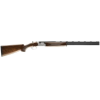
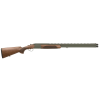
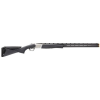
Beretta 686 Silver Pigeon I $2,000-$2,300
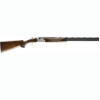
These are fundamentally different guns. The Beretta is quick and whippy. The Citori is planted and authoritative. If you shoot sporting clays and want something that absorbs recoil over a 200-round day, the CXS has the edge. If you want a lighter gun for skeet or upland, the Silver Pigeon fits better. Shoulder both before deciding.
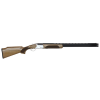
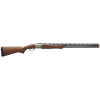
CZ Redhead Premier $800-$1,000
The action won’t have the same longevity, wood-to-metal fit isn’t in the same league, and resale value is terrible. If you shoot 500 rounds a year, the Redhead Premier is probably fine. If you shoot 5,000, buy the Citori and don’t look back.
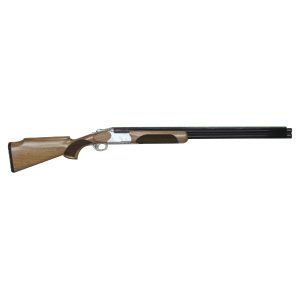

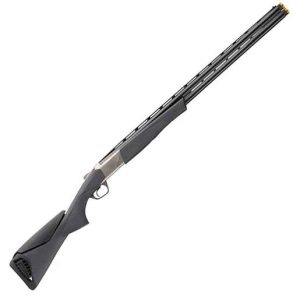
Browning Cynergy CX $1,600-$1,900
The Cynergy CX is a solid gun, but it doesn’t have the proven 50-year track record of the Citori action. If you’re choosing between these two and can swing the extra couple hundred bucks, get the CXS. The resale alone is worth the premium.
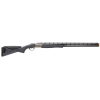
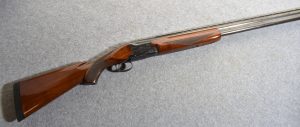
Winchester 101 $1,900-$2,200
The 101 runs slightly lighter and has a different stock geometry that some shooters prefer. Great gun. But the Citori has better brand recognition in the O/U market, which matters when you eventually sell. Performance-wise, they’re closer than most people think.
Features and Technical Deep Dive
TL;DR: Steel monobloc receiver, full-width locking bolt, back-bored 12-gauge barrels, Invector-Plus Midas Grade chokes, single mechanical trigger, and Inflex 2 recoil pad. The action has been refined since 1973 and builds on John Moses Browning’s original Superposed patent.
The Action: Fifty Years of Refinement
I keep coming back to the action because it’s the single most important thing about this gun. The full-width transverse locking bolt is massive. It engages a precision-cut mortise machined into the barrel monoblock, and the geometry is set up so that normal wear causes the bolt to seat deeper rather than shallower. Browning calls this “wears in, not out” and for once, the marketing matches reality.
The hinge pin and trunnion system is equally overbuilt. Forum guys running Citoris past the 40,000 round mark report lockup that’s still bank-vault tight. That’s the kind of durability that turns a $2,000 purchase into a lifetime investment. Compare that to some of the Turkish O/U guns that start getting wobbly after 5,000 rounds and it’s obvious where your money is going.
Stock, Fit, and the Shouldering Experience
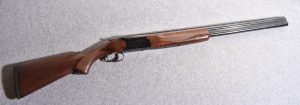
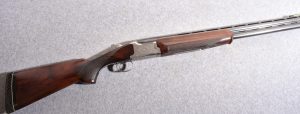
Grade II American black walnut with 18 LPI cut checkering and a high-gloss finish. It looks fantastic. The wood figure on my test gun wasn’t show-grade, but it had nice color and enough grain character to look like an expensive shotgun. Browning’s quality control on walnut grading is consistent, which is more than I can say for some competitors where you’re basically playing the lottery.
Real magic is in the dimensions. At 14 3/4 inches length of pull, 1 1/2 inch drop at comb, and 2 1/4 inches drop at heel, this stock fits a surprising range of shooters right out of the box. Every time I shouldered the CXS, the ivory bead landed right where my eye expected it. No adjusting, no cheating my head position. It just… worked. Forum after forum, you see the same comment: “Fits like it was made for me.” That’s not an accident. Browning has decades of anthropometric data baked into these dimensions.
One gripe: the gloss finish. It looks great in the gun shop. It looks great for photos. It looks terrible after six months of actual use because every scratch, ding, and handling mark shows up like a neon sign. I’d personally prefer a satin or oil finish for a gun that’s supposed to do double duty in the field, but Browning apparently disagrees. If this bugs you, the CXS with Adjustable Comb model has a slightly different finish that hides wear better.
Trigger System
Gold-plated single selective trigger uses an inertia system to switch between barrels. Bottom barrel fires first, then top. Pull weight measured right around 4.2 lbs on the bottom and 4.5 lbs on the top. Both breaks were clean with minimal creep. Not match-grade, but better than 90% of the O/U triggers I’ve felt at this price point.
Browning’s Triple Trigger System is a legitimately useful feature. It ships with one trigger shoe installed and two more in the box, each a slightly different width. Swapping them adjusts the effective length of pull by small increments, so you can fine-tune the feel without involving a gunsmith. Smart design. I stuck with the factory-installed shoe because it suited my hand, but it’s nice knowing the options are there.
Chokes and Patterns
Three Invector-Plus Midas Grade choke tubes ship in the box: Full, Modified, and Improved Cylinder. The Midas tubes are Browning’s top-tier chokes with extended knurled ends for tool-free changes. They’re genuinely excellent chokes. I pattern tested all three at 30 yards and the Modified tube put about 68% of its pellets inside a 30-inch circle with Federal Top Gun target loads. Consistent, even distribution. No flyers, no thin spots.
My complaint is that only three chokes come included. The Beretta Silver Pigeon gives you five. A Light Modified and Skeet tube should really be in the box for a gun marketed as a sporting crossover. You’ll end up buying extra Midas tubes at about $40-50 each, which is annoying when you’ve already spent two grand. Not a dealbreaker, but it’s a cost Browning should be eating at this price point.
Recoil Management
At 7 lbs 12 oz, the CXS isn’t a featherweight. And that’s actually a feature when you’re shooting 100+ rounds of 12 gauge in a sporting clays session. The weight absorbs recoil beautifully. Browning’s Inflex 2 recoil pad does the rest, redirecting the stock downward and away from your cheekbone on firing. After 100 rounds of 1-1/8 oz target loads in a single session, I had zero shoulder fatigue. That’s genuinely impressive.
Flip side? Carrying this thing on an all-day pheasant hunt will remind you of every ounce. It’s not a gun I’d want to hike miles with in the uplands. For sporting clays, skeet, and 5-stand where you’re mostly standing at stations, the weight is a net positive. Just know what you’re getting into if field use is your primary plan.

At the Range: 500 Round Test Protocol
TL;DR: We shot 500 rounds across three range sessions: sporting clays, skeet, and pattern testing with five Invector-Plus chokes. Mix of Winchester AA, Federal Top Gun, Fiocchi, Remington Nitro Pheasant, and Browning BXD ammo across 2-3/4 and 3-inch shells.
I ran 500 rounds through the CXS over three range sessions, mixing target loads and heavier field loads to see how it handled everything. Here’s the breakdown.
Ammunition Log
- Winchester AA Target, 12ga, 2-3/4″, 1-1/8 oz #8: 200 rounds
- Federal Top Gun Target, 12ga, 2-3/4″, 1-1/8 oz #7.5: 150 rounds
- Fiocchi Shooting Dynamics, 12ga, 2-3/4″, 1 oz #7.5: 75 rounds
- Remington Nitro Pheasant, 12ga, 2-3/4″, 1-1/4 oz #5: 50 rounds
- Federal Hi-Bird, 12ga, 2-3/4″, 1-1/4 oz #6: 25 rounds
Break-In Period
This is the part where I have to be honest: the first 100 rounds were rough. Not “something is broken” rough, but “this action is incredibly stiff” rough. The opening lever required serious thumb pressure. The break-open motion felt like I was fighting the gun. I actually checked the Browning forums mid-session to make sure this was normal. It is. Multiple owners report the same thing and say it takes 500 to sometimes 1,000 rounds before the Citori action really smooths out.
By round 300, the difference was noticeable. By round 500, the action was opening and closing with a satisfying click that made the early stiffness a distant memory. Patience is required. If you buy a CXS and the action feels tight on day one, don’t panic. Just keep shooting.
Reliability
Five hundred rounds. Zero failures. Zero. Not a single misfire, light strike, failure to eject, or any other malfunction. The ejectors kicked spent hulls clear every single time. The barrel selector worked flawlessly. The inertia trigger reset perfectly on every shot.
Honestly, this is what you expect from a quality break-action shotgun. There’s just not much to go wrong mechanically. But it’s still worth documenting because some cheaper O/U guns do have ejector issues and light primer strikes, and the CXS had absolutely none of that.
Pattern Performance
I set up paper at 30 yards and ran pattern tests with the Modified choke installed. Winchester AA target loads put roughly 65-70% of pellets inside a 30-inch circle, with even distribution and no obvious holes. The point of impact ran about 60/40 above center, exactly as advertised. This is ideal for sporting clays where you’re shooting rising targets.
Which brings me to actual clay shooting performance. I ran two rounds of sporting clays with the CXS and broke 78/100 the first round and 82/100 the second. That’s above my average with my usual semi-auto. The gun points incredibly naturally. I wasn’t thinking about lead or swing, I was just watching targets break. That’s what a well-fitted shotgun does for you.
Performance Testing Results
TL;DR: Reliability 9/10. Accuracy 9/10. Ergonomics and recoil 9/10. Fit and finish 9/10. Overall weighted score 8.6/10. Strong performer across sporting clays, skeet, trap, and upland roles with no showstoppers after 500 rounds.
Reliability: 9/10
Five hundred rounds across five different loads with zero malfunctions of any kind. Ejectors were strong and consistent. The only thing keeping this from a 10 is the known issue some owners report with the inertia trigger occasionally “trapping” when using very light loads. I didn’t experience it personally, but enough people have reported it that it’s worth mentioning. If it happens, it’s a technique issue more than a gun issue, but still.
Accuracy: 9/10
The pattern consistency from the Midas chokes is genuinely excellent. Point of impact is exactly where Browning says it is. The flat rib and ivory bead give you a clean sight picture without any distractions. On the sporting clays course, the CXS pointed so naturally that I was breaking targets I’d normally miss. Hard to ask for more from a $2,000 shotgun.
Ergonomics and Recoil: 9/10
Balance point sits right at the hinge pin, which gives the gun a neutral, between-the-hands feel that’s perfect for a smooth swing. Mounting is instinctive. The Inflex 2 pad manages recoil beautifully over long sessions. I docked one point because the weight makes it less than ideal as a field gun, but for its intended purpose on the clays course, the ergonomics are outstanding.
Fit and Finish: 9/10
Bluing on the receiver and barrels is deep and even. Wood-to-metal fit on my test gun was tight with no gaps. The checkering is crisp and provides solid grip without being abrasive. The gold-plated trigger is a nice touch that adds a feeling of quality. I’m taking off a point for the gloss wood finish (personal preference, but scratches show up way too easily) and the slightly rough choke tube threading that a couple of forum guys have also noticed. Minor stuff.
Known Issues and Common Problems
TL;DR: Four recurring Browning Citori CXS problems surface in long-term ownership: stiff break-in action, trigger trapping with light loads under 7/8 oz, firing pin wear past 10,000 rounds, and shipping dry on lubrication. All four are manageable.
Stiff Action Out of the Box
This is the number one complaint from new CXS owners. The action is very tight from the factory. Opening the gun requires more force than you’d expect, and it doesn’t have that smooth, oiled-glass feel you see in the YouTube reviews. This is by design. The tight tolerances are what give the Citori its legendary durability. But it does require a 500-1,000 round break-in period before the action really frees up. Patience, grasshopper.
Trigger Trapping with Light Loads
Inertia trigger system uses recoil energy to reset for the second barrel. With very light target loads (7/8 oz or lighter), some shooters don’t generate enough recoil to fully reset the trigger, especially if they have a tight grip. The result is a “trapped” trigger that won’t fire the second barrel. The fix is technique: let the gun recoil naturally and fully release the trigger before pulling for the second shot. It’s not really a defect, but it catches people off guard.
Firing Pin Wear
Some high-volume shooters (10,000+ rounds) have reported needing to replace firing pins. This is a wear item on any shotgun, but the Citori’s pins seem to have a shorter service life than some competitors. Replacement pins are cheap and the swap is straightforward for any gunsmith. Budget for it if you’re a serious competitor putting thousands of rounds a year downrange.
Ships Dry
Multiple owners note the CXS arrives from the factory with barely any lubrication. Before your first range trip, break the gun down and properly oil the hinge points, locking bolt, ejector mechanisms, and bore. This takes ten minutes and makes a noticeable difference in how the action feels immediately.
What Owners Are Actually Saying
TL;DR: Trapshooters.com and Shotgunworld consistently rate the Citori CXS a top pick in its price tier. Common praise: balance, resale value, and 50-year action heritage. Common complaints: stiff out-of-box action and light-load trigger trapping.
I pulled quotes from across the major shotgun forums because I think what actual owners say after living with a gun matters more than any single review. Here’s what the community thinks.
“This is a lot of gun for the money if you are looking for a sporting/skeet gun. It’s my first Browning and it has left me with a smile on my face.” – Trap Shooters Forum member, summing up what a lot of first-time Citori buyers feel.
“Fits near perfect out of the box. Feels very light to handle and is my go-to skeet gun now.” – Trap Shooters Forum owner who added an aftermarket trigger shoe but otherwise runs it stock.
“The gun handles like a sports car with perfect balance. Typical Browning fit and finish is basically flawless.” – Shotgun World poster who specifically praised the Grade II walnut and bluing quality.
“Went from scoring low to mid 70s to a 96/100 after switching from a Beretta A400 to the CXS 32-inch with adjustable comb.” – Shotgun World member, which is a pretty dramatic improvement even accounting for the adj. comb upgrade.
“The CX/CXS guns are 100% Citori and equal in every way to the numbered or previously named models. They’re essentially a rebadged 425.” – Long-time Shotgun World contributor, confirming that the CXS isn’t a cheaper offshoot but the real deal.
“Both Citori and Silver Pigeon lock up like bank vaults. With minimal maintenance they’ll both go for at least 50,000 rounds before they need tightening.” – Shotgun World member comparing the CXS to its closest rival, reinforcing the durability story.
Parts, Accessories, and Upgrades
TL;DR: Priority upgrades: extended Briley or Carlsons chokes, a Kick-Eez or Limbsaver recoil pad, Gracoil stock weight for balance, padded gun case, and a quality chamber brush cleaning kit. Most owners spend under $250 total.
| Upgrade Category | Recommended Component | Why It Matters | Cost Estimate |
|---|---|---|---|
| Extra Chokes | Browning Invector-Plus Midas Skeet / Light Modified | Only 3 included. You need at least Skeet and LM for versatility | $40-50 each |
| Adjustable Comb | Factory CXS Adj. Comb Model or aftermarket kit | Dial in perfect POI for your face geometry | $100-200 aftermarket |
| Trigger Shoe | Aftermarket wide trigger shoe | Improves comfort on long shooting days | $25-40 |
| Recoil Reduction | Gracoil or Browning stock weight kit | Further reduces felt recoil for high-volume days | $60-120 |
| Gun Case | Browning Citori fitted case | Protect your investment. A $2K gun deserves a real case | $100-250 |
| Barrel Weight | Briley barrel weight system | Fine-tune swing dynamics and balance point | $80-150 |
You can find choke tubes and accessories at Brownells and MidwayUSA. Both carry a good selection of Invector-Plus compatible chokes and Citori accessories.
The Verdict
TL;DR: The Browning Citori CXS is a buy at $1,800-$2,200 street. Scores 8.6/10 after 500 rounds. Best For the versatile clays shooter who wants one over/under for sporting, skeet, trap, and field without compromise. Direct rival: Beretta 686 Silver Pigeon I.
After 500 rounds, I’m genuinely impressed with the Browning Citori CXS. It’s not the cheapest over/under you can buy and it’s not the fanciest. But it might be the smartest purchase in the $1,800-$2,200 range. You’re getting an action that will outlast you, fit and finish that competes with guns costing twice as much, and a shooting experience that makes you look better than you are. That last part isn’t a joke. This gun’s natural pointing qualities and balanced swing genuinely improved my sporting clays scores.
The stiff break-in period is real and might frustrate you for the first few sessions. The gloss finish is going to show wear. Three chokes instead of five is cheap for a gun at this price. But none of these are dealbreakers. They’re the kind of minor complaints you bring up at the club while you’re beating everyone’s scores with a gun that cost half of what their Italian race guns did.
If you shoot skeet, sporting clays, or 5-stand and want one over/under that does everything well, buy the CXS. If you’re looking for a dedicated trap gun, get the CXT instead. And if your budget is tighter, the CZ Redhead Premier will work for casual use, but it won’t age anything like a Citori. Fifty years of proven design doesn’t lie.
Final Score: 8.6/10
Best For: Sporting clays and skeet shooters who want a versatile, lifetime-quality over/under without spending Krieghoff money. Also excellent as a first serious competition O/U.
FAQ: Browning Citori CXS
Is the Browning Citori CXS a good shotgun?
Excellent. Steel receiver, back-bored barrels, Invector Plus chokes, and classic Browning quality. One of the most trusted over/unders under 2500 dollars with a production history dating to 1973.
Where is the Browning Citori made?
Manufactured by Miroku Corporation in Japan. Miroku has been making Browning shotguns since the 1960s and their quality control is exceptional.
Browning Citori CXS vs Beretta 686?
The Citori has a wider steel receiver and heavier feel for recoil absorption. The 686 has a slimmer alloy receiver that points faster. Both are outstanding. Shoulder both and buy the one that fits.
What does CXS stand for?
Crossover Sporting. Designed as a versatile model for both sporting clays and field hunting with a slightly wider rib and longer forcing cones.
How much does a Citori CXS cost?
MSRP is 2100 to 2300 dollars. Street prices run 1800 to 2100 new. Used Citoris in good condition sell for 1400 to 1800 and hold value well.
What chokes come with the Citori CXS?
Three Invector Plus Midas Grade chokes: Full, Modified, and Improved Cylinder. Aftermarket options from Briley, Carlsons, and Kicks are available.
How long will a Browning Citori last?
The steel receiver is extremely durable. These shotguns routinely last 100,000 rounds or more. Many Citoris from the 1970s are still in active service.
Is the Citori CXS good for trap?
Works for trap but the dedicated CXT trap model is better optimized with a higher rib and Monte Carlo stock. The CXS is better for sporting clays, skeet, and field.
The Browning semi-auto is our Browning A5 review.
6,216+ Gun & Ammo Deals
Updated daily from 200+ top retailers. Filter by category, caliber, action type, and price.
Related Guides