
Last updated March 25th 2026
Some of the links below are affiliate links, meaning at no additional cost to you, we may earn a commission if you click through and make a purchase.
- Treat every gun as loaded
- Point the muzzle in a safe direction
- Keep your finger off the trigger until you’re ready to shoot
- Know your target and what’s beyond
On-Roster Handgun Deals
Best-priced firearms across 80+ retailers · Updated every 4 hours
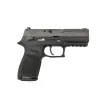
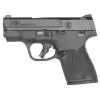
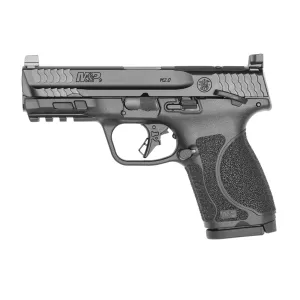
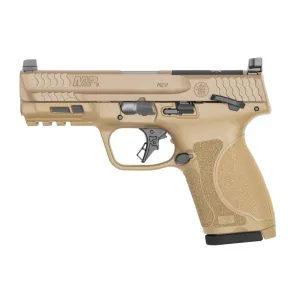
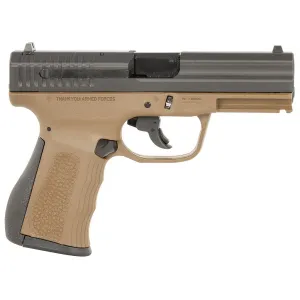
What is the California Handgun Roster?
The California Handgun Roster, officially called the Roster of Handguns Certified for Sale, is a list maintained by the California Department of Justice that dictates which semi-automatic handguns can be sold by licensed dealers in the state. If a handgun is not on the roster, no dealer in California can sell it to you. Period.
The roster was created by the Unsafe Handgun Act of 2001 under Cal. Penal Code § 32000. The original intent was safety testing: drop tests, firing tests, loaded chamber indicators. Reasonable enough on paper. But the addition of a microstamping requirement in 2013 turned the roster from a safety mechanism into a de facto ban on new handgun models. No manufacturer has implemented microstamping. No new semi-auto designs get added. The roster only shrinks.
If you are buying a handgun in California, understanding the roster is not optional. It determines your options, your prices, and your workarounds. This guide explains everything you need to know.
How the Roster Works
To be listed on the roster, a semi-automatic handgun must meet four requirements:
- Drop safety test. The firearm must not discharge when dropped from a specified height.
- Firing test. The firearm must fire reliably without malfunctioning during a specified number of rounds.
- Loaded chamber indicator (LCI). A visual or tactile mechanism that indicates a round is chambered.
- Magazine disconnect mechanism. The trigger must be deactivated when the magazine is removed.
Revolvers are exempt from the magazine disconnect and microstamping requirements, which is why revolvers have an easier path onto the roster. This is one reason California gun owners often look at revolvers as a way to bypass the worst roster restrictions. See our best California legal revolvers guide.
The Microstamping Problem
In 2007, California passed a law requiring new semi-automatic handguns to have microstamping technology. Microstamping uses microscopic laser engravings on the firing pin that stamp a unique identifying code onto spent cartridge cases when the gun is fired. The idea is that police can trace a spent casing back to a specific firearm.
For years, the California DOJ found microstamping “not technologically viable” and the requirement sat dormant. But in July 2025, DOJ released a report concluding that microstamping IS viable. If implementation standards are finalized, a January 1, 2028 mandate could require all rostered semi-automatic handguns to be microstamping-enabled.
Here is the practical problem: no major manufacturer has implemented microstamping on any production handgun. Not Glock. Not Smith & Wesson. Not Sig Sauer. Not Beretta. The technology exists in a lab, but nobody has put it into a mass-produced firearm. The reasons are technical (micro-engravings wear off after a few hundred rounds, can be defeated with a file in seconds) and commercial (the cost of retooling for one state is not worth it for most manufacturers).
The result: since 2013, virtually no new semi-automatic handgun designs have been added to the roster. The only additions are minor variant SKUs of already-approved designs (different color, different sight option) that do not require new testing. The roster peaked at over 1,200 models and has shrunk to roughly 979 as manufacturers stop paying the annual $200-per-model renewal fees.
AB 1127: The “Glock Ban” (2026)
As if the roster were not restrictive enough, Governor Newsom signed AB 1127 on October 10, 2025. This law bans the dealer sale of “semiautomatic machine-gun convertible pistols,” defined as handguns with a cruciform trigger bar that can be converted to full-auto by installing a “Glock switch.” That definition covers virtually every Glock model.
Key dates: dealers can sell existing inventory acquired before January 1, 2026, but all dealer sales of affected models end July 1, 2026. Manufacturers can submit modified designs for retesting by January 1, 2027. Glock has announced a “V Series” lineup as a potential workaround, but details are scarce as of March 2026.
If you want a Glock from a California dealer, the clock is ticking. After July 2026, the only way to get one will be through private party transfer at significantly inflated prices. The NRA has filed a lawsuit challenging AB 1127, but do not count on the courts moving fast enough to save dealer sales before the deadline.
What IS on the Roster Right Now?
Despite the shrinkage, there are still genuinely good handguns available from California dealers. The roster still includes:
- Glock Gen 3 models: G17, G19, G26, G21, G30SF, G34, G22, G23, and more. Buy before July 2026.
- Smith & Wesson: M&P9 2.0 (full and compact), M&P Shield, M&P Shield Plus, SD9 VE
- Sig Sauer: P226, P229, P320 M18, P365 (recently added)
- Springfield Armory: Echelon (4.0C and 4.5F), Hellcat, XD series, 1911 Loaded
- Beretta: 92FS, 92X, PX4 Storm, M9A1
- CZ: 75 B, 75 BD, P-01
- Ruger: Security-9, LCP Max, GP100, SP101, Mark IV, Wrangler
- 1911s: Springfield Loaded, Kimber Custom II, Rock Island GI, Colt
- Revolvers: Most S&W and Ruger revolvers are on the roster
For specific recommendations, check our best California legal handguns guide and best California CCW guns guide.
What is NOT on the Roster?
The guns California shooters most wish they could buy from a dealer:
- Glock Gen 4 and Gen 5 (improved trigger, modular backstraps, flared magwell)
- Glock 43X and 48 (perfect slim-line carry guns)
- Sig P365 X-Macro (larger grip module with higher capacity)
- Walther PDP (best-in-class striker trigger)
- CZ P-10 C (excellent striker-fired compact)
- FN 509 (military-tested, optics ready)
- HK VP9 (premium German engineering)
- Springfield Hellcat Pro (larger Hellcat variant)
- Canik TP9 series (incredible value, great trigger)
How to Get Off-Roster Handguns Legally
The roster only restricts dealer sales. There are three legal ways to obtain off-roster handguns in California:
1. Private Party Transfer (PPT)
Any California resident who legally owns an off-roster handgun can sell it to another California resident through a Private Party Transfer. Both parties go to a licensed FFL dealer who processes the paperwork. You pay the DROS fee ($37.19), the dealer’s transfer fee ($50-$100), and the 10-day waiting period applies. Total transfer cost: roughly $75-$125 on top of the purchase price.
Where to find PPT listings: Calguns.net marketplace, caguns.net, local gun shop consignment boards, and word of mouth. Prices for popular off-roster guns run 2-3x normal retail.
2. Law Enforcement Exemption
Active and retired peace officers can buy off-roster handguns directly from dealers. They can later sell those guns to civilians via PPT. This is legal as long as it is not conducted as a business. In practice, the LEO-to-civilian pipeline is the primary source of off-roster handguns in California. Several officers have been arrested for running what amounted to gun dealing operations, but individual sales remain common and legal.
3. New Resident Import
If you move to California, you can bring your legally owned handguns with you, including off-roster models. You must register them with the DOJ within 60 days of establishing residency. Those guns can later be sold via PPT to other California residents.
Typical Off-Roster Price Premiums
| Handgun | Normal MSRP | CA PPT Price | Premium |
|---|---|---|---|
| Glock 19 Gen 5 | ~$550 | $1,600-$2,000 | 3-4x |
| Glock 43X | ~$480 | $1,200-$1,500 | 2.5-3x |
| Glock 48 | ~$480 | $1,200-$1,500 | 2.5-3x |
| Walther PDP | ~$650 | $1,100-$1,400 | 1.7-2x |
| CZ P-10 C | ~$500 | $900-$1,300 | 1.8-2.5x |
| HK VP9 | ~$700 | $1,100-$1,500 | 1.6-2x |
After AB 1127 takes effect in July 2026, expect Glock PPT premiums to climb even higher as dealer supply dries up completely.
The Future of the Roster
The roster is being challenged in federal court on Second Amendment grounds, and the Bruen decision has given those challenges new legal ammunition. Multiple lawsuits argue that a roster system with no mechanism for adding new models (due to the microstamping requirement) is effectively a ban that has no historical analogue, which is the test Bruen established for evaluating firearms restrictions.
If the courts strike down the microstamping requirement, new handgun models could start flowing onto the roster again. If the courts strike down the roster entirely, Californians would be able to buy any handgun that is legal under federal law. Neither outcome is guaranteed, and Ninth Circuit timelines are measured in years, not months. But for the first time in over a decade, there is a plausible legal path to meaningful roster reform.
In the meantime, buy the on-roster guns you want before they fall off. Especially Glocks before July 2026. And check the California DOJ roster search page regularly for current status.
Related California Guides
- California Gun Laws (2026): The Complete Guide
- Best California Legal Handguns (2026)
- Best California CCW Guns (2026)
- Best California Legal Revolvers (2026)
- Best California Legal AR-15 Rifles (2026)
- Best Gun Stores in California
FAQ: California Handgun Roster
14,516+ Gun & Ammo Deals
Updated daily from 10+ top retailers. Filter by category, caliber, action type, and price.