

Affiliate disclosure: This article contains affiliate links. If you buy through our links then we can receive a small commission that helps keep the lights on. You don’t pay anything more.
Last updated August 2026 · By Nick Hall, CCW instructor and permit holder in California who lives under the roster, AWB, and CCW rules daily
Disclaimer: This is an editorial round-up of California gun laws. We do our best to make sure it’s correct, but do not rely on this as legal advice. If you’re unsure about anything, consult a lawyer.
- Treat every gun as loaded
- Point the muzzle in a safe direction
- Keep your finger off the trigger until you’re ready to shoot
- Know your target and what’s beyond
Quick Answer: California has the most restrictive gun laws of any US state in 2026. Concealed carry permits (CCWs) are issued through county sheriffs under “shall-issue” rules following the 2022 Bruen decision, but most counties impose lengthy training and processing delays. California’s Roster of Certified Handguns limits new handgun sales to specific approved models.
The state bans semi-automatic rifles defined as “assault weapons” under California law, magazines over 10 rounds, and most NFA items. Standard handgun purchase requires a Firearm Safety Certificate, a 10-day waiting period, and a single-handgun-per-30-days limit.
The biggest mistake new California gun owners make is assuming federal exemptions (FOPA, LEOSA) override state law in California. They generally do not. California honors no out-of-state CCW permits. New residents must register all firearms within 60 days. Sensitive places (schools, public transit, banks) are off-limits even with a CCW.
California has the most restrictive gun laws in the country. That’s not an opinion, it’s a measurable fact. The Giffords Law Center consistently ranks California first in gun law strength. If you’re a gun owner in California, or thinking about becoming one, you need to understand a regulatory system that is stacked against you at every turn.
The list is exhausting. A 10-day waiting period on every purchase. A Firearm Safety Certificate test before you can buy anything. A handgun roster that limits which models you can purchase (and the roster shrinks every year). A 10-round magazine limit. An assault weapons ban with a complicated “features test.” Universal background checks on everything, including ammo. A red flag law. No state preemption, meaning cities like San Francisco and Los Angeles can pile on even more restrictions. Open carry is banned statewide. And if you want a suppressor, forget it. They’re flat-out illegal.
But here’s the thing: California still has over 4 million gun owners. People hunt here. People compete here. People defend their homes here. And a series of federal court cases, particularly the Supreme Court’s Bruen decision in 2022, is slowly chipping away at some of California’s most extreme restrictions. The magazine ban has been struck down (and appealed, and struck down again). SB 2’s “sensitive places” expansion got largely enjoined. CCW permits went from impossible to shall-issue overnight. The legal landscape is shifting, and if you’re a California gun owner, there’s more reason for cautious optimism than there has been in decades.
State-Compliant Gun Deals
Best-priced firearms across 200+ retailers · Updated every 4 hours
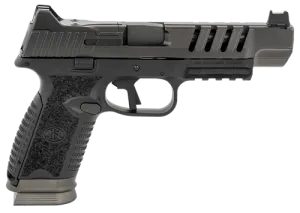
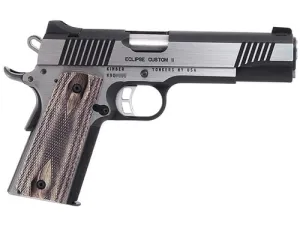
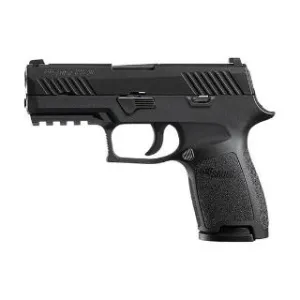
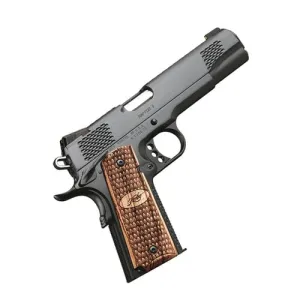
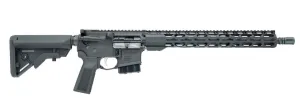
Looking for a brick-and-mortar shop in California? See our best gun stores in California guide for verified FFL dealers, ranges, and gunsmiths near you.
Top Ammo Deals
Best-priced ammunition across 200+ retailers · Updated every 4 hours




Table of Contents
Key Information: California Gun Laws at a Glance (2026)
Fast answers first, with statutes and sources below.
| Permitless Carry | No |
|---|---|
| Open Carry | Banned (loaded and unloaded) |
| Concealed Carry | CCW permit required (now shall-issue post-Bruen) |
| Purchase Permit | Firearm Safety Certificate required |
| Min. Purchase Age | 21 for ALL firearms |
| Background Checks | Universal (all sales + ammo purchases) |
| Waiting Period | 10 days, no exceptions |
| Magazine Capacity Limit | 10 rounds (Duncan v. Bonta pending) |
| Assault Weapon Ban | Yes (features test + named models) |
| Red Flag Law | Yes (GVROs, broad petitioner access) |
| Self-Defense | No SYG statute, but jury instructions say no retreat required. |
| NFA Items | Suppressors BANNED. SBRs restricted. |
| State Preemption | None (cities can be stricter) |
Official California Resources
One more restriction landed on 1 July 2026. AB 1127 bars dealers from transferring semi-automatic pistols with cruciform triggers, and a federal judge has declined to block it while the Justice Department’s challenge proceeds.
California Gun Laws: The Highlights
- Constitutional Carry: No. California requires a CCW permit for any concealed carry.
- CCW Permit: Shall-issue since the Bruen decision (2022). Previously may-issue and nearly impossible in many counties.
- Open Carry: Banned. Both loaded and unloaded open carry of handguns and long guns are prohibited in incorporated areas.
- Purchase Age: 21 for all firearms (raised from 18 for long guns in 2019).
- Background Checks: Universal. Every sale, transfer, gift, and loan requires a background check. Ammunition purchases also require a background check.
- Waiting Period: 10 days on every purchase. No exceptions for permit holders.
- Magazine Limit: 10 rounds. Possession of standard-capacity magazines is a crime.
- Assault Weapons Ban: Yes. Complex features test plus named models.
- Red Flag Law: Yes (Gun Violence Restraining Orders). Family members, coworkers, employers, and teachers can petition.
- Handgun Roster: Only handguns on the approved “safe handgun” list can be sold by dealers. The roster shrinks every year.
- Suppressors: Completely illegal. No exceptions.
- Preemption: None. Cities and counties can add their own restrictions.
Concealed Carry: Post-Bruen California
The Supreme Court’s New York State Rifle & Pistol Assn. v. Bruen decision in June 2022 changed everything for California CCW. Before Bruen, California was a may-issue state, and in counties like Los Angeles, San Francisco, and Santa Clara, “may-issue” meant “almost certainly won’t issue.” Getting a CCW required demonstrating “good cause” beyond a general desire for self-defense, and most urban counties denied virtually every application.
Bruen struck down the good-cause requirement as unconstitutional. California is now shall-issue, meaning the sheriff or police chief must issue a CCW if you meet the statutory requirements. Applications have surged across the state since the ruling.
The process under Cal. Penal Code § 26150-26225 requires: a background check, completion of a 16-hour firearms training course (including live-fire), proof of good moral character, and proof of residency. Costs vary by county but typically run $100-$300 for the application plus training costs. Processing times range from 30 days to 6+ months depending on the county.
California’s response to Bruen was to pass SB 2, which dramatically expanded the list of “sensitive places” where CCW holders couldn’t carry. The new sensitive-places list included parks, playgrounds, churches, banks, bars, restaurants that serve alcohol, public transit, and more. Federal courts largely enjoined these provisions in early 2024, finding them likely unconstitutional under the same Bruen framework. The litigation is ongoing as of March 2026, but most of SB 2’s expanded sensitive places are currently blocked by injunction.
Open Carry
Open carry of firearms is banned in California. Cal. Penal Code § 25850 prohibits the open carry of a loaded firearm in public. Cal. Penal Code § 26350 prohibits the open carry of an unloaded handgun in incorporated areas. Cal. Penal Code § 26400 prohibits the open carry of an unloaded long gun in incorporated areas. California closed every open-carry door, one at a time, and then welded them shut.
The only exception is in unincorporated areas (rural county land) where you can open carry an unloaded long gun. But even then, the ammunition must be kept separate. If you’re in any city or town, open carry in any form is a crime.
Purchase Requirements
Buying a gun in California involves more paperwork than buying a house. Here’s what you need:
Firearm Safety Certificate (FSC): Before you can buy any firearm, you must pass a 30-question written test administered by a licensed dealer under Cal. Penal Code § 31610-31670. The test covers safe handling, storage, and legal requirements. It costs $25, and the certificate is valid for 5 years. You need a 75% score to pass. It’s not difficult, but it’s a hoop you have to jump through.
10-Day Waiting Period: Every purchase requires a 10-day waiting period under Cal. Penal Code § 26815. No exceptions for CCW holders. No exceptions for current gun owners. No exceptions if you already own the exact same model. Ten days, every time. The stated purpose is a “cooling off” period, though the logic of cooling off someone who already owns 20 guns is questionable.
Universal Background Checks: All firearm transfers, including private party sales, must go through a licensed dealer and include a background check. California uses a state-level background check through the DOJ Bureau of Firearms, not the federal NICS system directly. The Dealer Record of Sale (DROS) fee is $37.19 per transaction.
One Handgun Per 30 Days: Under Cal. Penal Code § 27535, you can only purchase one handgun per 30-day period. This restriction doesn’t apply to rifles or shotguns. There are limited exemptions for CCW holders, law enforcement, and licensed collectors.
Age: You must be 21 to purchase any firearm in California. The state raised the age for long guns from 18 to 21 in 2019 under SB 61. There are narrow exceptions for active-duty military and law enforcement.
The Handgun Roster
California maintains a “Roster of Certified Handguns” under Cal. Penal Code § 32000. Only handguns on this list can be sold by licensed dealers. To stay on the roster, manufacturers must meet specific criteria including a loaded chamber indicator, a magazine disconnect mechanism, and (since 2013) microstamping capability. Since no manufacturer has implemented microstamping, no new models have been added to the roster in over a decade. The roster only shrinks.
As of early 2026, the roster contains roughly 250 models, down from over 1,000 at its peak. Many popular handguns available in every other state simply can’t be purchased new in California through a dealer. Want a Gen 5 Glock? Not on the roster. Want the latest Sig P365 variant? Not on the roster.
There’s a workaround: private party transfers and law enforcement exemptions. Officers can buy off-roster handguns for “personal use” and then resell them through private party transfers. This creates a legal gray market where off-roster guns sell for significant premiums. A Gen 5 Glock 19 that costs $550 everywhere else might sell for $1,200+ in California through a private party transfer.
Magazine Capacity Limits
California bans the manufacture, import, sale, and possession of magazines holding more than 10 rounds under Cal. Penal Code § 32310. This applies to all firearms, not just handguns.
The ban has been challenged in Duncan v. Bonta, one of the most closely watched gun cases in the country. Judge Benitez of the Southern District struck the ban down in 2019 and again on remand from the Ninth Circuit. During a brief window in March-April 2019 (“Freedom Week”), the injunction was in effect and California residents legally purchased standard-capacity magazines. Those magazines remain legal to possess if acquired during Freedom Week. The case is now before the en banc Ninth Circuit, and many expect it to eventually reach the Supreme Court. As of March 2026, the 10-round limit remains in effect.
Assault Weapons Ban
California’s assault weapons ban is the oldest and most complex in the country, originating with the Roberti-Roos Assault Weapons Control Act of 1989. Under Cal. Penal Code § 30500-30530, certain firearms are classified as “assault weapons” and are illegal to manufacture, sell, or possess (with grandfathering for those registered before specified dates).
The ban works three ways: a list of specifically named firearms, a “features test” for semi-automatic centerfire rifles, and a similar test for semi-automatic pistols. For rifles, an “assault weapon” is a semi-automatic centerfire rifle that accepts a detachable magazine and has any one of the following: a pistol grip, a thumbhole stock, a folding or telescoping stock, a grenade or flare launcher, a flash suppressor, or a forward pistol grip.
California gun owners have developed two main compliance strategies: “featureless” builds that remove all banned features (using a fin grip, fixed stock, no flash hider), or “fixed magazine” builds where the magazine cannot be removed without disassembling the action (using devices like the Hogue Freedom Fighter or Kingpin). Both are legal but require careful attention to the specific regulations.
Judge Benitez struck down the assault weapons ban in Miller v. Bonta in 2021, famously comparing the AR-15 to a Swiss Army knife. The Ninth Circuit reversed. The case was remanded after Bruen and is ongoing. Don’t hold your breath for California to actually lose this ban, but the legal challenge is real and well-funded.
Ammunition Restrictions
California requires a background check for every ammunition purchase under Cal. Penal Code § 30370. If you’re in the DOJ’s Automated Firearms System (meaning you’ve bought a gun in California), you’ll get a $1 “basic” eligibility check at the point of sale. If you’re not in the system, you’ll need a $19 “standard” eligibility check that takes longer.
You cannot buy ammunition online and have it shipped to your door. All ammo must be shipped to a licensed dealer, who runs the background check before releasing it to you. This adds cost and inconvenience to every ammo purchase. You also can’t bring ammunition into the state without going through a licensed vendor, with limited exceptions for personal use at a shooting range within 60 days of import.
Self-Defense Laws
California does not have a Stand Your Ground statute. However, the standard jury instructions (CALCRIM 505 and 3470) tell jurors that a person is “not required to retreat” and is “entitled to stand his or her ground and defend himself or herself.” In practice, California does not impose a strict duty to retreat, but the use of force must still be reasonable and proportional. The distinction is subtle but important: no statutory Stand Your Ground protection, but the jury instructions effectively provide one.
Inside your home, the Castle Doctrine applies under Cal. Penal Code § 198.5. If someone unlawfully and forcibly enters your home, there is a rebuttable presumption that you held a reasonable fear of imminent death or great bodily injury. This presumption gives you stronger legal footing for using deadly force inside your home than outside it.
The general self-defense standard under California law requires that you reasonably believed you were in imminent danger of being killed, suffering great bodily injury, or being the victim of a forcible and atrocious crime. The force used must be no more than was necessary to defend against that danger. Juries are instructed using CALCRIM 505 (justifiable homicide in self-defense), which lays out these elements.
In practice, defensive gun use in California is legally risky even when justified. The political climate in many urban counties means prosecutors may be more inclined to scrutinize a shooting than in gun-friendly states. If you carry in California, having a self-defense legal insurance plan is not optional. It’s essential.
Red Flag Law (Gun Violence Restraining Orders)
Cal. Penal § 198.5 California Home Defense PresumptionAny person using force intended or likely to cause death or great bodily injury within his or her residence shall be presumed to have held a reasonable fear of imminent peril of death or great bodily injury to self, family, or a member of the household when that force is used against another person, not a member of the family or household, who unlawfully and forcibly enters or has unlawfully and forcibly entered the residence and the person using the force knew or had reason to believe that an unlawful and forcible entry occurred.
California was the first state to enact a red flag law in 2014 under Cal. Penal Code § 18100-18205. The law allows Gun Violence Restraining Orders (GVROs) to temporarily remove firearms from individuals deemed a significant danger to themselves or others.
California’s GVRO system is one of the broadest in the country. Petitioners can include: law enforcement, family members, household members, employers, coworkers, and school employees. That’s a much wider net than states that only allow law enforcement to petition. Temporary orders can be granted ex parte (without the subject being present) and last up to 21 days. After a hearing, a GVRO can be issued for up to 5 years and can be renewed.
NFA Items
Suppressors: Completely illegal in California under Cal. Penal Code § 33410. Manufacturing, importing, selling, giving, lending, or possessing a suppressor is a felony. No exceptions for federal registration. California doesn’t care about your ATF Form 4. The federal elimination of the NFA tax stamp doesn’t change anything here.
Short-Barreled Rifles and Shotguns: Generally illegal under Cal. Penal Code § 33215 without a DOJ-issued permit. Permits are available but rarely granted to civilians.
Machine Guns: Illegal under Cal. Penal Code § 32625. No civilian possession, period. Even pre-1986 registered machine guns that are legal in most other states are prohibited in California.
AOWs: Legality depends on the specific configuration and whether it falls under other California prohibitions (assault weapons, short-barreled firearms, etc.).
California Suppressor Facts & Figures
| Suppressor ownership | Illegal for civilians. Cal. Penal Code § 33410 makes possessing a silencer a felony, there is no exception for a federal ATF Form 4 or tax stamp. |
| Hunting with a suppressor | Prohibited, possession is itself a crime, so there is no lawful hunting use. |
| Bringing one in from out of state | Not allowed. Importing or possessing a suppressor in California is a felony regardless of where it was bought or registered. |
| 2026 federal $0 tax stamp | Does not apply here. The federal change removed only the $200 federal tax; it does not affect California’s state ban. |
Do not attempt to buy, build, import, or possess a suppressor in California. Even a fully ATF-registered, tax-stamped suppressor is illegal to possess here. To see where suppressors are and are not legal, see our suppressor laws by state guide. This page is general information, not legal advice, consult a California firearms attorney about your specific situation.
State Preemption
California does not have state preemption of local firearms laws. Cities and counties can and do pass their own gun regulations that are stricter than state law. San Francisco, Los Angeles, Oakland, San Jose, and other municipalities have their own additional restrictions on storage, sales, ammunition, and more.
This means knowing “California gun law” isn’t enough. You also need to know the local ordinances wherever you live, work, or travel within the state. San Jose, for example, requires gun owners to carry liability insurance and pay an annual fee. San Francisco bans the sale of hollow-point ammunition within city limits. The patchwork makes compliance a nightmare.
Reciprocity: Out-of-State Permits
California Concealed Carry at a Glance
Constitutional carry: No
Honors non-resident permits: No — out-of-state permits not honored
Classification: No reciprocity, local permit only
Map base: Wikimedia Commons (CC BY-SA). Color overlay and reciprocity data by USA Gun Shop.
Can I Carry in California?
Select your home state to see if your permit authorizes carry in California.
California does not recognize concealed carry permits from any other state. If you have a permit from Texas, Florida, Utah, or anywhere else, it has zero legal standing in California. You cannot carry concealed in California without a California-issued CCW permit. Period.
Going the other direction, California’s CCW permit is recognized by very few states. Most reciprocity-friendly states don’t have formal agreements with California because California doesn’t reciprocate. A handful of states may honor California CCW through unilateral recognition, but the list is extremely limited.
States That Recognize California CCW
| Recognized In (Limited) | NOT Recognized (Most States) |
| A small number of states with universal recognition policies may honor California CCW unilaterally. These include states like Arizona, Idaho, Indiana, Iowa, Kansas, Kentucky, Michigan, Missouri, Montana, Nebraska, Nevada, Ohio, Oklahoma, South Dakota, Tennessee, Utah, Vermont, Virginia | California’s lack of reciprocity with other states means your California CCW is functionally useless outside California for most practical purposes. If you travel, you need a non-resident permit from a reciprocity-friendly state like Florida, Utah, or Arizona. |
Critical Details for Travelers
- Entering California: If you’re driving into California with firearms, you must comply with all California laws the moment you cross the state line. That means 10-round magazines only. No “assault weapons” as defined by California law. No suppressors. No ammo purchases without a California background check. Ignorance of California law is not a defense.
- No Out-of-State Permits Honored: Your concealed carry permit from another state does not work in California. Carry concealed without a California CCW and you’re facing criminal charges.
- Non-Resident CCW: As of April 22, 2025, California now issues CCW permits to non-residents following a federal court order. Applicants must apply to the issuing agency of the jurisdiction where they intend to spend time.
- FOPA Safe Passage: If you’re transiting through California under the federal Firearm Owners Protection Act, keep firearms unloaded and locked in a case that isn’t the glove compartment or center console. Ammunition should be stored separately. Do not stop longer than necessary. California has a history of prosecuting travelers who overstay their “transiting” welcome.
Prohibited Places
Prohibited Places in California
California has an extensive prohibited-places framework. SB 2 of 2023 added an expanded "sensitive places" list for CCW permit holders. The Ninth Circuit Court of Appeals has addressed several provisions.
- K-12 schools (1,000-ft Gun-Free School Zone)
- Colleges and universities
- Courthouses, courtrooms
- Judicial facilities
- State and local government buildings
- Polling places
- Hospitals
- Nursing homes
- Medical offices
- Stadiums, theaters, concert halls
- Amusement parks
- Casinos
- Parks, playgrounds, zoos
- Libraries, museums
- BART, Metrolink, Muni, Amtrak
- Airports (secure areas)
- Bus stops and stations
- Bars and restaurants serving alcohol for on-site consumption
- Federal courthouses, post offices, agency offices
- Presumption that private property is gun-free unless posted otherwise (some provisions subject to federal court review)
Even with a valid California CCW, you cannot carry in:
- Any building or grounds of a K-12 school (Cal. Penal Code § 626.9)
- Any building or grounds of a college or university
- Any government building (state and local)
- Any courthouse
- Any polling place
- Any airport sterile area
- Any place of worship (under SB 2, currently enjoined in part)
- Any establishment that serves alcohol (under SB 2, currently enjoined in part)
- Public transit vehicles and facilities
- Any private property that posts a “no firearms” sign (under SB 2, enforcement status uncertain)
SB 2 attempted to make California a state where you have a CCW but virtually nowhere to carry it. The federal courts have blocked most of those expansions for now, but the underlying statute remains on the books and could be enforced if the injunctions are lifted. Keep track of the litigation.
Purchasing Process Step by Step
- Get your Firearm Safety Certificate (FSC). Take the 30-question test at a licensed dealer. $25, valid for 5 years.
- Choose your firearm. If it’s a handgun, it must be on the California Handgun Roster. Rifles and shotguns must comply with assault weapons restrictions.
- Start the DROS. The dealer initiates the Dealer Record of Sale through the California DOJ. This includes the background check. Fee: $37.19.
- Wait 10 days. No exceptions. Go home and come back.
- Pass the Safe Handling Demonstration. When you pick up the gun, you must demonstrate safe handling to the dealer’s satisfaction.
- Take your gun home. It must be transported in a locked container (not the glove compartment) while in your vehicle.
For handguns, remember the one-per-30-days limit. If you want to buy two handguns, the second purchase can’t happen until 30 days after the first.
Recent Changes (2025-2026)
The legal landscape in California is shifting faster than at any time in recent memory, thanks to a cascade of federal court challenges:
- SB 2 (Sensitive Places): Signed by Governor Newsom in 2023 as a response to Bruen. Dramatically expanded the list of places where CCW holders can’t carry. Most of the expansions were enjoined by federal courts in early 2024. Litigation continues through the Ninth Circuit.
- Duncan v. Bonta (Magazine Ban): The 10-round magazine limit has been struck down at the district level multiple times. The case has been bouncing through the Ninth Circuit and is expected to eventually reach the Supreme Court. The ban remains in effect during appeals.
- Miller v. Bonta (Assault Weapons Ban): District court struck down the AWB. Ninth Circuit reversed. Remanded post-Bruen. Ongoing as of March 2026.
- Federal NFA Tax Stamp Elimination: Effective January 1, 2026. Does not affect California since suppressors, SBRs, and machine guns remain illegal under state law regardless of federal registration.
California’s legislature continues to introduce new gun restrictions annually, and the courts continue to push back under the Bruen framework. If you’re a California gun owner, the next 2-3 years of court decisions could fundamentally change what’s legal. Stay informed.
Our Take on California Gun Laws
California is the hardest state in the country to be a gun owner. Every regulation that can exist does exist, and then some. The purchasing process is slow, expensive, and restrictive. The carry laws are complicated and changing. The assault weapons ban forces you into awkward compliance builds. The magazine limit means you’re outgunned by anyone who doesn’t follow the law. And the lack of preemption means you need to track local ordinances on top of everything else.
But the Bruen revolution is real. CCW permits are now genuinely available. The magazine ban, the AWB, and SB 2 are all under serious federal court challenge. Judge Benitez at the Southern District has been a consistent defender of Second Amendment rights in California, and his rulings keep moving up the appellate ladder. There’s a plausible path to meaningful relief, even if it takes years.
If you live in California and own guns, get your CCW now while the shall-issue framework holds. Join a legal defense organization like CRPA or FPC that’s funding these court challenges. And know the law inside and out, because California will prosecute you for honest mistakes that wouldn’t even be noticed in most other states. For the complete statutes, visit the California Legislative Information database. For DOJ firearms information, check the California DOJ Bureau of Firearms.
California Gun Buying Guides
- Best California Legal Handguns (2026)
- Best California Legal AR-15 Rifles (2026)
- Best California CCW Guns (2026)
- Best California Legal Revolvers (2026)
- California Handgun Roster Explained (2026)
- Best Gun Safes for California: SB 53 Compliance (2026)
- Best California Legal Shotguns (2026)
- Best California Legal Hunting Rifles (2026)
- Best Gun Stores in California
California-Specific Carry Questions
How did the 2022 Bruen ruling change California concealed carry licensing?
The US Supreme Court’s Bruen ruling required California to abandon the discretionary good-cause standard that historically blocked most CCW applications in coastal counties. California has transitioned to a shall-issue framework while enacting SB 2 and related sensitive-location restrictions. Permit issuance has increased substantially since 2022, particularly in counties that previously denied the vast majority of applications, though sensitive-location restrictions limit where permit holders can lawfully carry.
What is the California Handgun Roster, and how does it limit purchases?
The California Roster of Handguns Certified for Sale restricts new handgun sales to models that have passed the California Department of Justice’s certification testing, which historically included drop-safety, microstamping, and other state-specific requirements. Many modern handguns are not on the roster because their manufacturers have not pursued California certification. The off-roster transfer rules permit acquisition of certain firearms through private-party transfers, law-enforcement-exempt pathways, and inherited firearms, but the new-handgun market for California civilians is restricted to roster-listed models.
What does California’s Assault Weapons Control Act prohibit?
The Assault Weapons Control Act, originally enacted in 1989 and substantially amended since, prohibits the manufacture, importation, and sale of firearms meeting California’s definition of an assault weapon. The definition focuses on specific features including pistol grips on rifles, flash hiders, and detachable magazines on semi-automatic rifles. Lawfully-owned pre-ban firearms registered with the DOJ may remain in possession, but the registration window has closed multiple times and reopening dates are typically not announced in advance.
Does California restrict magazine capacity, and what is the current status?
California restricts new magazine acquisition to a 10-round capacity under multiple statutes. Magazines lawfully owned before various effective dates have been the subject of ongoing federal litigation, with court rulings shifting the legal status of pre-ban magazines several times. As of 2026 the practical answer is to confirm the current status with the California DOJ before acquiring or transferring any magazine over 10 rounds.
FAQ: California Gun Laws
For our complete state-by-state comparison, see this state’s place in the national patchwork.
Explore More States
Alabama Gun Laws (2026): Constitutional Carry, Stand Your Ground & Full Freedom, Alaska Gun Laws, Arizona Gun Laws (2026): Constitutional Carry, No Limits & Stand Your Ground, Arkansas Gun Laws (2026): Constitutional Carry, No Limits & Stand Your Ground, Bruen Decision Explained (2026): NYSRPA v. Bruen, History-and-Tradition Test & Downstream Litigation, Castle Doctrine Explained (2026): All 50 States, Civil Immunity & Presumption of Reasonable Fear, Colorado Gun Laws (2026): 15-Round Cap, SB25-003 Semi-Auto Ban & Red Flag Law, Connecticut Gun Laws (2026): Permits, Carry Rules & Restrictions, Constitutional Carry States (2026): Complete List of 29 Permitless Carry States, Florida Gun Laws (2026): Constitutional Carry, Open Carry & Stand Your Ground, Georgia Gun Laws (2026): Constitutional Carry, No Limits & Full Freedom, Hawaii Gun Laws (2026): Registration, Permits & The Strictest State, Idaho Gun Laws (2026): Constitutional Carry, Stand Your Ground & Full Freedom, Illinois Gun Laws (2026): FOID Card, CCL, AWB & What You Need to Know, Indiana Gun Laws (2026): Constitutional Carry, Free Lifetime License & Stand Your Ground, Iowa Gun Laws (2026): Constitutional Carry, Strict Scrutiny & Full Freedom, Kansas Gun Laws (2026): Constitutional Carry, Stand Your Ground & Full Immunity, Kentucky Gun Laws (2026): Constitutional Carry, CDWL & Stand Your Ground, Louisiana Gun Laws (2026): Constitutional Carry at 18, CHP & Stand Your Ground, Louisiana Lets 18-Year-Olds Carry, Then Won’t Issue Them a Permit, Maine Gun Laws (2026): Constitutional Carry, 72-Hour Wait & Red Flag Law, Maryland Gun Laws (2026): HQL, Wear and Carry Permit, AWB & Sensitive Places, Massachusetts Gun Laws (2026): Chapter 135, LTC, FID & AWB, Michigan Gun Laws (2026): CPL, License to Purchase, Red Flag & Safe Storage, Minnesota Gun Laws (2026): Permit to Carry, Permit to Purchase & Red Flag, Mississippi Gun Laws (2026): Constitutional Carry, Enhanced Permit & Stand Your Ground, Missouri Gun Laws (2026): Constitutional Carry, Lifetime CCW & Stand Your Ground, Montana Gun Laws (2026): Constitutional Carry (HB 102), MCWP & Stand Your Ground, Nebraska Gun Laws (2026): Constitutional Carry (LB 77), CHP, HPC & Castle Doctrine, Nevada Gun Laws (2026): CCW, Universal Background Checks, Red Flag & Ghost Gun Ban, New Hampshire Gun Laws (2026): Constitutional Carry, PRL & Stand Your Ground, New Jersey Gun Laws (2026): FPIC, PPH, Chapter 131 CCP & Sensitive Places, New Mexico Gun Laws (2026): CHL, Universal Background Checks, HB 129 Status & Article 2 Section 6, New Mexico’s Waiting Period Lost in Court and Still Applies to You, New York Gun Laws (2026): CCIA, Pistol License, SAFE Act & Sensitive Locations, North Carolina Gun Laws (2026): CHP, SB 41 Repeal & Stand Your Ground, North Dakota Gun Laws (2026): Constitutional Carry, Class 1 & Class 2 CWL, Ohio Gun Laws (2026): Constitutional Carry (SB 215), CHL & Stand Your Ground, Oklahoma Gun Laws (2026): Constitutional Carry (HB 2597), SDA License & Make My Day, Oregon Gun Laws (2026): CHL, Measure 114 Status, SB 243 & Sandoval, Pennsylvania Gun Laws (2026): LTCF, PICS, Crawford & 18 Pa.C.S. § 6109, Red Flag Laws by State (2026): Complete List of 21 ERPO States, Rhode Island Gun Laws (2026): Blue Card, Dual Permits, 10-Round Cap & 2026 AWB, South Carolina Gun Laws (2026): Constitutional Carry, CWP & Stand Your Ground, South Dakota Gun Laws (2026): Constitutional Carry, Three-Tier Permits & Stand Your Ground, Stand Your Ground States (2026): Complete List of 38 SYG States, Tennessee Gun Laws (2026): Constitutional Carry, Enhanced HCP & Stand Your Ground, Texas Gun Laws (2026): Constitutional Carry, LTC, Castle Doctrine & Civil Immunity, Universal Background Check States (2026): Complete List of 21 UBC States, Utah Gun Laws (2026): Constitutional Carry, CFP, Stand Your Ground & Reciprocity, Vermont Gun Laws (2026): “Vermont Carry,” Universal Background Check & Magazine Cap, Virginia Gun Laws (2026): CHP, Universal Background Checks & Substantial Risk Order, Virginia Halts Private-Sale Background Checks Again (2026), Washington Gun Laws (2026): CPL, Universal Background Checks, Magazine Cap & 2023 AWB, West Virginia Gun Laws (2026): Constitutional Carry, CHL & Stand Your Ground, Wisconsin Gun Laws (2026): CCL, Castle Doctrine & Reciprocity, Wyoming Gun Laws (2026): Constitutional Carry, CFP, Stand Your Ground & 2A Sanctuary
6,216+ Gun & Ammo Deals
Updated daily from 200+ top retailers. Filter by category, caliber, action type, and price.