

Affiliate disclosure: This Glock 17 Gen 6 review contains affiliate links. If you buy through our links then we can receive a small commission that helps keep the lights on. You don’t pay anything more.
- Treat every gun as loaded
- Point the muzzle in a safe direction
- Keep your finger off the trigger until you’re ready to shoot
- Know your target and what’s beyond

Review: Glock 17 Gen 6 – Glock Finally Listened
Our Rating: 8.4/10
- RRP: $745
- Street Price: $599-$650 (Check our live pricing for the best current deal)
- Caliber: 9x19mm
- Action: Striker-fired, Safe Action System
- Barrel Length: 4.49″ (Glock Marksman Barrel, nDLC finish)
- Overall Length: 7.95″
- Height (with mag): 5.47″
- Width: 1.34″
- Weight (unloaded): 21.16 oz
- Capacity: 17+1
- Frame Material: Polymer with accessory rail
- Slide Finish: nDLC
- Sights: Steel front, polymer rear
- Optics: Factory ORS (3 plates included: RMR, DeltaPoint Pro, Holosun K)
- Trigger: Flat-faced, ~5.5 lbs
- Safety: Safe Action System (3 passive safeties)
- Made in: Austria and USA (Smyrna, GA)
Pros
- Factory flat-faced trigger eliminates the most common aftermarket upgrade
- ORS optics system is genuinely better than the old MOS (lower height-over-bore, sealed extractor)
- RTF6 grip texture is the best factory Glock grip ever
- Flared magwell, beavertail, and undercut trigger guard are all welcome additions
- Full backward compatibility with all Gen 3/4/5 9mm magazines
- Decades of proven Glock reliability carries over
Cons
- $745 MSRP is the most expensive Glock has ever been (street price ~$600-650 is more reasonable)
- Still ships with polymer rear sight and no night sights at this price
- Trigger is improved but still trails Walther PDP and CZ P-10 out of the box
- Some shooters report slightly snappier recoil than Gen 5
- No threaded barrel option at launch
Glock 17 Gen 6 Price
Quick Take
The Glock 17 Gen 6 is basically Glock admitting the aftermarket had better ideas. For years, the very first thing anyone did with a new Glock was swap the trigger and mill the slide for an optic. Glock watched that happen for a decade and finally said “fine, we’ll do it ourselves.” The result is the Glock 17 that should have existed five years ago.
You get a flat-faced trigger out of the box, a factory optics-ready slide with the new ORS system, an actually usable grip texture, and a flared magwell. All the stuff you used to spend $300-500 bolting on after purchase. It’s still not the best trigger in the striker-fired world (Walther still owns that crown), but it’s a massive step forward from the mushy hinged triggers of Gens past.
What hasn’t changed is the thing that matters most: reliability. I put 1,000 rounds of everything from steel-case junk to premium hollow points through this gun and got exactly zero malfunctions. That’s the Glock promise, and Gen 6 delivers it. The biggest aftermarket ecosystem in the firearms world carries over too. Every holster, every light, every magazine you already own still works.
Best For: Duty use, home defense, first-time gun owners, and anyone who wants the pistol with the most holster and accessory options on the planet. If you want one gun that does everything and has a replacement part available at every gun shop in America, this is still the answer.
Why Glock Built the Gen 6 This Way
Let’s be honest about what forced Glock’s hand here. The Glock switch epidemic became a national crisis, and lawsuits started piling up. The Gen 6 includes an anti-conversion steel rail at the rear of the frame that makes it significantly harder to install an auto sear. This isn’t a marketing feature. It’s a legal liability play, and it was probably the single biggest driver behind the entire Gen 6 program.
Then there’s the competition problem. Walther showed up with the PDP and its absurd factory trigger. CZ gave us the P-10 with metal sights and a better trigger for less money. Springfield dropped the Echelon with a universal optic interface. Meanwhile, Glock was still shipping a gun with a hinged trigger, no optic cut, and polymer sights in 2025. The aftermarket was doing Glock’s job better than Glock was, and the company was essentially outsourcing its R&D to Apex, Agency Arms, and every slide milling shop in America.
The MOS system was also becoming a liability. The optic sat too high, the screws were too short, and Glock’s decision to put thread locker in the extractor channel (which ran through the optic mounting area) was causing real problems. The new ORS system fixes all of that with a purpose-built optic mounting solution that sits lower and doesn’t interfere with the extractor. It’s the kind of thing Glock should have designed from the start.
So the Gen 6 isn’t really innovation. It’s Glock catching up to where the market already was. And honestly? That’s fine. Glock’s strength was never being first. It’s being the most reliable, most supported, most available pistol on earth. The Gen 6 just removes the reasons people were choosing something else.
Competitor Comparison
Sig Sauer P320 Full (~$550-650)
The P320 is the most modular pistol on the market, full stop. The fire control unit is the serialized part, which means you can swap frames, slides, and calibers like building blocks. The military adopted it as the M17/M18, which gives it serious credibility. If modularity matters to you more than aftermarket depth, the P320 is the move.
That said, the P320’s trigger isn’t as clean as you’d expect at this price, and Sig’s quality control has had some well-documented hiccups over the years. The Glock 17 Gen 6 won’t let you swap to a subcompact frame in 30 seconds, but it also won’t give you any reliability surprises. Different priorities, different guns.
Sig Sauer P320 Full Size Price
Smith & Wesson M&P 2.0 (~$500-580)
The M&P 2.0 has always been the value play in this segment, and that hasn’t changed. You get aggressive grip texture, solid ergonomics, and a pistol that runs like a sewing machine for $150-200 less than the Gen 6’s street price. Smith also includes four palm swell inserts, which is more generous than Glock’s two backstraps.
Where the M&P falls short is aftermarket support and the optics-ready options. The M&P’s CORE models exist, but the ecosystem is a fraction of what Glock offers. If you want a reliable 9mm and don’t care about customization, the M&P 2.0 saves you real money. If you want to build out a duty or competition rig over time, the Glock’s ecosystem is hard to beat.
Smith & Wesson M&P 2.0 Price
CZ P-10 F (~$400-500)
Here’s the dirty secret of the striker-fired world: the CZ P-10 F has a better trigger than the Glock 17 Gen 6, ships with metal sights front and rear, and costs $100-200 less. On paper, it’s the better gun for the money. I’ve said it. The CZ faithful already know this.
The catch is everything outside the gun itself. Holster options are a fraction of Glock’s. Aftermarket parts are limited. Your local gun shop might not even stock CZ magazines. The P-10 F is the enthusiast’s choice for people who care about the gun more than the ecosystem. The Glock 17 is for people who want the gun that works with everything.
CZ P-10 F Price
Walther PDP Full Size (~$550-650)
The Walther PDP has the best factory trigger in the striker-fired category. Period. It’s not close. If trigger feel is your number one priority, stop reading and go buy a PDP. The ergonomics are excellent too, with a grip angle that most shooters find more natural than the Glock’s trademark steep rake.
Walther’s problem is the same as CZ’s: the ecosystem. Holster makers are catching up, but “catching up” isn’t the same as “there.” Walther also doesn’t have Glock’s track record of 40+ years of military and law enforcement service. The PDP is the better shooting experience out of the box. The Glock 17 Gen 6 is the better platform to build on.
Walther PDP Full Size Price
Springfield Echelon (~$600-650)
Springfield’s Echelon brought something genuinely new to the table: a Central Operating Group (COG) chassis system and a universal optic interface that works with most major red dots without adapter plates. That optic mounting solution is arguably better than Glock’s ORS system because you don’t need to swap plates at all.
The Echelon is a solid gun that shoots well and offers real innovation. But it’s brand new, which means the aftermarket is thin and the long-term reliability data just isn’t there yet. Glock has four decades of torture tests behind it. Springfield has a good start. If the Echelon’s universal optic mount appeals to you, it’s worth serious consideration. Just know you’re buying into a younger platform.
Springfield Echelon Price
Features & Technical Deep Dive
The ORS Optics System
The old MOS system was a compromise. Glock milled a big pocket in the slide, shipped some adapter plates, and called it a day. The optic sat too high, the mounting screws were borderline too short for hard use, and that infamous thread locker in the extractor channel caused headaches when you tried to mount anything. It worked, but “it worked” is a low bar.
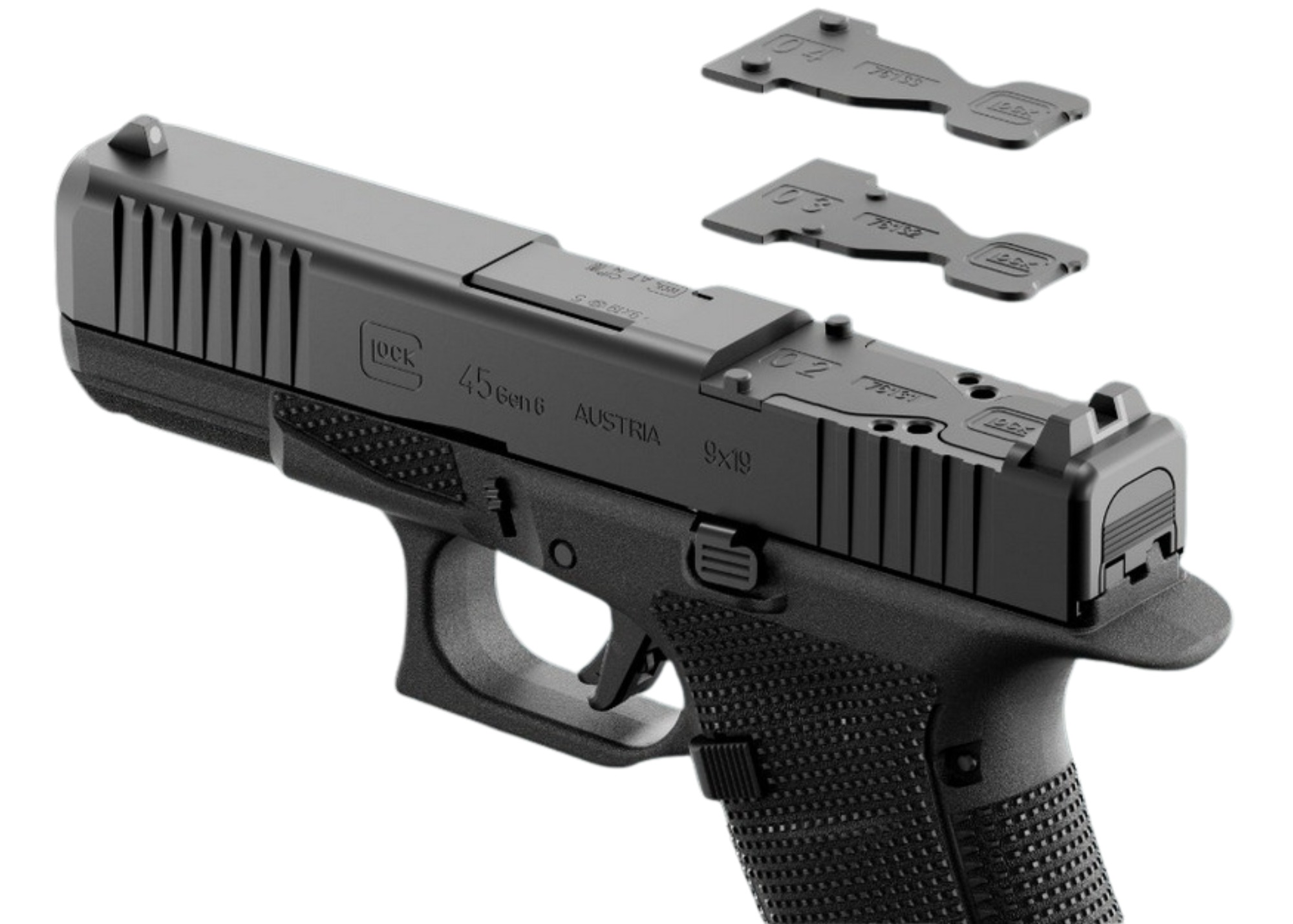
The ORS (Optic Ready System) is a ground-up redesign. The optic sits noticeably lower on the slide, which gives you a better co-witness with iron sights and a more natural sight picture. The extractor channel is completely sealed off from the optic mounting area, so you’ll never deal with that thread locker contamination issue again. Glock includes three mounting plates in the box: one for Trijicon RMR footprint, one for Leupold DeltaPoint Pro, and one for Holosun K series.
Is it better than the Walther or Springfield optic mounting systems? Honestly, it’s competitive but not class-leading. The Springfield Echelon’s universal interface doesn’t need plates at all. But the ORS is miles better than the old MOS, and that’s what matters for Glock owners upgrading from Gen 5.
RTF6 Grip and Ergonomics
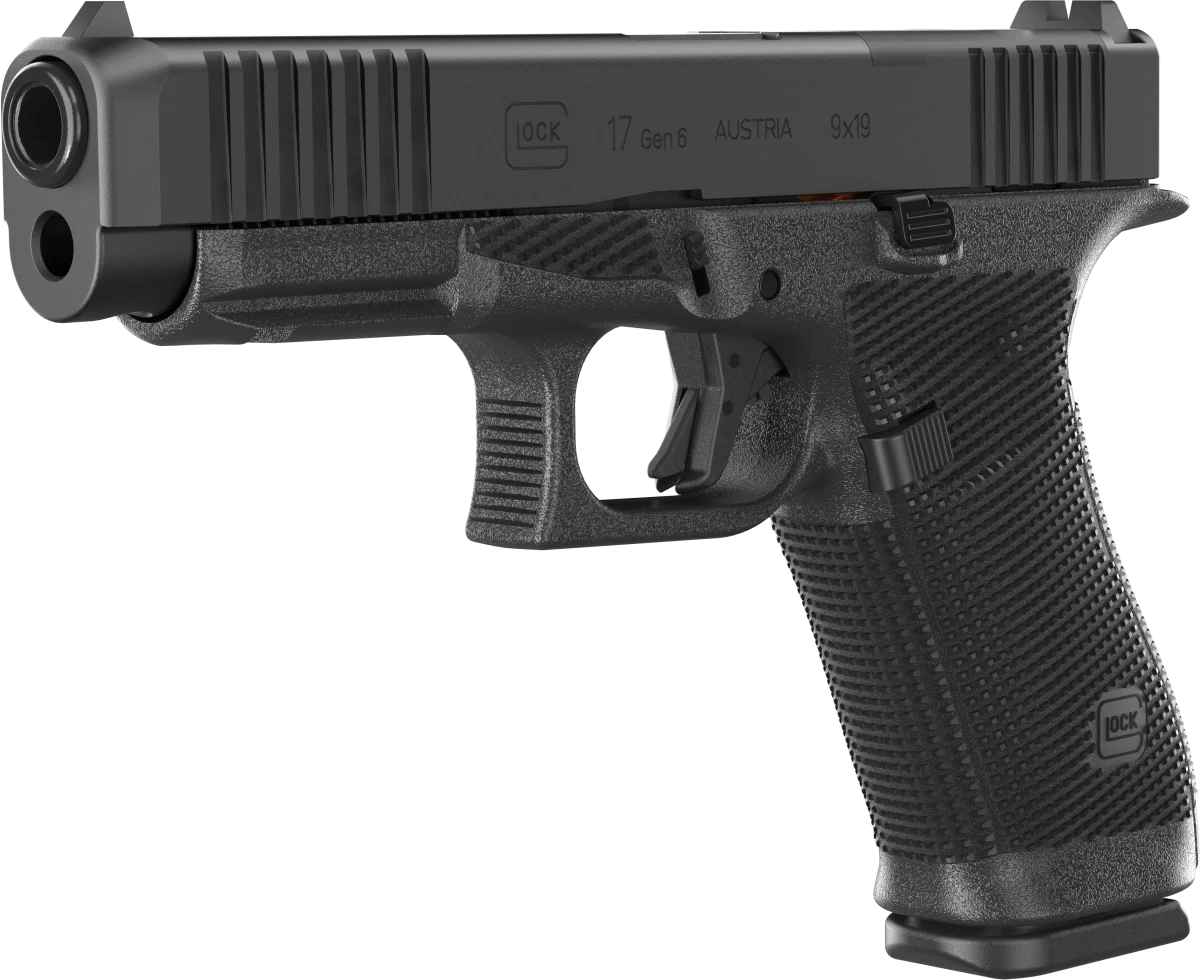
The RTF6 texture is genuinely great. Glock somehow nailed the balance between aggressive enough for a solid purchase and subdued enough that it won’t sand your skin off during a full day of shooting. Previous Glock textures were either too slick (Gen 3/4 standard) or too aggressive (RTF2, which felt like 40-grit sandpaper). RTF6 splits the difference perfectly.
Beyond the texture, the ergonomic changes are real. The enlarged beavertail gives you a higher, more consistent grip. The integrated palm swell fills the hand better than any previous generation. The deeper trigger guard undercut lets you choke up on the gun, which reduces muzzle flip. And the flared magwell makes reloads noticeably faster without adding bulk.
Glock also added ambidextrous gas pedals (those thumb rest ledges on either side of the frame above the trigger guard). They’re subtle, but lefties will appreciate finally getting some love from Glock. Two interchangeable backstraps are included for hand size adjustment, which is the same as Gen 5. I would have liked to see three options, but two covers most shooters.
The Flat-Faced Trigger
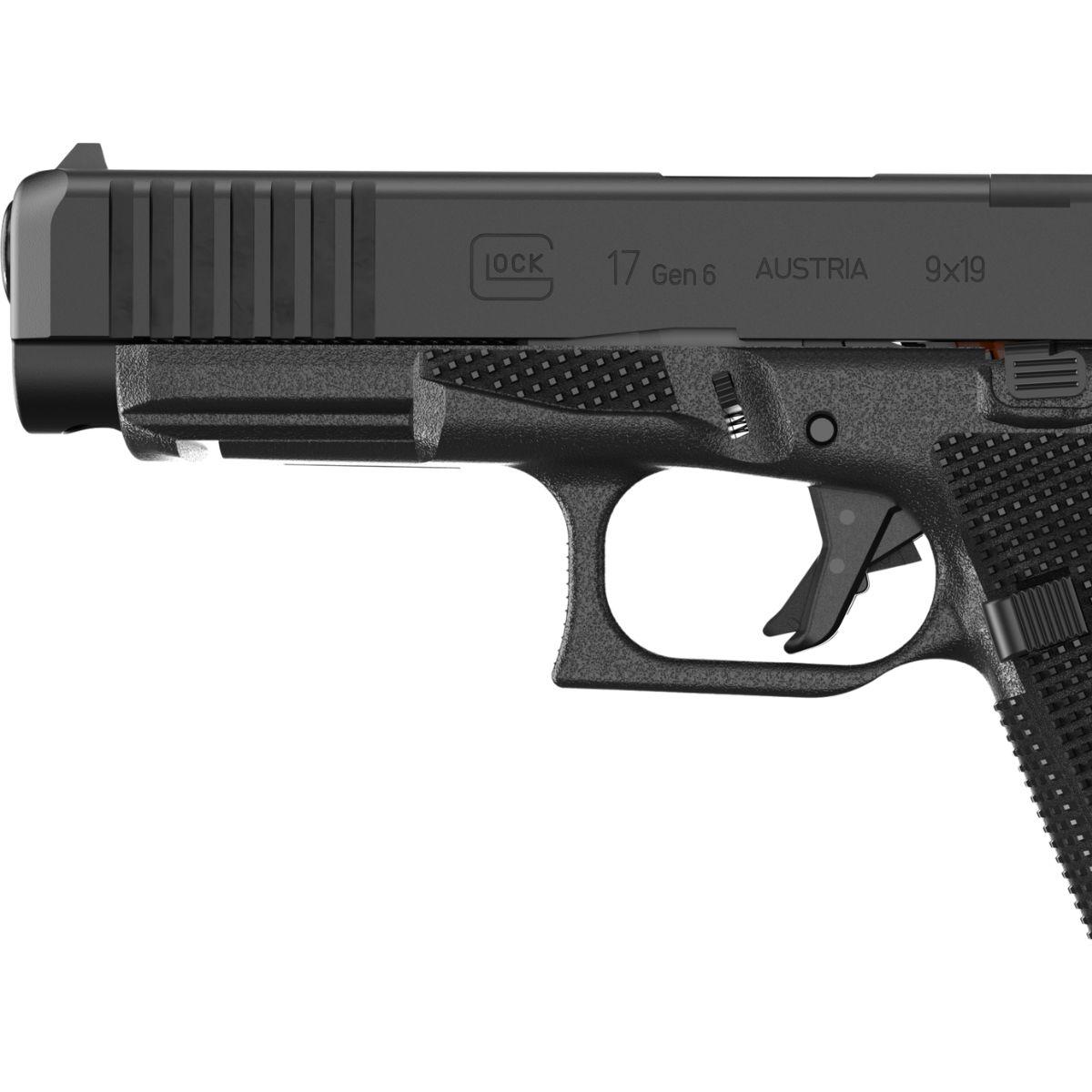
This was the number one most requested change from Glock owners, and it’s here. The factory flat-faced trigger replaces the curved, hinged trigger that’s been the Glock standard since 1982. The pull weight is still around 5.5 pounds, and it’s still a Safe Action trigger with the same three passive safeties. What’s different is the feel.
The flat face gives you a more consistent pull regardless of where your finger sits on the trigger. With the old curved trigger, finger placement changed the leverage and the perceived pull weight. The flat face eliminates that variable. The reset is also slightly shorter and more tactile than Gen 5, though it’s not a dramatic improvement.
Let me be real though: if you’ve shot a Walther PDP or a CZ P-10, the Gen 6 trigger still isn’t going to blow your mind. It’s better than any factory Glock trigger before it, but it’s still a Glock trigger. The take-up is long, there’s a bit of mush before the wall, and the break is clean but not crisp. For a duty gun, that’s arguably a feature (you want some take-up before the bang). For competition, you’re still going to want an Apex or Overwatch.
Anti-Switch Design
This is the feature nobody at Glock wants to talk about openly, but it’s probably the most significant engineering change in the Gen 6. The rear of the frame now has a short steel rail that prevents the installation of aftermarket auto sears (commonly called “Glock switches”). Gen 5 guns had a small plastic nub in this area that was easily defeated. The Gen 6’s steel rail is a much more serious obstacle.
Glock is facing multiple lawsuits related to the ease of converting their pistols to full-auto. This design change is a direct response to that legal pressure. For law-abiding owners, it doesn’t affect anything about how the gun functions. Your holsters still fit, your parts still work. But for Glock’s legal team, this was probably the single most important item on the Gen 6 spec sheet.
At the Range: 1,000 Round Test
Break-In Period
I started the test expecting Glock’s usual zero break-in requirement, and that’s exactly what I got. The gun ran perfectly from round one. The trigger did smooth out slightly over the first 200 rounds, with the take-up becoming a bit less gritty and the reset getting more defined. But there were no functional issues at any point during break-in.
The slide was initially stiff on the new recoil spring (single captive assembly this time, versus the dual spring in Gen 5). By round 300, it had loosened up to a comfortable rack. Nothing unusual here. This is standard for any new pistol with a factory recoil spring.
Reliability
Here’s the full ammo log from our 1,000 round test:
- Federal American Eagle 115gr FMJ: 400 rounds
- Blazer Brass 124gr FMJ: 200 rounds
- Speer Gold Dot 124gr +P JHP: 100 rounds
- Federal HST 147gr JHP: 100 rounds
- Winchester White Box 115gr FMJ: 200 rounds
Total malfunctions: zero. Not a single failure to feed, failure to eject, or light primer strike across 1,000 rounds of mixed ammunition. I used factory Gen 5 magazines, Gen 4 magazines, and the new Gen 6 magazines. All ran perfectly. This is the Glock reputation in action, and the Gen 6 upholds it completely.
Accuracy Testing
I tested accuracy from a bench rest at 25 yards, shooting five-round groups with each ammo type. The GMB (Glock Marksman Barrel) continues to impress. Speer Gold Dot 124gr +P turned in the best groups at just under 3 inches. Federal HST 147gr was close behind at 3.1 inches. The lighter 115gr loads opened up to around 3.5-4 inches, which is typical.
The pattern held true across all my testing: heavier bullets shoot tighter in this gun. If you’re choosing a defensive load, the 124gr or 147gr options are where the accuracy lives. For plinking, the 115gr stuff is perfectly fine. You’re not going to notice a half-inch difference shooting steel at 15 yards.
Standing unsupported at 15 yards, I was keeping everything inside a 4-inch circle at a comfortable pace. The flat-faced trigger does help with accuracy. There’s less tendency to push shots low-left (for right-handed shooters) because the trigger pull is more consistent across different finger placements. It’s not a night-and-day difference, but it’s measurable.
Known Issues & Common Problems
Polymer Rear Sight
At $745 MSRP, shipping a polymer rear sight is embarrassing. The CZ P-10 includes metal sights at half the price. The polymer rear sight will work fine for range use, but it can break if you use it to rack the slide one-handed off a belt or table edge (a legitimate defensive technique). Swap it for a set of Trijicon HD XRs or Ameriglo Bold sights. Budget $80-130 and do it before your first range trip.
MSRP Sticker Shock
$745 is the most expensive a standard Glock has ever been. That’s real money when the competition is offering comparable or better features for $400-650. The good news is that nobody pays MSRP for a Glock. Street price is running $599-650 depending on the retailer, and it’ll likely drop further as supply catches up. Check our live pricing above for the best current deal.
Slightly Snappier Recoil
Some shooters are reporting that the Gen 6 feels slightly snappier than the Gen 5. This is likely related to the switch from a dual captive recoil spring to a single captive assembly. I noticed a marginal difference during rapid fire, but nothing that affected my split times. It may also mellow out as the spring breaks in over the first 500-1,000 rounds.
No Threaded Barrel at Launch
If you want to run a suppressor or compensator, you’re out of luck with factory options right now. Glock hasn’t released a threaded barrel variant yet. Aftermarket options from SilencerCo, Faxon, and others should be available soon if they aren’t already. Budget $150-200 for a quality aftermarket threaded barrel.
California Legal Status Uncertain
California’s AB 1127 and the Gen 6’s cruciform trigger bar have created uncertainty about whether these guns can be legally sold in California. If you’re a CA resident, check with your local FFL before ordering. This situation may resolve as legal challenges work through the courts, but right now it’s a gray area.
Parts, Accessories & Upgrades
| Upgrade | Recommended | Why | Cost |
|---|---|---|---|
| Night Sights | Trijicon HD XR / Ameriglo Bold | The factory polymer rear sight needs to go. These are proven duty-grade replacements with tritium inserts. | $80-130 |
| Weapon Light | Streamlight TLR-7A / SureFire X300U | TLR-7A for concealment-friendly size, X300U for maximum output on a duty gun. Both fit the Gen 6 rail perfectly. | $125-300 |
| Red Dot | Holosun 507C / Trijicon RMR Type 2 | 507C is the value king with shake-awake and solar backup. RMR Type 2 is the duty standard. Both work with included ORS plates. | $250-500 |
| Extended Mag Release | Glock OEM Extended / Vickers Tactical | The factory mag release works fine, but an extended version speeds up reloads. The Vickers design adds reach without snagging. | $15-30 |
| Holster | Safariland 6390RDS (duty) / Haley Strategic Incog-X (AIWB) | Safariland is the gold standard for duty retention holsters. Incog-X is one of the best appendix carry options if you’re carrying the G17 concealed. | $50-200 |
The Verdict
The Glock 17 Gen 6 is the gun Glock should have made five years ago. Every major change (flat trigger, factory optics, better grip, flared magwell) is something the aftermarket was already doing for them. Glock finally took the hint, packaged it all together, and charged $745 for the privilege. Is that annoying? A little bit. But at the $600-650 street price, you’re getting a genuinely better Glock 17 without needing to spend another $300-500 on upgrades.
It’s not the best striker-fired pistol in every category. The Walther PDP has a better trigger. The CZ P-10 is a better value. The Springfield Echelon has a smarter optic mounting system. But none of those guns have the Glock ecosystem. None of them have 40 years of proven service. None of them have a holster available from literally every holster maker on earth. The Glock 17 Gen 6 isn’t the best at any one thing. It’s the best at everything combined.
Final Score: 8.4/10
Best For: Duty use, home defense, first-time gun owners, and anyone who wants maximum aftermarket and holster compatibility. If you could only own one full-size 9mm pistol for the rest of your life, the Glock 17 Gen 6 is still the safest bet.
Glock 17 Gen 6 Price
FAQ: Glock 17 Gen 6
Is the Glock 17 Gen 6 worth the upgrade from Gen 5?
If you already have a Gen 5 with an aftermarket trigger, optic cut, and grip work, probably not. You’ve already built your own Gen 6. But if you’re running a stock Gen 5 and have been thinking about upgrades, the Gen 6 bundles everything you’d spend $300-500 on into one package. For new buyers, there’s no reason to buy a Gen 5 anymore unless you find one at a steep discount.
Will my Gen 5 magazines work in the Glock 17 Gen 6?
Yes. The Gen 6 is fully backward compatible with Gen 3, Gen 4, and Gen 5 9mm magazines. All of my testing used a mix of Gen 4 and Gen 5 mags alongside the new Gen 6 mags with zero issues. Your existing magazine collection carries over completely.
What red dot sights fit the Glock 17 Gen 6 ORS system?
Glock includes three mounting plates in the box: one for the Trijicon RMR footprint (which also fits Holosun 407C/507C/508T), one for the Leupold DeltaPoint Pro, and one for the Holosun K series. This covers the vast majority of popular pistol red dots. If your optic uses one of these footprints, you’re good to go out of the box.
Is the Glock 17 Gen 6 legal in California?
This is currently uncertain. California’s AB 1127 and the Gen 6’s new cruciform trigger bar design have created legal questions about whether the gun can be sold in the state. Check with your local California FFL for the most current information, as this situation is evolving through legal challenges.
How does the Glock 17 Gen 6 trigger compare to the Gen 5?
The Gen 6 flat-faced trigger is a noticeable improvement over the Gen 5 curved trigger. The pull weight is similar at around 5.5 pounds, but the flat face provides more consistent leverage regardless of finger placement. The reset is slightly shorter and more tactile. It’s the best factory Glock trigger to date, though it still doesn’t match the Walther PDP or CZ P-10 for sheer crispness.
Will my Gen 5 Glock holster fit the Gen 6?
Most Gen 5 Glock 17 holsters will fit the Gen 6, as the external dimensions are very similar. The main fitment issue is the slightly wider slide stop and the ORS optic cut. If your holster is designed for an optics-ready Glock (MOS models), it should work fine. Tight-tolerance competition holsters may need minor adjustment. When in doubt, check with your holster manufacturer.
Is the Glock 17 Gen 6 worth the upgrade from Gen 5?
If you already own a Gen 5 and it works for you, the Gen 6 is not a must-buy. The improvements (flat trigger, ORS optics, RTF6 grip) are meaningful but incremental. If you are buying your first Glock 17 or upgrading from a Gen 3 or Gen 4, the Gen 6 is absolutely the one to get.
What optics fit the Glock 17 Gen 6?
The Gen 6 ships with three ORS mounting plates supporting Trijicon RMR, Leupold DeltaPoint Pro, and Holosun K footprints. Popular choices include the Holosun 507C, Trijicon RMR Type 2, and Holosun 509T. The ORS system mounts lower than the old MOS plates for better height-over-bore.
Does the Glock 17 Gen 6 use the same magazines as Gen 5?
Yes. The Gen 6 is fully backward compatible with all Gen 3, Gen 4, and Gen 5 double-stack 9mm Glock magazines. Your existing 17-round, 19-round, 24-round, and 33-round mags all work.
Is the Glock 17 Gen 6 legal in California?
This is uncertain as of early 2026. California AB 1127 (signed October 2025) bans sale of pistols with cruciform trigger bars effective July 1, 2026. The Gen 6 reportedly still uses a cruciform trigger bar. Check current California DOJ roster status before purchasing.
What is the difference between the Glock 17 Gen 6 and the Glock 19 Gen 6?
The Glock 17 Gen 6 is the full-size model with a 4.49-inch barrel, 7.95-inch overall length, and 17+1 capacity. The Glock 19 Gen 6 is the compact model with a shorter barrel (4.02 inches) and grip. Both share all Gen 6 features including the flat trigger, ORS optics, and RTF6 grip.
Why is the Glock 17 Gen 6 so expensive?
The MSRP of 745 dollars is higher than previous generations because the Gen 6 includes features that previously required aftermarket upgrades: factory optics-ready slide with plates, flat-faced trigger, flared magwell, and enhanced grip texture. Street price is typically 599 to 650 dollars, which is more competitive with rivals like the Sig P320 and Walther PDP.