
- Treat every gun as loaded
- Point the muzzle in a safe direction
- Keep your finger off the trigger until you’re ready to shoot
- Know your target and what’s beyond
Last updated September 6th 2026
Building an AR-10 is trickier than an AR-15. That’s not a knock against the platform. It’s just reality. There’s no single mil-spec standard like the AR-15 has. DPMS and ArmaLite patterns aren’t cross-compatible, and some manufacturers use proprietary dimensions that muddy the waters even further. If you’ve built an AR-15 and assume you can just scale everything up, you’re in for a frustrating surprise. Ask me how I know.
We compare AR-10 and .308 AR parts from Brownells, Palmetto State Armory, MidwayUSA, Optics Planet, and 200+ other retailers so you can find what fits your build at the best price. Filter by part type, brand, and price. Every link goes straight to the retailer.
Before you start shopping, read the compatibility guide below. It’ll save you from ordering a handguard that doesn’t fit your upper. I made that mistake so you don’t have to.
 -43%
-43% -27%
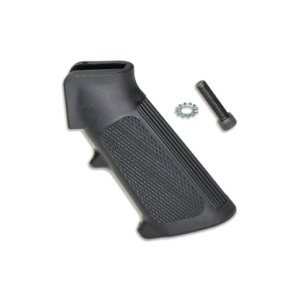
-27%ATI Outdoors AR-15/AR-10 Pistol Grip Screw w/ Star Lock Washer Black One Size
 -32%
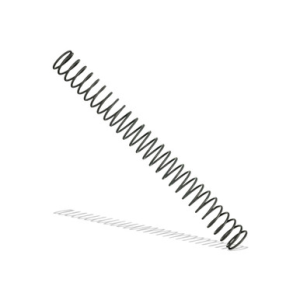
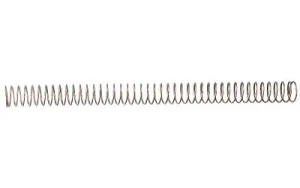
-32%Luth-AR AR-10 Rifle Length Buffer Spring .308 Win/7.62 NATO Tempered Spring

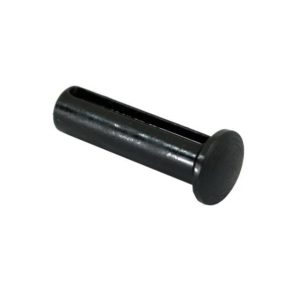
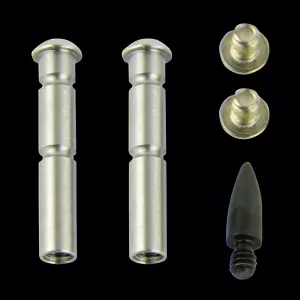
TacFire MAR108SS Anti-Walk Pin Set Stainless AR-15 Takedown Pins
 -12%
-12%
Table of Contents
Why AR-10 Parts Are Not Just “Big AR-15 Parts”
The biggest misconception in the AR world is that the AR-10 is just a scaled-up AR-15. Plenty of builders (myself included, the first time around) walk into an AR-10 build assuming the same logic applies. Pick your parts, slap them together, go shoot. Then the handguard doesn’t fit the upper. Or the barrel extension won’t thread in. Or the bolt face is wrong for the caliber.
The root problem is standardization, or the lack of it. Eugene Stoner designed the AR-10 first, but when the AR-15 took off for military contracts, the AR-10 was left without a single military specification tying everything together. Different manufacturers developed different interpretations. The two main patterns that survived are DPMS (also called LR-308) and ArmaLite. They look similar. They are not interchangeable where it matters most.
This page and the price comparison grid above exist specifically to help you navigate that mess. But you need to understand the patterns before you start buying.
DPMS vs. ArmaLite Pattern: The Compatibility Problem
This is the single most important thing to understand before buying any AR-10 part. The two main patterns differ in upper receiver dimensions, barrel extension threading, and handguard mounting systems. Get this wrong and parts literally won’t fit together.
DPMS pattern (LR-308): The most common pattern by far. Aero Precision’s M5 line, Palmetto State Armory’s PA-10, and most budget/mid-tier AR-10 builds use the DPMS pattern. The upper receiver is slightly shorter in height than ArmaLite, and it uses a unique barrel extension thread pitch. The overwhelming majority of aftermarket AR-10 parts are made for DPMS pattern. If you’re building from scratch and want the widest selection of compatible parts, go DPMS.
ArmaLite pattern: Used by ArmaLite (obviously) and a few other manufacturers. The upper receiver is taller, the barrel extension threading is different, and handguards are not interchangeable with DPMS. The aftermarket selection is much more limited. Unless you already own an ArmaLite rifle and need parts for it, DPMS is the easier path.
What IS cross-compatible between patterns: Triggers, pistol grips, safeties, buffer tubes, stocks, and most lower receiver small parts. These are essentially the same as AR-15 equivalents or are universal between both AR-10 patterns.
What is NOT cross-compatible: Upper receivers, barrel extensions, handguards, barrel nuts, and bolt carrier groups. These are pattern-specific. Mixing a DPMS handguard with an ArmaLite upper won’t work. Mixing barrel extensions between patterns won’t work. Always verify your pattern before ordering these parts.
| Part Category | Cross-Compatible? | Notes |
|---|---|---|
| Triggers | Yes | AR-15 triggers work in AR-10 lowers (standard pin size) |
| Pistol grips | Yes | Same thread/screw pattern as AR-15 |
| Safeties | Yes | Same dimensions as AR-15 |
| Buffer tubes & stocks | Yes | Mil-spec AR-15 tubes/stocks work (use AR-10 buffer weight) |
| Upper receivers | No | DPMS and ArmaLite uppers have different dimensions |
| Handguards | No | Must match your upper receiver pattern |
| Barrel nuts | No | Pattern-specific threading |
| Barrel extensions | No | Different thread pitch per pattern |
| Bolt carrier groups | No | AR-10 BCGs are larger than AR-15, not interchangeable |
| Magazines | No | AR-10 mags are larger; some brands are proprietary (Magpul and AICS are most common) |
AR-10 Lower Receiver Parts
The lower is where the AR-10 is friendliest to an AR-15 builder. Most of the small parts cross straight over. The receiver itself does not, and neither does the buffer weight, so those are the two places to pay attention.
Stripped Lower Receiver

Start here, and start with your pattern. If you would rather buy complete, our best AR-10 rifles guide ranks the factory options. A DPMS lower gives you the widest parts selection by a long way. The magazine well is the giveaway: it is noticeably wider than an AR-15 to swallow .308 magazines. Buy this and your upper from the same maker if you can, because mismatched receiver sets leave gaps you will stare at every time you pick the rifle up.
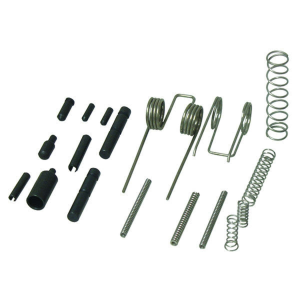
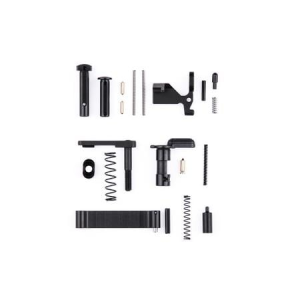
Lower Parts Kit
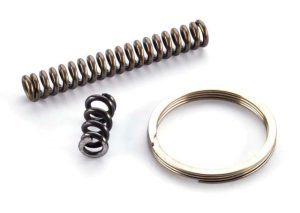
Springs, detents, pins and the fire control small parts. Nearly all of it is shared with the AR-15, which is why kits are often sold as AR-15 / AR-10. Check whether yours includes a grip and a trigger, because the cheap kits include both and the good ones leave them out.

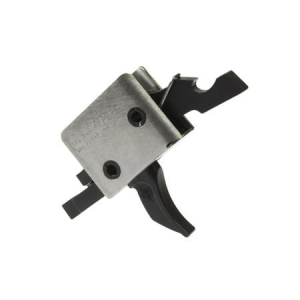
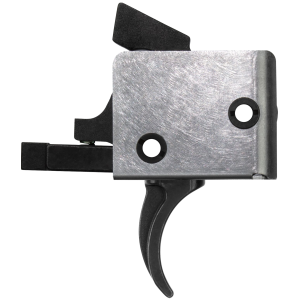
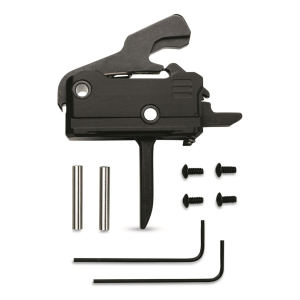
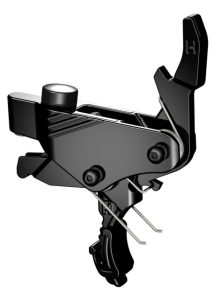
Trigger
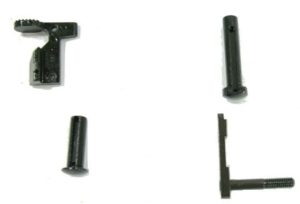
AR-15 triggers drop into AR-10 lowers. Pin spacing is the same, so the whole aftermarket is open to you. This is the best value upgrade on the platform. A heavy factory trigger wastes a good barrel, and a two-stage unit costs less than most handguards.
Buffer and Spring
Do not reuse AR-15 buffer parts here. A .308 needs a heavier buffer, 3.8 to 5.6 ounces against the 3 ounce carbine buffer, and a stiffer spring to match. Get this wrong and the rifle short strokes or the bolt bounces. It is a cheap part that causes expensive-feeling problems.
Stock

Mil-spec AR-15 stocks fit AR-10 buffer tubes, so this is another part where the whole AR-15 aftermarket is available. A .308 recoils more than a 5.56, so a stock with a decent cheek weld and a real recoil pad earns its money faster here than it does on a carbine.
Pistol Grip
Same screw and thread pattern as an AR-15. Any grip you already like will bolt on. Worth doing early because it is the part your hand is actually touching, and the A2 grip that ships on budget builds has that finger nub most people hate.
AR-10 Upper Receiver Parts
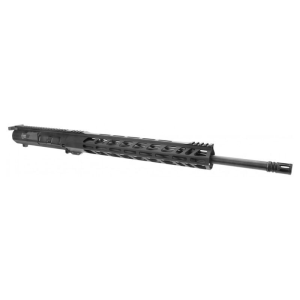
This is where the patterns bite. Uppers, handguards, barrel extensions, barrel nuts and bolt carriers are all pattern-specific. Confirm whether you are building DPMS or ArmaLite before a single one of these goes in a basket.
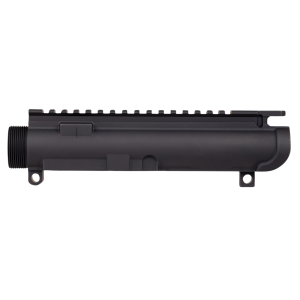
Stripped Upper Receiver

The part that decides what else fits. DPMS pattern uppers are shorter in height than ArmaLite and use a different barrel extension thread. Nearly every aftermarket handguard assumes DPMS, so unless you already own an ArmaLite rifle, that is the pattern to build on.
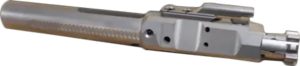
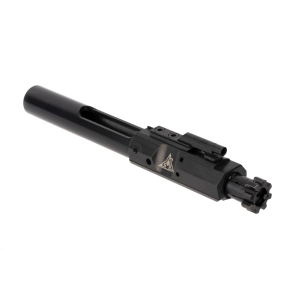
Bolt Carrier Group

Bigger and heavier than an AR-15 BCG, and not interchangeable with one. This is the part not to save on. You want it properly staked and MPI tested, because a .308 works a bolt harder than a 5.56 does. Nitride and nickel boron both wipe clean easily, which matters more on a rifle that runs dirty.

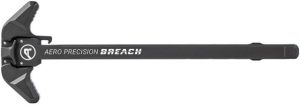
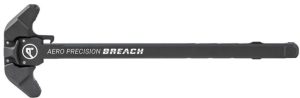
Charging Handle

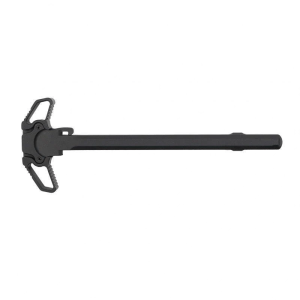
AR-10 charging handles are sized for the larger upper, so an AR-15 handle will not do. An ambidextrous latch is worth the small premium on a .308, because you will be pulling against a stiffer spring than you are used to.
Barrel

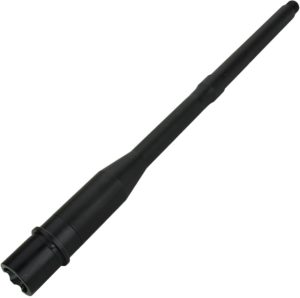
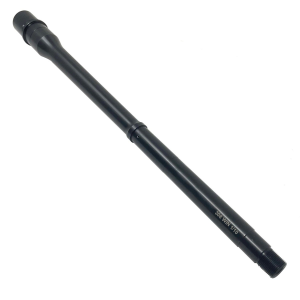
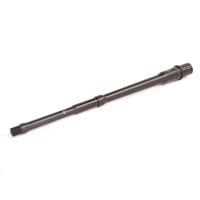
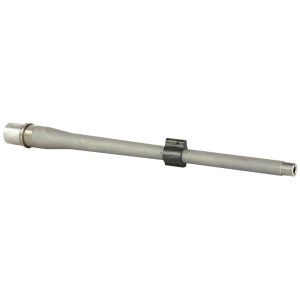
Along with the BCG, this is where the money should go. The .308 needs length to make velocity, so 16 inches is compact but leaves better than 100 fps on the table against 20. Eighteen is the sweet spot for most people. Check the twist rate stamped on the barrel: 1:10 suits standard .308 bullet weights well.
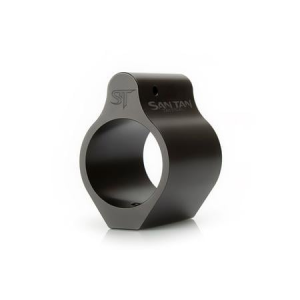
Gas Block
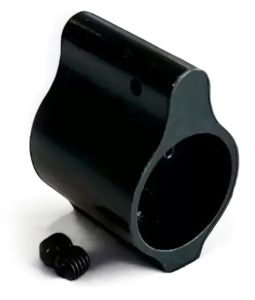
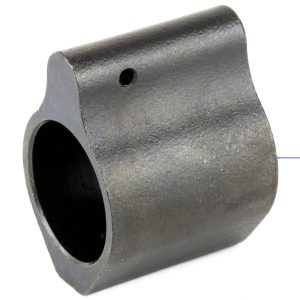
Measure your barrel journal before ordering, because .750 is common but not universal on .308 barrels. An adjustable block is more useful here than on an AR-15, since it lets you tune down a rifle that is over-gassed from the factory, and plenty of them are.

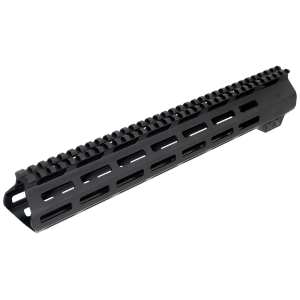
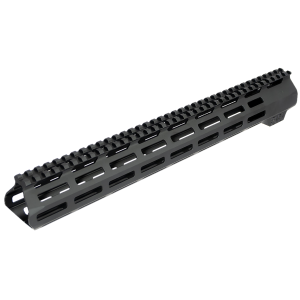
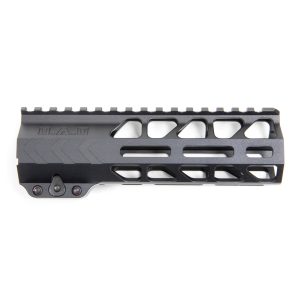
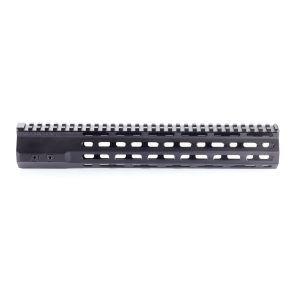
Handguard

Pattern-specific, and the part people most often order wrong. A DPMS handguard will not fit an ArmaLite upper. Free float is the default now and it is the right call on a .308, where barrel harmonics matter more than they do on a plinking carbine.
Muzzle Device

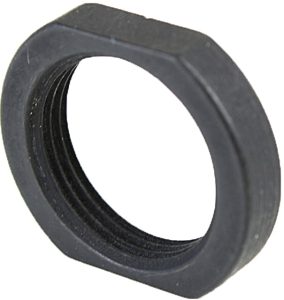
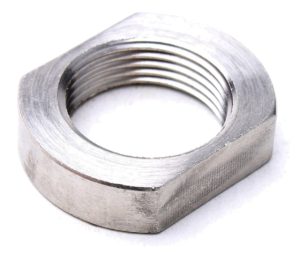
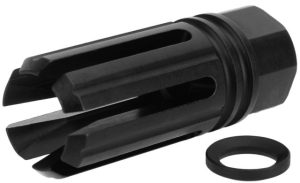
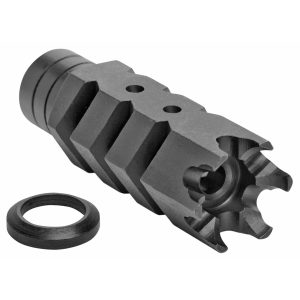
Most AR-10 barrels are threaded 5/8×24 rather than the AR-15 1/2×28, so check before you buy. A brake makes a real difference to how flat a .308 tracks. It also makes it considerably louder for anyone standing beside you, which is worth knowing before you fit one for range use.
AR-10 Magazines
Magazines

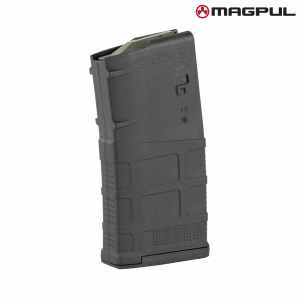
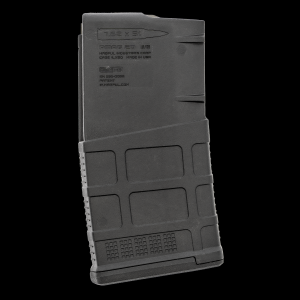
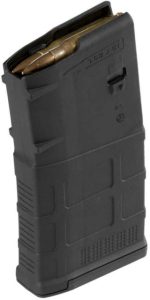
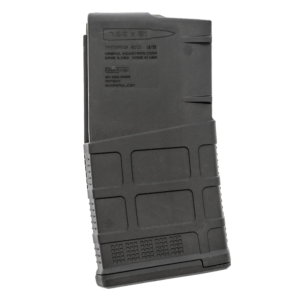
Another compatibility trap. Most DPMS pattern rifles take SR-25 / M110 pattern magazines, and the Magpul PMAG LR/SR is the one most builds are tested against. Some makers use proprietary magazines entirely. Buy one, confirm it seats and drops free, then buy the rest.
AR-10 Parts That Differ From AR-15
If you’re coming from the AR-15 world, here’s a quick rundown of what changes when you move to the .308 platform. Some of this is obvious, some of it catches people off guard.
Bolt carrier group: Bigger, heavier, and more expensive. The AR-10 BCG has to handle .308 Winchester pressures and the larger case dimensions. You cannot use an AR-15 BCG in an AR-10. Toolcraft makes excellent AR-10 BCGs at a fraction of what branded options cost, same as on the AR-15 side.
Buffer and buffer spring: Most AR-10 builds use a rifle-length buffer tube with a heavier buffer (3.8 to 5.6 ounces vs. the standard 3 ounce AR-15 carbine buffer). The spring is also stiffer. Using AR-15 buffer components in an AR-10 will cause short-stroking, bolt bounce, or both. JP Enterprises makes a silent captured spring that eliminates the buffer tube “sproing” sound and tunes recoil beautifully, worth every penny on a .308 build.
Lower receiver: Physically larger magazine well to accept .308/7.62 magazines. You cannot use an AR-15 lower on an AR-10. However, the grip screw pattern, trigger pin spacing, safety selector, and buffer tube threads are the same, which is why those small parts cross over.
Upper receiver: Larger ejection port, different receiver height (depending on DPMS vs. ArmaLite pattern), and a different barrel extension thread. The forward assist and dust cover are similar in concept but sized differently.
Magazines: This is another compatibility minefield. Most DPMS pattern rifles use SR-25/M110 pattern magazines (Magpul PMAG LR/SR is the most popular). Some manufacturers use proprietary magazine designs. Always verify which magazine pattern your lower accepts before buying in bulk.
Barrel and Caliber Selection for .308 AR Builds
The AR-10 platform supports several calibers, but three dominate the market. Your caliber choice affects barrel selection, bolt face, magazine compatibility, and what you’ll actually use the rifle for.
.308 Winchester / 7.62×51 NATO: The workhorse. Cheapest ammo, widest barrel selection, most forgiving for new builders. Good to about 800 yards for a skilled shooter with quality glass. If you’re building your first AR-10, go .308. You’ll have the most parts options, the cheapest ammo for practice, and zero regrets. A 16″ or 18″ barrel in .308 is the most versatile setup.
6.5 Creedmoor: The long-range precision choice. Flatter trajectory, less wind drift, and better ballistic coefficient than .308 at distance. The aftermarket has caught up significantly, with plenty of barrel and bolt options available. The trade-off is more expensive ammo and fewer budget barrel choices. If you’re building specifically for precision shooting beyond 600 yards, 6.5 Creedmoor is the better cartridge. A 20″ to 22″ barrel gets the most out of it.
.243 Winchester: Less common but excellent for varmint hunting and target shooting with minimal recoil. The aftermarket is more limited. If you want a .243 AR, you’ll have fewer barrel and bolt options to choose from. It’s a niche choice but a good one if you know that’s what you want.
Barrel length matters more on an AR-10. The .308 cartridge needs barrel length to develop full velocity. A 16″ barrel works for a compact general-purpose rifle but leaves 100+ fps on the table compared to 20″. An 18″ barrel is the sweet spot for most shooters: good velocity, manageable weight, and enough barrel to burn most of the powder charge. 20″ is ideal for precision and hunting. 22″ is for dedicated long-range 6.5 Creedmoor builds where every fps counts. Keep in mind that AR-10 barrels are heavier than AR-15 barrels in the same profile, so a 20″ .308 barrel adds real weight to an already heavy platform.
What a Complete AR-10 Build Actually Costs
Add up the cheapest listing on every card above and a complete AR-10, minus optics, comes to roughly $700 at the time of writing. That is a real floor rather than a guess, because it is the same live pricing the cards pull. It is also the floor, not a recommendation.
The number moves the moment you stop buying the cheapest version of everything, and two parts drive most of that movement. A quality .308 barrel runs two to four times the budget option, and a properly tested bolt carrier group does the same. Those are the two that change how the rifle shoots. Handguards and stocks are where builds quietly gain hundreds of dollars without shooting any better.
Compare that with a complete factory AR-10, which starts near $900, and the case for building one is not really about saving money. It is about choosing the barrel, the trigger and the gas system yourself. If you want a .308 for the lowest possible outlay, buy a complete rifle. If you want a specific .308, build it.
Best AR-10 Parts Brands Worth Your Money
The AR-10 parts market is smaller than the AR-15 side, so there are fewer brands to sort through. Here’s who’s actually making quality stuff and where your money is best spent.
Aero Precision (M5 line): The best value in the AR-10 world, hands down. Their M5 receivers, handguards, and builder sets are all DPMS pattern with excellent fit and finish. Aero is where I’d point any first-time AR-10 builder. The M5 Enhanced handguard system with its proprietary barrel nut is rock solid and eliminates the timing headache of standard barrel nuts.
Ballistic Advantage: Same parent company as Aero Precision, and they make some of the best barrels in the business. Their .308 and 6.5 Creedmoor barrels come in multiple profiles and are known for excellent accuracy at a mid-tier price point. If you’re buying an Aero M5 receiver set, a Ballistic Advantage barrel is the natural pairing.
Toolcraft: Same story as on the AR-15 side. Toolcraft AR-10 BCGs are properly speced, properly staked, and cost a fraction of branded alternatives. Nickel boron or nitride coated. Hard to justify spending more unless you want a specific brand name on your bolt carrier.
JP Enterprises: Premium-tier, but their silent captured spring system is genuinely transformative on an AR-10. The standard buffer tube “sproing” is louder and more obnoxious on a .308 than on a 5.56, and JP’s system eliminates it entirely while also providing adjustable recoil tuning. Their barrels are also outstanding for precision builds.
LaRue Tactical: The MBT-2S trigger works in AR-10 lowers just like AR-15s. At $90 for a two-stage trigger that genuinely competes with Geissele, it’s the value king regardless of platform. If you’re building an AR-10 on a budget, the LaRue trigger is where you put your upgrade dollars first.
How to Buy AR-10 Parts Without Wasting Money
Here’s the single best piece of advice for an AR-10 build: buy your upper and lower receiver from the same manufacturer. Or at minimum, make absolutely sure they’re the same pattern. Mixing an Aero M5 upper with a random “AR-10” lower from a different brand can result in fitment issues, pin alignment problems, and gaps between receivers that look terrible and affect function.
Budget allocation on an AR-10 should follow the same priority as an AR-15 but with higher dollar amounts across the board. Put the most money into the barrel and BCG. A quality barrel from Ballistic Advantage or Criterion paired with a Toolcraft BCG gives you a reliable, accurate foundation for around $300 to $400 total. Add a LaRue MBT-2S trigger for $90 and you’ve covered the three parts that matter most.
The receiver set, handguard, buffer assembly, and stock are important but more about ergonomics and aesthetics than performance. Aero Precision’s M5 builder sets (upper, lower, and handguard) regularly go on sale for $250 to $350, which is a steal for the quality. Pair that with the barrel, BCG, and trigger above and you’re looking at a complete mid-tier .308 AR build for under $900 before optics.
Use the price comparison grid above to find who has the best deal on each component. The spreads on AR-10 parts can be even wider than AR-15 because fewer retailers stock them and pricing is less competitive. I’ve seen $50 to $80 differences on the same Aero M5 handguard depending on where you look.
Related reading: AR-15 vs AR-10 if you are still choosing a platform, the full AR-15 parts list for the smaller sibling, the best semi-auto .308 rifles for factory alternatives, and every other parts category we track.
Pattern and component specifications in this guide were checked against Aero Precision’s M5 (.308) documentation and Magpul’s PMAG LR/SR GEN M3 listing. Prices in the cards above are pulled live and move daily.
Frequently Asked Questions
Browse Other Platforms
1911 Parts & Upgrades – Compare Prices • AK-47 Parts & Upgrades – Compare Prices • AR-15 Parts & Upgrades – Compare Prices • Glock Parts & Upgrades – Compare Prices • Shotgun Parts & Upgrades – Compare Prices • SIG P320 Parts & Upgrades – Compare Prices • SIG P365 Parts & Upgrades – Compare Prices
Are AR-10 and AR-15 parts interchangeable?
Some small parts are interchangeable. Triggers, pistol grips, safeties, buffer tubes, and stocks work across both platforms. However, upper receivers, lower receivers, bolt carrier groups, barrels, handguards, buffers, buffer springs, and magazines are NOT interchangeable. The AR-10 uses larger components sized for .308 Winchester pressures and case dimensions.
What is the difference between DPMS and ArmaLite pattern AR-10?
The two patterns differ in upper receiver height, barrel extension threading, and handguard mounting systems. DPMS pattern (also called LR-308) is the most common and has the largest aftermarket parts selection. ArmaLite pattern uses a taller upper receiver with different dimensions. Parts between the two patterns are not cross-compatible for uppers, handguards, barrel nuts, and barrel extensions. Most builders should go DPMS pattern for the widest selection of compatible parts.
Will a DPMS handguard fit an ArmaLite upper?
No. DPMS and ArmaLite uppers have different receiver heights and barrel nut threading. A handguard designed for one pattern will not mount properly on the other. Always verify that your handguard matches your specific upper receiver pattern before ordering. This is the most common compatibility mistake in AR-10 builds.
What caliber is best for an AR-10 build?
.308 Winchester is the best all-around choice for most builders. It has the cheapest ammo, the widest parts selection, and performs well out to 800 yards. 6.5 Creedmoor is better for dedicated long-range precision shooting beyond 600 yards, with flatter trajectory and less wind drift, but ammo costs more. .243 Winchester is excellent for varmint hunting with minimal recoil but has limited aftermarket support.
How much does it cost to build an AR-10 from parts?
Budget AR-10 builds start around 800 to 1000 dollars for a functional .308 rifle using Aero Precision and Toolcraft components. Mid-tier builds with premium barrels and triggers run 1200 to 1800 dollars. Precision builds with JP Enterprises or Criterion components can exceed 2500 dollars. AR-10 builds are always more expensive than equivalent AR-15 builds because the parts are larger, heavier, and produced in lower volumes.
What AR-10 parts should I not cheap out on?
The bolt carrier group and barrel are the two parts that matter most for reliability and accuracy. A Toolcraft BCG at around 90 to 120 dollars is the value sweet spot. For barrels, Ballistic Advantage and Criterion offer excellent accuracy at mid-tier prices. The trigger is the third priority. A LaRue MBT-2S at 90 dollars outperforms triggers twice its price. Furniture, buffer assemblies, and receiver sets can be budget tier without compromising function.
Is the AR-10 lower receiver the same as an AR-15 lower?
No. The AR-10 lower receiver is physically larger with a wider magazine well sized to accept .308 Winchester and 7.62 NATO magazines. You cannot use an AR-15 lower receiver for an AR-10 build. However, the trigger pin spacing, pistol grip thread, safety selector, and buffer tube threads are the same on most AR-10 lowers, which is why those small parts are cross-compatible.
Do I need a .308 specific buffer and spring for my AR-10?
Yes. AR-10 builds require a heavier buffer (3.8 to 5.6 ounces) and a stiffer spring than AR-15 components. Using AR-15 buffer weights and springs will cause cycling problems including bolt bounce, short stroking, and excessive bolt velocity. Most AR-10 builds use a rifle-length buffer tube. The JP Enterprises silent captured spring is an excellent upgrade that eliminates buffer tube noise and allows recoil tuning.
What barrel length is best for a .308 AR-10?
18 inches is the sweet spot for most .308 AR-10 builds, offering a good balance of velocity, accuracy, and manageability. 16 inch barrels work for a compact general purpose rifle but sacrifice 100+ fps. 20 inch barrels maximize velocity and are ideal for precision shooting and hunting. For 6.5 Creedmoor builds, 20 to 22 inches gets the most out of the cartridge. Remember that AR-10 barrels are heavier than AR-15 barrels, so longer barrels add significant weight.
Can I use an AR-10 bolt carrier group in an AR-15?
No. The AR-10 BCG is physically larger and heavier than an AR-15 BCG to handle the higher pressures and larger case dimensions of .308 Winchester. They are completely different sizes and will not fit in each other's receivers. You need a platform-specific BCG for each rifle.
6,510+ Gun & Ammo Deals
Updated daily from 200+ top retailers. Filter by category, caliber, action type, and price.