

Last updated May 3rd 2026
Some of the links below are affiliate links, meaning at no additional cost to you, we may earn a commission if you click through and make a purchase.
- Treat every gun as loaded
- Point the muzzle in a safe direction
- Keep your finger off the trigger until you’re ready to shoot
- Know your target and what’s beyond
The Guns of Heat in 2026 at a Glance
| Gun | Details | Key Specs | Check Price |
|---|---|---|---|
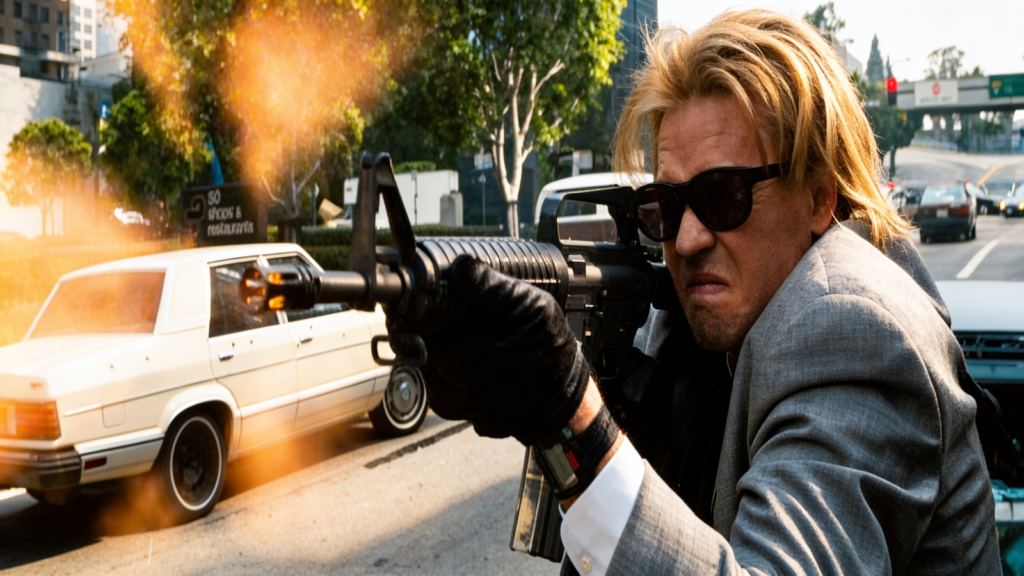 |
Best Overall IconicColt Model 733 (XM177-pattern) Val Kilmer’s bank-shootout reload. The reload US military instructors actually use as training material. |
Caliber: 5.56 NATO Barrel: 11.5″ Origin: Hartford, CT |
Check Price ↓ |
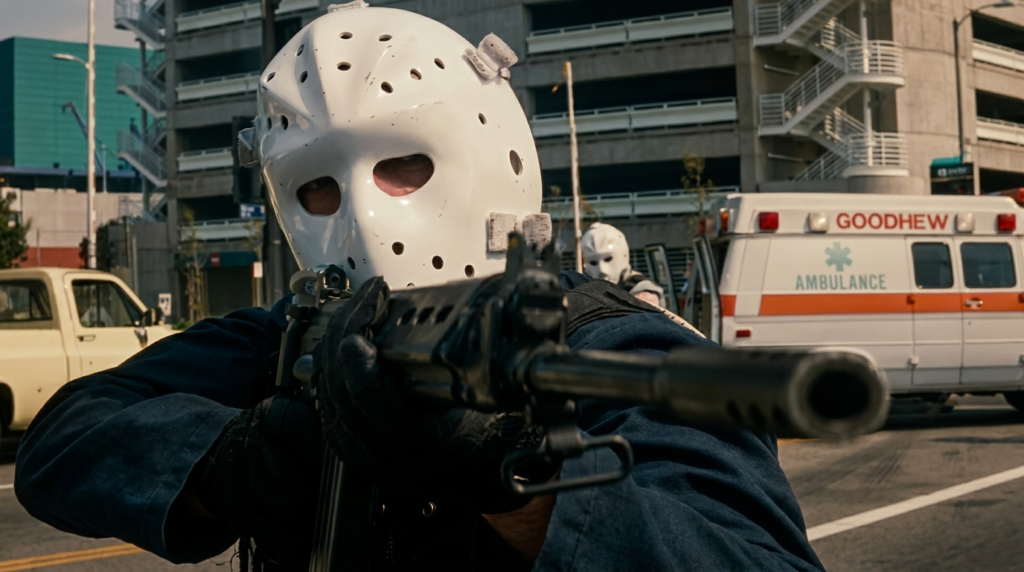 |
Best Villain RifleFN FAL 50.61 Para Cherrito’s armored-car double-tap rifle. The Belgian Paratrooper FAL with the side-folding stock. |
Caliber: 7.62 NATO Barrel: 17.6″ Origin: Herstal, Belgium |
Check Price ↓ |
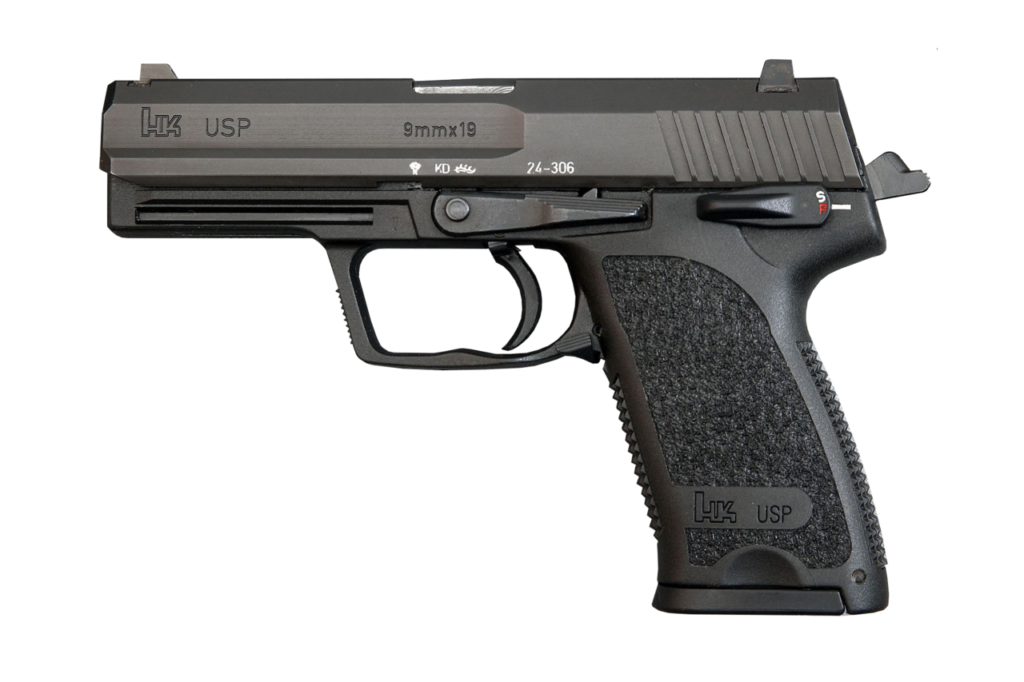 |
Best Modern Carry CloneHeckler & Koch USP9 McCauley’s primary sidearm. The first polymer-frame 9mm to actually feel right in a working professional’s hand. |
Caliber: 9x19mm Capacity: 15+1 Origin: Germany / VA |
Check Price ↓ |
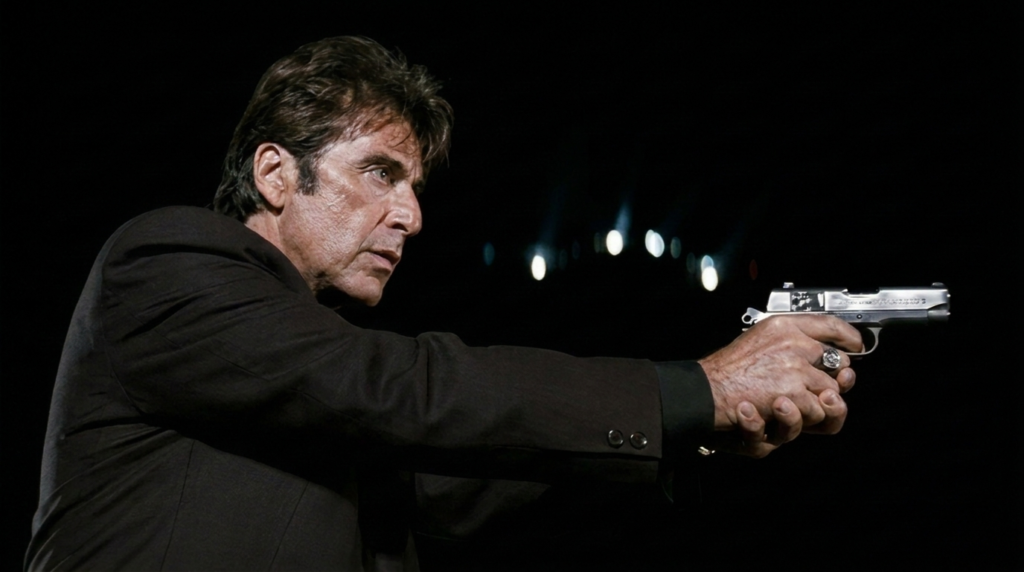 |
Best 1911 BuildColt Officer’s 1911 (Ivory) Hanna’s crossdraw piece. The flashy ivory-gripped Officer’s frame is the most-recognized cop-side 1911 in cinema. |
Caliber: .45 ACP Capacity: 7+1 Origin: Hartford, CT |
Check Price ↓ |
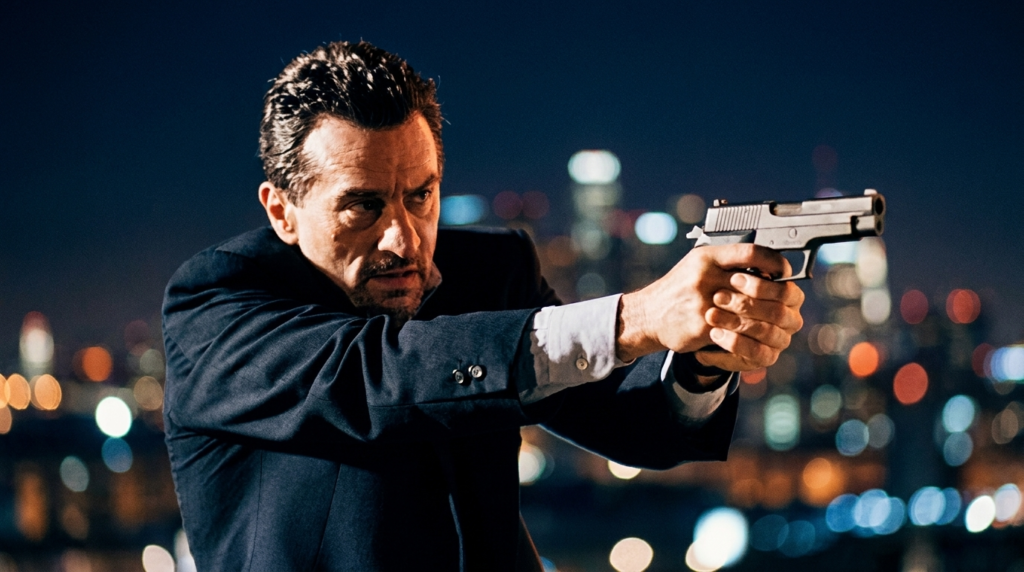 |
Best Duty PistolSIG Sauer P220 McCauley’s switch after he ditches the USP. The .45 ACP duty pistol that LAPD SWAT trained on through the 90s. |
Caliber: .45 ACP Capacity: 8+1 Origin: Switzerland / NH |
Check Price ↓ |
The guns of Heat (1995) are eight named firearms across the armored-car heist, the bank robbery, and the LAX finale: Chris Shiherlis and Neil McCauley’s Colt Model 733 carbines, Cherrito’s FN FAL 50.61 Paratrooper and IMI Galil ARM 372, McCauley’s Heckler & Koch USP9 (later swapped for a SIG P220), Lt. Vincent Hanna’s ivory-gripped Colt Officer’s 1911 in a crossdraw rig, Hanna’s chopped FN FNC, and the Mossberg 590 carried by the LAPD officers backing him up.
And if you’re wondering, yes we digitally remastered the screengrabs with Google Nanobot Pro to create some of the coolest Guns of Heat pictures out there. You’re welcome!
Table of Contents
The Most Tactically Honest Crime Film Ever Made
Heat dropped in December 1995, three years after Michael Mann had been refining the script as a TV movie called L.A. Takedown. The 1989 TV version had Robert De Niro and Al Pacino’s roles played by character actors, a smaller bank, and a fraction of the runtime. Mann waited six years to make it properly.
I’ve watched the 5th and Flower bank-robbery sequence at least forty times across two decades, and the gun work is why. The reload Val Kilmer pulls behind the cover car at the 11-minute mark of the shootout was so technically clean that the US military used the footage as training material for years. The Marine Corps reportedly screened it in fundamentals-of-marksmanship classes. That doesn’t happen with Hollywood gun choreography.
Mann brought in Mick Gould, a former British SAS operator, to train the cast for months before the shoot. De Niro, Kilmer, Sizemore, Pacino, and Voight ran live-fire drills with their character firearms until the manipulations were second nature. Kilmer practiced the reload until he could execute it in under three seconds with his eyes closed. The bank-shootout walk-fire sequence between McCauley and Hanna was choreographed against real ballistic timing, not theatrical timing.
The arsenal Heat puts on screen reads like a 1995 international duty-rifle catalog. Belgian FAL, German HK USP, Swiss SIG P220, Israeli Galil ARM, Italian-American Hartford Colt 733, classic American 1911 Officer’s frame in a crossdraw rig.
Mann’s armorer chopped Pacino’s FNC down to Para length and put an M16-style flash hider on it for visual continuity with the M4 silhouette the rest of the cops carry. Most of the screen weapons are full-auto registered transferables, but Mann told Pacino to fire only in semi for tactical realism. Hanna is a Robbery-Homicide lieutenant, not a SWAT operator.
Below: every named gun in Heat, the scene it appears in, the production-side detail the casual viewer missed, what civilian alternatives exist, and live retail pricing if you want to clone a screen-correct piece in 2026.
1. Colt Model 733: The Bank-Shootout Carbine
Chris Shiherlis (Val Kilmer) and Neil McCauley (Robert De Niro) carry Colt Model 733 carbines during the 5th and Flower bank robbery, the same XM177E2-pattern compact M16 family used by US Special Forces in the late Vietnam era.
- Caliber: 5.56x45mm NATO
- Barrel: 11.5 inches (XM177E2 spec)
- Action: Direct impingement, full-auto and semi-auto
- Stock: 2-position telescoping aluminum
- Origin: Colt’s Manufacturing, Hartford, Connecticut
| Rating | |
|---|---|
| Iconic Factor | 5/5 |
| Civilian Legality | 4/5 |
| Affordability | 3/5 |
| Period Authenticity | 5/5 |
| Scene Impact | 5/5 |
Pros
- The single most-imitated reload scene in action cinema
- Multiple modern AR-15 builders sell 11.5″ XM177-clone uppers
- Pre-ban transferable Model 733s are tracked collector pieces
Cons
- Original transferable 733 runs $40,000-$60,000 with NFA stamp
- Civilian 11.5″ barrel requires SBR Form 1 ($200) or pistol configuration
- Genuine retro furniture (CAR-15 stock, no forward assist) costs more than a complete carbine
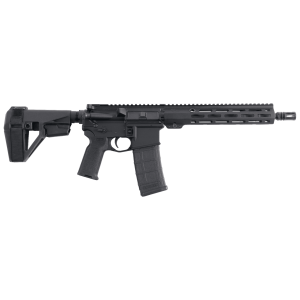
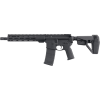
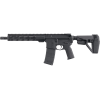
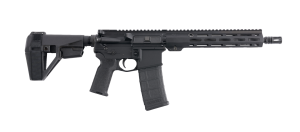
The Colt Model 733 is the gun Val Kilmer reloads behind the cover car.
The reload he executes in that scene (drop the empty magazine with the right hand while the left hand is already pulling a fresh one from the chest rig, slap it home, hit the bolt release, transition back to threat) was so clean that US Marine Corps and Army Special Forces instructors reportedly pulled the footage for marksmanship training packages. Kilmer drilled it for weeks under Mick Gould’s tactical instruction. Gould (former 22 SAS) and Andy McNab (also ex-22 SAS) ran close-quarters battle (CQB) drills with the principal cast for weeks before production..
The Model 733 is Colt’s commercial designation for the post-Vietnam compact M16 derivative. It uses an 11.5-inch barrel, a 2-position telescoping stock, and the slick-side carry-handle upper from the M16A1 era. The XM177E2 was the Vietnam-era predecessor, fielded by US Special Forces from 1967 onward; the 733 is the 1980s-90s commercial follow-on with the same lineage.
Heat’s screen units were registered pre-1986 transferable full-auto carbines, supplied through the production armorer for the bank-shootout sequence. McCauley’s 733 has the standard 30-round metal magazine; Shiherlis runs a 30-round mag with a Magpul-style baseplate retrofit for faster strip-out.
For civilian ownership in 2026, the closest screen-correct path is an 11.5-inch barrel AR-15 pistol (no NFA paperwork, no stock) or an 11.5-inch SBR (Form 1 application, $200 tax stamp, 4-8 month wait).
Modern brands shipping clean Colt 733 / XM177 clones include Brownells (BRN-601 retro upper), Troy Industries, and PSA’s retro line. Build cost runs $1,200-$1,800 for the upper plus $400-$700 for a retro lower with a CAR-15 stock. Pre-1986 transferable original 733s clear $40,000-$60,000 at auction with the NFA stamp.
For broader compact AR-15 options, see our 10 Best Lightweight AR-15 Rifles roundup.
Best For: AR-15 builders who want the screen-correct 11.5″ XM177E2-pattern carbine that Kilmer’s reload made famous, in a Form 1 SBR or pistol configuration.
2. FN FAL 50.61 Para: Cherrito’s Armored-Car Rifle
Michael Cherrito (Tom Sizemore) carries an FN FAL 50.61 Paratrooper variant with a side-folding stock during the armored-car robbery, executing the third guard with a textbook double-tap to the sternum and a follow-up to the head.
- Caliber: 7.62x51mm NATO
- Capacity: 20-round box magazine
- Action: Short-stroke gas piston, tilting bolt
- Barrel: 17.6 inches (Para spec)
- Origin: Fabrique Nationale Herstal, Liège, Belgium
| Rating | |
|---|---|
| Iconic Factor | 4/5 |
| Civilian Legality | 4/5 |
| Affordability | 3/5 |
| Period Authenticity | 5/5 |
| Scene Impact | 5/5 |
Pros
- The “right arm of the free world” battle rifle in its most cinematic configuration
- DSA Inc. SA58 Para is a near-screen-correct US-built clone in current production
- Side-folding stock makes the Para variant uniquely silhouette-recognizable
Cons
- DSA SA58 Para retails $1,800-$2,400, premium FAL pricing
- 7.62 NATO ammo is twice the cost-per-round of 5.56
- Original FN-marked Paratrooper imports are tightly limited collector pieces
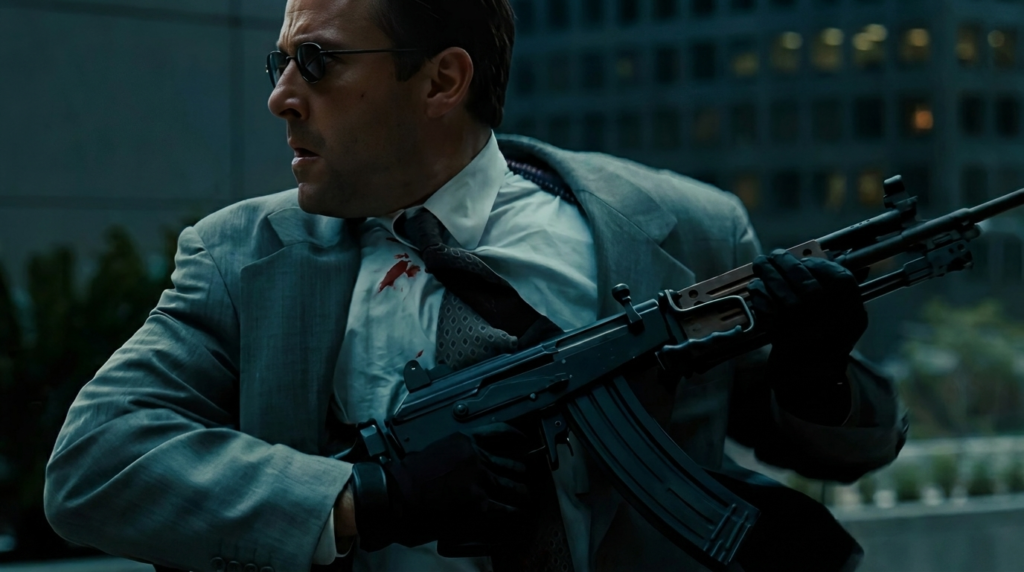
The Cherrito FAL is the rifle Tom Sizemore swings from his shoulder rig at the back of the armored car. He puts the third guard down with a short-burst pair to the sternum, walks the muzzle up, and finishes with a single round through the head.
The motion is one of the most-rehearsed pieces of weapon choreography in the film. Mann reportedly had Sizemore run the sequence twenty-eight times before the cameras rolled. The Para’s side-folding stock is what tells the audience this is a rifle built for tight-quarters professional work.
The FN FAL 50.61 is the Paratrooper variant of the Belgian-designed FAL battle rifle, introduced in 1953 and adopted by more than ninety NATO and Commonwealth militaries through the 1980s. The Para variant uses a 17.6-inch barrel (vs. the 21-inch standard FAL) and a side-folding tubular stock. The screen-used Cherrito rifle is a registered transferable full-auto FAL Para, supplied through the production armorer with original FN markings and a Belgian heritage receiver.
The civilian-legal modern equivalent is the DSA Inc. SA58 Para. DSA Inc. (Lake Barrington, Illinois) builds 100% US-made FAL clones on their own forged receivers, with a Belgian-style side-folding stock and a 17.6-inch barrel matching the original FN Para spec.
Retail runs $1,800-$2,400. Original FN-marked Paratrooper imports surface at GunBroker auctions for $3,500-$6,000 depending on condition and provenance, with paperwork-clean US-imported examples at the higher end.
For broader .308 / 7.62 NATO rifle options, see our 9 Best .308 Rifles for 2026 roundup.
Best For: FAL collectors who want the most-recognized Paratrooper-variant battle rifle in cinema, in a US-built modern clone with screen-correct silhouette.
3. IMI Galil ARM 372: Cherrito’s Bank Rifle
Cherrito switches to an IMI Galil ARM Model 372 with a wood handguard for the bank robbery, the only Israeli-designed rifle on screen and one of the cleaner AK-pattern depictions in 1990s cinema.
- Caliber: 5.56x45mm NATO
- Capacity: 35-round magazine (Galil-pattern)
- Action: Long-stroke gas piston, rotating bolt (AK-pattern)
- Barrel: 18.1 inches
- Origin: Israel Military Industries, Ramat HaSharon, Israel
| Rating | |
|---|---|
| Iconic Factor | 3/5 |
| Civilian Legality | 3/5 |
| Affordability | 2/5 |
| Period Authenticity | 5/5 |
| Scene Impact | 4/5 |
Pros
- IWI US (Harrisburg, PA) imports the modern Galil ACE as a clean spiritual successor
- Original IMI ARMs are sought-after Cold War collector pieces
- The wood-handguard ARM variant is the most aesthetically distinct AK-pattern in cinema
Cons
- Original IMI ARM imports are limited; clean examples run $3,500-$5,500
- Galil ACE in 5.56 retails $1,800-$2,200
- AK-pattern lower receiver isn’t easy to source for clone builders
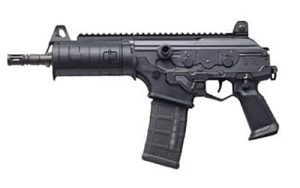
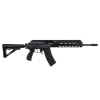
Cherrito carries the Galil ARM into the bank with the wood handguard exposed. The wood handguard is what makes the rifle visually unique. The ARM variant was offered with both polymer and wood furniture, and Mann’s armorer chose the wood version to read warmer on screen against Cherrito’s leather jacket. Cherrito uses the rifle in single-shot mode through most of the bank sequence, transitioning to short bursts only when the LAPD response unit pins them down at the corner.
The IMI Galil is Israeli designer Yisrael Galili’s 1972 service-rifle adaptation of the Finnish Valmet Rk 62, which was itself a refined AK-47. The ARM (Assault Rifle, Magazine) variant is the heaviest infantry version, with a folding stock, integral bipod, and bottle-opener (yes, an actual bottle-opener machined into the bipod).
Israel Defense Forces issued the Galil from 1972 through the early 2000s, and it remains in second-line service. The screen-used Cherrito ARM is the 5.56 NATO Model 372 variant with the wood handguard, supplied through the production armorer.
The civilian-legal modern equivalent is the IWI US Galil ACE in 5.56 NATO, manufactured in Harrisburg, Pennsylvania. The ACE updates the original ARM with a Picatinny rail, modern polymer furniture, and an improved gas system.
Retail runs $1,800-$2,200. Original IMI ARM rifles imported pre-1989 are collector pieces clearing $3,500-$5,500 in clean condition. Both feed from the same Galil-pattern 35-round magazine.
Best For: AK-pattern collectors who want the Israeli refinement of the Kalashnikov design, in either a 1990s-import IMI ARM or a current-production IWI ACE.
4. Heckler & Koch USP9: McCauley’s Primary Sidearm
Neil McCauley (Robert De Niro) carries an HK USP9 in his waistband through the early part of the film, including the diner scene with Hanna and the run from the Drive-In motel ambush. He switches to the SIG P220 for the LAX finale.
- Caliber: 9x19mm Parabellum (Heat used the 9mm; HK also produced .40 S&W and .45 ACP)
- Capacity: 15+1 (9mm USP)
- Action: Modified Browning short-recoil, polymer frame
- Trigger system: Variant 1 (DA/SA, decocker), McCauley’s likely config
- Origin: Heckler & Koch, Oberndorf am Neckar, Germany
| Rating | |
|---|---|
| Iconic Factor | 4/5 |
| Civilian Legality | 5/5 |
| Affordability | 4/5 |
| Period Authenticity | 5/5 |
| Scene Impact | 4/5 |
Pros
- The first polymer-frame 9mm to feel right in a working professional’s hand
- Still in production from HK Sterling, VA, same lineage as the screen pistol
- Pricing softened over the past decade; new USP9 retails $850-$1,000
Cons
- The original mechanical-recoil-reduction system polarises shooters
- Variant decoder/safety arrangements are confusing to first-time HK buyers
- Aftermarket support thinner than Glock or SIG ecosystems
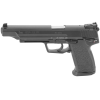
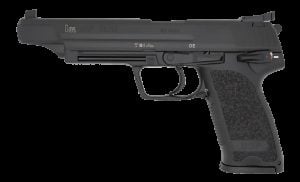
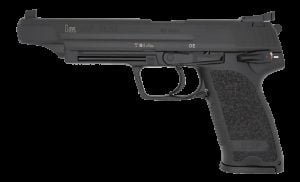
The McCauley USP is the pistol De Niro tucks into his waistband when he and Eady are about to leave the city. It is the gun he draws in the Drive-In motel hallway when the LAPD ambush kicks off.
It’s also what he dumps in the airport shuttle culvert before he switches to the SIG P220 for the LAX finale. The USP is on screen for the first two acts and never makes a sound. De Niro’s manipulation of the safety/decocker is so subtle that most viewers never register it.
The HK USP launched in 1993 as the “Universal Self-Loading Pistol”, HK’s polymer-frame answer to the Glock 17. Helmut Weldle (the same designer behind the P7 series) led the project. The USP introduced HK’s modified Browning short-recoil action with a captive recoil-reduction system, and offered nine factory-configured trigger variants (1 through 10, including DA/SA, DA-only, LEM-style).
Heat’s screen-used McCauley pistol is a Variant 1: DA/SA with a frame-mounted decocker/safety lever. The 9mm USP9 is the original-launch caliber; HK followed with .40 S&W and .45 ACP variants.
Carl Walther’s neighbor HK still produces the USP9 from Sterling, Virginia, importing the German receivers and final-fitting them stateside. New USP9 retails $850-$1,000. Used examples in clean condition clear $650-$800.
The current HK P30 and VP9 lines are the modern descendents of the USP. Both share the polymer-frame DNA and Oberndorf engineering, but neither has the screen pedigree of the original USP.
For broader 9mm carry options, see our 13 Best Full-Size 9mm Pistols roundup.
Best For: HK loyalists who want the screen-correct 1990s polymer-frame duty pistol that opened the door for the P30 and VP9 generations.
5. Colt Officer’s 1911 (Ivory): Hanna’s Crossdraw
Lt. Vincent Hanna (Al Pacino) carries a blued Colt Officer’s ACP 1911 with ivory grips in a Galco crossdraw shoulder holster, the most-recognized cop-side 1911 build in 1990s cinema.
- Caliber: .45 ACP
- Capacity: 7+1 (Officer’s frame)
- Action: Single-action, John Browning short-recoil
- Frame size: Officer’s ACP, compact 1911, 3.5″ barrel
- Origin: Colt’s Manufacturing, Hartford, Connecticut
| Rating | |
|---|---|
| Iconic Factor | 5/5 |
| Civilian Legality | 5/5 |
| Affordability | 3/5 |
| Period Authenticity | 5/5 |
| Scene Impact | 5/5 |
Pros
- Most-recognized 1911 carry build in 1990s cop cinema
- Colt still produces the Defender as the modern Officer’s-frame equivalent
- Ivory grip plates available from Eagle Grips, Altamont, Hogue
Cons
- Original Officer’s ACP discontinued; Defender is the current production line
- Compact 1911s are unforgiving on grip-shape and recoil
- Crossdraw rigs are out of fashion outside detective-cinema styling

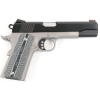

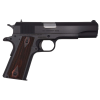
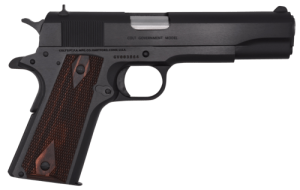
The Hanna 1911 is the gun Pacino draws when he kicks open the Drive-In motel door. It is also the gun in the crossdraw rig under his jacket through every interrogation scene, the gun he sets on the diner table when he and McCauley share their famous coffee, and the gun he draws first at LAX when he closes on McCauley in the runway lights.
The ivory grips read warm against the blued slide and against Pacino’s gray suit. Mann told costume design to leave the grips bone-white, not aged or yellowed, for maximum on-screen contrast.
The Colt Officer’s ACP is the compact-frame 1911 Colt introduced in 1985 to compete with the smaller carry pistols entering the police market. The frame is shortened from the Government Model’s 5-inch barrel to a 3.5-inch barrel, with a 7-round magazine instead of the standard 7+1 from the longer frame.
Colt discontinued the Officer’s ACP in 1996, replacing it with the Defender (alloy-frame compact 1911) in the 2000s. Heat’s screen-used Hanna pistol is a blued Officer’s ACP with custom-fit ivory grip plates supplied by the production armorer.
The current civilian-legal equivalent is the Colt Defender. It uses the same compact frame geometry as the Officer’s ACP, with an alloy frame for weight savings and a 3-inch barrel.
Retail runs $900-$1,100. Add ivory grip plates from Eagle Grips ($120-$180) and you have a screen-faithful Hanna build. Original Officer’s ACP examples surface at gun shows for $700-$1,200 depending on condition and finish.
For broader 1911 options, see our 8 Best Colt 1911 Pistols roundup.
Best For: 1911 carry builders who want the most-recognized cop-side compact 1911 in cinema, in a current-production Defender frame with ivory grip plates.
6. SIG Sauer P220: McCauley’s LAX-Finale Pistol
McCauley swaps his HK USP9 for a SIG Sauer P220 in the third act, carrying the .45 ACP duty pistol through the airport-shuttle pursuit and the runway showdown that ends the film.
- Caliber: .45 ACP (P220 in West-German military trim was 9mm; US-import P220 is .45)
- Capacity: 8+1
- Action: Modified Browning short-recoil, DA/SA
- Frame: Aluminum alloy
- Origin: SIG Sauer (Schweizerische Industrie Gesellschaft / J.P. Sauer & Sohn)
| Rating | |
|---|---|
| Iconic Factor | 4/5 |
| Civilian Legality | 5/5 |
| Affordability | 4/5 |
| Period Authenticity | 5/5 |
| Scene Impact | 5/5 |
Pros
- The .45 ACP duty pistol that LAPD SWAT trained on through the 90s
- SIG Sauer (Newington, NH) still ships the P220 in current production
- SIG P220 Legion variant adds modern Picatinny accessory rail
Cons
- DA/SA trigger feels long after a decade of striker-fired carry pistols
- Single-stack 8+1 capacity is dated next to modern double-stack .45s
- P220 retail runs $1,200-$1,400, premium SIG pricing
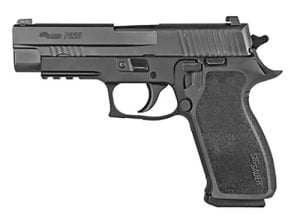
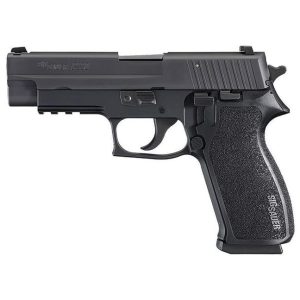
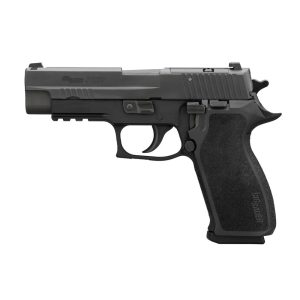
The McCauley P220 is the pistol De Niro draws in the airport-shuttle pursuit. It’s the gun he runs through the LAX runway lights, the gun he holds when he and Hanna make eye contact across the parking-structure rooftop. It’s also the gun he’s holding when Hanna’s first round hits him in the chest.
The SIG P220 launched in 1975 as the Swiss Army’s adopted service pistol (designation Pistole 75), replacing the SIG P210 in Swiss military service. The aluminum-frame design moved SIG from steel-frame target pistols into modern duty pistols.
The original Swiss-issue P220 was 9mm; the US-imported variant marketed by SIGARMS in the 1980s and 1990s shipped in .45 ACP for the American duty market. Heat’s screen-used McCauley P220 is the .45 ACP variant in the standard West-German production trim, supplied through the production armorer.
SIG Sauer (Newington, New Hampshire) still produces the P220 from US assembly with German receivers. Current retail runs $1,200-$1,400 for the standard .45 ACP P220, with the P220 Legion variant (enhanced trigger, Picatinny rail, X-Ray3 sights) at $1,400-$1,600. Used 1990s-era West-German P220s clear $700-$900 in clean condition. The P220 has been continuously produced for over fifty years, putting it in the same long-run bracket as the Beretta 92, Glock 17, and 1911.
Best For: SIG collectors who want the screen-correct 1990s .45 ACP duty pistol in either current-production trim or 1990s West-German used-market provenance.
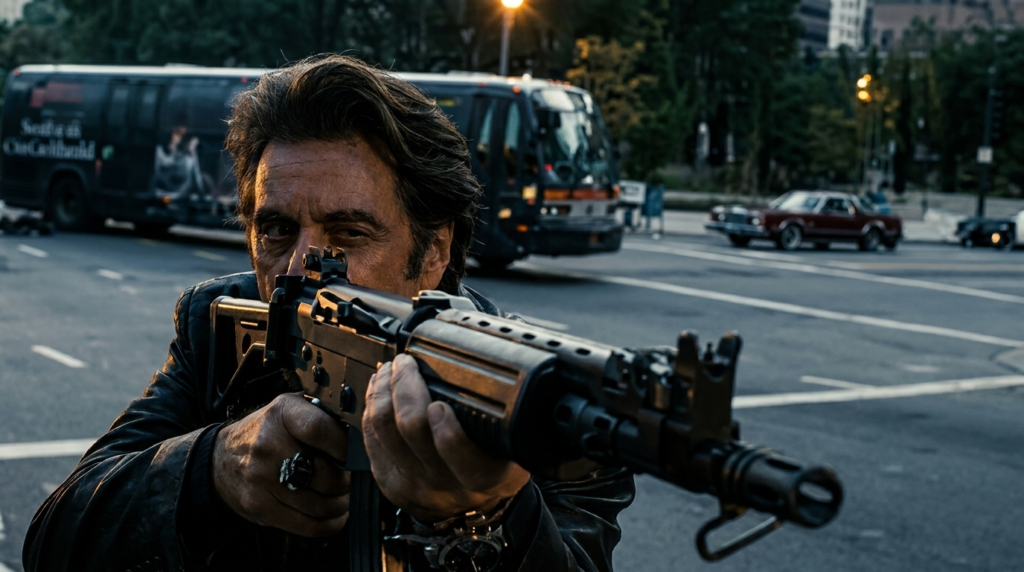
7. FN FNC (Chopped): Hanna’s Long Gun
Vincent Hanna’s long gun in Heat is a select-fire FN FNC chopped down to Para barrel length by the production armorer, fitted with an M16-style birdcage flash hider for visual continuity with the M4 silhouette his Robbery-Homicide team carries.
- Caliber: 5.56x45mm NATO
- Capacity: 30-round magazine
- Action: Long-stroke gas piston
- Barrel (chopped): ~14 inches
- Origin: Fabrique Nationale Herstal, Liège, Belgium
| Rating | |
|---|---|
| Iconic Factor | 3/5 |
| Civilian Legality | 2/5 |
| Affordability | 2/5 |
| Period Authenticity | 5/5 |
| Scene Impact | 3/5 |
Pros
- Distinctive Belgian piston-driven 5.56 platform, rare in cinema
- Mann’s chopped-Para configuration is a unique screen build
- Original FN FNC imports trade for collector premiums
Cons
- FN ceased FNC production in 2000; civilian semi-auto FNCs are scarce
- Chopped-Para configuration requires SBR Form 1 stamp ($200, 4-8 month wait)
- Limited US aftermarket support; furniture and parts hard to source
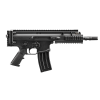

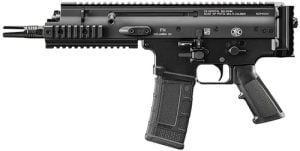
Hanna’s chopped FNC is the rifle Pacino runs in the bank shootout, the rifle he carries through the Drive-In ambush, and the rifle he sets down before the LAX foot pursuit starts. Mann instructed Pacino to fire it only in semi-auto despite the screen unit being a registered transferable full-auto. The directorial reasoning: Hanna is a Robbery-Homicide lieutenant, not a SWAT operator, so a deliberate trigger discipline reads more authentic than spray-and-pray.
The FN FNC is FN Herstal’s late-1970s replacement for the FAL. A 5.56 NATO carbine using a long-stroke gas piston system. The FNC entered production in 1979 and was adopted by Belgium, Sweden (as the AK 5), and Indonesia.
FN ceased FNC production in 2000, replaced by the FN SCAR family. Heat’s screen-used Hanna FNC was a select-fire transferable Para-stock variant, modified by the production armorer with a chopped barrel (approximately 14 inches from the original 17.6) and an M16-style birdcage flash hider in place of the slotted FN-pattern muzzle device.
For civilian ownership in 2026, the FN FNC market is collector-only. Pre-1989 imported semi-auto FNCs surface for $4,000-$7,000 at auction. The closest current-production spiritual successor is the FN SCAR 16S in 5.56 NATO, same Belgian piston-driven 5.56 lineage, modern aluminum upper, retailing $3,200-$3,600 from FN America in Columbia, South Carolina.
Best For: FN collectors who want the screen-correct chopped-Para FNC build from Heat, accepting that the realistic civilian path is the SCAR 16S as the production spiritual successor.
8. Mossberg 590: Hanna’s LAPD Backup Shotgun
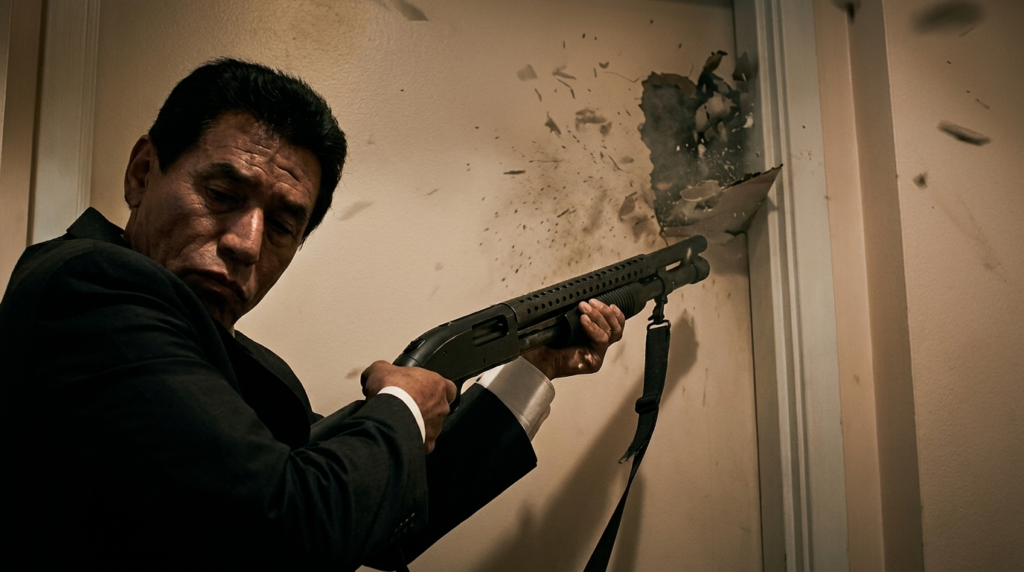
Hanna’s Robbery-Homicide team and the LAPD response units carry Mossberg 590 pump-action shotguns through the bank shootout, the Drive-In ambush, and the airport perimeter sweep at LAX.
- Gauge: 12
- Capacity: 8+1 (20-inch barrel, 8-shot tube)
- Action: Pump-action, dual extractors, twin action bars
- Standard load: 12-gauge 00 buckshot
- Origin: O.F. Mossberg & Sons, North Haven, Connecticut
| Rating | |
|---|---|
| Iconic Factor | 3/5 |
| Civilian Legality | 5/5 |
| Affordability | 5/5 |
| Period Authenticity | 5/5 |
| Scene Impact | 3/5 |
Pros
- Cheapest screen-correct duty shotgun in the entire Heat arsenal
- Mossberg 590 still in production from North Haven, CT
- US military adopted the 590A1 as Mil-Spec 3443E in 1989; identical lineage
Cons
- Pump-action is dated next to semi-auto duty shotguns in 2026
- 590A1 (heavy-walled barrel) costs $50-$100 more than the standard 590
- Recoil from full-power 12-gauge buckshot is unforgiving

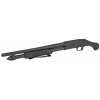
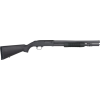
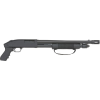
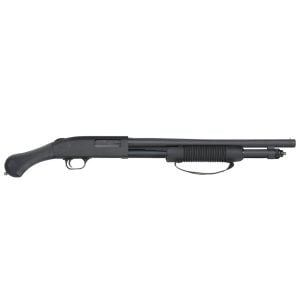
The Mossberg 590 is the shotgun the LAPD black-and-white units rack as they pile out of patrol cars during the bank shootout. It’s the shotgun Hanna’s team brings into the Drive-In motel hallway. It’s also what the LAX perimeter response carries when the foot pursuit begins.
The 590 is a working tool throughout the film. Never a hero shot, but always present in frame when the LAPD shows up.
The Mossberg 590 is O.F. Mossberg’s late-1980s upgrade to the 500-series pump-action design, with extended magazine tubes (8-shot or 9-shot capacity vs. the 500’s 5-shot), heavier metal trigger guard, and improved swivel mounts for sling work.
The US military adopted the 590A1 (heavy-walled barrel and metal safety) in 1989 as Mil-Spec 3443E, used by all four US service branches through Iraq and Afghanistan. Heat’s screen-used LAPD shotguns are the standard 590 with 20-inch barrel and 8-shot tube, in the synthetic-stock police trim.
Mossberg still produces the 590 from North Haven, Connecticut. Standard 590 retails $480-$580. The 590A1 (military-spec heavy barrel, metal trigger guard, metal safety) runs $580-$680. Both are the cheapest screen-correct piece in the Heat arsenal , every other gun on this list runs north of $850 by the time you have a clone build assembled.
The 590 is also the closest civilian-legal match to a duty 870 , Remington’s 870 Police Magnum is the alternate route at the same price tier.
Best For: Pump-shotgun buyers who want the cheapest screen-correct duty shotgun in any 1990s crime-cinema arsenal, in current-production Mossberg trim.
The Standout Scene: 5th and Flower
The 5th and Flower bank shootout is the longest sustained gun choreography in 1990s American film. Twelve minutes of screen time, with real ballistic timing, real reload mechanics, and real weapon-on-weapon engagement geometry.
Mick Gould’s tactical training of the cast shows in every frame: the way Kilmer pivots between cover and threat, the way De Niro walks the muzzle of the 733 down range as he transitions, the way Sizemore checks his sectors before he commits to fire.
Mann shot the entire sequence in downtown Los Angeles at the corner of Wilshire and Stocker, with full LAPD cooperation. The audio team recorded live 5.56 NATO and 7.62 NATO blank fire across the street geometry, with no library SFX overlay. The result is the only American crime-film shootout that actually echoes off the buildings the way real urban gunfire echoes. That single audio decision is half of why the sequence still holds up.
The Kilmer reload is the moment Marines and SOCOM operators reference. He’s behind the cover car, McCauley is laying suppressing fire across the street, Cherrito is engaging the LAPD response unit at the cross-corner. Kilmer’s Colt 733 runs dry. He drops the empty mag with his right hand while his left is already in the chest rig.
The fresh mag is in the well in under a second, and he hits the bolt release with his right thumb on the way back to the rifle. He’s back on target before McCauley finishes his suppressing burst. Two and a half seconds total, with both eyes open and his head up tracking threats. That’s why the footage went into training packages.
If You Only Want One Heat Gun
Build a Colt 733 / XM177 clone. It is the gun on every Heat retrospective, the gun in the reload everybody references, and a clean retro-AR build is the most satisfying clone project on this list. Brownells BRN-601 retro upper plus a stripped lower with a CAR-15 stock lands you a screen-faithful build for $1,500-$1,800 plus a $200 SBR stamp.
If your budget is tighter, the Mossberg 590 is the cheapest period-correct piece in the entire Heat arsenal. New 590 ships at $480-$580 from any major retailer. It is the LAPD-side build, it’s screen-faithful, and it does the work without aftermarket parts.
If your budget is generous and you want the villain-side compact-1911 build, the Colt Defender with Eagle Grips ivory plates is the right answer. Retail Defender plus aftermarket grips lands at $1,000-$1,300, well under the FAL Para or the FNC alternatives, and a more interesting carry piece than any of them.
Related Reading
- The Guns of Die Hard (1988)
- The Guns of Scarface (1983)
- The Guns of The Matrix (1999)
- The Guns of Predator (1987)
- The Guns of Pulp Fiction
- The Guns of Léon: The Professional
- The Guns of Sicario
- The Guns of The Town (2010)
- 8 Best Colt 1911 Pistols
- 9 Best .308 Rifles for 2026
FAQ: Guns of Heat
The bank shootout is the most copied gun sequence ever filmed, and the Colt and FAL behind it are both still buyable. Our AR-15 deals page tracks the Colt end, and handgun deals covers the USP and the SIG.
We also ran the numbers on what that famous downtown shootout would cost in real ammo today, in What It Costs to Shoot Like the Movies.
What guns does Neil McCauley use in Heat?
Neil McCauley (Robert De Niro) carries a Heckler & Koch USP9 as his primary sidearm through most of Heat, switching to a SIG Sauer P220 in .45 ACP for the LAX finale. During the bank robbery sequence he runs a Colt Model 733 carbine, the 11.5-inch-barrel XM177-pattern compact M16. McCauley dumps the USP after the Drive-In motel ambush before the airport shuttle pursuit.
What rifle does Val Kilmer reload in Heat?
Val Kilmer reloads a Colt Model 733 carbine during the 5th and Flower bank shootout. The Colt 733 is the commercial designation for the 11.5-inch-barrel compact M16 derivative, a descendant of the Vietnam-era XM177E2. Kilmer practiced the reload under former SAS operator Mick Gould for weeks before filming. The US Marine Corps and US Army Special Forces both used the footage as marksmanship training material.
What pistol does Vincent Hanna carry in Heat?
Lt. Vincent Hanna (Al Pacino) carries a blued Colt Officer's ACP 1911 with ivory grip plates in a Galco crossdraw shoulder holster. The Officer's ACP is the 3.5-inch-barrel compact 1911 Colt produced from 1985 to 1996. Hanna's rifle is a chopped FN FNC with an M16-style flash hider, fired only in semi-auto mode despite being a registered transferable full-auto.
What rifle does Cherrito use in Heat?
Michael Cherrito (Tom Sizemore) carries an FN FAL 50.61 Paratrooper variant during the armored-car robbery and an IMI Galil ARM Model 372 with wood handguard during the bank robbery. The FAL Para uses a 17.6-inch barrel and side-folding tubular stock. The Galil ARM is the heaviest infantry variant of the Israeli rifle, with a folding stock, integral bipod, and 5.56 NATO chambering.
Was Heat's bank shootout used for military training?
Yes. The Val Kilmer reload sequence in the 5th and Flower bank shootout was screened by US Marine Corps and US Army Special Forces instructors as marksmanship and reload-mechanics training material. Kilmer trained under former British SAS operator Mick Gould for months prior to filming. The reload he executes, drop empty magazine, retrieve fresh mag from chest rig, slap and seat, hit bolt release, transition back to threat, runs in approximately 2.5 seconds with both eyes up tracking threats.
Can civilians legally own the guns from Heat in 2026?
Most Heat firearms are legal for civilian ownership in 2026. The HK USP9, SIG P220, Colt Officer's 1911 (or modern Defender), Mossberg 590, and FN SCAR 16S (as the FNC successor) are all available at retail. The Colt 733, FN FAL Para, IMI Galil ARM, and FN FNC require either pre-1986 transferable NFA paperwork ($25,000-$60,000 with a Form 4 stamp) or Form 1 SBR builds for short-barrel configurations. DSA Inc. SA58 Para and IWI Galil ACE provide current-production civilian-legal alternatives.
Who trained the cast of Heat for the gun work?
Mick Gould, a former British Special Air Service operator, served as Heat's tactical advisor. Gould trained the principal cast, Robert De Niro, Val Kilmer, Tom Sizemore, Al Pacino, and Jon Voight, on weapons handling, room-clearing tactics, and reload mechanics over multiple months prior to filming. The training is most visibly cited in the Val Kilmer bank-shootout reload, which Gould rehearsed with Kilmer until it could be executed in under three seconds.
Where was the bank shootout in Heat filmed?
The 5th and Flower bank shootout was filmed at the corner of Wilshire and Stocker in downtown Los Angeles, with full Los Angeles Police Department cooperation. Michael Mann's production team recorded live 5.56 NATO and 7.62 NATO blank fire across the actual street geometry, with no library sound effects overlay. The result is the only American crime-film shootout where the gunfire echo reflects authentically off surrounding building geometry.
5,743+ Gun & Ammo Deals
Updated daily from 200+ top retailers. Filter by category, caliber, action type, and price.
Related Guides