

Affiliate disclosure: This post contains affiliate links. If you buy through our links we may earn a small commission at no extra cost to you. Prices and availability change often, so always check current pricing before you buy.
Last updated: June 19, 2026
Table of Contents
- Treat every gun as loaded
- Point the muzzle in a safe direction
- Keep your finger off the trigger until you’re ready to shoot
- Know your target and what’s beyond
The Ruger Mini-14 and the AR-15 are two very different answers to the same question: what should a do-everything .223 rifle look like? The Mini-14 is a traditional wood-and-steel-style rifle with a low profile and a Garand-derived action, the kind of gun that does not look like a weapon to most people. The AR-15 is the modular black rifle that became America’s most popular firearm, built to be customized, optic-ready, and fed by cheap, universal magazines.
Both shoot the same cartridge and fill the same ranch, varmint, and home-defense roles. But they get there in completely different ways, and the right choice depends on what you value. This guide breaks down accuracy, aftermarket, magazines, price, and looks so you can pick the .223 rifle that fits you.
How we tested: Every pick here is ranked against our testing methodology. Minimum round counts, accuracy and reliability protocols, the failures that disqualify a gun. Where we have not shot a specific variant ourselves, we say so in that section.
Quick Verdict
For most modern buyers, the AR-15 is the more capable and flexible choice. It is more accurate, endlessly customizable, uses cheap universal magazines, and can be bought as a budget rifle or built into anything. Choose the Ruger Mini-14 if you want a traditional-looking, low-profile ranch rifle that runs reliably, points like a classic carbine, and draws less attention, and you are happy with the gun as it comes. The AR is the better platform. The Mini-14 is the better classic.
Mini-14 vs AR-15: Specs Compared
| Spec | Ruger Mini-14 | AR-15 |
|---|---|---|
| Caliber | 5.56/.223 (300 BLK on Tactical) | 5.56/.223 (many calibers) |
| Action | Fixed-piston gas, Garand-style | Direct impingement (or piston) |
| Barrel length | 16.1 to 18.5 in | 16 in typical |
| Weight | ~6.75 lbs | ~6 to 7 lbs |
| Magazines | Proprietary Ruger (20-rd standard) | Universal STANAG (30-rd standard) |
| Optics mounting | Ruger rings / factory rail | Full-length flat-top rail |
| Customization | Limited | Nearly unlimited |
| Typical accuracy | ~2 to 4 MOA | ~1 to 2 MOA |
| Looks | Traditional rifle | Modern tactical |
| Price range | Mid, around $1,200 | Wide, $500 to $2,000+ |
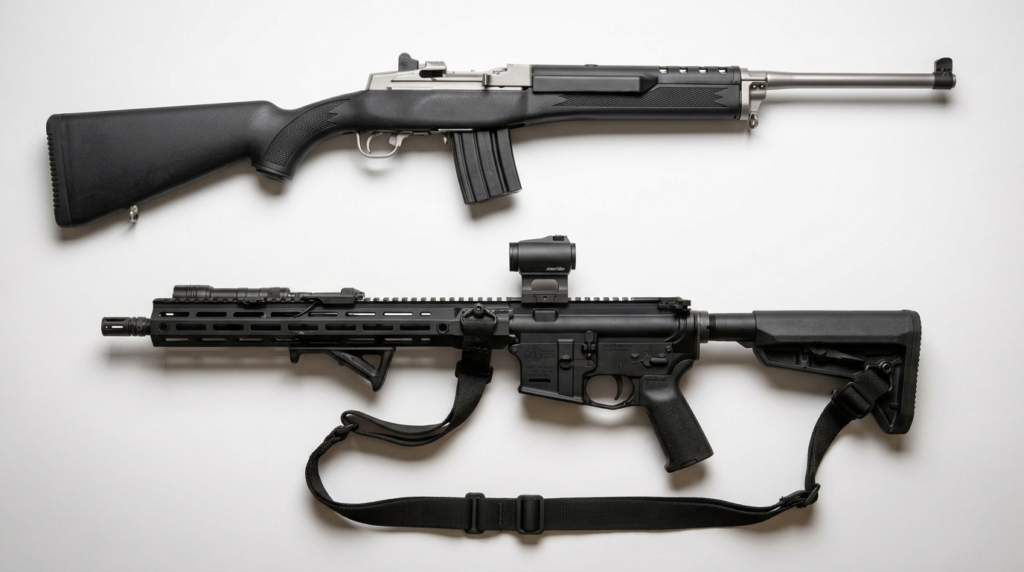
The spec sheet captures the personality gap. The Mini-14 is a fixed, traditional rifle that uses its own magazines and is what it is out of the box. The AR-15 is a modular system that takes universal magazines, mounts any optic, and can be reconfigured endlessly. They shoot the same round, but they are built on opposite philosophies.
Ruger Mini-14 Pros and Cons
Pros
- Traditional looks that draw far less attention
- Reliable Garand-style action that runs clean
- Slim, light, and points like a classic carbine
- Great ranch, truck, and varmint rifle
- Stainless and synthetic options resist weather
Cons
- Proprietary magazines cost more than AR mags
- Limited aftermarket compared to the AR-15
- Historically less accurate, thin barrel heats up
- Priced above many budget AR-15s
AR-15 Pros and Cons
Pros
- The largest aftermarket of any firearm on earth
- Universal 30-round magazines are cheap and everywhere
- More accurate and easy to make even more accurate
- Flat-top rail mounts any optic instantly
- Available as a budget rifle or built to any spec
Cons
- The black-rifle look draws more attention and restrictions
- Direct impingement runs dirtier in the receiver
- Upgrades can turn it into a money pit
- More heavily targeted by feature-based laws in some states
Looks and Acceptance
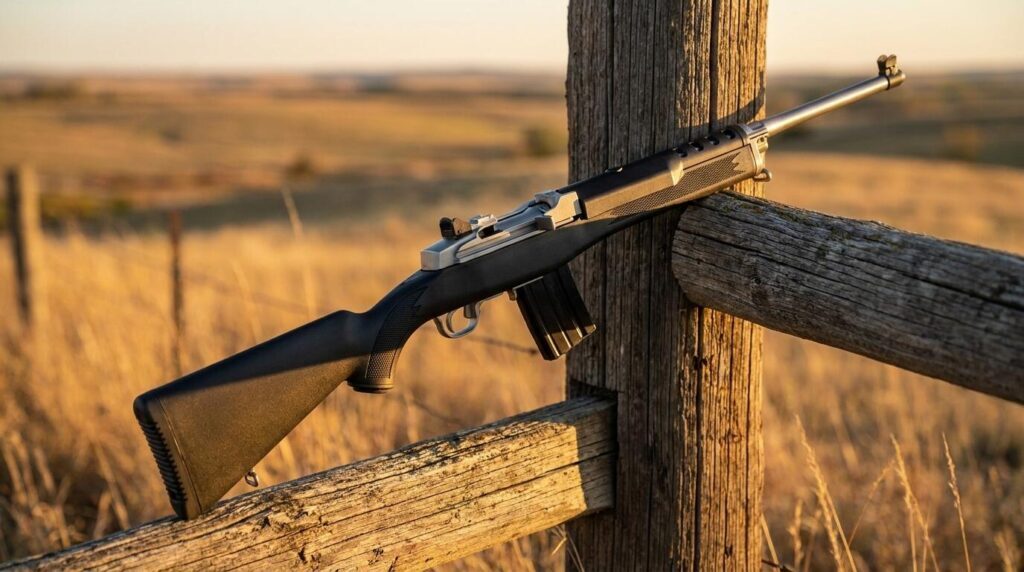
This is the Mini-14’s signature advantage. It looks like a traditional rifle, not a military weapon, which makes it far less likely to raise eyebrows at the range, on the ranch, or with non-gun neighbors. That low profile is genuinely useful, and in a handful of restrictive jurisdictions the Mini-14 sidesteps feature-based bans that catch the AR-15, though you must always check your own state and local laws because some places restrict it too. The AR-15 is the political lightning rod of American guns, instantly recognizable and more heavily regulated in certain states. If drawing less attention matters to you, the Mini-14 wins this round.
Accuracy
The AR-15 has the edge on accuracy, and it is not especially close at the high end. A quality AR with a free-float handguard and a good barrel will shoot one to two inches at a hundred yards all day, and you can push it further with match parts. The Mini-14 has improved a lot over the years, and modern versions shoot respectably, but the design’s thinner barrel tends to heat up and walk during long strings, and most shake out in the two to four inch range. For plinking, ranch work, and defense inside normal distances, the Mini-14 is plenty accurate. For precision and the ability to upgrade toward it, the AR is the better tool.
Magazines
This is a bigger deal than it sounds. The AR-15 uses the universal STANAG-pattern magazine, which means cheap, plentiful 30-round mags from dozens of makers that work across nearly every AR on the market. The Mini-14 uses proprietary Ruger magazines. The factory ones are excellent, but they cost more, are less common, and only fit the Mini-14. If you want to stock up on inexpensive, interchangeable magazines, the AR-15 wins easily. If you are content buying a handful of quality Ruger mags, the Mini-14 runs just fine.
Customization and Aftermarket
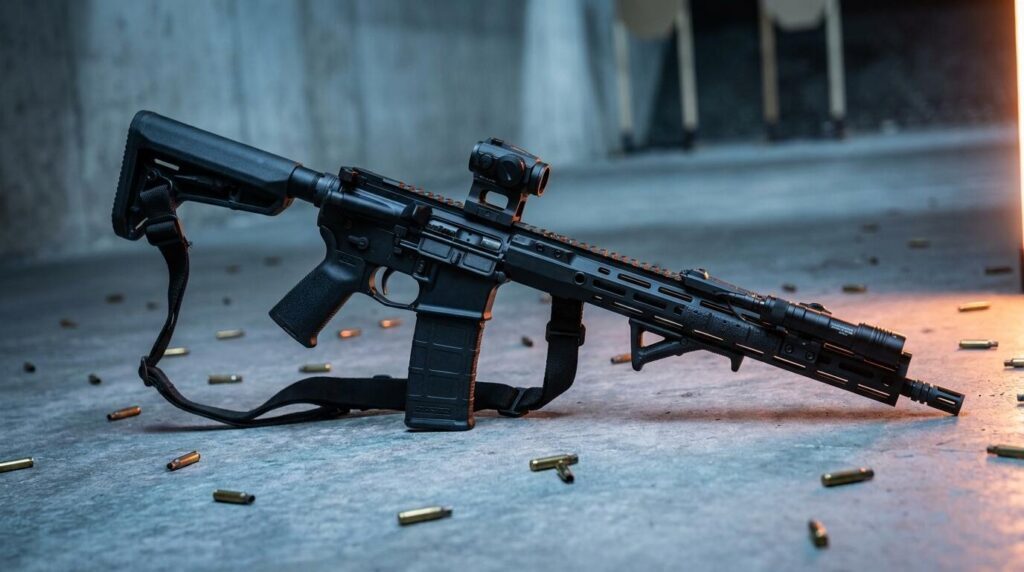
The AR-15 has the largest aftermarket of any firearm ever made, full stop. Stocks, triggers, handguards, barrels, optics mounts, and complete uppers are available from hundreds of companies, and you can change calibers, lengths, and roles by swapping parts. If you love to tinker, build, and upgrade, nothing matches it. The Mini-14 has a modest aftermarket by comparison. You can add a few stocks, optics mounts, and accessories, but it is fundamentally a rifle you buy and use rather than a platform you build. For flexibility, the AR is in a league of its own.
Reliability
Both rifles are reliable, with a small philosophical difference. The Mini-14 uses a fixed-piston, Garand-style action that keeps hot gas and carbon out of the receiver, so it tends to run clean and tolerate neglect well. The AR-15’s direct-impingement system is extremely reliable too, but it vents gas and carbon back into the receiver, so it runs a little dirtier and likes to be kept lubricated. Both will serve faithfully with basic care. The Mini-14 is the more forgiving of dirt and infrequent cleaning, while the AR rewards a bit of lube and maintenance.
Optics and Sights
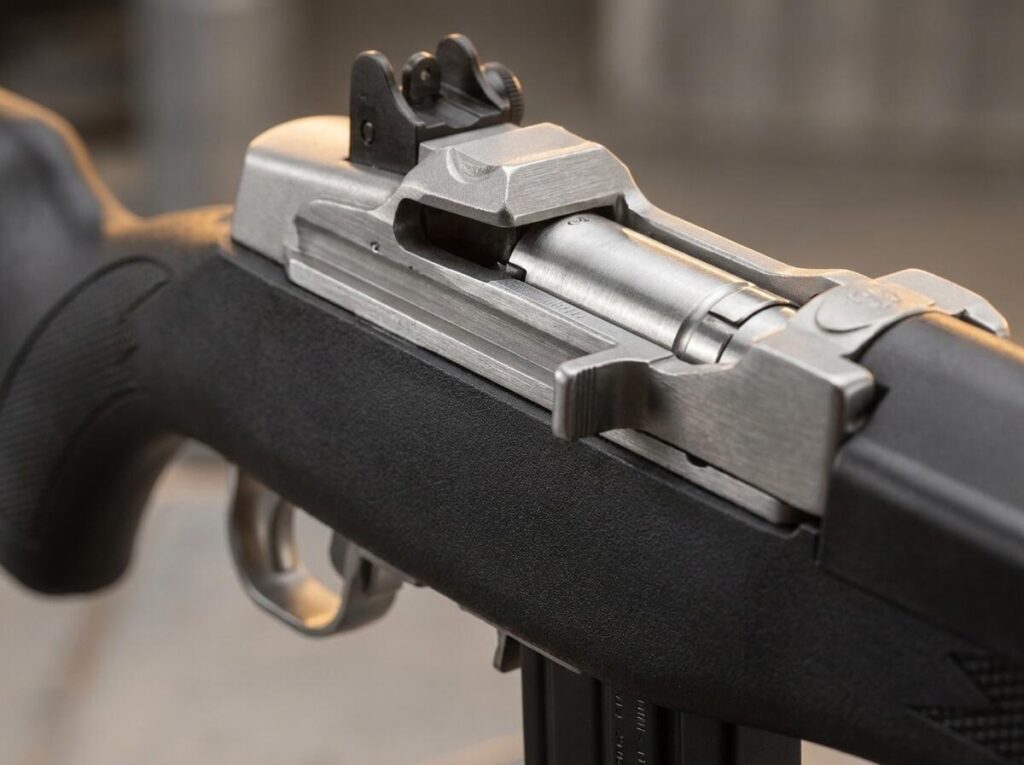
Mounting a modern optic is far easier on the AR-15. Its flat-top receiver has a full-length Picatinny rail, so a red dot or scope bolts on in seconds and returns to zero reliably. The Mini-14 historically made optics a chore, though current models ship with a factory rail and rings that make it workable. Both come with usable iron sights. If a red dot or scope is central to your plan, the AR-15 is the simpler, more proven path, while the modern Mini-14 can be set up to take glass with a little more effort.
Handling and Ergonomics
The two rifles feel different in the hands. The Mini-14 is slim and light and shoulders like a traditional carbine, which many shooters find natural and quick, especially for fast snap shots in the field. The AR-15 has its familiar pistol grip and adjustable stock, which give a very repeatable, ergonomic shooting position and easy length-of-pull adjustment for different shooters or gear. Neither is better in a vacuum. The Mini-14 feels like a classic rifle, the AR feels like a modern modular one, and your preference here is largely about what feels right to you.
Price and Value
Price is interesting because the ranges overlap from different directions. The Mini-14 sits in the mid-price range, often around twelve hundred dollars, and that is roughly what you pay. The AR-15 spans a huge range, from budget rifles around five to seven hundred dollars up past two thousand for premium builds. That means a basic AR-15 is cheaper to get into than a Mini-14, while a top-tier AR costs more. For pure value at the entry level, the AR wins. For a fixed, known package with no upgrade temptation, the Mini-14 is straightforward. Check the live pricing below, since both move with the market.
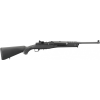
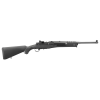
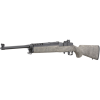
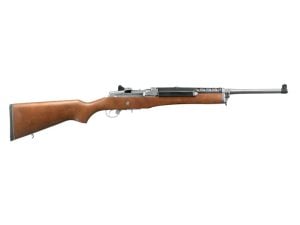
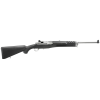
Ruger Mini-14 Live Pricing

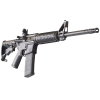
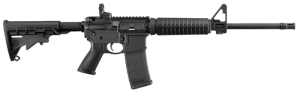
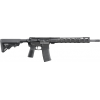
AR-15 Live Pricing


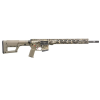
Why the Mini-14 Exists
The Mini-14 came from a simple idea. In the early 1970s Bill Ruger and his team wanted to shrink the proven gas system and rotating bolt of the M14 battle rifle down to the .223 cartridge, wrapped in a handy, traditional package. The result, introduced in 1973, looked like a scaled-down classic American rifle rather than a military carbine, and that was the whole point. It found a natural home with ranchers, police departments, and shooters who wanted an effective semi-auto that did not look aggressive. That heritage still defines the gun today, a low-profile, reliable rifle with deep roots in classic American design.
Why the AR-15 Took Over
The AR-15 grew from Eugene Stoner’s design into the most popular rifle in America for one big reason: it is a platform, not just a gun. Its two-part upper-and-lower design, universal magazines, and standardized parts meant that a huge industry could spring up around it, letting owners build, repair, and reconfigure their rifles however they liked. Decades of military use refined it, and the civilian market embraced the endless customization. Today the AR-15 is less a single rifle than an ecosystem, which is exactly why it dominates. When you buy one, you are buying into the largest support network in the firearms world.
Calibers and Versatility
Here the AR-15 stretches its legs. Because the platform is modular, you can run it in 5.56, .223 Wylde, .300 Blackout, and a long list of other calibers simply by changing the upper or barrel, which makes one lower receiver the heart of several different rifles. The Mini-14 is more focused. It comes in 5.56/.223, the Tactical model is offered in .300 Blackout, and the closely related Mini Thirty handles 7.62×39. That covers the popular bases, but it does not approach the AR’s swap-a-caliber flexibility. If you want one rifle that can become many, the AR is the clear winner on versatility.
Maintenance and Cleaning
Both rifles are easy to live with, with the difference coming down to how dirty they run. The Mini-14’s fixed-piston action vents gas away from the receiver, so the internals stay relatively clean and the gun shrugs off long intervals between cleanings. The AR-15’s direct-impingement system routes gas back into the receiver, so carbon builds up around the bolt carrier and it prefers to be kept wet with lube. Neither is hard to field strip, and parts for both are easy to find, though the AR’s universal parts make repairs and replacements especially simple. If you want the lowest-maintenance option, the Mini-14 has a slight edge.
Ranch, Varmint, and Hunting Use
This is the Mini-14’s home turf, and it earns its Ranch Rifle name. Its light weight, slim profile, and quick handling make it a joy to carry around a property, toss behind a truck seat, or shoulder fast on a coyote. The traditional looks also sit better with landowners and neighbors. The AR-15 is just as effective on varmints and predators, and its accuracy and optics options arguably make it the better precision varmint tool, but it is a touch less subtle. For classic ranch and truck-gun duty the Mini-14 feels right at home, while the AR is the better choice when you want to reach out with precision.
Home Defense
Both rifles make capable home-defense tools, firing an effective cartridge with manageable recoil. The AR-15 has some practical advantages indoors, including easy mounting of a weapon light and red dot, a collapsible stock that fits any shooter, and cheap magazines for training and spares. The Mini-14 works fine in this role too and benefits from its clean-running action and simple manual of arms. For a purpose-built home-defense setup with lights and optics, the AR is the more natural platform. For a simple, reliable rifle by the bedside that you do not plan to accessorize, the Mini-14 does the job.
Training and New Shooters
For a new shooter, both rifles are approachable, with a few differences. The AR-15’s adjustable stock and ergonomic grip help it fit shooters of all sizes, and the enormous availability of training, classes, and instructional material built around the platform is a real advantage. The Mini-14’s traditional layout is intuitive and familiar to anyone who has handled a classic rifle, and its simplicity means there is less to fuss with. A beginner will find plenty of support for the AR-15 and a gentle learning curve on the Mini-14. Either way, get instruction and practice the fundamentals.
Common Myths
A few myths surround this matchup. The first is that the Mini-14 is wildly inaccurate. Older models had a reputation for it, but modern Mini-14s shoot respectably, just not to match-AR standards. The second is that the AR-15 is unreliable or finicky. A quality AR is extremely dependable as long as it is lubricated. The third is that the Mini-14 is always exempt from gun laws that affect the AR. It often avoids feature-based restrictions, but plenty of jurisdictions regulate it too, so you must check your local laws. Clearing up these points leads to a smarter buying decision.
Resale and Holding Value
Both rifles hold value reasonably well, in different ways. The Mini-14 has a loyal following and a steady demand that keeps used prices stable, and because it is a fixed design there is less depreciation from worn-out trends. The AR-15 market is enormous, so base rifles are easy to sell but command lower used prices given how many exist, while premium parts and quality builds can hold value better. In practical terms, neither is a bad financial bet, and you should buy the rifle that fits your needs rather than chasing resale, because both will serve you for many years.
Which Should You Buy?
Buy the AR-15 if you want maximum customization, cheap universal magazines, the best accuracy potential, easy optics, or the lowest entry price, or if you simply want the most capable and supported rifle platform in the country.
Buy the Ruger Mini-14 if you want a traditional-looking, low-profile ranch rifle, you value a clean-running action and classic handling, you prefer a gun that draws less attention, or you simply do not want to tinker and want a rifle that is ready to go as it comes.
Still torn? Most first-time modern-rifle buyers and anyone who likes to customize should go AR-15. Shooters who want a classic ranch rifle, a lower profile, or a no-fuss package will be happier with the Mini-14.
Recoil and Shooting Comfort
Both rifles fire the mild 5.56/.223 cartridge, so recoil is light and very manageable in either one, which is part of why this cartridge is so popular for new shooters. The AR-15 has a slight comfort edge from its in-line stock design, which directs recoil straight back into the shoulder and keeps the muzzle flatter for fast follow-up shots, and a collapsible stock lets you dial in the perfect fit. The Mini-14 has a more traditional stock with a bit more muzzle rise, though it is still gentle and easy to shoot all day. Neither will punish you, and most shooters will be comfortable behind both.
Slings, Lights, and Setup
If you want to accessorize, the AR-15 makes it effortless. Rail space and standardized mounts mean slings, lights, and optics bolt on with off-the-shelf parts, and there is a purpose-built accessory for nearly any need. The Mini-14 accepts slings easily and can take a light and optic with the right mounts, but the selection is smaller and you may have to hunt for the right part. For a fully kitted-out rifle with a light and optic, the AR is the simpler build. For a clean, simple carbine with maybe a sling and a scope, the Mini-14 keeps things refreshingly uncomplicated.
How I Compared These
This comparison is based on hands-on experience with both rifles and is checked against Ruger’s published specifications, common AR-15 norms, and our own reviews of both platforms. I focused on the differences that drive a buying decision, accuracy, magazines, aftermarket, optics, looks, and price, rather than spec-sheet trivia. Where a figure varies, such as accuracy or AR pricing, I gave honest ranges rather than cherry-picked best cases. The Mini-14 was judged in its standard Ranch and Tactical forms and the AR-15 as a typical quality carbine.
The Bottom Line
The Ruger Mini-14 and the AR-15 are both excellent .223 rifles that solve the same problem in opposite ways. The AR-15 is the modular, accurate, endlessly customizable platform with cheap universal magazines and the deepest support of any rifle in America, and for most buyers it is the more capable choice. The Mini-14 is the traditional, low-profile, clean-running ranch rifle that points like a classic and draws less attention. Decide whether you want a platform to build on or a finished rifle to carry, and your answer becomes clear.
Related Comparisons and Reviews
Frequently Asked Questions
Is the Mini-14 or AR-15 better?
For most modern buyers the AR-15 is more capable. It is more accurate, endlessly customizable, uses cheap universal magazines, and can be bought on a budget. The Mini-14 is the better choice if you want a traditional-looking, low-profile ranch rifle that runs reliably and draws less attention.
Is the AR-15 more accurate than the Mini-14?
Generally yes. A quality AR-15 commonly shoots one to two inches at a hundred yards and can be improved with match parts. The Mini-14 has gotten better over the years but its thinner barrel tends to heat up and walk, so most shoot in the two to four inch range. Both are accurate enough for ranch work and defense.
Do they use the same magazines?
No. The AR-15 uses universal STANAG-pattern magazines that are cheap and available everywhere. The Mini-14 uses proprietary Ruger magazines that cost more and only fit the Mini-14. This is a meaningful difference if you want to stock up on inexpensive, interchangeable mags.
Is a Mini-14 legal where AR-15s are banned?
Sometimes, because the Mini-14 lacks the military-style features that trigger some feature-based bans, but not always. Several restrictive jurisdictions also limit the Mini-14. Always check your specific state and local laws before buying either rifle.
Which is cheaper?
A basic AR-15 is usually cheaper to get into, often five to seven hundred dollars, while the Mini-14 sits in the mid range around twelve hundred. However, premium AR-15 builds cost more than a Mini-14. For entry-level value the AR wins.
Which is more reliable?
Both are reliable. The Mini-14 uses a Garand-style action that keeps the receiver clean and tolerates neglect well. The AR-15 is also very reliable but its direct-impingement system runs a little dirtier and likes to be kept lubricated. Either will serve faithfully with basic care.
5,743+ Gun & Ammo Deals
Updated daily from 200+ top retailers. Filter by category, caliber, action type, and price.
Related Guides