
Affiliate link disclosure: This article contains affiliate links. If you buy through our links then you get the best deal and we get to keep hunting the best prices for the Gen 6 Glock 19 and other handguns. It’s a win-win.
Gen 6 Glock 19 Stats
- Caliber: 9mm
- Capacity: 10/15
- Barrel Length: 4.02 inch
Glock 19 Gen 6
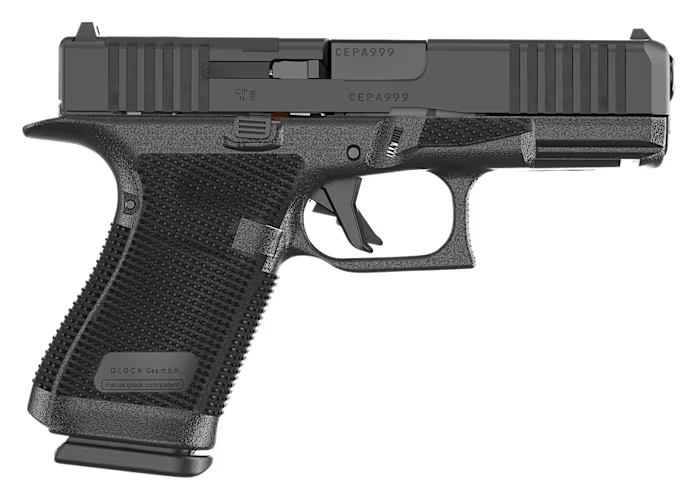
For the first time in a long while, a new Glock generation actually feels like a generational step rather than a minor refresh. The Gen 6 Glock 19 is not just a Gen 5 with a few edges and grooves knocked off. It represents Glock quietly correcting a decade of incremental compromises while responding to a market that has moved on from the idea that “good enough” is good enough.
The Gen 6 Glock 19 does not reinvent the Glock formula. That was never going to happen. What it does instead is refine nearly every interface point between shooter and gun, while modernising the platform in ways Glock probably should have done years ago.
This is a technical evolution, not a cosmetic one.
Glock 19 Gen 6 vs Gen 5 Comparison Table
Glock 19 Gen 6 vs Gen 5: Spec & Feature Comparison
Clean spec sheet + the real-world differences that matter: grip, trigger, optics interface, and controls.
| Feature | Gen 5 | Gen 6 |
|---|---|---|
| Caliber | 9×19mm | 9×19mm |
| Capacity | 15+1 | 15+1 |
| Barrel Length | 4.02 in (102 mm) | 4.02 in (102 mm) |
| Overall Length | 7.28 in | 7.28 in |
| Height (w/ mag) | 5.04 in | 5.04 in |
| Width | 1.34 in | ~1.34 in |
| Weight (unloaded) | ~23.6 oz | ~23.8 oz |
| Frame Texture | Gen 5 RTF Rough texture, familiar feel | RTF6 More uniform grip, better wet control |
| Grip Geometry | Classic Gen 5 profile | Refined angle + upper grip contour for more natural point |
| Beavertail | Modular backstrap option | Integrated, more pronounced beavertail |
| Trigger | Safe Action, curved shoe | Revised flat-face shoe, cleaner wall and reset |
| Trigger Pull | ~5.5 lb (typical) | ~5.5 lb (more consistent feel) |
| Slide Serrations | Front/rear (MOS models), moderate depth | Deeper, more aggressive serrations for gloved or wet hands |
| Optics Interface | MOS plate system | Optics-first cut, lower mount height, improved stability |
| Iron Sight Setup | Co-witness depends on plate and optic choice | Improved out-of-box co-witness geometry (model dependent) |
| Barrel | Glock Marksman Barrel (GMB) | Revised GMB tolerances for more consistent groups at distance |
| Controls | Ambi slide stop, reversible mag release | Refined ambi controls, more positive engagement |
| Magazine Compatibility | Gen 5 mags | Gen 5 mags compatible |
| Internal Updates | Gen 5 internals, proven duty baseline | Updated striker/spring geometry for longevity + consistency |
| Design Goal | Incremental refinement | Modernisation: ergonomics + optics integration + shootability |
UGS take: The headline dimensions barely move. The real changes are where your hands and eyes live. Grip texture, trigger feel, controls, and the optics interface are the four areas that make Gen 6 feel like a genuine step forward.
Find the Best Price in Seconds
Search once, compare 100+ trusted retailers instantly.
Is It Worth Upgrading From a Glock 19 Gen 5?
If you already own a Glock 19 Gen 5 that runs reliably, upgrading to Gen 6 is not going to change your world. Glock did not change capacity, size, or core operating principles. A well-set-up Gen 5 is still a very capable defensive and duty pistol.
Where Gen 6 starts to make sense is in the details. The refined grip geometry points more naturally for many shooters, the trigger has a cleaner break and reset, and the optics interface is genuinely improved rather than bolted on. If you run a red dot, shoot high round counts, or are buying new rather than replacing an existing gun, Gen 6 is the better long-term platform.
In short, Gen 6 is an upgrade in feel and usability, not a night-and-day leap in performance. Existing Gen 5 owners can comfortably stay put. New buyers, or those planning to add optics, should start with Gen 6 that is undoubtedly going to take its place among the best compact 9mm pistols on the market.
A Grip That Finally Feels Finished
The most noticeable change the moment you pick up a Gen 6 Glock 19 is the grip geometry.
Glock has subtly reworked the grip angle and front-to-back depth, particularly in the upper third of the frame. The result is a grip that points more naturally for a wider range of shooters, especially those who always felt they had to fight the Glock “brick” angle.
The new texture, often referred to as RTF6, is more aggressive than Gen 5 but better distributed. Instead of relying on sharp peaks, the texture spreads contact across more surface area. It locks the hand in place without chewing it up during long range sessions.
The beavertail is also more pronounced and integrated, not bolted on as an afterthought. It allows a higher grip without discomfort and reduces slide bite risk without forcing aftermarket solutions.
Trigger Improvements That Actually Matter
Glock triggers have always been serviceable, rarely loved. There’s a thriving aftermarket with drop in triggers, with the Timney Alpha Competition trigger, Overwatch Precision TAC and the ZEV Fulcrum series all gaining loyal followings.
The Gen 6 Glock 19 introduces a flatter-faced trigger shoe with a cleaner break and noticeably improved reset. This is not a competition trigger, and Glock is clearly not chasing the aftermarket here, but the improvement is real.
Take-up feels more consistent, the wall is more defined, and the reset is shorter and more tactile than Gen 5. For duty and defensive use, this is arguably the best factory Glock trigger to date.
Importantly, Glock achieved this without compromising reliability or introducing unnecessary complexity. The internal changes are evolutionary, not experimental.
Optics-First, Not Optics-Ready
One of the biggest philosophical shifts in the Gen 6 Glock 19 is that it finally feels optics-first, not optics-adapted.
Previous MOS models always felt like a concession. Plates stacked on slides, compromised co-witness heights, and tolerance stacking issues were common complaints. Gen 6 addresses this with a redesigned slide cut that sits optics lower and more securely.
The mounting interface is stronger, more consistent, and less dependent on aftermarket fixes. This is Glock acknowledging that pistol optics are no longer niche or optional. They are standard.
Iron sights remain usable out of the box, but the pistol is clearly designed with a dot in mind from day one.
Slide and Barrel Refinements
The Gen 6 slide shows subtle but meaningful changes. Serrations are deeper and more usable under stress, especially with wet or gloved hands. They are not flashy, but they are functional.
Barrel manufacturing tolerances have also been tightened. Glock is not advertising match-grade accuracy, but early testing suggests more consistent groups at distance compared to Gen 5. This matters for duty guns and concealed carry pistols alike.
The crown and rifling changes are conservative, but Glock is clearly chasing repeatability rather than headline accuracy claims.
Controls and Ergonomics
Controls on the Gen 6 Glock 19 are slightly enlarged and reshaped. The slide stop is easier to manipulate without becoming obtrusive. The magazine release is more positive, especially under recoil.
None of these changes scream innovation on their own. Together, they remove friction points that shooters have been working around for years.
This is Glock smoothing edges, literally and figuratively.
Internal Reliability and Longevity
Internally, the Gen 6 platform benefits from lessons learned across millions of Gen 5 pistols in circulation.
Small changes to spring assemblies, striker components, and internal tolerances aim to improve longevity and consistency over high round counts. Glock is not chasing novelty here. They are chasing boring reliability, which has always been their strength.
For agencies and high-volume shooters, this matters more than any cosmetic feature ever could.
Where the Gen 6 Glock 19 Sits in the Market
The Gen 6 Glock 19 is Glock acknowledging reality.
The market caught up and there are cheaper, and better Glock alternatives, sometimes both. SIG, Walther, CZ, and even Glock-clone manufacturers have been offering better ergonomics and optics integration for years. Gen 6 is Glock reasserting itself without abandoning its core identity.
It does not try to be flashy. It tries to be correct.
And for Glock, that is the smartest move possible.
The V Series and Why It Complicates the Story
The Gen 6 launch does not exist in a vacuum, and ignoring the V Series would be dishonest.
The V Series was introduced earlier as a compliance-driven redesign intended to address legal and regulatory pressure around illegal auto sear devices. While the intent may have been understandable, the execution created confusion.
From a consumer perspective, the V Series looked like a forward-facing product that broke compatibility without delivering clear benefits. Aftermarket workarounds appeared quickly, undercutting the stated purpose, and enthusiasts reacted badly.
Then Gen 6 was announced.
That sequencing made the V Series feel immediately obsolete, even if Glock never intended it to be a long-term civilian platform. Whether fair or not, the optics were poor.
Gen 6 effectively supersedes the V Series for most civilian buyers. It recenters the conversation on performance, ergonomics, and modernisation rather than politics and compliance.
The lesson here is simple. Glock’s engineering remained solid, but its communication stumbled. Gen 6 may fix the technical side, but the V Series will likely be remembered as an awkward detour Glock would rather move past quietly.
Related: See our hands-on Glock 19 Gen 6 review — 1,200 round test with full comparison.
Hub: Best Glock Pistols (2026)
Glock 19 Gen 6 Review: 1,200 Round Hands-On Test (2026)
Glock 19 Gen 5 vs Gen 4: What’s the Difference
Glock 19 Gen 5 Review (2025): 2,000 Round Hands-On Test
What is the Glock Gen 6 Glock 19?
The Gen 6 Glock 19 is the latest evolution of the compact Glock platform. It builds on Gen 5 with refined ergonomics, a redesigned trigger feel, deeper slide serrations, and a more robust optics-first mounting system. It focuses on shootability and modern use rather than radical redesign.
How is the Gen 6 Glock 19 different from Gen 5?
Gen 6 improves the grip shape and texture, offers a flatter trigger with a cleaner reset, refines controls, and lowers the optic mounting height. Dimensions and capacity remain the same, but the gun feels more finished and deliberate in hand compared to Gen 5.
Is the Gen 6 Glock 19 more accurate than Gen 5?
On paper, accuracy is similar. In practice, tighter barrel tolerances and improved ergonomics help shooters achieve more consistent groups, especially at distance. The improvements are incremental, but noticeable for experienced shooters and duty users running optics.
Does the Gen 6 Glock 19 come optics-ready?
Yes. The Gen 6 Glock 19 is designed with an optics-first slide cut rather than a retrofitted plate system. Optics sit lower, mount more securely, and offer better co-witnessing with iron sights compared to earlier MOS configurations.
Are Gen 5 magazines compatible with the Gen 6 Glock 19?
Yes. The Gen 6 Glock 19 maintains compatibility with Gen 5 magazines. Glock avoided unnecessary magazine changes, which helps existing owners upgrade without replacing mags or duty gear.
Has the trigger improved on the Gen 6 Glock 19?
Yes, modestly but meaningfully. The flat-face trigger offers a more defined wall and a crisper reset. It is still a duty-grade trigger, not a competition unit, but it is the best factory trigger Glock has produced to date.
Is the Gen 6 Glock 19 meant to replace the V Series?
For civilian buyers, effectively yes. The V Series was compliance-driven, while Gen 6 is performance-driven. Gen 6 supersedes the V Series as Glock’s forward-facing platform for most shooters, even if the V Series continues in institutional roles.
Should Gen 5 owners upgrade to Gen 6?
If your Gen 5 runs well, upgrading is optional. If you use pistol optics, want improved ergonomics, or are buying new, Gen 6 is the better long-term platform. The improvements stack up more in use than they do on a spec sheet.
Does the Gen 6 Glock 19 affect aftermarket compatibility?
Most Gen 5 holsters, magazines, and accessories remain compatible. Optics mounting hardware may differ due to the revised cut. The aftermarket is already treating Gen 6 as the primary future platform rather than a short-lived variant.
Why did Glock launch the V Series and Gen 6 so close together?
The launches addressed different pressures. The V Series focused on legal and regulatory concerns, while Gen 6 focused on product evolution. Poor communication made the overlap look confusing, but Gen 6 represents Glock’s actual long-term design direction.