

Last updated September 5th 2026 · By Nick Hall. I have built and run AR-15s in both chamberings; this comparison pulls from that range time plus published ballistic data.
Affiliate disclosure: some links below are affiliate links. If you buy through them you still get the best price and you help us keep tracking deals, at no extra cost to you.
Table of Contents
How we tested: Every pick here is ranked against our testing methodology. Minimum round counts, accuracy and reliability protocols, the failures that disqualify a gun.
The Short Answer
Choose 5.56 NATO for almost everything. It is cheaper, flatter, faster and reaches farther, and it is the default AR-15 round for good reason. Choose .300 Blackout when you run a short barrel or a suppressor, want subsonic loads for quiet shooting, or hunt hogs at close range.
Both rounds run in the same AR-15. They share magazines and the same bolt, and switching between them is a barrel swap, because .300 Blackout was built on a necked-up 5.56 case specifically so it would. What separates them is what each is tuned to do. The 5.56 is a high-velocity, long-reaching rifle round. The .300 Blackout is a heavy-bullet, short-range, suppressor-friendly round that does its best work out of a stubby barrel.
That shared magazine is also the reason this pairing can hurt you, which is the section I would read first if you are about to own both.
.300 Blackout vs 5.56: Specs at a Glance
| Spec | 5.56 NATO | .300 Blackout |
|---|---|---|
| Bullet diameter | .224 in | .308 in |
| Common bullet weights | 55 to 77 gr | 110 to 220 gr |
| Muzzle velocity (typical) | ~3,000 fps (55 gr) | ~2,200 fps (125 gr) / ~1,000 fps subsonic |
| Practical effective range | ~500 yards | ~200 to 300 yards supersonic |
| Best barrel length | 16 to 20 in | 9 to 16 in |
| Barrel twist | 1:7 to 1:9 | 1:7 or 1:8 for heavy subsonic |
| Suppressed / subsonic | Loud, no true subsonic | Excellent, purpose-built |
| AR-15 compatibility | Standard | Same mags and bolt, barrel swap only |
| Typical ammo cost | ~$0.45/round | ~$0.85 to $1.50/round |
Figures from published manufacturer ballistic data and ANSI/SAAMI cartridge standards, cross-checked September 2026. .300 Blackout was standardized by SAAMI in 2011.
Two cartridges built for opposite ends of the same platform. The 5.56 trades bullet weight for speed and reach. The .300 Blackout trades speed and reach for a heavy bullet that thumps hard up close and goes quiet when you want it to.
Pros
- Cheapest centerfire rifle round made
- Flat trajectory out to 500 yards
- Light recoil, easy to shoot fast
Cons
- No true subsonic option
- Sheds energy past 500 yards
- Less punch up close than .30 cal
Pros
- Built for short barrels and suppressors
- Genuinely quiet subsonic loads
- Barrel swap only, same mags and bolt
Cons
- Costs two to four times 5.56
- Drops fast past 200 yards
- Will chamber in a 5.56 barrel
.300 Blackout vs 5.56 by the Numbers
These come from the standard rather than from another review. The figures below are read out of ANSI/SAAMI Z299.4, the 400-page centerfire rifle standard the industry actually builds to, and from the federal noise regulation.
- Both cap at 55,000 psi: the maximum average pressure in ANSI/SAAMI Z299.4 is 550 (psi/100) by transducer for 223 Remington and 550 for 300 AAC Blackout. Identical ceilings, which is the real reason one bolt handles both cartridges.
- January 17, 2011: the date SAAMI issued the 300 AAC Blackout standard, revised 20 May 2022. Its parent case, 223 Remington, was issued 21 April 1980, so the Blackout is 31 years the younger.
- .224 against .308 inches: the bullet diameters. Same case head, same magazine, same bolt face, and a bullet nearly forty percent wider. That is the whole cartridge in one line.
- 55 to 77 grains against 110 to 220: the usual bullet weights. The heaviest common Blackout load is roughly four times the weight of the lightest common 5.56 load.
- About 3,000 fps against about 1,000: muzzle velocity for 55-grain 5.56 and for heavy subsonic Blackout. The Blackout gives up two thirds of its speed on purpose, to stay under the sound barrier.
- 140 dB peak: the impulse-noise ceiling in 29 CFR 1910.95, and the number that decides whether a suppressed rifle is genuinely quiet or merely quieter. NIOSH measurements put unsuppressed rifle peaks well above it, and found levels varying by as much as 20 dB across different rifles.
- 9 to 16 inches against 16 to 20: the barrel length each cartridge is built around. This single spec decides the comparison more than any ballistic figure does.
- Roughly double, at least: what Blackout costs to shoot. Practice 5.56 runs about $0.45 a round against $0.85 to $1.50 for Blackout, and heavy subsonic loads sit at the top of that range.
- 300 Whisper is the same thing: SAAMI lists 300 AAC Blackout and 300 Whisper as interchangeable, so a rifle marked for one will safely fire the other. That is the only interchange on this page that is safe.
The pressure line is the one worth sitting with. People assume the Blackout is a milder cartridge because it is slower, and it is not: it runs to the same 55,000 psi ceiling as the round it was built from. What changed is where that pressure goes, into a heavier bullet over a shorter barrel instead of into velocity.

Same Rifle, Different Barrel
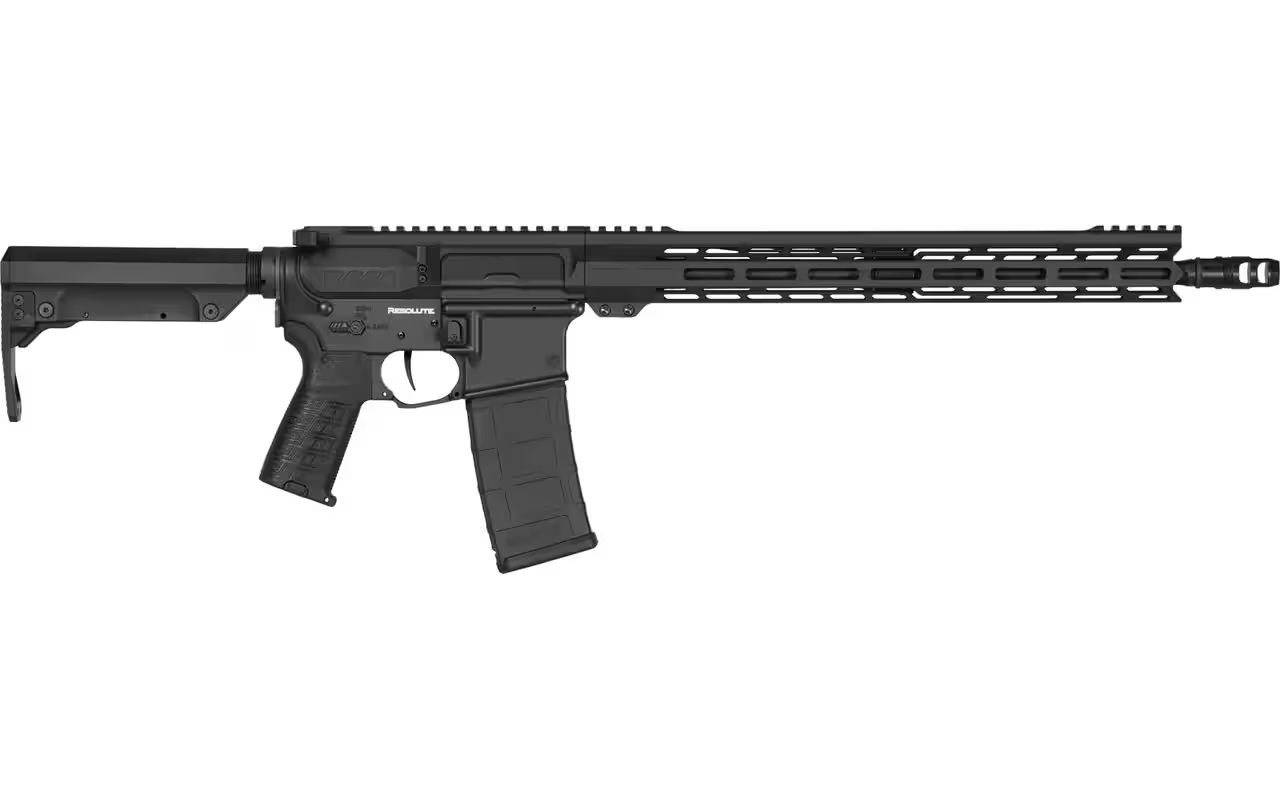
This is what makes the comparison unusual. .300 Blackout was designed from the start to work in an unmodified AR-15. It uses a 5.56 case necked up to take a .30-caliber bullet, so it feeds from the same magazines and runs on the same bolt carrier group. Converting a 5.56 AR-15 to .300 Blackout means swapping the barrel and nothing else.
Magazines are the part that surprises new builders. The cartridges share a case head and overall length, so a 30-round 5.56 magazine feeds .300 Blackout without modification and holds the same count. You buy no new mags. That is why so many owners keep one lower and two uppers, one in each chambering, and switch in seconds. If you already own an AR-15, our best AR-15 rifles and AR-15 deals guides are the place to start, then decide whether a second upper makes sense.
The One Mistake That Destroys Rifles
Everything that makes the swap convenient also makes this dangerous. Because the two rounds share a magazine and a bolt, a .300 Blackout cartridge will physically chamber in a 5.56 barrel. If it fires, a .308-diameter bullet tries to force its way down a .224 bore. The rifle can come apart in your hands. This is not a theoretical risk, it is a documented and recurring one, and it is the single most important thing on this page.
SAAMI puts it more plainly than I can, in its own interchangeability advisory: “just because a round of ammunition can fit into a firearm's chamber, barrel, or action, this does not necessarily mean that it is safe to use that ammunition in that firearm.” That is written for the whole industry, and this pairing is the cleanest example of it in common use.
The mitigation is discipline, not equipment, and it is worth being rigid about:
- Never have both calibers open on the same bench at the same time.
- Dedicate magazines to one caliber and mark them permanently. Paint, tape or engraved followers, something you can see in bad light.
- Store the ammo in separate containers, in separate places, not two cans side by side.
- Look at the bullet before you load. A .300 Blackout round is visibly fatter and stubbier than a 5.56. Once you have seen the two together, you cannot unsee it.
The people this catches are not careless. They are running both uppers on one lower, which is exactly the setup this cartridge was designed to enable. Treat the rule as absolute and the risk goes to nearly nothing. Our best 300 Blackout uppers guide covers the uppers worth buying for that two-upper setup.
Why .300 Blackout Exists at All
The cartridge was not a wildcat that got lucky. It was built to a brief: give a suppressed AR-15 a .30-caliber bullet, out of a short barrel, without changing anything but the barrel, and without losing magazine capacity. Every design decision follows from that sentence.
That is why it starts as a 5.56 case with the neck opened up rather than as a new case: keeping the case head means keeping the bolt and the magazine. It is why the powder is fast-burning: the round has to make its velocity inside nine inches of barrel, not twenty. And it is why the heavy subsonic loads exist at all, because a bullet that stays under the speed of sound makes no supersonic crack for a suppressor to fail to catch.
SAAMI issued the standard on 17 January 2011 and revised it in May 2022. Before that the same idea circulated as .300 Whisper, and SAAMI still lists the two as interchangeable, so an older Whisper-marked barrel will safely run factory Blackout ammunition.
Ballistics: Velocity and Range
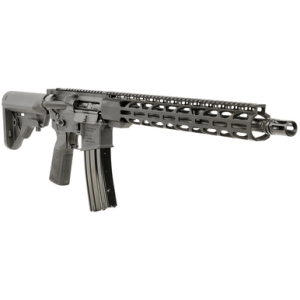
The 5.56 is the speed demon. A 55-grain bullet leaves the muzzle around 3,000 feet per second, shoots flat, and stays useful to roughly 500 yards. The .300 Blackout supersonic load pushes a heavier 110 to 125 grain bullet near 2,200 fps, which hits hard but drops faster and runs out of practical range around 200 to 300 yards.
If your shooting involves any distance, the 5.56 wins and it is not an argument. The Blackout was never meant to reach out. It was meant to deliver a heavy bullet efficiently up close, especially from a short barrel where the 5.56 gives away much of its velocity advantage anyway.
Barrel Length: Where .300 Blackout Actually Wins
This is the spec that decides the whole comparison, and it is the one most buyers skip. The 5.56 burns a lot of powder and wants a 16 to 20 inch barrel to reach its potential. Chop it to a 9 or 10 inch SBR or pistol and you bleed velocity and gain an enormous fireball, because a meaningful share of the powder is still burning after the bullet has left. You paid for performance the barrel is too short to collect.
The .300 Blackout was designed around exactly that problem. Its powder charge burns efficiently in a short tube, so it reaches close to full velocity from a 9 inch barrel and gains very little from a longer one. That is the entire reason the cartridge exists, and it is why it owns the SBR and AR pistol world.
So the honest way to frame the decision is not “which round is better” but “how long is your barrel”. Full-length carbine, take the 5.56. Short and especially suppressed, the Blackout gives you a compact rifle that is not quietly wasting most of its powder in the air in front of the muzzle.
Subsonic Loads, Suppressors and Hearing
This is the Blackout’s headline trick. It was engineered to run heavy subsonic bullets, around 200 to 220 grains at roughly 1,000 fps, that stay below the speed of sound. Pair that with a suppressor and you get genuinely quiet, hearing-safe shooting with reliable cycling. The 5.56 cannot do this, because it has no true subsonic load. Even suppressed, the bullet still breaks the sound barrier and you still get the crack.
It is worth being precise about what “quiet” means here, because the marketing is not. Federal noise regulation caps impulse exposure at 140 dB peak, and NIOSH measurements of real firearms at the shooter's ear put every gun they tested above that line, with rifle levels varying by as much as 20 dB from one gun to the next. A suppressor plus a subsonic load is the combination that gets a rifle close to that ceiling rather than far above it. It is still not silent, and it is still worth wearing hearing protection over.
Indoors that difference stops being a preference and becomes a medical one. An unsuppressed rifle fired in a hallway can do permanent hearing damage with a single shot. A suppressed subsonic Blackout is the only one of these two that gets you out of that.
Budget a little tuning for it. Cycling heavy subsonic loads reliably behind a can means an adjustable gas block and the right buffer weight, since a suppressor adds back pressure. The 5.56 is the more plug-and-play of the two, running standard gas systems and buffers with common loads. Once a suppressed Blackout is dialed in, though, it is one of the most pleasant rifles you can shoot.
Twist Rate: The Spec That Bites Blackout Buyers
The two cartridges want different barrel twist rates, and this is where a cheap barrel ruins a build. The heavy 200 to 220 grain subsonic bullets the Blackout is famous for need a fast twist, commonly 1:7 or 1:8, to stabilize. A slow-twist barrel cut for lighter supersonic bullets will keyhole them, and you will see it as sideways ovals in the paper rather than groups.
Most quality Blackout barrels ship with the right twist, but confirm it before you buy, especially on a budget barrel or a used upper where nobody can tell you what it is. The 5.56 is more forgiving across its narrower bullet-weight range, with 1:7 to 1:9 handling everything from 55 to 77 grains. Pick a barrel, feed it almost any factory load, and it works. That is one less thing to get wrong, and it is a real part of the 5.56’s appeal.
Recoil, Optics and Holdover
Both are mild. The 5.56 barely moves, with light flat recoil that lets you track the dot through fast strings. The Blackout pushes a bit more with supersonic loads because of the heavier bullet, and subsonic loads recoil even less. Neither will punish a new shooter.
Optics are where the Blackout adds a wrinkle. If you shoot both supersonic and subsonic through the same rifle, the trajectories are wildly different and your zero does not carry across. A 1,000 fps 220-grain bullet drops like a thrown rock compared to a 2,200 fps 125-grain one. Blackout shooters who run both keep a holdover card taped to the stock or use a reticle with enough stadia to work with. The 5.56 gives you one flat trajectory to learn and a zero that stays honest for a few hundred yards.
Home Defense
Both work, for different reasons. A 5.56 carbine with proper defensive ammo is light, low-recoil, high-capacity, and fragmenting loads actually over-penetrate interior walls less than many common handgun rounds. It is cheap enough to train with seriously, which matters more than most people admit.
The Blackout’s case is the suppressed subsonic setup: short, quiet, heavy-hitting, and survivable to fire indoors without wrecking your hearing. If you are building a dedicated home-defense gun and you are willing to buy a can, that is a genuine advantage the 5.56 has no answer to. If you want one do-everything defensive carbine on a budget, take the 5.56.
Hunting
The .300 Blackout is a fine close-range hog and deer round inside about 150 yards, where a heavy bullet does clean work and a short suppressed rifle is a pleasure in a blind. Night hog hunting is where it really earns its place, because the suppressed subsonic report does not scatter the whole sounder after the first shot.
The 5.56 is the better varmint and predator round, flatter and faster for coyotes and prairie dogs at distance. Check your state law before you plan around either one, because many states restrict .224-caliber rounds for deer-sized game on energy grounds and some set minimum calibers outright. Match the cartridge to the animal, the distance and the statute.
What About 7.62×39?
It comes up every time, because on paper it looks like the same idea for less money: a .30-caliber bullet, short-range performance, cheap surplus-adjacent ammunition. In an AR-15 it is a worse fit than either round on this page, and the reason is geometry rather than ballistics.
- It does not share the bolt. The 7.62×39 case head is larger than the 5.56 case head, so an AR-15 in that chambering needs its own bolt as well as its own barrel. The Blackout needs neither.
- The magazines fight you. That case has a pronounced taper, which is why AK magazines curve. Feeding it reliably from a straight AR-15 magazine has been a known problem for as long as people have tried it, and it means buying dedicated mags.
- There is no subsonic answer. It is a supersonic cartridge with no mainstream heavy subsonic load, so it gives up the one thing people buy a Blackout for.
- It is cheaper to shoot. This is the genuine advantage, and on a rifle built around it rather than converted to it, it is a real one.
So the honest ranking for an AR-15 is: 5.56 for almost everything, Blackout when you want short and quiet, and 7.62×39 when you would rather buy the rifle that was designed around it in the first place.
What They Cost to Shoot
It is not close, and the gap is the single biggest practical reason most people stay on 5.56. Across the retailers we track as I write this, brass-case 5.56 practice ammo from a trusted seller starts around 45 cents a round. Comparable brass-case .300 Blackout starts near 85 cents. Heavy subsonic loads sit higher again, around 90 cents and up. Steel-case narrows it, but even there the Blackout carries a premium.
Call it roughly double for practice ammo, and understand what that buys you in trigger time. A thousand rounds of 5.56 costs about what 500 rounds of Blackout does. The build costs lean the same way, since 5.56 is the most common AR chambering and barrels, uppers and complete rifles are everywhere at competitive prices. Our best AR-15 ammo guide covers the 5.56 loads worth buying. Both cards below pull live prices so you can check the current spread yourself.
Choose 5.56 NATO if…
You want one do-everything AR-15 round. Range work, distance, varmints, training volume and defense all sit in its lane. You shoot a lot or watch the budget, because cheap abundant ammo means more trigger time. You run a 16-inch carbine. For a standard AR-15 this is the default and the right call for most shooters. Worth knowing: 5.56 and .223 Remington are not identical, and the chamber marking decides what you can safely fire. We cover that in 5.56 vs .223.
Choose .300 Blackout if…
You run a suppressor and want quiet subsonic shooting. You build short, in an SBR or AR pistol where the 5.56 wastes powder it cannot use. You hunt hogs or deer up close, especially at night. If a compact, quiet, heavy-hitting rifle is the goal, this cartridge was built for exactly that and nothing else does the job as well. For a current purpose-built host, see the Smith & Wesson M&P15 AXE and its 1:7.5 twist barrel.
My Recommendation
Start with 5.56, and buy the Blackout second. That is not a hedge, it is the order that costs you least. A first AR-15 in 5.56 is cheaper to buy, far cheaper to feed, and does the widest range of jobs with no special considerations. You learn the platform on ammo you can afford to shoot in volume, which is the part that actually makes you better.
Add a .300 Blackout upper when a specific need shows up: a suppressor, a short-barreled build, close-range hunting. Because it is a barrel swap on the same lower, it is the natural second upper rather than the first rifle. Buying the specialty round first is a reliable way to spend more and shoot less. If you want the bigger-bore version of this conversation, our AR-15 vs AR-10 comparison covers it.
One last thing, because it is the only part of this that can hurt you: if you end up owning both, mark the magazines the day the second upper arrives. Not later. The two rounds must never share a bench.
.300 Blackout Ammo: Live Prices




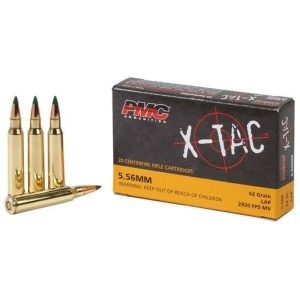
5.56 NATO Ammo: Live Prices



FAQ: .300 Blackout vs 5.56
Is .300 Blackout better than 5.56?
Only for specific jobs. .300 Blackout is better for suppressed shooting, short barrels and close-range hunting because of its subsonic loads and heavy bullet. For distance, cost, velocity and general use, 5.56 NATO is the better all-around AR-15 round.
Can a 5.56 AR-15 shoot .300 Blackout?
Not with a 5.56 barrel. The two share magazines and the bolt, but you must swap to a .300 Blackout barrel. Critically, a .300 Blackout round can chamber in a 5.56 barrel and cause a catastrophic failure, so never mix the ammo or magazines.
Does .300 Blackout use the same magazines as 5.56?
Yes. .300 Blackout was designed to feed from standard AR-15 5.56 magazines and run on the same bolt carrier group. Only the barrel changes between the two chamberings, which is why mixing ammo is so dangerous.
Is .300 Blackout good for home defense?
Yes, especially suppressed with subsonic ammo, which protects your hearing indoors. A 5.56 carbine with defensive ammo also works well and costs far less. Choose .300 Blackout if a quiet, short, suppressed gun is the goal.
What is the effective range of .300 Blackout vs 5.56?
Supersonic .300 Blackout is practical to about 200 to 300 yards, while 5.56 reaches roughly 500 yards and beyond with a good load. If distance matters, 5.56 is the clear winner.
Why is .300 Blackout so much more expensive than 5.56?
5.56 and .223 are produced in enormous military and commercial volume, making them very cheap. .300 Blackout is a lower-volume specialty round, and its heavy subsonic loads in particular cost two to four times as much per round.
What barrel twist rate does .300 Blackout need?
For the heavy subsonic loads the cartridge is known for, 200 to 220 grain bullets, you want a fast twist of 1:7 or 1:8. A slower twist cut for light supersonic bullets will not stabilize them and you will see keyholing, sideways ovals in the paper instead of round holes. Most quality Blackout barrels ship with the correct twist, but confirm it before buying a budget barrel or a used upper. The 5.56 is more forgiving, with 1:7 to 1:9 handling 55 through 77 grain bullets without fuss.
Is .300 Blackout worth it if I do not own a suppressor?
Sometimes. The supersonic loads run fine unsuppressed and still give you a heavy .30-caliber bullet from a short barrel, which is a real advantage for close-range hog hunting and compact builds. What you are giving up without a can is the subsonic quiet that the cartridge was built around, which is most of its argument. If you have no suppressor and no plan to get one, and your barrel is 16 inches, the 5.56 does the same jobs for roughly half the ammo cost.
3,979+ Gun & Ammo Deals
Updated daily from 200+ top retailers. Filter by category, caliber, action type, and price.
Related Guides