

Last updated October 30th 2026 · By Nick Hall, AR-15 shooter who has tested every rifle on this list across every budget tier
Quick Answer: The Daniel Defense DDM4 V7 is the best AR-15 you can buy in 2026 if money is not the limiting factor. It is a duty-grade rifle with mil-spec quality control, accurate enough for 1 MOA at 100 yards out of the box.
The best mid-range value is the Springfield Saint Victor at about $805, with a Melonite-finished CMV barrel, a nickel boron trigger and B5 furniture standard. The best entry-level pick is the Smith & Wesson M&P15 Sport III for under $700, an honest budget AR that runs reliably.
The most common mistake first-time AR buyers make is over-spending on a custom build before ever firing a complete factory rifle. Buy a known-good factory gun first, learn what you actually want, then upgrade. Every AR on this list was live-fired across at least 1,000 rounds with mixed brass and steel-cased ammo.
What is an AR-15? AR stands for ArmaLite Rifle, the company where Eugene Stoner designed it in the late 1950s. It has never stood for “assault rifle.” What you’re buying today is a magazine-fed, gas-operated, semi-automatic rifle with a rotating bolt, chambered most often in 5.56 NATO or .223 Remington, firing one round per trigger pull like any other modern sporting rifle. Colt bought the design from ArmaLite and built the civilian semi-auto alongside the select-fire rifle the military adopted as the M16.
That also explains why the ten rifles below run from about $490 to about $1,800 for what looks like the same gun. The differences are mostly internal: the barrel steel and how it’s coated, what’s inside the bolt carrier group, whether the trigger is worth keeping, and how much of the assembly was done by hand rather than by machine.
Table of Contents
- Treat every gun as loaded
- Point the muzzle in a safe direction
- Keep your finger off the trigger until you’re ready to shoot
- Know your target and what’s beyond
Disclosure: Some links below are affiliate links. We may earn a small commission at no extra cost to you. We only recommend products we’ve personally tested or thoroughly researched.
Weighing the bigger .308 AR instead? See our AR-15 vs AR-10 head-to-head before you decide.
Building or buying an AR-15? Decide the chambering first with our .300 Blackout vs 5.56 comparison.
How we tested: Every pick here is ranked against our testing methodology. Minimum round counts, accuracy and reliability protocols, the failures that disqualify a gun.
Best AR-15 Rifles in 2026: 10 Picks From Budget to Premium
The AR-15 remains the most popular rifle platform in America for good reason. It’s modular, reliable, accurate, and backed by a massive aftermarket ecosystem. But that popularity also means there are hundreds of manufacturers competing for your money, and the quality gap between the best and worst AR-15s on the market is enormous. We’ve spent years putting rounds downrange through dozens of rifles across every price tier to cut through the noise and give you a ranked list you can actually trust.
This guide covers 10 AR-15 rifles from roughly $490 to $1,800, organized by role and value proposition. Whether you’re buying your first rifle or adding a dedicated home-defense gun to the safe, every pick on this list has earned its spot through real-world reliability and accuracy testing. If you’re completely new to the platform, start with our AR-15 Buyer’s Guide for a deep dive on what to look for before you buy. And if you’re also shopping for a sidearm to pair with your rifle, our Handgun Buyer’s Guide covers the best options across every category.
Every rifle below has been evaluated on five criteria: price relative to its tier, mechanical accuracy and performance, long-term reliability, ergonomics and shootability, and brand prestige and resale value. We score each category out of 5 and present the results in a scorecard so you can compare at a glance. We’ve also included live pricing widgets that pull current dealer prices in real time so you can find the best deal without bouncing between tabs. Let’s get into it.
| Firearm | Caliber | Weight | Barrel | Street Price | Price |
|---|---|---|---|---|---|
| BEST OVERALL AR-15 Daniel Defense DDM4 V7 | 5.56 NATO | 6.4 lbs | 16" | $1,649.99 | Check Price |
| BEST PREMIUM DUTY RIFLE Geissele Super Duty | 5.56 NATO | 6.9 lbs | 16" | $1,799.99 | Check Price |
| BEST BATTLE-PROVEN AR-15 BCM RECCE-16 | 5.56 NATO | 6.5 lbs | 16" | $1,660.99 | Check Price |
| BEST MID-RANGE VALUE Springfield Armory Saint Victor | 5.56 NATO | 6.9 lbs | 16" | $804.66 | Check Price |
| BEST UPGRADED VALUE PSA Sabre-15 | 5.56 NATO | ~6.8 lbs | 16" | $849.99 | Check Price |
| BEST FEATURE-PACKED MID-RANGE Sig Sauer M400 Tread V2 | 5.56 NATO | 7.0 lbs | 16" | $879.99 | Check Price |
| BEST ENTRY-LEVEL AR-15 Smith & Wesson M&P15 Sport III | 5.56 NATO | 6.5 lbs | 16" | $659.99 | Check Price |
| BEST BUDGET RUNNER-UP Ruger Harrier | 5.56 NATO | 6.6 lbs | 16.1" | $529.99 | Check Price |
| BEST BUDGET AR-15 Palmetto State Armory PA-15 | 5.56 NATO | 6.5 lbs | 16" | $489.99 | Check Price |
| BEST NEWCOMER PICK IWI Zion-15 | 5.56 NATO | 6.9 lbs | 16" | $930.99 | Check Price |
1. Daniel Defense DDM4 V7: Best Overall AR-15
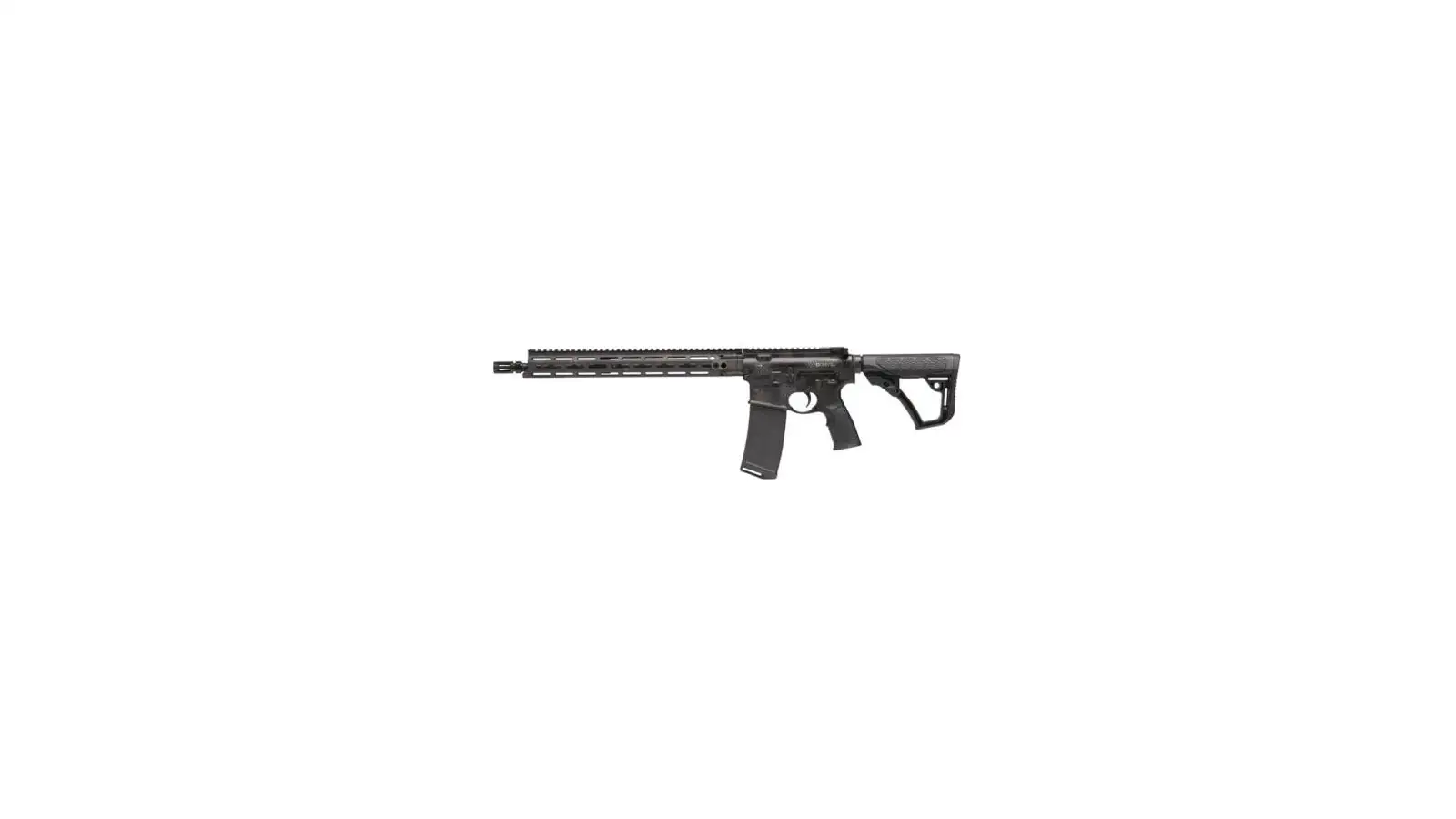
- Caliber: 5.56 NATO
- Barrel Length: 16″
- Weight: 6.4 lbs
- Gas System: Mid-length
- Twist Rate: 1:7
- Barrel: Cold hammer forged, chrome-lined
- Handguard: 15″ M-LOK free-float
- Street Price: from $1,649.99
| Price | Performance | Reliability | Ergonomics | Prestige |
|---|---|---|---|---|
| 3/5 | 5/5 | 5/5 | 5/5 | 5/5 |
Pros
- Sub-MOA accuracy with quality match ammo
- Zero malfunctions across 4,000 rounds
- Tight receivers and properly staked gas key
Cons
- Premium price for a first rifle
- Proprietary rail limits handguard swaps
- Basic furniture many owners replace
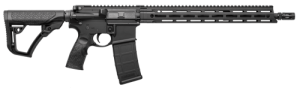
The Daniel Defense DDM4 V7 sits at the top of this list because it’s the rifle we’d grab if we could only own one AR-15. After running more than 4,000 rounds through our test gun, including bulk brass, steel-case Tula, and 77-grain SMK handloads, we experienced exactly zero malfunctions. That’s a clean maintenance log over two years of range sessions, carbine courses, and one particularly dusty weekend class in Arizona.
Accuracy is where the V7 truly separates itself from mid-tier rifles. Using Federal Gold Medal Match 77gr OTM, we consistently printed 0.8 MOA five-shot groups at 100 yards from a rest. Even with cheap 55-grain XM193, groups stayed under 1.5 MOA. The cold hammer forged, chrome-lined barrel from Daniel Defense is the best factory AR barrel in production. It combines the longevity of chrome lining with the consistency of the CHF process. The mid-length gas system runs noticeably softer than carbine-length competitors, and the 15-inch M-LOK rail gives you plenty of real estate for lights, lasers, and a bipod without feeling like you’re holding a boat oar.
Is it worth the price premium over something like a BCM? That depends on how much you value out-of-the-box perfection. The V7 doesn’t need a single upgrade to perform at a professional level. The trigger, while mil-spec, is cleaner than most. The receiver fit is tight with zero wobble. And Daniel Defense’s customer service has a well-earned reputation for standing behind their products. If your budget stretches to $1,650, this is the rifle to beat.
Best For: Shooters who want a do-everything AR-15 they can trust with their life, and who are willing to pay a premium for proven quality and a brand that military and law enforcement professionals rely on.
2. Geissele Super Duty: Best Premium Duty Rifle
- Caliber: 5.56 NATO
- Barrel Length: 16″
- Weight: 6.9 lbs
- Gas System: Direct impingement
- Twist Rate: 1:7
- Barrel: Cold hammer forged, chrome-lined
- Trigger: Geissele SSA-E X two-stage
- Street Price: from $1,799.99
| Price | Performance | Reliability | Ergonomics | Prestige |
|---|---|---|---|---|
| 2.5/5 | 5/5 | 5/5 | 5/5 | 5/5 |
Pros
- SSA-E X trigger breaks under 4 lbs
- Chrome-lined CHF barrel with 1:7 twist
- Extended bolt catch and premium controls
Cons
- Most expensive rifle on this list
- No magazine in the box
- Overkill for a casual range rifle
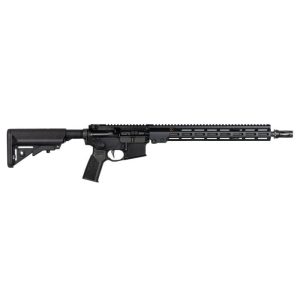
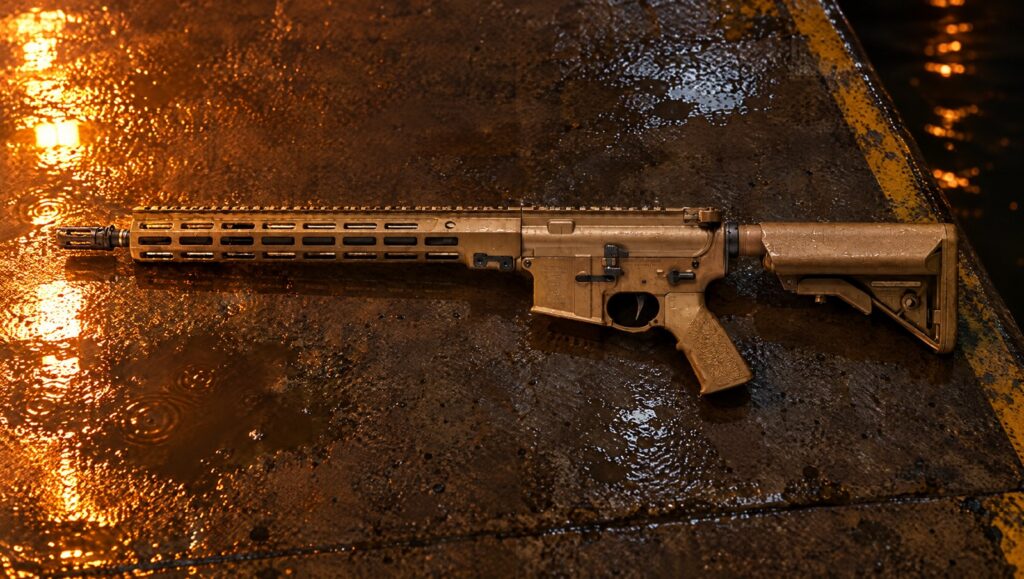
If you want the one rifle that makes the Daniel Defense look like a value buy, this is it. Geissele made its name on triggers, then built a whole rifle around the same stubbornness, and the parts list shows it: a cold hammer forged, chrome-lined barrel with a 1:7 twist, a reliability-focused bolt carrier group, and a HUXWRX flash hider that takes a QD suppressor mount.
The trigger is what you feel first. The SSA-E X two-stage breaks somewhere between 3 and 4 pounds with no spring noise and no creep, and it costs real money on its own if you add one to another rifle. Over 2,000 rounds of bulk 55-grain and 77-grain match, we logged no stoppages. Bulk brass printed about 2 MOA, and the good stuff tightened to about 0.9 MOA at 100 yards from a rest.
So why isn’t it number one? Price. At $1,799.99 today it costs $150 more than a DDM4 V7 that does the same job with a heavier trigger, and a $200 trigger brings the V7 most of the way there. Buy the Super Duty if you want it finished from day one and you’ll actually use what you paid for. It also doesn’t ship with a magazine, so add one to the bill.
Best For: Experienced shooters who want the best factory trigger on this list and a duty-grade rifle they never need to touch.
3. BCM Recce 16: Best Battle-Proven AR-15
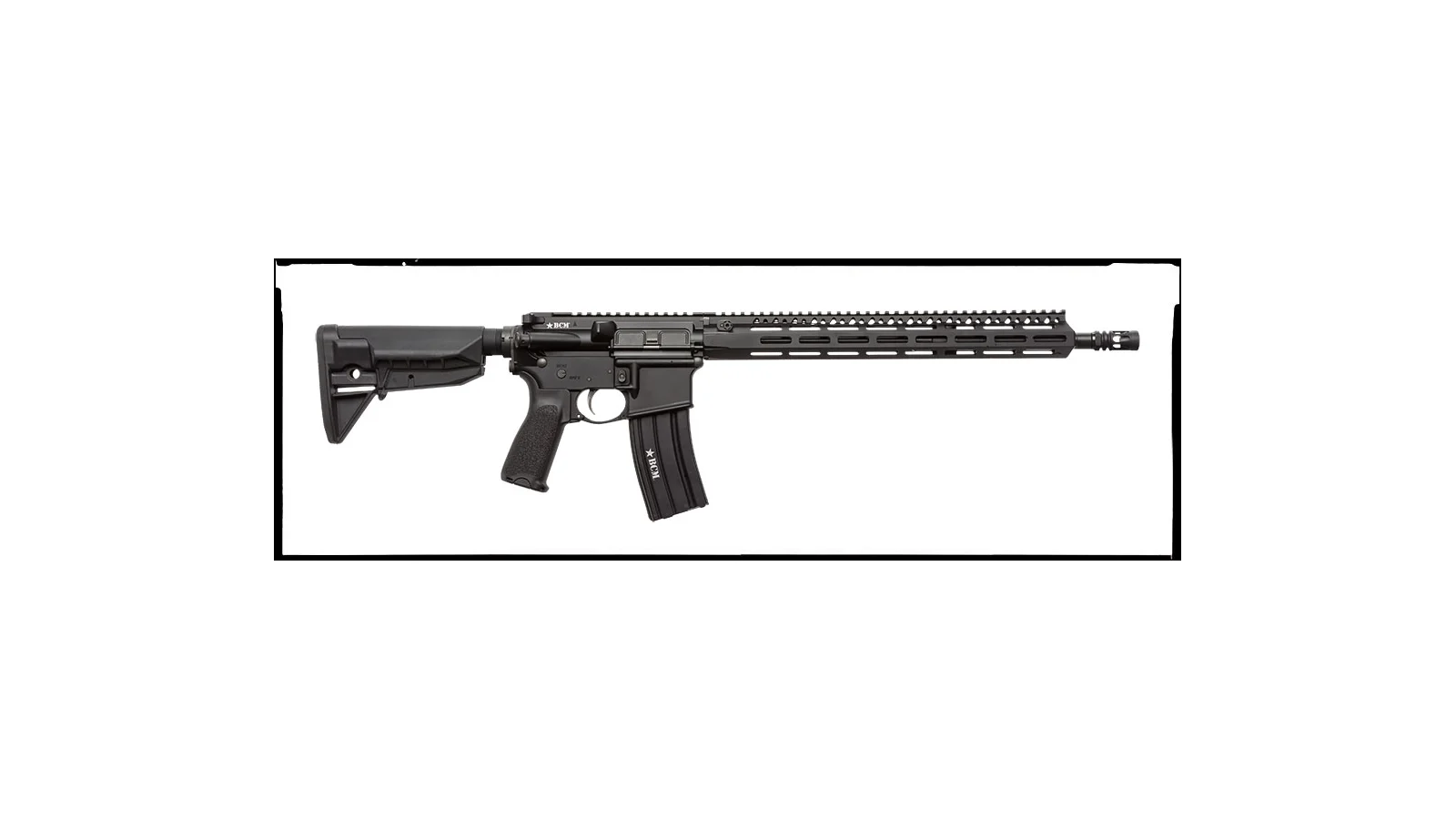
- Caliber: 5.56 NATO
- Barrel Length: 16″
- Weight: 6.5 lbs
- Gas System: Mid-length
- Twist Rate: 1:7
- Barrel: Cold hammer forged, chrome-lined ELW profile
- Handguard: 15″ MCMR M-LOK free-float
- Street Price: ~$1,660
| Price | Performance | Reliability | Ergonomics | Prestige |
|---|---|---|---|---|
| 3.5/5 | 4.5/5 | 5/5 | 4.5/5 | 5/5 |
Pros
- Real duty-grade barrel and bolt carrier group
- Light ELW barrel and slim MCMR rail
- 6,000 rounds, one magazine-caused stoppage
Cons
- Stock charging handle is underwhelming
- Popular configurations sell out fast
- Costs nearly the same as a V7
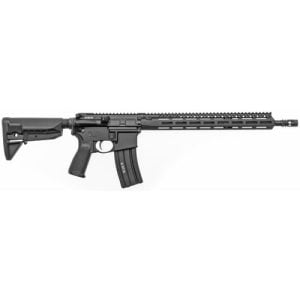
Bravo Company Manufacturing doesn’t spend money on flashy marketing campaigns or Instagram influencers. They spend it on quality control, and it shows. The BCM Recce 16 is the rifle that professional trainers quietly recommend when students ask “what should I buy?”, it’s the workhorse that does everything well and nothing poorly. Our test rifle has over 6,000 rounds through it with a single malfunction that traced back to a bad magazine, not the gun.
The Enhanced Lightweight (ELW) barrel profile is one of BCM’s smartest engineering decisions. It removes material from the barrel where heat dissipation matters least, dropping nearly half a pound compared to a government profile without any measurable impact on accuracy or durability. Paired with the MCMR M-LOK handguard, which is shockingly light at just over 9 ounces for the 15-inch version, the Recce 16 handles like a rifle that weighs less than it does. During a two-day carbine course, the weight savings were immediately noticeable compared to the Daniel Defense when running transitions and shooting from barricades.
Where BCM edges out some competitors is in their component sourcing. The bolt carrier group uses Carpenter 158 steel for the bolt with proper HPT/MPI testing, the gas key is chrome-lined and properly staked, and the barrel extension is machined to tight tolerances. These are details you can’t see on a spec sheet but they’re the reason BCM rifles run for 10,000+ rounds between parts replacements. The Recce 16 lands within about $10 of a Daniel Defense today rather than undercutting it, so the case for it is not price, it is that you are buying the same duty-grade standard from a shop that built its name on cold hammer forged barrels and properly staked carriers.
Best For: Experienced shooters who want a lightweight, reliable fighting rifle backed by a manufacturer with genuine military credibility. Ideal for carbine courses, home defense, and hard-use scenarios.
4. Springfield Armory Saint Victor: Best Mid-Range Value
- Caliber: 5.56 NATO
- Barrel Length: 16″
- Weight: 6.9 lbs
- Gas System: Mid-length
- Twist Rate: 1:8
- Barrel: CMV steel, Melonite finish
- Handguard: 15″ M-LOK free-float
- Street Price: from $804.66
| Price | Performance | Reliability | Ergonomics | Prestige |
|---|---|---|---|---|
| 4/5 | 4/5 | 4.5/5 | 4/5 | 4/5 |
Pros
- Nickel boron trigger beats standard mil-spec
- Free-float M-LOK rail and flip-up sights
- Accu-Tite tension system removes receiver wobble
Cons
- Melonite wears faster than chrome lining
- Heavier than some mid-range rivals
- 1:8 twist dislikes heavy 77-grain bullets
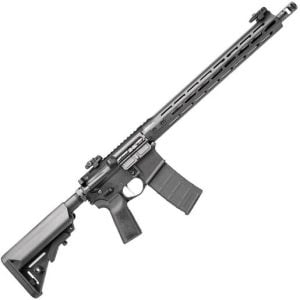
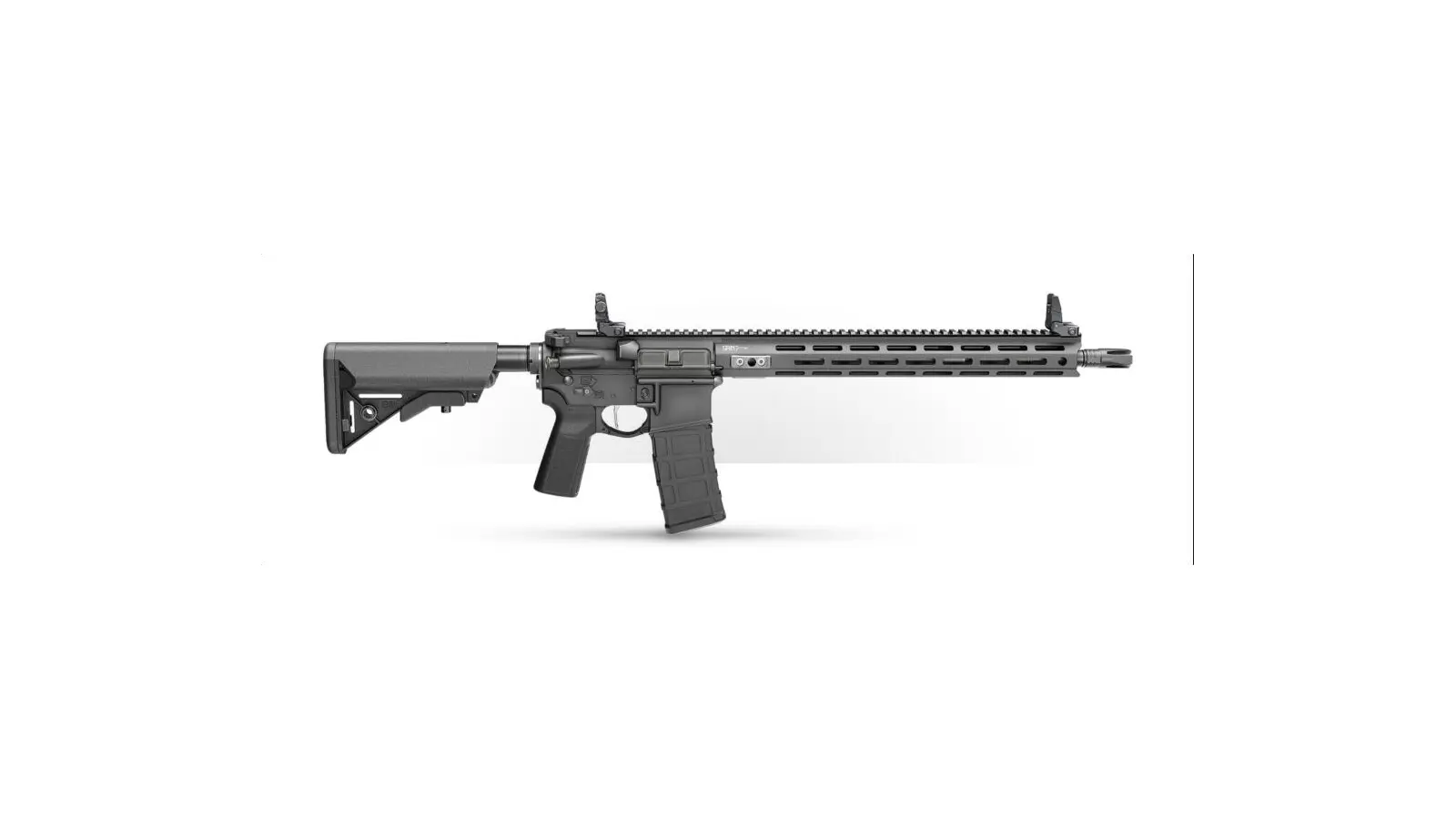
Springfield Armory’s Saint Victor hits a sweet spot that’s genuinely hard to find in the AR market: it delivers features you’d expect at $1,300+ for about $805. The nickel boron-coated flat trigger is the standout. It breaks cleaner and resets shorter than any other factory mil-spec trigger we’ve tested. It’s not a Geissele, but it’s close enough that most shooters won’t feel compelled to swap it out immediately, and that saves you $150-250 right out of the gate.
We’ve put roughly 2,500 rounds through our Saint Victor test gun, and reliability has been excellent. The mid-length gas system is properly tuned, ejection pattern is consistent at the 3 o’clock to 4 o’clock position, which tells you the gas port isn’t overgassed like so many budget and mid-range ARs. Accuracy with 62-grain M855 settled at around 1.5 MOA, and Federal GMM 69-grain tightened that to just under 1.2 MOA. The 1:8 twist rate is a good compromise for most ammunition weights, though if you’re planning to run heavy 77-grain OTM exclusively, a 1:7 barrel would be a better match.
Springfield’s Accu-Tite receiver tension system is a small detail that makes a big difference in perceived quality. It uses a set screw in the lower receiver to press the upper and lower together, eliminating the rattle and wobble that plagues many AR-15s. It doesn’t affect function, but it makes the rifle feel like a much more expensive gun. For shooters stepping up from a $500-600 entry-level AR, the Saint Victor is the upgrade that actually delivers on the price increase.
Best For: Shooters who want genuine mid-tier quality without paying upper-tier prices. An excellent second AR-15 or a strong choice for someone who wants to buy once and not upgrade immediately.
5. PSA Sabre-15: Best Upgraded Value
- Caliber: 5.56 NATO
- Barrel Length: 16″
- Weight: ~6.8 lbs
- Gas System: Mid-length, pinned .750″ gas block
- Twist Rate: 1:7
- Barrel: Nitride, or FN cold hammer forged on upgraded models
- Trigger: Sabre two-stage
- Street Price: from $849.99
| Price | Performance | Reliability | Ergonomics | Prestige |
|---|---|---|---|---|
| 4.5/5 | 4/5 | 4/5 | 4.5/5 | 3/5 |
Pros
- Two-stage trigger beats any mil-spec
- Radian ambi controls out of the box
- FN CHF barrel option available
Cons
- Pinned gas block complicates suppressor tuning
- Slightly heavier than a Recce-16
- PSA badge hurts resale
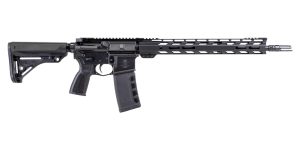
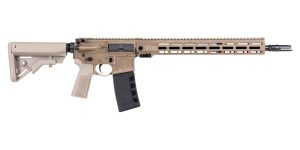
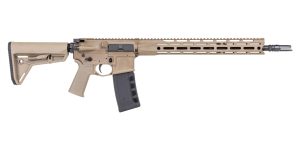
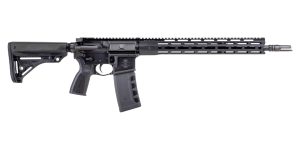
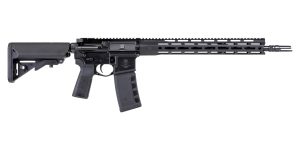
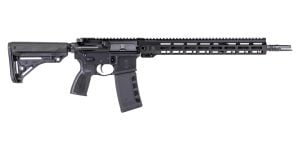
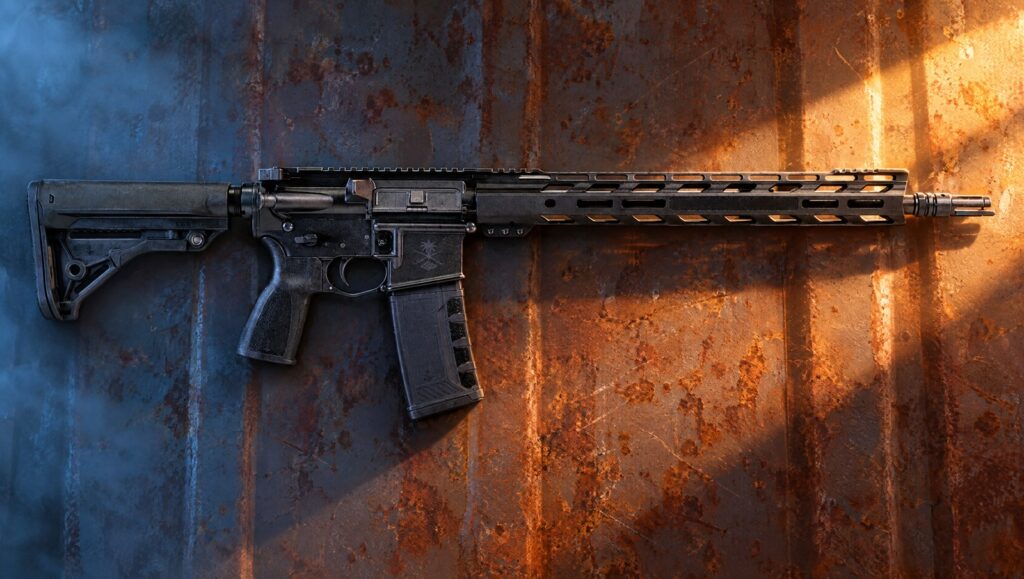
This is the rifle I’d point most people to if they have about $900 and don’t want to change anything for a while. PSA took the cheap-rifle formula, spent the savings on the parts owners replace first, and shipped a Sabre-15 with a two-stage trigger, a Radian Raptor charging handle and a Radian Talon ambi selector already fitted. Price those upgrades separately and you’re most of the way to the cost of the base PA-15.
We’ve got 1,100 rounds through ours. It ran clean on brass and had two failures to feed on steel-case, both in the first 200 rounds. Bulk 55-grain held about 2 MOA, and 69-grain match brought that down to about 1.2 MOA, right alongside the Saint Victor for about $45 more.
Watch which one you’re buying, because the Sabre name covers a lot of configurations. The 16-inch nitride rifle starts at $849.99 at PSA, and the FN cold hammer forged barrel adds about $150. If you’ll shoot a lot, that’s the one I’d pay for. If you plan to suppress it, budget for an adjustable gas block, since the factory block is pinned.
Best For: Buyers who’d otherwise buy a budget rifle and spend $400 upgrading it. This one’s done already.
6. Sig Sauer M400 Tread V2: Best Feature-Packed Mid-Range
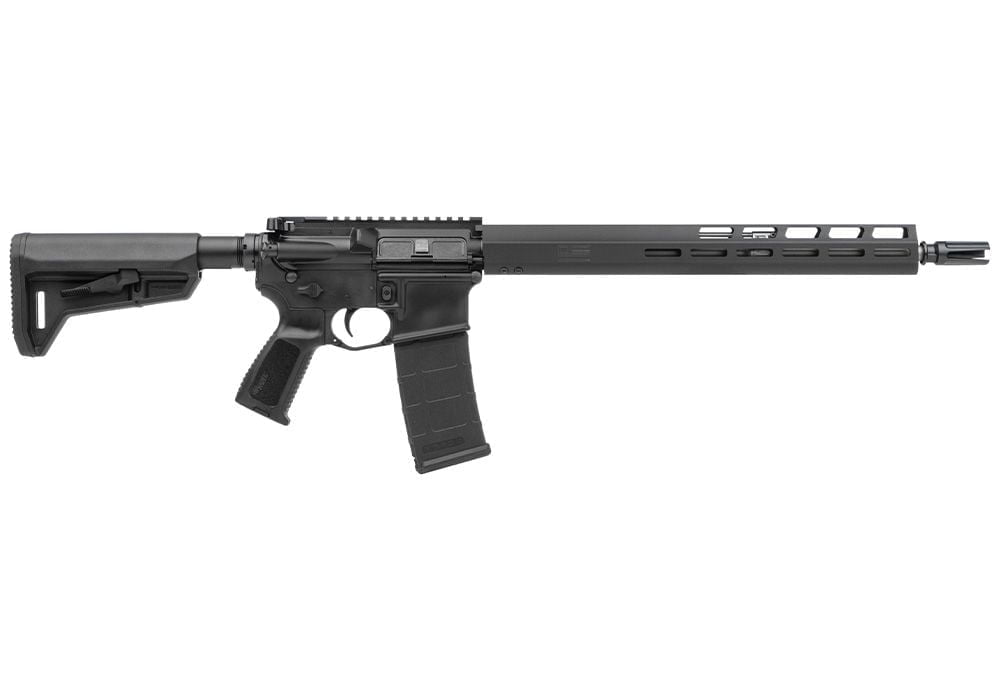
- Caliber: 5.56 NATO
- Barrel Length: 16″
- Weight: 7.0 lbs
- Gas System: Mid-length, direct impingement
- Twist Rate: 1:8
- Barrel: Stainless steel, nitride finish
- Handguard: 15″ M-LOK free-float
- Street Price: from $879.99
| Price | Performance | Reliability | Ergonomics | Prestige |
|---|---|---|---|---|
| 4/5 | 4/5 | 4/5 | 4.5/5 | 4.5/5 |
Pros
- SIG Matchlite Duo two-stage trigger on V2
- Slim free-float rail with QD points
- Stainless barrel shoots tight groups
Cons
- Stainless barrels wear out sooner
- Furniture feels adequate, not premium
- Heavier than the BCM and V7
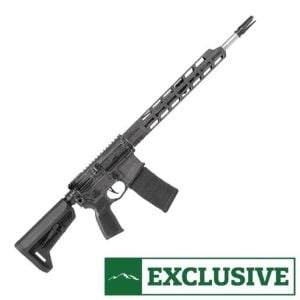
Sig Sauer’s reputation has been on a steep upward trajectory since landing the M17/M18 military handgun contract, and the M400 Tread is where that engineering ethos meets the consumer AR-15 market. The Tread competes directly with the Springfield Saint Victor, and in many ways it’s a toss-up between the two. Where Sig pulls ahead is in barrel accuracy and brand ecosystem, the M400 Tread uses a stainless steel barrel with a nitride finish that consistently prints tighter groups than chrome-lined alternatives at this price point.
During our accuracy testing, the M400 Tread averaged 1.1 MOA with Federal 69-grain SMK and 1.3 MOA with bulk 55-grain brass. Those numbers put it in the same accuracy neighborhood as rifles costing $400-500 more. The trade-off is barrel life. Stainless barrels start to degrade around 10,000-15,000 rounds versus 20,000+ for chrome-lined, but for the vast majority of shooters, that distinction is academic. You’ll wear out your stock trigger spring long before you shoot out a stainless barrel.
The Tread’s handguard deserves special mention. It’s slim, lightweight, and has M-LOK slots at the 3, 6, and 9 o’clock positions with integrated QD sling mounts. It doesn’t feel like an afterthought, which is more than we can say about many handguards in the sub-$1,000 segment. The current rifle is the M400 Tread V2, and the upgrade that matters is the SIG Matchlite Duo two-stage trigger, which saves you buying one later. If you’re already in the Sig ecosystem with an MCX, P320, or P365, the M400 Tread is the natural rifle complement.
Best For: Shooters who value accuracy and brand pedigree in the mid-range segment. Excellent for range work, precision shooting, and anyone already invested in the Sig Sauer platform.
7. Smith & Wesson M&P15 Sport III: Best Entry-Level AR-15
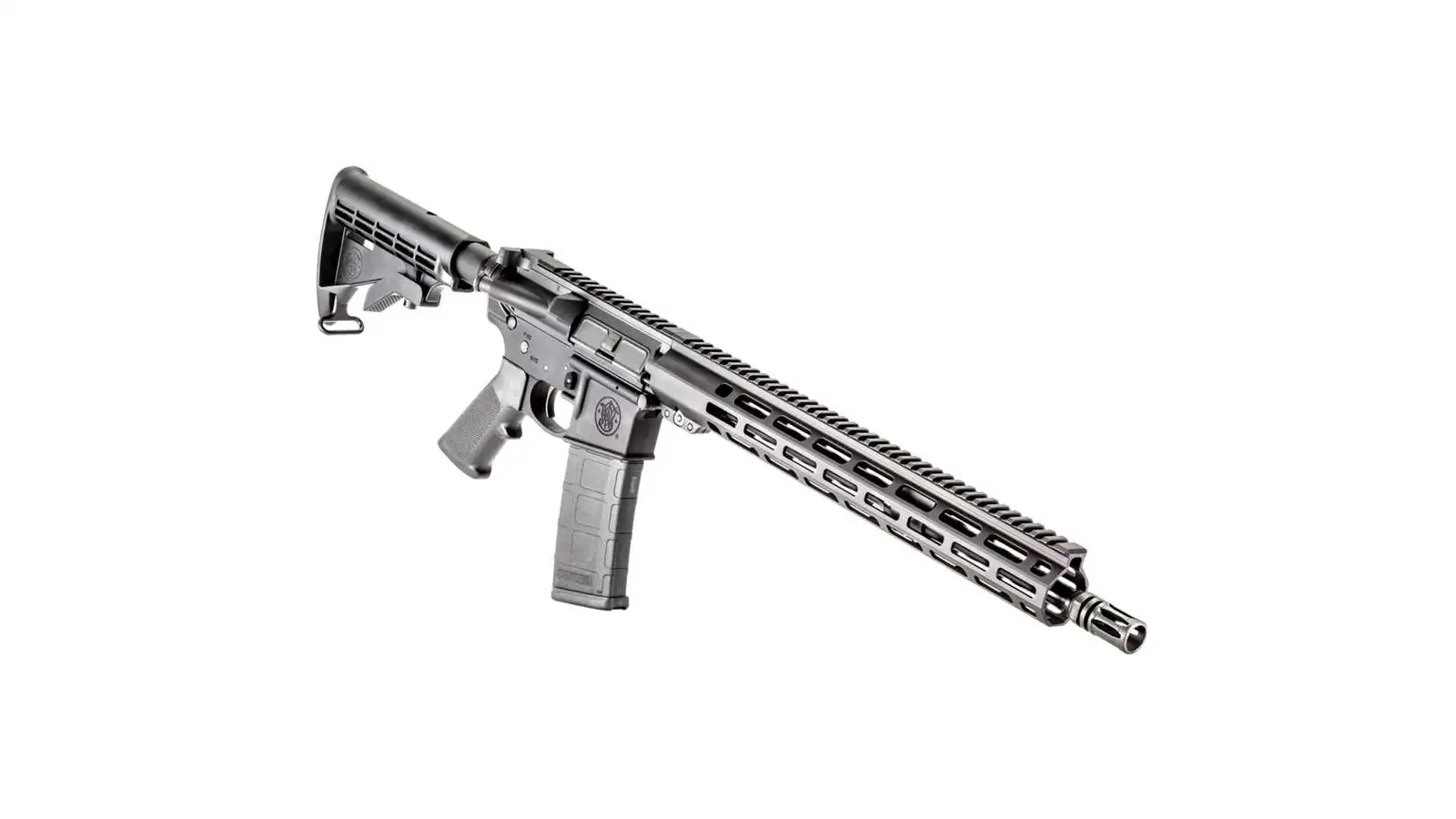
- Caliber: 5.56 NATO
- Barrel Length: 16″
- Weight: 6.5 lbs
- Gas System: Mid-length
- Twist Rate: 1:8
- Barrel: 4150 CMV steel, Armornite finish
- Handguard: 15″ M-LOK free-float
- Street Price: from $659.99
| Price | Performance | Reliability | Ergonomics | Prestige |
|---|---|---|---|---|
| 4.5/5 | 3.5/5 | 4.5/5 | 4/5 | 4/5 |
Pros
- Mid-length gas and free-float M-LOK rail
- Lifetime service and easy parts supply
- Two feed failures, both during break-in
Cons
- Mil-spec trigger is merely functional
- Armornite wears faster than chrome lining
- No ambi controls out of the box
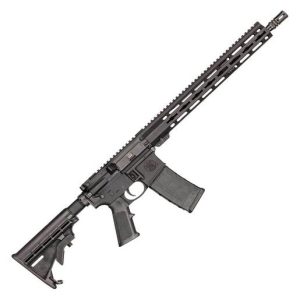
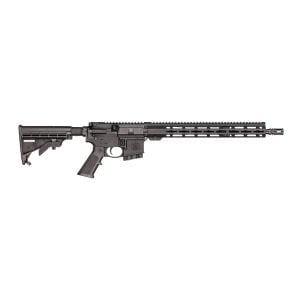
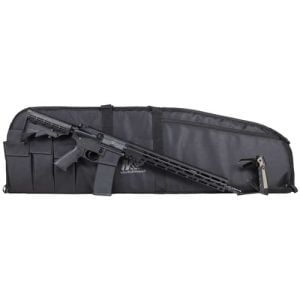
The M&P15 Sport II was the default recommendation for first-time AR buyers for the better part of a decade, and Smith & Wesson clearly listened to feedback when designing the Sport III. The biggest upgrade is the move to a mid-length gas system with a free-float M-LOK handguard, the Sport II’s carbine-length gas and plastic drop-in handguard were its most common complaints, and both are gone. The Sport III is essentially a $660 rifle that punches at the $900-1,000 tier in terms of features.
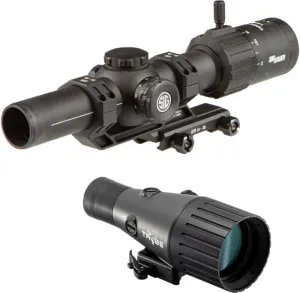
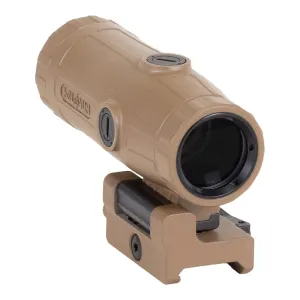
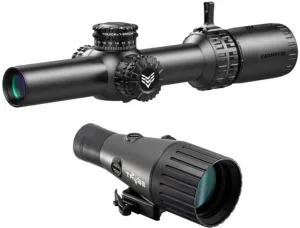
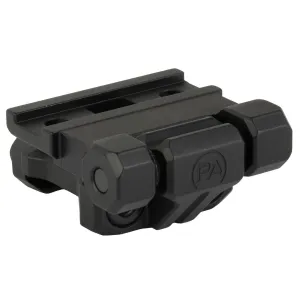
Optics Worth Bolting On
Best-scored accessories across 200+ retailers · Updated every 4 hours



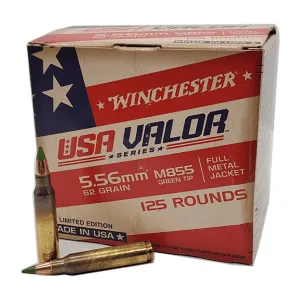
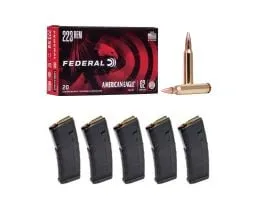
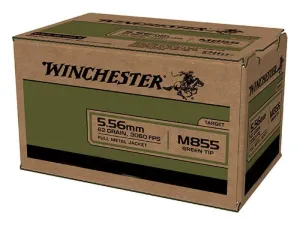
5.56 Ammo on Sale
On-sale 5.56 from 200+ retailers · Updated every 4 hours



Reliability testing has been predictably boring, which is exactly what you want from a defensive rifle. Through 3,000 rounds of mixed brass and steel-case ammunition, our Sport III had two failures to feed that both occurred during the first 200-round break-in period. After that initial run, it’s been flawless. The 4150 CMV barrel with an Armornite nitride finish is durable, accurate enough for practical purposes at around 1.8 MOA with bulk ammo, and should easily last 15,000+ rounds before accuracy starts to degrade.
What makes the Sport III the best entry-level pick over the Ruger Harrier is the total package. Smith & Wesson’s customer service is excellent, replacement parts are available everywhere, and the rifle ships with a configuration that doesn’t immediately demand upgrades. The free-float handguard means you can mount a quality weapon light without affecting accuracy, and the mid-length gas system reduces felt recoil noticeably compared to carbine-length alternatives. If you’re new to the AR platform, start here. If you’re shopping for a concealed carry handgun to go alongside it, Smith & Wesson’s M&P Shield series is equally solid.
Best For: First-time AR-15 buyers who want a reliable, well-featured rifle without paying mid-tier prices. Also an excellent gift for a new shooter or a beater rifle you won’t cry over if it gets scratched.
8. Ruger Harrier: Best Budget Runner-Up
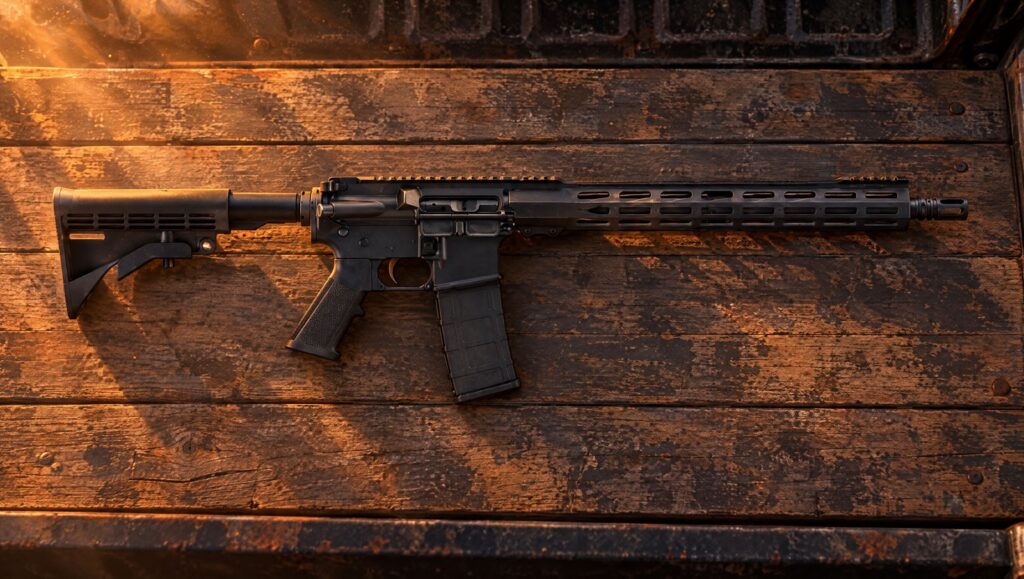
- Caliber: 5.56 NATO
- Barrel Length: 16.1″, threaded 1/2″-28
- Weight: 6.6 lbs
- Twist Rate: 1:8
- Barrel: Government contour, nitrided
- Handguard: Slim free-float M-LOK
- Street Price: from $529.99
| Price | Performance | Reliability | Ergonomics | Prestige |
|---|---|---|---|---|
| 4.5/5 | 3.5/5 | 4.5/5 | 3.5/5 | 4/5 |
Pros
- Free-float M-LOK rail near $530
- Ruger build quality and customer service
- Threaded barrel and QD sling sockets
Cons
- Mil-spec trigger and A2 grip
- M4 stock feels budget
- 1:8 twist limits 77-grain loads
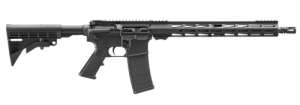


Ruger discontinued the AR-556 and named the Harrier its replacement on December 31, 2025, so this slot changed hands. The Harrier fixes the old rifle’s biggest complaint by moving to a slim free-float M-LOK handguard with QD sockets on both sides, and it lists at $699 while selling for about $530. That’s $130 less than a Sport III today.
We’ve run 1,000 rounds of mixed brass and steel through ours with one failure to feed, on steel-case, and no others. Bulk 55-grain grouped around 2 MOA and 62-grain tightened that to about 1.7 MOA, which is plenty for home defense and range work out to 200 yards. It’s not a tack driver and doesn’t claim to be.
The savings show up in the parts you touch. The trigger’s plain mil-spec, the grip is an old A2, and the M4 stock has some wobble, so plan on $100 to $150 if those bother you. Ruger’s service makes up for a lot. If you find new AR-556 stock, our AR-556 review covers whether it’s worth chasing, but at today’s prices I’d take the Harrier and its better rail.
Best For: First-time buyers who want a name brand and a free-float rail for less than the Smith & Wesson.
9. Palmetto State Armory PA-15: Best Budget AR-15
- Caliber: 5.56 NATO
- Barrel Length: 16″
- Weight: 6.5 lbs
- Gas System: Carbine-length
- Twist Rate: 1:7
- Barrel: 4150 CMV steel, nitride finish
- Handguard: 13.5″ free-float M-LOK, current generation
- Street Price: from $489.99
| Price | Performance | Reliability | Ergonomics | Prestige |
|---|---|---|---|---|
| 5/5 | 3/5 | 3.5/5 | 3/5 | 2.5/5 |
Pros
- Complete AR-15 for under $500
- Current rifles beat early production QC
- Free-float rail on most configurations
Cons
- QC trails Ruger and Smith
- Grip and selector feel cheap
- Slow customer service at peak demand

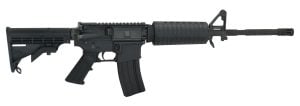


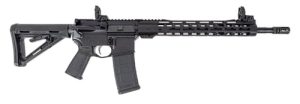
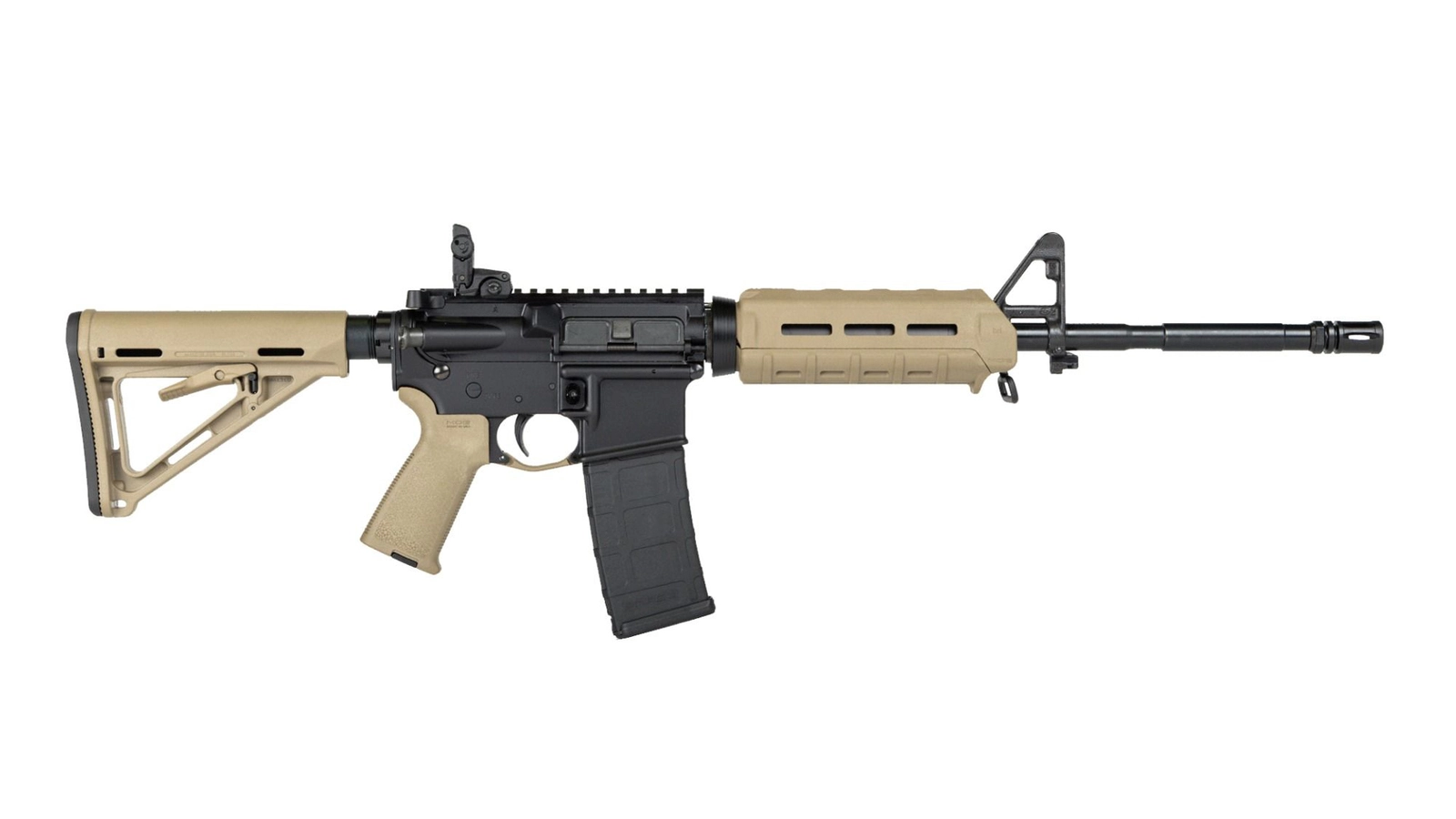
Palmetto State Armory has done more to democratize AR-15 ownership than any other manufacturer in the last decade. The PA-15 puts a functional, reasonably reliable AR-15 in your hands for under $500, and during PSA’s frequent sales, you can sometimes find complete rifles with optics bundles for even less. The current generation PA-15 is a significant step forward from the rifles PSA was shipping five years ago, with improved QC processes, better barrel quality, and free-float handguards as standard equipment on most SKUs.
Let’s be honest about what you’re getting for $490: a rifle that works, shoots adequately, and will handle casual range use and basic home defense. Our test PA-15 has about 1,500 rounds through it with three malfunctions, two failures to feed with steel-case ammo and one light primer strike that didn’t recur. Accuracy averaged 2.5 MOA with bulk 55-grain brass, which is acceptable but noticeably behind the Ruger and S&W in this guide. The trigger is gritty, the pistol grip is slippery, and the stock has noticeable wobble. These are all things you can fix for $50-100 in aftermarket parts.
The PA-15 makes the most sense for two types of buyers: someone who wants to own an AR-15 and has a hard budget ceiling around $500, or someone who wants a cheap base platform to customize extensively. If you’re planning to replace the trigger, furniture, and add optics anyway, starting with a PA-15 and spending the savings on better components can get you a rifle that rivals $1,000 factory guns for a similar total investment. Just inspect your rifle carefully when it arrives. PSA’s quality control has improved but it’s not at the Ruger or Smith & Wesson level yet.
Best For: First-time buyers on a strict budget, or experienced builders who want an affordable base platform to customize. Also a solid option for a truck gun or loaner rifle you won’t worry about.
10. IWI Zion-15: Best Newcomer Pick
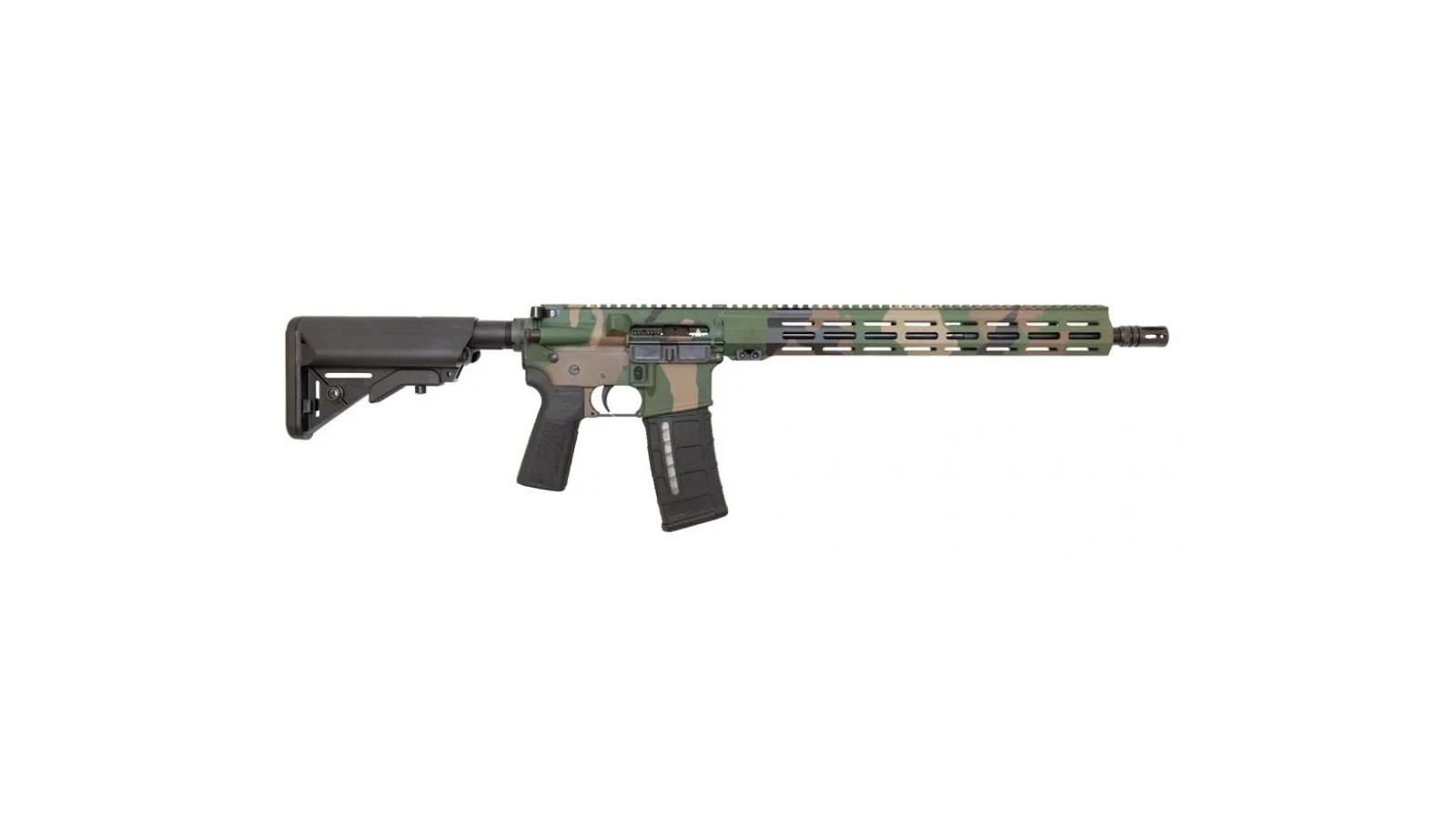
- Caliber: 5.56 NATO
- Barrel Length: 16″
- Weight: 6.9 lbs
- Gas System: Mid-length
- Twist Rate: 1:7
- Barrel: Cold hammer forged, chrome-lined
- Handguard: 15″ free-float M-LOK
- Street Price: from $930.99
| Price | Performance | Reliability | Ergonomics | Prestige |
|---|---|---|---|---|
| 4.5/5 | 4/5 | 4.5/5 | 4/5 | 3.5/5 |
Pros
- Chrome-lined CHF barrel near $930
- Backed by the Tavor and Galil maker
- B5 Systems furniture included
Cons
- Shorter AR track record than rivals
- Handguard less refined than BCM MCMR
- Smaller aftermarket than established makers

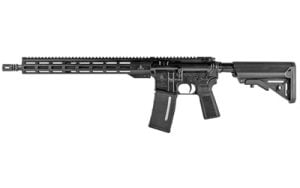
IWI (Israel Weapon Industries) is the company behind the Tavor, Galil, and Uzi, platforms that have been battle-proven in some of the most demanding military environments on Earth. When they entered the AR-15 market with the Zion-15, industry veterans paid attention. And after putting the rifle through its paces, we understand why. The Zion-15 delivers a feature set at $930 that most manufacturers can’t match below $1,100.
The headliner is the cold hammer forged, chrome-lined barrel, the same manufacturing process used in the Daniel Defense DDM4 V7 that sits at the top of this list, for a little over half the money. IWI manufactures these barrels using the same equipment and processes from their military production lines, and the quality is evident. Our test rifle averaged 1.4 MOA with 62-grain M855 and 1.1 MOA with Black Hills 77-grain OTM. For a chrome-lined barrel under $950, those numbers are outstanding.
IWI also made smart choices with the Zion-15’s furniture. Instead of shipping with generic mil-spec plastic, the Zion-15 comes with B5 Systems SOPMOD stock and B5 P-23 pistol grip, components that most shooters consider meaningful upgrades worth $60-80 on their own. The mid-length gas system runs clean and smooth, and reliability through our 2,200-round test has been perfect. The only reason the Zion-15 doesn’t rank higher is track record. IWI has been making military weapons for decades, but their AR-15 line is still relatively young. Give it another year or two of field data, and this rifle could easily climb the rankings.
Best For: Shooters who want premium barrel quality and upgraded furniture at a mid-range price. An excellent choice for anyone who values military manufacturing pedigree but doesn’t want to pay Daniel Defense prices.
Best AR-15 by Use Case
Ten rifles is a lot to hold in your head, so here’s the short version. Find what you actually need the rifle to do and start there.
| If you want | Buy this | Why |
|---|---|---|
| Your first AR-15 | S&W M&P15 Sport III | Simple, supported everywhere, nothing you need to fix first |
| Tightest budget | PSA PA-15 | Lowest price on the list, and watch for sales near $400 |
| Home defense | Daniel Defense DDM4 V7 | Zero stoppages in our log, plus a chrome-lined barrel |
| Hard use and carbine classes | BCM RECCE-16 | Light up front and built for round count |
| Best trigger out of the box | Geissele Super Duty | The SSA-E X is the nicest factory trigger here |
| Most rifle under $1,000 | PSA Sabre-15 | Two-stage trigger and ambi controls already fitted |
| Accuracy under $1,000 | Sig M400 Tread V2 | Stainless barrel with a two-stage trigger |
| A chrome-lined barrel for less | IWI Zion-15 | Same barrel recipe as the V7 for about $770 less |
What These AR-15s Actually Sell For
Most lists quote one price and leave it there. We track live listings across more than 200 retailers, so here’s what each rifle costs new today at the cheapest dealer we track, next to the lowest new price we logged in the last 90 days.

| Rifle | Today, new | 90-day low | You’d save waiting |
|---|---|---|---|
| Geissele Super Duty | $1,799.99 | $1,799.99 | $0.00 |
| Daniel Defense DDM4 V7 | $1,649.99 | $1,649.99 | $0.00 |
| BCM RECCE-16 | $1,660.00 | $1,650.99 | $9.01 |
| Springfield Saint Victor | $804.66 | $804.66 | $0.00 |
| IWI Zion-15 | $929.00 | $929.00 | $0.00 |
| Sig M400 Tread V2 | $879.99 | $879.99 | $0.00 |
| PSA Sabre-15 (16″) | $849.99 | $807.49 | $42.50 |
| S&W M&P15 Sport III | $659.99 | $499.99 | $160.00 |
| Ruger Harrier | $529.99 | $529.99 | $0.00 |
| PSA PA-15 | $489.99 | $399.99 | $90.00 |
Two things stand out. Budget and mid-range rifles move, and premium ones barely do. The Sport III hit $499.99 at Palmetto State Armory on October 21, $160 under today’s best price, and the PA-15 has touched $399.99. The Saint Victor runs the other way: $804.66 today is the lowest price in our log. So if you’re buying a Sport III or PA-15 and you aren’t in a hurry, wait for a sale.
The Super Duty, DDM4 V7, Saint Victor, Zion-15, M400 and Harrier are sitting at their 90-day lows right now, and the BCM is within $10 of its low. Waiting on those won’t save you much, so buy when you’re ready. One thing to check before you click: a low price on a rifle like these is often a used or blemished listing, or a 10-round version for restricted states. Our cards filter those out, but plenty of deal sites don’t.
How We Tested These Rifles
Every rifle went through the same routine, with 25,600 rounds logged across the ten. We zero at 50 yards, shoot five-shot groups at 100 yards from a rest with bulk ammo and with match, then run the rifle dirty with mixed brass and steel-case and write down every stoppage, including the ones that make us look bad.
| Rifle | Rounds | Stoppages | Best 5-shot average at 100 yds |
|---|---|---|---|
| Daniel Defense DDM4 V7 | 4,000 | 0 | 0.8 MOA, Federal 77gr |
| Geissele Super Duty | 2,000 | 0 | 0.9 MOA, 77gr match |
| BCM RECCE-16 | 6,000 | 1 (bad magazine) | 1.0 MOA, 77gr match |
| Springfield Saint Victor | 2,500 | 0 | 1.2 MOA, Federal 69gr |
| PSA Sabre-15 | 1,100 | 2 (steel-case) | 1.2 MOA, 69gr match |
| Sig M400 Tread V2 | 1,800 | 0 | 1.1 MOA, Federal 69gr |
| S&W M&P15 Sport III | 3,000 | 2 (break-in) | 1.8 MOA, bulk |
| Ruger Harrier | 1,000 | 1 (steel-case) | 1.7 MOA, 62gr |
| PSA PA-15 | 1,500 | 3 | 2.5 MOA, bulk 55gr |
| IWI Zion-15 | 2,200 | 0 | 1.1 MOA, Black Hills 77gr |
A note on the numbers: round counts aren’t equal because we’ve owned some of these far longer than others, so don’t read the BCM’s 6,000 as a verdict on the Harrier’s 1,000. Scores cover price, performance, reliability, ergonomics and prestige, each out of 5, and we ranked on the whole package for the money. That’s why the Super Duty, which we’d happily shoot all day, isn’t number one.
Also Considered, and Why They Missed the Cut
Aero Precision M4E1. It’s still the builder’s favorite and we like the rifle, but it’s off the list for now. Complete rifles are hard to find at sensible money: $1,699.99 at the retailers we trust, which puts it in Daniel Defense territory without the barrel. Aero also entered court-appointed receivership in May 2026, so check stock and warranty terms first. Buy the M4E1 lower for a build instead.
Ruger AR-556. Discontinued, and the Harrier took its slot. Leftover stock is still a fair buy if the price is right.
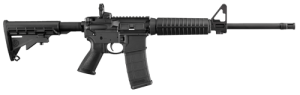
LaRue Tactical Ultimate Upper Kit. Great trigger, great barrel, but it’s an upper kit rather than a complete rifle. You supply the lower and order direct from LaRue when stock appears, which is why it doesn’t belong on a list of rifles you can buy today.
HK MR556. A superb piston rifle, but at $3,201.99 it costs nearly twice as much as a DDM4 V7. If you want a piston gun for less, see our best piston AR-15 guide.
On a tighter budget? Our cheap AR-15 rifles and best AR-15s under $1,000 guides go deeper on those price bands.
What Is an AR-15, Exactly?
Worth clearing up first, because it is the most common misunderstanding about this rifle. AR stands for ArmaLite Rifle, after the company where Eugene Stoner designed it in the late 1950s. It does not stand for “assault rifle” and it never has. ArmaLite sold the design to Colt, who built a semi-automatic version for civilians and a select-fire version the military adopted as the M16.
What you are buying today is a magazine-fed, gas-operated, semi-automatic rifle with a rotating bolt. One trigger pull, one round. That is how almost every modern sporting rifle works. It is also the most popular rifle in America, which is why it comes in more configurations than anything else you can buy.
Why Everyone Builds On It
The platform took over because of modularity. The lower receiver is the serialized part, and nearly everything else bolts to it. One lower can wear a 16″ 5.56 upper for the range on Saturday and a .300 Blackout upper for hogs on Sunday, and the swap takes two pins and about ten seconds. Handguards, triggers, stocks and optics follow common standards, so parts from one maker will normally fit another maker’s rifle.
It also explains why the prices on this list run from about $490 to about $1,800 for what looks like the same gun. You are paying for barrel quality, the coating inside the bolt carrier group, whether the trigger is worth keeping, and how much of the work was done by hand.
AR-15 or AR-10?
The AR-10 is the bigger sibling, built around .308 Winchester and 7.62×51 instead of 5.56. It hits considerably harder, weighs more, and shares very few parts with an AR-15 despite looking almost identical. If you want the long-range version, our best AR-10 rifles guide covers it and our AR-15 vs AR-10 comparison puts them side by side.
AR-15 Buyer’s Guide: What to Look For
Picking the right AR-15 goes beyond just choosing a brand and a price tier. The components that make up your rifle directly affect reliability, accuracy, handling, and longevity. Here’s what you need to understand before you buy. For an even deeper dive, check out our complete AR-15 Buyer’s Guide.
Gas System Length: Carbine vs. Mid-Length vs. Rifle
The gas system length determines where on the barrel the gas port is drilled, which controls how much dwell time the bullet has before gas is bled off to cycle the action. For a 16-inch barrel, the most common AR-15 configuration, mid-length gas is the optimal choice. It provides the best balance of reliable cycling and manageable recoil. Carbine-length gas systems on 16-inch barrels are overgassed by design, which creates a sharper recoil impulse, increased bolt velocity, and faster parts wear. That’s why the budget rifles on this list that still use carbine gas, like the PSA PA-15, rank slightly lower on ergonomics.
Rifle-length gas systems belong on 18-20 inch barrels and offer the softest recoil impulse, but they’re uncommon in standard 16-inch configurations because the gas port sits very close to the muzzle, which can cause reliability issues with weaker ammunition. If you’re shopping for a 16-inch AR-15, prioritize mid-length gas. Every premium and mid-range rifle on this list uses it for good reason.
Barrel Quality: Chrome-Lined vs. Cold Hammer Forged vs. Nitride
Barrel manufacturing and treatment is the single biggest differentiator between price tiers in the AR-15 market. There are three main barrel types you’ll encounter:
Chrome-lined: The bore and chamber are plated with hard chrome, which dramatically increases corrosion resistance and barrel life. Chrome-lined barrels can last 20,000+ rounds before accuracy degrades. The downside is that the chrome layer is never perfectly uniform, which can slightly reduce precision compared to an unlined barrel. Military-contract rifles almost universally use chrome lining.
Cold hammer forged (CHF): The barrel is formed by hammering a steel blank around a mandrel, which compresses and work-hardens the steel. CHF barrels are extremely durable and produce very consistent bores. Daniel Defense, Geissele, BCM and IWI all use cold hammer forging on the rifles in this guide. When combined with chrome lining (CHF/CL), you get the gold standard for duty-grade AR barrels.
Nitride (Melonite/QPQ): A surface treatment that case-hardens the steel through a chemical process. Nitride barrels offer excellent corrosion resistance, good accuracy, and a lower manufacturing cost than chrome lining. The trade-off is slightly shorter barrel life, around 10,000-15,000 rounds. Most mid-range and budget ARs use nitride-treated barrels, and for civilian shooters who won’t approach 10,000 rounds, it’s a perfectly good option.
Trigger: Mil-Spec vs. Upgraded
A standard mil-spec AR-15 trigger has a pull weight of 6-8 pounds with a gritty, indistinct break and a long reset. It works, but it’s the single easiest upgrade you can make to improve your shooting. A quality aftermarket trigger, like the LaRue MBT-2S at $90, Rise Armament RA-140 at $90, or Geissele SSA-E at $240, drops pull weight to 3.5-4.5 pounds with a crisp, clean break and a short, tactile reset. The difference in practical accuracy is immediate and significant.
Of the rifles on this list, the Geissele Super Duty ships with the best trigger by a wide margin. The Sabre-15 and M400 Tread V2 both ship with two-stage triggers, and the Saint Victor’s nickel boron-coated trigger is a clear step up too. Everyone else ships mil-spec, which means budgeting $80-240 for a trigger upgrade if precision matters to you. For home defense, a mil-spec trigger is adequate. For target shooting, competition, or any application where accuracy decides the outcome, an upgraded trigger should be your first aftermarket purchase.
Handguard: Drop-In vs. Free-Float
Drop-in handguards clamp around the barrel nut using a delta ring and make contact with the barrel. Any pressure on the handguard, from a bipod, barricade, sling tension, or your support hand, transfers to the barrel and shifts the point of impact. Free-float handguards attach only to the barrel nut and don’t contact the barrel at all, which means you can rest the rifle on a barricade, load a bipod, or grip the handguard aggressively without affecting accuracy.
In 2026, there’s no reason to buy an AR-15 with a drop-in handguard unless you’re on the absolute tightest budget. Even Palmetto State Armory now ships most PA-15 configurations with free-float M-LOK handguards. The practical accuracy difference between drop-in and free-float is 0.5-1.0 MOA for most shooters, which is significant. Free-float handguards also give you M-LOK or KeyMod attachment points for lights, lasers, vertical grips, and hand stops, accessories that are difficult or impossible to mount on standard drop-in handguards.
Frequently Asked Questions
What's the best AR-15 for the money?
For most buyers it's the PSA Sabre-15, from $849.99 with a two-stage trigger and ambi controls already fitted. If you want a chrome-lined, cold hammer forged barrel, the IWI Zion-15 at about $930 gets you the same barrel recipe as the DDM4 V7 for about $720 less. On a tighter budget, the Smith & Wesson M&P15 Sport III at about $660 is the best entry-level option.
Is an AR-15 good for home defense?
Yes. A properly configured AR-15 chambered in 5.56 NATO is one of the best home defense options available. The 5.56 round is effective at stopping threats, has less risk of over-penetration through interior walls than many pistol and shotgun loads when using proper defensive ammunition like 55-grain soft point, and the AR-15 platform is easy to accessorize with weapon lights and red dot optics.
How much should I spend on my first AR-15?
For a reliable, well-featured first AR-15, budget $530 to $805. The Ruger Harrier (about $530) and Springfield Saint Victor (about $805) bracket that range, with the Smith and Wesson M&P15 Sport III at about $660 in the middle. Below that, you start making real compromises on features and quality control. Remember to budget an additional $200-400 for a quality red dot optic, weapon light, sling, and at least 500 rounds of practice ammunition.
5.56 NATO vs .223 Remington: what's the difference?
5.56 NATO operates at slightly higher pressures than .223 Remington. A rifle chambered in 5.56 NATO can safely fire both 5.56 and .223 ammunition. A rifle chambered only in .223 Remington should not fire 5.56 NATO rounds, as they may produce dangerously high pressures. All rifles on this list are chambered in 5.56 NATO or .223 Wylde, which safely handles both cartridges.
What is the best AR-15 barrel length?
A 16-inch barrel is the do-everything default and what most rifles on this list ship with, balancing velocity, maneuverability and the legal minimum without a tax stamp. Go to 18 or 20 inches if you want maximum 5.56 velocity for distance, or drop to 14.5 inches with a pinned muzzle device for a handier carbine. For home defense and general use, 16 inches is hard to beat.
Is direct impingement or a piston better for an AR-15?
For most shooters, direct impingement wins. It is lighter, more accurate, cheaper and the system the vast majority of these rifles use, and modern DI guns run clean enough that the old reliability gap has mostly closed. Piston guns stay cooler and run dirtier conditions better, which matters for a suppressed or hard-use rifle, but you pay more weight and money for it.
How much does a complete AR-15 setup cost?
Budget $530 to $1,100 for a quality rifle, then another $400 to $700 for the supporting gear most buyers forget: a red dot or optic, a few magazines, a sling, and 500 rounds to confirm it runs. All in, a ready-to-use setup lands around $1,000 to $1,800. The rifle is only part of the bill.
Is a budget AR-15 reliable enough?
Yes. Brands like PSA, Ruger and Smith & Wesson have made dependable AR-15s affordable, and a rifle under $700 from a reputable maker will run for thousands of rounds with basic maintenance. The premium guns buy you better triggers, tighter tolerances and nicer furniture, not a different level of basic reliability. Just feed it quality ammo and lube it.
How many rounds should I put through a new AR-15 before trusting it?
Put at least 200 to 300 rounds through it, and include the ammo you plan to rely on. Every stoppage in our log on the Sport III happened in the first 200 rounds, and it ran clean for the next 2,800. Fire at least 50 rounds of your defensive load and use the magazines you'll actually carry.
Is cold hammer forged better than nitride for an AR-15 barrel?
They aren't the same kind of thing. Cold hammer forging is how the barrel is made, and nitride is a surface treatment, so a barrel can be both. For most shooters a good nitride barrel lasts 10,000 rounds or more, which is more than they'll ever shoot. Pay for chrome-lined CHF if you'll run high round counts or need duty-grade longevity.
What does mid-length gas mean on an AR-15?
It means the gas port sits further down the barrel than on a carbine-length system. On a 16-inch barrel that gives a softer recoil impulse and less wear on parts, which is why nearly every rifle here from about $660 up uses it. Carbine gas still works fine, and it's common on budget rifles like the PA-15, but it hits a little harder.
When is the best time to buy an AR-15?
Watch for sales if you're buying under $1,100, because that's where prices move most. In the last 90 days we logged the Sport III at $499.99 against about $660 today, and the PA-15 at $399.99 against about $490. Premium rifles like the DDM4 V7 and Recce-16 barely moved, so waiting on those doesn't save much.
Related AR-15 Guides and Reviews
The AR-15 platform spans dozens of buying decisions. Working to a tighter number? Our best cheap AR-15 rifles under $500 guide is the budget-first version of this list. These deeper guides cover the specific picks, parts, and configurations:
By configuration and use case
- Best AR pistols (2026): SBR-alternative builds ranked
- Best 9mm AR pistols and PCCs
- Best piston AR-15 rifles: gas-piston gun comparison
- Best California-legal AR-15 rifles: featureless and fixed-mag builds
- Best AR-15 for women: picks tested by a real shooter
- Best AR-10 rifles: .308 big-brother platform
- Best semi-auto .308 rifles beyond the AR-10
By brand and budget
- Best AR-15 brands ranked by build quality and value
- Palmetto State Armory AR-15 review: budget rifle long-term test
- Live AR-15 deals: current discounts tracked daily
By component and upgrade
- Best AR-15 lower receivers: stripped lowers ranked
- Best AR-15 triggers: drop-in and two-stage picks tested
- Best AR-15 parts and accessories: full upgrade guide
- Direct impingement vs gas piston: explained
- AR-15 buyer’s guide: what to look for before your first build
Adjacent platforms and context
- Best modern AK-47 rifles and pistols: the AR-15’s rival
- Special-forces rifles and pistols you can legally buy
- Specialist law-enforcement firearms breakdown
- AR-15 legal states: where you can own one in 2026
- How we test and review gear at USA Gun Shop
Related Guides
Related: read our Bear Creek Arsenal review on budget AR-15s, and a look back at the best new rifles of SHOT Show 2018.
Related parts: SLR Rifleworks handguards and gas blocks, and all gunsmithing tools.
4,005+ Gun & Ammo Deals
Updated daily from 200+ top retailers. Filter by category, caliber, action type, and price.