

Last updated June 27th 2026
Some of the links below are affiliate links, meaning at no additional cost to you, we may earn a commission if you click through and make a purchase.
Table of Contents
How we tested: Every pick here is ranked against our testing methodology. Minimum round counts, accuracy and reliability protocols, the failures that disqualify a gun. Where we have not shot a specific variant ourselves, we say so in that section.
Quick Verdict
The .360 Buckhammer and the .30-30 Winchester are both lever-gun deer cartridges, but one critical difference decides it for many hunters: the .360 Buckhammer is a straight-wall cartridge legal in shotgun-zone states, while the bottlenecked .30-30 is not. If you hunt a straight-wall state, the .360 Buckhammer is your lever-gun option. Everywhere else, the .30-30 wins on cheap, ubiquitous ammo and a century of proven performance, while the .360 hits noticeably harder.
Remington introduced the .360 Buckhammer in 2023 to give lever-action hunters a hard-hitting, straight-wall-legal cartridge for states like Ohio, Indiana, and Michigan. The .30-30 has been the definitive lever-gun deer round since 1894. They look similar on paper, but their case shapes, power, and legal status pull them in different directions.
.360 Buckhammer vs .30-30: Specs at a Glance
| Spec | .360 Buckhammer | .30-30 Winchester |
|---|---|---|
| Introduced | 2023 | 1894 |
| Bullet diameter | .358″ | .308″ |
| Case type | Straight-wall (rimmed) | Bottlenecked (rimmed) |
| Common bullet weights | 180-200 gr | 150-170 gr |
| Typical load | 180 gr at 2,400 fps | 150 gr at ~2,390 fps |
| Muzzle energy | ~2,300 ft-lbs | ~1,900 ft-lbs |
| Straight-wall legal | Yes | No |
| Recoil | Moderate | Mild |
| Ammo availability | Growing | Excellent |
The Straight-Wall Difference That Decides It
The single most important factor in this comparison isn’t ballistics, it’s legality. A number of Midwestern states restrict deer hunting in certain zones to straight-walled cartridges. The .30-30 Winchester, despite being a lever-gun legend, has a bottlenecked case and is therefore not legal in those straight-wall zones.
The .360 Buckhammer was created specifically to fix that. It’s a rimmed, straight-walled cartridge that feeds through a lever-action tube magazine and is legal in straight-wall states, giving lever-gun hunters in Ohio, Indiana, and Michigan an option the .30-30 can’t provide. If you hunt one of those states, this comparison is effectively over: the .360 Buckhammer is your cartridge.
.360 Buckhammer Pros & Cons
Pros
- Legal in straight-wall states where the .30-30 is not
- A heavier .358 bullet and more energy than the .30-30
- Feeds through lever-action tube magazines like the classics
- Hits harder on deer and hogs inside its range
- Modern factory loads from Remington and Federal
Cons
- Newer cartridge with less ammo selection and higher prices
- More recoil than the mild .30-30
.30-30 Winchester Pros & Cons
Pros
- The most proven lever-gun deer cartridge ever, since 1894
- The cheapest, most available lever ammo on every shelf
- Mild recoil that’s easy for any hunter to shoot well
- A vast selection of new and used lever rifles
- More than enough for whitetail inside 200 yards
Cons
- Not legal in straight-wall-cartridge states
- Less energy and a lighter bullet than the .360 Buckhammer
Velocity and Energy
The .360 Buckhammer hits harder. It pushes a heavy 180-grain .358 bullet at 2,400 fps for about 2,300 foot-pounds, while the .30-30 sends a 150-grain .308 bullet around 2,390 fps for roughly 1,900 foot-pounds. That’s a meaningful energy advantage of about 400 foot-pounds for the Buckhammer, driven by its heavier, larger-diameter bullet.
Both are plenty for whitetail inside their effective range, but the .360 Buckhammer’s extra energy and bigger bullet give it more authority on larger deer and hogs. The .30-30 has cleanly taken millions of deer and isn’t underpowered, but if raw thump matters to you, the Buckhammer is the harder hitter.
Trajectory and Effective Range
Both are brush and timber cartridges with similar, looping trajectories, effective on deer to about 200 yards. Neither is a long-range round, and both shoot flat enough to hold dead-on inside about 150 yards with a simple zero.
The .360 Buckhammer’s heavier bullet drops a bit faster at the far end of that range, while the .30-30, especially with modern LEVERevolution-style pointed bullets, can stretch its legs slightly. In practice the difference is small; both are short to medium-range deer cartridges best kept inside 200 yards on game.
Recoil
The .30-30 is famously mild, one of the gentlest centerfire deer cartridges and a longtime favorite for new and young hunters. Its modest recoil makes it easy to shoot well and pleasant to practice with.
The .360 Buckhammer kicks more, the price of its heavier bullet and extra energy, though it’s still moderate and far from punishing in a typical lever rifle. If the lowest recoil is your priority, the .30-30 wins; if you’ll trade a bit more kick for more power, the Buckhammer is manageable.
Ammo Cost and Availability
This is the .30-30’s biggest win. After 130 years in production, it’s on every shelf in every brand at low prices, one of the most available rifle cartridges in the world. You’ll find .30-30 at any rural shop the day before season.
The .360 Buckhammer’s ammo, from Remington and Federal, has grown since 2023 but remains newer, pricier, and less common, especially off the beaten path. For affordability and easy availability, the .30-30 is far ahead, so .360 Buckhammer hunters should stock up ahead of the season.
Rifle Selection
The .30-30 has been chambered in more lever guns than any cartridge in history, so the new and used market is vast, from $400 used Marlins to fine new Winchesters. If you want the widest lever-rifle selection, the .30-30 is unmatched.
The .360 Buckhammer is offered mainly by Henry, with Rossi and Smith & Wesson also chambering it, so selection is smaller but solid and growing. See our best .360 Buckhammer rifles guide for the top picks. For a straight-wall-state hunter, the available .360 lever guns are excellent; for everyone else, the .30-30’s selection is deeper.
Hunting Applications
For a straight-wall-state lever hunter, the choice is made: the .360 Buckhammer is the legal, hard-hitting option, and a great one. For a hunter anywhere else who wants a classic, affordable, mild lever gun, the .30-30 remains one of the best deer cartridges ever and is hard to beat on value.
If you want maximum power from a lever gun and don’t mind more recoil or pricier ammo, the .360 Buckhammer’s heavier bullet and extra energy make it the harder hitter on bigger deer and hogs. Both are short-range brush guns; the Buckhammer just brings more authority and straight-wall legality.
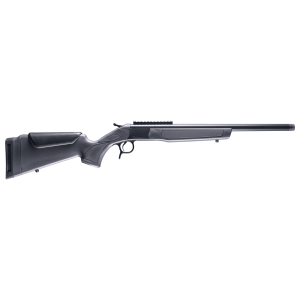
Live .360 Buckhammer Rifles on Sale
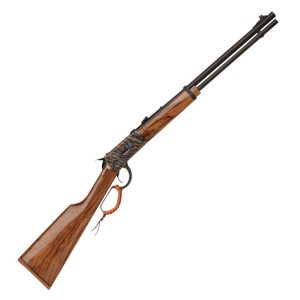
Live .30-30 Rifles on Sale
How I Compared These Cartridges
I based this comparison on each cartridge’s published factory ballistics from Remington, Federal, and the major ammo makers, cross-referenced against the SAAMI specs. I weighed the factors that decide a lever-gun hunter’s choice: the all-important straight-wall legality, velocity and energy, trajectory and range, recoil, ammo cost and availability, and rifle selection.
The honest headline is that legality often decides this comparison before ballistics even enter the picture. Where both are legal, it comes down to the .360’s extra power versus the .30-30’s unbeatable value and availability, and I’ve kept the recommendation grounded in that reality.
Bottom Line: Which Should You Buy?
Buy the .360 Buckhammer if you hunt a straight-wall state or want maximum lever-gun power. It’s the legal option where the .30-30 isn’t, and it hits harder with a heavier .358 bullet and about 400 more foot-pounds of energy, making it the better choice for bigger deer and hogs.
Buy the .30-30 Winchester if you want a proven, affordable, mild lever gun and don’t hunt a straight-wall state. A century of performance, the cheapest and most available ammo, gentle recoil, and a bottomless rifle selection make it one of the best value deer cartridges ever.
For most lever hunters the decision is simple: if your state requires straight-wall cartridges, choose the .360 Buckhammer; if not, the .30-30 is the smarter value unless you specifically want the Buckhammer’s extra power. For more, see our best lever-action rifles guide.
FAQ: .360 Buckhammer vs .30-30
Is the .360 Buckhammer better than the .30-30?
It depends. The .360 Buckhammer hits harder, with a heavier .358 bullet and about 400 more foot-pounds of energy, and it is legal in straight-wall states where the .30-30 is not. The .30-30 wins on cheap, ubiquitous ammo, mild recoil, and a century of proven performance. In a straight-wall state, the Buckhammer is the clear choice.
Is the .30-30 legal in straight-wall states?
No. The .30-30 Winchester has a bottlenecked case, so it is not legal for deer in straight-wall-cartridge zones like parts of Ohio, Indiana, and Michigan. That is exactly why the straight-walled .360 Buckhammer was created, to give lever-gun hunters a legal option in those states.
Does the .360 Buckhammer hit harder than the .30-30?
Yes. The .360 Buckhammer pushes a 180-grain bullet for about 2,300 foot-pounds of energy versus roughly 1,900 foot-pounds for a typical 150-grain .30-30 load, an advantage of around 400 foot-pounds. Its heavier, larger .358 bullet also delivers more authority on bigger deer and hogs.
Does the .360 Buckhammer kick more than the .30-30?
Yes, the .360 Buckhammer recoils more than the famously mild .30-30 because it launches a heavier bullet with more energy. The Buckhammer's recoil is still moderate and manageable in a typical lever rifle, but the .30-30 remains the gentler, easier-shooting cartridge.
What is the effective range of the .360 Buckhammer and .30-30?
Both are brush and timber cartridges effective on deer to about 200 yards, with similar looping trajectories. Neither is a long-range round, and both are best kept inside 150 to 200 yards on game, where they hit hard and shoot flat enough to hold dead-on.
Which is cheaper and easier to find, .360 Buckhammer or .30-30?
The .30-30 is far cheaper and easier to find, being one of the most available rifle cartridges in the world after 130 years in production. The .360 Buckhammer's ammo has grown since 2023 but remains newer, pricier, and less common, so it is smart to stock up ahead of the season.
Can a .360 Buckhammer use a .30-30 rifle?
No, they are different cartridges with different bullet diameters and case dimensions, so a .30-30 rifle cannot fire .360 Buckhammer. You need a rifle chambered specifically in .360 Buckhammer, such as the Henry side gate, Rossi R95, or Smith & Wesson 1854.
4,626+ Gun & Ammo Deals
Updated daily from 200+ top retailers. Filter by category, caliber, action type, and price.
Related Guides