

Last updated September 2026 · By Nick Hall, PRS competitor
The 6.5 Creedmoor is the better cartridge for PRS and most precision shooting, with about 30 percent less recoil than the .308 Winchester, a flatter trajectory past 500 yards, and easier shot-spotting, which is why most competitive shooters have switched to it. The .308 wins on barrel life, lasting around 5,000 rounds to the 6.5’s 2,000, and on ammo availability. For PRS, choose the 6.5 Creedmoor. For a budget plinker or a hunting rifle you shoot rarely, the .308 still makes sense.
This is the cartridge question every new precision shooter asks, and for PRS the answer is fairly settled: a large majority of competitive shooters have moved to the 6.5 Creedmoor. It’s not that the .308 Winchester is bad, it’s a proven, reliable cartridge with 70 years of history, but the 6.5 was designed from the start for exactly the long-range, low-recoil shooting that PRS rewards. I shoot precision rifle, and this breaks down where each cartridge wins. For the rifles that chamber both, see my best PRS rifles roundup.
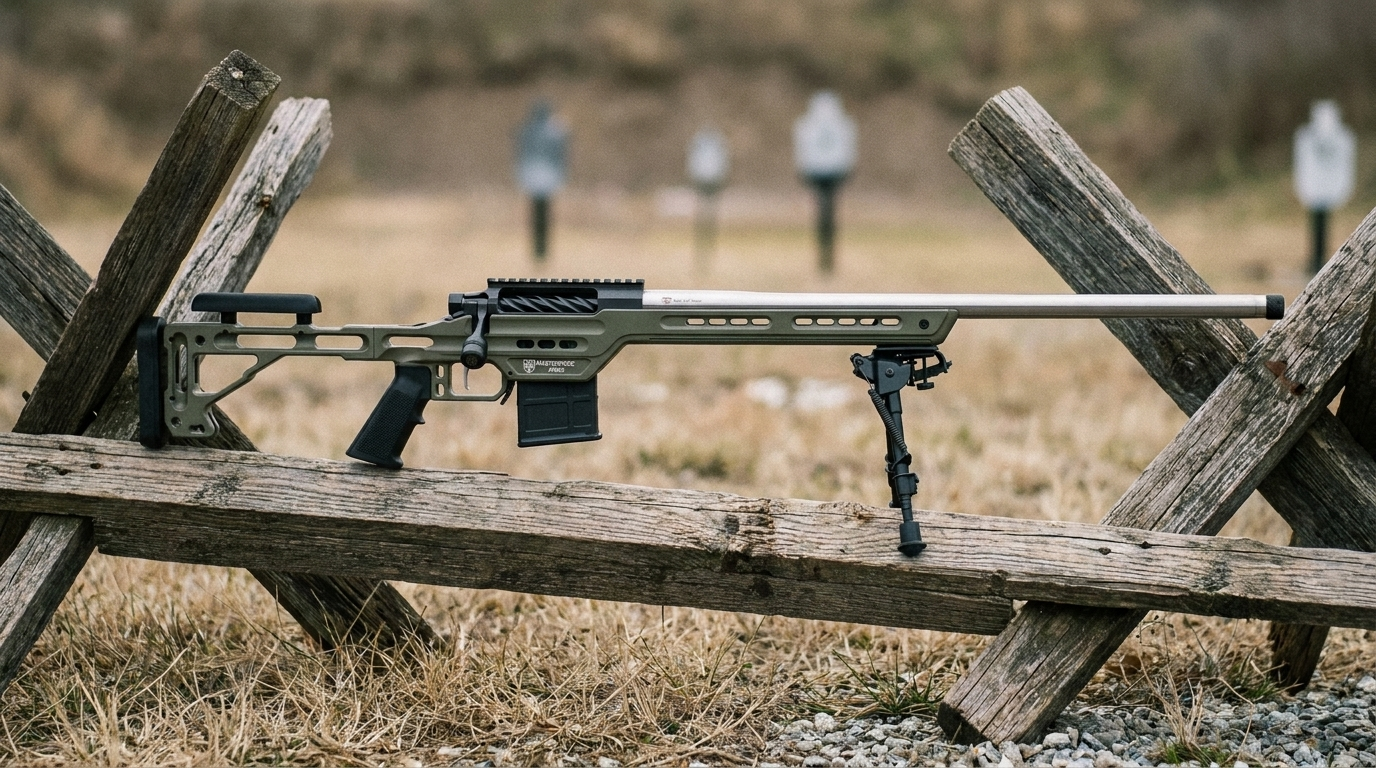
Table of Contents
How we tested: Every pick here is ranked against our testing methodology. Minimum round counts, accuracy and reliability protocols, the failures that disqualify a gun.
6.5 Creedmoor vs .308 Winchester: Quick Comparison
| Factor | 6.5 Creedmoor | .308 Winchester |
|---|---|---|
| Recoil | About 30% less | More |
| Trajectory past 500 yd | Flatter, less drop | More drop |
| Wind drift | Less | More |
| Shot-spotting | Easier, stays on target | Harder |
| Barrel life | ~2,000 rounds match | ~5,000 rounds match |
| Ammo availability | Very good | Excellent, cheaper bulk |
| Best for | PRS, long range | Budget, hunting, high volume |
Which PRS Division You Shoot Decides This
Before the ballistics, check which division you are entering, because it may make the decision for you. PRS Tactical division exists precisely to put these two cartridges head to head: it restricts you to .308 Winchester or 6.5 Creedmoor, at a capped muzzle velocity. The current limits are set out in the Precision Rifle Series rulebook, and they are worth reading before you buy a barrel. Inside that box, this comparison is the whole question, and the answer is the 6.5.
Open division has no such restriction, and that changes the picture completely. See the section below on what the field actually runs, because if you are shooting Open, the honest answer is that most of the podium moved past both of these cartridges years ago.
If you are new to the sport and not sure which division you are in, our explainer on what PRS actually is covers the structure, and the best PRS rifles guide covers the guns that chamber both.
Why the 6.5 Creedmoor Wins for PRS
The 6.5 Creedmoor was purpose-built for long-range precision, and it shows in the three things that matter most in PRS. First, recoil: it produces about 30 percent less free recoil than the .308, and in a sport where you must stay on target to spot your own hits and take a fast follow-up shot, that lower recoil is a direct competitive advantage. You see your miss, correct, and re-engage without the gun jumping off the target.
Second, ballistics. The 6.5 fires high-ballistic-coefficient bullets that fly flatter and drift less in the wind past 500 yards, so your elevation and wind calls are more forgiving at the distances PRS stages reach. Third, accuracy: that lower recoil and flatter flight give most shooters tighter groups out of the box, with half-MOA to three-quarter-MOA accuracy easily attainable. Add it up and the 6.5 Creedmoor is simply easier to shoot well at distance, which is why the competitive field has largely switched.
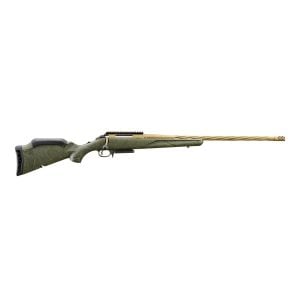

Where the .308 Winchester Still Wins
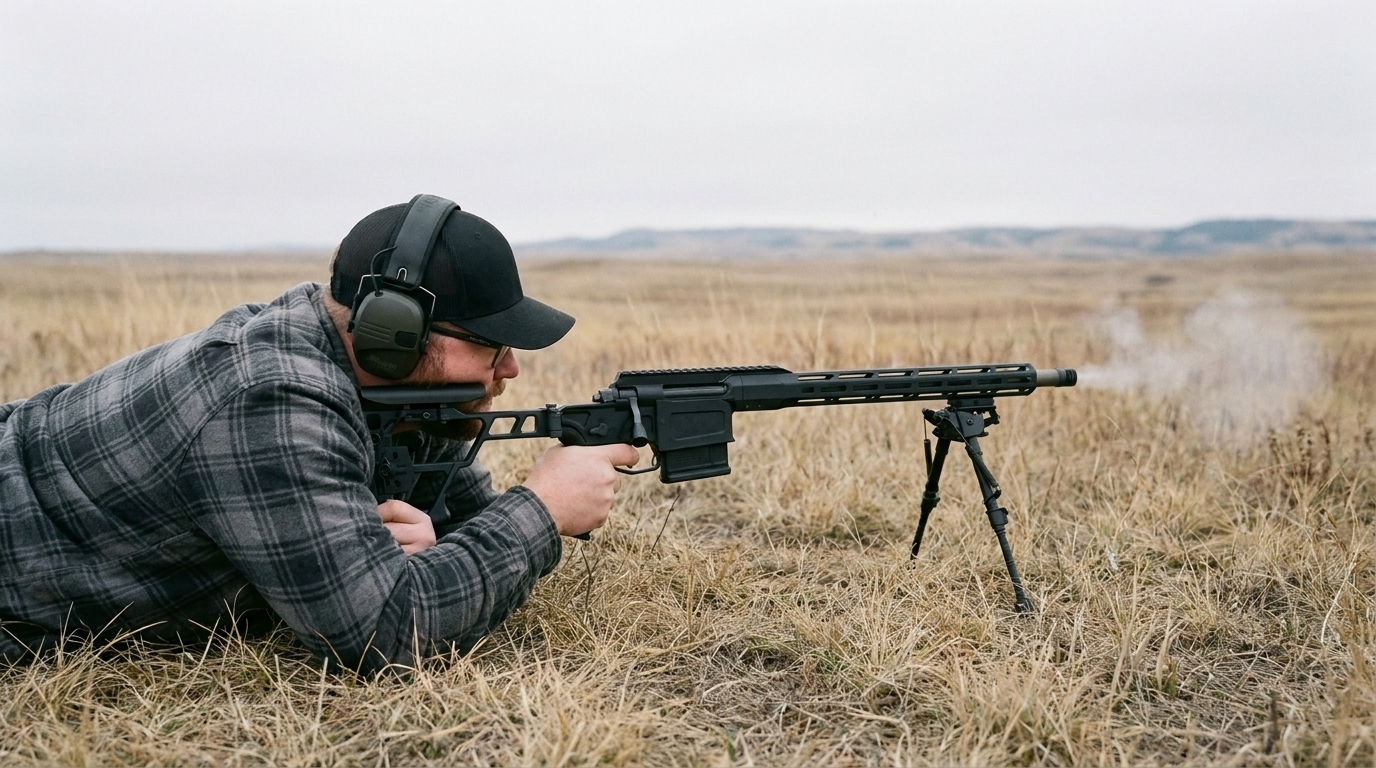
The .308 isn’t beaten on everything, and two advantages keep it relevant. The big one is barrel life: a match-grade .308 barrel lasts around 5,000 rounds, while a 6.5 Creedmoor match barrel burns out in roughly 2,000. For a high-volume shooter or someone who doesn’t want to rebarrel often, that’s a real cost saving over time, since a barrel and the gunsmithing add up.
The .308 also wins on ammo. It has been a standard military and hunting cartridge for decades, so it’s available everywhere, often cheaper in bulk, and easy to find even in a shortage. For a budget plinker, a hunting rifle you shoot a few boxes through a year, or a first rifle where cheap practice ammo matters more than the last bit of long-range performance, the .308 remains a sensible, economical choice. It’s also a fine PRS Tactical-division cartridge, since that division restricts you to .308 or 6.5 Creedmoor anyway.
Recoil and Shot-Spotting: The PRS Difference
The single most important factor in a PRS cartridge is whether you can stay on target through the shot, and this is where the 6.5 Creedmoor earns its dominance. With about 30 percent less recoil than the .308, the 6.5 lets you watch your bullet impact, or your miss, through the scope without the rifle jumping off the target. In a timed positional stage, that means you spot a miss instantly, hold the correction, and break a fast follow-up shot, often the difference between a clean stage and a dropped point.
The .308 recoils enough that many shooters lose the sight picture on the shot, so they cannot spot their own impacts as easily and lose time re-acquiring the target. Put rough numbers on it: a 6.5 Creedmoor match load in a 12-pound rifle generates something in the region of 10 to 12 foot-pounds of free recoil, against roughly 15 to 17 for a .308 match load in the same gun. That gap is small in absolute terms and decisive in practice, because it sits right on the threshold where the reticle stays on a steel plate instead of hopping off it. A muzzle brake and a heavy rifle help, but they don’t erase the gap. For PRS specifically, where self-spotting is a core skill, the 6.5’s softer recoil is a genuine, measurable edge that no amount of technique fully closes on the .308.
What the Rest of the Field Actually Runs
Here is the nuance most 6.5 versus .308 articles leave out, and it matters if you are spending money on a competition rifle. In PRS Open division, where the rules do not restrict you, the 6.5 Creedmoor is no longer the cartridge to beat. The 6mm family took that spot: 6mm Dasher, 6mm Creedmoor, 6 BR and 6 GT dominate the equipment surveys at the top of the field.
The logic is the same logic that beat the .308, taken one step further. A 6mm bullet recoils less again than a 6.5, so it is even easier to stay behind the rifle and spot your own impact, and modern 6mm bullets have enough ballistic coefficient to hold their own in wind. Shooters chased that advantage exactly the way they chased it away from the .308 a decade earlier.
So the accurate framing is this. Against the .308, the 6.5 Creedmoor wins on the things PRS scores, and it is the right answer in Tactical division where those are your only two choices. In Open, treat the 6.5 as a very capable starting point rather than the endgame, and know that the cartridge you graduate to will probably have a 6 in front of it. None of that makes the 6.5 a bad buy, and it does mean nobody should tell you it is what the winners are running.
Barrel Life and Cost Over Time
Barrel life is the .308’s strongest argument, and it’s worth taking seriously. A match 6.5 Creedmoor barrel lasts roughly 2,000 rounds before accuracy starts to fall off, while a .308 match barrel holds true for around 5,000. If you shoot a lot, that means rebarreling a 6.5 more than twice as often, and a quality barrel plus gunsmithing is a few hundred dollars each time. Over years of high-volume shooting, the .308 can be cheaper to feed and maintain.
That said, most PRS shooters accept the shorter 6.5 barrel life as the price of the competitive advantage, and 2,000 rounds is still a full season or more for many. Price it out before it surprises you: a quality prefit or blank plus chambering and headspacing runs a few hundred dollars, so a 6.5 shooter putting 2,000 rounds a year downrange is budgeting for that roughly every season, where the .308 shooter does it every two or three. If you’re a high-volume practicer on a budget, the math may favor the .308, but if you’re chasing match performance, the 6.5’s edge is worth the more frequent rebarrel. Cheap practice on a .22 trainer like an NRL22 setup also takes pressure off your centerfire barrel; see my NRL22 guide.
Factory Match Ammo or Handloading?
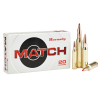
This is where the two cartridges separate for a competitor, and it is not the direction people expect. The 6.5 Creedmoor has the deeper factory match shelf. It was designed in the match era, so every major maker loads a serious long-range offering for it, and a shooter who does not reload can buy ammunition that will hold half MOA straight off the shelf.
The .308 has the deeper shelf overall, and most of that depth is hunting and bulk range ammunition rather than match. There is excellent .308 match ammo, and there is proportionally less of it, and it costs about what 6.5 match costs. So the .308’s famous price advantage is real for practice and largely evaporates for the ammunition you would actually compete with.
Most people past their first season handload, and that flips the calculation again. Both cartridges are easy to load well, the 6.5 has a slight edge in component availability for high-BC bullets, and once you are loading your own, ammunition cost stops being a reason to pick either one. Which puts the decision back where it started: recoil, spotting, and how long your barrel lasts.
Choosing Your First PRS Chambering
If this is your first precision rifle, take the 6.5 Creedmoor and stop researching. Not because it is the fastest thing on the line, but because factory match ammunition is everywhere, every chassis and action maker supports it, barrels are off the shelf, and you can shoot a full season on components you can actually buy. A 6mm Dasher will beat it on paper and will also have you forming brass before your first match.
Spend the difference on the things that actually drop your scores in year one: a scope that tracks, a bipod and bag you trust, a solid zero, and rounds downrange. Cartridge choice is somewhere below all of those in its effect on a new shooter’s finish position, and a .22 trainer for positional practice does more for you than a hotter centerfire. Our NRL22 guide covers that route.
For the broader, non-competition version of this comparison, covering hunting, energy on game and general use, see our full 6.5 Creedmoor vs .308 Winchester breakdown.
Which Should You Choose?
Match the cartridge to your goal.
- Choose the 6.5 Creedmoor if you’re shooting PRS or any serious long-range precision. The lower recoil, flatter trajectory and easier shot-spotting are decisive, which is why the competitive field has switched.
- Choose the .308 Winchester if you want maximum barrel life, the cheapest and most available ammo, a high-volume budget setup, or a hunting rifle you shoot rarely.
- New to long range? The 6.5 Creedmoor is also the easier cartridge to learn on, since its low recoil lets you focus on fundamentals rather than fighting the gun.
- Shooting PRS Tactical division? Both are legal there, and the 6.5 Creedmoor is the stronger choice within the division’s restrictions.
The Bottom Line
For PRS and serious precision shooting, the 6.5 Creedmoor is the better cartridge, with about 30 percent less recoil, a flatter trajectory, and the easier shot-spotting that wins stages, which is why most of the competitive field runs it. The .308 Winchester holds two real advantages, much longer barrel life and cheaper, more available ammo, that make it the smart pick for a budget plinker, a high-volume shooter, or an occasional hunting rifle. For competition, choose the 6.5; for economy and barrel life, the .308 still earns its place. New to the sport? Start with my what PRS is guide.
Frequently Asked Questions
- Treat every gun as loaded
- Point the muzzle in a safe direction
- Keep your finger off the trigger until you’re ready to shoot
- Know your target and what’s beyond
Is 6.5 Creedmoor or .308 better for PRS?
The 6.5 Creedmoor is better for PRS. It produces about 30 percent less recoil than the .308, flies flatter and drifts less in the wind past 500 yards, and lets you spot your own hits and take fast follow-up shots, which is why most competitive PRS shooters have switched to it. The .308 wins on barrel life and ammo cost, but for competition the 6.5 is the clear choice.
How much less does a 6.5 Creedmoor recoil than a .308?
The 6.5 Creedmoor produces about 30 percent less free recoil than the .308 Winchester. In precision competition that matters a lot, because lower recoil lets you stay on target through the shot, spot your own bullet impact or miss, and break a fast, corrected follow-up shot. That self-spotting ability is a core PRS skill, and it's the single biggest reason the 6.5 dominates the sport.
Does the .308 have better barrel life than the 6.5 Creedmoor?
Yes, significantly. A match-grade .308 barrel lasts around 5,000 rounds, while a 6.5 Creedmoor match barrel burns out in roughly 2,000 rounds. For a high-volume shooter that means rebarreling the 6.5 more than twice as often, and a quality barrel plus gunsmithing costs a few hundred dollars each time. Barrel life is the .308's strongest practical advantage.
Why have PRS shooters switched to 6.5 Creedmoor?
PRS shooters switched to the 6.5 Creedmoor because it was purpose-built for long-range precision. Its roughly 30 percent lower recoil makes self-spotting easier, its high-ballistic-coefficient bullets fly flatter and drift less in wind past 500 yards, and most shooters get tighter groups out of the box. Those advantages directly help you win timed positional stages, so the competitive field largely moved to it.
Is the .308 still worth buying?
Yes, for the right use. The .308 wins on barrel life, lasting around 5,000 rounds versus the 6.5's 2,000, and on ammo, which is cheaper and available everywhere. For a budget plinker, a high-volume practice rifle, or a hunting rifle you shoot a few boxes through a year, the .308 is a sensible, economical choice. It's mainly for serious long-range competition that the 6.5 pulls clearly ahead.
Which is easier for a beginner, 6.5 Creedmoor or .308?
The 6.5 Creedmoor is easier for a beginner learning long range. Its lower recoil lets you focus on fundamentals like position, breathing and trigger control rather than fighting the gun, and its flatter trajectory and lower wind drift make your elevation and wind calls more forgiving. The .308 is still learnable, but the 6.5's softer, flatter behavior makes the learning curve gentler.
Can you shoot both 6.5 Creedmoor and .308 in PRS Tactical division?
Yes, PRS Tactical division specifically restricts competitors to .308 Winchester or 6.5 Creedmoor, so both are legal there. Within those two choices, the 6.5 Creedmoor is the stronger option for the same reasons it wins overall: less recoil, flatter trajectory and easier shot-spotting. Most Tactical-division shooters who want to be competitive choose the 6.5.
Is 6.5 Creedmoor ammo more expensive than .308?
For bulk practice ammo yes, the .308 is cheaper and more widely available, especially in bulk, because it has been a standard military and hunting cartridge for decades. Quality 6.5 Creedmoor match ammo is readily available and costs a little more per round. For high-volume practice the .308 saves money, though many precision shooters offset 6.5 costs by training on a cheap .22 rimfire setup.
4,021+ Gun & Ammo Deals
Updated daily from 200+ top retailers. Filter by category, caliber, action type, and price.
Related Guides