

Last updated September 2026 · By Nick Hall, USPSA competitor
A 2011 like the Staccato is the better competition gun for serious USPSA shooters, with a far better trigger, more weight to soak recoil, and the capacity that dominates Limited and Open, but a Glock is the smarter starting point, costing a third as much with the deepest aftermarket of any pistol. Buy the Glock to learn the sport affordably and reach a high level; step up to a 2011 when you’re committed and want the last few percent. The honest truth is your skill matters more than which you pick for a long time.
This is the classic competition pistol debate, and the answer depends entirely on where you’re in the sport. A 2011 is the gun that wins Limited and Open at the national level, with a single-action trigger and capacity a Glock cannot match, but it costs well over 2,000 dollars built. A Glock costs a fraction of that, runs forever, and has an aftermarket so deep you can build it into almost anything. I shoot USPSA, and this breaks down which makes sense for you. For the full field, see my best competition pistols roundup.
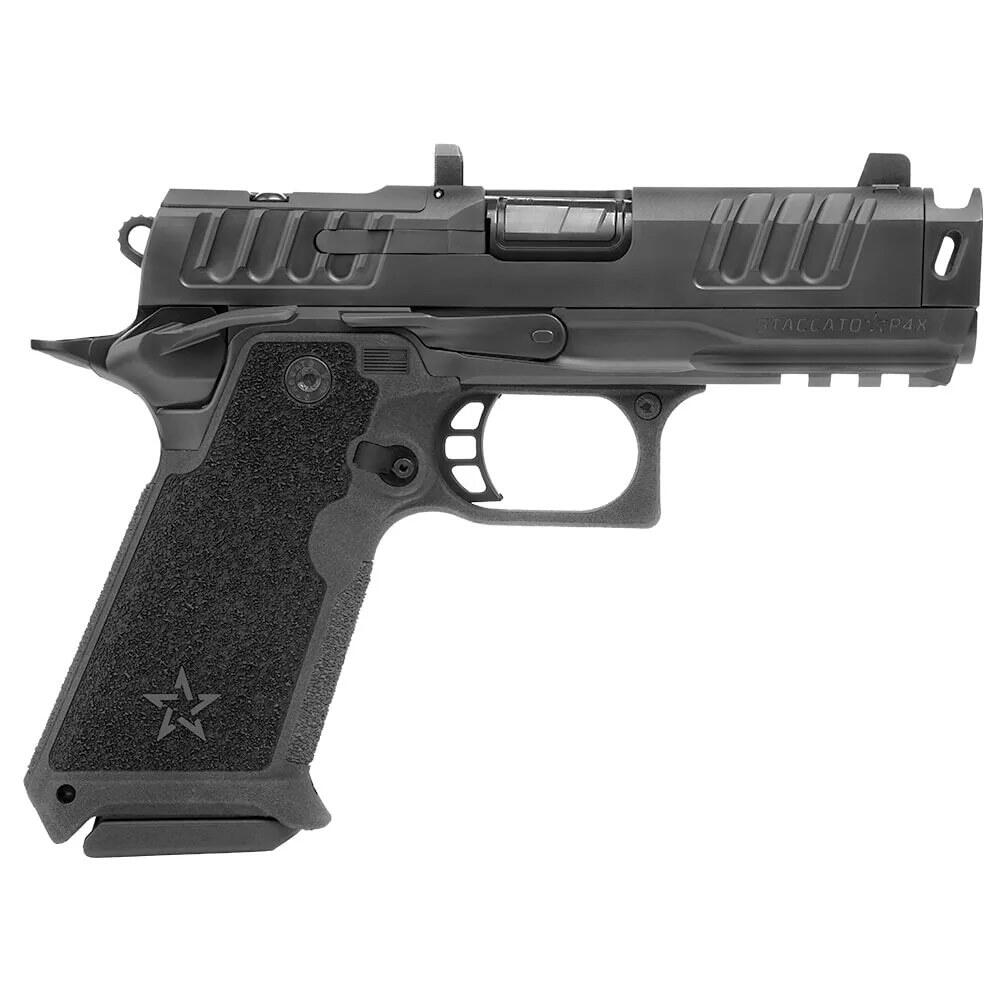
Table of Contents
How we tested: Every pick here is ranked against our testing methodology. Minimum round counts, accuracy and reliability protocols, the failures that disqualify a gun.
2011 vs Glock: Quick Comparison
| Spec | 2011 (Staccato) | Glock (34 MOS) |
|---|---|---|
| Action | Single action | Striker |
| Trigger | Glass-rod 4-4.5 lb SA | Mediocre stock, upgradable |
| Capacity | 17+1 to 20+1 | 17+1 |
| Weight | ~33-38 oz | ~25 oz |
| Aftermarket | Good, growing | Deepest of any pistol |
| Best divisions | Limited, Open, Limited Optics | Carry Optics, Production |
| Price | $2,000-$3,600 built | $650 + upgrades |
Your Division Decides This, Not Your Preference
Before the trigger argument, work out which division you are shooting, because USPSA’s equipment rules decide most of this for you. A 2011 is a Limited and Open gun. That is where its capacity and its scoring advantage actually pay, and it is where the national-level field runs them.
In Carry Optics and Production, which is where most new shooters start and where a lot of people happily stay, the rules flatten the field. Magazine length is capped, and the scoring is fixed at minor for everyone regardless of what you load. A 2011 in Carry Optics is legal and it is also bringing an advantage the division has specifically ruled out.
So the first question is not which gun is better, it is which division you want to shoot. Our USPSA divisions explained guide walks through them, and what USPSA actually is covers the format if you are brand new.
The Case for the 2011
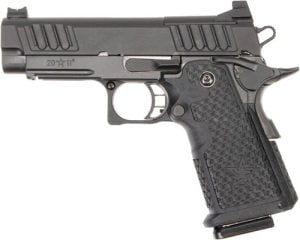
The 2011 is the gun that wins at the highest level of USPSA, and for good reasons. The single-action trigger is in a different class from a stock Glock, a short, crisp, glass-rod break that you cannot replicate on a striker gun no matter how you tune it. The double-stack 2011 frame holds more rounds, which matters in high-round-count Limited and Open stages, and the heavier all-metal build soaks up recoil so the gun stays flat. High-end 2011s like the Staccato XC and HD add integral compensators and optic-ready slides and simply dominate Limited and Open.
The cost is the catch. A quality 2011 runs well over 2,000 dollars and a full Open build climbs far higher, and historically they demanded more maintenance than a Glock, though modern guns like the Staccato have largely solved reliability. But for a committed competitor who wants the best trigger, the most capacity, and a gun built to win Limited or Open, the 2011 is the answer. Read my Staccato 2011 review for the deep dive.
The Case for the Glock
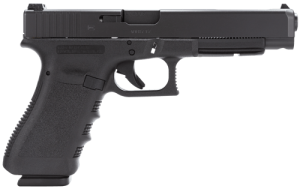
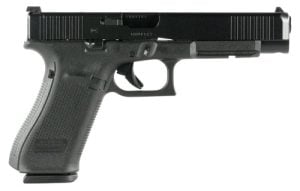
The Glock is the smartest gun to start competition with, and it stays competitive far longer than people expect. A Glock 34 MOS costs around 650 dollars, runs with total reliability, and has the deepest aftermarket of any pistol on earth, so every upgrade you could want already exists off the shelf. You can shoot it in Carry Optics or Production, add a red dot, drop in a competition trigger, and reach a high classification without ever spending 2011 money. For a new or budget-conscious shooter, nothing makes more sense.
The honest limitation is the trigger. Even a tuned Glock trigger doesn’t match a 2011 single action, and the lighter polymer frame recoils more than a heavy metal gun. That’s why you don’t see stock Glocks winning Limited and Open against 2011s. But in Carry Optics and Production, and at the beginner-to-intermediate level everywhere, a Glock is plenty of gun and the value is unbeatable. See it in my best budget competition pistols roundup.
Trigger and Recoil: The Real Gap
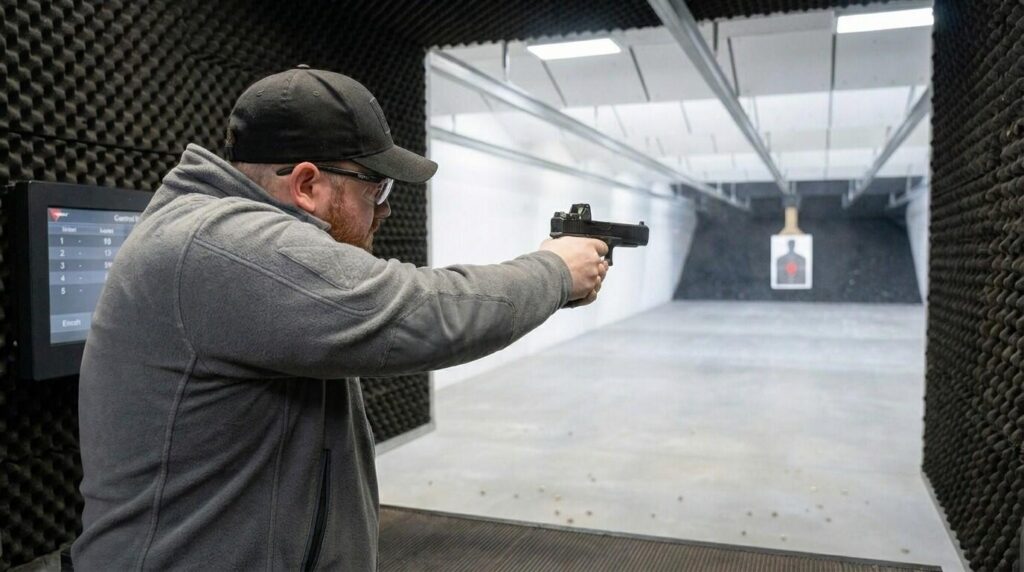
The biggest difference between these two is the trigger, and it’s not close. The 2011 gives you a 1911-pattern single-action trigger, a short, light, crisp break with a fast reset that’s widely considered the finest trigger type in pistol competition. A Glock is striker-fired, and while a good competition trigger kit improves it a lot, it cannot match the 2011 for crispness and consistency. This is the single biggest reason serious shooters move to a 2011.
Recoil follows the same pattern. The heavier all-metal 2011 stays flatter shot to shot, while the lighter Glock moves more and demands a firmer grip to control. Neither gap is so large that it stops a skilled shooter from winning Carry Optics or Production with a Glock, but at the very top of Limited and Open, the trigger and recoil advantages of the 2011 are decisive. For most shooters, the gap matters less than the thousands of rounds of practice that actually build skill.
Major and Minor: The Scoring Rule Behind It All
This is the part that explains why 2011s own Limited and Open, and almost nobody spells it out for new shooters. USPSA scores hits differently depending on your ammunition’s power factor, which is bullet weight multiplied by velocity divided by 1,000. Make 165 and you shoot major. Make 125 and you shoot minor. In Limited, major also means a .40 or larger cartridge, so a 9mm is scored minor there no matter how hot you load it. The division rules and the published power-factor thresholds are worth reading once before you buy anything.
The A-zone is worth 5 points either way. The difference is everywhere else: a C-zone hit is 4 points at major against 3 at minor, and a D-zone hit is 2 against 1. Over a stage full of imperfect hits, that is a large scoring gap for exactly the same shooting.
Here is the crucial part. Production, Carry Optics, Limited Optics and PCC are scored minor for everyone, whatever you load. Only Limited and Open let you claim major. So the 2011’s ability to run a heavy .40 major load in a gun heavy enough to stay flat under it is worth real points in Limited and Open, and worth precisely nothing in the divisions most people actually shoot.
If you are shooting Carry Optics, the 2011 buys you a better trigger and nothing else that the scoresheet recognises. That is a legitimate reason to want one. It is not a competitive necessity, and anyone telling you otherwise is describing a different division.
Cost and Aftermarket
The price gap is enormous and it shapes the whole decision. A Glock 34 MOS slide and frame cost a few hundred dollars, versus 1,200 dollars and up for a quality 2011, and a full Open 2011 build can pass 4,000 dollars. For the price of one race 2011 you can buy a Glock, a red dot, a trigger, a holster, and a mountain of practice ammo, which is exactly what a developing shooter needs most.
The Glock also wins on aftermarket depth. Nothing has more parts, holsters, magazines, sights, and trigger options than a Glock, so you can tailor it endlessly and cheaply. The 2011 aftermarket is good and growing, but it’s pricier and more specialized. The practical upshot is that a Glock lets you spend on the things that improve scores, while a 2011 is a bigger up-front commitment that pays off only once your skill justifies it.
The Third Option Most People Skip
This is framed as a two-way choice and it is really a three-way one, because the gap between a 650 dollar Glock and a 2,500 dollar Staccato has filled in. Two routes sit in the middle and both are worth a look before you commit either way.
The budget 2011. Springfield’s Prodigy and several imported double-stack 1911s give you the 2011 layout and a single-action trigger for around half what a Staccato costs. They ask more of you on maintenance and are fussier about magazines than the premium guns, and they get you the trigger and the capacity without the full bill.
The hammer-fired middle ground. A CZ Shadow 2 gives you an all-metal frame, a genuinely excellent DA/SA trigger and superb recoil control for roughly a third of a race-gun budget, and it is a proven Production and Carry Optics gun. If your division scores minor anyway, this is arguably the smartest money on this page. We put those two head to head in Staccato 2011 vs CZ Shadow 2.
Neither is the endgame gun for a Limited or Open shooter chasing a national classification. Both are a better answer than a stretched budget on a 2011 you then cannot afford to feed, which is the trap this comparison walks people into more than any other. More options are in our best budget competition pistols roundup.
The Cost Nobody Quotes: Magazines
The sticker price is only the start of the 2011 bill, and magazines are the line item that surprises people. A competition 2011 magazine with a base pad costs several times what a Glock magazine does, and you do not need one, you need six or more to run a match without standing at the loading table between stages.
Do that arithmetic before you commit. Glock magazines are among the cheapest and most available on earth, and a full match complement costs less than a couple of 2011 mags. It is the same pattern as the gun itself: the Glock lets you spend the difference on ammunition, and ammunition is what actually makes you faster.
What Actually Moves Your Classification
Worth saying plainly, because the gear debate swallows a lot of oxygen. At the level where most people are stuck, the gun is not the constraint. Draw speed, transitions, reloads, movement into and out of positions, and calling your shots are the constraints, and none of them care what the trigger cost.
A shooter who buys a Glock and 5,000 rounds of practice will beat the same shooter who buys a 2011 and 1,500 rounds, every season, without exception. Buy the 2011 when your practice volume is already where you want it and the gun is genuinely the thing holding you back. That point arrives later than most people hope, and when it arrives you will know, because you will be able to name the specific thing the gun is costing you.
Which Should You Buy?
Match the gun to where you’re in the sport.
- Buy a Glock if you’re new, on a budget, or shooting Carry Optics or Production. It costs a third as much, runs forever, has the deepest aftermarket, and will carry you to a high level while you learn.
- Buy a 2011 if you’re committed, want the best trigger and the most capacity, or you shoot Limited or Open where 2011s dominate. It’s the endgame gun for a serious competitor.
- Want a hammer-gun middle ground? A CZ Shadow 2 gives you a superb DA/SA trigger and steel-frame recoil control for around 1,200 dollars; see my Staccato vs Shadow 2 comparison.
- Not sure on division? Read my USPSA divisions explained guide first, since the division decides which gun is even legal.
The Bottom Line
A 2011 is the better competition gun for a serious shooter, with a far superior trigger, more capacity, and the dominance in Limited and Open that a Glock cannot match. But a Glock is the better starting point and stays competitive far longer than most people expect, at a third of the price with an unbeatable aftermarket. Start with a Glock to learn the sport affordably, and step up to a 2011 when you’re committed and chasing the last few percent. Either way, your reps matter more than the gun for a long time. New to the sport? Start with my what USPSA is guide.
Frequently Asked Questions
- Treat every gun as loaded
- Point the muzzle in a safe direction
- Keep your finger off the trigger until you’re ready to shoot
- Know your target and what’s beyond
Is a 2011 or a Glock better for USPSA?
A 2011 is the better competition gun for serious shooters, with a far superior single-action trigger, more capacity, and dominance in Limited and Open. A Glock is the smarter starting point, costing a third as much with the deepest aftermarket of any pistol, and it stays competitive in Carry Optics and Production. Start with a Glock to learn, then step up to a 2011 when committed.
Why do 2011s dominate USPSA Limited and Open?
2011s dominate Limited and Open because they combine a glass-rod single-action trigger, high double-stack capacity, and a heavy all-metal frame that soaks up recoil, and high-end models add integral compensators and optic-ready slides. Those advantages matter most in the high-round-count, major-power-factor world of Limited and Open, where a Glock's lighter frame and striker trigger cannot keep pace at the top.
Can you win USPSA with a Glock?
Yes, especially in Carry Optics and Production and at the beginner-to-intermediate level everywhere. A Glock 34 with a red dot and a competition trigger is fully competitive in those divisions, and plenty of shooters reach high classifications on one. Where a Glock falls short is at the very top of Limited and Open against purpose-built 2011s, but for most shooters the gun isn't the limiting factor.
How much more does a 2011 cost than a Glock?
A lot. A Glock 34 MOS runs around 650 dollars, while a quality 2011 starts around 1,200 and a full Open build can pass 4,000 dollars. For the price of one race 2011 you could buy a Glock, a red dot, a trigger, a holster and a large supply of practice ammo, which is why the Glock is the smarter buy for a developing shooter.
Is the trigger really better on a 2011 than a Glock?
Yes, and it's not close. The 2011 has a 1911-pattern single-action trigger with a short, light, crisp break and fast reset that's widely considered the best trigger type in pistol competition. A Glock is striker-fired, and while a competition trigger kit improves it significantly, it cannot match the 2011 for crispness and consistency. The trigger is the single biggest reason shooters move to a 2011.
Should a beginner buy a 2011 or a Glock?
A beginner should almost always start with a Glock. It costs a third as much, runs with total reliability, has the deepest aftermarket for cheap upgrades, and fits the beginner-friendly Carry Optics and Production divisions. That leaves budget for the ammo and training that actually build skill. A 2011 is an endgame gun to grow into once you're committed and know your division.
What is the best Glock for USPSA?
The Glock 34, especially the MOS version with an optic cut, is the best Glock for USPSA. Its longer barrel gives a longer sight radius, it fits Carry Optics and Production, and it has the deepest aftermarket of any pistol so you can add a trigger, sights and a magwell cheaply. A Glock 17 also works well. Both are reliable, affordable platforms you can build up over time.
Are 2011s reliable enough for competition?
Modern 2011s like the Staccato have largely solved the reliability concerns that older race 2011s had, and they run dependably at the highest level of the sport. They do still benefit from more attentive maintenance than a Glock, which is famously low-maintenance. For a committed competitor willing to maintain the gun, a quality modern 2011 is reliable enough to win nationals.
4,021+ Gun & Ammo Deals
Updated daily from 200+ top retailers. Filter by category, caliber, action type, and price.
Related Guides