

Last updated September 2026 · By Nick Hall, long-range shooter who has tested 6.5 Creedmoor and .308 Winchester head-to-head
Affiliate disclaimer: We earn a small part of the sale when you buy through our links. You don’t pay anything extra and your purchase helps support the site.
Quick Answer: The 6.5 Creedmoor wins for long-range precision shooting in 2026, flatter trajectory, less wind drift, and higher BC bullets that push the cartridge meaningfully past .308 Winchester at extended range. The .308 Win wins for short-action versatility, ammunition availability, and barrel life.
6.5 Creedmoor advantages: flatter trajectory (especially past 600 yards), less wind drift, higher BC bullets (Hornady ELD-X, Berger Hybrid), longer effective range. .308 Winchester advantages: broader ammunition availability and lower price, longer barrel life (4,000-5,000 vs ~2,500-3,000 rounds for 6.5 CM), better terminal performance on big-game inside 400 yards, and the deepest semi-auto rifle ecosystem (every .308 AR-10 platform).
The biggest mistake new shooters make is choosing 6.5 Creedmoor for hunting that never extends past 300 yards. .308 Winchester does everything 6.5 CM does inside 400 yards at lower cost; 6.5 CM only pulls ahead at 500-1,000+ yard ranges. Match the cartridge to your realistic engagement distance, then match the rifle to the cartridge.
Table of Contents
Find the Best Price in Seconds
Search once, compare 200+ trusted retailers instantly.
Comparing the Creedmoor to the big magnums too? Read 6.5 Creedmoor vs .300 Win Mag.
How we tested: Every pick here is ranked against our testing methodology. Minimum round counts, accuracy and reliability protocols, the failures that disqualify a gun. Where we have not shot a specific variant ourselves, we say so in that section.
Introduction: America’s Two Favorite Bolt-Action Calibers
If you walk into any gun store in America and ask for a bolt-action rifle, two calibers will dominate the conversation: .308 Winchester and 6.5 Creedmoor. Between them, they account for more bolt-action rifle sales than every other centerfire caliber combined. They share the same parent case (the .308 Win is literally the parent cartridge of the 6.5 CM), they fit in short-action receivers, and they can both reach out to distances that would make your grandfather’s .30-30 blush.
The .308 Winchester is the proven veteran. Introduced in 1952 as a commercial version of the 7.62x51mm NATO military round, it has over 70 years of combat, law enforcement, and hunting heritage behind it. It has been used in every major conflict since Korea. It was the dominant precision rifle cartridge in military and police sniper units for decades. It has killed every species of game animal in North America many times over. When people say “battle-tested,” they mean the .308.
The 6.5 Creedmoor is the upstart. Developed in 2007 by Hornady senior ballistician Dave Emary and competitive shooter Dennis DeMille, the 6.5 CM was purpose-built from the ground up for long-range precision shooting. It took the competitive shooting world by storm almost immediately, and within a decade it had become the single most popular cartridge in Precision Rifle Series (PRS) competition. By 2020, it had crossed over into mainstream hunting and is now offered in nearly every bolt-action rifle platform on the market. So which one is actually better? That depends entirely on what you’re doing with it.

Side-by-Side Comparison Table
| Specification | .308 Winchester | 6.5 Creedmoor |
| Bullet Weight | 150-180 gr | 120-147 gr |
| Muzzle Velocity | 2,600-2,800 fps | 2,700-2,960 fps |
| Muzzle Energy | 2,600-2,800 ft-lbs | 2,300-2,500 ft-lbs |
| Drop at 500 Yards | ~50 inches | ~36 inches |
| Wind Drift at 500 Yards (10 mph) | ~18 inches | ~13 inches |
| Effective Range | ~800 yards | 1,000+ yards |
| Recoil (avg bolt rifle) | ~22 ft-lbs | ~17 ft-lbs (20% less) |
| Barrel Life | 5,000+ rounds | 2,500-3,000 rounds |
| Ammo Cost (per round) | $0.80-$1.50 | $1.00-$1.80 |
| Best For | Hunting, military, high volume | Long-range precision, competition |
The table tells the story in broad strokes: .308 hits harder up close and costs less to feed. 6.5 Creedmoor shoots flatter, drifts less in the wind, and extends your effective range by 200+ yards. Now let’s dig into the details.
Ballistics: Where 6.5 Creedmoor Wins
This is where the 6.5 Creedmoor earns its reputation. The cartridge was designed from the outset to fire long, high-BC (ballistic coefficient) bullets at moderate velocities, and the result is one of the flattest-shooting, wind-resistant cartridges available in a short-action platform. The numbers are not even close once you get past 400 yards.
The key metric is ballistic coefficient. The 6.5mm (.264 caliber) bullet diameter allows for very long, sleek, high-BC projectiles that cut through the air more efficiently than the fatter .30 caliber bullets used in the .308. The Hornady 140-grain ELD Match, the signature 6.5 Creedmoor load, has a G1 BC of .610, which is exceptional for a short-action cartridge. Compare that to the Hornady 168-grain ELD Match in .308, which has a G1 BC of .523. That .087 difference in BC translates to dramatically less wind drift and less bullet drop at distance.
At 500 yards, the 6.5 Creedmoor drops roughly 36 inches versus about 50 inches for the .308, that’s 14 fewer inches of holdover you need to account for. At 1,000 yards, the gap widens even further: the 140-grain ELD Match arrives with roughly 1,100 fps of remaining velocity, still supersonic and stable. The 168-grain .308 load goes transonic (unstable) between 800 and 900 yards, which is why most .308 shooters consider 800 yards the practical ceiling for consistent accuracy.
Wind drift tells an even more dramatic story. In a 10 mph crosswind at 500 yards, the 6.5 CM drifts approximately 13 inches versus 18 inches for the .308. At 1,000 yards, that gap balloons to roughly 35 inches for the Creedmoor versus 55+ inches for the .308. If you’re shooting steel at distance or competing in precision rifle matches, 20 inches of wind drift advantage at 1,000 yards is the difference between a hit and a miss. This ballistic superiority is not theoretical, it’s the reason 6.5 Creedmoor took over PRS competition almost overnight.
Power: Where .308 Winchester Wins
Ballistic coefficient doesn’t kill animals. Energy and bullet construction do. And this is where the .308 Winchester fights back hard. At the muzzle, the .308 delivers 2,600-2,800 ft-lbs of energy versus the 6.5 Creedmoor’s 2,300-2,500 ft-lbs. That’s a 200-300 ft-lb advantage right out of the gate, and at typical hunting distances inside 300 yards, the .308 maintains a significant energy edge.
With a 180-grain controlled-expansion bullet like the Nosler Partition or Federal Trophy Bonded, the .308 delivers devastating terminal performance on large game. The heavier, larger-diameter bullet creates a wider wound channel and penetrates deeper through muscle and bone. For elk, moose, and large-bodied whitetails, that extra energy and frontal area matters. Many experienced elk hunters will tell you that they want at least 1,500 ft-lbs of energy at impact, the .308 delivers that out to about 400 yards with a 180-grain load, while the 6.5 CM hits that threshold closer to 350 yards with a 143-grain bullet.
The .308 also benefits from a much wider selection of bullet weights and types. You can load it with everything from 110-grain varmint bullets to 220-grain subsonic rounds for suppressed shooting. Hunting loads are available in virtually every bullet design ever conceived: soft points, bonded cores, controlled expansion, monolithic copper, tipped polymer, partition, the list goes on. The 6.5 Creedmoor has a growing selection, but it simply cannot match the depth of the .308’s catalog, particularly in heavy-for-caliber hunting projectiles.
There’s also the matter of short-range authority. If you’re hunting in thick brush where shots are inside 150 yards and you need a bullet to punch through brush and break bone, a 180-grain .308 soft point is hard to beat. The 6.5 Creedmoor’s lighter, smaller-diameter bullets are more susceptible to deflection on brush contact and simply carry less momentum for close-range impact on heavy-bodied game.
Practical Considerations
Ammo availability. This is one of the .308’s biggest real-world advantages. .308 Winchester ammunition is available literally everywhere, big-box stores, gas stations in rural Montana, Walmart, military surplus outlets, and every gun shop in the country. It is one of the three or four most commonly stocked rifle calibers in America. The 6.5 Creedmoor has made enormous strides in availability since 2015 and is now stocked in most dedicated gun shops and online retailers, but it is still harder to find in remote areas and small-town general stores. During the ammo shortages of 2020-2021, .308 was consistently easier to source than 6.5 CM.
Ammo cost. Factory .308 ammunition starts around $0.80 per round for basic brass-cased FMJ practice ammo and runs $1.00-$1.50 for quality hunting loads. 6.5 Creedmoor starts around $1.00 per round for practice ammo and $1.30-$1.80 for premium hunting and match loads. For the occasional hunter who shoots 40 rounds a year, the difference is negligible. For the precision shooter running 200+ rounds per month through drills and competitions, the cost gap adds up. Military surplus .308/7.62×51 can sometimes be found for under $0.60 per round, a price point the 6.5 Creedmoor will never match.
Barrel life. This is the .308’s most underappreciated advantage. A .308 Winchester barrel lasts 5,000 to 8,000 rounds before accuracy begins to degrade noticeably. A 6.5 Creedmoor barrel, pushing lighter bullets at higher pressures through a smaller bore, lasts 2,500 to 3,000 rounds. For a casual shooter or hunter, barrel life is essentially irrelevant; you’ll never shoot enough to wear one out. For a competitive PRS shooter running 3,000-5,000 rounds per year, barrel replacement is a regular maintenance item. A quality match barrel costs $300-$500 plus installation, so this is a real cost consideration for high-volume shooters.
Rifle selection. Both calibers are now available in virtually every bolt-action platform, Remington 700, Savage 110, Ruger American, Tikka T3x, Bergara B-14, Howa 1500, and dozens more. The .308 still holds a slight edge in total rifle options, particularly in semi-automatic platforms (AR-10, M1A, FAL, SCAR 17) and military-surplus rifles. If you want a semi-auto precision rifle, the .308 has more proven platforms. The 6.5 Creedmoor is available in AR-10 format, but the .308 has decades more development in that space.
Hunting: Which Caliber Is Better?
For whitetail deer inside 400 yards, which describes the vast majority of deer hunting in America, both calibers are excellent and the practical difference is minimal. A well-placed 140-grain 6.5 Creedmoor bullet or a 150-grain .308 bullet will kill a whitetail cleanly every time. The 6.5 CM has a slight edge in trajectory (less holdover at 300-400 yards), while the .308 hits with a bit more energy. Either way, the deer is going down. Pick whichever rifle you shoot more accurately, that matters far more than the ballistic difference between these two.
For elk, moose, and large-bodied game, the .308 Winchester has the edge. These animals are tough, heavy-boned, and often require deep penetration through thick hide and muscle to reach vitals. A 180-grain .308 Nosler Partition or Barnes TTSX delivers the energy and penetration these animals demand. The 6.5 Creedmoor can kill elk, thousands of elk have been taken with 143-grain ELD-X loads, but you have less margin for error on marginal shot angles. If you’re going after Roosevelt elk in thick Pacific Northwest timber where shots may require quartering-through penetration at close range, bring the .308.
For long-range varmint and predator hunting, coyotes, prairie dogs, and other small targets at 400-800 yards, the 6.5 Creedmoor wins decisively. Its flatter trajectory and reduced wind drift make it significantly easier to connect on small targets at distance. A coyote at 600 yards is a realistic shot with a 6.5 CM and a quality scope. With a .308, you’re dealing with substantially more holdover and wind correction, making the shot harder than it needs to be. For the all-around one-rifle hunter who takes mostly deer with an occasional coyote or antelope mixed in, either caliber will serve you well, but your typical shot distance should guide the choice. If most of your hunting happens in thick Eastern hardwoods where 200 yards is a long shot, the .308’s extra energy is more useful than the Creedmoor’s flat trajectory. If you hunt open Western terrain where 400-yard shots across a draw are common, the Creedmoor’s reduced drop and wind drift will put more meat in the freezer.
Competition: 6.5 Creedmoor Dominates
If you’re interested in Precision Rifle Series (PRS) competition, NRL matches, or any form of long-range competitive shooting, the 6.5 Creedmoor is the overwhelming choice. We break that match-specific decision down in detail in 6.5 Creedmoor vs .308 for PRS. Survey data from PRS competitors consistently shows the 6.5 Creedmoor as the most popular cartridge by a wide margin, used by 40 to 50% of competitors, with the next closest cartridge in the low teens. The .308 Winchester, once the standard competition round, has been almost entirely displaced from the podium.
The reasons are straightforward. PRS matches involve shooting steel targets at distances from 200 to 1,200+ yards, often from unstable positions under time pressure. The 6.5 Creedmoor’s 20% recoil reduction means faster follow-up shots and better ability to spot your own impacts through the scope. Its flatter trajectory means less dial on the turret between stages. Its superior wind resistance means fewer misses on distant targets in variable conditions. At a typical PRS match, those advantages compound across 10-15 stages and translate directly into higher scores. The .308 still has a place in beginner-level competition and gas gun matches (where semi-auto AR-10s are common), but at the competitive level, the Creedmoor owns the field.

Recoil: How Much Does It Matter?
The 6.5 Creedmoor generates roughly 20% less free recoil energy than the .308 Winchester in equivalent-weight rifles. In a typical 8-pound bolt-action rifle, that translates to about 17 ft-lbs of recoil for the 6.5 CM versus 22 ft-lbs for the .308. That’s a noticeable difference, not night and day, but enough that most shooters can feel it.
For hunters taking 1-3 shots in a day, recoil is not a significant differentiator. Both calibers are comfortable to shoot, and neither will punish you the way a .300 Win Mag or .338 Lapua will. Where the recoil advantage becomes meaningful is during extended range sessions, precision practice drills, or competition stages where you’re firing 50-100+ rounds in a session. Less recoil means less flinch development, less fatigue, and, critically, the ability to stay on target through the shot and watch your bullet impact. That last point is why competitive shooters overwhelmingly prefer the Creedmoor: seeing your own splash at 800 yards lets you make corrections faster.
New or recoil-sensitive shooters will also appreciate the 6.5 Creedmoor’s gentler push. If you’re buying a rifle for a teenager or a spouse who doesn’t shoot often, the reduced recoil makes a real difference in building confidence and developing good shooting fundamentals. A shooter who flinches because of recoil will never shoot accurately, regardless of how good the cartridge’s ballistics are on paper.
Handloading: A Draw With Caveats
Both cartridges are excellent handloading candidates. The .308 Winchester has decades of load data available and works well with an enormous variety of powders and bullet weights. It’s forgiving of minor variations in charge weight and seating depth, making it one of the most beginner-friendly cartridges to reload. Brass is cheap and plentiful, Lake City military surplus brass can often be had for pennies per case.
The 6.5 Creedmoor was designed with handloaders in mind. Its case geometry allows long, high-BC bullets to be seated without intruding excessively into the powder column, which is a problem that plagued the older .260 Remington. Hornady brass is readily available, and Lapua, Alpha Munitions, and Peterson all produce premium brass for serious competitors. The 6.5 CM responds extremely well to careful load development, sub-half-MOA accuracy at 100 yards is achievable with quality components and proper technique.
The caveat is barrel life. Because the 6.5 Creedmoor burns through barrels faster, high-volume handloaders will need to replace barrels more frequently and re-develop loads each time. The .308 is the better choice if you want to load and shoot thousands of rounds on the same barrel without worrying about accuracy degradation. That said, if you’re a handloader who enjoys chasing tiny groups and maximizing ballistic performance, the 6.5 Creedmoor’s responsiveness to load tuning is deeply satisfying, it rewards precision in the reloading room with precision on target.
The Verdict: Which Caliber Should You Buy?
Buy the 6.5 Creedmoor if: You shoot past 500 yards regularly. You compete in PRS or long-range matches. You hunt in open terrain, Western plains, bean fields, senderos, where shots beyond 400 yards are realistic. You’re a newer shooter who benefits from reduced recoil. You prioritize precision and flat trajectory over raw knockdown power. The Creedmoor was designed for one thing, shooting accurately at distance, and it does that job better than any other short-action cartridge on the market.
Buy the .308 Winchester if: You hunt large game (elk, moose, bear) and want maximum terminal energy. You shoot high volume and want barrels that last 5,000+ rounds. You want guaranteed ammo availability anywhere in the country, including small-town hardware stores. You value the massive selection of bullet types and weights for handloading. You want a cartridge with a 70-year track record of military, law enforcement, and hunting performance. The .308 does nothing flashy, but it does everything reliably.
Here’s the honest truth: both of these cartridges are excellent, and neither is a wrong choice. A skilled shooter with a .308 will outperform a mediocre shooter with a 6.5 Creedmoor every single time. The cartridge you choose matters far less than the optic you mount, the fundamentals you practice, and the trigger time you invest. If you already own one and are wondering whether to switch, the answer is probably no, spend that money on ammo and range time instead. If you’re starting fresh, pick the one that matches your primary use case and don’t look back. Both have earned their place at the top of the short-action mountain.
One final thought: the best caliber debate generates more internet arguments than any other topic in the firearms world. Don’t let online tribalism drive your decision. The 6.5 Creedmoor is not a “hipster fad”, it’s a genuinely superior ballistic design that has earned every bit of its success. The .308 Winchester is not “obsolete”, it remains one of the most versatile and proven rifle cartridges ever designed. Respect both. Buy the one that fits your shooting life. And then go shoot it.
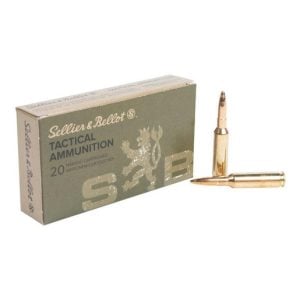
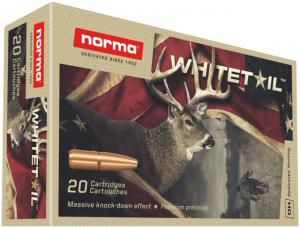
6.5 Creedmoor Ammo: Live Prices
Match-grade 6.5 Creedmoor is where the cost shows up, so it is worth checking the current spread before you commit to the cartridge.


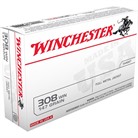
.308 Winchester Ammo: Live Prices
The .308’s advantage is that cheap practice ammunition actually exists for it, which is the quiet reason a lot of people shoot it more.




Frequently Asked Questions
Is 6.5 Creedmoor better than .308 for long range?
Yes. The 6.5 Creedmoor has less wind drift, flatter trajectory, and less recoil than .308 at ranges beyond 400 yards. For precision shooting and hunting at distance, the 6.5 CM is the better cartridge.
Is .308 more powerful than 6.5 Creedmoor?
The .308 offers heavier bullet options (up to 220 grains vs 147 for 6.5 CM) and more energy at close range. But the 6.5 Creedmoor retains energy better at distance due to higher ballistic coefficients.
Which has cheaper ammo, 6.5 Creedmoor or .308?
The .308 Winchester has cheaper ammunition due to military surplus availability and longer market history. Budget .308 runs about 0.60 per round versus 0.90 for comparable 6.5 Creedmoor loads.
Can I hunt elk with 6.5 Creedmoor or do I need .308?
Both work for elk with proper bullets and shot placement. The .308 offers heavier bullet options that some hunters prefer for large game. The 6.5 CM with 140-grain premium bullets is proven effective on elk inside 400 yards.
Which has less recoil, 6.5 Creedmoor or .308?
The 6.5 Creedmoor has approximately 20 to 25 percent less recoil than .308 in comparable rifles. This makes a real difference during extended range sessions and allows faster follow-up shots on game.
Is .308 becoming obsolete?
No. The .308 remains one of the most popular rifle cartridges in the world. Military, law enforcement, and millions of hunters still rely on it. The 6.5 CM is better for some applications, but .308 is far from obsolete.
Which is better for a new shooter, 6.5 CM or .308?
The 6.5 Creedmoor is better for new shooters due to less recoil and flatter trajectory. It is more forgiving of range estimation errors. The lighter recoil also helps new shooters develop good habits faster.
Can I use the same rifle action for both calibers?
Yes. Both use a short-action bolt. Many rifle models are available in both calibers with the same action length. Barrel swap conversions are possible on some platforms. Magazines differ between the two.
Related Guides