
Last updated August 26th 2026 · By Nick Hall, AK-47 shooter who has owned American and imported rifles across stamped and milled variants
Affiliate disclosure: This AK-47 buyer’s guide contains affiliate links. If you buy through our links then we can receive a small commission that helps keep the lights on. You don’t pay anything more.
- Treat every gun as loaded
- Point the muzzle in a safe direction
- Keep your finger off the trigger until you’re ready to shoot
- Know your target and what’s beyond

How we tested: Every pick here is ranked against our testing methodology. Minimum round counts, accuracy and reliability protocols, the failures that disqualify a gun.
AK-47 Buyer’s Guide: What to Look For, What to Avoid, and What to Buy in 2026
I’ve been shooting AKs for years and have owned imports from four different countries. I’ve also built a few from parts kits, run thousands of rounds of both brass and steel through them, and watched the American AK market go from a total disaster to genuinely impressive in under a decade. This guide is everything I wish someone had told me before I bought my first one.
The AK platform is not complicated, but the buying process can be. There are real differences between manufacturers, receiver types, barrel quality, and trunnion construction that determine whether your rifle lasts a lifetime or fails catastrophically at the range. This guide covers all of it so you can buy with confidence.
Table of Contents
Why Buy an AK-47 in 2026?
We’re living in the best time to buy an AK in the United States. That’s not hyperbole. Ten years ago, the American-made AK market was a minefield of cast trunnions and out-of-spec builds. Today, companies like Palmetto State Armory and Kalashnikov USA have figured out how to make good AKs domestically, and the import market is as strong as it’s ever been.
Zastava, WBP, and Arsenal are all shipping rifles to the US. The Zastava ZPAP M70 in particular has become one of the best values in the entire firearms market. On the import side, you’re getting decades of military manufacturing experience in every rifle.
Ammo prices have also stabilized after the Russian import ban rattled the market. Steel-cased 7.62x39mm is widely available again from manufacturers in Bosnia, Serbia, and other countries. You can still feed an AK for roughly 30 cents per round if you shop around, which makes it one of the cheapest centerfire rifles to shoot.
If you already own an AR-15 (or several), an AK adds genuine diversity to your collection. Different manual of arms, different caliber, different magazine ecosystem, different ergonomics. It’s not a replacement for the AR. It’s a complement to it. And if you’ve been on the fence, 2026 is the year to pull the trigger. Check out our best AK-47 rifles roundup for specific model recommendations.
What “AK-47” Actually Means
Worth clearing up first, because it trips up almost every first-time buyer. AK-47 stands for Avtomat Kalashnikova, which is simply Kalashnikov’s automatic, and the 47 is the year of the design trials. In Russia and across the old Eastern Bloc nobody says AK-47. They say Kalashnikov, or just AK.
In the West the name got applied to everything. Strictly it belongs only to rifles built on the original three receiver types. Almost nothing sold in an American gun shop today is literally an AK-47: what you are looking at is nearly always an AKM-pattern rifle, or a modern commercial interpretation of one. That is not a problem, and it is not anyone being dishonest. It just means the label on the box and the rifle in your hands are two different things, and knowing that makes the rest of this guide a lot easier to follow. If you want the rifles ranked rather than the platform explained, that is our 9 best AK-47 rifles roundup.
Can You Actually Buy an AK-47?
Short answer: you can buy a rifle that looks exactly like one and shoots the same cartridge, and you cannot buy the rifle the encyclopedias are describing. Those are two different guns and the difference is one part.
Read the entry for the AK-47 in Britannica or Wikipedia and you will be told it fires at about 600 rounds per minute and switches between semi-automatic and fully automatic. That is correct. The rifle the Soviet army adopted in 1949 is select-fire, which in American law makes it a machine gun. Everything sold as an AK-47 in a US gun shop is semi-automatic only: one round per pull of the trigger, no auto position on the selector.
That is not the importer cutting corners. It is the law, and it has three layers.
| Rule | Year | What it did |
|---|---|---|
| National Firearms Act | 1934 | Put machine guns on a federal registry with a transfer tax |
| Gun Control Act import clause | 1968 | Blocked importing machine guns for civilian sale |
| Hughes Amendment, 18 USC 922(o) | 1986 | Closed the registry entirely on 19 May 1986. Nothing built after that date can ever be transferred to a civilian |
So there is a fixed pool of legally transferable machine guns in the United States, somewhere around 175,000 to 182,000 of them, and it can never grow. It shrinks slightly every year as guns are destroyed or lost to estates. Ordinary supply and demand does the rest: a transferable AK runs $30,000 to $50,000 in 2026, and that is before the paperwork. The identical rifle in semi-automatic costs $600 to $1,200.
One 2026 point worth killing off, because I have been asked it twice this year already. The $200 NFA transfer tax dropped to zero on 1 January 2026. That is real, and it is genuinely good news if you are buying a suppressor or a short-barrelled rifle. It did nothing for machine guns. The tax and the registry are two separate things, and 922(o) closed the registry. A free tax stamp on a list you cannot be added to is still a closed door.
None of which should put you off, because the semi-automatic version is the one you actually want. Full auto out of a 7.62×39 rifle empties a 30-round magazine in three seconds and puts almost none of it where you aimed. It is enormous fun and it is a terrible way to shoot. Every practical thing an AK is good at, defense, hunting, plinking, competition, it does on semi-automatic. What follows in this guide is about buying that rifle well.
A Short History of the Kalashnikov
The story starts with a German rifle. On 15 July 1943 Soviet officials were shown a captured Sturmgewehr 44, chambered for a short 7.92x33mm round, and the penny dropped: a cartridge between a pistol round and a full-power rifle round was the future of infantry weapons. The Soviet answer was the 7.62x39mm M43, and then they needed a rifle to fire it.
Mikhail Kalashnikov had started designing weapons in 1941 while recovering from a shoulder wound. He began work on what became the AK in 1945, put it in front of the trials board in 1947, and the fixed-stock version went into service in 1948. It was formally accepted by the Soviet Armed Forces in early 1949.
Then came the part that actually mattered. The early rifles used milled receivers from 1951, machined from a solid block, which made them strong and expensive. In 1959 the AKM arrived with a stamped and riveted sheet-metal receiver that cut roughly a third of the weight and a great deal of the cost, and added a slanted muzzle brake to fight climb. That is the rifle the world actually got. In 1974 the AK-74 moved to the smaller, faster 5.45x39mm and the line split in two.
AK-47 vs AKM vs AK-74: the Difference in One Table
If you remember nothing else from this page, remember this.
| Model | Year | Cartridge | Receiver | What changed |
|---|---|---|---|---|
| AK-47 | 1949 | 7.62x39mm | Milled from 1951 | The original. Strong, heavy and costly to make. |
| AKM | 1959 | 7.62x39mm | Stamped and riveted | About a third lighter and far cheaper. Slanted muzzle brake, hammer retarder. This is what most rifles sold as “AK-47s” really are. |
| AK-74 | 1974 | 5.45x39mm | Stamped | Smaller, faster round. Less recoil, flatter trajectory, distinctive brake. Ammo is scarcer in the US. |
So when a listing says AK-47 and the receiver is stamped, it is an AKM pattern. That is the normal case, not a red flag.
Why There Are a Hundred Million of Them
Roughly 75 million AK-47s have been built, and something close to 100 million once you count every Kalashnikov-pattern variant. Nothing else in small arms comes close. It is made by Zastava in Serbia, Fabryka Broni Radom in Poland, Norinco in China and Kalashnikov Concern in Russia, among dozens of others, and it has been the standard infantry rifle of an enormous share of the world’s armies since the 1950s.
The engineering behind the reputation
The reliability is not folklore, it is design choices. A large gas piston that hits hard enough to shove fouling out of the way. Generous clearances between moving parts, so grit has somewhere to go instead of binding things up. And a strongly tapered cartridge case that drops out of the chamber almost regardless of what has been baked onto it. The rifle runs dirty because it was built to run dirty.
The trade is service life. Expect somewhere between 6,000 and 15,000 rounds from an AK, with small parts and springs wanting replacement every few thousand along the way. That is a long time for most owners and a short time compared to a well-kept AR, and it is worth knowing before you buy a used rifle with an unknown round count.
What the cartridge actually does
The 7.62x39mm pushes a 122 grain bullet at about 2,350 fps. It punches through heavy foliage, interior walls and light vehicle bodywork far better than a 5.56, and full metal jacket loads stay intact rather than fragmenting. Those two facts together are exactly why it is excellent in the field and why you should think carefully about it indoors. Which loads actually do what is covered in our 7.62×39 ammo guide.
AK Caliber Options
The AK platform has been chambered in everything from 7.62x39mm to .308 Winchester. Here are the calibers you’ll actually find on the US market in 2026 and who they’re best suited for.
7.62x39mm (The Classic)
This is the original AK caliber and still the best choice for most buyers. The 7.62x39mm round fires a .30 caliber 123-grain bullet at around 2,350 fps. It hits hard inside 300 yards, which covers virtually every practical defensive and hunting scenario. Terminal performance is excellent, especially with modern soft-point or hollow-point loads.
Ammo availability is the biggest advantage. Steel-cased 7.62x39mm from Tula, Wolf, Red Army Standard, and others is widely available and affordable. You can shoot all day for a fraction of what .308 or even 5.56 costs. If you’re buying your first AK, get it in 7.62x39mm. Full stop.
5.45x39mm (The AK-74 Round)
The 5.45x39mm was the Soviet answer to the 5.56 NATO cartridge. It’s a small, fast, flat-shooting round that offers noticeably less recoil than 7.62x39mm. The AK-74 platform is a joy to shoot, and accuracy is better than 7.62x39mm AKs due to the inherent ballistic advantages of the smaller cartridge.
The problem is ammo. The Russian import ban gutted the 5.45 supply chain. Most of the cheap surplus that made this caliber attractive is gone. What’s available now is more expensive and harder to find. If you already reload or don’t mind paying more per round, a 5.45 AK is a great shooter. But for a first AK, the ammo situation makes it a hard sell right now.
5.56x45mm NATO
A few manufacturers make AKs chambered in 5.56/.223, sometimes called the AK-101 pattern. The appeal is obvious: you get AK reliability with AR-15 ammo compatibility. PSA makes a 5.56 AK, and the IWI Galil ACE (which is AK-derived) is available in 5.56 as well.
Options are limited compared to 7.62x39mm, and magazine compatibility can be tricky. Some 5.56 AKs use proprietary magazines, while others accept modified Galil or AR magazines with an adapter. It’s a niche choice best suited for people who want to standardize on 5.56 across their entire collection.
9mm Pistol Caliber AKs
The KUSA KP-9 is the star of this category. It’s a semi-auto clone of the Russian Vityaz submachine gun, chambered in 9mm, and it’s one of the most fun guns I’ve ever shot. Recoil is almost nonexistent, ammo is cheap, and it’s a natural suppressor host.
PSA also makes the AK-V in 9mm, which takes CZ Scorpion magazines. Both are excellent options if you want an AK-pattern gun for home defense, range fun, or competition. Just know that these are pistol caliber carbines (or pistols, depending on configuration) and aren’t direct substitutes for a full-power 7.62x39mm rifle.
Understanding AK Receiver Types
The receiver is the serialized part of the rifle and the foundation everything else bolts to. AK receivers come in two main flavors: stamped and milled. Understanding the difference matters because it affects weight, cost, durability, and which aftermarket parts will fit your gun.
Stamped Receivers
The vast majority of AK-47s on the market use stamped steel receivers. These are made from flat sheets of steel that are bent and formed into shape, then heat treated. The original AK-47 prototype used a stamped receiver, but manufacturing challenges led to the early adoption of milled receivers. The Soviets went back to stamped with the AKM in 1959, and stamped has been the global standard ever since.
Stamped receivers are lighter, cheaper to produce, and perfectly adequate for any realistic use case. Every military AK in active service today uses a stamped receiver. If someone tells you stamped receivers are “cheap” or “inferior,” they’re confusing manufacturing cost with quality. A properly made stamped AK will outlast you.
Milled Receivers
Milled receivers are machined from a solid block of steel. They’re heavier, more rigid, and significantly more expensive to produce. The Arsenal SAM7 series is the most well-known milled AK on the US market. These receivers are practically indestructible.
The downside is weight and cost. A milled AK adds about a pound over a comparable stamped model, and the price premium is significant. Arsenal SAM7 rifles regularly sell for $1,500 to $2,000+. For collectors, competition shooters, or anyone who just wants the absolute best, milled is the way to go. For everyone else, stamped is the smart choice.
Receiver Thickness: 1.0mm vs 1.5mm
Not all stamped receivers are created equal. Standard AKM-pattern receivers use 1.0mm steel. This is what most Russian, Romanian, and US-made AKs use. It’s proven and reliable.
Zastava and WBP both use 1.5mm stamped receivers, which are 50% thicker than standard. Zastava inherited this from the Yugoslav M70 military rifle design. The thicker receiver adds a little weight but provides extra rigidity. It also means standard AKM furniture won’t fit without modification, so keep that in mind when shopping for aftermarket stocks and handguards.
Bottom line: stamped is fine for 99% of shooters. If you want the absolute tank of AK receivers, go milled. If you want a tougher stamped option, look at Zastava or WBP with their 1.5mm receivers.
Trunnion Types: Why This is the Most Important Part
If you only remember one thing from this entire guide, make it this: the front trunnion is the single most important component of an AK-47. It’s the part that locks the bolt in battery and absorbs the force of every round fired. A bad trunnion means a dangerous rifle. A good trunnion means a rifle that will last 100,000+ rounds.
What is a Trunnion?
The front trunnion is a steel block that’s riveted into the front of the receiver. The barrel presses into it from the front, and the bolt locks into it when the action is closed. Every time you pull the trigger, the trunnion takes the full brunt of chamber pressure. It’s the structural heart of the rifle.
The rear trunnion is where the stock attaches. It takes recoil force but is under much less stress than the front trunnion. When people talk about “trunnion quality” in AKs, they almost always mean the front trunnion.
Cast vs Forged Trunnions
This is where things get serious. Forged trunnions are made by hammering hot steel into shape under extreme pressure, which aligns the grain structure of the metal and makes it incredibly strong. Every military AK ever made uses forged trunnions. Every reputable import uses forged trunnions.
Cast trunnions are made by pouring molten metal into a mold. The resulting part looks the same but has a weaker, more porous grain structure. Cast trunnions can and do crack, sometimes catastrophically. Several early American AK manufacturers used cast trunnions to cut costs, and the results were rifles that failed at disturbingly low round counts. I.O. Inc was the worst offender, but they weren’t the only one.
The rule is simple: never buy an AK with cast trunnions. If a manufacturer won’t tell you whether their trunnions are forged, that’s your answer. Walk away.
Standard vs Bulged Trunnions
Zastava rifles use a “bulged” front trunnion that’s thicker and beefier than standard AKM trunnions. This design comes from the RPK light machine gun, which was built to handle sustained automatic fire. Zastava adapted it for their M70 rifle, and it’s carried over to the civilian ZPAP M70.
A bulged trunnion on a semi-auto rifle is overkill in the best possible way. It’s one of the reasons the Zastava ZPAP M70 is so highly recommended. You’re getting RPK-level durability in a standard rifle package. Combined with the 1.5mm receiver, the Zastava is arguably the most overbuilt stamped AK on the market.
Barrel Quality: What to Look For
The barrel is the second most important component after the trunnion. A good AK barrel should last 30,000 rounds or more. A great one will go well beyond that. Here’s what to look for.
Chrome-Lined vs Nitride
Chrome lining is the traditional AK barrel treatment. A thin layer of hard chrome is applied inside the bore and chamber, which protects against corrosion and erosion. This is especially important if you plan to shoot corrosive surplus ammo, which can eat an unlined barrel in short order. Chrome lining also makes cleaning easier.
Nitride (also called Melonite or QPQ) is a surface treatment that hardens the steel itself rather than adding a coating. Nitride barrels are more accurate out of the box because the process doesn’t add an uneven layer inside the bore. However, nitride doesn’t protect against corrosive ammo the way chrome lining does.
For most AK buyers, chrome-lined is the better choice. The AK platform was designed around chrome-lined barrels and corrosive ammo. If you’re exclusively shooting modern non-corrosive ammo and want maximum accuracy, nitride is a valid option. But chrome lining is the safer, more versatile pick.
Cold Hammer Forged (CHF) vs Button Rifled
Cold hammer forging is a manufacturing process where a barrel blank is hammered around a mandrel at high pressure. This compresses and work-hardens the steel, producing an extremely durable barrel. Most European AK manufacturers (Zastava, WBP, Arsenal, Cugir) use cold hammer forged barrels because that’s what their military production lines were built for.
Button rifling is the standard American method. A hardened button is pulled through the barrel blank to cut the rifling grooves. It produces excellent accuracy and is cheaper than CHF. PSA’s earlier GF3 models used button-rifled barrels, while their GF5 uses an FN-made CHF chrome-lined barrel.
Both methods produce good barrels. CHF lasts longer under high volume of fire, which is why militaries prefer it. For a semi-auto civilian rifle, either will outlast your interest in shooting it. That said, CHF chrome-lined is the gold standard if you can get it.
Barrel Manufacturers
FN (Fabrique Nationale) makes the barrels for PSA’s top-tier AK-47 GF5 models. These are the same barrels FN supplies to military contracts around the world. It’s a major selling point for the GF5 line.
Zastava makes their own barrels in-house at their factory in Kragujevac, Serbia. They’ve been doing it since the 1850s. WBP manufactures in the same Radom facility that’s been producing Polish military arms for decades. Arsenal sources from the Circle 10 factory in Bulgaria. In each case, you’re getting barrels from factories with deep military manufacturing heritage.
AK-47 Furniture: Wood, Polymer, and Rails
If you are planning to change things once the rifle is home, our AK-47 upgrades guide covers what is worth doing and what is not.
Furniture is the easiest thing to change on an AK and one of the biggest factors in how the rifle looks and feels. You can go classic wood, modern polymer, or full tactical with rails and optic mounts. Here’s what’s out there.
Classic Wood
Nothing looks better on an AK than a set of well-finished wood furniture. The Zastava ZPAP M70 ships with dark walnut that looks fantastic out of the box. Romanian WASRs come with beech or birch laminate. WBP rifles feature attractive walnut. Serbian and Polish wood tends to be the nicest from a cosmetic standpoint.
Wood furniture is heavier than polymer and requires some maintenance (occasional oiling to prevent drying and cracking), but it’s the classic AK look for a reason. If you want the traditional aesthetic, keep the wood. You can always refinish or stain it to your preference.
Polymer Furniture
Magpul dominates the aftermarket polymer space for AKs. Their MOE AK handguard, pistol grip, and Zhukov stock are probably the most popular upgrades on the market. They’re lighter than wood, impervious to moisture, and relatively inexpensive at around $25 to $80 per piece.
PSA ships many of their AKs with Magpul furniture from the factory, which saves you the trouble of swapping parts. The Magpul Zhukov folding stock is especially popular because it gives the AK a much more modern profile and folds to the side for compact storage.
Aftermarket Rails and Handguards
If you want to mount lights, lasers, foregrips, or other accessories, you’ll need a railed handguard. SLR Rifleworks makes some of the best aluminum AK handguards on the market. They’re lightweight, rigid, and have excellent fitment. Midwest Industries is another solid option with a wider range of price points.
Zenitco-style rails and furniture (the Russian tactical look) have become hugely popular thanks to the “Tarkov effect.” Several companies now make clones and reproductions of the Zenitco B-30/B-31 handguard combo. These look great but can be heavy and expensive. For most shooters, an SLR or Midwest Industries handguard is the practical choice.
Country of Origin: A Quick Guide
Where an AK was made tells you a lot about what to expect. Here’s a breakdown of the major players on the US market.
Serbia (Zastava)
Zastava is the single best value in the AK market right now. The ZPAP M70 gives you a 1.5mm receiver, bulged RPK trunnion, chrome-lined CHF barrel, and beautiful walnut furniture for around $900 to $1,000. That’s a staggering amount of rifle for the money.
Zastava also has excellent US-based customer service through Zastava USA, which is unusual for an import brand. I’ve owned two ZPAPs, and both have been flawless. The only thing to note is that the Yugo pattern is slightly different from standard AKM, so some aftermarket parts require Yugo-specific versions.
Bulgaria (Arsenal)
Arsenal is the premium name in AK imports. Their SAM7R (milled receiver) is widely considered the finest AK available in the United States. Bulgarian manufacturing quality is superb, fit and finish are excellent, and the rifles shoot incredibly well. The SAM7 series uses a milled receiver that’s essentially indestructible.
The trade-off is price. Arsenal rifles start around $1,500 and can go well above $2,000 for certain configurations. They’re also not always in stock. If you can find one and can afford it, an Arsenal is a buy-it-for-life AK.
Romania (Century Arms Imports / Cugir)
The WASR-10 is probably the most popular AK ever sold in America. It’s manufactured by Cugir in Romania and imported by Century Arms. The WASR is a no-frills, proven-reliable military rifle that has earned a rock-solid reputation over decades of service.
WASRs historically had rough fit and finish (canted sights, ugly furniture, tool marks everywhere), but recent production has improved significantly. They’re not pretty guns. They are, however, supremely reliable guns built on real military tooling. Just make sure you’re buying a WASR import, not a Century Arms “build” (more on that in the red flags section).
Poland (WBP)
WBP rifles from the Radom factory are some of the best-finished AKs on the market. The WBP Jack and Fox models feature 1.5mm receivers, forged trunnions, CHF chrome-lined barrels, and beautiful fit and finish that rivals rifles costing twice as much.
The downside: WBP rifles are hard to find in stock. They sell out almost immediately when they drop, and import quantities are limited. If you see one available and it’s in your budget, don’t hesitate. They’re excellent rifles that command a premium on the secondary market.
USA (PSA, KUSA, and Others)
Palmetto State Armory has been the biggest success story in American AK manufacturing. Their first generation (GF1 and GF2) had issues, but the GF3 introduced forged trunnions, and the GF5 added FN CHF chrome-lined barrels. The PSA AK-47 GF5 is a genuinely excellent rifle at a great price point. PSA also offers more configurations and caliber options than almost anyone else.
Kalashnikov USA (KUSA) makes the KR-103, which is as close to an authentic Russian AK-103 as you can legally buy new. Quality is excellent, and KUSA has earned a strong reputation quickly. Their KP-9 pistol caliber AK is also outstanding.
A word on Riley Defense: early Riley AKs had questionable quality, but their newer Gen 2 models with forged trunnions have improved. They’re budget options that are worth considering, but I’d still recommend PSA or KUSA over Riley at similar price points.
Russia (Banned Imports)
Russian-made AKs (Saiga, Vepr, Molot) can no longer be imported into the United States due to sanctions. What’s already here is it. Saigas and Veprs command premium prices on the used market, especially converted sporting models.
If you find a Russian AK at a reasonable price, it’s almost certainly a good buy from a collector standpoint. Just be aware that prices are inflated and will likely stay that way. For a shooter rather than a collector, your money goes further with a new Zastava or KUSA.
Best-priced firearms across 200+ retailers · Updated every 4 hours


Red Flags: What to Avoid
Not all AKs are created equal, and some are genuinely dangerous. Here’s what to watch out for.
Cast trunnions. I’ve already covered this, but it bears repeating. Some early American-made AKs used cast front trunnions that cracked and failed under normal use. If the manufacturer doesn’t explicitly state “forged trunnions,” assume the worst and move on.
Century Arms “builds” vs imports. Century Arms imports excellent rifles: the WASR-10 (Romania), the ZPAP M70 (Serbia, historically), and others. However, Century has also built AKs domestically using a mix of imported parts kits and US-made components. Some of these Century builds (like the older RAS47 and C39V2) had serious quality issues. The key is to determine whether a Century-branded AK is an import (good) or a domestic build (research carefully). The WASR is always safe. If you see “RAS47” or “C39,” avoid it.
I.O. Inc. Avoid entirely. I.O. Inc AKs have a well-documented history of catastrophic failures, including cracked trunnions, blown bolts, and out-of-spec headspace. They’re no longer in business for good reason. If you see one used, pass.
No barrel treatment. Any AK that has neither chrome lining nor nitride treatment on the barrel is cutting corners. An unlined, untreated barrel will corrode faster and wear out sooner, especially with corrosive ammo. All reputable manufacturers offer at least one of these treatments.
Used AKs with visible problems. Canted front sight towers, loose or uneven rivets, excessive headspace, wobbly dust covers (beyond the normal AK wiggle), or any visible cracks around the trunnion area. If a used AK shows any of these signs, negotiate hard on price or walk away entirely.
How to Inspect an AK Before You Buy
Whether you’re buying new from a shop or used from a private seller, here’s how to give an AK a proper once-over before money changes hands.
Headspace Check
This is the most important inspection you can perform on any AK. Headspace refers to the distance between the bolt face and the chamber. If headspace is excessive, the cartridge case isn’t properly supported, which can lead to case ruptures and potentially dangerous failures.
You’ll need go and no-go gauges for 7.62x39mm (or whatever caliber your AK is chambered in). The bolt should close on the go gauge and should not close on the no-go gauge. If it closes on the no-go gauge, the headspace is out of spec and the rifle needs work. This is a $30 investment that can save you from a catastrophic failure. Every AK owner should have a set.
Rivet Quality
AK receivers are held together with rivets, and rivet quality tells you a lot about build quality. Look at the rivets on both sides of the receiver, especially around the front and rear trunnions. They should be smooth, evenly formed, and tight against the receiver with no visible gaps.
Sloppy rivets (uneven, off-center, or with gaps between the rivet head and receiver) indicate poor assembly. On a new rifle, this is a sign of a careless manufacturer. On a used rifle, check that the rivets haven’t loosened over time, which could indicate excessive wear or abuse.
Sight Alignment
Look down the top of the rifle from the rear. The front sight tower should be straight and centered. Canted sights are a common AK complaint, especially on WASRs and some other imports. A slight cant can be corrected with sight adjustment, but a severely canted front sight tower means the tower itself was pressed in crooked during assembly.
A minor cant is cosmetic and doesn’t affect function (you just adjust the sights to compensate). A major cant is a quality control failure that would make me return the rifle.
Magazine Fit
Insert a magazine (bring one to the shop if you’re buying in person). It should rock in and lock with a positive click. There should be minimal front-to-back wobble. Some side-to-side play is normal on AKs, but the magazine should feel secure and shouldn’t drop free without pressing the magazine release.
Try multiple magazines if possible. AK mag compatibility can vary between manufacturers, but a rifle that can’t reliably seat standard surplus steel magazines has a problem.
Bolt Carrier Play
Pull the charging handle back and feel the bolt carrier travel. Some wobble and play is completely normal on AKs. The platform was designed with generous tolerances on purpose, which is part of why it’s so reliable in adverse conditions. What you don’t want is a bolt carrier that feels loose, gritty, or catches at any point in its travel.
Cycle the action several times. It should feel smooth with consistent resistance. New rifles will be stiff and will break in over the first few hundred rounds.
Where to Start by Budget
Broad orientation only. For the full ranking with live prices on every rifle, use the 9 best AK-47 rifles roundup, and if you are torn between the two most common budget picks we compared them directly in PSAK-47 vs WASR-10.
Here’s what I’d buy at each price point in 2026. These recommendations are based on personal experience, community consensus, and current market availability. For detailed reviews of each model, check out our 9 Best AK-47 Rifles roundup.
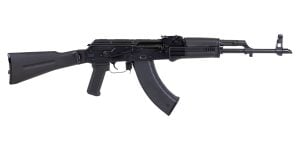
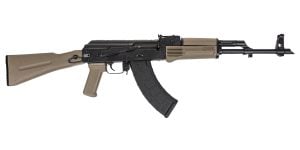
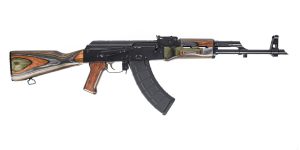
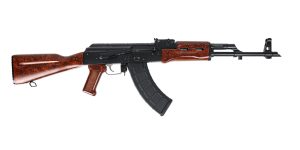
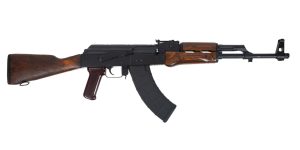
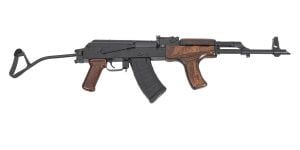
Under $800: PSA AK-47 GF3
The PSA AK-47 GF3 is the best entry-level AK on the market. It features forged trunnions, a hammer-forged barrel, and decent Magpul furniture. It’s not fancy, but it’s built right and it works. PSA frequently runs sales that push the GF3 below $700, making it the cheapest forged-trunnion AK you can buy new.
If you can stretch your budget a bit, the GF5 adds an FN CHF chrome-lined barrel and is worth the upgrade. But the GF3 gets the job done for shooters on a tight budget.
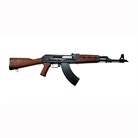
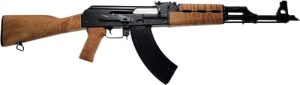
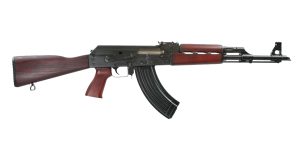
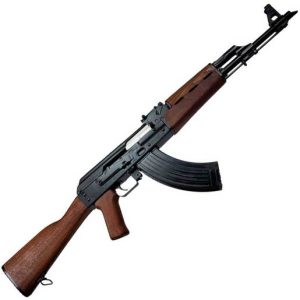
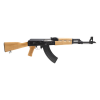
$800 to $1,000: Zastava ZPAP M70 or WASR-10
This is the sweet spot. The Zastava ZPAP M70 is my top recommendation for most buyers. You get the bulged trunnion, 1.5mm receiver, CHF chrome-lined barrel, and walnut furniture. It’s an absurd amount of quality for a rifle in this price range.
The WASR-10 is the proven alternative. It’s not as refined as the Zastava, but it’s a genuine Romanian military rifle that has earned its reputation over millions of rounds fired across the globe. WASRs are also standard AKM pattern, which means the widest possible aftermarket support. Both turn up regularly at the major retailers, and the live price comparison further down this page will show you who has them and for how much right now.
$1,000 to $1,300: KUSA KR-103 or WBP Jack
The KUSA KR-103 is essentially an American-made AK-103, one of the most modern Russian military AK variants. Build quality is outstanding, and it comes with a side rail for optic mounting. It’s the closest thing to a new Russian AK you can buy.
The WBP Jack from Poland is equally impressive if you can find one in stock. Polish manufacturing quality is superb, and the Jack has earned a cult following for good reason. Both rifles at this price point are buy-once, cry-once purchases that you’ll never outgrow.
$1,500 and Up: Arsenal SAM7R or IWI Galil ACE
If money is no object and you want the absolute best, the Arsenal SAM7R is the answer for a traditional AK. Its milled receiver is a work of art, Bulgarian quality control is meticulous, and the rifle will outlast your grandchildren. It’s heavy, it’s expensive, and it’s worth every penny.
The IWI Galil ACE is the modernized AK option. It’s based on the AK operating system but redesigned by Israel’s IWI with a monolithic top rail, left-side charging handle, and modern ergonomics. It accepts standard AK magazines in 7.62x39mm. If you want AK reliability with AR-15 ergonomic sensibilities, the Galil ACE is the pick. Both are low-volume rifles that sell out quickly, so availability moves week to week.

Find the Best Price in Seconds
Search once, compare 200+ trusted retailers instantly.
Deals of the Day
Today's best discounts · Updated 3x daily
Gun Deals
See All →
Ammo Deals
See All →


Best-priced firearms across 200+ retailers · Updated every 4 hours

Final Thoughts
The AK-47 is one of the most proven rifle designs in history. It’s been in continuous military service since 1949, it’s been manufactured in more countries than any other firearm, and it continues to earn its reputation for reliability every single day. Buying one in 2026 is easier and safer than ever, as long as you know what to look for.
Stick with forged trunnions. Prioritize chrome-lined barrels. Buy from established manufacturers with good track records. And if you’re on the fence between two rifles, spend the extra money on the better one. A quality AK is a 50-year gun. The price difference between “good enough” and “excellent” is $200 to $300, and you’ll appreciate that investment every time you pick up the rifle.
I’d start with a Zastava ZPAP M70 if you want the best value, or a KUSA KR-103 if you want the most authentic AK experience. Either way, you’re getting a fantastic rifle. Welcome to the AK world.
Frequently Asked Questions
For the full 7.62×39 platform spectrum spanning AK, AR, bolt action, SKS, and Mini-30 picks, see our best 7.62×39 rifles roundup covering the PSA AK-47 GF5, Zastava ZPAP M70, Ruger Mini-30, CMMG Mk47, and 5 more. the SKS buying guide covers the other cheap 7.62×39 option.
What does AK-47 actually stand for?
Avtomat Kalashnikova, which translates as Kalashnikov's automatic, and the 47 refers to the year of the design trials. In Russia and the former Eastern Bloc nobody calls it an AK-47. It is simply the Kalashnikov, or the AK.
Is an AK-47 the same as an AKM?
Not quite, and nearly every rifle sold in America as an "AK-47" is actually an AKM pattern. The original AK-47 used a milled receiver machined from a solid block, which was strong and expensive. The AKM arrived in 1959 with a stamped and riveted sheet-metal receiver, cutting about a third of the weight and most of the cost, and adding a slanted muzzle brake. If the receiver is stamped, you are looking at an AKM pattern. That is normal and not a warning sign.
Is an AK-47 a good first rifle?
An AK-47 can absolutely be a good first rifle. The manual of arms is simple, recoil is manageable, and 7.62x39mm ammo is affordable. That said, many first-time buyers find the AR-15 easier to learn on due to lighter recoil, more intuitive controls, and better ergonomics. If you are drawn to the AK platform specifically, go for it. Just get a quality one. For a comparison, read our AR-15 vs AK-47 breakdown.
Are AK-47s legal in the US?
Semi-automatic AK-pattern rifles are legal to own in most US states. They are not machine guns and fire one round per trigger pull, just like any other semi-automatic rifle. Some states including California, New York, New Jersey, Massachusetts and Connecticut restrict features like pistol grips, folding stocks or detachable magazines, which may require a compliant configuration. True select-fire AKs are heavily NFA-restricted. Check your state and local laws before purchasing.
How much does an AK-47 cost?
In 2026, new AK-47 prices range from about $650 for a budget PSA model to $2,000 and up for a premium Arsenal milled rifle. The sweet spot for most buyers is $800 to $1,100, which gets you a Zastava ZPAP M70, KUSA KR-103 or PSA GF5. Used AKs vary widely by manufacturer, condition and origin, and Russian imports like Saiga and Vepr command significant premiums because of the import ban.
What caliber is an AK-47?
The standard AK-47 fires 7.62x39mm, an intermediate cartridge with roughly the same energy as .30-30 Winchester. It leaves the muzzle at about 2,350 fps with a 122 grain bullet. AK-pattern rifles are also built in 5.45x39mm (AK-74), 5.56 NATO, 7.62x51 NATO and 9mm, but 7.62x39mm remains the most common and the cheapest to feed.
What is the best AK-47 ammo?
For range use and plinking, steel-cased FMJ from Wolf, Tula, Red Army Standard or Barnaul is the standard. It is cheap, reliable, and what the platform was designed around. For defensive or hunting use, Hornady SST 123gr and Federal Fusion 123gr are excellent soft points. Avoid corrosive surplus unless your barrel is chrome-lined and you will clean the rifle promptly afterwards.
What is the difference between an AK-47 and AK-74?
Cartridge, mainly. The AK-47 and its AKM successor fire 7.62x39mm. The AK-74, introduced in 1974, fires the smaller and faster 5.45x39mm. The 74 has less recoil, a flatter trajectory and a distinctive muzzle brake. Both use the same basic operating system. In the US, 7.62x39mm rifles are far more common and the ammunition is much easier to find.
Is an AK-47 good for home defense?
It can work, but it is not the obvious choice. The 7.62x39mm round punches through interior walls far more readily than 5.56 NATO or a defensive shotgun load, and full metal jacket loads stay intact rather than fragmenting. An AR-15 with proper defensive ammunition, or a 12-gauge, is the better answer indoors. If you want the AK anyway, use soft-point ammunition and consider a shorter barrel.
What AK-47 brands should I avoid?
Avoid rifles with cast front trunnions, which can crack and fail. Century Arms' US-made VSKA and C39 models have a documented history there, though their imported WASRs from Cugir are fine. Stick to forged trunnion rifles from Zastava, Arsenal, WBP, Kalashnikov USA, or an imported WASR. The trunnion matters more than the badge on the dust cover.
What is the best AK-47 to buy in 2026?
It depends on budget. For premium quality the Arsenal SAM7 series is top tier. For the best value, the Zastava ZPAP M70 delivers a forged, bulged trunnion for under $1,000, and the WBP Jack from Poland is a strong mid-range option. Palmetto State Armory's AK line has become the affordable American standard. Avoid the cheapest no-name builds, where quality control is a gamble.
Can I hunt with an AK-47?
Yes. The 7.62x39mm is ballistically close to .30-30 Winchester, which has taken more whitetail than almost any other cartridge. With quality soft points like Hornady SST, Federal Fusion or Winchester Deer Season XP it is effective on deer-sized game inside 200 yards. Some states set minimum caliber or cartridge requirements, so check local regulations.
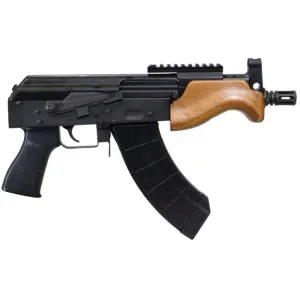
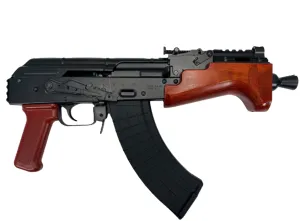
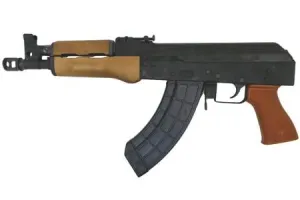
Where can I buy a Draco AK pistol?
The Draco is a Romanian-made AK pistol imported by Century Arms, essentially a WASR with a short barrel and no stock, classified as a pistol. They are widely available from the major online retailers. Prices move around a lot, so check live pricing rather than any figure written into an article.