

Last updated August 16th 2026 · By Nick Hall, .50 BMG shooter familiar with FFL class, recoil mitigation, and the real cost of shooting fifty
@@M2@@USA Gun Shop is reader-supported. When you buy through links on our site, we may earn an affiliate commission at no extra cost to you. This does not influence our editorial content or recommendations.
- Treat every gun as loaded
- Point the muzzle in a safe direction
- Keep your finger off the trigger until you’re ready to shoot
- Know your target and what’s beyond
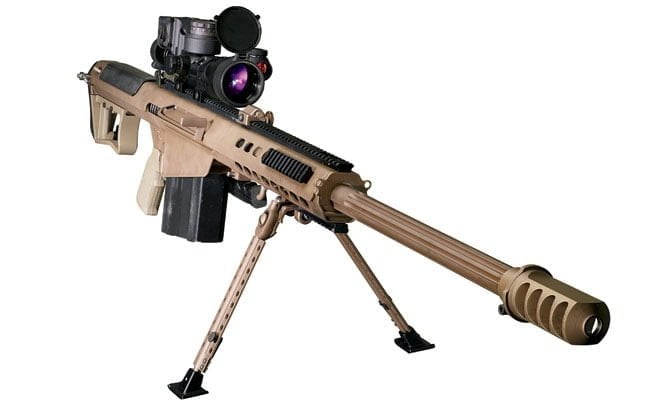
Table of Contents
How we tested: Every pick here is ranked against our testing methodology. Minimum round counts, accuracy and reliability protocols, the failures that disqualify a gun.
Introduction
I fired my first 50 BMG round in 2018 at a long-range desert shoot in Nevada, and it genuinely changed how I think about rifles. The concussive blast, the visible trace downrange, the steel plate rocking at 1,000 yards. Nothing else in the firearms world comes close to that experience.
After owning two different 50 cals and shooting at least a half dozen others, I put together this guide to help you figure out if a fifty caliber rifle actually makes sense for you. I’ll cover the ballistics, the real costs (they’re steep), what the military tip colors actually mean, the legal side, and how the round compares to the other big long-range cartridges. Picking the rifle itself is a separate job, and our best 50 BMG rifles guide handles that one.
Let me be upfront: most people will never need a 50 BMG. But “need” isn’t really the point, is it? If you want to own the most powerful commonly available rifle cartridge on the planet, this guide will help you do it the right way.
What is 50 BMG?
History of the Cartridge
The .50 BMG, short for Browning Machine Gun, is designated 12.7x99mm NATO and listed by C.I.P. as the 50 Browning. It is a NATO standard service cartridge under STANAG 4383. John Browning drew it up during the First World War, not in peacetime: the American Expeditionary Force wanted something that could reach aircraft and put holes in armor, and nothing in the inventory could do either.
The case is essentially a scaled-up .30-06. Browning worked the design with Winchester and Frankford Arsenal, and he and Colt had working prototypes finished on 11 November 1918, which is Armistice Day. The war it was built for ended the week the gun was ready.
It entered service in 1921 in the M1921 Browning machine gun, and that design matured into the M2HB, which is still bolted to American vehicles and aircraft more than a century later. Very little else in small arms has had that kind of run. The civilian side came much later, in the 1980s and 1990s, when Barrett and others started building rifles around the round.
Ballistics and Performance
Depending on load, a .50 BMG leaves the muzzle with somewhere between 10,000 and 15,000 ft-lbs of energy. To put that in perspective, a .30-06 makes 2,000 to 3,000 and a .308 about 2,600. Two published examples: a 647 grain Speer runs 3,044 fps for 13,310 ft-lbs, and an 800 grain Barnes runs 2,895 fps for 14,895 ft-lbs.
The armor figure is the one that explains why the round exists. Fired from an M2, it will go through nine tenths of an inch of face-hardened armor steel at 220 yards. It was never designed to shoot at people.
Effective accurate range sits between 1,500 and 2,000 yards in the hands of a skilled shooter with quality glass. The maximum ballistic range stretches to approximately 4 miles, though nobody is making aimed shots at that distance. The round maintains supersonic velocity well past 2,000 yards, which is a big part of why long-range shooters love it.
Why Civilians Buy 50 BMG Rifles
Long-range target shooting is the number one reason. There’s a dedicated community of ELR (Extreme Long Range) shooters who compete at distances beyond a mile, and 50 BMG is the classic choice for that discipline. Beyond competition, plenty of owners buy them simply because they can. It’s the kind of rifle that turns heads at any range.
Some buyers treat 50 BMG rifles as investments. Barrett M82s and M107s hold their value exceptionally well, and certain limited-production models have appreciated significantly over the years. A small number of hunters use them for dangerous game in Africa, though that’s relatively uncommon given the weight and bulk of these rifles.
The Ammunition, and What You Can Actually Buy
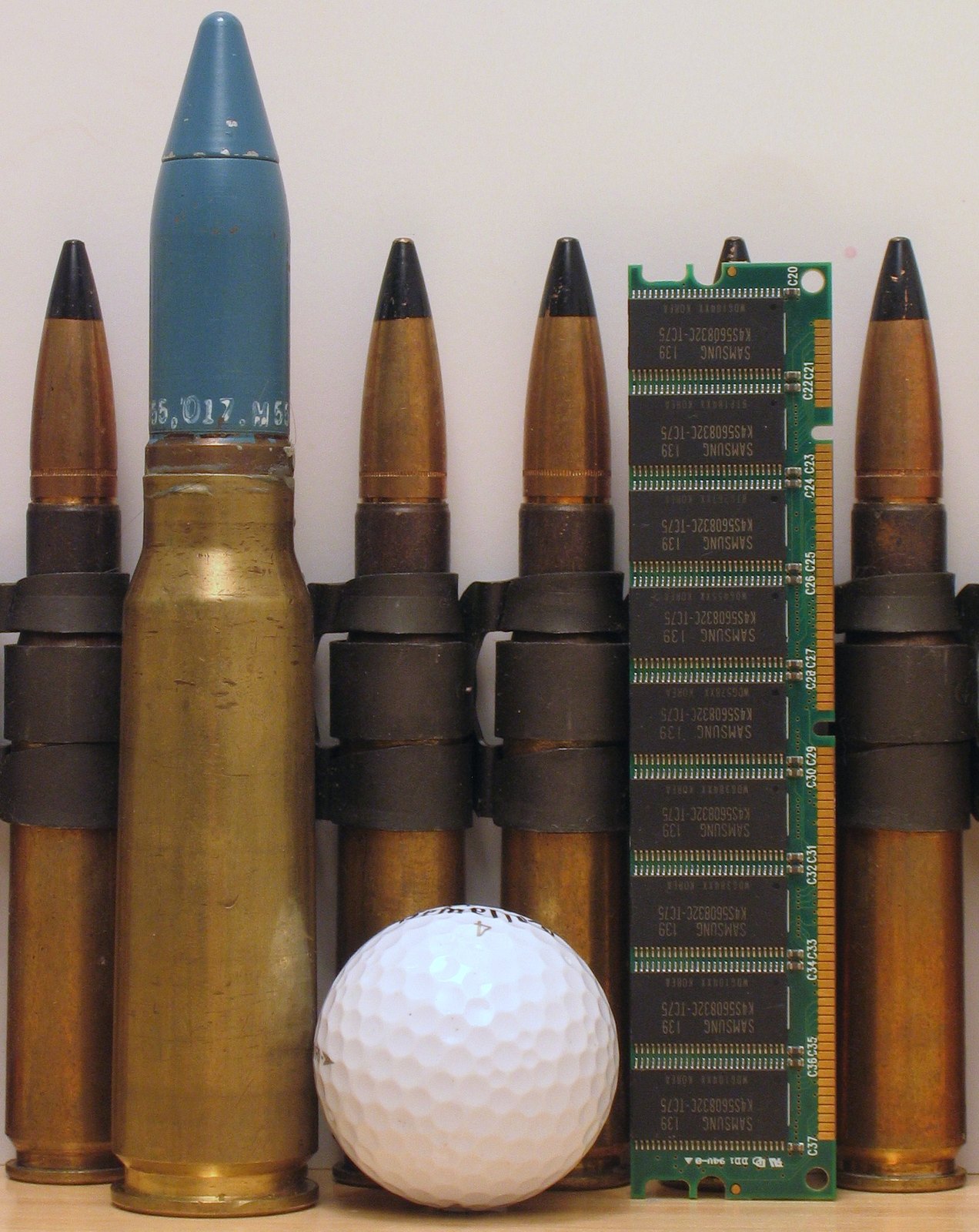
This is the part that decides whether you keep the rifle. A .50 BMG round is roughly five and a half inches long and weighs about as much as a small hammer, and it is priced accordingly.
What is on the shelf
Civilian buying comes down to three broad tiers. Surplus and ball ammunition, most often M33-pattern, is what most people shoot: it is the cheapest way to make noise and it is accurate enough for steel at moderate distance. Commercial full metal jacket from PMC, Prvi Partisan and PPU sits just above it, at 625 to 660 grains. Match ammunition from Hornady and others is what you buy when the rifle is better than the ammo, and it costs accordingly. We go through the specific loads worth buying in the 50 BMG ammo guide.
You will also see linked ball and tracer mixes sold for machine gun use, four ball to one tracer. They are legal to own, and worth knowing about if you ever get the chance to shoot a belt-fed.


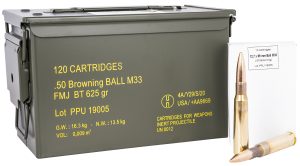

A note on what you cannot buy
Armor-piercing incendiary and explosive .50 BMG is military ammunition. Some of it is unlawful to possess, some of it is simply unavailable, and none of it belongs at a public range. If a seller offers you Raufoss, walk away.
Military Cartridge Types, and How to Read the Tips
Almost every serious .50 BMG round is identified by the color of its tip. This is the shorthand, and it is genuinely useful if you ever handle surplus.
| Designation | Tip marking | What it does |
|---|---|---|
| M33 Ball | Unpainted copper | The standard round. Personnel and unarmoured targets. This is the pattern most civilian surplus follows. |
| M17 Tracer | Tracer | Observation, signalling and marking targets for other weapons. |
| M8 API | Silver | Armor-piercing incendiary. For armored and flammable targets. |
| M20 API-T | Red with an aluminum ring | The M8 with a tracer element added. |
| M903 SLAP | Amber sabot | Saboted light armor penetrator. A 355 to 360 grain tungsten core that will go through three quarters of an inch of steel at 1,500 yards. |
| M962 SLAP-T | Red plastic sabot | SLAP with a tracer. |
| Mk 211 Raufoss | Green with a gray ring | A combined-effects round: tungsten penetrator, zirconium powder and Composition A explosive. Military only. |
How Much Does 50 BMG Cost to Shoot?
This is the question that separates the dreamers from the buyers. Ammo cost is the single biggest ongoing expense with 50 BMG ownership, and it’s not cheap by any measure. If you thought .308 match ammo was pricey, prepare yourself.
Ammo Cost Breakdown
Match/Precision Ammo (Hornady A-MAX 750gr, Hornady Match): Expect to pay $5 to $6 per round. This is what you’ll want for serious accuracy work and competition shooting. The consistency round to round is significantly better than bulk ammo.
Ball/FMJ (Federal American Eagle, PMC): These run about $3 to $4 per round and are your best option for general shooting and practice. Quality is decent and availability is good at major retailers.
Surplus/Mil-Spec: When available, surplus ammo runs $3 to $5 per round. Supply fluctuates and some surplus uses corrosive primers, which means extra cleaning after every session. Always check before you buy.
What a Year of Shooting Actually Costs
Let’s do some honest math. If you shoot 100 rounds per month (which is a moderate amount for someone who’s serious about their fifty), you’re looking at $300 to $800 per month in ammo alone. That’s $3,600 to $9,600 per year. Most 50 BMG owners I know shoot far less than that, maybe 20 to 50 rounds per range trip, a few times a month.
A more realistic budget for a casual owner who hits the range twice a month and sends 30 rounds each time: about $180 to $480 per month, or $2,160 to $5,760 annually. It adds up fast. For detailed picks on the best ammo options, check out our Best 50 BMG Ammo guide.

What the Military and Police Actually Use It For
The .50 BMG has never really been an anti-personnel round. Its job is equipment.
Anti-materiel work
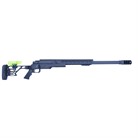
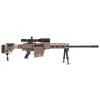
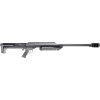
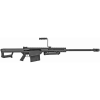
The original brief was aircraft and armor, and the modern version of that is disabling vehicles, radar, generators, parked aircraft and anything else expensive from a distance at which nobody can reasonably shoot back. Anti-materiel rifles like the Barrett M82 and its descendants exist for exactly this, and the M2 Browning still does the heavy version of the same job.
Explosive ordnance disposal
One of the quieter uses, and one of the most sensible. A single .50 BMG round will set off or break up unexploded ordnance from a safe standoff, which beats sending a person to look at it.
Coast Guard and law enforcement
The US Coast Guard mounts them on helicopters and uses them to shoot out the engines of boats that will not stop. It is a precise, non-lethal-by-intent application of an enormous cartridge. On the police side, departments including the NYPD and Pittsburgh have held .50 BMG rifles, mostly for the same anti-materiel reasoning rather than any patrol use.
And on the civilian side
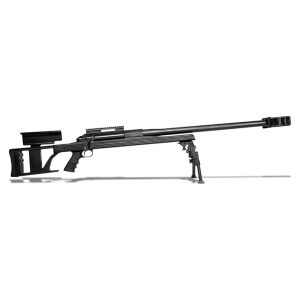
Extreme long range competition, mostly. The Fifty Caliber Shooters Association has run matches around this cartridge for years, and ELR shooting past a mile is where most privately owned .50s spend their working life. The rest are bought because their owners wanted one, which is a perfectly good reason. If you want the rifles ranked rather than the cartridge explained, that is the 10 best 50 BMG rifles roundup.
Legal Considerations
Before you start shopping, you need to understand the legal landscape around 50 BMG ownership. The good news is that in most of the country, buying a fifty is no different legally than buying any other rifle. The bad news is that a few states have specific restrictions you absolutely must know about.
Federally, a .50 BMG rifle is an ordinary Title 1 rifle. It is not an NFA item, there is no special tax stamp, and you buy one on the same Form 4473 as a deer rifle. The complications are all at state and city level, and that list has grown, so check your own jurisdiction before you spend anything.
Where it is restricted
California. The .50 Caliber BMG Regulation Act of 2004 ended private sales in the state. Rifles registered before the cut-off stay lawful in their owners’ hands. Check the current position with the California DOJ Bureau of Firearms before buying anything.
Illinois. The Protect Illinois Communities Act allows a .50 BMG rifle only if it was acquired by 10 January 2023 and registered by 1 January 2024. The Act reaches the ammunition as well, which most write-ups miss.
New Jersey. A center-fire rifle chambered for .50 BMG is treated as a prohibited destructive device. People who owned one lawfully beforehand were given a registration route rather than a confiscation.
Washington D.C. The District will not register a .50 BMG, and an unregisterable firearm is an unlawful one.
Connecticut. Narrower than its reputation. Connecticut names the Barrett Light-Fifty 82A1 specifically in its assault weapon definition rather than banning the caliber, so other .50 BMG rifles are not caught by that clause. Pre-ban registered examples remain lawful.
Maryland. No outright ban, but extra regulation applies and you are limited to one purchase a month.
Outside the United States the picture varies. In the United Kingdom, for example, a bolt-action .50 BMG is legal on a Section 1 Firearms Certificate, assessed on the same good-reason test as any other rifle.
One point worth stating plainly, because it comes up in every legislative debate: a 1999 US Department of Justice briefing found no confirmed case of a .50 BMG rifle being used in a violent crime in the United States. Almost every domestic case on record is a possession charge.
Range and Transport Challenges
Owning a 50 BMG legally is one thing. Finding a place to shoot it is another challenge entirely. Many indoor ranges and even some outdoor ranges don’t allow 50 BMG due to their backstop limitations. You’ll want to call ahead and confirm before you show up with a 30-pound rifle and a can of ammo.
Transport is also worth thinking about. These rifles are long (often 45 to 57 inches), heavy, and draw attention. A quality hard case is essential, and you should be familiar with your state’s transport laws regarding firearms in vehicles.
Maintaining Your 50 BMG
A 50 BMG rifle is a significant investment, and proper maintenance protects that investment. The good news is that these rifles are overbuilt and durable. The bad news is that when something does go wrong, parts and repairs aren’t cheap.
Cleaning After Every Session
Clean your 50 BMG after every shooting session, no exceptions. This is especially critical if you’re shooting surplus ammunition, which may use corrosive primers. Corrosive primer residue contains potassium chloride salts that attract moisture and cause rust in the bore. A quick pass with hot soapy water followed by standard cleaning solvents will neutralize the salts.
For non-corrosive ammo, standard bore solvent and a good bronze brush will handle fouling. Use a bore guide to protect the chamber and throat. A one-piece cleaning rod designed for 50 caliber bores is a worthwhile investment over segmented rods that can come apart inside the barrel.
Bore Inspection Schedule
Invest in a borescope or make friends with someone who has one. Check your bore every 500 rounds for signs of throat erosion, copper fouling buildup, or pitting. Catching problems early means you can adjust your cleaning routine or barrel care before accuracy degrades significantly.
Muzzle Brake Maintenance
Your muzzle brake takes a beating every time you pull the trigger. On semi-auto rifles, the brake is part of the gas system and must be kept clean for reliable cycling. Remove it periodically (following the manufacturer’s torque specs for reinstallation), soak it in solvent, and scrub out carbon buildup. Inspect the baffle surfaces and mounting threads for cracks.
Storage
These rifles are long and heavy, so storage takes planning. A standard gun safe may not accommodate a 57-inch Barrett without removing the upper receiver. Make sure you have a proper safe or storage solution figured out before you buy. A quality gun sock and dehumidifier in the safe will prevent corrosion during long-term storage.
50 BMG Alternatives
If the cost, weight, or legal restrictions of 50 BMG give you pause, there are several cartridges that deliver impressive long-range performance in smaller, lighter, and cheaper packages. None of them match the raw power of the fifty, but depending on your goals, one of these might actually be the better choice.
.338 Lapua Magnum
The .338 Lapua delivers roughly 80% of the practical range capability of 50 BMG at about one-third the ammo cost. Match-grade .338 Lapua runs $3 to $5 per round, and the rifles are significantly lighter (10 to 16 pounds). It’s the most popular alternative for shooters who want extreme range without the extreme everything else that comes with a fifty.
.408 CheyTac
The .408 CheyTac was specifically engineered to exceed 50 BMG’s effective range while using lighter rifles. It maintains supersonic velocity past 2,200 yards and has set multiple long-range shooting records. Ammo is expensive ($6 to $10 per round) and harder to find, but the rifles weigh 15 to 20 pounds less than most 50 BMG platforms.
.375 CheyTac
The .375 CheyTac is gaining serious traction in the ELR competition world. It offers exceptional ballistic coefficients, excellent accuracy, and works in platforms that weigh closer to standard heavy rifles. Ammo availability is the biggest challenge, though it’s improving as the cartridge gains popularity among competitive shooters.
Alternative Cartridge Comparison
| Cartridge | Ammo Cost/Round | Typical Rifle Weight | Effective Range | Best For |
|---|---|---|---|---|
| .50 BMG | $3 – $8 | 22 – 32 lbs | 1,500 – 2,000 yds | Maximum power, ELR shooting |
| .338 Lapua Magnum | $3 – $5 | 10 – 16 lbs | 1,200 – 1,700 yds | Best all-around long-range |
| .408 CheyTac | $6 – $10 | 14 – 22 lbs | 1,800 – 2,200+ yds | Extreme range, lighter platform |
| .375 CheyTac | $5 – $8 | 12 – 18 lbs | 1,600 – 2,000+ yds | ELR competition |
Frequently Asked Questions
How much does a 50 BMG rifle cost?
It spans a huge range, from entry-level single-shots to semi-autos that cost more than a car. Prices move enough that any number here would be stale within months, so see our best 50 BMG rifles guide, which carries live pricing on every model.
Is owning a 50 BMG worth it?
If you have access to a range that allows it and enjoy extreme long-range shooting, absolutely. It is an experience unlike any other caliber. If your range maxes at 300 yards, save your money.
Where can I shoot a 50 BMG?
Most indoor ranges prohibit 50 BMG. You need an outdoor range that allows it or access to private land with a safe backstop and at least a mile of clear distance. BLM land in western states works well.
How much does 50 BMG ammo cost per round?
Surplus ball ammo costs 3 to 5 dollars per round. Match-grade runs 6 to 10 dollars. Budget at least 100 to 200 dollars per range trip. This is not a caliber for high-volume shooting.
Is 50 BMG legal in all states?
Legal in most states. California and Connecticut ban 50 BMG rifles. Washington D.C. also prohibits them. Check your state laws before purchasing. No federal NFA registration is required.
What is the effective range of a 50 BMG?
Military snipers have confirmed kills beyond 2,500 yards. Civilian shooters regularly hit targets at a mile. The cartridge stays supersonic past 2,500 yards. Practical accuracy depends on the shooter and conditions.
Do I need a special license for a 50 BMG?
No. A 50 BMG rifle is purchased like any standard rifle with a background check. No NFA registration, no special license, no tax stamp. You must be 18 to buy from an FFL.
Is the recoil on a 50 BMG manageable?
Large muzzle brakes on most 50 BMG rifles reduce felt recoil to roughly the level of a 12-gauge shotgun slug. Semi-autos like the Barrett M82 spread recoil over a longer impulse. It is intense but not painful.
What does BMG stand for?
Browning Machine Gun. John Browning designed the cartridge during the First World War and it entered service in 1921 in the M1921 Browning machine gun, which matured into the M2HB that is still in service today. Its NATO designation is 12.7x99mm, and C.I.P. lists it as the 50 Browning.
Is 50 BMG the same as 50 cal?
Not quite, and the distinction matters when you are buying. "Fifty cal" is loose shorthand for any half-inch bullet. .50 BMG is one specific cartridge, 12.7x99mm, and it is enormous. Other .50 caliber rounds like .50 Beowulf and .50 Action Express are completely different cases that will not chamber in a .50 BMG rifle and cost a fraction as much to shoot.
What do the tip colors on 50 BMG ammo mean?
They identify the round. Unpainted copper is M33 ball, the standard load. Silver is M8 armor-piercing incendiary. Red with an aluminum ring is M20, the same thing with a tracer. Green with a gray ring is the Mk 211 Raufoss, which is a military explosive round. If you are buying surplus, ball is what you want and what you will almost always find.
Why was the 50 BMG invented?
Aircraft and armor. The American Expeditionary Force in the First World War had nothing that could reliably reach either, so Browning scaled the concept up. He and Colt finished working prototypes on 11 November 1918, the day the war ended, which is why the round is often described as arriving a week late for the conflict it was built for.
A .50 BMG rifle is a serious investment. We stacked the priciest fifties up against the cars you could buy instead in guns that cost more than your car.
3,979+ Gun & Ammo Deals
Updated daily from 200+ top retailers. Filter by category, caliber, action type, and price.