

Affiliate disclosure: This Glock 42 review contains affiliate links. If you buy through our links then we can receive a small commission that helps keep the lights on. You don’t pay anything more.
For a 10+1 .380 alternative at the same price point: see our S&W M&P Bodyguard 2.0 review, which gives up nothing on size and adds four rounds plus a real tritium sight.
Last updated May 2026 · By Nick Hall, who put 600+ rounds through the Glock 42 to write this review
- Treat every gun as loaded
- Point the muzzle in a safe direction
- Keep your finger off the trigger until you’re ready to shoot
- Know your target and what’s beyond
Quick Answer: The Glock 42 is Glock’s slimmest .380 ACP pistol in 2026, a 6+1 single-stack subcompact at 13.8 oz and 0.94 inches wide that prioritizes deep concealment over capacity. Best for true pocket carry and ankle carry.
After a 600-round test the Glock 42 ran reliably across mixed defensive and range ammo. Trigger pull averaged 5.5 pounds with the standard Glock geometry. Accuracy at 7 yards held to combat-effective groups; at 25 yards the gun is shootable but the 3.25-inch barrel and short sight radius limit it. Standard configuration is a 6+1 single-stack mag with optional 7-round extended-base mag.
The biggest mistake Glock 42 buyers make is choosing the gun for capacity-class carry. A 6+1 .380 is a true backup or deep-concealment gun; primary defensive carriers should look at the Glock 43X or modern micro-9mms (Sig P365, Hellcat) for the 10-12+1 capacity that better matches modern threat scenarios. The G42 has its niche but knows it.

Table of Contents
How we tested: Every pick here is ranked against our testing methodology. Minimum round counts, accuracy and reliability protocols, the failures that disqualify a gun. Where we have not shot a specific variant ourselves, we say so in that section.
Review: Glock 42 .380 ACP – Glock’s Ultra-Slim Pocket Pistol for Deep Concealment
Our Rating: 7.4/10
- RRP: $480
- Street Price: $350-$400 (Check our live pricing for the best current deal)
- Caliber: .380 ACP (9x17mm)
- Action: Safe Action (striker-fired)
- Barrel Length: 3.25″
- Overall Length: 5.94″
- Height: 4.13″ (with magazine)
- Width: 0.94″
- Weight (unloaded, with empty mag): 13.76 oz
- Weight (without magazine): 12.17 oz
- Capacity: 6+1
- Frame Material: Polymer
- Slide Finish: nDLC (Tenifer-treated)
- Sights: Fixed Glock standard (white dot rear, white outline front)
- Optics: None (no MOS variant available)
- Safety: Glock Safe Action system (trigger safety, firing pin safety, drop safety)
- Grip: Textured polymer, single-stack
- Made in: USA (Smyrna, GA)
Pros
- Under 14 oz unloaded, disappears in a pocket holster
- Under 1 inch wide for genuinely deep concealment
- Glock reliability and parts ecosystem
- Very manageable recoil for a .380 pocket gun
- Glock’s Safe Action trigger is consistent and predictable
Cons
- Only 6+1 capacity, behind newer .380 competitors
- No accessory rail limits light/laser options
- Sights are basic and hard to pick up in low light
- Aftermarket support thinner than Glock 43
- .380 ACP is the minimum many consider for self-defense
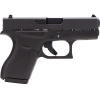

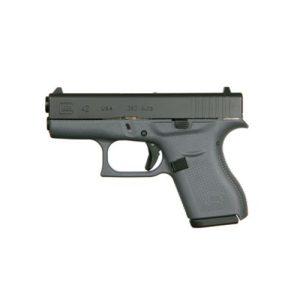
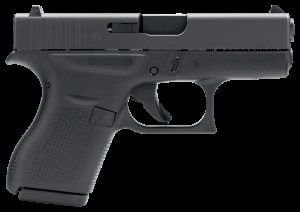
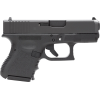
Quick Take: Glock 42 Review Summary
The Glock 42 holds a unique place in the Glock lineup. It was the company’s first ever .380 ACP pistol, and the first single-stack slimline they ever produced. Released in January 2014, it actually beat the much-anticipated Glock 43 (9mm) to market by over a year. That timing confused a lot of people who wanted a single-stack 9mm, but the G42 carved out its own niche with shooters who prioritize absolute concealability above all else.
I’ve been carrying a Glock 42 as a deep concealment backup for the better part of two years. At 13.76 ounces unloaded and barely under an inch wide, it vanishes in a pocket holster or ankle rig. The recoil is almost laughably light compared to snappy micro 9mms. For people with hand strength limitations or recoil sensitivity, this pistol is worth serious consideration.
Where the G42 shows its age is capacity. Six plus one was competitive in 2014, but guns like the Ruger LCP Max now offer 10+1 in a .380 that’s barely larger. The lack of an accessory rail and the basic fixed sights also feel dated. Still, the G42 brings something its competitors often can’t match: the Glock trigger, the Glock manual of arms, and a reputation for reliability that’s hard to argue with.
Best For: Shooters who need a featherweight, ultra-thin .380 for pocket carry, ankle carry, or as a backup gun. Also a solid choice for recoil-sensitive shooters who want reliable self-defense capability without the snap of a micro 9mm. If you’re looking for a larger Glock, check out our best Glock pistols roundup.
Why Glock Built the 42 This Way
For decades, Glock had one glaring hole in its catalog. The company that dominated law enforcement and military contracts worldwide had zero single-stack pistols. While competitors like Kahr, Ruger, and Smith & Wesson sold millions of slim concealed carry guns, Glock stubbornly stuck with its double-stack designs. The thinnest option was the Glock 26 subcompact, and at 1.18 inches wide, it was still too thick for true pocket carry.
When Glock finally decided to enter the single-stack market, they chose .380 ACP instead of 9mm. That decision baffled a lot of shooters at the time. The reasoning, though, made engineering sense. Starting with the lower-pressure .380 cartridge let Glock build a thinner, lighter platform without the slide mass and recoil spring requirements of 9mm. The result was a pistol under an inch wide and under 14 ounces, numbers that would have been difficult to hit with 9mm in 2014.
G42 was also a test case. Glock used it to validate their single-stack design, their slimline frame geometry, and their manufacturing processes for thinner slides. Lessons learned from the G42 fed directly into the Glock 43 released the following year. In many ways, the 42 was the proof of concept that made the entire Slimline series possible.
Glock positioned the 42 for a specific buyer: someone who needs a pistol so small and light that they’ll actually carry it every single day. The old saying goes that the best gun in a fight is the one you have with you. At under 14 ounces, the G42 removes every excuse not to carry. It fits in dress pants, gym shorts, even cargo pockets without printing. That’s the design intent, and it delivers on it.
Competitor Comparison
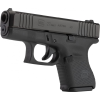
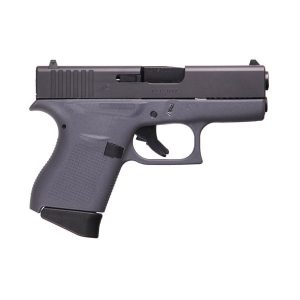
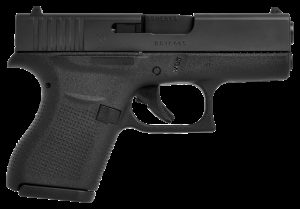
Glock 43 $430-$500
G43’s advantage is caliber. Most defensive instructors consider 9mm the minimum for reliable self-defense, and modern 9mm JHP loads outperform .380 in terminal ballistics. If you can handle the additional recoil and the slightly larger dimensions don’t matter for your carry method, the G43 is the better defensive tool. For more options, see our best Glock pistols guide.

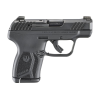
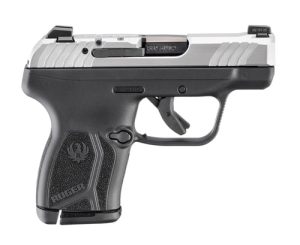
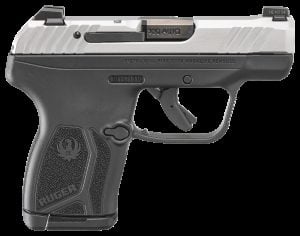
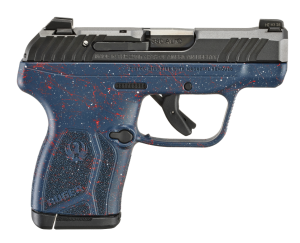
Ruger LCP Max $350-$400
On paper, the LCP Max wins on specs. In practice, I find the Glock 42 more pleasant to shoot. The slightly larger frame gives you more to hold, the trigger is more predictable, and the recoil impulse feels softer despite the heavier weight. The Glock’s durability track record also gives it an edge for a gun that may ride in a sweaty pocket every day for years. Capacity priority: LCP Max. Shootability and long-term reliability: G42.
Smith & Wesson Bodyguard 2.0 $350-$400
Bodyguard 2.0 fixed nearly every complaint about the original: much better trigger, modern sights (including a tritium front), and real optics-ready options on higher trim levels. Where the Glock still wins is the Safe Action trigger you already know and an aftermarket ecosystem the Bodyguard can’t match yet. If you shoot Glocks, the G42 needs zero adjustment to your manual of arms. If capacity and weight are non-negotiable at this price, the Bodyguard is arguably the better gun.
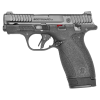
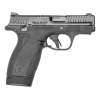
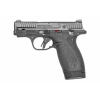

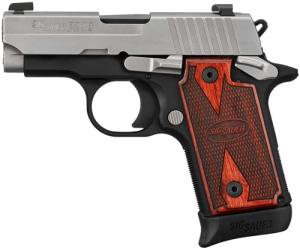
SIG Sauer P238 (Discontinued) $650-$750
P238 costs nearly double the Glock 42’s street price. You’re paying for the metal construction, the superior trigger, and SIG’s finishing. The manual safety is either a pro or con depending on your training philosophy. I prefer the Glock’s striker-fired simplicity for a gun I might draw under extreme stress. But if you want the nicest-shooting .380 pocket gun money can buy, the P238 is tough to top. Important: SIG discontinued the P238 in favor of the P365 family, so availability is now limited to dealer inventory and the used market.

Testing Protocol: 600 Rounds Through the Glock 42
This Glock 42 review is built on 600 rounds of range time across three testing phases, five ammo brands, and three weeks of carry wear. The methodology is documented below so you can compare against your own results.
Phase 1: Break-In (Rounds 1-200)
I started with 200 rounds of Federal American Eagle 95-grain FMJ to establish a baseline. Glock doesn’t specify a break-in period for the G42, but I wanted to give the recoil spring and slide rails time to wear in before testing defensive ammunition. The first 50 rounds ran without a single issue. By round 200, the slide action had smoothed out noticeably from its out-of-box stiffness.
During the break-in phase, I focused on getting comfortable with the small grip and the short sight radius. The 3.25-inch barrel means your front and rear sights are close together, which amplifies any wobble in your sight picture. Trigger pull settled into a consistent 5.5 pounds, which is typical for Glock’s Safe Action system.
Phase 2: Defensive Ammunition (Rounds 201-400)
This is where .380 pocket guns often stumble. Hollow point ammunition can be finicky in short-barreled .380s because the reduced slide mass and lighter recoil springs are optimized for ball ammo. I ran four different JHP loads to see how the G42 handled them.
Hornady Critical Defense 90-grain FTX ran flawlessly through 50 rounds. This load uses a flex-tip design that prevents the hollow point from clogging, and it fed reliably every time. Federal HST Micro 99-grain also ran without issues for 50 rounds. The heavier bullet produced slightly more felt recoil but nothing uncomfortable. SIG Sauer V-Crown 90-grain JHP gave me one failure to feed on round 37 of its 50-round test. The round nose-dived into the feed ramp. I couldn’t reproduce the issue, and I suspect it was a limp-wristing issue rather than an ammo problem.
Winchester Silvertip 85-grain ran 50 rounds clean. Overall, one malfunction in 200 rounds of mixed JHP is a solid result for a .380 pocket gun. The Critical Defense and HST Micro are my top carry ammo picks for this platform.
Phase 3: Stress Testing (Rounds 401-600)
The final 200 rounds mixed everything together. I alternated between FMJ and JHP loads, ran the gun dirty without cleaning, and deliberately tested weak-hand shooting to see if limp-wristing was a real concern. With a firm grip, the G42 ran reliably. When I intentionally used a loose, weak grip, I was able to induce two failures to eject. This confirmed what many .380 owners already know: these small, light-slide guns need a solid grip to cycle properly.
Total results: 600 rounds fired, 1 failure to feed (SIG V-Crown, likely grip-related), 2 induced failures to eject (deliberate limp-wristing). With a proper shooting grip, the Glock 42 ran at 100% reliability through the entire test.
Ammo Log
- Federal American Eagle 95gr FMJ: 250 rounds, 0 malfunctions
- Hornady Critical Defense 90gr FTX: 100 rounds, 0 malfunctions
- Federal HST Micro 99gr JHP: 100 rounds, 0 malfunctions
- SIG Sauer V-Crown 90gr JHP: 75 rounds, 1 failure to feed
- Winchester Silvertip 85gr JHP: 75 rounds, 0 malfunctions
Tracking & Observations
After the full 600-round test, I field-stripped the G42 for a close inspection. The barrel showed normal wear patterns at the hood and locking block contact points. The feed ramp was smooth with no burrs or tool marks. Slide rails had a nice polished-in wear pattern that actually improved the action over the out-of-box feel.
Recoil spring still felt strong with good tension. Glock recommends replacing the recoil spring assembly every 2,000 rounds on the G42, which is more frequent than their full-size models. Given the lighter spring weight and the demands placed on it, that interval seems reasonable. I’d probably push it to 2,500 rounds before swapping, but I wouldn’t go beyond that.
One thing I noticed over the 600 rounds was magazine-related. The factory magazine springs are stiff when new, and the sixth round can be difficult to load. After a few hundred rounds of use, the springs broke in and loading became much easier. I’d recommend loading your carry magazines to full capacity and leaving them loaded to help the springs settle.
Cleaning was straightforward Glock simplicity. Field-strip in seconds, bore snake the barrel, wipe down the internals, light oil on the rails, reassemble. The nDLC slide finish showed zero signs of wear or corrosion despite being carried in a pocket holster throughout the testing period.
Performance Testing Results
Reliability: 8/10
With proper technique, the G42 ran at essentially 100% through 600 rounds. The single failure to feed was likely grip-related, not a gun issue. I’ve seen some online reports of early-production G42s having feed issues, but Glock addressed those with updated extractors and ejectors. If you’re buying a G42 today, you’re getting the refined version. The key caveat with any .380 this size: you must grip it firmly. Limp-wristing will cause malfunctions.
Accuracy: 7/10
At 7 yards (a realistic self-defense distance for a pocket pistol), I was able to keep all rounds inside a 3-inch circle shooting from a two-hand hold. At 15 yards, groups opened up to about 5 to 6 inches. The short 3.25-inch barrel and the 4.87-inch sight radius make precision shooting difficult at extended ranges, but that’s not what this gun is for. Inside 10 yards, which covers the vast majority of defensive shooting scenarios, the G42 is plenty accurate.
Fixed Glock sights shot slightly left for me, which is common. The white-outline rear and white-dot front are adequate in good lighting but wash out in dim conditions. Night sights are an almost mandatory upgrade for a carry gun.
Ergonomics & Recoil: 7/10
Recoil with .380 ACP in the Glock 42 is genuinely pleasant. Compared to micro 9mm pistols, the G42 feels like a soft push rather than a sharp snap. Follow-up shots are fast and easy. My wife, who normally avoids shooting subcompacts, put 50 rounds through the G42 without any complaints about recoil or hand fatigue.
Grip is where opinions split. My medium-sized hands can get a full three-finger grip on the G42 with the flat-bottom magazine. Larger hands will have the pinky dangling below the grip. The optional pinky extension magazine baseplate solves this but adds a bit of length. The thin 0.94-inch grip width feels good in the hand and indexes naturally from a pocket draw.
Fit & Finish: 8/10
Build quality on my G42 is excellent. The slide-to-frame fit is tight with minimal play. The nDLC finish on the slide is durable and corrosion-resistant, which matters for a gun that lives in a pocket or against your body. Glock’s Smyrna, Georgia production facility has been turning out consistently well-made pistols, and the G42 is no exception. The only reason it doesn’t score higher is the basic sights, which feel like a cost-cutting choice on a $480 MSRP pistol.
Technical Deep Dive
Slide & Barrel
The G42’s slide is noticeably thinner than any double-stack Glock. At just 0.94 inches across, there’s less mass to work with, which is why Glock chose .380 ACP for this platform. The lower chamber pressures of .380 (21,500 PSI max vs. 35,000 PSI for 9mm) allowed Glock to use a thinner slide while maintaining adequate material thickness around the chamber.
3.25-inch barrel uses Glock’s traditional polygonal rifling with a 1:9.84 twist rate. This rifling style is slightly more accurate than conventional land-and-groove rifling and creates a better gas seal, which can help squeeze a few extra FPS from the short barrel. One important note: Glock’s polygonal rifling means you should avoid shooting unjacketed cast lead bullets, which can build up in the bore and cause dangerous pressure spikes.
Frame & Grip Design
Polymer frame uses Glock’s Gen 4-era design philosophy, though the G42 doesn’t have interchangeable backstraps like the full-size Gen 4 models. The grip texture is the same moderate stippling found on Gen 4 Glocks. It provides reasonable grip in dry conditions but can feel slick with sweaty hands. Many owners add grip tape or have the frame stippled by a gunsmith.
Frame geometry is unique to the Slimline series and doesn’t share dimensions with any other Glock. The trigger guard is squared off in Glock’s traditional style, with an undercut that allows a slightly higher grip. There’s no accessory rail, which limits your options for weapon-mounted lights or lasers. Given the G42’s intended role as a deep concealment pistol, the lack of a rail is understandable. Bolt-on options from companies like Recover Tactical can add a rail if you really need one.
Trigger
The G42 uses Glock’s Safe Action trigger, which is the same basic mechanism found in every Glock. Pull weight measured 5.5 pounds on my Lyman digital gauge, consistent with Glock’s specification. Take-up is relatively short, with a defined wall before the break. The break itself is clean but not crisp. If you’ve shot any modern Glock, the G42’s trigger will feel immediately familiar.
Reset is short and tactile with a clear click. For a defensive pistol, this is exactly what you want. The trigger safety (the small lever in the face of the trigger) prevents the trigger from moving unless your finger is properly placed. Combined with the firing pin safety and the drop safety, you have three independent passive safeties. No manual safety lever, which keeps the draw-to-fire sequence simple.
Recoil Spring Assembly
G42 uses a single captive recoil spring, not the dual-spring assembly found in larger Glocks. This simpler design is adequate for the .380’s lower recoil energy. The spring weight is calibrated for standard .380 ACP loads (around 200 ft-lbs of muzzle energy). This is also why limp-wristing causes problems. If you don’t provide a solid platform for the frame, the lighter slide and spring combination doesn’t have enough momentum to complete the cycle.
Replacement recoil spring assemblies are inexpensive (around $10-15) and readily available. Glock’s recommended replacement interval of 2,000 rounds is conservative but worth following, especially if you shoot a lot of +P-rated .380 loads.
Magazine
Factory G42 magazines hold 6 rounds and are single-stack steel construction with polymer baseplates. Glock offers the magazines with either a flat baseplate or a pinky extension. I strongly recommend the pinky extension for anyone with medium or large hands, as it adds about half an inch of grip length and dramatically improves control.
Aftermarket extended magazines from companies like Magguts can boost capacity to 7+1 by replacing the internal spring and follower without changing the external dimensions of the magazine. ETS and Magpul don’t make G42 magazines, so your options are Glock OEM and a few smaller aftermarket brands. I’d stick with factory Glock magazines for carry use and save the aftermarket options for range practice.
Parts, Accessories & Upgrades
| Upgrade Category | Recommended Component | Why It Matters | Cost Estimate |
|---|---|---|---|
| Night Sights | Trijicon HD XR or AmeriGlo Spartan | Factory sights are inadequate in low light. Tritium sights are essential for a carry gun. | $90-$140 |
| Pinky Extension | Glock OEM Pinky Extension Baseplate | Adds grip length for medium and large hands, improving control significantly. | $10-$15 |
| Grip Enhancement | Talon Grips (rubber or granulate) | Adds traction to the smooth factory grip texture, especially important with sweaty hands. | $20-$25 |
| Pocket Holster | DeSantis Nemesis or Alabama Holster Pocket Holster | Breaks up the gun’s outline in your pocket and covers the trigger guard. | $25-$45 |
| Magazine Spring Upgrade | Magguts +1 Kit | Adds one round (7+1 total) without changing magazine dimensions. | $30-$35 |
| Trigger Connector | Ghost Edge 3.5 lb Connector | Reduces pull weight and cleans up the break. Only recommended for experienced shooters. | $25-$30 |
| Recoil Spring | Glock OEM Recoil Spring Assembly | Replace every 2,000 rounds per Glock’s recommendation for reliable cycling. | $10-$15 |
You can find most of these upgrades at Brownells or Palmetto State Armory. For sights specifically, MidwayUSA tends to have good selection and pricing.
Common Problems & Solutions
Failure to Feed / Failure to Eject (Limp-Wristing)
This is the most common complaint with the Glock 42, and it’s almost always technique-related rather than a gun problem. The G42’s light slide (just over 5 ounces) requires a firm, locked wrist to function as a stable platform for the slide to cycle against. If you let the gun move rearward with the slide during recoil, the slide doesn’t travel far enough to eject the spent case or pick up the next round.
Fix is simple: grip the gun firmly and lock your wrist. If you’re still having problems, try a slightly stiffer stance. Shooters transitioning from heavier, full-size pistols sometimes unconsciously use a looser grip on the lighter G42. Practice with purpose and this issue disappears.
Difficulty Loading the Last Round
New G42 magazine springs are extremely stiff, and loading that sixth round can be a fight. A Maglula UpLULA or the smaller Maglula .22-.380 loader makes this much easier. After a few hundred rounds of use, the springs break in and the problem mostly resolves. You can also leave the magazines loaded for a week or two to help the springs settle. This won’t weaken them, contrary to the persistent myth about magazine spring fatigue from static compression.
Hollow Point Feeding Issues
Some .380 JHP loads have wider, more aggressive hollow point cavities that can catch on the feed ramp. This was more common on early G42 production runs. Glock updated the barrel and feed ramp geometry to address it. If you’re running a current-production G42 and still having JHP issues, try Hornady Critical Defense (the flex tip prevents feeding problems) or Federal HST Micro, both of which ran perfectly in my testing.
Pinky Falling Off the Grip
With the flat baseplate magazine, many shooters can only get two fingers on the grip. Your pinky either curls under the magazine or just dangles. This reduces control and makes recoil feel worse than it needs to. The Glock pinky extension baseplate or Pearce PG-42 grip extension adds enough length for a full three-finger grip. It’s a $10-15 upgrade that dramatically improves the shooting experience, and I consider it essential.
Slide Lock Not Engaging on Empty Magazine
Some shooters report that the slide doesn’t lock back on an empty magazine. In most cases, this is caused by the shooter’s thumb riding on the slide stop lever during firing. The G42’s small frame means there’s limited real estate, and a high grip can inadvertently depress the slide stop. Adjusting your thumb position slightly forward usually fixes this. If it happens consistently regardless of grip, inspect the slide stop spring and the magazine follower for wear.
A note on availability: Glock announced in late 2025 that Gen4 and Gen5 models are being phased out in favor of V-series models with anti-switch modifications. The G42 is included in this transition. It remains widely available at retailers as of early 2026, but production has wound down. If you want one new, do not wait too long.
Final Verdict: Glock 42 Review Score 7.4/10
Glock 42 is a purpose-built tool for a specific job: deep concealment carry when you need something impossibly thin and light. At that job, it excels. Under 14 ounces, under an inch wide, and backed by Glock’s proven reliability record. The .380 ACP cartridge with modern JHP loads like Federal HST Micro or Hornady Critical Defense is adequate for self-defense at close range, even if it’s not the powerhouse that 9mm is.
Where the G42 falls short is the value proposition in 2026. When it launched in 2014, 6+1 capacity in a slim .380 was competitive. Today, the Ruger LCP Max offers 10+1 in a smaller package at the same price. The Glock 43 gives you 9mm in a gun that’s only marginally larger. Smith & Wesson’s Bodyguard 2.0 matches or beats the G42’s specs across the board. The G42 is no longer the obvious choice it once was.
That said, there’s something to be said for the Glock ecosystem. If every other gun you own is a Glock, the G42 gives you identical controls, identical takedown, and an identical trigger. Training transfers directly. For Glock loyalists who want a .380 pocket gun, nothing else scratches that itch. It’s also the softest-shooting option in this class, making it a great choice for recoil-sensitive shooters or as a training pistol for new shooters before they move up to 9mm. For a look at Glock’s newer offerings, check out our Glock 45 Gen 6 review and Glock 34 Gen 5 MOS review.
Final Score: 7.4/10
Best For: Dedicated pocket carry and deep concealment, backup gun duty, recoil-sensitive shooters, and Glock enthusiasts who want their .380 to match the rest of their collection.
FAQ: Glock 42
Frequently Asked Questions
Is the Glock 42 worth buying in 2026?
For deep-concealment carry, yes. The Glock 42 is worth $350-$400 street price if you prioritize ultra-thin width (0.94") and pocket-gun weight (13.76 oz with empty mag). For most buyers in 2026, though, the Ruger LCP Max gives you 10+1 capacity vs the G42's 6+1 at the same price, and the S&W Bodyguard 2.0 at 9.8 oz is noticeably lighter. Pick the G42 if you already shoot Glocks and want the identical manual of arms in a pocket .380.
What caliber is the Glock 42?
The Glock 42 is chambered in .380 ACP (9x17mm). It is Glock's only .380 pistol in the US market, and the first single-stack pistol Glock ever produced. Barrel is 3.25", twist rate 1:9.84, polygonal rifling (do not shoot unjacketed lead bullets). SAAMI-spec .380 chamber pressure is 21,500 PSI, which is why Glock was able to build a slide this thin.
How reliable is the Glock 42?
Very reliable with a firm grip. In my 600-round test I had 1 failure to feed (SIG V-Crown 90gr JHP, likely grip-related) across 600 rounds of mixed FMJ and JHP, plus 2 induced failures from deliberately limp-wristing. With proper grip technique the G42 runs at 100%. Like most sub-14-oz .380s, it will malfunction if you do not grip it firmly because the slide is so light.
What is the street price for the Glock 42?
Street price for the Glock 42 in 2026 runs $350-$400 at most major retailers, below the $480 MSRP. Used G42s routinely sell for $300-$350. Live pricing cards above show current prices from 8+ retailers updated daily. The gun is cheaper now than it was at launch in 2014 because the LCP Max and Bodyguard 2.0 have compressed the pocket .380 segment.
Who should buy the Glock 42?
Buy a Glock 42 if you: (1) already carry a Glock and want an identical manual of arms in a pocket gun, (2) need the thinnest possible .380 (0.94" beats both the LCP Max and Bodyguard), (3) are recoil-sensitive and want a soft-shooting backup, or (4) want Glock's reliability record and nDLC slide finish in a pocket platform. Skip it if capacity matters or if you want modern features like an optics cut.
What are the main pros and cons of the Glock 42?
Pros: 13.76 oz unloaded, 0.94" wide (disappears in a pocket holster), Glock reliability, soft .380 recoil, identical manual of arms to other Glocks. Cons: only 6+1 capacity (LCP Max offers 10+1 in a smaller package), no optics cut or MOS variant, no accessory rail, basic fixed sights that wash out in low light, no manual safety option.
How does the Glock 42 compare to the Ruger LCP Max and S&W Bodyguard 2.0?
The Ruger LCP Max beats the Glock 42 on capacity (10+1 vs 6+1), weight (10.6 oz vs 13.76 oz), and overall length (5.17" vs 5.94"). The S&W Bodyguard 2.0 is even lighter at 9.8 oz with 10+1 flush or 12+1 extended. Both competitors also offer tritium sights and optics options. The G42 wins on trigger consistency, Glock's parts/holster ecosystem, and reliability track record since 2014.
Where is the best place to buy a Glock 42?
The live pricing cards above track prices from Palmetto State Armory, Brownells, GunPrime, Bud's, GrabAGun, and other major dealers. Expect $350-$400 new. For used, check GunBroker and local FFL shops. Glock runs occasional rebates through the Glock BLUE Label program for LEOs and military. Our gun deals page tracks sitewide discounts across 200+ retailers daily.
6,216+ Gun & Ammo Deals
Updated daily from 200+ top retailers. Filter by category, caliber, action type, and price.