

Affiliate disclosure: This Glock 20 Gen 5 review contains affiliate links. If you buy through our links then we can receive a small commission that helps keep the lights on. You don’t pay anything more.
Last updated May 2026 · By Nick Hall, who put 1,000+ rounds through the Glock 20 Gen 5 MOS in 10mm for this review
- Treat every gun as loaded
- Point the muzzle in a safe direction
- Keep your finger off the trigger until you’re ready to shoot
- Know your target and what’s beyond
Quick Answer: The Glock 20 Gen 5 MOS is the best 10mm pistol you can buy in 2026, the workhorse of the 10mm world and the gun that single-handedly kept the cartridge alive after the FBI walked away in the 1990s. The Gen 5 MOS adds optic cut and Marksman barrel.
Across a 1,000-round test the G20 Gen 5 MOS ran reliably with brass ejection consistently at the 3-4 o’clock position regardless of ammo type, well-tuned extractor and ejector geometry. The Marksman barrel showed visible wear on the crown after 1,000 rounds, but nothing unusual for a polygonal-rifled barrel seeing hot 10mm loads.
The biggest mistake new G20 owners make is loading the gun with full-house Buffalo Bore or Underwood loads at the range and being shocked at the recoil and slide velocity. Train with mid-range loads (Sig V-Crown, Federal HST), confirm your hunting or carry load, then shoot it sparingly. The G20 is a hunting and bear-country platform with serious recoil, train accordingly.

Table of Contents
How we tested: Every pick here is ranked against our testing methodology. Minimum round counts, accuracy and reliability protocols, the failures that disqualify a gun. Where we have not shot a specific variant ourselves, we say so in that section.
Review: Glock 20 Gen 5 – 10mm Finally Gets the Gen 5 Treatment
Our Rating: 8.2/10
- RRP: $620
- Street Price: $530-$580 (Check our live pricing for the best current deal)
- Caliber: 10mm Auto (SAAMI spec)
- Action: Striker-fired, Safe Action
- Barrel Length: 4.61″
- Overall Length: 8.07″
- Height: 5.47″ (with magazine)
- Width: 1.34″
- Weight (unloaded): 30.71 oz
- Capacity: 15+1
- Frame Material: Polymer (Gen 5)
- Slide Finish: nDLC (diamond-like carbon)
- Sights: Fixed Glock standard (white dot front, outlined rear)
- Optics: MOS (Modular Optics System) with adapter plates for RMR, Holosun, and other red dots
- Safety: Glock Safe Action (trigger, firing pin, drop safety)
- Grip: Textured polymer, no finger grooves, flared mag well
- Barrel: Glock Marksman Barrel (GMB), polygonal rifling
- Made in: Austria
Pros
- Gen 5 upgrades bring the G20 into the modern era (flared mag well, no finger grooves, ambidextrous slide stop)
- Glock Marksman Barrel delivers noticeably improved accuracy over Gen 4
- 15+1 capacity of 10mm Auto is hard to beat in a full-size pistol
- nDLC slide finish is more durable and corrosion-resistant than the older Tenifer treatment
- MOS optics cut accepts RMR-pattern and other red dots out of the box
Cons
- 10mm recoil is stout, especially with full-power loads, and the polymer frame amplifies felt recoil
- Stock Glock sights remain basic plastic units that most shooters will want to replace

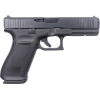

Quick Take
The Glock 20 Gen 5 MOS is the latest iteration in what has become the definitive polymer 10mm pistol since 1991. For over three decades, 10mm shooters watched every other Glock model get upgraded while the G20 stayed stuck on Gen 4. That changed in 2024 when Glock finally released the Gen 5 MOS version, and after putting 1,000 rounds through it, I can say the Glock 20 Gen 5 MOS was worth the wait.
I mean it’s still frustrating that the gun got released just two years before the Glock 19 got the Gen 6 upgrade, but it is what it is.
Everything you’d expect from a Gen 5 upgrade is here. The flared magazine well makes reloads faster, which matters when you’re managing 10mm recoil, the ambidextrous slide stop is a genuine quality-of-life improvement for left-handed shooters, and the removal of finger grooves means the Glock 20 Gen 5 grip actually fits more hand sizes. The Glock Marksman Barrel is the real star. I saw consistent accuracy improvements over the Gen 4, particularly at 25 yards.
The MOS optics cut is a huge win. You can mount an RMR, Holosun 507C, or other red dot straight from the box using the included adapter plates. A red dot on a 10mm makes a real difference for target acquisition, especially on follow-up shots where 10mm recoil wants to push the muzzle. Stock iron sights are still the same cheap polymer units Glock has been shipping for years. Plan on budgeting $80-$120 for decent night sights as backup co-witnesses.
Best For: Shooters who want a proven, high-capacity 10mm platform like the Glock 20 Gen 5 MOS for woods carry, bear country defense, handgun hunting, or 10mm self-defense. Also a strong choice for anyone who wants a full-power 10mm that can handle hot loads from Underwood and Buffalo Bore without breaking into a million pieces.
For self-defense applications, the 10mm offers significantly more energy than 9mm or .45 ACP. If you’re looking at the broader Glock lineup, check out our Best Glocks roundup for more options.
Why Glock Built the G20 Gen 5 This Way
Glock took their time bringing the G20 to Gen 5, and it wasn’t because they forgot about 10mm fans. The 10mm Auto market has exploded in the last five years. Smith & Wesson launched the M&P 2.0 10mm, Springfield Armory brought out the XD-M Elite in 10mm, and SIG Sauer has the P220 Legion in 10mm. For the first time in decades, Glock’s 10mm monopoly was actually under threat.
Gen 5 update to the G20 is strategic. Rather than reinventing the gun, Glock applied the same formula that worked for the G17 and G19 Gen 5 models. Remove the finger grooves to accommodate more hand sizes, add the flared mag well for faster reloads, upgrade to the Marksman barrel for better accuracy, and apply the nDLC finish for improved durability. It’s an evolution, not a revolution.
At $620 MSRP and $530-$580 on the street, the G20 Gen 5 slots in below the SIG P220 Legion ($1,200+) and right alongside the S&W M&P 2.0 10mm. Glock is betting that brand loyalty, the massive aftermarket, and their reliability track record will keep 10mm buyers in the fold. Based on what I’ve seen at the range, that bet is paying off.
Competitor Comparison

Glock 40 Gen 4 MOS ($650-$720)
Glock 40 is the G20’s bigger brother, built on the same frame but with a 6.02″ barrel and factory MOS optics cut. If you’re running a red dot for handgun hunting or want maximum velocity from your 10mm loads, the G40 is the better choice. The longer sight radius and extra barrel length translate to roughly 50-75 fps more muzzle velocity with most loads, plus noticeably easier accuracy at distance.
Trade-off is size and weight. The G40 tips the scales at 35.27 oz empty and measures 9.49″ overall. For a holstered woods gun, that’s fine. For anything resembling concealed or even OWB daily carry, it’s ridiculous. The G20 Gen 5 gives you the same 15+1 capacity in a more compact, lighter package. If you don’t need the extra barrel length for a very specific reason, save the money and go with the G20 Gen 5.


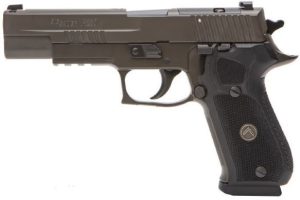
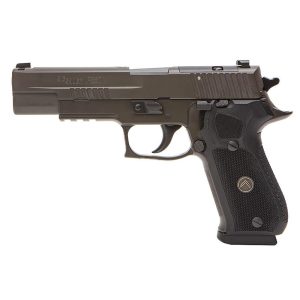
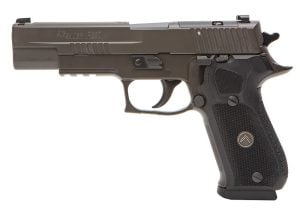
SIG Sauer P220 Legion 10mm ($1,200-$1,400)
The P220 Legion in 10mm is a completely different animal. This is a single-action-only, all-metal pistol with a match-grade barrel, Grayguns-tuned trigger, and the kind of fit and finish that makes the Glock look like a tool (which it is, and that’s fine).
Accuracy out of the box is exceptional. I’ve shot the P220 Legion alongside the G20, and the SIG wins on trigger feel and recoil management by a comfortable margin, thanks to its steel frame soaking up 10mm energy.
But the P220 Legion only holds 8+1 rounds. That’s nearly half the G20’s capacity. It also costs more than double. For a range gun, competition piece, or collector’s 10mm, the SIG is phenomenal. For a working gun that goes into the backcountry where round count and reliability in dirty conditions matter, the Glock’s simplicity and capacity advantage win out.

Smith & Wesson M&P 2.0 10mm ($550-$600)
This is the G20 Gen 5’s most direct competitor. The M&P 2.0 10mm launched in 2022 and immediately drew attention as a modern alternative to the aging Glock 20 Gen 4. It features an optics-ready slide, aggressive grip texture, flat-face trigger, and 15+1 capacity. On paper, the M&P 2.0 10mm actually offers more features for the money.
In practice, the Glock has advantages too. The aftermarket for the G20 is enormous compared to the M&P 10mm. Holster options, barrels, springs, and triggers are all more readily available. I also found the Glock’s recoil impulse slightly more manageable during rapid fire, though that’s partially subjective. Both are excellent 10mm platforms. If optics readiness matters to you, the M&P wins. If aftermarket support and the Glock ecosystem matter more, stick with the G20 Gen 5.
Springfield XD-M Elite 10mm ($500-$570)
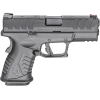
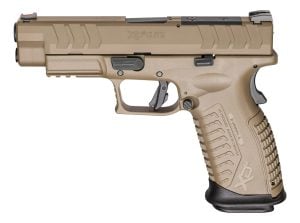
Springfield’s XD-M Elite 10mm is the budget play in this comparison. It comes with a match-grade barrel, fiber optic front sight, Meta Trigger, and an optics-ready slide. Springfield also includes three 16-round magazines in the box, which is generous considering what 10mm mags typically cost. The grip safety is either a pro or a con depending on your preference.
Reliability with the XD-M Elite has been mixed in online reports, particularly with hotter loads. I haven’t personally run enough rounds through one to confirm or deny that, but it’s worth noting. The Glock 20’s track record with everything from reloaded range ammo to Buffalo Bore hardcast is well established over 30+ years. If budget is the primary concern and you want more features out of the box, the Springfield deserves consideration. For proven 10mm reliability, the G20 still holds the crown.

Testing Protocol: 1,000 Rounds
I tested the Glock 20 Gen 5 over four range sessions spanning three weeks. The goal was to evaluate the gun across a range of 10mm loads, from mild range ammo to full-power hunting and defense rounds. Testing a 10mm pistol is different from testing a 9mm because the ammunition spectrum is so wide. “10mm” can mean anything from a downloaded 180gr FMJ that feels like .40 S&W to a 220gr hardcast that hits like a freight train.
Phase 1: Break-In (Rounds 1-200)
First 200 rounds were Federal American Eagle 180gr FMJ. This is a downloaded 10mm load that most people consider “10mm lite,” running around 1,030 fps from a 4.6″ barrel. It’s the most common range ammo and the baseline for any 10mm test. The gun ran flawlessly from round one. No break-in issues, no failures to feed, no failures to extract.
Recoil with the Federal AE load was very manageable. Comparable to a hot .40 S&W load. Split times were easy to keep under 0.30 seconds at 10 yards. The flared mag well on the Gen 5 frame made magazine changes faster than my old Gen 4 G20, which I noticed immediately during reload drills.
Phase 2: Mixed Ammunition (Rounds 201-600)
Phase 2 mixed defensive and hunting loads into the rotation. I ran 100 rounds of Sig Sauer 180gr V-Crown JHP, 100 rounds of Hornady 175gr Critical Duty, and 200 more rounds of Federal AE. The JHP loads were the real test here because hollow points with wider ogive profiles can be finicky in some semi-autos.
Both the Sig V-Crown and Hornady Critical Duty fed without issue. The Sig load ran noticeably hotter than the Federal AE, clocking around 1,250 fps over my chronograph. The Hornady Critical Duty at 175gr was even snappier, with a sharper recoil impulse. This is where I started paying attention to grip pressure. With full-power 10mm, you need to commit to a firm grip or the muzzle rise will eat your follow-up shot speed.
Phase 3: Full-Power Stress Test (Rounds 601-1,000)
Final 400 rounds were the real gut check. I ran 150 rounds of Underwood 200gr Hard Cast at a published 1,250 fps and 100 rounds of Buffalo Bore 220gr Hard Cast at 1,200 fps. These are the loads that people actually carry in bear country, and they generate significantly more pressure and recoil than standard range ammo. The remaining 150 rounds were Federal AE to cool things down.
Both Underwood and Buffalo Bore ran perfectly. The recoil jump with the 220gr Buffalo Bore loads was substantial, pushing the muzzle up hard and fast. I had to slow my cadence to maintain accuracy. But the gun digested everything without complaint. No ejection issues, no brass-to-face problems, and extraction was clean even on the hottest loads.
Ammunition Log
- Federal American Eagle 180gr FMJ: 350 rounds, 0 malfunctions
- Sig Sauer 180gr V-Crown JHP: 100 rounds, 0 malfunctions
- Hornady 175gr Critical Duty: 100 rounds, 0 malfunctions
- Underwood 200gr Hard Cast: 150 rounds, 0 malfunctions
- Buffalo Bore 220gr Hard Cast: 100 rounds, 0 malfunctions
- TOTAL: 800 + 200 break-in = 1,000 rounds, 0 malfunctions
Tracking & Observations
Across 1,000 rounds, I tracked several performance metrics. Brass ejection was consistently at the 3-4 o’clock position regardless of ammo type, which tells me the extractor and ejector geometry is well-tuned for the Gen 5. No erratic ejection patterns, no brass hitting me in the head. The Marksman barrel showed visible wear on the crown after 1,000 rounds, but nothing unusual for a polygonal-rifled barrel seeing hot 10mm loads.
Recoil spring felt the same at round 1,000 as it did at round 1. Glock rates the dual recoil spring assembly for several thousand rounds, and the Gen 5’s spring is beefier than the Gen 4 unit. I’d recommend replacing it around the 3,000-5,000 round mark if you’re shooting mostly full-power loads, and closer to 5,000-7,000 if you stick with downloaded ammo.
One thing I noticed: the Gen 5 frame texture is more aggressive than the Gen 4, which is a good thing with 10mm. The old Gen 4 texture could get slippery with sweaty hands under recoil. The Gen 5 texture bites into your palm more and provides better purchase during rapid strings.
What This Means for You
- Bear country carry: The G20 Gen 5 handles full-power hardcast loads from Underwood and Buffalo Bore without any reliability concerns. 15+1 of hot 10mm is serious backcountry insurance.
- Range shooting: Downloaded Federal AE and similar loads make this a comfortable range gun. The Gen 5 improvements (mag well, grip texture) make a noticeable difference over the Gen 4.
- Home defense: 10mm is viable for home defense, but consider the overpenetration risk with hardcast and FMJ loads. JHP options like the Sig V-Crown or Hornady Critical Duty are better choices indoors.
- Handgun hunting: Capable at close range, but the 4.61″ barrel limits velocity compared to the 6.02″ Glock 40. For dedicated hunting, the G40 MOS with a red dot is the better option.

Performance Testing Results
Reliability: 9/10
Zero malfunctions across 1,000 rounds of five different ammunition types, including full-power hardcast loads that generate significantly more pressure than standard 10mm. The gun ran dirty, too. I didn’t clean it until after the 600-round mark, and performance never wavered. Glock’s reputation with the G20 platform is well-earned.
I’m holding back the last point because 1,000 rounds, while thorough, isn’t enough to declare perfection. I’ve seen Glocks run 5,000+ rounds without a hiccup, and I expect this one will too. But I score what I’ve tested, not what I assume.
Accuracy: 8/10
The Glock Marksman Barrel is the biggest functional upgrade in the Gen 5 G20. From a bench rest at 25 yards, I shot consistent 2.5″ five-shot groups with Sig V-Crown 180gr JHP and 3″ groups with Federal AE 180gr FMJ. The Underwood 200gr hardcast opened up to around 3.5″ at 25 yards, which is typical for heavy, flat-nosed projectiles.
Standing unsupported at 15 yards, I was keeping everything inside a 4″ circle with controlled pairs. That’s more than adequate for a defensive or woods-carry pistol. The Gen 4 G20 I previously owned would typically shoot 3-3.5″ groups at 25 yards with the same Sig ammo, so the Marksman barrel is delivering a measurable improvement.
Ergonomics & Recoil: 7/10
Let’s be honest: 10mm recoil is not for everyone. Even with downloaded ammo, the G20 Gen 5 kicks harder than any 9mm or .45 ACP Glock. With full-power Underwood and Buffalo Bore loads, it’s a workout. The dual recoil spring assembly does a good job of managing slide velocity, but the polymer frame transmits more energy to your hands than a steel-framed 10mm like the SIG P220.
Gen 5 frame improvements help. Removing the finger grooves was the right call because it lets you position your hand wherever it naturally falls. The flared mag well provides a subtle index point for your grip. Still, if you have smaller hands, the G20’s grip circumference (it’s built on the SF frame, which is slightly slimmer than the original G20) may feel large. I’d rate the ergonomics higher on a 9mm Gen 5 Glock, but the 10mm recoil factor brings this score down.
Fit & Finish: 8/10
NDLC (diamond-like carbon) finish on the slide is a genuine upgrade from the older Tenifer process. It’s harder, more corrosion-resistant, and has a slightly slicker feel that reduces friction during cycling. My test gun had clean machining on the slide serrations, consistent frame texture, and no visible mold marks on the polymer.
Glock’s fit and finish will never match a SIG Legion or a custom 1911. That’s not what you’re paying for. What you get is consistent, functional quality. The barrel lockup is tight, the slide-to-frame fit has minimal play, and everything works as it should. For a $530-$580 street-price pistol, the quality is right where it should be.
Technical Deep Dive
Slide & Barrel
Gen 5 slide retains the same external profile as the Gen 4 but gets the nDLC finish that Glock has been applying across their updated lineup. Rear serrations are standard, front serrations are absent. The slide is steel with a front bull-nose profile that helps with reholstering. Internal slide rails are polished and showed no unusual wear patterns after 1,000 rounds.
The Glock Marksman Barrel (GMB) is the headline feature. It uses an improved rifling profile with enhanced polygonal rifling and a recessed target crown. The rifling is tighter than the Gen 4 barrel, which contributes to the accuracy improvements I measured at the range. Barrel-to-slide lockup is solid with zero vertical play when in battery. One thing to note, because we had this wrong here before: we went and searched GLOCK’s own current pistol manual, and it never mentions polygonal rifling and never prohibits cast or unjacketed lead. What it does warn about, more than once, is reloaded, remanufactured or handloaded ammunition, which it says voids the warranty. That lands harder on cast-bullet shooters, since nearly all of them handload. A conventionally rifled barrel from Lone Wolf or KKM is still the popular choice for cast, and it cleans up more easily.
Frame & Ergonomics
Gen 5 G20 frame is built on Glock’s large frame (same as the G21 in .45 ACP) but uses the SF (Short Frame) configuration as standard. This means a slightly reduced trigger reach compared to the original G20, which was a common complaint. The trigger guard is squared off with a small undercut at the grip junction. Aggressive texturing covers the front, back, and sides of the grip.
No finger grooves is the most immediately noticeable change. The Gen 4 G20’s finger grooves were polarizing, especially for shooters with large hands or those who wore gloves. The smooth front strap on the Gen 5 accommodates a wider range of hand sizes and glove types. The flared mag well at the base of the grip guides magazine insertions and provides a subtle palm swell that anchors your grip during recoil. An accessory rail (Picatinny-style) sits under the dust cover for lights and lasers.
Trigger System
Trigger is standard Glock Safe Action with three passive safeties: trigger safety, firing pin safety, and drop safety. Pull weight on my test gun measured 5.5 lbs on a Lyman digital trigger gauge, which is right in the middle of Glock’s 5-6 lb spec. Take-up is about half an inch, then you hit a defined wall before a clean break. Reset is short and tactile with an audible click.
Compared to the Gen 4 trigger, the Gen 5 unit feels marginally smoother. The connector is the same standard minus connector, but the internal geometry seems refined. It’s still a Glock trigger, meaning it won’t wow anyone coming from a SIG Legion SAO or a tuned 1911. But it’s perfectly functional for a duty or field pistol. Most Glock 20 owners will want to polish the internals or drop in a Ghost or Overwatch Precision connector if trigger feel matters to them.
Recoil Spring Assembly
Gen 5 G20 uses a dual captive recoil spring assembly that is beefier than the Gen 4 unit. This is important because 10mm generates significantly more slide velocity than 9mm or .40 S&W. The dual spring design provides progressive resistance: lighter at the start of the rearward stroke (so the action cycles reliably) and heavier as the slide reaches full compression (so it doesn’t slam the frame).
If you shoot primarily full-power 10mm, consider upgrading to a heavier aftermarket recoil spring from Wolff Gunsprings. The factory spring is calibrated for a mix of downloaded and standard loads. A heavier spring (22-24 lb) can tame muzzle flip with hot loads, though it may cause issues with lighter target ammo. I ran the factory spring for all 1,000 test rounds without any problems across the full ammo spectrum.
Magazine
The G20 Gen 5 ships with three 15-round magazines. These are the same proven G20 magazines that have been in production for decades, which means your existing Gen 3 or Gen 4 G20 magazines will work in the Gen 5. The magazine body is polymer-coated steel with a polymer baseplate. A metal magazine catch notch is reinforced to prevent wear.
Magazine insertion and release are both improved by the Gen 5’s flared mag well. Loaded magazines drop free reliably, even when dirty. I tested with all three factory magazines and two older Gen 4 magazines, and all five ran without issue. Aftermarket extended magazines are available from Magpul (15-round), Kriss (30-round), and others, giving you plenty of options for range use or competition.
Specifications Table
| Specification | Glock 20 Gen 5 |
|---|---|
| Caliber | 10mm Auto |
| Action | Striker-fired, Safe Action |
| Barrel Length | 4.61″ |
| Overall Length | 8.07″ |
| Height (with mag) | 5.47″ |
| Width | 1.34″ |
| Weight (unloaded) | 30.71 oz |
| Weight (loaded) | 39.86 oz |
| Capacity | 15+1 |
| Barrel Rifling | Polygonal (GMB), right-hand twist |
| Twist Rate | 1:9.84″ |
| Slide Finish | nDLC (diamond-like carbon) |
| Frame | Polymer, Gen 5, SF configuration |
| Trigger Pull | ~5.5 lbs |
| Sight Radius | 6.77″ |
| Rail | Picatinny accessory rail |
| MSRP | $620 |
Upgrades & Accessories
| Upgrade Category | Recommended Product | Why It Matters | Cost Estimate |
|---|---|---|---|
| Sights | Trijicon HD XR Night Sights (GL604-C) | The factory plastic sights are the weakest link. Tritium night sights with a bright orange front dot transform target acquisition in all lighting conditions. | $100-$130 |
| Trigger Connector | Ghost Edge 3.5 lb Connector | Reduces trigger pull weight and smooths the break without changing the safety system. Drop-in install, no gunsmith needed. | $25-$30 |
| Recoil Spring | Wolff Non-Captive Guide Rod + 22 lb Spring | Better recoil control with full-power 10mm loads. The non-captive design lets you swap spring weights easily based on your ammo choice. | $35-$45 |
| Barrel | KKM Precision Match Barrel (10mm) | Conventional rifling is what cast-bullet shooters choose and it cleans more easily than the factory barrel. Tighter chamber for improved accuracy with all loads. | $200-$250 |
| Weapon Light | Streamlight TLR-1 HL | 1,000 lumens, fits the Picatinny rail perfectly. Essential for a nightstand or woods-carry gun. Proven durability with 10mm recoil. | $120-$140 |
| Holster (OWB) | Safariland 6360RDS or PHLster Floodlight | For woods carry, a retention holster is critical. Safariland’s ALS system locks the gun securely during hiking or scrambling over terrain. | $120-$180 |
| Magazine Extension | Pearce Grip PG-1045 +1 Extension | Adds one round (16+1 total) and extends the grip slightly for a better pinky purchase. Minimal cost for real utility. | $10-$15 |
You can find most of these upgrades at Brownells or Palmetto State Armory. The Glock 20 has one of the largest aftermarkets of any 10mm pistol, so finding parts and accessories is never an issue.
Common Problems & Solutions
- “Limp wristing” failures: The most common G20 complaint, especially from new 10mm shooters. Full-power 10mm generates enough recoil that a loose grip can cause short-stroking, leading to failures to feed or stovepipes. The fix is simple: grip the gun firmly. The Gen 5’s improved texture helps, but this is ultimately a technique issue.
- Brass bulge with hot loads: Some shooters report a slight bulge near the case head on brass fired through the G20, particularly with max-pressure loads. This is caused by the unsupported portion of the Glock chamber. If you reload, inspect your brass carefully. An aftermarket barrel with a tighter, fully-supported chamber (like KKM or Lone Wolf) eliminates this issue.
- Slide not locking back on empty: Usually caused by the shooter’s thumb riding the slide stop lever. The Gen 5’s ambidextrous slide stop means this can happen on either side. Adjust your grip so your thumbs clear both levers.
- Stiff magazine springs: New G20 magazines can be difficult to load to full capacity. The springs break in over time. Loading them to 15 and leaving them for a week or two helps. A Maglula UpLULA loader also works with G20 magazines and saves your thumbs.
- Recoil spring wear with hot loads: If you primarily shoot full-power 10mm (Underwood, Buffalo Bore, DoubleTap), your recoil spring will wear faster than if you shoot downloaded range ammo. Monitor your ejection pattern. If brass starts flying over your head instead of landing at 3-4 o’clock, it’s time for a new spring.
Final Verdict
Glock 20 Gen 5 is exactly what 10mm shooters have been asking for: the same reliable, proven G20 platform with modern Gen 5 refinements. The Marksman barrel improves accuracy. The flared mag well speeds up reloads. The removal of finger grooves makes the grip more universally comfortable. And the nDLC finish is genuinely more durable than what came before. After 1,000 rounds of everything from mild range ammo to punishing hardcast loads, I have zero reliability complaints.
Is it perfect? No. The MOS optics system is a welcome addition to the Gen 5 platform. The stock sights are cheap and should be replaced immediately. And 10mm recoil through a polymer frame will always be more punishing than through a steel frame, which is physics that no Gen 5 upgrade can fix. But these are known trade-offs, not deal-breakers.
If you want a 10mm pistol that will work every single time you pull the trigger, whether that’s on the range, in the backcountry, or in the worst possible moment, the Glock 20 Gen 5 delivers. It’s the same gun that’s been protecting hikers, hunters, and backcountry enthusiasts for over 30 years, now with the quality-of-life upgrades it deserved. For more Glock options, see our Best Glocks guide, or check out the Glock 45 Gen 6 if you want to see what the latest generation looks like in 9mm.
Final Score: 8.2/10
Best For: Woods carry, bear country defense, handgun hunting at moderate range, and shooters who want the most proven 10mm semi-auto platform on the market with modern ergonomic updates.
Looking for the best price on the Glock 20 Gen 5 MOS? Check our gun deals page for current discounts from 200+ retailers, or use our price comparison tool to see every retailer’s price side by side.
FAQ: Glock 20 Gen 5
Frequently Asked Questions
Is the Glock 20 Gen 5 MOS worth buying?
Yes. After 1,000 rounds of testing, the Glock 20 Gen 5 MOS earned an 8.2 out of 10. Zero malfunctions, improved accuracy from the Marksman barrel, and the Gen 5 ergonomics are a significant upgrade over the Gen 4. At a street price of 530 to 580 dollars, it is the best value in a full-size 10mm pistol.
What caliber is the Glock 20 Gen 5 MOS?
The Glock 20 Gen 5 MOS is chambered in 10mm Auto. It has a 15 plus 1 capacity and handles both standard pressure and full-power 10mm loads reliably. The 10mm Auto cartridge produces roughly 550 to 750 foot-pounds of energy depending on the load.
Is the Glock 20 Gen 5 MOS optics-ready?
Yes. MOS stands for Modular Optics System. The slide comes with a cover plate over the optics cut and includes adapter plates for mounting red dots like the Trijicon RMR, Holosun 507C, and other popular pistol optics.
What is the street price for the Glock 20 Gen 5 MOS?
Street prices typically range from 530 to 610 dollars depending on the retailer. The MSRP is around 620 dollars but most online retailers sell below that. Check multiple retailers to find the best deal.
Is the Glock 20 good for bear defense?
The Glock 20 in 10mm Auto is one of the most popular bear defense handguns available. With full-power hardcast loads from Underwood or Buffalo Bore pushing 700 plus foot-pounds of energy, it has enough penetration for large predator defense. The 15 plus 1 capacity provides a significant advantage over revolvers.
How does the Glock 20 Gen 5 compare to the Gen 4?
The Gen 5 brings several improvements: the Glock Marksman Barrel for better accuracy, a flared magazine well for faster reloads, removal of finger grooves for better grip fit, ambidextrous slide stop, and the nDLC finish which is more durable than the Gen 4 Tenifer coating. The frame geometry is also slightly improved.
What are the main problems with the Glock 20?
Common issues include the Glock bulge (brass deformation near the feed ramp with hot loads), limp wristing with full-power 10mm causing failures to eject, and the stock plastic sights being inadequate. All three have solutions: use quality brass, maintain a firm grip, and upgrade to night sights.
What red dot fits the Glock 20 Gen 5 MOS?
The MOS system accepts RMR-footprint optics including the Trijicon RMR, Holosun 507C, and Holosun 508T using the included adapter plates. The Holosun SCS-MOS mounts directly to the slide without an adapter plate. For 10mm recoil, choose an optic rated for slide-mounted use.
6,216+ Gun & Ammo Deals
Updated daily from 200+ top retailers. Filter by category, caliber, action type, and price.
Related Guides