

Last updated August 2026 · By Nick Hall, shooter who has mounted and zeroed every pistol red dot on this list in the last 3 years
Some of the links below are affiliate links, meaning at no additional cost to you, we may earn a commission if you click through and make a purchase.
- Treat every gun as loaded
- Point the muzzle in a safe direction
- Keep your finger off the trigger until you’re ready to shoot
- Know your target and what’s beyond
How we tested: Every pick here is ranked against our testing methodology. Minimum round counts, accuracy and reliability protocols, the failures that disqualify a gun. Where we have not shot a specific variant ourselves, we say so in that section.
Best Pistol Red Dot Sights in 2026 at a Glance
| Optic | Model Details | Key Specs | Check Price |
|---|---|---|---|
 |
BEST OVERALLTrijicon RMR Type 2 The duty standard. Forged aluminum housing built to be dropped, shot and ignored. |
|
Check Price ↓ |
 |
BEST VALUEHolosun 507C X2 Multi-reticle and solar backup for roughly a third of RMR money. |
|
Check Price ↓ |
 |
BEST FOR CARRYHolosun EPS Carry Sealed emitter in a micro-compact package, so pocket lint stays out of your dot. |
|
Check Price ↓ |
 |
BEST FOR COMPETITIONTrijicon SRO The big round window makes the dot almost impossible to lose on a fast transition. |
|
Check Price ↓ |
 |
BEST FOR SLIM SLIDESHolosun HS507K X2 Fits micro-compacts that a full-size optic hangs off the edges of. |
|
Check Price ↓ |
Table of Contents
Choosing Pistol Optics in 2026
A pistol red dot used to be a competition toy. Now it is the default, and most new duty and carry guns ship with a milled slide whether you asked for one or not. That is good news and bad news. The good news is you have real choice. The bad news is that ten optics all claiming to be the toughest, brightest and longest-running thing on the market is not much help when you are standing there with a credit card.
So this list is ordered by what the optic is actually for, not by price. I have mounted and zeroed every one of these in the last three years. Where a spec matters, I have taken it from the manufacturer rather than repeating what everyone else writes, because a surprising amount of what gets published about these optics is wrong. Housing materials and battery access get mixed up constantly.
Two things decide most of this before anything else. First, what your slide is cut for, since a footprint mismatch means an adapter plate, extra height and one more thing to work loose. Second, whether the emitter is open or enclosed, which matters far more for daily carry than it does for a range gun. Both get their own section further down, and if you are still choosing the pistol itself, start with our guide to the best optics-ready pistols.
Prices move constantly on optics, so every pick below has live pricing from the retailers we track. If you are setting up a carry gun rather than a range gun, the best concealed carry handguns guide pairs well with this one, and rifle shooters should head to the AR-15 optics guide instead.
1. Trijicon RMR Type 2
- Dot size: 3.25 MOA
- Weight: 1.2 oz
- Battery: 1x CR2032, over 4 years continuous
- Housing: Forged aluminum
- Footprint: RMR
- Street price: about $465
| Category | Rating |
|---|---|
| Price | 3/5 |
| Durability | 5/5 |
| Window Size | 4/5 |
| Battery Life | 5/5 |
| Versatility | 5/5 |
Pros
- Battle-proven with military and police
- Patented housing diverts impact from lens
- Over four years on one CR2032
Cons
- Battery sits under the optic
- Still the priciest open emitter here
- Smaller window than competition optics
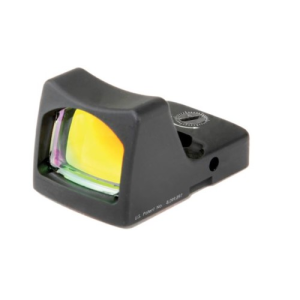
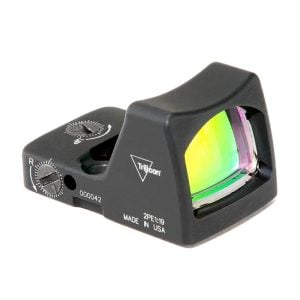
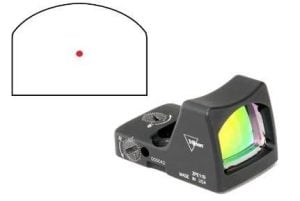
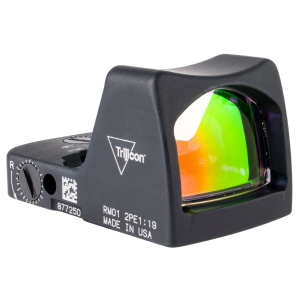
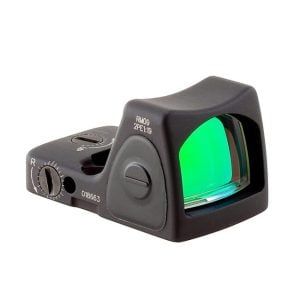
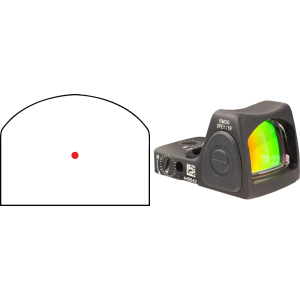
The Trijicon RMR Type 2 remains the benchmark that every other pistol red dot is measured against. I have run one on my carry gun for over three years now, and it has survived drops, rain, and thousands of rounds without a single issue. The patented housing shape isn’t just marketing. It genuinely deflects recoil forces away from the glass, and you can feel the difference when comparing it side by side with flat-faced competitors. For host pistols designed to run these dots, see our best optics-ready pistols roundup.
The 3.25 MOA dot hits the sweet spot for most shooters. It’s large enough to pick up quickly at defensive distances but precise enough for 25-yard headshots. Battery life sits at roughly four years of continuous use. The cell lives under the optic though, so a swap means pulling the sight and confirming zero afterwards. That is the RMR Type 2’s one real annoyance, and it is exactly what Trijicon fixed on the newer RMR HD.
Best For: Shooters who want the most proven, durable pistol red dot on the market and don’t mind paying a premium for it. Ideal for concealed carry, duty use, and anyone who demands absolute reliability.
2. Holosun 507C X2
- Reticle: 2 MOA dot and 32 MOA circle, switchable
- Window: 0.91 in x 0.63 in
- Weight: 1.5 oz
- Battery: CR1632 side tray, up to 50,000 hours
- Housing: 7075 T6 aluminum
- Footprint: RMR
| Category | Rating |
|---|---|
| Price | 5/5 |
| Durability | 4/5 |
| Window Size | 4/5 |
| Battery Life | 5/5 |
| Versatility | 5/5 |
Pros
- Pick dot, circle, or both
- Solar backup if the battery dies
- Shake awake saves power when idle
Cons
- Open emitter can catch lint
- Aluminum housing less tough than RMR
- Bulkier than micro-compact carry optics
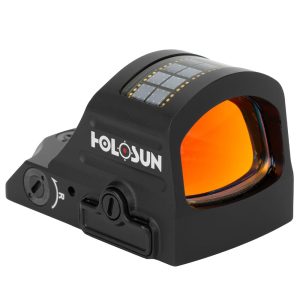
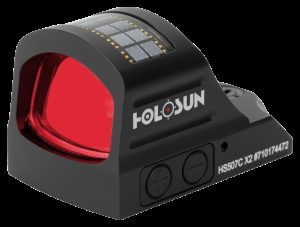
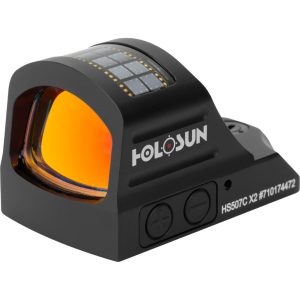
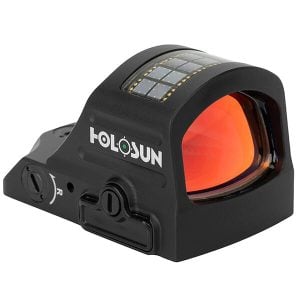
The Holosun 507C X2 has become the default recommendation for anyone who wants premium features without the premium price. The multi-reticle system is genuinely useful. I run the 32 MOA circle with the 2 MOA center dot, which gives me a large ring for fast acquisition at close range and a precise dot for accuracy at distance.
Solar backup isn’t just a gimmick. I have tested this by pulling the battery entirely and shooting outdoors. The dot stays on as long as there’s ambient light. Shake awake is another feature that Holosun nailed. The optic sleeps when you set the gun down and wakes instantly when you pick it up. Combined with the 50,000-hour battery life, you essentially never worry about a dead dot.
Best For: Shooters who want the best feature set for the money. Perfect for concealed carry, home defense, and range use. If you’re on a budget and want one optic that does everything well, this is it.
3. Holosun EPS Carry
- Window: 0.77 in x 0.58 in
- Weight: 1.23 oz
- Battery: CR1620, up to 50,000 hours
- Housing: 7075 T6 aluminum
- Footprint: K, with an RMSc-to-K adapter plate in the box
| Category | Rating |
|---|---|
| Price | 4/5 |
| Durability | 4/5 |
| Window Size | 3/5 |
| Battery Life | 5/5 |
| Versatility | 4/5 |
Pros
- Enclosed emitter keeps rain and lint out
- Light at 1.23 oz
- Side tray battery, no dismount needed
Cons
- Needs the included plate on RMSc slides
- Smaller window than RMR-footprint optics
- Dearer than open-emitter rivals
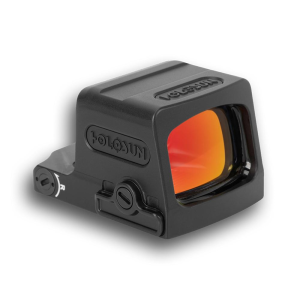
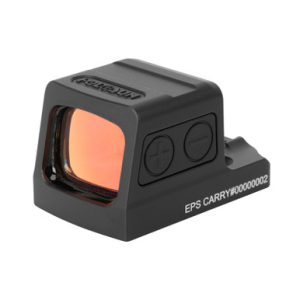
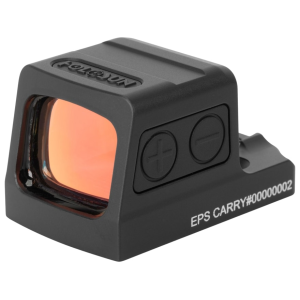
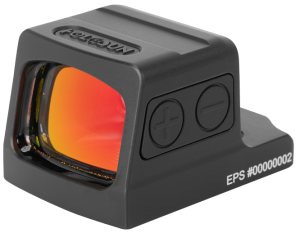
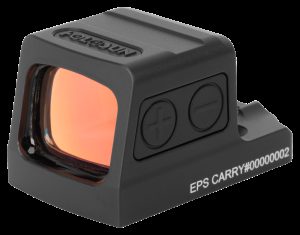
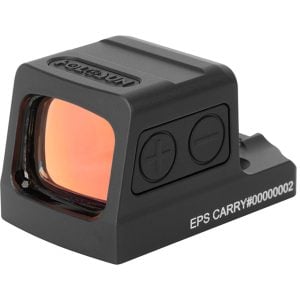
The Holosun EPS Carry is what I point concealed carriers at who want an enclosed emitter without a bulky footprint. At just over one ounce, it’s the lightest enclosed emitter optic on this list. The K-footprint on the Shield RMSc footprint means it fits guns like the SIG P365, Springfield Hellcat and Smith & Wesson Shield Plus using the RMSc-to-K adapter plate Holosun includes in the box. K and RMSc are not the same pattern, so do not expect a bare drop-on.
I carried an EPS Carry on a P365 for six months and never once had an issue with lint or debris blocking the emitter. That is the entire point of an enclosed design, and Holosun executed it perfectly here. The 7075 T6 aluminum housing keeps the weight down without giving up much to the bigger enclosed optics.
Best For: Concealed carriers running micro-compact pistols who want the reliability of an enclosed emitter in the lightest possible package. Excellent for everyday carry in all weather conditions.
4. Trijicon SRO
- Dot size: 1, 2.5 or 5 MOA
- Weight: 1.6 oz
- Battery: 1x CR2032, over 3 years, top loading
- Housing: 7075-T6 forged aluminum
- Footprint: RMR
- Street price: about $495
| Category | Rating |
|---|---|
| Price | 3/5 |
| Durability | 3/5 |
| Window Size | 5/5 |
| Battery Life | 4/5 |
| Versatility | 3/5 |
Pros
- Biggest window of any pistol dot
- Trijicon optical clarity and build
- Choice of 1, 2.5 or 5 MOA
Cons
- Exposed lens suits range, not carry
- Same premium pricing as the RMR
- Taller than most carry optics
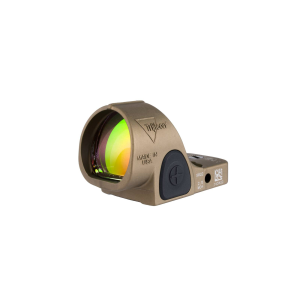
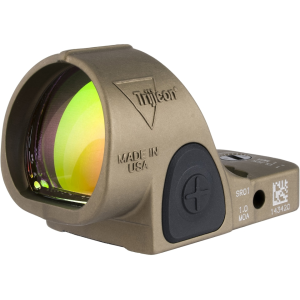
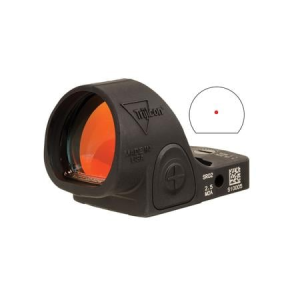
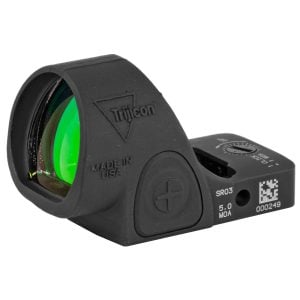
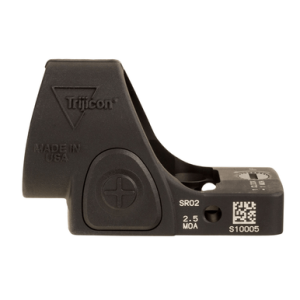
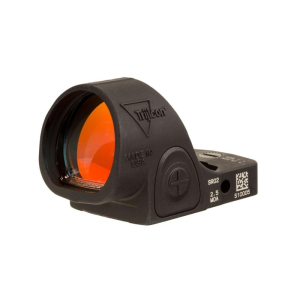
The Trijicon SRO was purpose-built for competition, and it shows. The window is enormous compared to the RMR, making target transitions noticeably faster when you’re running through stages at speed. I switched to an SRO on my USPSA gun and immediately felt the difference in how quickly I could pick up the dot out of the holster draw.
The tradeoff is durability. The SRO has a wider, more exposed lens that isn’t designed to take the same abuse as the RMR. Trijicon is upfront about this. It is a competition optic, not a duty optic. If you plan to carry or run a duty gun, go with the RMR. But if you want every possible advantage in a match, nothing else gives you that much glass.
Best For: Competitive shooters who need the largest possible window for fast dot acquisition and stage transitions. Ideal for USPSA, IDPA, and Steel Challenge.
5. Holosun HS507K X2
- Dot size: 2 MOA dot with a 32 MOA circle
- Battery: 1x CR1632, 50,000 hours
- Weight: 1 oz
- Illumination: 10 daytime and 2 night vision settings
- Footprint: Holosun K
- Street price: about $296
| Category | Rating |
|---|---|
| Price | 4/5 |
| Durability | 4/5 |
| Window Size | 3/5 |
| Battery Life | 5/5 |
| Versatility | 4/5 |
Pros
- Fits slim slides most dots won’t
- Multi-reticle in a tiny housing
- 50,000 hours on a CR1632
Cons
- K footprint needs a matching cut
- Small window punishes a sloppy draw
- Open emitter still collects pocket lint
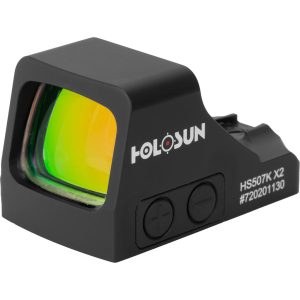
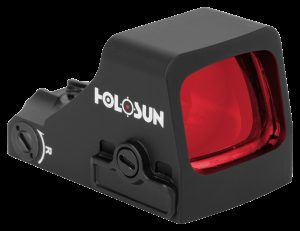
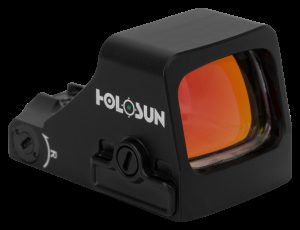
This is the one I reach for when the slide is too narrow for anything else. The 507K is built for micro-compacts, so it sits on a Sig P365, a Hellcat or a Shield Plus without hanging over the edges like a full-size optic does. You get Holosun’s multi-reticle system in a housing that weighs one ounce.
Here’s the honest trade. That window is small, and if your draw is inconsistent you will hunt for the dot on the first few hundred presentations. Practice fixes it, but it’s real, and anyone telling you a micro optic finds itself as fast as a full-size one hasn’t shot both back to back.
Watch the footprint. The 507K uses Holosun’s K pattern, not the RMR pattern that half this list shares. Your slide needs a K cut or a plate cut for it, and getting that wrong is the most common ordering mistake I see on micro-compacts. Worth double checking before you buy.
Best For: Slim and micro-compact carry pistols where a full-size optic simply will not fit, and shooters who want a circle-dot reticle at carry size.

6. Aimpoint Acro P-2
- Dot size: 3.5 MOA
- Weight: 2.2 oz
- Battery: CR2032, 50,000 hours
- Submersible: 35 m
- Mount: Integrated Acro interface
| Category | Rating |
|---|---|
| Price | 2/5 |
| Durability | 5/5 |
| Window Size | 3/5 |
| Battery Life | 5/5 |
| Versatility | 3/5 |
Pros
- Enclosed and submersible to 35 meters
- 50,000 hours on one CR2032
- Law enforcement duty standard
Cons
- Heaviest here at 2.2 oz
- Needs an ACRO cut or plate
- Costs over $600 new
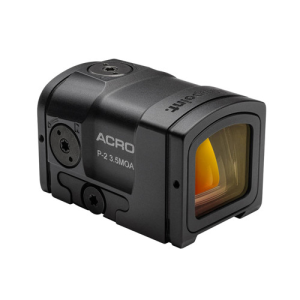
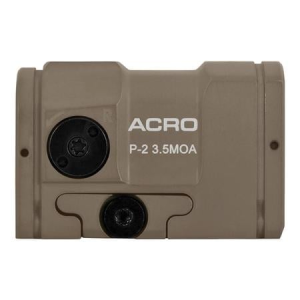
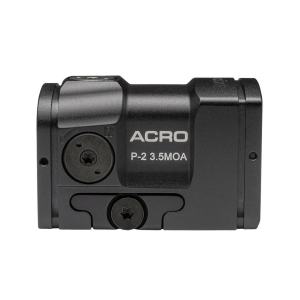
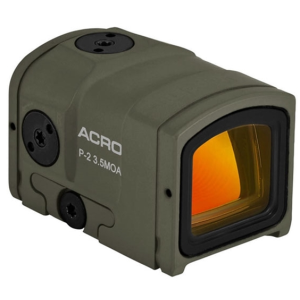
The Aimpoint Acro P-2 is what you buy when failure isn’t an option. Aimpoint built this thing like a tank. It is fully enclosed, submersible to 35 meters, and shrugs off the sort of abuse that would finish most of the optics on this list. Multiple law enforcement agencies across Europe and the United States have adopted the Acro P-2 as their standard issue pistol optic, and that endorsement carries serious weight.
The P-2 fixed the battery life problems that plagued the original Acro P-1. You now get roughly five years of continuous use from a single CR2032, which is outstanding for an enclosed emitter design. The tradeoff is weight and cost. At 2.2 oz and north of $600, this is a commitment. But if you need the toughest enclosed emitter money can buy, nothing else comes close.
Best For: Law enforcement, military, and serious duty carriers who demand the absolute highest level of durability and reliability in an enclosed emitter optic.

7. Holosun 509T X2
- Reticle: 2 MOA dot and 32 MOA circle, switchable
- Weight: 1.27 oz
- Battery: CR1632 side tray, up to 50,000 hours
- Housing: 7075 T6 titanium
- Footprint: 509T, with an RMR adapter plate in the box
| Category | Rating |
|---|---|
| Price | 4/5 |
| Durability | 4/5 |
| Window Size | 4/5 |
| Battery Life | 5/5 |
| Versatility | 5/5 |
Pros
- Enclosed emitter with multi-reticle switching
- Titanium housing is tough for the weight
- Shake awake plus solar failsafe
Cons
- Taller than open emitter alternatives
- Needs an adapter plate on some slides
- Street price closer to $430
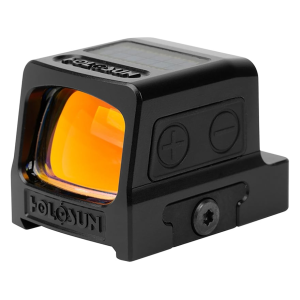
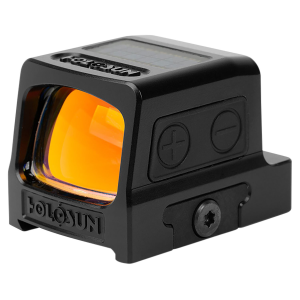
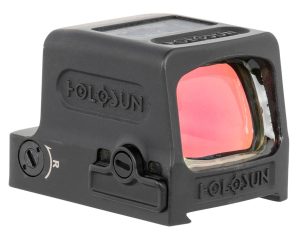
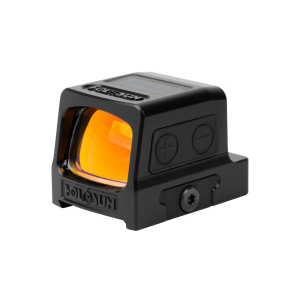
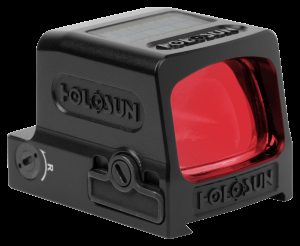
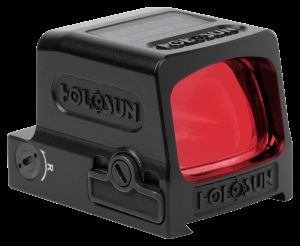
The Holosun 509T X2 gives you almost everything the Aimpoint Acro P-2 offers at roughly two-thirds the price. You get a fully enclosed emitter, titanium housing, and Holosun’s multi-reticle system that lets you toggle between the 2 MOA dot, 32 MOA circle, or both. I ran a 509T on a Glock 19 for several months and found it to be an outstanding value.
The 509T ships with an RMR adapter plate, which is a nice touch that broadens compatibility. It does sit slightly taller than a standard RMR due to the enclosed housing, but most shooters adapt quickly. The 50,000-hour battery life with shake awake means you can forget about changing batteries for years.
Best For: Shooters who want the protection of an enclosed emitter and the versatility of Holosun’s multi-reticle system without spending $600 on an Aimpoint.

8. Leupold DeltaPoint Pro
- Dot size: 2.5 MOA
- Battery: CR2032, 1,600 hours at low intensity
- Housing: Aircraft-grade aluminum
- Street price: about $450
| Category | Rating |
|---|---|
| Price | 3/5 |
| Durability | 4/5 |
| Window Size | 4/5 |
| Battery Life | 2/5 |
| Versatility | 4/5 |
Pros
- Very low profile against the slide
- Spring-loaded adjustments hold zero well
- Fits many pistol platforms
Cons
- Shortest battery here at 1,600 hours
- Motion sensor drains cells in transit
- Costs about $450 new
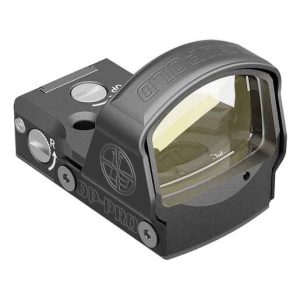
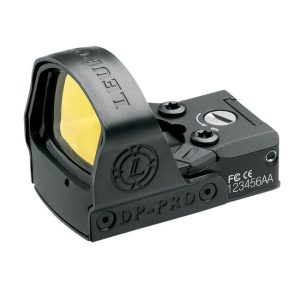
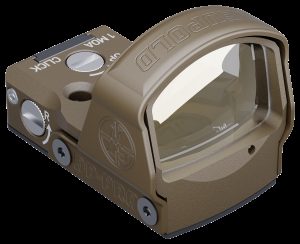
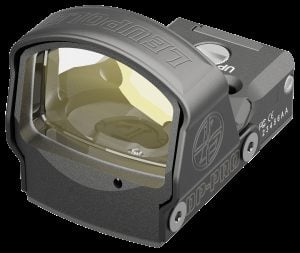
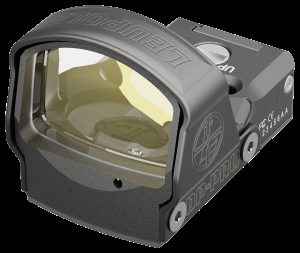
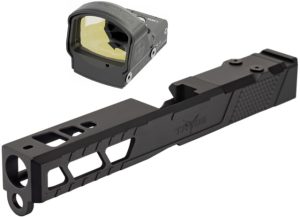
The Leupold DeltaPoint Pro has been a staple in the pistol red dot market for years, and it earns its spot here thanks to its exceptionally low profile. No other optic on this list sits as close to the slide. This matters for concealment and for maintaining a sight picture that feels closer to traditional iron sights. Many shooters transitioning from irons to dots find the DPP’s height the easiest to adapt to.
Leupold’s glass quality is outstanding, as you would expect from a brand built on precision optics. The spring-loaded adjustment system holds zero reliably even under hard recoil. My one concern is battery life. At 1,600 hours, you’re looking at changing batteries every few months of continuous use. The motion sensor helps extend this, but it’s still well behind the competition.
Best For: Shooters who prioritize the lowest possible mounting height and those transitioning from iron sights who want an optic that sits as close to the slide as possible.

9. Primary Arms SLx RS-10R
- Dot size: 3 MOA
- Lens: 23x19mm multi-coated
- Battery: 1x CR1632, 40,000 hours with AutoLive
- Weight: 1.1 oz
- Footprint: sold in Holosun 407C/507C and Trijicon RMR patterns
- Street price: about $200
| Category | Rating |
|---|---|
| Price | 5/5 |
| Durability | 3/5 |
| Window Size | 4/5 |
| Battery Life | 4/5 |
| Versatility | 4/5 |
Pros
- Two hundred dollars, properly made
- AutoLive wakes it on movement
- Pick your footprint at checkout
Cons
- Not a duty optic
- Coatings trail the premium glass
- Shorter runtime than the Holosuns
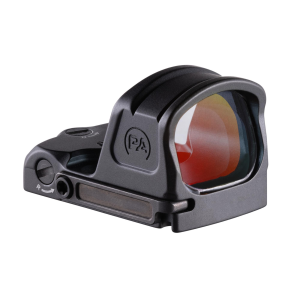
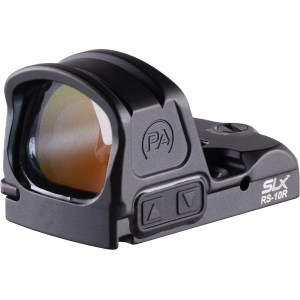
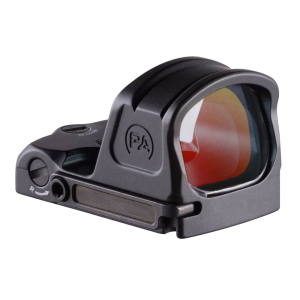
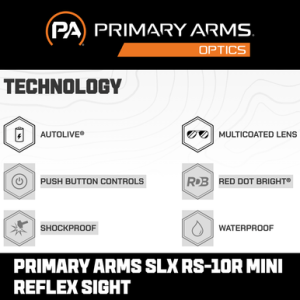
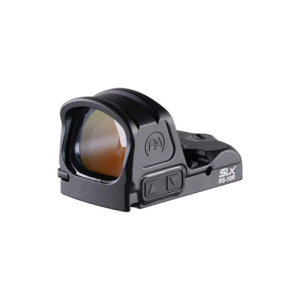
Two hundred dollars used to buy you a red dot that died the first time you shot it. It doesn’t any more, and the RS-10R is the clearest proof. A 3 MOA dot, a 23x19mm window and AutoLive motion activation that turns the dot on when the gun moves and off when it sits.
The clever part is the footprint choice. Primary Arms sells it cut for the Holosun 407C and 507C pattern and cut for the Trijicon RMR pattern, so you match it to the slide you already own instead of stacking a plate on top. Fewer parts, lower mount, less to shake loose.
I would not put it on a duty gun. Forty thousand hours is respectable but it trails the Holosuns on this list, and the coatings are a step behind the premium glass. For a range pistol, a nightstand gun, or a first dot you’re learning on, it is a lot of optic for the money.
Best For: First-time red dot buyers and anyone building a range or home defense pistol who wants a real optic without premium money.

10. Holosun 407C X2
- Reticle: 2 MOA dot
- Window: 0.91 in x 0.63 in
- Weight: 1.5 oz
- Battery: CR1632 side tray, up to 50,000 hours
- Housing: 7075 T6 aluminum
- Footprint: RMR
| Category | Rating |
|---|---|
| Price | 5/5 |
| Durability | 4/5 |
| Window Size | 4/5 |
| Battery Life | 5/5 |
| Versatility | 4/5 |
Pros
- Same build and battery as 507C
- Solar failsafe and shake awake included
- Clean 2 MOA dot, easy pickup
Cons
- No multi-reticle option, dot only
- Open emitter needs the odd wipe
- Aluminum housing, not titanium like 509T
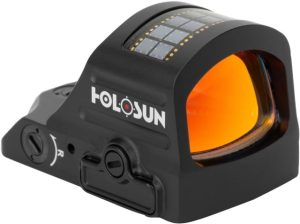
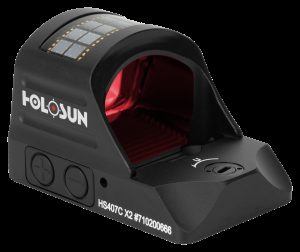
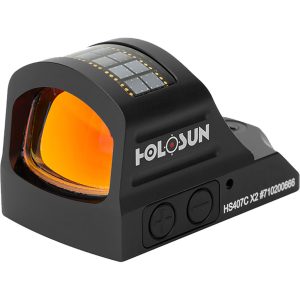
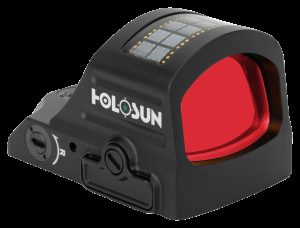
The Holosun 407C X2 is essentially the 507C without the multi-reticle system, and for many shooters that’s a perfectly fine trade to save around $50. You still get the same 50,000-hour battery life, shake awake, solar failsafe, and the same 7075 T6 aluminum housing. The only difference is that you get a single 2 MOA dot instead of the selectable dot and circle reticle.
Plenty of experienced shooters actually prefer a dot-only reticle. The circle can be distracting for some people, and if you know you only want a dot, there’s no reason to pay extra for a feature you will turn off anyway. I have recommended the 407C to dozens of people as their first pistol red dot, and the feedback has been overwhelmingly positive.
Best For: Shooters who want Holosun quality and battery life at the lowest possible price, and those who prefer a simple dot-only reticle without the multi-reticle system.
Open vs Enclosed Pistol Optics: How to Choose
The biggest decision you will make when choosing a pistol red dot is whether to go with an open or enclosed emitter design. Open emitter optics like the Trijicon RMR and Holosun 507C have a gap between the lens and the LED emitter. This makes them lighter, thinner and cheaper. The downside is that rain, snow, lint, and debris can obstruct the emitter window and block your dot.
Enclosed emitter optics like the Holosun EPS Carry and Aimpoint Acro P-2 seal the emitter inside a tube, completely protecting it from the elements. This is a significant advantage for concealed carry, where pocket lint and sweat are constant threats. It also matters in harsh weather. The tradeoff is a taller profile, a bit more weight, and a higher price.
For range use and competition, open emitters remain the better choice for most shooters thanks to lower cost and lighter weight. For everyday carry and duty use, the trend is moving firmly toward enclosed emitters, and I expect that shift to accelerate in the coming years. If you are buying your first pistol red dot today and plan to carry it daily, I would lean toward an enclosed emitter unless budget is your primary concern.
Pistol Red Dot Footprint Guide: Which Optic Fits Your Slide
RMR Footprint: The most common pistol optic footprint, established by the Trijicon RMR. Used by the RMR, the Holosun 507C and 407C, and the RMR-cut version of the Primary Arms RS-10R. Most factory optics-ready slides from Glock, Smith & Wesson, and others include RMR-pattern cuts. If you want maximum compatibility, this is the safest choice.
K Footprint, the Shield RMSc pattern: A smaller footprint designed for micro-compact and subcompact pistols. Holosun calls its version the K footprint and uses it on the HS507K X2 and the EPS Carry. Common on the SIG P365, Springfield Hellcat, and similar micro-compact slides. This is the go-to footprint for small carry guns.
Glock MOS: Glock’s Modular Optic System does not cut the slide for one pattern. It ships a set of adapter plates and you pick the one matching your optic, which is why a Glock 19 MOS will take almost anything on this list. The tradeoff is height. Every plate raises the optic, so suppressor-height irons stop co-witnessing properly on some combinations. Later MOS generations use a direct-mount cut for RMR-pattern optics, so check which one your slide has before ordering plates you do not need.
ACRO Footprint: Aimpoint’s proprietary enclosed emitter footprint, used by the Acro P-2. Requires a dedicated ACRO cut or an adapter plate. Fewer slides come factory-milled for ACRO, but the pattern is gaining traction with custom slide shops and duty holster manufacturers.
DeltaPoint Pro Footprint: Used by the Leupold DeltaPoint Pro, and closely related to the PRO RX pattern SIG uses on the Romeo1 Pro. SIG warns the two are not universally interchangeable. Several pistols come factory-cut for this pattern, including SIG P320 variants. It offers a large mounting surface for a stable platform.
Astigmatism and Red Dots: Why Your Dot Looks Like a Starburst
If the dot looks like a comet, a smear or a cluster of little dots instead of a clean circle, the optic is probably fine. Your eye isn’t. Astigmatism distorts point light sources, and a red dot is about as pure a point source as you will ever look at. Plenty of shooters discover it for the first time behind a $600 optic and assume they bought a lemon.
Three things actually help. Turn the brightness down, because most people run their dot far brighter than they need and brightness makes the smear worse. Try a green emitter, since the eye focuses green more tightly than red and a lot of astigmatic shooters see a noticeably cleaner green dot. And if you wear a corrective prescription, shoot with it on, because that is what your prescription is fixing.
If none of that works, stop fighting it. A prism sight uses an etched reticle rather than a projected dot, so astigmatism does not smear it the same way. It costs you the unlimited eye relief a reflex sight gives you, which is a real trade on a pistol, but a clean reticle you can actually use beats a smeared one you can’t. Our guide to prism scopes covers the options.
How to Zero a Pistol Red Dot
Most people zero a pistol dot at 15 or 25 yards. I use 15. Defensive shooting happens close, the trajectory is flat enough that 15 keeps you inside the vital zone from contact distance out past 25, and it is a distance you can actually shoot well enough to read your own group.
Mount it properly first, because a zero on a loose optic is not a zero. Degrease the screws, use the torque spec in the manual rather than a guess, and put a witness mark across the screw head and the housing so a shift shows itself. Blue threadlocker if the manufacturer says so, and let it cure before you shoot.
Then shoot a five-round group off a bag, not offhand. Measure from the center of the group to the point of aim and adjust, remembering that most pistol dots move a full inch at 100 yards per click, which is roughly a sixth of an inch at 15 yards. That is why chasing single shots wastes ammo. Shoot the group, adjust once, shoot another group to confirm.
Confirm again after a hundred rounds. Screws settle, and the zero you set on a fresh mount is not always the zero you keep.
New Pistol Optics Worth Watching in 2026
These didn’t make the ten because they are either too new to have a track record or too niche to recommend broadly. They are worth knowing about anyway.
- Holosun HS507C X3: the successor to the X2 that sits at number two on this list. Same multi-reticle idea, refined housing, and it currently sells for a little over the X2. The X2 stays here because it is proven and cheaper, but if you want the current generation, the X3 is it.
- Osight XE AMRS and XR: enclosed emitter designs at prices that undercut the established names by a wide margin. We covered the Osight enclosed emitter launch when it landed. Too new for me to vouch for the durability.
- FN PUREVIEW: FN’s first pistol holographic sight, and the first serious challenge to EOTech’s hold on that technology in a slide-mounted package. Details in our FN PUREVIEW writeup. Premium money.
- Trijicon SRO in green: the same big-window competition optic at number four, with a green emitter. If you have astigmatism and you shoot a target pistol, this is the one to look at first.
Frequently Asked Questions
What is the best red dot sight for a pistol?
The best pistol red dot depends on your budget and use case. The Trijicon RMR Type 2 is the gold standard for duty and defensive use. The Holosun 507C X2 offers the best value with shake-awake and solar backup. For micro-compact pistols, the Holosun 407K or 507K are the top choices. Check our full ranked list above for detailed comparisons.
What MOA red dot is best for a pistol?
Most shooters do best with a 3.25 MOA or 6 MOA dot on a pistol. The 6 MOA dot is faster to acquire at close range and better for defensive shooting. The 3.25 MOA dot offers more precision at distance. For concealed carry and self-defense, a 6 MOA dot is the more practical choice. For competition and range use, 3.25 MOA gives you tighter groups.
Do I need an optics-ready pistol for a red dot?
Yes, in most cases. An optics-ready (MOS, OR, or OSP) pistol has a pre-milled slide with a mounting plate system. Without it, you need to send your slide to a machine shop for custom milling, which costs $150 to $250 and takes several weeks. Most modern pistols now offer factory optics-ready variants.
How long do pistol red dot batteries last?
Battery life varies by model. The Trijicon RMR Type 2 lasts about 4 years on a single CR2032 battery. Holosun models with solar backup can last 50,000+ hours (over 5 years) on battery alone, and indefinitely with solar assist in bright conditions. We recommend replacing batteries annually regardless of stated life, especially on defensive guns.
Are cheap red dots reliable for self-defense?
Budget red dots under $150 are not worth the risk for defensive or duty use. They may lose zero under recoil, have shorter battery life, or fail in harsh conditions. For range and competition use, budget options like the Holosun 407C can work well. For a gun you trust your life to, invest in a Trijicon RMR, Aimpoint ACRO, or Holosun 507C at minimum.
Are pistol red dots actually worth it?
For carry and home defense, a pistol red dot improves hit probability past 7 yards meaningfully. Independent training data from Sage Dynamics and Modern Samurai Project backs that up. The trade-off is the upfront cost ($300-$700 typical) and the learning curve, which takes 500-1,000 practice presentations to internalize. For range and competition, the answer is unambiguous: red dots win.
What is the best red dot for a Glock?
For Glock 19 Gen 6 and Glock 45 MOS, the Holosun 507C X2 and Trijicon RMR HD are the consensus picks. Both share the RMR footprint, which Glock's factory MOS plates support without extra adapters. The 507C runs the cheaper end at $329 street; the RMR HD costs $749 but offers Trijicon's battery + Cerakote durability.
Open vs enclosed: which red dot is better for carry?
Enclosed-emitter red dots like the Aimpoint Acro P-2, Steiner MPS, and Holosun EPS Carry resist debris, lint, and oil better than open-emitter dots. That matters for daily concealed carry, where the optic lives next to your skin. Open emitters like the RMR, Holosun 507C, and Sig Romeo Zero Elite cost less and weigh less. For carry inside pocket lint or AIWB sweat zones, enclosed wins.
Do I need to co-witness my red dot with iron sights?
Co-witnessing is not required, but I would set it up that way. Suppressor-height irons let you see your gun sights through the red dot window, so you still have something to aim with if the optic dies or the battery quits at the wrong moment. An absolute co-witness puts the irons level with the dot. A lower one-third co-witness sits them in the bottom of the window, which keeps your view of the target cleaner. Either works. Pick the one you shoot faster with.
Which red dot footprint should I get?
It depends on what your slide is cut for. RMR is the most widely supported pattern and fits a lot of Glock, S&W and aftermarket slides. The Shield RMSc footprint, often called K, is the micro-compact standard and covers the SIG P365 and Springfield Hellcat. ACRO is Aimpoint's own pattern and needs a dedicated cut. Check what your pistol is milled for before you buy anything, because an adapter plate adds height and one more thing that can come loose.
6,057+ Gun & Ammo Deals
Updated daily from 200+ top retailers. Filter by category, caliber, action type, and price.
Related Guides