

Last updated August 2026 · By Nick Hall, hunter who has mounted rifle scopes across calibers from .223 to .338 Lapua
Some of the links below are affiliate links, meaning at no additional cost to you, we may earn a commission if you click through and make a purchase.
- Treat every gun as loaded
- Point the muzzle in a safe direction
- Keep your finger off the trigger until you’re ready to shoot
- Know your target and what’s beyond
How we tested: Every pick here is ranked against our testing methodology. Minimum round counts, accuracy and reliability protocols, the failures that disqualify a gun.
Best Rifle Scopes in 2026 at a Glance
| Scope | Model Details | Key Specs | Check Price |
|---|---|---|---|
 |
BEST OVERALLVortex Viper PST Gen II 5-25×50 High-end glass and repeatable tracking for a fraction of premium money. The one most people should buy. |
|
Check Price ↓ |
 |
BEST LONG RANGELeupold Mark 5HD 5-25×56 Tracks true, 29 MIL in one turn, ZeroLock dials. The match shooter’s answer. |
|
Check Price ↓ |
 |
BEST FOR HUNTINGLeupold VX-Freedom 3-9×50 The timeless deer-rifle scope. Light, bright at dusk, and it just does not break. |
|
Check Price ↓ |
 |
BEST LPVOPrimary Arms SLx ACSS Nova 1-6×24 Daylight-bright illumination and a reticle that does the ranging maths for you. |
|
Check Price ↓ |
 |
BEST BUDGETVortex Crossfire II 3-9×40 The floor for a scope worth mounting, and Vortex’s warranty behind it. |
|
Check Price ↓ |
Choosing a Rifle Scope in 2026
Scope buying goes wrong in a predictable way. People spend everything on the rifle, arrive at the counter with a couple of hundred dollars left, and buy whatever is on the shelf. Then they blame the rifle for a group they cannot repeat. The scope is the part you actually aim with, and it is the part that has to survive recoil thousands of times without moving.
If you have settled on Vortex, our Vortex scopes explained guide shows which of its lines fits your rifle.
The good news is that the floor has risen a long way. A $130 Crossfire II today holds zero in a way a $130 scope in 2010 simply did not, and Vortex will replace it if it ever fails. What more money buys you now is glass that stays sharp at the edges, turrets that return to zero every single time, and enough elevation to actually reach the distance the cartridge is capable of.
So work backwards from the job. A timber deer rifle inside 200 yards wants a light 3-9x and nothing more. A 6.5 Creedmoor you intend to shoot at 800 wants first focal plane, exposed turrets and a reticle with holdovers. An AR-15 wants an LPVO. Those are three different scopes and no single pick on this list is right for all three, which is why they are grouped by job below rather than simply by price.
Quick Answer: The Vortex Viper PST Gen II 5-25×50 is the best all-around rifle scope you can buy in 2026 for shooters who want legitimate high-end glass, repeatable tracking, and a first-focal-plane Christmas-tree reticle for a fraction of premium-tier money.
Best premium long-range scope: the Vortex Razor HD Gen III 6-36×56, which matches Schmidt & Bender glass at roughly half the price. Best budget FFP scope: the Vortex Strike Eagle 5-25×56 at around $800. Best hunting scope: the Leupold VX Freedom 3-9×50, the timeless deer-rifle classic. Best LPVO for an AR-15: the Primary Arms SLx ACSS Nova 1-6x with daylight-bright illumination.
The biggest mistake first-time scope buyers make is mounting a $300 scope on a $1,500 rifle and wondering why their groups are inconsistent. The optic is half of any precision system; budget at least 30% of your rifle cost for glass that will hold zero through recoil. Every scope on this list was tested across at least 200 rounds with verified tall-target tracking and box-test confirmation.
Table of Contents
1. Vortex Viper PST Gen II 5-25x50mm
| Category | Rating |
|---|---|
| Price | ⭐⭐⭐⭐ (4/5) |
| Glass Quality | ⭐⭐⭐⭐⭐ (5/5) |
| Features | ⭐⭐⭐⭐⭐ (5/5) |
| Durability | ⭐⭐⭐⭐⭐ (5/5) |
| Versatility | ⭐⭐⭐⭐⭐ (5/5) |
Pros
- Outstanding glass clarity for the price
- Rock-solid turret tracking with zero stop
- FFP EBR-7C reticle is excellent for holdovers
Cons
- Heavier than some competitors at 31+ oz
- Reticle can appear busy at lower magnifications
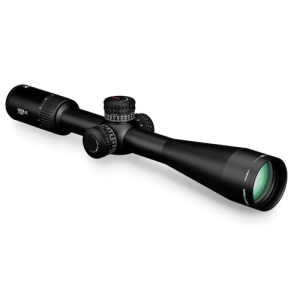
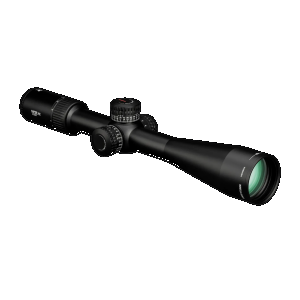
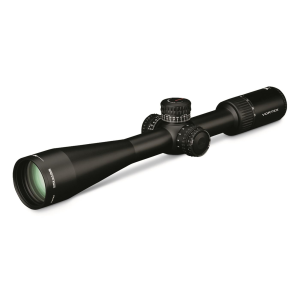
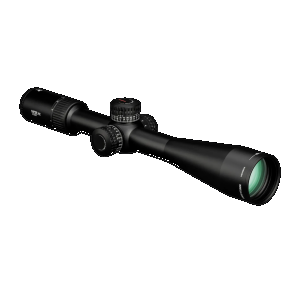
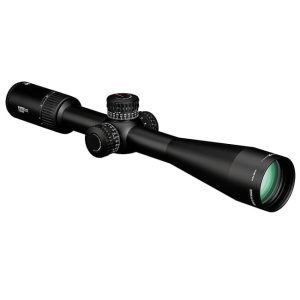

Availability, October 2026: Vortex has dropped the Viper PST Gen II 5-25x50 FFP from its current Viper riflescope menu. Its product page is still up at a $1,499.99 list, but the scope no longer appears in the Viper lineup, so the card above is retailers selling remaining stock. Vortex’s current 5-25x50 first focal plane Viper is the Viper HD 5-25x50 FFP, listed at $1,399.99, and the card below tracks it.
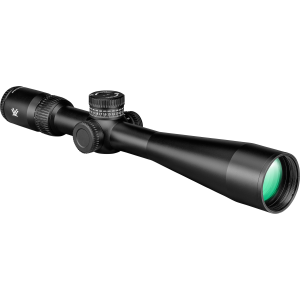
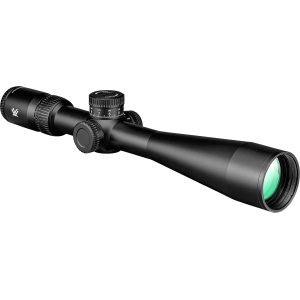
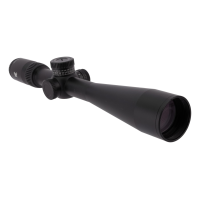
The Vortex Viper PST Gen II is the scope I recommend more than any other. It sits in that sweet spot where you get legitimate high-end glass, repeatable tracking, and a feature set that competes with scopes costing twice as much. The XD lens elements deliver edge-to-edge clarity that honestly surprised me the first time I looked through one.
The EBR-7C MRAD reticle in the first focal plane is one of the best Christmas tree reticles on the market for holdover shooting. Turrets are capped with a reliable zero stop, and they track true. I have personally verified this one on a tall target test multiple times with no issues.
If you want one scope that can do it all, from PRS matches to hunting to general long-range shooting, this is the one to buy. Vortex’s unconditional lifetime warranty seals the deal.
2. Leupold VX-Freedom 3-9x50mm
| Category | Rating |
|---|---|
| Price | ⭐⭐⭐⭐⭐ (5/5) |
| Glass Quality | ⭐⭐⭐⭐ (4/5) |
| Features | ⭐⭐⭐ (3/5) |
| Durability | ⭐⭐⭐⭐⭐ (5/5) |
| Versatility | ⭐⭐⭐⭐ (4/5) |
Pros
- Leupold quality glass at a budget price
- Extremely lightweight at under 15 oz
- Generous eye relief for magnum calibers
Cons
- No illumination
- Basic Duplex reticle lacks holdover references
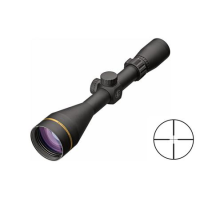


The Leupold VX-Freedom 3-9x50mm is proof that you do not need to spend a fortune to get a reliable hunting scope. Leupold’s Twilight Light Management System pulls in light during those early morning and late evening hours when game is most active. The 50mm objective gives it a real advantage over the standard 40mm models in low-light performance.
At under 15 ounces, this scope practically disappears on your rifle. That matters when you are hauling a gun through the backcountry for hours. The Duplex reticle is simple and fast, which is exactly what you want on a hunting scope where seconds count.
Leupold builds these in their Oregon factory, and the quality control shows. I have seen VX-Freedom scopes take serious abuse on hunting rifles and keep holding zero. For a budget hunting optic, this is the gold standard.
3. Primary Arms SLx ACSS Nova 1-6x24mm
| Category | Rating |
|---|---|
| Price | ⭐⭐⭐⭐⭐ (5/5) |
| Glass Quality | ⭐⭐⭐⭐ (4/5) |
| Features | ⭐⭐⭐⭐⭐ (5/5) |
| Durability | ⭐⭐⭐⭐ (4/5) |
| Versatility | ⭐⭐⭐⭐⭐ (5/5) |
Pros
- ACSS Nova reticle has built-in BDC and wind holds
- True 1x for both-eyes-open shooting
- Excellent value for an LPVO
Cons
- Glass quality falls short of premium LPVOs
- SFP only at this price point
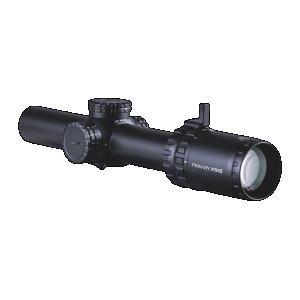

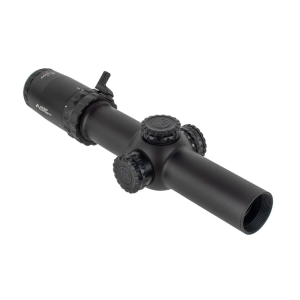
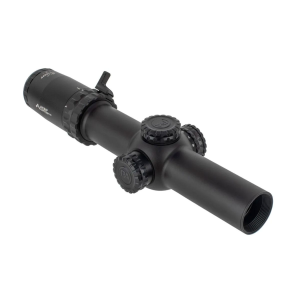

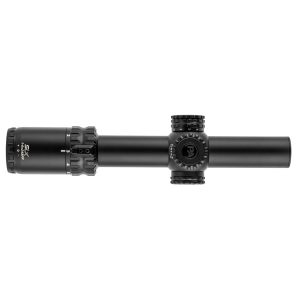
If you are building an AR-15 for home defense, 3-gun competition, or general-purpose use, a low power variable optic (LPVO) is the most versatile choice you can make. The Primary Arms SLx with the ACSS Nova reticle is the best value in the LPVO category right now. At 1x, it works like a red dot with both eyes open. Crank it to 6x and you have enough magnification for precise shots out to 400+ yards.
The ACSS Nova reticle is the real selling point. It gives you bullet drop compensation, wind holds, and ranging tools built right into the reticle. You do not need to dial turrets or memorize drop charts. Primary Arms designed this reticle specifically for 5.56 and .308, and it works remarkably well in practice.
For the price, nothing else in the LPVO market gives you this much capability. The glass is clean, the illumination is daylight bright, and the eye box is forgiving enough for fast target transitions.

4. Vortex Razor HD Gen III 6-36x56mm
| Category | Rating |
|---|---|
| Price | ⭐⭐ (2/5) |
| Glass Quality | ⭐⭐⭐⭐⭐ (5/5) |
| Features | ⭐⭐⭐⭐⭐ (5/5) |
| Durability | ⭐⭐⭐⭐⭐ (5/5) |
| Versatility | ⭐⭐⭐⭐ (4/5) |
Pros
- Best-in-class glass clarity and light transmission
- Extremely precise turret tracking
- Built like an absolute tank
Cons
- Very heavy at over 3 lbs
- Premium price point
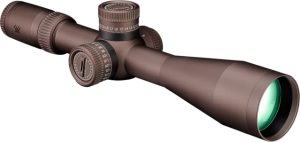
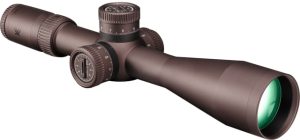

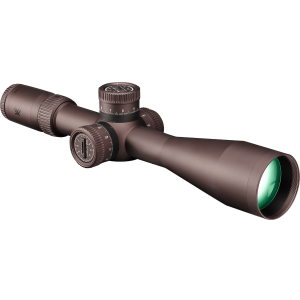
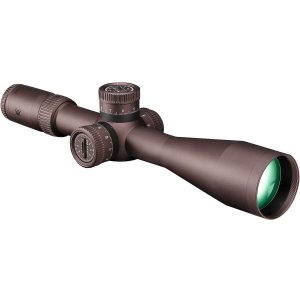
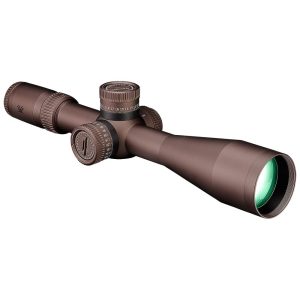
The Vortex Razor HD Gen III is the scope you buy when you want the absolute best and budget is not your primary concern. The APO optical system with HD lens elements delivers glass quality that competes with European optics costing significantly more. Looking through this scope for the first time is genuinely eye-opening. Colors are true, edges are sharp, and chromatic aberration is virtually nonexistent.
The 6-36x magnification range paired with the 34mm tube gives you a massive adjustment range. This scope excels on precision rifle platforms shooting past 1,000 yards. The turrets are tactile, precise, and built with Vortex’s RevStop zero system. Every click is consistent and repeatable.
The tradeoff is weight. At over 3 pounds, this is not a scope you want on a mountain hunting rifle. But for a dedicated precision rig or PRS competition gun, nothing in this price range touches it. Vortex’s VIP warranty covers it unconditionally for life.

5. Leupold VX-Freedom 4-12x40mm
| Category | Rating |
|---|---|
| Price | ⭐⭐⭐⭐⭐ (5/5) |
| Glass Quality | ⭐⭐⭐⭐ (4/5) |
| Features | ⭐⭐⭐ (3/5) |
| Durability | ⭐⭐⭐⭐⭐ (5/5) |
| Versatility | ⭐⭐⭐⭐ (4/5) |
Pros
- Incredibly lightweight at just 12.6 oz
- Tri-MOA reticle adds aiming reference points
- Great eye relief range for comfortable shooting
Cons
- No illumination option
- 1″ tube limits internal adjustment range
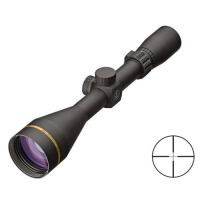


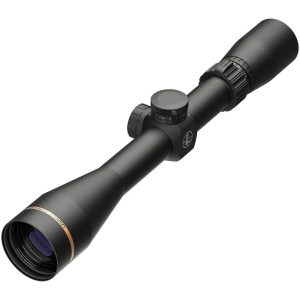

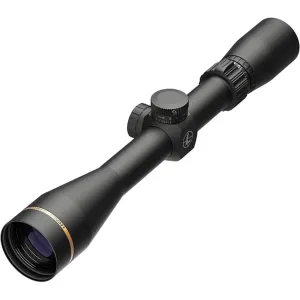
The 4-12x40mm version of the VX-Freedom is the ultimate value play for hunters and recreational shooters. At just 12.6 ounces, it is one of the lightest scopes in its magnification class. The extra magnification over the 3-9 model gives you more reach for longer shots while keeping the package compact and lightweight.
The Tri-MOA reticle adds small hashmarks to the standard Duplex layout, giving you basic holdover references without cluttering the field of view. It is a nice middle ground between a plain Duplex and a full BDC reticle. The generous eye relief range of 3.7 to 4.6 inches makes this scope very forgiving, especially on harder-recoiling rifles.
This is the scope I tell people to buy when they want something reliable and proven without overthinking it. Mount it, zero it, and forget about it. It will hold up for years of hard use.

6. Vortex Strike Eagle 5-25x56mm
| Category | Rating |
|---|---|
| Price | ⭐⭐⭐⭐ (4/5) |
| Glass Quality | ⭐⭐⭐⭐ (4/5) |
| Features | ⭐⭐⭐⭐ (4/5) |
| Durability | ⭐⭐⭐⭐⭐ (5/5) |
| Versatility | ⭐⭐⭐⭐ (4/5) |
Pros
- 34mm tube with generous internal adjustment
- FFP reticle at a mid-range price
- Locking turrets prevent accidental shifts
Cons
- Glass is a step below the Viper PST Gen II
- EBR-7C MOA reticle is less refined than MRAD options
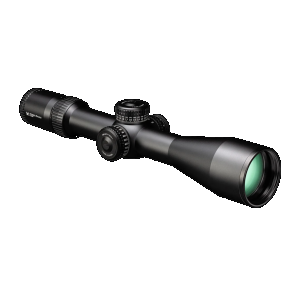

The Strike Eagle 5-25×56 is Vortex’s answer for shooters who want a big-tube, FFP scope without spending Viper PST money. The 34mm tube and 56mm objective give you a wide, bright image with plenty of internal adjustment range. If you are shooting an MOA-based system, the EBR-7C MOA reticle gives you clean subtensions for holdovers and wind calls.
One of the smartest features on this scope is the locking elevation turret. Give it a push down and it locks in place so your zero cannot drift from bumps in a truck bed or case. Pull it up and you are back to dialing. It is a small detail that makes a real difference in the field.
The glass is not quite as sharp as the Viper PST Gen II, especially at the edges on max magnification. But for the price difference, the Strike Eagle delivers tremendous capability. It is an ideal first scope for someone getting into long-range shooting who does not want to upgrade in six months. Our Vortex Strike Eagle review covers all five current Strike Eagles, from the 1-10 power LPVO to this 5-25.

7. SIG Sauer Sierra3 BDX 4.5-14x44mm
| Category | Rating |
|---|---|
| Price | ⭐⭐⭐ (3/5) |
| Glass Quality | ⭐⭐⭐⭐ (4/5) |
| Features | ⭐⭐⭐⭐⭐ (5/5) |
| Durability | ⭐⭐⭐⭐ (4/5) |
| Versatility | ⭐⭐⭐ (3/5) |
Pros
- Bluetooth pairs with SIG KILO rangefinder for auto holdover
- Illuminated BDX dot shows exact aiming point
- Solid glass quality from SIG’s HDX optics
Cons
- Requires SIG KILO rangefinder to unlock full potential
- Battery dependent for smart features
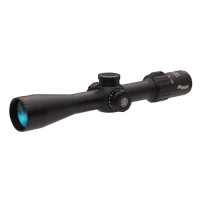

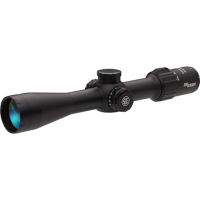
The Sierra3 BDX is unlike anything else on this list. Pair it with a SIG KILO BDX rangefinder and the scope communicates via Bluetooth to display an illuminated holdover dot in real time. You range your target, the data transfers to the scope, and a blue dot appears exactly where you need to hold. It takes the guesswork out of shooting at distance, especially for hunters who may not have time to dial turrets.
Even without the BDX system active, this is a well-built scope with quality HDX glass and a clean, usable reticle. The 4.5-14x magnification range covers most hunting scenarios from whitetail stands to western big game. SIG built the optics side of this scope to be genuinely good, not just a gimmick carrier.
The catch is that you need the SIG KILO rangefinder to get the full smart scope experience, which adds to the total investment. But if you are already in the SIG ecosystem or plan to be, the BDX system is genuinely useful in the field.
8. Leupold Mark 5HD 5-25x56mm
| Category | Rating |
|---|---|
| Price | ⭐⭐⭐ (3/5) |
| Glass Quality | ⭐⭐⭐⭐⭐ (5/5) |
| Features | ⭐⭐⭐⭐⭐ (5/5) |
| Durability | ⭐⭐⭐⭐⭐ (5/5) |
| Versatility | ⭐⭐⭐ (3/5) |
Pros
- Tracks true, box tests come back square
- 29 MIL of elevation in one turn
- ZeroLock stops accidental dial changes
Cons
- Two thousand dollars before rings
- 35mm tube needs specific mounts
- Heavy on a lightweight hunting rifle
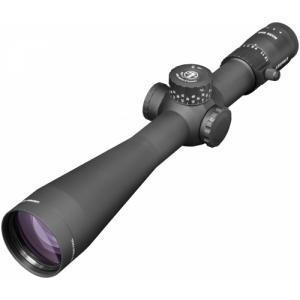

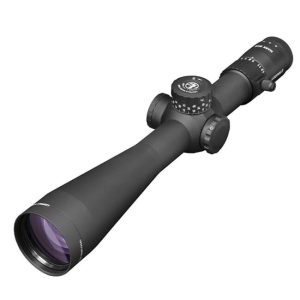
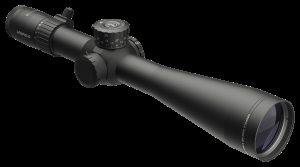

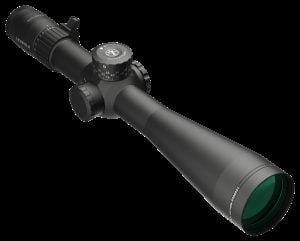
If you shoot matches, or you stretch a hunting rifle past what most people would call sensible, this is the scope that stops the arguing. The Mark 5HD is what a lot of precision shooters end up on after they have owned two or three others, and it is a US-made optic at a price where most of the competition is not.
Every Mark 5HD size, and how it compares with the Mark 4HD, is in our Leupold scopes explained guide.
Tracking is the whole point of a scope like this and the Mark 5HD tracks. Box tests come back square, the dial returns to zero, and 29 MIL of elevation in a single turn means you are not counting revolutions in the middle of a stage. ZeroLock keeps the turret where you left it, which matters more than it sounds like it does when the rifle is in and out of a truck all weekend.
The cost is real and so is the weight. Two thousand dollars gets you glass and mechanics, not a mount, and the 35mm tube narrows your ring options. Put it on a rifle that earns it. On a 6.5 Creedmoor you actually shoot at distance, it is the last scope you will buy for that gun.
9. Vortex Crossfire II 3-9x40mm
| Category | Rating |
|---|---|
| Price | ⭐⭐⭐⭐⭐ (5/5) |
| Glass Quality | ⭐⭐⭐ (3/5) |
| Features | ⭐⭐⭐ (3/5) |
| Durability | ⭐⭐⭐⭐ (4/5) |
| Versatility | ⭐⭐⭐⭐ (4/5) |
Pros
- Incredible value under $200
- Backed by Vortex’s unconditional lifetime warranty
- Light and compact for any rifle platform
Cons
- Glass quality shows its price at higher magnification
- No illumination or advanced reticle features


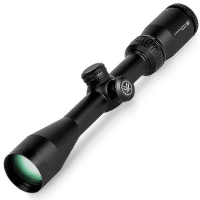
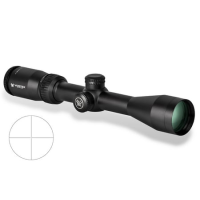
The Vortex Crossfire II is the best scope you can buy for under $200, and it is not particularly close. Vortex managed to pack decent multi-coated optics, a clean V-Plex reticle, and solid construction into a package that costs less than a nice dinner for two. For a first rifle scope, a beater gun, or a budget build, this is the obvious choice.
The V-Plex reticle is Vortex’s version of the classic Duplex. It is simple, fast to acquire, and does not distract from the target. The glass is not going to compete with scopes twice the price, but it is clear enough for hunting shots out to 300 yards and general range work. Turrets are capped and hold zero reliably.
What makes the Crossfire II special is the Vortex VIP warranty behind it. If anything goes wrong, for any reason, Vortex repairs or replaces it for free. That kind of backing on a sub-$200 scope is unheard of from any other manufacturer. It removes all the risk from buying a budget optic.
All Nine Scopes Compared
| Scope | Magnification | Focal Plane | Weight | Street Price | Compare |
|---|---|---|---|---|---|
| Vortex Viper PST Gen II 5-25×50 | 5-25×50 | FFP | 31.2 oz | About $899 | Lowest Price ↓ |
| Leupold VX-Freedom 3-9×50 | 3-9×50 | SFP | 14.6 oz | About $450 | Lowest Price ↓ |
| Primary Arms SLx ACSS Nova 1-6×24 | 1-6×24 | SFP | 17.9 oz | About $245 | Lowest Price ↓ |
| Vortex Razor HD Gen III 6-36×56 | 6-36×56 | FFP | 48.5 oz | About $3,000 | Lowest Price ↓ |
| Leupold VX-Freedom 4-12×40 | 4-12×40 | SFP | 12.6 oz | About $304 | Lowest Price ↓ |
| Vortex Strike Eagle 5-25×56 | 5-25×56 | FFP | 30.4 oz | About $799 | Lowest Price ↓ |
| SIG Sauer Sierra3 BDX 4.5-14×44 | 4.5-14×44 | SFP | 22.6 oz | About $650 | Lowest Price ↓ |
| Leupold Mark 5HD 5-25×56 | 5-25×56 | FFP | 30 oz | About $2,200 | Lowest Price ↓ |
| Vortex Crossfire II 3-9×40 | 3-9×40 | SFP | 14.8 oz | About $130 | Lowest Price ↓ |
FFP vs SFP: Which Do You Need?
First focal plane (FFP) and second focal plane (SFP) refer to where the reticle sits inside the scope’s optical system. In an FFP scope, the reticle scales with magnification. That means the subtensions (holdover marks, windage dots, mil hash marks) are accurate at every power setting. If your reticle says 2 mils at 10x, it still reads 2 mils at 25x. This is critical for precision shooters who use holdovers instead of dialing turrets. Our Nightforce NX8 review shows how that plays out across one family sold in both first and second focal plane.
We put real numbers on that choice in our first vs second focal plane explainer.
In an SFP scope, the reticle stays the same size regardless of magnification. The subtensions are only accurate at one specific power, and on most scopes that is the maximum. The advantage is that the reticle is always easy to see and never gets too thick or too thin. For hunters and general shooters who primarily use the crosshairs to aim and dial for distance when needed, SFP works perfectly well.
My general recommendation: if you shoot long range and use holdovers regularly, go FFP. If you primarily hunt at ranges under 400 yards and want a simple, clean sight picture, SFP is the better choice. Neither is objectively superior. It comes down to how you shoot and what you prioritize behind the rifle.
MOA or MIL: Pick One and Stop Worrying
Both are just angles. One MOA is about an inch at 100 yards. One MIL is about 3.6 inches at the same distance. Neither is more accurate than the other, and anyone who tells you otherwise is selling something.
What actually matters is that your turrets and your reticle speak the same language. A MIL reticle on a scope with MOA turrets is a genuinely miserable way to spend a range day, because every correction needs converting in your head while the wind changes. Check the model number before you buy. Manufacturers sell the same scope both ways and the difference is one letter.
If you shoot alone and think in inches, MOA feels natural. If you shoot with other people, or you read ballistics apps and match data, MIL is the common tongue and it saves translating. I run MIL on the long-range rifles and MOA on the hunting guns, purely because that is how each one started.
Parallax: The Setting Most Shooters Ignore
Parallax is the reticle appearing to float against the target when you move your head behind the scope. If you can shift your eye a little and watch the crosshair drift off your aiming point, that drift is real error, and at distance it is worth more than most people’s group size.
Fixed-parallax hunting scopes are set at the factory to 100 or 150 yards, and inside normal hunting range you will never notice. Anything with a side focus dial lets you tune it out at whatever distance you are shooting. Adjust it until the reticle stops moving when you shift your head, not until the target looks sharpest. Those two points are close but they are not the same, and the no-movement point is the one that matters.
This is the single most common reason a good scope on a good rifle throws an unexplained flier at 400 yards. Worth learning properly.
What You Actually Get for More Money
Glass is where the money goes, and the difference is not really sharpness in the middle. Every scope on this list is sharp in the middle. The difference shows at the edges of the field, in the last twenty minutes of legal light, and in how much color fringing you see against a bright sky.
Extra-low dispersion glass and better coatings are what buy that. A Razor HD Gen III at $3,000 and a Crossfire II at $130 will both put a bullet where the reticle sits at noon. Put them side by side on a deer at last light and the gap is obvious and it is not subtle.
The other thing money buys is tracking. Cheap turrets dial four MIL and give you three and a half, and they do not always come back to zero. That does not matter if you never touch the dials. It matters enormously if you do. Which is the honest test for how much scope you need: are you holding over, or are you dialling?
Rings, Bases and Torque
A $2,000 scope in $20 rings is a $20 scope. Mounting is not the place to save, and it is where more accuracy problems come from than the optic itself.
Use a torque wrench, not a feel. Ring caps want 15 to 18 inch-pounds and base screws 25 to 30, but the number that counts is the one in your ring maker’s instructions, because it varies. Overtightening ring caps can crush a tube and it will not be covered under warranty. Go around the screws in a cross pattern in stages rather than running each one down in turn.
Get eye relief right before you tighten anything. Shoulder the rifle with your eyes shut, open them, and the picture should be full and black-edge free without you craning forward or back. Then level the reticle to the rifle, not to the world. Once it is all torqued, go and zero it properly. Our guide on how to sight in a rifle scope walks through that end of it.
The Bottom Line
If you buy one scope and you want it to cover most of what a rifle does, buy the Vortex Viper PST Gen II 5-25×50 at around $899. First focal plane, turrets that track, glass that holds up, and Vortex behind it if anything goes wrong. It is the pick I would make with my own money.
For a deer rifle that lives in a truck and gets used twice a year, spend a quarter of that on the Leupold VX-Freedom 3-9×50 and put the rest into ammunition and range time. And if you are actually shooting matches or stretching past 800 regularly, the Leupold Mark 5HD is where the arguing stops.
Whatever you land on, mount it properly and learn the parallax dial. Those two things will do more for your groups than another thousand dollars of glass.
Frequently Asked Questions
For a flatter-shooting western big-game cartridge alternative, see our best .270 Winchester rifles roundup covering the Tikka T3x Lite, Browning X-Bolt 2 Speed LR, Winchester Model 70 Featherweight, and 6 more.
For the magnum-class step up, see our best .300 Win Mag rifles roundup covering the Tikka T3x Lite, Bergara B-14 HMR, Winchester Model 70 Super Grade, Browning X-Bolt 2 Speed, and 5 more.
For premium bolt-action specifics in the .300 Win Mag class, see our best .300 Win Mag bolt action rifles roundup covering the Sako S20 Hunter, Nosler Model 21, Bergara B-14 HMR, and 6 more.
For the lower-recoil deer-and-varmint cartridge alternative, see our best .243 Winchester rifles roundup covering the Tikka T3x Lite, Browning X-Bolt 2 Micro for youth, Winchester Model 70 Featherweight, and 6 more.
For the full 7.62×39 platform spectrum spanning AK, AR, bolt action, SKS, and Mini-30 picks, see our best 7.62×39 rifles roundup covering the PSA AK-47 GF5, Zastava ZPAP M70, Ruger Mini-30, CMMG Mk47, and 5 more.
For the 7mm magnum middle-ground between the .270 and the .300 Win Mag, see our best 7mm Remington Magnum rifles roundup covering the Tikka T3x Lite, Sako 85 Finnlight II, Bergara B-14 Hunter, and 6 more.
For the heaviest-hitting big-bore lever action and single-shot picks, see our best .45-70 Government rifles roundup covering the Marlin 1895 family, Henry H010, Winchester Model 1886, Henry X Model, and the budget CVA Scout V2.
For the rimfire magnum step up to .22 WMR with bolt, semi-auto, and lever picks, see our best .22 WMR rifles roundup covering the CZ 457 American, Savage A22 Magnum semi-auto, Henry H001M Frontier, Volquartsen Summit, and 5 more.
For the flattest-shooting rimfire varmint cartridge with bolt, semi-auto, and lever picks, see our best .17 HMR rifles roundup covering the CZ 457, Savage A17 semi-auto, Bergara BMR precision rimfire, Henry H001V Varmint Express lever, and 5 more.
For Midwest deer hunters in straight-wall states (Ohio, Indiana, Iowa, Michigan), see our best .350 Legend rifles roundup covering the Winchester XPR, Ruger American Ranch with AR magazine compatibility, Mossberg Patriot Predator, Bergara B-14 Ridge, CMMG Resolute Mk4 AR-15 platform, and 4 more.
For Midwest hunters who want the heaviest-hitting straight-wall cartridge with AR-15 and bolt action picks, see our best .450 Bushmaster rifles roundup covering the Bushmaster XM-15, Ruger American Ranch, Mossberg Patriot, Bergara B-14 Ridge, Franchi Momentum Elite, CVA Cascade, and 3 more.
For the recoil-friendly 7mm hunting cartridge that women and youth shooters love, see our best 7mm-08 Remington rifles roundup covering the Tikka T3x Lite, Kimber Hunter at 5.5 lb, Winchester Model 70 Featherweight, Bergara B-14 Hunter, Savage 110 Hunter, and 4 more.
For the long-range hunting upgrade with magnum-class velocity and high-BC 6.5mm bullets, see our best 6.5 PRC rifles roundup covering the Tikka T3x Lite, Bergara B-14 HMR, Sako S20 Hunter, Christensen Mesa, Nosler M21, and 4 more.
What magnification do I need for my rifle scope?
It depends on your primary use. For hunting inside 300 yards, 3-9x or 4-12x covers most situations. For long-range target shooting past 600 yards, you will want at least 15-20x on the top end. LPVOs in the 1-6x or 1-8x range are ideal for close to mid-range work on AR-platform rifles. Match your magnification to your realistic shooting distances, not your maximum fantasy range.
What is the difference between FFP and SFP scopes?
In a first focal plane (FFP) scope, the reticle changes size as you adjust magnification, keeping the subtensions accurate at all power settings. In a second focal plane (SFP) scope, the reticle stays the same size regardless of magnification, but subtensions are only accurate at one power level (usually max). FFP is preferred for precision long-range shooting. SFP is often preferred for hunting due to its consistent, clean sight picture.
How much should I spend on a rifle scope?
A common guideline is to spend at least as much on your scope as you did on your rifle. That said, excellent options exist at every price point. Budget scopes like the Vortex Crossfire II and Leupold VX-Freedom deliver solid performance under $300. Mid-range scopes from $500 to $1,000 offer noticeably better glass and features. Premium scopes above $1,500 provide the best clarity, tracking, and durability for serious precision work.
Do I need an illuminated reticle?
Illumination is helpful in low-light hunting conditions and essential for LPVOs used at 1x where you need a bright aiming point. For daytime target shooting and general range use, illumination is a nice-to-have but not a necessity. If you hunt during dawn and dusk hours, an illuminated reticle can help you pick up the crosshairs faster against dark backgrounds.
What tube size is best for a rifle scope?
Most scopes use 1-inch, 30mm, or 34mm tubes. A 1-inch tube is lightest and works well for hunting and general use. A 30mm tube offers more internal adjustment range and light transmission, making it the most popular choice for versatile scopes. A 34mm tube provides the maximum adjustment range for long-range precision shooting but adds weight and requires specific mounts. Choose based on your application, not just the bigger-is-better assumption.
Can I use one scope for hunting and target shooting?
Yes, and many scopes on this list work well for both. The Vortex Viper PST Gen II is an excellent dual-purpose choice with enough magnification for long-range targets and a versatile enough profile for hunting. If weight is a concern for hunting, consider a lighter scope like the Leupold VX-Freedom for field use and a dedicated heavier optic for the range. A 5-25x or 4-16x scope in the 24-30 oz range typically strikes the best balance.
What is the best rifle scope?
It depends on the rifle and range. Vortex, Leupold and Nightforce lead across budgets, with the Vortex Diamondback and Viper offering great value and Leupold and Nightforce serving premium and long-range needs. The best scope matches your rifle, your distance and your budget, so define the job before chasing magnification.
What magnification do I need on a rifle scope?
For close to mid-range and hunting, a 3-9x or 2-7x covers most needs, while a low-power variable like a 1-6x suits an AR and fast targets. For long-range precision, step up to 4-16x or higher. More magnification is not always better, since high power narrows your field of view and exaggerates wobble.
3,979+ Gun & Ammo Deals
Updated daily from 200+ top retailers. Filter by category, caliber, action type, and price.
Related Guides
Which one would you recommend for hunting deer?
As always, it depends on you! Where you’re hunting, what range you typically hunt at etc. With Creedmoor, you can hunt at outrageous distances and it’s more of a sniper fire experience. So you want the best scope you can afford for that. I’d recommend you spend more on the scope and less on the rifle, so the Vortex Gen II mounted on a Ruger Enhanced Precision could be a ideal starter point. The Ruger is modular, so you can switch out for parts that suit you better out in the field. You know it yourself, get a good scope and it will outlast several good rifles.
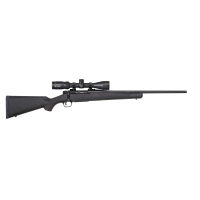
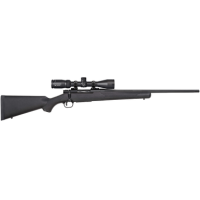
If you’re just starting, btw, I saw this Mossberg Patriot 6.5 Creeedmoor hunting rifle for less than $350. It’s a starter rifle for sure, but it’s a great price and I saw another Mossberg AND Scope kit for $520 if you want to save a few bucks. It’s a lower-powered Vortex than I’d recommend, but still a perfectly capable starter.