

Affiliate disclosure: This article contains affiliate links. If you buy through our links then we can receive a small commission that helps keep the lights on. You don’t pay anything more.
Last updated July 2026 · By Nick Hall, gun owner familiar with Delaware’s new purchase permit and carry regime
Disclaimer: This is an editorial round-up of Delaware gun laws. We do our best to make sure it’s correct, but do not rely on this as legal advice. If you’re unsure about anything, consult a lawyer.
- Treat every gun as loaded
- Point the muzzle in a safe direction
- Keep your finger off the trigger until you’re ready to shoot
- Know your target and what’s beyond
Delaware has been on a legislative tear since 2022, passing new gun restrictions at a pace that’s caught a lot of people off guard. What was once a relatively moderate Mid-Atlantic state for gun owners now has an assault weapons ban, a 17-round magazine limit, universal background checks, and as of November 2025, a brand new permit-to-purchase requirement. If you haven’t checked Delaware’s gun laws recently, what you think you know is probably outdated.
The state isn’t as restrictive as Connecticut, New Jersey, or Maryland, but it’s moving in that direction. Open carry is still legal without a permit, which is a bright spot. But the new purchase permit, the assault weapons ban that survived a Supreme Court challenge, and the suppressor ban make Delaware a state where you need to pay close attention to the details.
How we tested: Every pick here is ranked against our testing methodology. Minimum round counts, accuracy and reliability protocols, the failures that disqualify a gun. Where we have not shot a specific variant ourselves, we say so in that section.
State-Compliant Gun Deals
Best-priced firearms across 200+ retailers · Updated every 4 hours
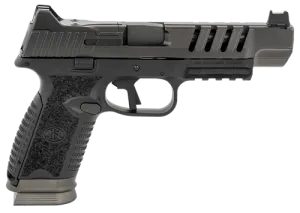
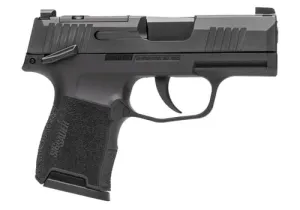
Top Ammo Deals
Best-priced ammunition across 200+ retailers · Updated every 4 hours





Table of Contents
Key Information: Delaware Gun Laws at a Glance (2026)
Fast answers first, with statutes and sources below.
| Permitless Carry | No (Permit Required) |
|---|---|
| Open Carry | Legal without permit |
| Concealed Carry | CDWL Required (May-Issue) |
| Purchase Permit | Required (as of Nov 2025) |
| Background Checks | Universal (all sales including private) |
| Waiting Period | None |
| Magazine Capacity Limit | 17 rounds (CDWL holders exempt) |
| Assault Weapon Ban | Yes (2022, upheld by SCOTUS) |
| Red Flag Law | Yes (ERPO, 2018) |
| Suppressors | Banned for civilians |
| Stand Your Ground | No (Duty to retreat outside home) |
| State Preemption | Partial |
Official Delaware Resources
Delaware Gun Laws: The Highlights
- Constitutional Carry: No. Permit required for concealed carry.
- Concealed Carry: Concealed Deadly Weapon License (CDWL) required. May-issue through Superior Court.
- Open Carry: Legal without a permit for adults who can lawfully possess firearms.
- Purchase Permit: Yes. Required as of November 16, 2025. Must be 21 for handguns/rifles, 18 for shotguns.
- Background Checks: Universal (all sales including private transfers).
- Waiting Period: No statutory waiting period.
- Magazine Limit: 17 rounds (enacted 2022).
- Assault Weapons Ban: Yes (enacted 2022, upheld by courts).
- Red Flag Law: Yes (enacted 2018).
- Suppressors: Illegal for civilians.
Permits and Purchasing
11 Del. C. § 1441 Delaware License to Carry Concealed Deadly WeaponsA person of full age and good moral character desiring to be licensed to carry a concealed deadly weapon for personal protection or the protection of the person's property may be licensed to do so when the following conditions have been strictly complied with: written application to the Prothonotary of the proper county, certificate from five respectable citizens attesting to good moral character and reputation for peace and good order, newspaper publication of the application at least 10 business days prior to filing, fingerprinting through IdentoGO, and completion of a state-approved firearms training course covering federal and state laws, Delaware deadly-force law, conflict management, and actual firing of the handgun.
As of November 16, 2025, Delaware requires a Permit to Purchase for all firearm acquisitions. This is a new requirement that didn’t exist before. The minimum age is 21 for handguns and rifles, and 18 for shotguns and muzzle-loading rifles. This was one of the most significant changes to Delaware gun law in recent years.
For concealed carry, Delaware uses a Concealed Deadly Weapon License (CDWL) issued through the Superior Court. The process is technically may-issue, though most qualified applicants are approved in practice. Requirements include completing a firearms training course, submitting an application with five character references who are residents of the same county, and passing a background check. The CDWL covers not just firearms but any concealed deadly weapon.
The application goes through the Prothonotary of the Superior Court in your county of residence. Processing times vary by county. New Castle County (Wilmington area) typically has the longest wait times due to volume.
Concealed and Open Carry
Open carry is legal in Delaware without a permit for any adult who can lawfully possess a firearm. This is one of the more permissive aspects of Delaware law and stands in contrast to the state’s recent restrictive trend. You can open carry a handgun without any license or permit. However, standard prohibited locations apply: schools, government buildings, state parks, and anywhere signage prohibits firearms.
Concealed carry requires the CDWL. Without it, carrying a concealed deadly weapon is a Class G felony under 11 Del. C. § 1442. Delaware recognizes concealed carry permits from a limited number of other states. Check current reciprocity before carrying on a Delaware permit in another state or carrying an out-of-state permit in Delaware.
Background Checks
Delaware has universal background checks. All firearm transfers, including private sales, must go through a licensed dealer who conducts a background check. This applies to handguns, rifles, and shotguns. There are limited exceptions for transfers between immediate family members, but even those have restrictions.
Delaware uses the NICS system for its background checks. There is no state-level point of contact system. Dealer transfers follow the standard federal process.
Magazine Capacity Limits
Delaware enacted a 17-round magazine limit in 2022 under 11 Del. C. § 1468. Magazines holding more than 17 rounds are prohibited with exceptions for law enforcement, military, and holders of a valid Concealed Deadly Weapon License. That CDWL exception is unusual and worth noting: if you have a Delaware concealed carry permit, the magazine limit does not apply to you.
The 17-round limit was chosen specifically because it’s the standard capacity of common full-size pistols like the Glock 17 and SIG P320. In practice, this ban primarily affects rifle magazines (standard AR-15 magazines are 30 rounds) and extended pistol magazines.
Assault Weapons Ban
Delaware’s assault weapons ban was enacted in 2022 under 11 Del. C. § 1466. It bans the sale of defined assault-style weapons including AR-15 pattern rifles, AK-47 pattern rifles, and similar semiautomatic platforms. The law was immediately challenged in court, but the U.S. Supreme Court declined to hear the case in January 2025, leaving the ban intact.
Firearms legally possessed before the ban took effect are grandfathered. The law prohibits future sales and transfers of covered weapons within the state. This means you can keep what you already own, but you can’t buy, sell, or transfer banned firearms in Delaware going forward.
Red Flag Law
Delaware enacted its Extreme Risk Protection Order (ERPO) law in 2018 under 10 Del. C. § 7701-7709. The law allows family members, household members, law enforcement, and certain medical professionals to petition for an order to temporarily remove firearms from individuals deemed to pose a danger to themselves or others.
Emergency orders can be issued ex parte (without the respondent present) and last until a full hearing. At the hearing, the respondent has the opportunity to present their case. If the court finds by a preponderance of the evidence that the person poses a danger, firearms are surrendered for up to one year.
NFA Items
Suppressors are completely banned for civilians in Delaware under 11 Del. C. § 1444. Possession of a suppressor is a felony. Delaware is one of only eight states that completely prohibit civilian suppressor ownership. The 2026 federal change, which dropped the NFA transfer tax on suppressors to $0 but did not remove them from the NFA or its registration requirements, does not override Delaware’s state-level ban.
Short-barreled rifles and short-barreled shotguns are restricted. Check current statute for specific NFA item legality, as Delaware’s restrictions on these items are more nuanced than a blanket ban.
Delaware Suppressor Facts & Figures
| Suppressor ownership | Illegal for civilians. 11 Del. C. § 1444 makes possessing a firearm silencer a felony, there is no exception for a federal ATF Form 4 or tax stamp. |
| Hunting with a suppressor | Prohibited, possession is itself a crime, so there is no lawful hunting use. |
| Bringing one in from out of state | Not allowed. Possessing a suppressor in Delaware is a felony regardless of where it was bought or registered. |
| 2026 federal $0 tax stamp | Does not apply here. The federal change removed only the $200 federal tax; it does not affect Delaware’s state ban. |
Do not attempt to buy, build, import, or possess a suppressor in Delaware. Even a fully ATF-registered, tax-stamped suppressor is illegal to possess here. To see where suppressors are and are not legal, see our suppressor laws by state guide. This page is general information, not legal advice, consult a Delaware firearms attorney about your specific situation.
State Preemption
Delaware has partial preemption. Counties and municipalities are generally prohibited from enacting laws that regulate the ownership, transfer, or possession of firearms. However, local governments can regulate the discharge of firearms and create limited carry restrictions in certain locations. In practice, this means the state laws described on this page apply statewide, but check local ordinances for discharge restrictions in your area.
Self-Defense: Duty to Retreat
11 Del. C. § 464 Delaware Self-DefenseThe use of force upon or toward another person is justifiable when the defendant believes that such force is immediately necessary for the purpose of protecting the defendant against the use of unlawful force by the other person on the present occasion. The use of deadly force is justifiable under this section if the defendant believes that such force is necessary to protect the defendant against death, serious physical injury, kidnapping or sexual intercourse compelled by force or threat. The use of deadly force is not justifiable under this section if the defendant, with the purpose of causing death or serious physical injury, provoked the use of force against the defendant in the same encounter.
Delaware is NOT a Stand Your Ground state. Under 11 Del. C. § 464, you have a duty to retreat before using deadly force if you can safely do so. The exception is the Castle Doctrine: within your own dwelling, you have no duty to retreat and may use deadly force if you reasonably believe it’s necessary to protect yourself or others from death, serious physical injury, kidnapping, or sexual intercourse by force.
Outside the home, the duty to retreat means that if you can safely disengage from a threatening situation, you are legally required to do so before using deadly force. This applies on the street, in parking lots, in stores, everywhere outside your residence. If you’re involved in a defensive shooting in Delaware, expect the prosecutor to scrutinize whether retreat was possible. This is a critical difference from neighboring states like Pennsylvania (which has Stand Your Ground).
Reciprocity: Out-of-State Permits
Delaware Concealed Carry at a Glance
Constitutional carry: No
Honors non-resident permits: No — out-of-state permits not honored
Classification: No reciprocity
Map base: Wikimedia Commons (CC BY-SA). Color overlay and reciprocity data by USA Gun Shop.
Can I Carry in Delaware?
Select your home state to see if your permit authorizes carry in Delaware.
Delaware’s concealed carry reciprocity is moderately broad. The state recognizes permits from states that have signed a formal reciprocity agreement with the Delaware Attorney General. Delaware’s own CCDW (Concealed Carry of a Deadly Weapon) license is recognized by a decent number of states, making it useful for travel along the East Coast and into the South.
Getting a Delaware CCDW isn’t easy compared to many states. The process involves completing a firearms training course, publishing your intent to obtain a permit in a local newspaper (yes, really), getting five character references from your county, and a background check through the Prothonotary’s office. All that effort is worth it if you need the reciprocity.
States That Recognize Delaware CCDW
| Full Reciprocity (20+) | NOT Recognized In |
| Alaska, Arizona, Arkansas, Colorado, Florida, Idaho, Indiana, Iowa, Kansas, Kentucky, Louisiana, Michigan, Mississippi, Missouri, Montana, Nebraska, New Hampshire, North Carolina, North Dakota, Ohio, Oklahoma, South Dakota, Tennessee, Texas, Utah, Vermont, Virginia, West Virginia, Wisconsin, Wyoming | California, Connecticut, Hawaii, Illinois, Maryland, Massachusetts, Minnesota, New Jersey, New York, Oregon, Rhode Island, Washington, Washington D.C. |
Critical Details for Travelers
- Newspaper Publication: Delaware uniquely requires you to publish your name and intent to obtain a CCDW in a local newspaper. This is a public notice requirement that surprises many applicants.
- Non-Resident Permits: Delaware does not issue non-resident permits. You must be a Delaware resident to obtain a CCDW.
- Reciprocity Agreements: Delaware requires formal bilateral agreements. The AG’s office maintains the current list. Check before traveling as agreements can change.
Prohibited Places
Prohibited Places in Delaware
Delaware requires a Concealed Deadly Weapons License (CDWL) for concealed carry. The prohibited-places list is moderate and statutory.
- K-12 schools and school grounds
- School buses
- School-sponsored events
- Courthouses and courtrooms
- State government buildings
- Police stations
- Federal courthouses, post offices, agency offices
- Posted private property where owner has communicated a no-firearms policy
Even with a valid CDWL, Delaware prohibits firearms in several locations. Under 11 Del. C. § 1457, firearms are prohibited in schools, school zones, and on school buses. State parks restrict firearms under park regulations. Government buildings, courthouses, and polling places during elections are also off-limits.
Private property owners can prohibit firearms by posting signage. Carrying in violation of posted signage is a trespassing offense. Delaware law doesn’t specifically address carry in bars or restaurants that serve alcohol, but carrying while intoxicated is a separate offense.
Purchasing Process Step by Step
Here’s what the process looks like for a first-time gun buyer in Delaware as of 2026:
- Obtain a Permit to Purchase from the Delaware State Police or your county authority. This is the new requirement as of November 2025. Bring valid ID and complete the application.
- Choose your firearm. Remember the assault weapons ban and 17-round magazine limit (unless you hold a CDWL). Ask your dealer about compliance if you’re unsure.
- Complete the sale at a licensed dealer. Fill out the federal 4473 form, undergo a NICS background check. If you’re buying through a private sale, the transfer must go through a licensed dealer who conducts the background check.
- Take your firearm home. There’s no waiting period at the dealer level once you have the Purchase Permit and pass the background check.
If you also want to carry concealed, the CDWL process is separate and goes through the Superior Court in your county. It requires a training course, five character references, and a background check. Processing times vary by county.
Recent Changes (2022-2026)
Delaware has been on a legislative tear. More gun restrictions passed between 2022 and 2025 than in the previous two decades combined.
- June 2022: Assault Weapons Ban (HB 450). Banned the sale, manufacture, and delivery of assault weapons. Existing owners grandfathered. Survived a constitutional challenge in Delaware Superior Court.
- June 2022: Magazine Limit (SB 6). Capped magazine capacity at 17 rounds. CCDW holders exempt. Existing magazines grandfathered.
- June 2022: Age Increase (HB 451). Raised the minimum purchase age from 18 to 21 for most buyers.
- 2023: Universal Background Checks (HB 222). Required background checks for all private sales, closing the gun show loophole.
- November 2025: Purchase Permit (SB 2). Delaware now requires a permit before purchasing any firearm. Involves a background check, training course, and application through the Prothonotary.
On the federal side, the elimination of the $200 NFA tax stamp (effective January 1, 2026) makes suppressors and SBRs cheaper to acquire in Delaware since they were already legal with federal registration. The bigger question is whether the state legislature continues its restrictive trend in 2026.
Background Checks: The Full Picture
Delaware now has universal background checks. Every transfer, whether through a dealer, at a gun show, or between private individuals, requires a background check through the State Bureau of Identification. The only exemptions are transfers between immediate family members and temporary loans for lawful sporting purposes.
With the new Permit to Purchase layered on top, Delaware now has two separate screening processes: one to get the permit, and another at the point of sale. That is more friction than most states impose, and it is a significant shift from where Delaware was just five years ago.
Our Take on Delaware Gun Laws
Delaware changed more in three years than most states change in a decade. The assault weapons ban, magazine limits, and purchase permit requirement all landed between 2022 and 2025. If you bought a gun in Delaware in 2021, the legal landscape today would be almost unrecognizable.
The silver lining is that open carry remains unrestricted, the CDWL exemption on magazine limits is generous, and grandfathered firearms aren’t affected by the assault weapons ban. But the trajectory is clearly toward more restriction, not less. If you live in Delaware, stay current on the legislative session and know your rights. The Delaware State Sportsmen’s Association is the primary advocacy group worth supporting.
For the complete statutes, visit the Delaware Code Title 11.
What to Carry
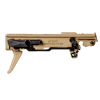
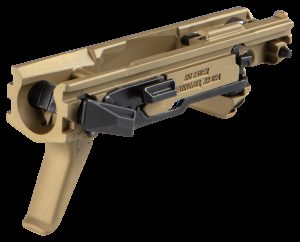
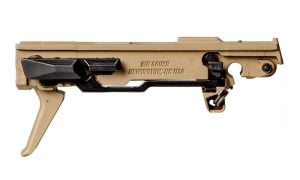
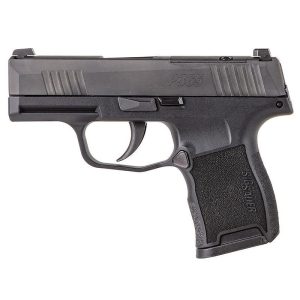
Now that you have the carry rules down, here is the gun most people reach for. The Sig Sauer P365 is the best-selling concealed-carry pistol in the country, slim enough to disappear under a t-shirt yet holding 10+1 or more.

FAQ: Delaware Gun Laws
Delaware-Specific Carry Questions
Is Delaware shall-issue or may-issue for the Concealed Deadly Weapon License?
Delaware operates a hybrid framework. The Concealed Deadly Weapon License application requires character references, training, and a background check, and is processed by the Superior Court in the applicant’s county. The process has historically been treated as may-issue in practice, with some discretion at the court level. Applicants should expect a more rigorous process than typical shall-issue states.
What does Delaware’s assault-weapon and magazine law cover?
Delaware enacted restrictions on certain semi-automatic firearms and on magazines over 17 rounds under the 2022 firearm reform package. Magazines lawfully owned before the effective date were given a compliance period to surrender, register, or transfer out of state. Possession of a non-compliant magazine after the compliance period is a separate offense from possession of a restricted firearm.
Does Delaware’s Castle Doctrine require retreat outside the home?
Delaware Castle Doctrine applies inside the home with a presumption that the defender acted reasonably. Outside the home, Delaware retains a duty to retreat under common-law self-defense principles unless retreat would not be reasonably safe. The defender must articulate a reasonable belief that defensive force was necessary to prevent imminent harm; the law does not provide the broad no-duty-to-retreat protection that Stand Your Ground states offer.
Can I open carry in Delaware?
Delaware has no statutory ban on open carry of a handgun for an adult who is not prohibited under federal or state law, but local law enforcement may treat open carry as a basis for inquiry under disorderly-conduct or breach-of-peace statutes. Open carry is uncommon in Delaware compared to neighboring Pennsylvania, and most Delaware carriers rely on the Concealed Deadly Weapon License for routine carry.
Frequently Asked Questions
Do I need a permit to buy a gun in Delaware?
Yes, as of November 16, 2025, Delaware requires a Permit to Purchase for all firearm acquisitions. The minimum age is 21 for handguns and rifles, and 18 for shotguns and muzzle-loading rifles. This is a new requirement that was not previously in place.
Is open carry legal in Delaware?
Yes. Open carry is legal in Delaware without a permit for any adult who can lawfully possess a firearm. No license or registration is required. Standard prohibited locations apply including schools, government buildings, and state parks. This makes Delaware more permissive for open carry than many of its neighboring states.
Does Delaware have an assault weapons ban?
Yes. Delaware enacted an assault weapons ban in 2022 that prohibits the sale of defined assault-style weapons including AR-15 and AK-47 pattern rifles. The U.S. Supreme Court declined to hear a challenge to the law in January 2025, leaving it intact. Firearms legally possessed before the ban are grandfathered.
What is the magazine capacity limit in Delaware?
Delaware limits magazines to 17 rounds under 11 Del. C. section 1468. However, holders of a valid Concealed Deadly Weapon License (CDWL) are exempt from this restriction. The limit primarily affects rifle magazines and extended pistol magazines, as most standard full-size pistol magazines hold 17 rounds or fewer.
Are suppressors legal in Delaware?
No. Suppressors are completely banned for civilians in Delaware under 11 Del. C. section 1444. Possession is a felony offense. Delaware is one of only eight states that completely prohibit civilian suppressor ownership. The 2026 federal change dropped the NFA transfer tax on suppressors to $0 but did not remove them from the NFA or its registration requirements, so it does not override Delaware's state-level ban.
How do I get a concealed carry permit in Delaware?
Delaware issues a Concealed Deadly Weapon License (CDWL) through the Superior Court. Requirements include completing a firearms training course, submitting an application with five character references from your county of residence, and passing a background check. The process is technically may-issue but most qualified applicants are approved.
Does Delaware require background checks for private sales?
Yes. Delaware has universal background checks. All firearm transfers, including private sales between individuals, must go through a licensed dealer who conducts a NICS background check. There are limited exceptions for transfers between immediate family members.
Does Delaware have a red flag law?
Yes. Delaware enacted an Extreme Risk Protection Order law in 2018. Family members, household members, law enforcement, and certain medical professionals can petition for an order to temporarily remove firearms from individuals deemed to pose a danger. Orders can be issued on an emergency basis and last up to one year after a hearing.
4,969+ Gun & Ammo Deals
Updated daily from 200+ top retailers. Filter by category, caliber, action type, and price.