

Affiliate disclosure: This article contains affiliate links. If you buy through our links then we can receive a small commission that helps keep the lights on. You don’t pay anything more.
Last updated July 2026 · By Nick Hall, gun owner familiar with Connecticut’s permits and restriction details
Disclaimer: This is an editorial round-up of Connecticut gun laws. We do our best to make sure it’s correct, but do not rely on this as legal advice. If you’re unsure about anything, consult a lawyer.
- Treat every gun as loaded
- Point the muzzle in a safe direction
- Keep your finger off the trigger until you’re ready to shoot
- Know your target and what’s beyond
Quick Answer: Connecticut has restrictive gun laws in 2026. Concealed carry is “shall-issue” through local police chiefs at age 21+, with state pistol permit fee of $70 and required training. Connecticut bans “assault weapons” defined under the 2013 post-Sandy Hook law, magazines over 10 rounds, and most NFA items.
Standard handgun purchases require a State Pistol Permit AND a long-gun eligibility certificate, plus a 14-day waiting period for handguns. Connecticut requires registration of pre-ban “assault weapons” and large-capacity magazines (existing pre-2013 inventory may still be possessed).
The biggest mistake new Connecticut gun owners make is bringing standard-capacity magazines from out of state. Possession over 10 rounds is a Class D felony unless registered. Connecticut honors no out-of-state CCW permits. Universal background checks apply to all firearm transfers, including private sales.
Connecticut is one of the strictest states in the country for gun owners, and it has been tightening the screws steadily since Sandy Hook in 2012. If you’re moving to Connecticut, buying your first gun here, or just trying to figure out what you can legally own, this page covers every major regulation with the actual statutes so you can verify everything yourself.
The short version: you need a permit or certificate to buy anything. Every sale goes through a background check, including private transfers. Magazines are capped at 10 rounds. There’s an assault weapons ban. And you can forget about carrying without a permit. Connecticut is not a constitutional carry state and isn’t trending that direction.
That said, Connecticut is shall-issue for pistol permits, suppressors are now legal with proper NFA registration (though banned for hunting), and the gun community here is resilient. There are excellent shops, ranges, and training facilities across the state. You just need to know the rules.
State-Compliant Gun Deals
Best-priced firearms across 200+ retailers · Updated every 4 hours
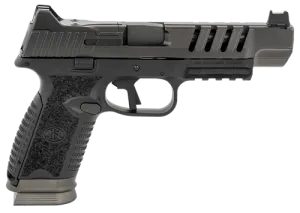
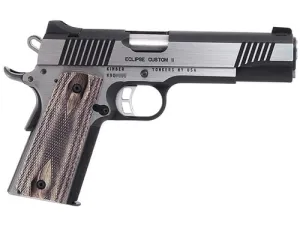
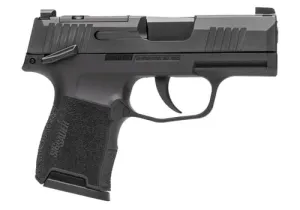
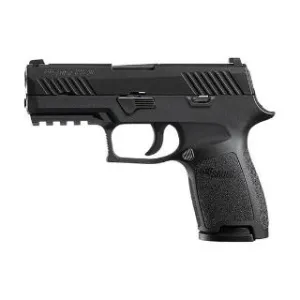
Looking for a brick-and-mortar shop in Connecticut? See our best gun stores in Connecticut guide for verified FFL dealers, ranges, and gunsmiths near you.
Top Ammo Deals
Best-priced ammunition across 200+ retailers · Updated every 4 hours




Table of Contents
Key Information: Connecticut Gun Laws at a Glance (2026)
Fast answers first, with statutes and sources below.
| Permitless Carry | No (Permit Required) |
|---|---|
| Open Carry | With Pistol Permit Only, 21+ |
| Concealed Carry | CT Pistol Permit Required, 21+ |
| Purchase Permit | Required (Pistol Permit or Certificate of Eligibility) |
| Background Checks | Universal (all sales including private transfers) |
| Waiting Period | None with permit. ~2 weeks without. |
| Magazine Capacity Limit | 10 rounds |
| Assault Weapon Ban | Yes |
| Red Flag Law | Yes (First in nation, 1999) |
| Suppressors | Legal (NFA, banned for hunting) |
| SBRs/SBSs | Legal with NFA compliance |
| Stand Your Ground | No (Duty to retreat) |
| State Preemption | Partial |
Official Connecticut Resources
Connecticut Gun Laws: The Highlights
Conn. Gen. Stat. § 29-28 Connecticut Pistol PermitNo person shall carry any pistol or revolver upon his or her person, except when such person is within the dwelling house or place of business of such person, without a permit to carry the same issued as provided in section 29-28. A pistol permit shall be issued to any suitable person who is a resident of this state or a permanent resident alien... The applicant shall be at least 21 years of age, has not been convicted of a felony, has successfully completed a course approved by the commissioner of emergency services and public protection.
- Constitutional Carry: No. Permit required for concealed carry.
- Concealed Carry: Connecticut Pistol Permit required (shall-issue post-Bruen). Must be 21+.
- Open Carry: Legal with a valid Pistol Permit only. Must be 21+.
- Purchase Permit: Yes. Pistol Permit or Certificate of Eligibility required for all firearms and ammunition.
- Background Checks: Universal (all sales including private transfers).
- Waiting Period: No waiting period with permit/certificate. Two-week wait without one.
- Magazine Limit: 10 rounds (grandfathered if registered before April 4, 2013).
- Assault Weapons Ban: Yes. Defined list of banned models plus feature-based tests.
- Red Flag Law: Yes. Connecticut was the first state to enact one (1999).
- Suppressors: Legal with NFA registration (banned for hunting).
Permits and Purchasing
Connecticut has a two-tier permit system that you need to understand before you try to buy anything. Under Conn. Gen. Stat. § 29-36f through § 29-37a, you need either a Connecticut Pistol Permit (CTPP) or a Certificate of Eligibility to purchase any firearm or ammunition in the state.
The pistol permit process is a two-step affair. First, you complete an NRA or DESPP-approved safety course, then apply for a temporary 60-day permit through your local police department. That temporary permit then gets upgraded to a regular 5-year permit through the Department of Emergency Services and Public Protection (DESPP). The whole process involves fingerprinting, photographs, and a background check through the state’s own system (Connecticut uses a State Point of Contact rather than going directly through NICS).
The Certificate of Eligibility is the alternative for people who want to buy long guns but don’t need a carry permit. It requires the same background check and application process but doesn’t authorize carry.
If you hold a valid pistol permit or certificate, there’s no waiting period. Without one, you’re looking at a two-week wait while your application processes. In practice, most regular buyers maintain their permit and skip the wait entirely.
Concealed and Open Carry
Connecticut requires a Connecticut Pistol Permit for both concealed and open carry. There is no constitutional carry and no separate open carry permit. If you have the CTPP, you can carry concealed or openly. If you don’t have it, you can’t carry at all outside your home or place of business.
The state was technically may-issue before the Supreme Court’s Bruen decision in 2022, but in practice it operated more like shall-issue. Post-Bruen, the state has confirmed shall-issue status: if you meet the requirements and pass the background check, the permit is issued. You must be 21 or older.
Prohibited locations for carry include schools (Conn. Gen. Stat. § 53a-217b), state capitol and legislative buildings, and any property where the owner has posted no-carry signage. State law doesn’t broadly prohibit carry in bars or restaurants that serve alcohol, which is a common restriction in other states.
Background Checks
Connecticut has universal background checks under Conn. Gen. Stat. § 29-33 and § 29-36l. Every firearm transfer, whether through a dealer or between private individuals, must go through a background check. Private sellers must conduct the transfer through a licensed dealer or use the DESPP’s direct transfer process.
The state operates as its own Point of Contact (POC) for background checks rather than routing directly through the FBI’s NICS system. This means the state runs its own check using state criminal records, mental health records, and federal databases. The process is generally quick for permit holders but can take longer for first-time applicants going through the eligibility certificate process.
Magazine Capacity Limits
Under Conn. Gen. Stat. § 53-202w, Connecticut limits magazine capacity to 10 rounds. This applies to both handgun and rifle magazines. Magazines that exceed 10 rounds and were legally possessed before April 4, 2013, are grandfathered but had to be registered with DESPP by January 1, 2014.
As of early 2025, HB 7052 passed committee to raise the limit from 10 to 15 rounds, but this has not been signed into law as of March 2026. If you’re reading this later, check the current status. For now, the 10-round limit stands.
Possession of an unregistered large-capacity magazine is a Class D felony. This is not a regulation to take lightly. If you’re moving to Connecticut with magazines over 10 rounds, you need to research the registration and compliance process before crossing the state line.
Assault Weapons Ban
Connecticut’s assault weapons ban under Conn. Gen. Stat. § 53-202a through § 53-202k is one of the strictest in the country. The law bans a specific list of named firearms (including AR-15 variants, AK-pattern rifles, and certain shotguns) plus any semiautomatic firearm that meets certain feature-based tests.
For semiautomatic centerfire rifles, the key features that trigger the ban include: a folding or telescoping stock, a pistol grip that protrudes conspicuously below the action, a thumbhole stock, a grenade or flare launcher, a flash suppressor or threaded barrel, or a forward pistol grip. If your semiautomatic rifle has a detachable magazine AND any one of these features, it’s classified as an assault weapon under Connecticut law.
Pre-ban assault weapons (possessed before April 4, 2013) could be registered with DESPP and retained by the owner. Unregistered assault weapons are illegal to possess. This is a strict liability area: if you’re caught with an unregistered banned firearm, you’re facing felony charges regardless of whether you knew it was banned.
Red Flag Law (Risk Warrants)
Connecticut was the first state in the nation to enact an extreme risk protection order law, passing its “risk warrant” statute in 1999 under Conn. Gen. Stat. § 29-38c. Under this law, a state’s attorney or any two police officers can petition for a warrant to seize firearms from a person who poses a risk of imminent personal injury to themselves or others.
The law was updated in 2021 to expand who can petition: family members, household members, and medical professionals can now initiate the process. In 2023, the requirement for two police officers to attest was reduced to one. The seized firearms are held for up to one year, with a hearing where the respondent can contest the order.
NFA Items
Suppressors are legal to own in Connecticut with proper NFA registration. However, they are prohibited for use while hunting. Note that the federal “One Big Beautiful Bill” (signed July 4, 2025) eliminated the $200 NFA tax stamp on suppressors (though suppressors remain NFA-registered items) effective January 1, 2026, but Connecticut’s state-level hunting prohibition still applies.
Short-barreled rifles (SBRs) and short-barreled shotguns (SBSs) are legal with federal NFA compliance. Machine guns manufactured after May 19, 1986 are prohibited, consistent with federal law.
Connecticut Suppressor Facts & Figures
| Suppressor ownership | Legal for civilians with federal ATF registration (Form 4, fingerprints, NICS check). Connecticut adds no state suppressor ban or extra NFA layer. |
| Hunting with a suppressor | Prohibited. Connecticut bars using any silencer while hunting, Conn. Gen. Stat. § 26-75: “No person shall use any silencer on any firearm when hunting.” Ownership, range use, and home defense remain legal. |
| State suppressor permit | None required beyond the federal Form 4. |
| 2026 federal tax stamp | $0 for suppressors, SBRs, SBSs and AOWs (down from $200), effective January 1, 2026. Machine guns and destructive devices are still taxed at $200. |
Thinking about buying a suppressor? See our guides on how to buy a suppressor in 2026, the best suppressors for every caliber, and the $0 tax stamp explained.
State Preemption
Connecticut has partial preemption. Courts have interpreted legislative intent to preempt local regulation of firearm sales, hunting, and carrying with a state permit. However, there is no explicit statutory preemption, and municipalities can restrict the discharge of firearms within their borders. Some towns have enacted local ordinances that create additional restrictions, so check your specific municipality’s regulations.
Recent Changes (2025-2026)
PA 25-43 (HB 7042): Signed into law, this act allows civil lawsuits against firearms industry members and prohibits carry permits for individuals convicted of violent misdemeanors out of state.
HB 7052: Would raise the magazine capacity limit from 10 to 15 rounds. Passed committee in March 2025 but has not been enacted as of this writing.
HB 5043 (2026): Would ban future sale, manufacture, and import of convertible pistols (targeting specific trigger bar designs). Currently in committee.
Federal: The “One Big Beautiful Bill” eliminated the $200 NFA tax stamp on suppressors, SBRs, SBSs, and AOWs effective January 1, 2026. Suppressors were fully removed from NFA regulation. However, Connecticut’s own state-level restrictions on hunting with suppressors remain in effect.
Reciprocity: Out-of-State Permits
Connecticut Concealed Carry at a Glance
Constitutional carry: No
Honors non-resident permits: No — out-of-state permits not honored
Classification: No out-of-state permit recognition
Map base: Wikimedia Commons (CC BY-SA). Color overlay and reciprocity data by USA Gun Shop.
Can I Carry in Connecticut?
Select your home state to see if your permit authorizes carry in Connecticut.
Connecticut does NOT recognize concealed carry permits from any other state. If you’re visiting Connecticut with an out-of-state carry permit, you cannot carry here. Period. You would need to apply for a non-resident Connecticut Pistol Permit through the Department of Emergency Services and Public Protection (DESPP), which follows the same process as the resident permit including fingerprinting and background check.
Connecticut’s own Pistol Permit is recognized by a limited number of states. The list is much shorter than permits from states like Florida or Utah because Connecticut doesn’t actively pursue reciprocity agreements. If you travel frequently with a firearm, pair your Connecticut permit with a non-resident Florida CWFL or Utah permit for broader coverage.
States That Recognize Connecticut Pistol Permit
| Recognized In (Limited) | NOT Recognized (Most States) |
| States that may unilaterally honor Connecticut permits include: Alabama, Alaska, Arizona, Idaho, Indiana, Iowa, Kansas, Kentucky, Michigan, Mississippi, Missouri, Montana, Nebraska, North Carolina, Ohio, Oklahoma, South Dakota, Tennessee, Texas, Utah, Vermont, Virginia, Wisconsin | California, Colorado, Delaware, Florida, Georgia, Hawaii, Illinois, Maine, Maryland, Massachusetts, Minnesota, Nevada, New Hampshire, New Jersey, New Mexico, New York, North Dakota, Oregon, Pennsylvania, Rhode Island, South Carolina, Washington, West Virginia, Wyoming, Washington D.C. |
Critical Details for Travelers
- No Incoming Recognition: Connecticut does not honor any out-of-state permits. Visitors must apply for a non-resident Connecticut permit or leave their firearms at home.
- Non-Resident Permits: Connecticut does issue non-resident permits through DESPP. The process requires fingerprinting at a Connecticut state police barracks, background check, and the same application process as residents.
- Travel Warning: If you’re driving through Connecticut (I-95 corridor), you cannot carry on an out-of-state permit. FOPA safe passage applies: firearm unloaded, locked in trunk, ammunition stored separately. Don’t stop longer than necessary.
Prohibited Places
Prohibited Places in Connecticut
Connecticut maintains extensive prohibited-places restrictions. The 2023 amendments added additional sensitive-locations categories.
- K-12 schools and school grounds
- School buses
- Courthouses and courtrooms
- State Capitol
- Polling places
- Bars and restaurants serving alcohol for on-site consumption where posted
- Federal courthouses, post offices, agency offices
- Posted private property where owner has communicated a no-firearms policy
Even with a valid Connecticut Pistol Permit, there are places you cannot carry. Under Conn. Gen. Stat. § 53a-217b, firearms are prohibited on the grounds of any elementary or secondary school. State capitol and legislative buildings are also off-limits. Private property owners can prohibit carry by posting signage, and carrying in violation of posted signage can result in a trespassing charge.
Notably, Connecticut does NOT have a blanket prohibition on carry in bars or restaurants that serve alcohol, which is a common restriction in many other states. You can carry in a restaurant with a bar as long as you’re not prohibited by posted signage. However, carrying while intoxicated is a separate offense regardless of location.
Self-Defense: Duty to Retreat
Connecticut is NOT a Stand Your Ground state. Under Conn. Gen. Stat. § 53a-19, you have a duty to retreat before using deadly force if you can do so with complete safety. The only exception is inside your own dwelling, where the Castle Doctrine applies. Within your home, you have no duty to retreat and may use reasonable force, including deadly force, if you reasonably believe it is necessary to prevent an imminent use of deadly physical force.
Outside your home, the duty to retreat means you must attempt to disengage or flee if it’s safely possible before resorting to deadly force. This is a significant difference from states like Florida and Georgia where Stand Your Ground applies everywhere you have a legal right to be. If you’re involved in a defensive shooting in Connecticut, the prosecutor will examine whether retreat was possible. Know this law cold.
Purchasing Process Step by Step
Here’s exactly what the process looks like for a first-time gun buyer in Connecticut:
- Take an approved safety course. NRA Basic Pistol or a DESPP-approved course. Usually 4-8 hours and costs $100-200. Shop around, many local gun stores offer them.
- Apply for a temporary permit at your local police department. Bring your course completion certificate, ID, and the application fee. You’ll be fingerprinted and photographed.
- Wait for the temporary permit (up to 60 days). Your local PD conducts a background check through state databases.
- Apply for the regular permit through DESPP within the 60-day temporary period. Submit the temporary permit and additional paperwork. The regular permit is valid for 5 years.
- Buy your firearm. With permit in hand, visit a licensed dealer, fill out the federal 4473, pass the state POC background check, and take your purchase home.
The whole process from safety course to first purchase typically takes 8-12 weeks. It’s not fast, but it’s predictable. Start the process early if you know you want to own a firearm in Connecticut.
Our Take on Connecticut Gun Laws
Connecticut is not a fun state to be a gun owner. The regulations are complex, the compliance requirements are real, and the penalties for getting it wrong are serious. You need a permit to buy, a permit to carry, you’re capped at 10 rounds, and the assault weapons ban eliminates a lot of popular configurations.
But it’s not impossible. The permit process is shall-issue, which means if you do the work you’ll get your permit. The gun shops and ranges in the state know the laws inside and out and can help you navigate compliance. And the gun community in Connecticut is active, engaged, and fights for every inch of ground. If you live here, get your permit, know the law, and support the local shops and advocacy groups that are working to protect your rights.
For the complete statutes, visit the Connecticut General Assembly’s statute database. For permit applications, contact the Department of Emergency Services and Public Protection.
FAQ: Connecticut Gun Laws
Connecticut-Specific Carry Questions
What is the Connecticut Pistol Permit, and is the process shall-issue?
Connecticut issues a temporary state permit followed by a permanent permit, processed by local law enforcement and the Department of Emergency Services and Public Protection. The state operates a shall-issue framework with a suitability provision that has historically been narrowly interpreted. Connecticut requires a state-approved firearm safety course before initial application, with additional training periodically required for renewal.
What does the Connecticut Assault Weapons ban cover?
Connecticut prohibits sale, manufacture, transfer, and acquisition of firearms meeting the state’s definition of an assault weapon. The definition was expanded after the 2012 Sandy Hook incident under PA 13-3. Lawfully-owned pre-ban firearms registered with the Connecticut State Police remain in possession, but the registration window closed in 2013 and new sales of covered firearms are prohibited. The Connecticut Supreme Court and federal courts have upheld the statute multiple times.
Does Connecticut restrict magazine capacity?
Yes. Connecticut caps new magazine acquisition at 10 rounds. Magazines lawfully owned and declared to the Connecticut State Police before the 2013 declaration deadline remain in possession with use restrictions: declared magazines may not be loaded with more than 10 rounds outside specific permitted locations such as ranges and competitions.
How does Connecticut Castle Doctrine work without a Stand Your Ground statute?
Connecticut recognizes Castle Doctrine inside the home with a presumption that an intruder unlawfully entering presents a threat justifying defensive force. Outside the home, Connecticut retains a duty to retreat under common-law self-defense principles unless retreat would not be reasonably safe. The state has not enacted a statutory Stand Your Ground extension to public spaces.
Frequently Asked Questions
For our complete state-by-state comparison, see all 50 state gun-law guides.
Do I need a permit to buy a gun in Connecticut?
Yes. You need either a Connecticut Pistol Permit or a Certificate of Eligibility to purchase any firearm or ammunition in Connecticut. This applies to both dealer and private sales. The permit process involves a safety course, fingerprinting, background check, and application through your local police department and DESPP.
Is Connecticut a constitutional carry state?
No. Connecticut requires a Connecticut Pistol Permit for both concealed and open carry. There is no permitless carry option. The state is shall-issue, meaning if you meet the requirements and pass the background check, the permit will be issued. You must be 21 or older to obtain a carry permit.
What is the magazine capacity limit in Connecticut?
Connecticut limits magazine capacity to 10 rounds under Conn. Gen. Stat. section 53-202w. This applies to both handgun and rifle magazines. Magazines over 10 rounds that were legally possessed before April 4, 2013 are grandfathered if they were registered with DESPP by January 1, 2014. Possession of an unregistered large-capacity magazine is a Class D felony.
Can I carry a gun openly in Connecticut?
Open carry is legal in Connecticut but only with a valid Connecticut Pistol Permit. Without the permit, you cannot carry a firearm openly or concealed outside your home or place of business. You must be 21 or older. Prohibited locations include schools, the state capitol, and properties with posted no-carry signage.
Does Connecticut have an assault weapons ban?
Yes. Connecticut bans a defined list of named firearms plus any semiautomatic firearm that meets feature-based tests under Conn. Gen. Stat. sections 53-202a through 53-202k. For semiautomatic rifles with detachable magazines, banned features include folding or telescoping stocks, pistol grips, thumbhole stocks, flash suppressors, and threaded barrels. Pre-2013 assault weapons could be grandfathered if registered.
Are suppressors legal in Connecticut?
Yes, suppressors are legal to own in Connecticut with proper NFA registration. The federal One Big Beautiful Bill eliminated the 200 dollar NFA tax stamp on suppressors (though suppressors remain NFA-registered items) effective January 1, 2026. However, Connecticut still prohibits the use of suppressors while hunting. Purchase and possession for non-hunting purposes is legal.
Is there a waiting period to buy a gun in Connecticut?
If you hold a valid Connecticut Pistol Permit or Certificate of Eligibility, there is no waiting period. Without one, there is approximately a two-week wait while your eligibility application processes. Most regular gun buyers in Connecticut maintain their permit and skip the wait entirely.
Does Connecticut require background checks for private sales?
Yes. Connecticut has universal background checks. Every firearm transfer, whether through a licensed dealer or between private individuals, must include a background check. Private sellers must either conduct the transfer through a licensed dealer or use the DESPP direct transfer process. There are no exceptions for private sales.
Explore More States
Alabama Gun Laws (2026): Constitutional Carry, Stand Your Ground & Full Freedom, Alaska Gun Laws, Arizona Gun Laws (2026): Constitutional Carry, No Limits & Stand Your Ground, Arkansas Gun Laws (2026): Constitutional Carry, No Limits & Stand Your Ground, Bruen Decision Explained (2026): NYSRPA v. Bruen, History-and-Tradition Test & Downstream Litigation, California Gun Laws (2026): CCW, AWB, Roster & Everything You Need to Know, Castle Doctrine Explained (2026): All 50 States, Civil Immunity & Presumption of Reasonable Fear, Colorado Gun Laws (2026): 15-Round Cap, SB25-003 Semi-Auto Ban & Red Flag Law, Constitutional Carry States (2026): Complete List of 29 Permitless Carry States, Florida Gun Laws (2026): Constitutional Carry, Open Carry & Stand Your Ground, Georgia Gun Laws (2026): Constitutional Carry, No Limits & Full Freedom, Hawaii Gun Laws (2026): Registration, Permits & The Strictest State, Idaho Gun Laws (2026): Constitutional Carry, Stand Your Ground & Full Freedom, Illinois Gun Laws (2026): FOID Card, CCL, AWB & What You Need to Know, Indiana Gun Laws (2026): Constitutional Carry, Free Lifetime License & Stand Your Ground, Iowa Gun Laws (2026): Constitutional Carry, Strict Scrutiny & Full Freedom, Kansas Gun Laws (2026): Constitutional Carry, Stand Your Ground & Full Immunity, Kentucky Gun Laws (2026): Constitutional Carry, CDWL & Stand Your Ground, Louisiana Gun Laws (2026): Constitutional Carry at 18, CHP & Stand Your Ground, Louisiana Lets 18-Year-Olds Carry, Then Won’t Issue Them a Permit, Maine Gun Laws (2026): Constitutional Carry, 72-Hour Wait & Red Flag Law, Maryland Gun Laws (2026): HQL, Wear and Carry Permit, AWB & Sensitive Places, Massachusetts Gun Laws (2026): Chapter 135, LTC, FID & AWB, Michigan Gun Laws (2026): CPL, License to Purchase, Red Flag & Safe Storage, Minnesota Gun Laws (2026): Permit to Carry, Permit to Purchase & Red Flag, Mississippi Gun Laws (2026): Constitutional Carry, Enhanced Permit & Stand Your Ground, Missouri Gun Laws (2026): Constitutional Carry, Lifetime CCW & Stand Your Ground, Montana Gun Laws (2026): Constitutional Carry (HB 102), MCWP & Stand Your Ground, Nebraska Gun Laws (2026): Constitutional Carry (LB 77), CHP, HPC & Castle Doctrine, Nevada Gun Laws (2026): CCW, Universal Background Checks, Red Flag & Ghost Gun Ban, New Hampshire Gun Laws (2026): Constitutional Carry, PRL & Stand Your Ground, New Jersey Gun Laws (2026): FPIC, PPH, Chapter 131 CCP & Sensitive Places, New Mexico Gun Laws (2026): CHL, Universal Background Checks, HB 129 Status & Article 2 Section 6, New Mexico’s Waiting Period Lost in Court and Still Applies to You, New York Gun Laws (2026): CCIA, Pistol License, SAFE Act & Sensitive Locations, North Carolina Gun Laws (2026): CHP, SB 41 Repeal & Stand Your Ground, North Dakota Gun Laws (2026): Constitutional Carry, Class 1 & Class 2 CWL, Ohio Gun Laws (2026): Constitutional Carry (SB 215), CHL & Stand Your Ground, Oklahoma Gun Laws (2026): Constitutional Carry (HB 2597), SDA License & Make My Day, Oregon Gun Laws (2026): CHL, Measure 114 Status, SB 243 & Sandoval, Pennsylvania Gun Laws (2026): LTCF, PICS, Crawford & 18 Pa.C.S. § 6109, Red Flag Laws by State (2026): Complete List of 21 ERPO States, Rhode Island Gun Laws (2026): Blue Card, Dual Permits, 10-Round Cap & 2026 AWB, South Carolina Gun Laws (2026): Constitutional Carry, CWP & Stand Your Ground, South Dakota Gun Laws (2026): Constitutional Carry, Three-Tier Permits & Stand Your Ground, Stand Your Ground States (2026): Complete List of 38 SYG States, Tennessee Gun Laws (2026): Constitutional Carry, Enhanced HCP & Stand Your Ground, Texas Gun Laws (2026): Constitutional Carry, LTC, Castle Doctrine & Civil Immunity, Universal Background Check States (2026): Complete List of 21 UBC States, Utah Gun Laws (2026): Constitutional Carry, CFP, Stand Your Ground & Reciprocity, Vermont Gun Laws (2026): “Vermont Carry,” Universal Background Check & Magazine Cap, Virginia Gun Laws (2026): CHP, Universal Background Checks & Substantial Risk Order, Virginia Halts Private-Sale Background Checks Again (2026), Washington Gun Laws (2026): CPL, Universal Background Checks, Magazine Cap & 2023 AWB, West Virginia Gun Laws (2026): Constitutional Carry, CHL & Stand Your Ground, Wisconsin Gun Laws (2026): CCL, Castle Doctrine & Reciprocity, Wyoming Gun Laws (2026): Constitutional Carry, CFP, Stand Your Ground & 2A Sanctuary
6,187+ Gun & Ammo Deals
Updated daily from 200+ top retailers. Filter by category, caliber, action type, and price.