

Affiliate disclosure: This Ruger PC Carbine review contains affiliate links. If you buy through our links then we can receive a small commission that helps keep the lights on. You don’t pay anything more.
Last updated and checked October 30, 2026 · By Nick Hall. Prices are the lowest new listings in our feed of 200+ retailers on October 30, 2026.
- Treat every gun as loaded
- Point the muzzle in a safe direction
- Keep your finger off the trigger until you’re ready to shoot
- Know your target and what’s beyond
Table of Contents
How we tested: Every pick here is ranked against our testing methodology. Minimum round counts, accuracy and reliability protocols, the failures that disqualify a gun.
Review: Ruger PC Carbine – The 9mm Takedown That Does Everything Right
Our Rating: 8.3/10
- RRP: $799 (19100 base model)
- Street Price: From $649.99 for the 17-round threaded model on October 30, 2026 (Use our live pricing for the best up to date deal)
- Caliber: 9mm Luger
- Action: Blowback, semi-automatic
- Barrel Length: 16.12″
- Overall Length: 34.37″
- Weight (unloaded): 6.8 lbs
- Capacity: 17+1 (Ruger SR-Series/Security-9 mag) or 17+1 (Glock 17 mag, magwell P/N 90654 included in box)
- Barrel: Cold hammer-forged, 1:10 twist, fluted, threaded (1/2″-28)
- Stock: Synthetic, glass-filled nylon
- Receiver: Aluminum alloy, Type III hard-coat anodized, with integrated Picatinny rail
- Sights: Adjustable ghost ring rear, protected blade front
- Safety: Manual crossbolt, internal firing pin block
- Takedown: Tool-free, twist-and-pull design
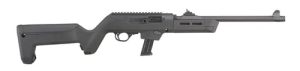
- Made in: USA, Mayodan, North Carolina by Sturm, Ruger & Co. Variants: 19100 (base, 17 rounds, threaded), 19101 (10-round, unthreaded, state compliant), 19115 (aluminum free-float handguard, $899 MSRP), 19130 (Magpul PC Backpacker stock, $949 MSRP)
Pros
- Takedown design splits in half in seconds for easy storage and transport
- Interchangeable magazine wells accept both Ruger and Glock mags
- Dead blow action reduces felt recoil and improves accuracy
- Threaded barrel ready for suppressor use out of the box
- Strong value at about $650 street
- Cold hammer-forged barrel with fluting, built to last
Cons
- Front-heavy balance takes getting used to
- Factory stock is basic (Magpul Backpacker stock is almost mandatory)
- Trigger is functional but not inspiring
- Charging handle is small and hard to grab under stress
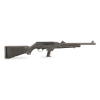
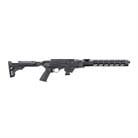
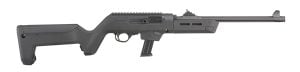
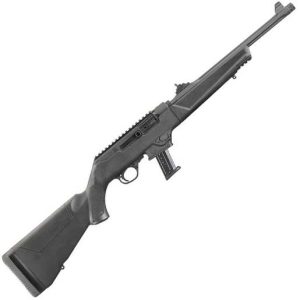
Quick Take
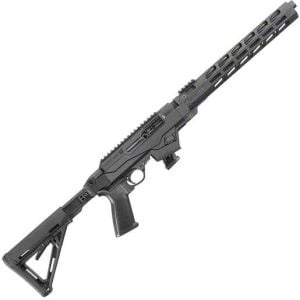
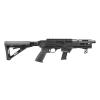
The Ruger PC Carbine is one of those guns that makes you wonder why it took so long for someone to build it. A 9mm carbine that splits in half for storage, eats both Ruger and Glock magazines, and comes threaded for a suppressor. All from $649.99 on October 30, 2026, against a $799 MSRP. That’s a genuinely hard combination to beat.
I put 1,200 rounds through this thing over the course of six weeks, and it just works. Zero malfunctions with factory ball ammo, zero issues with hollow points, and the dead blow action keeps the bolt from bouncing around like a pinball machine. Accuracy at 50 yards was consistently in the 2-3 inch range with decent ammo, which is more than enough for what a pistol-caliber carbine is supposed to do.
Is it perfect? No. The stock that ships from the factory feels like an afterthought, the charging handle was clearly designed for smaller hands than mine, and the balance point sits further forward than I would like. But every one of those issues has a straightforward fix, and the core engineering is so solid that the PC Carbine remains the most practical 9mm carbine on the market.
Best For: Home defense, range fun, truck gun duty, and anyone who wants a suppressor-ready 9mm carbine that packs down small. Also an excellent choice for first-time PCC buyers who want reliability without breaking the bank. If you want the same dead-blow action in a pistol-class package, the Ruger PC Charger is the braced PSE platform sibling using the same magwell ecosystem.
Why Ruger Built the PC Carbine This Way
Pistol-caliber carbines have been around for well over a century. Ruger first dabbled with the original PC9 in 1996 before discontinuing it. They returned with the modern PC Carbine in late 2017, with broad commercial release in 2018. And when they did, they clearly spent time studying what shooters actually wanted instead of just slapping a longer barrel on a pistol design. The result is a gun that solves real problems rather than creating new ones.
Takedown feature is the most obvious selling point. Ruger already proved this concept with the 10/22 Takedown, and porting it to a 9mm carbine was a natural move. A full-size rifle that splits into two manageable halves without tools, fits in a backpack, and returns to zero when reassembled? That’s a genuinely useful feature, not a marketing gimmick.
Then there’s the interchangeable magazine well. Ruger could have locked you into their own magazine ecosystem and called it a day. Instead, they ship the gun with both a Ruger SR-Series/Security-9 mag well and a Glock mag well. If you already own a Glock 17 or Glock 19, you can share magazines between your pistol and your carbine. That decision alone probably sold more PC Carbines than any ad campaign ever could.
Dead blow action is the engineering detail that sets this gun apart from most blowback PCCs. Instead of letting the bolt slam home and bounce, Ruger uses a captive weight inside the bolt carrier that moves opposite to the bolt. It’s the same principle used in dead blow hammers. The result is noticeably less felt recoil and better accuracy, because the bolt isn’t rattling around when you’re trying to get follow-up shots on target.
Put all of this together and you get a carbine that was designed for practical use. Home defense, range days, truck gun duty, suppressed shooting. Ruger built the PC Carbine for people who actually shoot their guns, and it shows.
Competitor Comparison

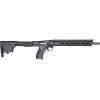
Where the PC Carbine wins is action design. Dead blow gives it a smoother shooting experience than the FPC’s direct blowback, and Ruger’s interchangeable mag well is more elegant than the S&W M&P magazine lock-in. At $539.99 to $629.99 for 17-round-plus models on October 30, 2026, up to about $110 less than the Ruger, the FPC is a solid choice, but the edge goes to the PC Carbine on value and shootability.
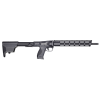
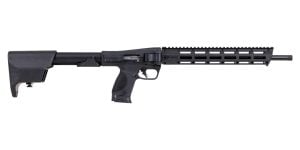
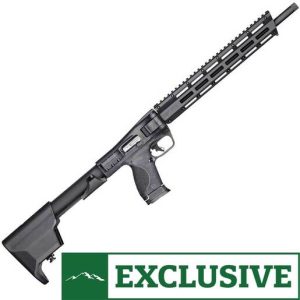

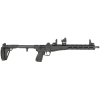
Build quality difference is immediately obvious though. Sub-2000 feels like a $430 gun: polymer construction that flexes, a trigger best described as “present.” PC Carbine’s aluminum receiver, cold hammer-forged barrel, and dead blow action put it in a different league. Gen 3 Sub-2000 improved reliability, but for an extra $220 the Ruger is the better long-term investment.
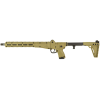
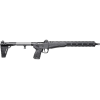
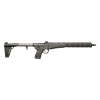
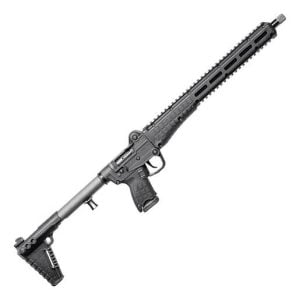

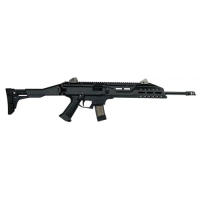
Question is whether it’s worth roughly double the price of the PC Carbine ($1,395.99 for the Scorpion 3+ Carbine on October 30, 2026). For most shooters, honestly, it’s not. Scorpion doesn’t fold or take down, doesn’t accept Glock mags, and is heavier. You pay for ergonomics and trigger, which matters to competition shooters but less for the truck-gun or home defense role where the PC Carbine excels.

Palmetto State Armory AR-9
PSA’s AR-9 takes the opposite approach to the PC Carbine. Instead of designing a purpose-built PCC, they adapted the AR-15 platform to run 9mm with a Glock-compatible magwell in the lower receiver. If you already know the AR manual of arms, the transition is instant. You also get a massive aftermarket for customization, since most AR-15 furniture and accessories bolt right on.
Downside is that the AR-9 doesn’t pack down like the PC Carbine (unless you add a folding stock adapter, which adds cost). The blowback action on most AR-9s is also snappier than the PC Carbine’s dead blow system.
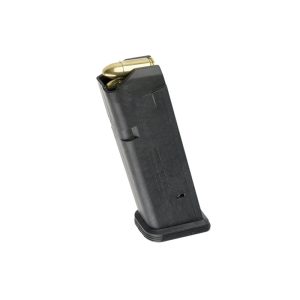
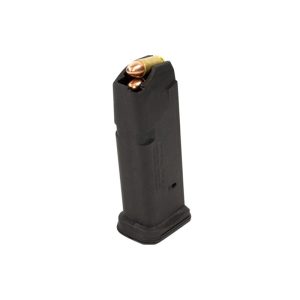
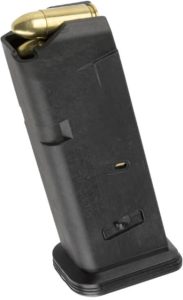
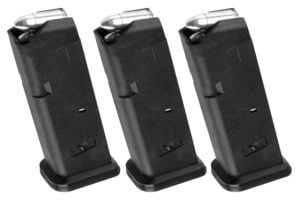
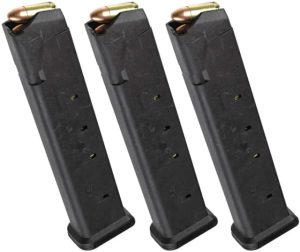
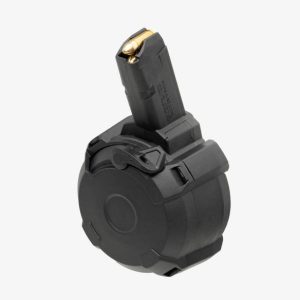
And while PSA has come a long way with quality control, Ruger’s track record for reliability is hard to beat. The AR-9 is a great choice if you want an AR that runs cheap ammo. The PC Carbine is the better choice if portability and out-of-the-box utility are what matter to you. PSA had no AR-9 rifles listed in our feed on October 30, 2026, so below are the Glock-pattern Magpul magazines that both guns run.
Features and Design Details
The Takedown System
Ruger’s takedown mechanism is deceptively simple. You push a recessed lever on the underside of the forend, twist the front half about 30 degrees, and pull it forward. The whole process takes about three seconds once you get the feel for it. Reassembly is just the reverse, and the barrel locks back into place with a satisfying click.
The big question everyone asks is whether it holds zero after reassembly. In my testing, yes. I separated and reassembled the PC Carbine over a dozen times during the 1,200-round test, and point of impact shift was never more than about an inch at 50 yards. For a pistol-caliber carbine, that’s more than acceptable. You could argue it’s impressive.
When separated, each half is roughly 17-18 inches long. Both halves fit comfortably in a standard backpack, a laptop bag, or the Ruger takedown bag that most retailers sell as an accessory. This is the feature that makes the PC Carbine a legitimate truck gun or bug-out gun rather than just another range toy.
Interchangeable Magazine Wells
PC Carbine ships with two magazine wells in the box. One accepts Ruger Security-9 and SR-Series magazines. The other accepts Glock double-stack magazines (Glock 17, 19, and compatible aftermarket mags). Swapping between them takes about two minutes and requires no tools beyond a punch to push out a single pin.
Most buyers will pop the Glock mag well in and never look back. Glock mags are cheap, plentiful, and available everywhere. Running the same magazine between your Glock 17 and your PC Carbine simplifies your logistics and your ammo loadout. I tested with both OEM Glock 17 magazines and Magpul GL9 PMAGs, and both ran flawlessly.
Dead Blow Action
This is the feature that separates the PC Carbine from most blowback PCCs, and it’s worth understanding why it matters. In a standard blowback action, the bolt slams backward, hits the buffer, and bounces forward (the American Rifleman review of the PC Carbine covers this in detail). That bounce transfers energy into the gun and the shooter. It makes follow-up shots slower and less accurate.
Ruger’s dead blow system puts a tungsten weight inside the bolt carrier on a secondary spring. When the bolt travels rearward, the weight moves forward. When the bolt comes forward, the weight moves backward. The opposing mass absorbs the bolt’s energy at each end of travel, eliminating bounce. In practice, this makes the PC Carbine feel smoother than you would expect from a blowback 9mm. It’s not delayed blowback, but the effect on felt recoil and shot-to-shot recovery is real.
Barrel and Receiver
16.12-inch barrel is cold hammer-forged with a 1:10 twist rate, which is the standard for 9mm. Ruger also fluted the barrel, which shaves a bit of weight and looks good doing it. The muzzle is threaded 1/2″-28, the same thread pitch used by most 9mm suppressors. A thread protector comes installed from the factory.
The receiver is aluminum alloy with a Type III hard-coat anodized finish, the same tough finish you get on a quality AR receiver. A full-length Picatinny rail runs along the top for optics mounting.
I ran a Sig Romeo5 red dot during most of my testing and had no issues with the rail holding zero. The rail has enough space for a magnified optic, though honestly a red dot is the ideal pairing for a pistol-caliber carbine.
Trigger and Controls
The trigger is adequate. That’s probably the most honest way to describe it. Pull weight on my sample measured around 5.5 pounds with a bit of creep and a mushy break. It’s not going to win any awards, but it also didn’t prevent me from shooting accurately. There’s a clean reset at least, which helps with faster shooting.
Manual safety is a crossbolt type located behind the trigger guard. Push right to fire, push left to safe. It’s positive and easy to reach. The magazine release is also in a good spot. Where Ruger missed the mark is the charging handle. It’s a small, non-reciprocating handle on the right side of the receiver, and it’s just not enough surface area to get a confident grip. This is another area where the aftermarket picks up Ruger’s slack, with extended charging handle options from several manufacturers.

At the Range: 1,200 Round Test
Break-In and Initial Impressions
I started with 200 rounds of assorted ball ammo to get a feel for the gun before doing anything structured. First impression: this thing is fun. The dead blow action makes it feel like shooting a .22 LR that happens to punch 9mm holes. Recoil is a non-event, muzzle rise is minimal, and you can stay on target through rapid strings without effort.
Front-heavy balance was immediately noticeable when shooting from standing unsupported. It’s not terrible, but after 30 minutes your support arm knows it’s there. Shooting from a rest or barricade, the weight up front actually helps stabilize things. It’s one of those trade-offs that depends on how you plan to use the gun.
Reliability Testing
Over the full 1,200 rounds I didn’t have a single malfunction. Not one failure to feed, failure to eject, or failure to fire. I intentionally tested with a variety of ammo to stress the gun, including cheap steel-case stuff that gives some PCCs fits. The PC Carbine ate all of it without complaint.
I also tested with two different Glock 17 OEM magazines, three Magpul GL9 PMAGs, and the Ruger Security-9 magazine that ships in the box (with the Ruger mag well installed for that portion). Every magazine ran perfectly. The last-round bolt hold-open worked consistently with all of them.
Accuracy Testing
I tested accuracy at 25 and 50 yards from a bench rest with a Sig Romeo5 red dot zeroed at 25 yards.
At 25 yards, five-shot groups averaged around 1.5 inches with Federal American Eagle 124gr and about 1.2 inches with Speer Gold Dot 124gr. At 50 yards, groups opened to about 2.5 inches with the Federal and just over 2 inches with the Speer.
Those numbers are solid for a blowback PCC. The dead blow action genuinely helps here, because the gun settles faster between shots, and there’s less vibration disrupting your sight picture. Is it sub-MOA? No, and no 9mm carbine is going to be. But for any realistic use case (home defense, steel plates, local PCC matches), this level of accuracy is more than sufficient.
Ammo Log
- Federal American Eagle 115gr FMJ: 400 rounds, zero malfunctions
- Federal American Eagle 124gr FMJ: 200 rounds, zero malfunctions
- Blazer Brass 115gr FMJ: 200 rounds, zero malfunctions
- Tula 115gr FMJ (steel case): 100 rounds, zero malfunctions
- Speer Gold Dot 124gr JHP: 100 rounds, zero malfunctions
- Federal HST 147gr JHP: 100 rounds, zero malfunctions
- Winchester White Box 115gr FMJ: 100 rounds, zero malfunctions
Total: 1,200 rounds. Malfunctions: zero. The PC Carbine ran everything I fed it, including the steel-case Tula that makes some guns choke and the heavy 147gr HST that can cause feeding issues in certain blowback designs.
Performance Testing Results
Reliability: 9/10
A perfect reliability score would mean the gun ran flawlessly with every type of ammo, every magazine, and in adverse conditions. The PC Carbine came very close. 1,200 rounds without a single hiccup across seven different ammo types and multiple magazine brands is about as good as it gets. I didn’t deliberately test in mud or sand, so I am holding back that last point, but for a clean and reasonably maintained gun, reliability is essentially perfect.
Accuracy: 8/10
PC Carbine shoots better than most people will ever need from a 9mm carbine. Consistent 2-3 inch groups at 50 yards is genuinely good for this platform, and the dead blow action contributes to that by reducing the disturbance between shots. It loses points compared to a delayed blowback or roller-locked system, which can squeeze tighter groups, but for the price and the intended use case, this is excellent accuracy.
Ergonomics and Recoil: 7/10
Recoil management is outstanding thanks to the dead blow action. Muzzle rise is almost nonexistent.
Where the ergonomics fall short is in the stock design and weight distribution. The synthetic stock is purely functional, with spacers for length of pull but no adjustable comb (unless you buy the Magpul Backpacker stock). The balance point sits forward of the magazine well, which makes the gun feel nose-heavy during extended offhand shooting.
The small charging handle is the other ergonomic miss. These are all solvable problems, but they keep the score from climbing higher out of the box.
Fit, Finish, and QC: 8/10
Ruger’s build quality has been consistently good for decades, and the PC Carbine reflects that. The aluminum receiver is cleanly machined with no visible tool marks. The barrel is cold hammer-forged, which is a step above what you see in most guns at this price. The finish on the barrel and metal parts is even and well-applied. The synthetic stock is where the fit and finish story gets less exciting. It’s functional and durable, but it doesn’t feel premium. The glass-filled nylon does its job without impressing anyone.
Known Issues and Common Problems
Front-Heavy Balance
This is the number one complaint you will see in every PC Carbine review, and it’s legitimate. The 16-inch fluted barrel and the aluminum receiver put a lot of weight forward of the action. During extended shooting sessions without a rest, your support arm will feel it. The fix is either to add a lighter handguard or, more commonly, to accept that this gun works best with a rest, barricade, or sling to distribute the weight.
Basic Factory Stock
The glass-filled nylon stock gets the job done, but it’s the weakest part of the package. Length of pull only adjusts with the three 1/2-inch spacers in the box (12.62 to 14.12 inches), there’s no adjustable comb, and the grip angle is just okay. The good news is that the Magpul PC Backpacker stock was practically designed for this gun. It replaces the factory stock, improves the grip, and the gun’s two halves nest together inside the stock for an incredibly compact storage package. I would consider this a must-buy accessory.
Small Charging Handle
Factory charging handle is a small knob on the right side of the receiver. It works, but it doesn’t give you much to grab, especially with gloves on. Several companies make extended charging handles that bolt on as a direct replacement. I would budget $30-50 for one and install it on day one.
Trigger Feel
Factory trigger isn’t bad. It’s just not particularly good either. At 5.5 pounds with a mushy break, it feels like what you would expect from a mid-price Ruger. If you plan to use the PC Carbine for competition or precision work, a trigger upgrade from Tandemkross or similar is worth considering. For home defense and recreational shooting, the factory trigger is perfectly serviceable.
Parts, Accessories, and Upgrades
One of the PC Carbine’s strengths is its healthy aftermarket. Here are the upgrades that make the biggest difference, ranked by priority.
| Upgrade Category | Recommended Component | Why It Matters | Cost Estimate |
|---|---|---|---|
| Stock | Magpul PC Backpacker Stock | Better ergonomics, nested takedown storage, adjustable LOP | $100-$120 |
| Optic | Sig Sauer Romeo5 Red Dot | Shake-awake, reliable, perfect size for PCC use | $100-$130 |
| Charging Handle | Tandemkross Extended Charging Handle | Much easier to grab, essential for fast manipulations | $30-$50 |
| Trigger | Tandemkross Victory Trigger or Volquartsen TG9 | Cleaner break, reduced pull weight, better reset | $50-$120 |
| Chassis | Midwest Industries chassis with M-LOK handguard | Aluminum chassis adds rigidity and full-length M-LOK rail real estate for lights, foregrips, and bipods | $280-$350 |
| Muzzle Device | Suppressor or linear compensator | Threaded barrel is begging for a can or at least a comp | $50-$1,000+ |
| Magazines | Magpul GL9 PMAG 17rd (Glock compatible) | Affordable, reliable, widely available | $12-$15 each |
You can find most of these parts at Palmetto State Armory or Brownells. Both carry a solid selection of PC Carbine accessories.
Suppressed Shooting
I need to talk about this separately because the PC Carbine is one of the best suppressor hosts in the PCC world. The 1/2″-28 threaded barrel is ready to go from the factory. You unscrew the thread protector, screw on your can, and you’re in business.
Running the PC Carbine suppressed with 147gr subsonic ammo is a genuinely pleasant experience. The 16-inch barrel gives the bullet enough velocity to remain effective while keeping the report quiet. The dead blow action also shines here, because the reduced bolt bounce means less mechanical noise. If you’re in a state that allows suppressors and you have been looking for a reason to file that Form 4, the PC Carbine might be it.
Pair it with quality 147gr subsonic ammo and you have a home defense setup that won’t destroy your hearing if you ever need to use it indoors without ear protection. That alone is worth the price of admission for a lot of people.
Home Defense Considerations
PC Carbine makes a surprisingly strong case as a home defense weapon. A 9mm out of a 16-inch barrel picks up roughly 100-150 fps over the same round from a pistol. That translates to better terminal performance and more consistent hollow point expansion. You also get a shoulder-fired platform with four points of contact, which means faster and more accurate shots under stress compared to a handgun.
The takedown feature is less relevant for home defense (you’re not going to split the gun in half during a break-in), but the compact overall length of 34.37 inches is manageable in hallways and doorways. The threaded barrel for a suppressor is a huge plus. And if your home defense pistol is a Glock, sharing magazines between your primary and secondary is tactically smart.
Main argument against it for home defense is the same argument against any long gun: it requires two hands, it’s harder to maneuver in tight spaces than a pistol, and you can’t open doors or hold a flashlight without taking a hand off the gun (unless you mount a weapon light on the Picatinny rail, which I recommend).
The Verdict
After 1,200 rounds, the Ruger PC Carbine has earned a permanent spot in my collection. It’s not the fanciest PCC on the market, and it’s not going to win beauty contests against a CZ Scorpion or a Stribog. But it might be the most practical 9mm carbine you can buy at any price, and it starts at about $650.
Takedown design is genuinely useful, not just a gimmick. The interchangeable magazine wells give you flexibility that no other PCC offers at this price point.
The dead blow action makes it shoot smoother than it has any right to. Ruger’s reputation for building reliable, well-made firearms carries through every aspect of this gun.
Yes, the stock is basic, the charging handle is small, and the trigger is just okay. But those are all $30-$120 fixes, and the core gun underneath is excellent.
If you want a PCC that works as a range toy, a home defense option, a truck gun, a suppressor host, and a backpack gun, the PC Carbine checks every single box. I’ve tested PCCs that cost twice as much and couldn’t match this gun’s combination of utility and reliability. At $649.99, it’s not just a good deal. It’s the best value in the pistol-caliber carbine market.
Final Score: 8.3/10
Best For: Shooters who want a do-everything 9mm carbine that packs down for storage and transport, runs cheap ammo and premium defense loads equally well, and plays nice with their existing Glock magazines. Also one of the best Ruger rifles for the money and a top pick on our best 9mm carbine rifles list.
How I Tested the Ruger PC Carbine
Testing ran across six weeks of range sessions, totaling 1,200 documented rounds through a single 19100-base PC Carbine. Glock magwell installed for the bulk of testing, with the Ruger Security-9 magwell swapped in for the last 100 rounds to verify both magazine systems. Optic was a Sig Romeo5 red dot zeroed at 25 yards.
Reliability was tracked round-by-round across seven ammo types from cheap steel-case Tula through Federal HST 147gr defensive loads. Accuracy was measured from a bench rest at 25 and 50 yards, five-shot groups per ammo type.
Trigger pull weight was sampled with a Lyman digital trigger gauge averaged over ten pulls. Takedown integrity tested by separating and reassembling the gun a dozen times, checking point-of-impact shift at 50 yards after each reassembly.
Looking for the most packable option? Read our full Kel-Tec Sub-2000 review.
FAQ: Ruger PC Carbine
Is the Ruger PC Carbine worth buying in 2026?
Yes, for most 9mm carbine buyers. In our 1,200-round test it ran zero malfunctions across seven ammo types, the takedown held zero within about an inch at 50 yards, and it takes Glock magazines. At $649.99 on October 30, 2026 it is not the cheapest PCC, but it is the most practical.
How much does the Ruger PC Carbine cost?
Ruger's MSRP on the 19100 base model is $799. On October 30, 2026 the 17-round threaded PC Carbine was listed from $649.99, and the Magpul Backpacker model from $780.99. Ruger currently lists the 19100 as unavailable from the factory, so dealer stock is what's out there.
Does the Ruger PC Carbine take Glock magazines?
Yes. It ships with the Ruger SR-Series/Security-9 magazine well installed and a Glock magazine well in the box. With the Glock well in, it runs Glock 17 and 19 pattern magazines and Magpul GL9 PMAGs. Ruger warns that early Glock magazines with a U-shaped notch at the rear of the feed lips won't lock in.
How accurate is the Ruger PC Carbine?
From a bench with a Sig Romeo5, our five-shot groups averaged about 1.2 inches at 25 yards with Speer Gold Dot 124gr and 1.5 inches with Federal American Eagle 124gr. At 50 yards they opened to just over 2 inches and about 2.5 inches. That's plenty for home defense, steel and PCC matches.
What is the Ruger PC Carbine's dead blow action?
Ruger puts a tungsten dead-blow weight in the bolt that shortens bolt travel and reduces felt recoil and muzzle rise. It is still a straight blowback gun, not delayed blowback, but it shoots noticeably flatter than most blowback 9mm carbines.
Is the Ruger PC Carbine barrel threaded?
Yes on the standard 19100. The 16.12-inch cold hammer-forged, fluted barrel is threaded 1/2 x 28 and ships with a thread protector, so most 9mm suppressors and muzzle devices screw straight on. State-compliant versions like the 19101 have an unthreaded barrel and 10-round magazines.
How do you take down the Ruger PC Carbine?
With the rifle unloaded, push the recessed lever, twist the two halves and pull them apart, no tools needed. Each half is about 17 to 18 inches long, small enough for a backpack. We took ours apart more than a dozen times and the zero never moved more than about an inch at 50 yards.
Ruger PC Carbine vs S&W M&P FPC?
The M&P FPC was $539.99 to $629.99 on October 30, 2026, up to about $110 less than the Ruger, and it folds as one unit and weighs about a pound less. The PC Carbine shoots smoother thanks to the dead blow action and offers both Ruger and Glock magazine wells. We give the edge to the Ruger.
Is the Ruger PC Carbine good for home defense?
Yes. A 9mm from a 16-inch barrel gains roughly 100 to 150 fps over a pistol, you get a shoulder-fired platform that is far easier to shoot well under stress, and the threaded barrel takes a suppressor. Mount a weapon light on the rail and run a quality hollow point like Federal HST 147gr.
What are the best upgrades for the Ruger PC Carbine?
Start with the Magpul PC Backpacker stock ($100 to $120), which stores the two halves together, then an extended charging handle ($30 to $50) and a red dot like the Sig Romeo5. A Tandemkross or Volquartsen trigger fixes the factory 5.5-pound mushy break.
Looking for the best prices? Check our gun deals page to compare across 200+ retailers before you buy.
4,164+ Gun & Ammo Deals
Updated daily from 200+ top retailers. Filter by category, caliber, action type, and price.
Related Guides