

Last updated: March 24, 2026 · By Nick Hall, CCW instructor (carries through Northeast winters)
USA Gun Shop is reader-supported. When you buy through links on our site, we may earn an affiliate commission at no extra cost to you. Full disclosure here.
- Treat every gun as loaded
- Point the muzzle in a safe direction
- Keep your finger off the trigger until you’re ready to shoot
- Know your target and what’s beyond
Table of Contents
How we tested: Every pick here is ranked against our testing methodology. Minimum round counts, accuracy and reliability protocols, the failures that disqualify a gun.
Winter Is Concealed Carry on Easy Mode
If you’re not taking advantage of winter for concealed carry, you’re leaving free real estate on the table. Seriously. Those extra layers you’re already wearing? They’re the best concealment device money can buy, and you didn’t even have to order them off Amazon.
Summer carry is a constant game of “does my shirt print?” and “is this holster digging into my hip?” Winter flips that equation completely. You’ve got a jacket, maybe a hoodie underneath, possibly a flannel under that. Your gun disappears. It’s like concealed carry cheat codes.
And here’s what most people don’t think about: winter lets you upsize. That micro compact you’ve been suffering with all summer? Leave it in the safe. You can carry a real gun now. More rounds, longer sight radius, better trigger, less recoil. Everything gets better when you’ve got a coat to hide it under.
I actually look forward to the cold months for this reason alone. My carry rotation changes the second the temperature drops below 50. Bigger guns, more comfortable holsters, and zero stress about printing. If you’re still carrying your LCP in January, we need to talk.
Upgrade Your Gun Size
This is the single biggest advantage of winter carry, and too many people ignore it. A compact or even a full-size pistol conceals effortlessly under a jacket. That Glock 19 you love shooting at the range but never carry? It’s winter carry season. Put it on your hip.
The math is simple. A Glock 43X gives you 10+1 in a slim package. The Glock 19 gives you 15+1 with a better grip, better recoil management, and a sight radius that actually lets you shoot accurately past 10 yards. Under a winter coat, they conceal almost identically. So why would you carry less gun?
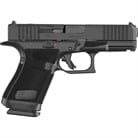
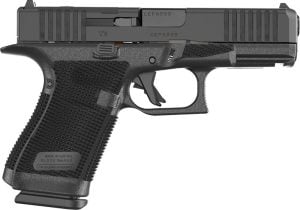
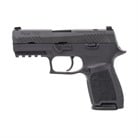
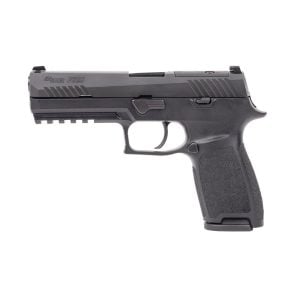
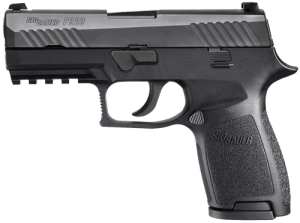
The Sig P320 Compact is another killer winter option. Modular, accurate, and it carries like a dream in OWB under a coat. Same story with the CZ P-01 or a Smith & Wesson M&P 2.0 Compact. These are guns that shoot well, hold enough ammo to matter, and only need a light jacket to disappear.
Some guys even go full-size in winter. A Government 1911, a Beretta 92, a full-size M&P. I’m not going to tell you that’s practical for everyone, but if you’ve got the build and the right holster, winter is the one time of year you can actually pull it off. More gun is almost always better gun.
Don’t forget about capacity upgrades either. If your compact takes extended mags, now’s the time to run them. A Glock 19 with a 17-round mag? The extra grip length doesn’t matter when it’s buried under two layers. Run the bigger mags, carry the bigger gun, and actually enjoy your range time translating to your carry setup.
OWB Under a Jacket
Outside the waistband carry in winter is an absolute significant upgrade. If you’ve only ever carried IWB, you don’t know what you’re missing. OWB is more comfortable, faster to draw, and easier on your pants. The only reason most people don’t carry OWB is concealment. A jacket solves that problem instantly.
I switched to OWB every winter about four years ago and I’m never going back. A good pancake holster at 3 o’clock, a mid-length jacket over the top, and I forget the gun is even there. No claw digging into my gut, no adjusting my belt every 30 minutes. Just a comfortable carry that I can wear all day without thinking about.
The draw is noticeably faster too. Your hand doesn’t have to negotiate between your body and your waistband. Sweep the jacket back, grip, draw. It’s clean and natural. If you’ve ever fumbled an IWB draw because your undershirt got caught or your grip was compromised, OWB fixes all of that.
Safariland makes excellent OWB holsters for duty and concealment. Blackhawk’s Omnivore works if you want something that fits multiple guns. But honestly, a basic Kydex pancake holster from any reputable maker will do the job. You don’t need to spend $100 here. A $40 holster and a $30 jacket and you’re set.
One thing to watch: jacket length matters. Your jacket needs to cover the holster when you’re standing, bending, and reaching overhead. A waist-length bomber jacket works for compact guns. For a full-size, you’ll want something that hits mid-hip at least. Test it at home before you walk out the door.
Drawing Through Layers
Here’s where winter carry gets tricky. All those beautiful concealing layers? They’re between you and your gun. And when you need that gun in a hurry, fumbling through a coat, a hoodie, and a flannel isn’t going to cut it. You need a plan, and you need to practice it.
The fastest winter draw is with your coat unzipped. Sweep the coat back with your support hand, grip with your strong hand, draw straight up. It’s essentially the same motion as clearing a cover garment in summer, just with a heavier layer. If you can draw from a t-shirt, you can draw from an unzipped jacket. Practice it a few times and it becomes second nature. For shirts, jackets, pants, and undershirts specifically, see our best concealed carry clothing roundup.
A zippered coat over AIWB is the other fast option. Unzip with your support hand (or keep it unzipped), lift the hem of whatever’s underneath, and draw. Two motions instead of one, but still very fast with practice. I’ve timed myself doing this and the difference from a summer AIWB draw is maybe half a second. Totally manageable.
Where it gets slow is a buttoned coat over a strong-side OWB holster. You’ve got to clear buttons or snaps, then sweep the coat, then grip. That’s three distinct motions minimum. It works, but it requires real practice. If you go this route, consider replacing coat buttons with snaps for faster access. Some guys even sew in magnets. Whatever gets that coat open quickly.
Here’s my honest advice: pick one winter carry configuration and practice it 50 times before you rely on it. Draw from concealment isn’t something you figure out when the stakes are real. Dry fire at home, practice the sweep, get your reps in. Your winter draw should be almost as fast as your summer draw, or you need to change your setup.
Gloves and Trigger Guards
Cold hands and trigger guards don’t play nice together. If you’ve ever tried to get a gloved finger into a standard trigger guard, you know exactly what I’m talking about. It’s clumsy, it’s slow, and depending on the glove thickness, it might not work at all. This is a real problem that most winter carry articles gloss over.
Thick insulated gloves are basically incompatible with most handguns. Your finger won’t fit in the trigger guard, and even if it does, you can’t feel the trigger. Trigger control goes out the window. That’s not a minor inconvenience. That’s a safety issue.
Thin shooting gloves are the answer. Mechanix, PIG Alpha, SKD PIG gloves, even some thin leather driving gloves work well. You want something thin enough to feel the trigger and fit inside the guard, but warm enough to keep your hands functional. It’s a compromise, but it’s a necessary one.
Test your setup before you need it. Put on whatever gloves you normally wear, unholster your (cleared and safe) carry gun, and try to get a proper grip and trigger finger placement. If it doesn’t work, get thinner gloves or consider a gun with a larger trigger guard. Glocks actually do pretty well here because the trigger guard is squared off and roomy. Smaller guns with tight guards, like a J-frame revolver, can be a real challenge with any glove.
One more thing: your grip changes with gloves. The texture that locks your bare hand in place might not grab the same way through fabric. If your gun has aggressive stippling, gloves might actually improve your cold-weather grip. If it’s smooth, consider adding some Talon Grips or getting a grip job done. Don’t find this out the hard way.
AIWB in Winter
Appendix carry doesn’t stop being great just because it’s cold outside. If anything, it gets better. That little bit of printing that stresses you out in a t-shirt? Gone. Completely invisible under a hoodie or jacket. AIWB in winter is concealed carry on easy mode squared.
There’s a comfort bonus too. The gun sits against your body, which means it stays warm. If you’ve ever grabbed a gun that’s been sitting in a cold car or on a nightstand in an unheated room, you know how unpleasant cold steel or polymer against your skin can be. AIWB keeps your carry gun at body temperature. Small thing, but it matters when you’re carrying all day.
The draw is fast too, as long as your coat cooperates. Keep your coat unzipped and the draw is nearly identical to summer AIWB. Lift the coat hem and your cover garment with your support hand, grip, draw. Simple. If your coat zips, just leave it unzipped or open the bottom few inches. You’ll stay plenty warm and your draw won’t suffer.
I run AIWB about 70% of the time in winter, OWB the other 30%. AIWB with a coat is so well concealed that I’ve carried a Glock 19 with a weapon light and nobody has ever noticed. Not once. That’s the kind of concealment that only winter gives you. Take advantage of it.
Best Winter Carry Holsters
Your holster needs change in winter, or at least they should. The slim, minimal IWB holster you run in July works fine under layers too, but you’ve got more options now. And some of those options are a lot more comfortable for all-day carry.
OWB pancake holsters are the winter MVP. They sit tight against your body, distribute weight well, and they’re comfortable enough to wear for 12+ hours. A good leather or Kydex pancake holster at 3 o’clock under a jacket is probably the most comfortable carry setup that exists. If you haven’t tried it, this winter is your chance.
Standard IWB holsters work great under layers too. You might find that the extra clothing actually makes your IWB holster more comfortable because there’s more material between the holster and your skin. Some people run a dedicated winter IWB holster with less padding because the layers do the cushioning work.
Shoulder holsters are another winter option that people either love or hate. Under a jacket that stays on all day (like at work), a shoulder rig distributes weight across your shoulders instead of your belt. It’s worth trying if you spend a lot of time sitting. Not my personal favorite, but I know guys who swear by them from November through March.
Whatever holster you choose, make sure it has solid retention and covers the trigger guard completely. Winter layers can bunch up and potentially get inside a trigger guard, especially with softer holsters. Hard Kydex with full trigger coverage is the safe play. Check out our best concealed carry holsters guide for specific recommendations across all carry positions.
Specific brand picks for winter setups: PHLster Floodlight 2 for AIWB with a weapon light (the extra bulk hides easily under layers), JM Custom Kydex IWB-3 for strong-side carry of mid-size pistols, Vedder LightTuck for budget-friendly all-day IWB, and Crossbreed SuperTuck if you want hybrid leather-and-Kydex comfort with the body shield. For OWB pancake under a jacket, Galco Concealable in tan saddle leather or Bianchi Black Widow are the classics that age well. For shoulder rigs, Galco Miami Classic and Andrews Leather Monarch are the gold standards.
Coat and Jacket Selection
Not all winter coats are created equal for concealed carry. The wrong coat makes carrying awkward, slow, and obvious. The right coat makes it effortless. Here’s what actually matters when you’re picking a jacket for winter carry.
Structured jackets conceal OWB better than anything else. A Carhartt-style work jacket, a field coat, or a waxed cotton jacket has enough stiffness in the fabric that it drapes over a holster without showing its outline. The gun just disappears. Puffy down jackets, on the other hand, tend to conform around the gun and can actually highlight it. Skip the puffer for carry.
Draw speed matters too. A heavy, stiff coat is harder to sweep out of the way. A lighter jacket moves faster. The sweet spot is something with enough structure to conceal but enough flexibility to clear quickly. My go-to is a flannel-lined canvas jacket or a medium-weight softshell. Both conceal well and don’t fight me on the draw.
The vest-over-hoodie combo is underrated. A tactical or work vest over a thick hoodie gives you warmth, concealment, and easy access. The vest conceals at your waist, the hoodie adds warmth, and neither one is hard to clear for a draw. It’s a casual look that works for errands, outdoor stuff, and even some workplaces. Plus, you look like every other guy at the hardware store. That’s the point.
Avoid coats with tight elastic waistbands. They can ride up and expose your holster when you reach for something on a high shelf. Avoid anything that’s skin-tight, obviously. And check your coat length against your holster position. Too short and you flash your gun every time you bend over. Too long and it’s in the way during your draw. About two inches below the bottom of your holster is the sweet spot.
Cold Weather Range Tips
If you only practice at an indoor range, you’re training for conditions you’ll never actually face. It’s cold outside when you carry in winter. You should be practicing in the cold too. Cold hands, stiff fingers, and bulky clothes all affect your shooting, and you won’t know how much until you actually try it.
Cold hands are the biggest factor. Your grip strength drops, your finger dexterity suffers, and your trigger control gets sloppy. The first few mags at an outdoor range in 30-degree weather will humble you. That’s not a reason to avoid it. That’s exactly why you need to do it. You need to know what your shooting looks like when your hands are cold and stiff.
Warm up your hands before shooting, but don’t warm them up too much. You want to simulate realistic conditions. Keep hand warmers in your pocket between drills if you need to, but shoot your qualifier or your practice set with whatever hand temperature you’d actually have in a self-defense situation. That probably means cold.
Gear test in the cold too. Does your holster retain properly when the Kydex contracts in cold temperatures? Does your magazine release work with gloved hands? Does your red dot fog up when you go from a warm car to cold air? These are things you find out at the range, not during an emergency. Run your full winter carry setup through at least one cold range session before you trust it with your life.
Practice your draw from concealment with your actual winter coat on. Not your range vest, not your flannel. Your real coat. Time yourself. If you’re more than a second slower than your summer draw, work on it until you close that gap. Speed matters, and winter layers eat speed if you don’t train for them.
Looking for the best prices? Check our gun deals page and price comparison tool to compare prices from 200+ retailers before you buy.
Winter Maintenance: Condensation, Salt, and Rust
Cold gun, warm room. That’s how rust starts. The moment you walk inside after a winter day of carry, condensation forms on every cold metal surface. If your gun is in a leather holster and you toss it on the dresser without wiping it down, you’re going to find rust spots within a week.
The fix is simple. Wipe your gun down every time you come inside. Take 30 seconds, run a lightly oiled cloth over the slide, frame, barrel, and visible internals. CLP, Hornady One Shot, or a lightly oiled silicone cloth works. The combination of cold-to-warm transitions, road salt on your hands, and indoor humidity is harder on your gun than anything you’ll see in summer.
Salt is the silent killer in northern states. If you’re walking through slush, your shoes are tracking road salt onto floor mats, truck cabs, and eventually your hands. That salt transfers to your gun every time you grip the slide or do a chamber check. Stainless steel handles it. Blued steel does not. If you carry a blued gun in a winter where roads get salted, plan on a deeper clean every two weeks at minimum.
Lubrication also matters more in cold weather. Some lubes thicken below 32 degrees, which can slow down slide cycling on lighter striker-fired pistols. CLP, Slip 2000, and FrogLube run fine in the cold. Avoid heavy gun oils that turn into syrup when the temperature drops. If you live somewhere brutally cold, run a quick function check on your carry pistol every couple of weeks to make sure everything is still cycling smoothly. USCCA and the NRA Family winter carry libraries cover this routine in more detail if you want a deeper read.
FAQ
Can I carry a bigger gun in winter?
Absolutely. Winter layers provide enough concealment to comfortably carry compact and even full-size pistols that would print badly under a summer t-shirt. A Glock 19 or Sig P320 disappears under a jacket.
Is OWB legal for concealed carry?
In most states, yes, as long as the gun remains concealed. OWB under a jacket that fully covers the holster and firearm counts as concealed carry in nearly every jurisdiction. Check your state's specific laws to confirm.
How do you draw with a winter coat?
Keep your coat unzipped and sweep it back with your support hand while gripping with your strong hand. Practice this motion repeatedly at home with an unloaded gun until it becomes fast and automatic.
Do cold temperatures affect ammunition?
Modern factory ammunition performs reliably in cold weather. Extreme cold below zero can slightly reduce muzzle velocity, but the difference is negligible for self-defense distances. Store your carry ammo at room temperature when possible.
What holster is best for winter carry?
OWB pancake holsters are the most comfortable option under a jacket. Standard IWB and AIWB holsters also work great with the added concealment of winter layers. Choose based on your preferred carry position.
Can I carry with gloves?
You can, but thick insulated gloves make it difficult to access the trigger and maintain proper control. Thin shooting gloves from brands like Mechanix or PIG Alpha are the best compromise between warmth and dexterity.
Should I change my carry gun for winter?
You don't have to, but you should consider it. Winter lets you carry more gun with zero concealment penalty. Upgrading from a micro compact to a compact or full-size gives you better capacity, accuracy, and shootability.
Is shoulder carry good in winter?
Shoulder holsters work well under jackets that stay on all day, like at an office job. They distribute weight across your shoulders instead of your belt, which some people find more comfortable for extended wear during cold months.
Final Thoughts
Winter concealed carry is an upgrade over summer carry in almost every way. More concealment, bigger guns, more comfortable holsters, and zero stress about printing. If you’re not adjusting your carry setup when the temperature drops, you’re missing out on the best carry season of the year.
Upgrade your gun, try OWB under a jacket, practice your draw through layers, and test your gear in the cold. That’s the whole playbook. It’s not complicated, but it does require some intentional practice. The concealment is free. The skill to use it isn’t.
If you’re looking for more carry guidance, check out our concealed carry guide for the fundamentals, our summer carry guide for when the layers come off, and our roundups of the best concealed carry handguns and best compact 9mm pistols for gun recommendations. And don’t forget quality carry ammo. Your winter setup is only as good as what you feed it.
Stay warm, stay armed, stay ready.
4,659+ Gun & Ammo Deals
Updated daily from 200+ top retailers. Filter by category, caliber, action type, and price.