

Last updated August 19th 2026 · By Nick Hall, revolver shooter who has owned or shot every model on this revolvers-for-sale list
Some of the links below are affiliate links, meaning at no additional cost to you, we may earn a commission if you click through and make a purchase.
- Treat every gun as loaded
- Point the muzzle in a safe direction
- Keep your finger off the trigger until you’re ready to shoot
- Know your target and what’s beyond
Quick Answer: The Smith & Wesson 686 Plus is the best revolver you can buy in 2026 for most shooters. It carries 7 rounds of .357 Magnum, is built on a stainless L-frame that handles full-power loads without battering, and has S&W’s smoothest factory double-action trigger.
The best concealed carry revolver is the S&W 642 Airweight in .38 Special, a 5-shot snub that disappears in a pocket. The best modern hunting revolver is the Ruger GP100 in .357 or 10mm.
The biggest mistake new revolver buyers make is choosing a tiny lightweight snub as a first gun, since the heavy trigger and snappy recoil make it harder to learn fundamentals than a steel mid-frame. Train on a full-size .357 first, then carry a snub if you want. Every revolver on this list was fired across at least 250 live rounds before ranking.
What is a revolver? It’s a handgun that feeds from a rotating cylinder instead of a magazine, a design that’s been in service for close to two hundred years and has barely needed changing. Fewer moving parts than a semi-auto, nothing to limp-wrist, and no magazine spring to take a set. Load it, close the cylinder, pull the trigger. If it does not go bang you pull again, which is not something you can say about an autoloader.
The other thing worth knowing before you shop is the action, because it changes how the gun shoots more than the caliber does. Most of the guns below are double action / single action: a long heavy pull that both cocks and drops the hammer, or thumb the hammer back first for a short light one. A few, like the S&W 642 and the Ruger LCR, are double action only with no hammer spur to reach. And the Ruger Wrangler and Heritage Rough Rider are single action, cocked by hand for every shot, which is exactly why they are such cheap fun.
Table of Contents
How we tested: Every pick here is ranked against our testing methodology. Minimum round counts, accuracy and reliability protocols, the failures that disqualify a gun. Where we have not shot a specific variant ourselves, we say so in that section.
At a Glance
| Pick | Best For | Caliber | Rounds | Street Price | Price |
|---|---|---|---|---|---|
| Smith & Wesson 686 Plus | Best overall | .357 Magnum | 7 | $870-$1,004 | Price ↓ |
| Ruger GP100 | Toughest .357 | .357 Magnum | 6 | $805-$1,019 | Price ↓ |
| Smith & Wesson 642 | Best pocket carry | .38 Special +P | 5 | $465-$557 | Price ↓ |
| Colt Python | Best trigger | .357 Magnum | 6 | $1,070-$1,500 | Price ↓ |
| Ruger SP101 | Best compact .357 | .357 Magnum | 5 | $580-$760 | Price ↓ |
| Smith & Wesson Model 29 | Best classic .44 | .44 Magnum | 6 | $1,082-$1,395 | Price ↓ |
| Ruger Wrangler | Best single-action .22 | .22 LR | 6 | $194-$225 | Price ↓ |
| Smith & Wesson Model 66 | Best K-frame | .357 Magnum | 6 | $834-$1,020 | Price ↓ |
| Taurus 856 | Best budget carry | .38 Special +P | 6 | $300-$417 | Price ↓ |
| Smith & Wesson 500 | Biggest bore | .500 S&W | 5 | $1,449-$1,936 | Price ↓ |
| Ruger LCR | Lightest carry revolver | .38 Special +P | 5 | $440-$570 | Price ↓ |
| Charter Arms Bulldog | Best .44 Special carry | .44 Special | 5 | $326-$441 | Price ↓ |
| Chiappa Rhino 200DS | Least muzzle rise | .357 Magnum | 6 | $861-$1,071 | Price ↓ |
| Taurus Raging Hunter | Best for hunting | .357 Magnum | 7 | $750-$850 | Price ↓ |
| Heritage Rough Rider | Cheapest to own | .22 LR | 6 | $155-$193 | Price ↓ |
1. Smith & Wesson 686 Plus

| Price | Accuracy | Build Quality | Trigger | Versatility |
|---|---|---|---|---|
| 4/5 | 5/5 | 5/5 | 5/5 | 5/5 |
Pros
- Extra round (7 vs the usual 6) gives a real capacity advantage
- Outstanding double-action and single-action trigger out of the box
- Shoots .357 Magnum and .38 Special for maximum versatility
Cons
- Heavier than some competitors at 35 oz
- MSRP puts it above budget-friendly options
- Internal lock still divides buyers

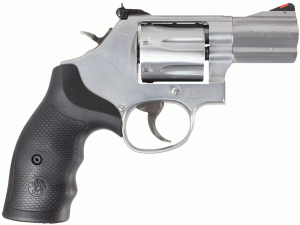

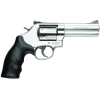

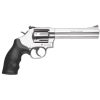
The Smith & Wesson 686 Plus earns the top spot because it does everything a revolver should do, and it does it better than almost anything else on the market. The L-frame is big enough to handle full-power .357 Magnum loads comfortably, but it’s not so large that it feels unwieldy. That 7-round cylinder is a real bonus when most .357s top out at 6.
I’ve shot thousands of rounds through a 686 Plus over the years, and the trigger just keeps getting smoother. Out of the box, the double-action pull is already better than most competitors. In single action, it breaks like glass. Smith & Wesson’s fit and finish on this gun is consistently excellent.
Whether you load it with .38 Special wadcutters for target shooting or .357 Magnum hollow points for home defense, this gun handles it all. The adjustable rear sight is precise and easy to dial in. If I could only own one revolver, this would be it.
Best For: Shooters who want the most capable, versatile .357 Magnum revolver money can buy.
We ran 1,500 rounds through one. Here is what held up and what did not.
2. Ruger GP100

| Price | Accuracy | Build Quality | Trigger | Versatility |
|---|---|---|---|---|
| 5/5 | 4/5 | 5/5 | 4/5 | 4/5 |
Pros
- Triple-locking cylinder for rock-solid lockup
- Overbuilt frame handles tens of thousands of magnum rounds
- Excellent value for a full-size stainless .357
Cons
- Heaviest gun on this list at 40 oz
- Factory trigger is functional but not as refined as Smith & Wesson
- Cylinder release takes practice to work fast


If you want a revolver that will outlast you and your grandchildren, the Ruger GP100 is the answer. This thing is built like an absolute tank. Ruger’s triple-locking cylinder design creates one of the strongest lockups in the industry, and the solid frame construction means this gun can handle a steady diet of full-house .357 Magnum loads without breaking a sweat.
The GP100 is heavier than the 686 at 40 oz, which is either a pro or a con depending on how you look at it. More weight means less felt recoil when shooting magnums, but it also means this isn’t a gun you’ll want to carry all day. For a range gun, nightstand gun, or trail gun, the extra weight is actually a benefit.
The factory trigger is good, not great. It’s a bit stacky in double action compared to Smith & Wesson’s offerings. But a $15 spring kit transforms it into something really impressive. The two guns now trade within about fifty dollars of each other on the street, so pick on feel and trigger rather than price.
Best For: Budget-conscious buyers who want a .357 Magnum revolver they can shoot hard and pass down to their kids.
There is a lot more on this gun in our full GP100 review.
3. Smith & Wesson 642

| Price | Accuracy | Build Quality | Trigger | Versatility |
|---|---|---|---|---|
| 5/5 | 3/5 | 4/5 | 3/5 | 3/5 |
Pros
- Incredibly lightweight at 14.4 oz for effortless pocket carry
- Shrouded hammer eliminates snagging on draw
- Proven J-frame design trusted by millions
Cons
- Only 5 rounds of .38 Special
- Snappy recoil with +P loads due to light weight
- Fixed sights limit precision shooting
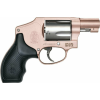

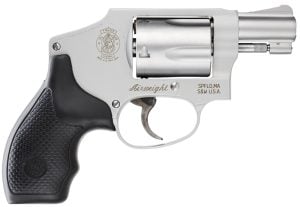
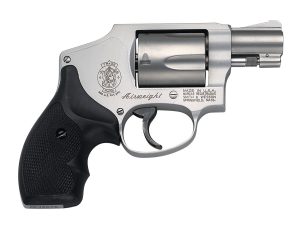
The Model 642 is arguably the most popular concealed carry revolver ever made, and for good reason. At 14.4 oz empty, you can drop it in a pocket holster and genuinely forget it’s there. The shrouded internal hammer means there’s nothing to catch on clothing during a draw. It’s double-action only, which keeps things simple under stress.
Let’s be honest about the tradeoffs. Five rounds of .38 Special isn’t a lot of firepower, and the lightweight aluminum frame makes +P loads genuinely unpleasant to shoot at the range. This isn’t a gun you’ll spend all afternoon plinking with. It’s a purpose-built defensive tool designed to be carried a lot and shot a little.
I’ve carried a 642 as a backup gun for years. It disappears in a pocket or ankle holster, and I’ve never once had a reliability issue. Load it with good .38 Special +P defensive ammo, practice enough to be competent at 7 yards, and you’ve got one of the most reliable carry guns money can buy.
Best For: Concealed carriers who prioritize a lightweight, snag-free revolver they can pocket carry every day.
We pocket carried one for 500 rounds: the 642 Airweight, tested properly.
4. Colt Python

| Price | Accuracy | Build Quality | Trigger | Versatility |
|---|---|---|---|---|
| 2/5 | 5/5 | 5/5 | 5/5 | 4/5 |
Pros
- One of the smoothest revolver triggers in production
- Stunning fit, finish, and polish on the stainless steel
- The “Rolls-Royce of revolvers” reputation holds true
Cons
- Premium price at $1,699 MSRP
- Only 6 rounds compared to the 686’s 7
- Can be hard to find in stock at certain retailers
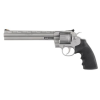
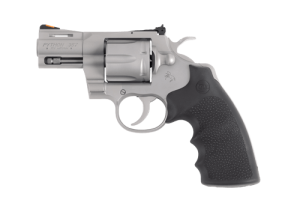
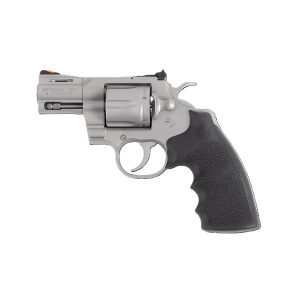
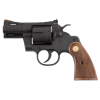
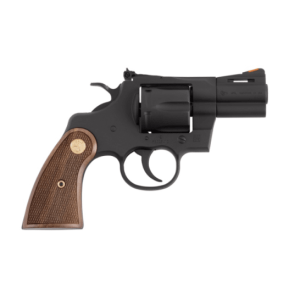
The Colt Python has been called the finest production revolver ever made, and after spending time with the reintroduced model, I understand why. The trigger is on another level. The double-action pull is silky smooth with a clean break, and single action is so crisp it almost feels like cheating. Colt’s V-spring mechanism creates a feel that Smith & Wesson’s coil springs just can’t replicate.
The fit and finish on the new Pythons is outstanding. The stainless steel has a beautiful semi-bright polish, and every surface is cleanly machined. It looks and feels like a $1,500 revolver should. When you pick one up, you immediately notice the quality difference compared to guns at lower price points.
Is the Python worth nearly double the price of a 686 Plus? That depends on what you value. If you want the absolute best trigger and the prestige of owning a Python, the answer is yes. If you’re purely looking at specs and value, the 686 Plus gets you 90% of the way there for a lot less money. But guns aren’t always about pure logic, and the Python is one of those revolvers that makes you smile every time you open the case.
Best For: Collectors and enthusiasts who want the finest .357 Magnum revolver money can buy.
Is it actually worth the money? We spent a while on that question.
5. Ruger SP101

| Price | Accuracy | Build Quality | Trigger | Versatility |
|---|---|---|---|---|
| 4/5 | 4/5 | 5/5 | 4/5 | 4/5 |
Pros
- All-steel construction tames .357 Magnum recoil in a small package
- Ruger’s overbuilt design handles a lifetime of hard use
- Compact enough for IWB carry with the right holster
Cons
- Only 5 rounds
- Heavier than aluminum-framed snub noses (25 oz vs 14 oz)
- Sights are basic and not easily upgraded
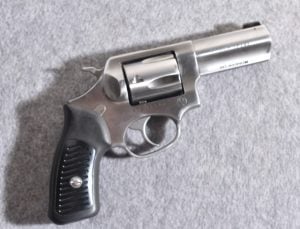
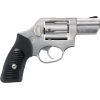
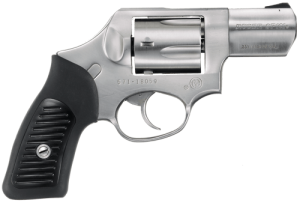
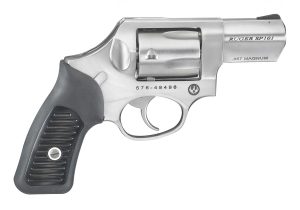
The Ruger SP101 solves a problem that most small revolvers have: they’re too light to comfortably shoot .357 Magnum. At 25 oz of solid stainless steel, the SP101 has enough heft to absorb magnum recoil without punishing your hand. It’s still compact enough to carry IWB or in a jacket pocket, though it’s noticeably heavier than the aluminum-framed 642.
I think of the SP101 as the ultimate “just in case” revolver. It’s small enough to carry, but powerful enough to load with full-house .357 Magnum if you’re hiking in bear country. Load it with .38 Special for comfortable practice, then swap to .357 for serious use. That flexibility is hard to beat in a gun this size.
The trigger improves significantly with use. After a few hundred rounds, the double-action pull smooths out considerably. If you want to speed up the process, a spring kit and some polishing will get you there even faster. Ruger’s build quality is, as always, outstanding.
Best For: Anyone who wants .357 Magnum power in a compact, carryable package without the wrist-breaking recoil of a lightweight frame.
Read the 500-round SP101 carry test for the long version.
6. Smith & Wesson Model 29

| Price | Accuracy | Build Quality | Trigger | Versatility |
|---|---|---|---|---|
| 3/5 | 5/5 | 5/5 | 5/5 | 3/5 |
Pros
- The most iconic .44 Magnum revolver in history
- Beautiful blued finish and classic N-frame proportions
- Capable hunting revolver for deer and hogs
Cons
- Heavy at nearly 3 pounds
- .44 Magnum ammo is expensive and hard-kicking
- Not practical for concealed carry
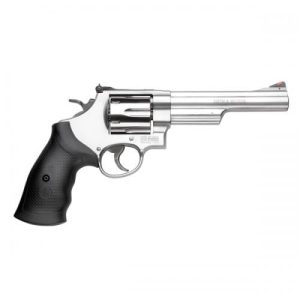
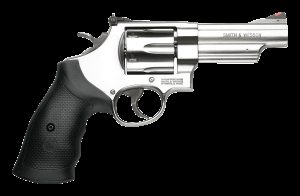
“Being as this is a .44 Magnum, the most powerful handgun in the world…” Clint Eastwood made the Model 29 famous in 1971, and it still anchors our best .44 Magnum revolvers roundup, and it’s been one of the most sought-after revolvers ever since. The good news is that Smith & Wesson still makes it, and the current production models are excellent. The deep blued finish over the carbon steel N-frame is gorgeous.
This is a serious big-bore revolver. Full-power .44 Magnum generates substantial recoil, even in a gun this heavy. But that’s the point. The Model 29 is a hunting revolver, a trail gun for bear country, and a piece of firearms history all in one. Load it with .44 Special for much milder range sessions, or step up to magnum loads when you need the power.
The 6.5″ barrel gives you the best velocity and sight radius, making this the most accurate configuration. The trigger on the N-frame guns has always been outstanding, with a smooth, predictable double-action pull. If you’ve ever wanted to own the “Dirty Harry” gun, the modern Model 29 delivers everything you’d expect.
Best For: Shooters who want a classic big-bore revolver for hunting, trail use, or collecting.
Dirty Harry’s gun, on the clock and over a chronograph: our Model 29 review.
7. Ruger Wrangler

| Price | Accuracy | Build Quality | Trigger | Versatility |
|---|---|---|---|---|
| 5/5 | 3/5 | 3/5 | 3/5 | 2/5 |
Pros
- Incredibly affordable at around $200 street price
- Cerakote finish available in several colors
- Transfer bar safety allows safe carry with all 6 chambers loaded
Cons
- Single-action only (must cock the hammer each shot)
- Aluminum frame feels less premium than steel
- Fixed sights with limited adjustability
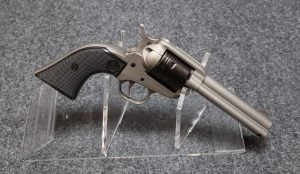
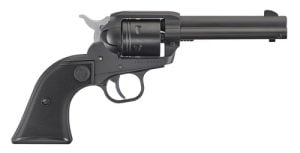
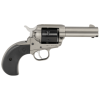

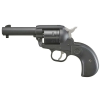
The Ruger Wrangler is the most fun you can have at the range for under $250. It’s a single-action .22 LR revolver that channels old-school cowboy vibes without the old-school price tag.
See our full Ruger Wrangler review for the full hands-on test.
Ruger essentially took their legendary Single-Six design and made it more affordable by using an aluminum frame with a Cerakote finish instead of stainless steel. In the process, they made arguably the best .22 LR revolver on the market.
I bought a Wrangler on a whim and it quickly became one of my most-shot guns. There’s something deeply satisfying about cocking that hammer and squeezing off rounds. At pennies per round for .22 LR, you can spend an entire afternoon at the range without feeling guilty about ammo costs. The Cerakote finish comes in several color options, and it holds up well to regular use.
This isn’t a self-defense gun or a precision target pistol. It’s a fun gun, plain and simple. If you’re new to revolvers and want to learn the basics without spending a fortune, or if you just want a plinking gun that puts a smile on your face, the Wrangler is hard to beat at this price.
Best For: New shooters, plinkers, and anyone who wants an affordable single-action revolver for casual range fun.
8. Smith & Wesson Model 66

| Price | Accuracy | Build Quality | Trigger | Versatility |
|---|---|---|---|---|
| 4/5 | 5/5 | 5/5 | 5/5 | 4/5 |
Pros
- Classic K-frame size balances shootability and portability
- Excellent adjustable sights for precise shooting
- Smooth factory trigger in both DA and SA
Cons
- One fewer round than the 686 Plus (6 vs 7)
- K-frame may be slightly less durable with heavy magnum use than L-frame guns
- Steel K-frame carries heavier than a J-frame
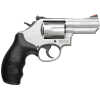
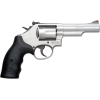
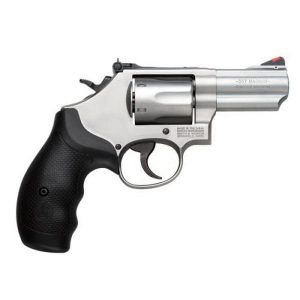
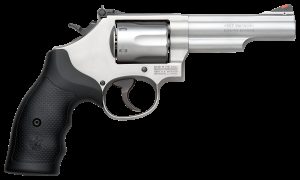
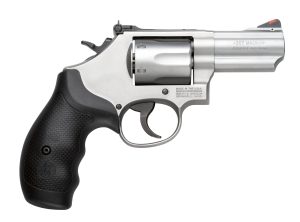
The Model 66 is the stainless steel version of the legendary Model 19, the revolver that defined the “duty gun” for law enforcement for decades. The K-frame sits in a sweet spot between the smaller J-frame and the larger L-frame, offering a gun that’s big enough to shoot well but not so large that it’s uncomfortable to carry on a belt all day.
Smith & Wesson’s K-frame trigger is, in my opinion, one of the best double-action triggers in the revolver world. The current Model 66 carries on that tradition with a smooth, consistent pull that rewards practice. The adjustable rear sight paired with a red ramp front sight makes for quick, precise target acquisition.
If you’re looking at the 686 Plus and thinking it’s a bit large, the Model 66 might be your answer. You give up one round, six instead of seven, and a slightly smaller frame, but you gain a more comfortable carry experience. For home defense, range shooting, or an all-around revolver, the Model 66 is a classic that still holds up in 2026.
Best For: Shooters who want a mid-size .357 Magnum with a legendary pedigree and one of the best factory triggers available.
9. Taurus 856

| Price | Accuracy | Build Quality | Trigger | Versatility |
|---|---|---|---|---|
| 5/5 | 3/5 | 3/5 | 3/5 | 3/5 |
Pros
- 6 rounds in a snub nose (most competitors only hold 5)
- Very affordable entry point for concealed carry
- Steel frame absorbs recoil better than aluminum
Cons
- Taurus quality control has been inconsistent historically
- Trigger is heavier and grittier than Smith & Wesson
- Limited aftermarket holster and accessory options
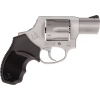
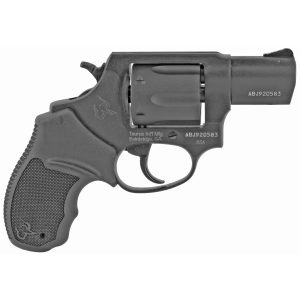
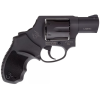
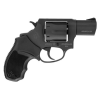
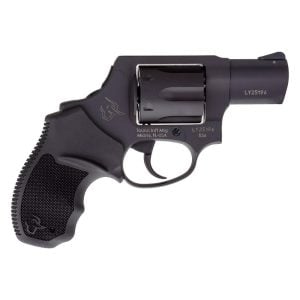
The Taurus 856 answers a simple question: what if you could get a 6-round snub nose revolver for about $300? Most small-frame revolvers in .38 Special hold only 5 rounds. The 856 squeezes in an extra round, which is a meaningful advantage when your capacity is already limited. And at this price point, it’s one of the most accessible carry revolvers on the market.
Taurus has had a rocky reputation over the years, but their recent revolvers have been solid. The 856 I tested ran without issues through several hundred rounds of both standard and +P ammunition. The steel frame, where the 642 uses aluminum, adds weight but also makes shooting more comfortable. At 22 oz, it splits the difference between ultralight aluminum guns and heavier stainless options.
The trigger isn’t as smooth as a Smith & Wesson, and the fit and finish won’t win any beauty contests. But it works, it’s reliable in my experience, and it saves you over $100 compared to the Model 642. If you’re on a tight budget and want a dependable carry revolver, the 856 deserves a serious look.
Best For: Budget-minded concealed carriers who want an extra round and a steel frame without breaking the bank.
10. Smith & Wesson 500

| Price | Accuracy | Build Quality | Trigger | Versatility |
|---|---|---|---|---|
| 2/5 | 4/5 | 5/5 | 4/5 | 2/5 |
Pros
- The most powerful production revolver in existence
- Compensated barrel helps manage the massive recoil
- Capable of taking any game animal in North America
Cons
- Extremely heavy at 4.5 pounds
- .500 S&W Magnum ammo is expensive (often $2+ per round)
- Recoil is punishing even for experienced shooters
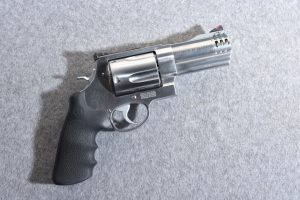
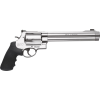
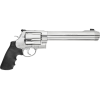
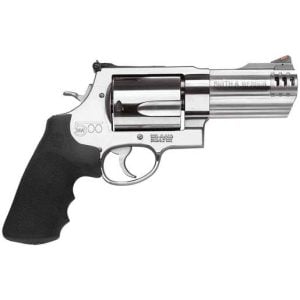
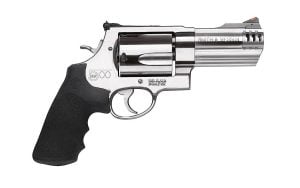
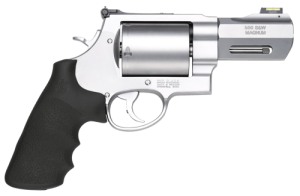
The Smith & Wesson 500 exists because someone at S&W asked “what’s the most powerful revolver we can possibly build?” and the engineers took it as a challenge. The .500 S&W Magnum cartridge generates over 2,600 ft-lbs of energy at the muzzle, making it the most powerful production revolver cartridge in the world. This is a handgun that can ethically take any game animal on the planet.
I’ll be honest: shooting the 500 is an event, not a casual range session. The recoil is tremendous, even with the compensated barrel doing its best to tame the muzzle rise. At 72.5 oz, which is over four and a half pounds, you feel every ounce of this gun before you even pull the trigger. After five rounds, most people are ready for a break.
So who actually buys this? Handgun hunters who want maximum stopping power. People who spend time in grizzly country and want the ultimate backup. And, honestly, people who just want to own the biggest, baddest revolver ever made. There’s nothing wrong with that. The 500 is an engineering marvel and a conversation starter at every range session.
Best For: Handgun hunters, big-game enthusiasts, and anyone who wants to own the most powerful production revolver on the planet.
11. Ruger LCR

| Price | Accuracy | Build Quality | Trigger | Versatility |
|---|---|---|---|---|
| 4/5 | 3/5 | 4/5 | 5/5 | 3/5 |
Pros
- Best factory double-action trigger on a snub
- Only 13.5 oz, disappears in a pocket
- Polymer housing genuinely softens the recoil
Cons
- Five rounds and slow to reload
- Fixed sights with no upgrade path
- Snappy with full-power +P loads
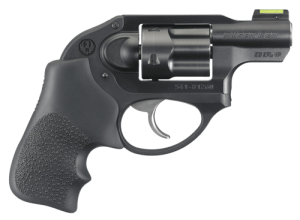
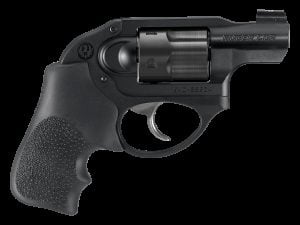
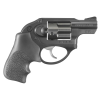
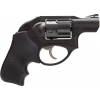
The LCR is the gun that finally dragged the pocket revolver into this century. Ruger built the fire control housing out of polymer, hung an aluminum monolithic frame off it, and used the flex in that assembly to smooth out the double-action pull. What you get is a 13.5 oz snub with a better trigger than revolvers costing twice as much.
That trigger is the whole argument. It comes back in one long, even stroke with no stacking, which is exactly what you want on a gun with fixed sights you’re going to shoot fast at close range. I’ve handed an LCR to shooters who swore they hated revolver triggers and watched them change their mind inside five rounds.
The tradeoffs are the ones every lightweight snub makes. Five rounds. A reload that needs a speed strip and real practice. And enough recoil with +P defensive loads that you won’t want to shoot a hundred of them in one sitting. Ruger lists it at $759, but the street price sits a long way under that.
Against the S&W 642 it comes down to trigger versus tradition. The 642 is the classic and it carries a shade flatter. But the LCR shoots better for most people straight out of the box, and that matters more.
Best For: Everyday carriers who want the lightest possible revolver without accepting a bad trigger.
That trigger is the whole argument. See how it held up over 500 rounds.
12. Charter Arms Bulldog

| Price | Accuracy | Build Quality | Trigger | Versatility |
|---|---|---|---|---|
| 5/5 | 3/5 | 3/5 | 3/5 | 3/5 |
Pros
- Real .44 Special power at 20 oz
- Simple, proven design that just works
- Costs half what rivals ask
Cons
- Fit and finish feel budget
- Only five rounds on board
- Trigger is gritty until broken in
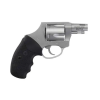
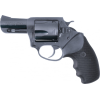
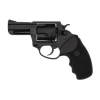
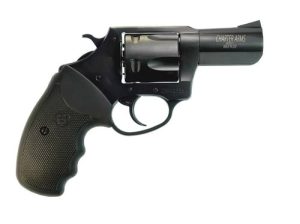
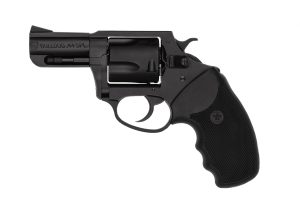
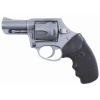
The Bulldog has been doing the same job since 1973, and nothing else on this list does it. It puts a fat .44 Special bullet in a 20 oz five-shot revolver with a 2.5 inch barrel and an overall length under seven inches. Nobody else builds that gun at this price.
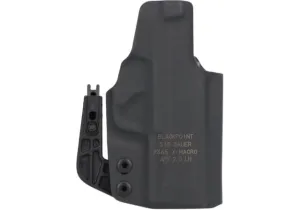
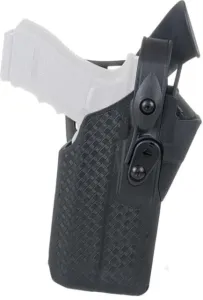
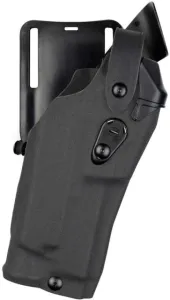
Revolver Holsters
Best-scored accessories across 200+ retailers · Updated every 4 hours
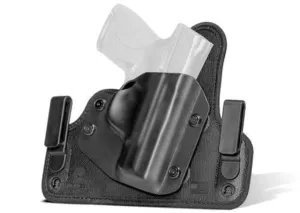
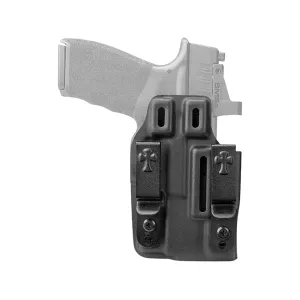
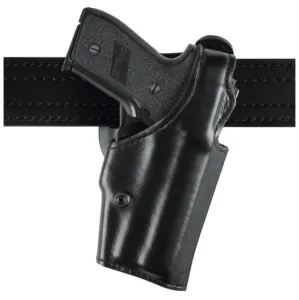

357 Ammo on Sale
On-sale 357 from 200+ retailers · Updated every 4 hours



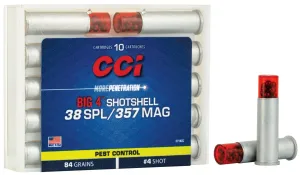
Why bother with .44 Special when .38s are cheaper? Because a 200 grain bullet at moderate velocity does its work without the blast and flash of a magnum out of a short barrel. It’s a big, slow, heavy projectile in a package you can carry all day, and out of a snub barrel it makes a lot more sense than a .357 does.
Charter’s a small company and the gun shows it. The finish is functional rather than pretty, the trigger arrives gritty and wants a few hundred rounds before it smooths out, and lockup isn’t Smith & Wesson tight. At around $400 on the street against $448 MSRP, I can live with all of that.
The Pug version in the photo is the one I’d buy. That stubbier grip keeps the butt from printing under a shirt, and on a gun this short the grip is what gives you away.
Best For: Carriers who want big-bore bullet weight in a genuinely pocketable revolver.
13. Chiappa Rhino 200DS

| Price | Accuracy | Build Quality | Trigger | Versatility |
|---|---|---|---|---|
| 2/5 | 4/5 | 4/5 | 4/5 | 3/5 |
Pros
- Bottom-chamber barrel nearly eliminates muzzle rise
- Six rounds in a true snub frame
- Fiber optic front sight fitted standard
Cons
- Costs more than a 686 Plus
- Holsters and parts are hard to find
- Manual of arms takes real relearning
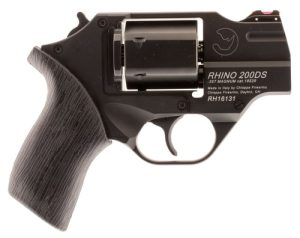
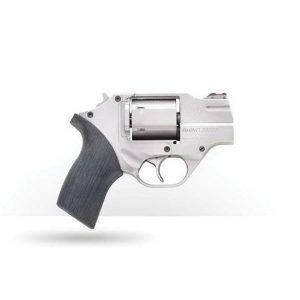
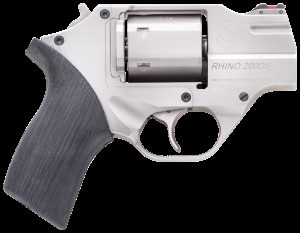
Every other revolver here fires from the top chamber of the cylinder, which sits well above your hand and levers the muzzle upward under recoil. The Rhino fires from the bottom chamber instead. That one decision drops the bore line almost level with your grip, and the difference in muzzle rise with full-power .357 Magnum isn’t subtle.
It’s a 2 inch, six-shot, aluminum-framed .357 that weighs about 25 oz. The payoff is that you can actually shoot magnum loads out of it in strings rather than one at a time. The hexagonal cylinder and flat slab sides also make it carry flatter than the round cylinder on a J-frame, which nobody expects from a gun that looks this strange.
The catch is everything else. You’re paying Colt money for an Italian gun with a thin dealer network. That exposed lever on the left side is a cocking lever, not a hammer, and it confuses just about everyone who picks the gun up. Finding a holster means going to a custom maker. MSRP runs $1,069 for the black anodized model.
I wouldn’t make this a first revolver. As a second or third one though, once you already know what a standard bore axis feels like, it’s easily the most interesting gun on this page.
Best For: Experienced revolver shooters who want magnum power with the least muzzle rise available.
14. Taurus Raging Hunter

| Price | Accuracy | Build Quality | Trigger | Versatility |
|---|---|---|---|---|
| 4/5 | 5/5 | 4/5 | 4/5 | 4/5 |
Pros
- Picatinny rail ready for a red dot
- Seven rounds of .357 Magnum
- Factory porting genuinely tames muzzle rise
Cons
- 53 oz is heavy to carry
- Far too large for concealed carry
- Fit and finish trails Smith & Wesson

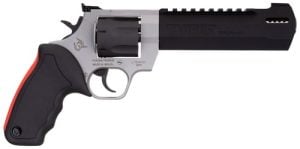

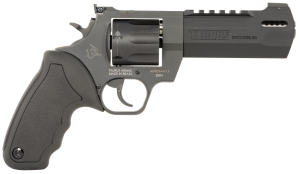
Nothing else on this list is built to wear a scope. The Raging Hunter ships with a Picatinny rail machined into the barrel shroud, so mounting a red dot or a low-power handgun scope takes minutes instead of a trip to a gunsmith. If you actually hunt with a handgun, that changes the maths completely.
The .357 Magnum version holds seven rounds in a 6.75 inch ported barrel and weighs 53 oz unloaded. That sounds absurd until you fire it. Between the mass, the porting and the cushioned grip insert, full-power magnum loads land closer to warm .38s, and I got through a full box without developing a flinch by the end of it.
Accuracy was the surprise. Taurus still has a reputation to shake off, but the angular barrel is rigid and the adjustable rear sight held zero through the whole test. With a dot on top and decent hunting ammo, deer and hog inside 75 yards is a realistic ask.
Fit and finish don’t match a Smith & Wesson at the same money, and the two-tone look is a matter of taste. Taurus lists $1,147.99 on the two-tone 6.75 inch model, but the street price on the .357 sits several hundred dollars below that.
Best For: Handgun hunters who want an optics-ready magnum without paying custom-shop money.
15. Heritage Rough Rider

| Price | Accuracy | Build Quality | Trigger | Versatility |
|---|---|---|---|---|
| 5/5 | 3/5 | 3/5 | 2/5 | 2/5 |
Pros
- Cheapest revolver here at under $200
- .22 LR costs pennies a round
- Single action teaches trigger control properly
Cons
- Loading gate is slow and fiddly
- Zinc alloy frame rather than steel
- Trigger is heavy and rough
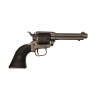

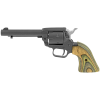
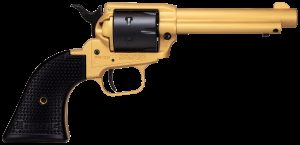
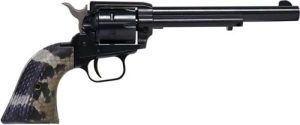
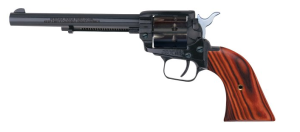
There’s a floor to what a working revolver can cost, and the Rough Rider is sitting on it. Around $160 to $190 buys a six-shot single action in .22 LR that’ll happily eat bulk-pack ammo all afternoon. Heritage gets there with a zinc alloy frame and a black oxide finish, and to their credit they’re honest about it.
Don’t write it off for being cheap. Single action forces you to cock the hammer, settle, and press deliberately for every single shot, which is a genuinely good way to teach a new shooter what a clean press feels like. Add ammo at a couple of cents a round and you can run a beginner through five hundred rounds for the price of one box of .357.
The 6.5 inch model shown weighs 33.4 oz with an 11.78 inch overall length, and MSRP is $196.99. Loading and unloading through a gate one chamber at a time is slow. The trigger is rough compared to anything else here. The manual hammer safety is fiddly. All true, and all forgivable at this price.
Want the same idea in a better gun? The Ruger Wrangler higher up this page is worth the extra fifty dollars. But if the budget is genuinely fixed, this is the one.
Best For: New shooters, plinkers and anyone who wants a real revolver for under two hundred dollars.
We shot the cheap one properly, and it surprised us.
Revolver vs Semi-Auto
The revolver vs semi-auto debate has been going on for decades, and both sides have valid points. Semi-autos offer higher capacity, faster reloads, and slimmer profiles for concealed carry. A modern 9mm pistol like a Glock 19 holds 15 rounds and reloads in about two seconds with a fresh magazine. No revolver can match that.
But revolvers have advantages that semi-autos can’t replicate. They’re mechanically simpler, which means there are fewer things that can go wrong. A revolver doesn’t care about limp-wristing, and it won’t have a failure to feed or a stovepipe. If you pull the trigger and nothing happens, just pull it again and the cylinder rotates to the next round. For someone who doesn’t train regularly, that simplicity is a genuine safety advantage.
Revolvers also offer caliber versatility that semi-autos can’t touch. A .357 Magnum revolver shoots both .357 and .38 Special. You can practice with cheap .38 loads and carry .357 for defense. Some revolvers chamber cartridges that simply don’t exist in semi-auto platforms, like .44 Magnum and .500 S&W. For handgun hunting, big-bore revolvers remain the top choice. The bottom line: neither platform is objectively “better.” Pick the one that fits your needs, your training level, and your intended use.
Single Action, Double Action, and Why It Matters More Than Caliber
This is the part that trips up first-time revolver buyers, and it decides how the gun feels far more than the chambering does. In single action, you cock the hammer with your thumb and the trigger only has one job: dropping it. The pull is short and light, often under four pounds. That is the Ruger Wrangler and the Heritage Rough Rider on this list, and it is why single-action plinkers feel so easy to shoot well.
In double action, one long pull does both jobs, rotating the cylinder and cocking and dropping the hammer. It is heavier, somewhere between eight and twelve pounds on most guns, and it is the pull you will actually use under stress. Most of the guns here are DA/SA, meaning you get both: thumb the hammer for a precise shot at the range, or run it double action for defense. The S&W 686 Plus, the Ruger GP100 and the Colt Python all work this way.
Then there is double action only. The hammer is bobbed or fully enclosed, so there is nothing to snag on a pocket and nothing to cock. The S&W 642 and the Ruger LCR are built this way on purpose, because a carry gun that catches on clothing is worse than a heavy trigger. The trade is real though: every shot is that long pull, which is exactly why I keep telling new shooters not to start on one.
How We Tested These Revolvers
Every revolver on this list went through the same hands-on protocol. We ran a minimum of 250 rounds through each gun, alternating between cheap practice ammo like Federal American Eagle .38 Special, Magtech .357 Magnum FMJ and Aguila .22 LR, then premium defensive loads such as Speer Gold Dot, Federal HST .357 and Hornady Critical Defense. On the big-bores we mixed Buffalo Bore and Underwood hardcast solids in to make sure the cylinder gap and forcing cone could handle full-power loads without keyholing or shaving lead.
Reliability is automatic on a quality revolver, so we score on three weighted factors instead: trigger, meaning double-action pull weight, single-action break, reset and consistency through the cylinder. Accuracy, measured as 5-shot groups at 25 yards from a rest on factory iron sights, then again at 50 yards with magnum loads. And build quality, meaning cylinder lockup, timing, frame-to-cylinder fit and finish. Trigger is the heaviest weight because a good revolver lives or dies on the trigger.
Price-to-performance is the tiebreaker. A Colt Python at $1,699 MSRP should outperform a Ruger GP100 at $1,109, and on trigger and finish it does, but the GP100 takes the practical-value win because it costs hundreds less on the street. Where a premium platform earns its slot on something specific, we say so. Where it doesn’t, we tell you which budget option matches it for your use case.
We re-test every pick at least once per year and update pricing inside this guide weekly via our live-pricing widget. If a revolver on this list goes out of production, gets a recall, or starts failing in the field, it gets removed and a replacement gets the same protocol before being ranked.
Live Revolver Deals Right Now
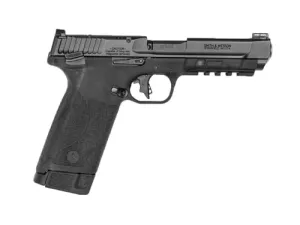
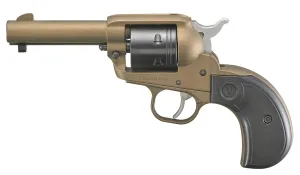
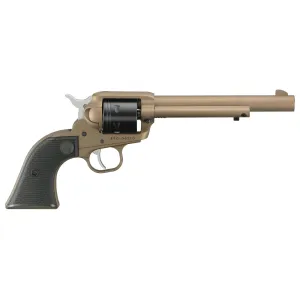
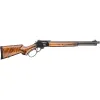
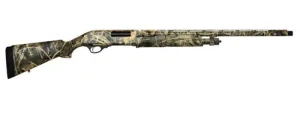
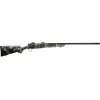
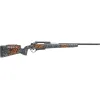
Prices on the picks above move week to week, and good revolvers sell out fast. Here is what is actually in stock and on deal today across the retailers we track, so you can see real numbers before you commit. Tap any card to jump straight to that listing.
Top Revolver Deals
Best-priced firearms across 200+ retailers · Updated every 4 hours


Frequently Asked Questions
Are revolvers good for self-defense?
Yes, revolvers are excellent for self-defense. They're simple to operate under stress, extremely reliable, and available in proven defensive calibers like .38 Special +P and .357 Magnum. The main tradeoff is capacity. Most hold five to seven rounds where a comparable semi-auto holds ten to seventeen. For home defense or concealed carry, a quality revolver from Smith & Wesson, Ruger, or Colt is a solid choice.
What is the best revolver caliber for self-defense?
.357 Magnum is the best revolver caliber for self-defense because it offers outstanding stopping power and also lets you shoot .38 Special for practice. If you're carrying a lightweight snub nose, .38 Special +P is an excellent choice with more manageable recoil. Both calibers have decades of real-world defensive use backing them up.
Are revolvers more reliable than semi-autos?
Revolvers are mechanically simpler, which gives them an edge in reliability for users who don't maintain or train with their firearms regularly. They don't suffer from failures to feed, stovepipes, or magazine-related issues. However, modern semi-autos from reputable manufacturers are also extremely reliable. The reliability advantage of revolvers is most significant for shooters who rarely practice.
What is the best snub nose revolver?
The Smith & Wesson Model 642 is the best overall snub nose revolver. It weighs just 14.4 oz, has an internal hammer for snag-free draws, and is chambered in .38 Special +P. For a budget option, the Taurus 856 offers 6 rounds instead of 5 at a lower price. If you want .357 Magnum power in a snub nose, the Ruger SP101 is the best choice.
Can you conceal carry a revolver?
Absolutely. Small-frame revolvers like the Smith & Wesson 642 and Taurus 856 are specifically designed for concealed carry. J-frame revolvers fit easily in pocket holsters, ankle holsters, or IWB holsters. The main consideration is that revolvers have a thicker cylinder than most semi-autos, so they print more in certain carry positions. Choose a snub nose with a 2-inch barrel for the best concealability.
What is the best revolver for a beginner?
The Ruger Wrangler in .22 LR is the best revolver for an absolute beginner. It runs about $200, has minimal recoil, and cheap ammo lets you practice extensively. For a beginner who wants a defensive revolver, the Smith & Wesson 686 Plus is the best option because it shoots cheap .38 Special while you learn and .357 Magnum when you carry, and it has a smooth trigger that's forgiving for new shooters.
Is .38 Special enough for self-defense, or do I need .357 Magnum?
Both work, and which one is right depends on the gun more than the cartridge. .357 Magnum hits harder and it will also shoot .38 Special, so practice stays cheap and you keep the option of loading down. .38 Special +P is the sensible step down, especially out of a lightweight snub where full-house Magnum recoil stops you training. .44 Magnum is overkill for defensive use unless the same gun is doing double duty for hunting or bear country.
How many rounds does a typical revolver hold?
Five to seven rounds in most modern carry and duty revolvers. Snub-nose .38s like the S&W 642 hold 5. Mid-frame .357s like the Ruger GP100 hold 6. The Smith & Wesson 686 Plus is the outlier with 7 in its L-frame cylinder. Big-bore guns chambered in .500 S&W or .454 Casull typically hold 5. There's no semi-auto-style 15-round capacity on a wheelgun.
Related From UGS
Related: the wild Iver Johnson revolver shotgun.
The most unusual revolver we have tested is the Chiappa Rhino, which puts the barrel at the bottom of the cylinder to kill muzzle flip.
For a budget carry option, the Taurus 856 undercuts every J-frame here and still holds six.
6,216+ Gun & Ammo Deals
Updated daily from 200+ top retailers. Filter by category, caliber, action type, and price.