

Last updated May 2026 · By Nick Hall, CCW instructor (modified 30+ carry guns over the past decade)
Some of the links below are affiliate links, meaning at no additional cost to you, we may earn a commission if you click through and make a purchase.
- Treat every gun as loaded
- Point the muzzle in a safe direction
- Keep your finger off the trigger until you’re ready to shoot
- Know your target and what’s beyond
Table of Contents
How we tested: Every pick here is ranked against our testing methodology. Minimum round counts, accuracy and reliability protocols, the failures that disqualify a gun.
Your Carry Gun Is Not a Range Toy
I get it. You bought your carry gun, you’ve been shooting it for a few months, and now you’re browsing aftermarket triggers at 11pm on a Tuesday. We’ve all been there. The aftermarket for concealed carry guns is massive, and every Instagram ad is telling you that one more upgrade will make you shoot like John Wick.
Here’s the thing. Your carry gun has one job: go bang every single time you need it to. That’s it. Every modification you bolt onto that gun is a potential failure point. A new trigger spring that wasn’t tensioned right. A slide cut that wasn’t milled to spec. An extended mag release that catches on your shirt and dumps your magazine in a parking lot.
Some mods are worth doing. They’ll make you faster, more accurate, and more confident. But a lot of what the gun internet sells you is range toy stuff disguised as “tactical upgrades.” This guide is about knowing the difference, and being honest about which side of the line each mod falls on.
I’m not anti-customization. I’ve modified every carry gun I’ve owned. But I’ve also reverted mods that didn’t hold up, and I’ve learned the hard way that “cool” and “reliable” aren’t always the same thing. The gun community loves to throw money at problems that don’t exist. I’d rather help you throw money at the ones that do.
So here’s my honest breakdown: what’s worth doing, what requires careful consideration, and what you should skip entirely. No fluff, no affiliate-driven hype, just what actually works on a gun you bet your life on every day.
Mods Worth Doing (Tier 1)
Let’s start with the upgrades that actually earn their spot on a carry gun. These are modifications where the performance benefit is real, the reliability risk is low, and the juice is absolutely worth the squeeze. If you’re going to spend money on your carry setup, start here and work down the list.
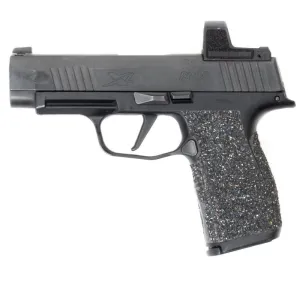
Red dot optics are the single biggest accuracy improvement you can make to a handgun. Full stop. A quality micro red dot like the Holosun 507K, 407K, or EPS Carry gives you faster target acquisition, better accuracy at distance, and a massive advantage in low light. Your eyes focus on the target instead of trying to align three points on the sights. Once you train with a dot, iron sights feel like going back to a flip phone. If your slide is already optics-ready (and most modern carry guns are), this should be mod number one.
Night sights are almost as important, especially if you’re running a red dot. Tritium sights from Trijicon (the HD XR line is excellent) or AmeriGlo give you a visible sight picture in darkness without batteries. If you’ve mounted an optic, you need suppressor-height sights for co-witness. That way, if your dot dies or gets obscured, you still have usable sights through the optic window. It’s a backup for your backup. And considering that most defensive encounters happen in low light, this is non-negotiable gear.
Grip texture might be the most underrated mod on this list. Better grip equals better recoil control equals faster follow-up shots. Talon Grips are the easy, reversible option. Rubberized for comfort, granulate for maximum traction. Professional stippling is more permanent but gives you a custom grip surface that won’t peel off. Either way, this is a low-risk, high-reward change that costs under $25 for Talons. If your carry gun feels slick when your hands are sweaty, fix it. Today.
A weapon-mounted light deserves a mention in Tier 1 as well, though it depends on your carry setup. A Streamlight TLR-7 Sub or a SureFire XSC gives you positive target identification in the dark. You can’t shoot what you can’t see, and you really shouldn’t shoot what you can’t identify. The downside is bulk. Adding a light to a micro compact makes it wider and longer, which can affect concealment. If you carry in a holster that accommodates a light (and you should), this is worth doing. If you’re pocket carrying a tiny .380, it’s probably not going to work.
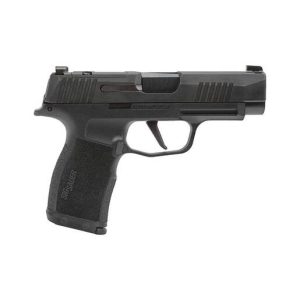
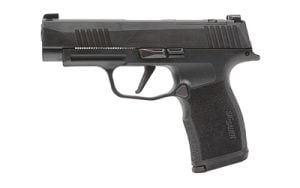
The Sig P365 XL is one of the best platforms for all three of these mods. Optics-ready from the factory, tons of night sight options, and the grip module takes Talons perfectly. It’s basically designed to be upgraded intelligently.
Mods to Consider Carefully (Tier 2)
These mods aren’t bad. They can improve your gun. But they come with trade-offs that you need to think about before you commit, and some of them have implications beyond just how the gun shoots.
Trigger upgrades are where things get controversial. An Apex trigger in a Smith & Wesson Shield or a Timney Alpha in a Glock can absolutely transform the shooting experience. Shorter reset, cleaner break, less mush. I’ve run aftermarket triggers in carry guns and shot noticeably better with them. But here’s the catch: any trigger work on a carry gun must be followed by extensive reliability testing. I’m talking 500+ rounds minimum with zero malfunctions before you trust it. And there’s the legal angle too. In a defensive shooting, a prosecutor can and will ask about modifications to your firearm. “So you installed a lighter trigger to make it easier to shoot people?” is a real question that real attorneys have asked. Keep your trigger pull at 4 pounds or above, and keep your receipts showing you had the work done by a professional. This isn’t paranoia. It’s reality.
Extended slide releases are a mixed bag. If you struggle to lock the slide back or release it under stress, a larger slide stop lever can help. But that extra material sticking out from the frame can snag on clothing during the draw, especially from appendix carry. Some people swear by them. I’ve gone back and forth. If you run one, practice your draw stroke a hundred times and see if it catches.
Magazine extensions add 1 to 3 rounds of capacity, which sounds great on paper. The trade-off is a longer grip, which means more printing under a t-shirt. A Glock 43X with a Shield Arms S15 mag and a +2 basepad is approaching Glock 19 territory in grip length, and at that point, just carry the 19. Mag extensions are great on the nightstand gun where concealment doesn’t matter. For summer carry? Think twice. Also consider that some basepads use aftermarket springs, which introduces another potential failure point in the feeding system. If you go this route, use reputable brands (Hyve, Taran Tactical, Shield Arms) and run those extended mags through your full 500-round test.
Mods to Skip (Tier 3)
I’m going to be blunt here. These modifications either don’t do what people think they do, actively hurt the gun’s reliability, or create problems that outweigh any marginal benefit. Save your money. Or better yet, spend it on ammo and range time.
Ported barrels and compensators on carry guns need to stop. Yes, they reduce muzzle flip on the range in broad daylight. Know what else they do? They blast a column of fire and gas straight up from the slide. In a low-light defensive situation, that flash will temporarily blind you. Compensators also add length to the muzzle, which means new holsters, more printing, and more weight at the front of the gun. On a full-size competition gun, comps are incredible. On a micro compact you carry every day? Hard pass. The recoil reduction on a 9mm carry gun is marginal at best, and you’re trading real-world defensive capability for range comfort.
Lightened striker springs promise faster lock time. They deliver light strikes on hard primers. If your carry ammo has even slightly harder primers than what you tested with, you’re rolling the dice every time you pull the trigger. The factory spring weight exists for a reason. On a competition gun where you control the ammo, lighter springs can work. On a carry gun where you might grab whatever self-defense loads were on the shelf? Don’t touch it.
Aftermarket barrels are mostly a solution looking for a problem. Unless you’re threading the barrel for a suppressor, the factory barrel on your Glock, Sig, or Smith is perfectly accurate at defensive distances. Nobody is taking 25-yard precision shots in a self-defense scenario. A match barrel might shave half an inch off your group at 15 yards. Cool. That’s also a barrel your gunsmith didn’t fit, in a gun that was designed around the factory barrel’s tolerances. Spend that $200 on ammo instead.
Cerakote and custom finishes look awesome. I’ll give you that. But they’re purely cosmetic on a carry gun. The factory finish on modern firearms handles sweat, holster wear, and weather just fine. If you want your carry gun to look cool, go for it. Just don’t pretend it’s a performance upgrade. And if you’re spending $300 on a fancy finish for a $500 gun, maybe rethink your priorities.
The Reliability Rule: 500 Rounds, Zero Failures
This is the rule I live by, and it’s non-negotiable. After any modification to a carry gun, run 500 rounds through it before you trust your life to it. Not 500 rounds of cheap range FMJ, either. At least 100 of those rounds should be your actual carry ammo. Federal HST, Speer Gold Dot, Hornady Critical Duty, whatever you load in the magazine when you strap it on in the morning. If the gun chokes even once during that 500-round test, you either fix the problem or revert the modification. Period.
I know 500 rounds of quality defensive ammo isn’t cheap. A box of Gold Dots runs $30+ for 20 rounds. That’s the cost of carrying a modified gun with confidence. If you can’t afford to test the modification, you can’t afford the modification. Run the test with a mix of round counts: 200 at the first range session, 150 at the second, 150 at the third. Spread it out if you need to. But don’t shortcut it.
Why 500? Because some problems don’t show up in the first 100 rounds. A trigger return spring that’s slightly underspec’d might work fine when the gun is clean and oiled. By round 400 when the gun is dirty and dry? That’s when the reset starts hanging up. The 500-round test catches the problems that only appear under real-world conditions. It also builds your confidence. Knowing your gun has run 500 rounds without a hiccup after a mod gives you a level of trust that no amount of internet forum reassurance can match.
Keep a log. Seriously. Write down the date, round count, ammo used, and any issues. If you ever need to reference your testing history (for legal purposes or just your own peace of mind), that log is worth its weight in gold. A simple note on your phone works fine.
Holster Compatibility After Mods
Here’s something a lot of people forget until it’s too late: almost every modification changes your holster requirements. Mount a red dot? You need an optic-cut holster that accommodates the sight housing. Add a weapon light? The holster now needs to fit the light and use it for retention. Extended controls, compensators, threaded barrels, all of them can change the fit. Before you buy a $150 modification, check if your current holster will work with it. If not, factor in another $60 to $100 for a new holster.
The smart move is to decide on your full configuration before buying holsters. Figure out your optic, your light (if any), and your controls, then buy the holster to fit the complete package. Companies like Tier 1 Concealed, T.Rex Arms, and ANR Design let you specify optic cut, light bearing, and other options when you order. Don’t build your setup piecemeal and end up with three holsters that each fit a different version of the same gun.
One more thing: extended magazine releases and oversized slide stops can catch on holster retention lips during the draw. I’ve seen a Vickers extended slide stop prevent a clean draw from a popular Kydex holster because it was snagging on the retention tab. Test your draw stroke. A lot. With your actual carry clothing.
The Legal Side of Carry Gun Modifications
Nobody wants to think about the legal aftermath of a defensive shooting, but if you carry a modified gun, you need to. Trigger modifications get the most scrutiny. Prosecutors have successfully introduced aftermarket trigger work as evidence of recklessness or intent. “Why did you modify the trigger to make it easier to fire?” is a question designed to make you look bad in front of a jury. It doesn’t matter that the modification improved your accuracy and control. What matters is how a DA can spin it.
Keep your trigger pull at 4 pounds or above. That’s roughly factory weight for most striker-fired guns and within the range that’s defensible as “standard.” Document your modifications. Keep receipts, keep the old parts, and if a professional did the work, keep their invoice. If you can show that a certified armorer installed your trigger and it was set to factory-equivalent pull weight, that’s a much better position than “I watched a YouTube video and installed a 2.5-pound competition trigger.”
Extended magazines are another area to watch. In states with capacity limits, running an extended mag could turn a legal shoot into a weapons charge. Check your state laws before you add that basepad. USCCA publishes a deeper legal write-up on aftermarket modifications and the way they get treated in court if you want the long version. And if you travel across state lines with your carry gun (which you should be doing carefully anyway per the concealed carry guide), know that what’s legal in your home state might not be legal where you’re going.
Platform-Specific Customization Notes
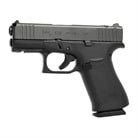
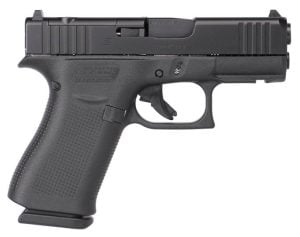
Not all carry platforms are created equal for aftermarket support. Glock is king here, and it isn’t close. The aftermarket for the Glock 43X, 48, and 19 is enormous. Triggers from Timney (the Alpha Competition is outstanding), Overwatch Precision, and Agency Arms. Sights from every major manufacturer. Stippling services on every corner of Instagram. If you buy a Glock 43X MOS, you’ll have more upgrade options than you can shake a credit card at. The MOS system takes a direct-mount optic plate, and the Shield Arms S15 magazines give you 15 rounds in a single-stack-size grip. It’s a platform basically designed for smart customization.
The Sig P365 and P365 XL have a growing aftermarket but it’s more limited. The biggest advantage is the modular grip system. You can swap the entire grip module for a different size, texture, or color without touching the serialized fire control unit. Optics options are solid too, though Sig uses their own footprint, so you’ll want a Holosun or Sig Romeo that fits natively rather than messing with adapter plates. Trigger options exist from Armory Craft and others, but they’re not as plentiful as Glock. The P365 platform is already so good out of the box that most people only need sights and a dot.
The Smith & Wesson Shield Plus sits in an interesting spot. The aftermarket is healthy but focused. Apex Tactical basically owns the trigger upgrade market for the Shield, and their kit is excellent. It takes a mushy factory trigger and turns it into something crisp and predictable. The Performance Center version comes with an optics cut from the factory, so skip the standard model if you know you want a red dot. Night sight options are plentiful from Trijicon, AmeriGlo, and XS Sights. The Shield Plus doesn’t have the Glock-level aftermarket, but the key upgrades are all available and well-tested.
Whatever platform you’re on, focus on the Tier 1 mods first: optic, sights, grip. Get those right and run your 500-round test before you even think about triggers and extended controls. Most people will find that a dot and night sights transform their carry gun enough that they don’t feel the need to keep modifying.
Final Thoughts
Customizing your carry gun can absolutely make you a better, more confident shooter. But only if you approach it with the right mindset. Your carry gun isn’t a project car where you can keep swapping parts and see what happens. It’s the tool you’re betting your life on every single day. Treat every modification like it has to earn its place through performance and reliability, not just because it looks cool on Instagram or some guy on Reddit swears by it.
Start with the mods that matter: a quality red dot, proper sights, and good grip texture. Test everything with real ammo and real round counts. Be honest about whether a modification actually makes you more capable, or if it just makes range day more fun. Those are two different things.
If your carry gun runs perfectly with a dot, night sights, and Talon Grips, you’re ahead of 90% of the people carrying concealed. That’s not a bad place to be. And your wallet will thank you for not chasing the next shiny aftermarket gun part. Spend the money you saved on ammo and training instead. That’ll do more for your shooting than any trigger swap ever will.
The best carry gun setup is one you trust completely and shoot well. If that means a bone-stock Glock 19 with a Streamlight and Talon Grips, you’re golden. If it means a tricked-out P365 XL with a Holosun and Apex trigger that’s passed its 500-round test, that’s golden too. Just don’t confuse modifying your gun with becoming a better shooter. The fastest path to competence isn’t in a parts catalog. It’s at the range with a timer and a good instructor.
Looking for the best prices? Check our gun deals page and price comparison tool to compare prices from 200+ retailers before you buy.
Frequently Asked Questions
Should I modify my concealed carry gun?
Yes, but selectively. Stick to proven Tier 1 mods like red dots, night sights, and grip texture that improve performance without compromising reliability. Every modification must pass a 500-round reliability test before you trust your life to it.
Is a red dot worth it on a carry gun?
Absolutely. A micro red dot like the Holosun 507K or EPS Carry is the single biggest accuracy improvement you can make. Faster target acquisition, better low-light performance, and improved accuracy at distance. Once you train with a dot, you will not want to go back to irons.
Will trigger modifications get me in legal trouble?
They can complicate things. Prosecutors have introduced aftermarket trigger work as evidence of recklessness. Keep your pull weight at 4 pounds or above, document all modifications, and have work done by a certified armorer. Keep receipts and the original parts.
Do I need to re-test my gun after modifications?
Yes. Run 500 rounds through the gun after any modification, including at least 100 rounds of your carry ammo. Zero malfunctions. If it chokes even once, fix the issue or revert the mod. No exceptions.
What is the best red dot for a carry pistol?
The Holosun 507K and EPS Carry are the top picks for micro compacts like the Sig P365 and Glock 43X MOS. They offer excellent battery life, shake-awake technology, and multiple reticle options at a reasonable price point.
Should I stipple my carry gun?
If your grip feels slick when your hands are sweaty, yes. Talon Grips are a cheap, reversible option that costs under 25 dollars. Professional stippling is more permanent but gives a custom texture. Either way, better grip means better recoil control and faster follow-ups.
Are aftermarket barrels worth it for carry?
Unless you are threading the barrel for a suppressor, no. Factory barrels on modern carry guns are more than accurate enough at defensive distances. A match barrel might tighten your groups slightly, but that difference is meaningless in a real-world scenario. Spend the money on ammo.
Can I run a weapon light on a carry gun?
Yes, and you should if your holster supports it. A Streamlight TLR-7 Sub or SureFire XSC lets you positively identify targets in the dark. The trade-off is added width and length, which affects concealment. Make sure your holster is designed for your specific gun and light combo.
4,644+ Gun & Ammo Deals
Updated daily from 200+ top retailers. Filter by category, caliber, action type, and price.
Related Guides